• KGS/USD = 0.01144 0%
  • KZT/USD = 0.00192 -0%
  • TJS/USD = 0.10866 0.18%
  • UZS/USD = 0.00008 0%
  • TMT/USD = 0.28571 0%
  • KGS/USD = 0.01144 0%
  • KZT/USD = 0.00192 -0%
  • TJS/USD = 0.10866 0.18%
  • UZS/USD = 0.00008 0%
  • TMT/USD = 0.28571 0%
  • KGS/USD = 0.01144 0%
  • KZT/USD = 0.00192 -0%
  • TJS/USD = 0.10866 0.18%
  • UZS/USD = 0.00008 0%
  • TMT/USD = 0.28571 0%
  • KGS/USD = 0.01144 0%
  • KZT/USD = 0.00192 -0%
  • TJS/USD = 0.10866 0.18%
  • UZS/USD = 0.00008 0%
  • TMT/USD = 0.28571 0%
  • KGS/USD = 0.01144 0%
  • KZT/USD = 0.00192 -0%
  • TJS/USD = 0.10866 0.18%
  • UZS/USD = 0.00008 0%
  • TMT/USD = 0.28571 0%
  • KGS/USD = 0.01144 0%
  • KZT/USD = 0.00192 -0%
  • TJS/USD = 0.10866 0.18%
  • UZS/USD = 0.00008 0%
  • TMT/USD = 0.28571 0%
  • KGS/USD = 0.01144 0%
  • KZT/USD = 0.00192 -0%
  • TJS/USD = 0.10866 0.18%
  • UZS/USD = 0.00008 0%
  • TMT/USD = 0.28571 0%
  • KGS/USD = 0.01144 0%
  • KZT/USD = 0.00192 -0%
  • TJS/USD = 0.10866 0.18%
  • UZS/USD = 0.00008 0%
  • TMT/USD = 0.28571 0%
12 December 2025

Kazakhstan Labor Ministry Increases Pressure on Employers Paying “Gray” Salaries

Kazakhstan’s Ministry of Labor and Social Protection has drafted legislation aimed at eliminating the widespread practice of paying employees off the books, known locally as “gray” salaries, Minister Svetlana Zhakupova announced this week.

According to ministry estimates published earlier this summer, approximately 30% of Kazakhstan’s employed population fails to contribute to the Unified Accumulative Pension Fund (UAPF), a clear indicator that they may be receiving unreported wages.

Data from the Bureau of National Statistics shows that in the second quarter of 2025, 9.3 million people were employed across the country. Of these, 7.1 million were salaried employees (76.8%) and 2.2 million were self-employed (23.2%).

This suggests that more than 3 million workers may be receiving wages outside the official system, avoiding both income tax and social contributions.

Targeting the Shadow Economy

The ministry plans to focus first on those who make no contributions at all. “We have cases where highly qualified employees officially receive the minimum wage of 85,000 KZT (about $159),” Zhakupova said. “To avoid taxes, employers declare the minimum wage on paper and pay the rest in cash.”

This practice, she added, creates striking wage disparities among employees with the same qualifications and roles. “In some instances, workers in identical positions earn between 229,000 KZT ($426) and 1.2 million KZT ($2,200), depending on the employer,” Zhakupova noted. These discrepancies are particularly acute in Kazakhstan’s mining and metallurgical sector.

Digital Oversight and Industry Agreements

To address the issue, the ministry is negotiating industry-wide wage agreements and requiring companies to declare their staffing structures. A digital tool for this purpose is available on the enbek.kz platform.

“About 20 to 25 major organizations, including several under our jurisdiction, have already submitted their staffing schedules in a pilot project,” said Zhakupova.

She believes the initiative will help ensure a more equitable distribution of company profits. “We’ve seen cases where salaries have risen, yet labor productivity has not. That contradicts basic economic logic. Our digital system identifies such ‘red zones’ for inspection,” she explained.

Legislative Timeline

The draft law is currently under interagency review and has received support from both the government and the presidential administration. It is expected to be submitted to Kazakhstan’s parliament, the Mazhilis, for consideration in the near future.

In the meantime, the ministry has begun flagging suspicious labor contracts, particularly those listing highly skilled workers, such as mechanical engineers, at or near the minimum wage.

More than 1.1 million people in Kazakhstan currently earn wages at or below the legal minimum. “When we see such contracts, it’s clear these companies are operating in the shadow economy,” Zhakupova said during a recent government briefing. “Inspectors are now actively working with such employers.”

As The Times of Central Asia previously reported, the government has also decided to freeze the minimum wage in 2026, despite earlier pledges to raise it.


Sharp Rise in Global Gold Prices Expected to Benefit Kyrgyz Economy

A significant surge in global gold prices is presenting new economic opportunities for Kyrgyzstan. Over recent weeks, gold has risen by more than $400 per troy ounce on the London Commodities Exchange, signaling potential gains for the country’s gold-dependent economy.

Back in 2022, amid escalating global geopolitical tensions, Kyrgyz authorities began encouraging citizens to hold their savings in gold. Three years on, that strategy appears vindicated: gold prices have nearly doubled.

According to the National Bank of Kyrgyzstan, the country’s international reserves reached over $7 billion in 2025, growing by $2 billion in just one year. A substantial portion of these reserves is held in gold bullion, highlighting the precious metal’s role as the cornerstone of Kyrgyzstan’s financial resilience. The current price surge is expected to further insulate the national economy from external shocks.

In 2024, Kyrgyz mining enterprises produced 24 tons of gold. If production levels remain steady, export revenues could exceed $2.5 billion in 2025. This would provide a significant boost to tax revenues, the national budget, and the country’s foreign currency reserves.

Economist Kubanychbek Idinov told The Times of Central Asia that the Kumtor mine, the country’s flagship gold asset, remains the primary driver of state revenue.

“Thanks to the nationalization of Kumtor in 2022, government revenues from the enterprise have increased several times. These funds are already being used to build social housing and develop new industries. With the launch of underground mining, authorities now have the capacity to further expand social spending and finance industrial growth,” said Idinov.

He estimates that Kumtor still holds between 500 and 700 tons of gold, which could support Kyrgyzstan’s economic stability for up to two more decades.

However, experts warn against overreliance on gold.

“Prices may rise, but they can also fall,” Idinov noted. “While current conditions offer windfall revenues, these should be strategically invested into infrastructure, trade, and industrial development. That is the path to a more resilient and diversified economy.”

The latest rally in gold prices offers Kyrgyzstan a rare window of opportunity. But capitalizing on this moment will depend on how effectively authorities can translate resource wealth into long-term national development.

Attitudes Toward Children with Special Needs in Kazakhstan Are Beginning to Shift

An appalling call by an Almaty-based blogger to “kill autistic people” has reignited public debate over attitudes toward children with special needs in Kazakhstan, revealing deep-rooted prejudices that persist in society despite ongoing reforms.

Shocking Comments and a Criminal Case

“There are too many autistic people, they need to be treated, and if they cannot be cured, they should be killed or autism hospitals should be opened. Children with autism have no feelings!” wrote Almaty blogger Raihan Zhumamuratova in a now-deleted post on social media. Her remarks sparked outrage online and drew swift condemnation from authorities.

Zhumamuratova’s post followed a disturbing incident on August 23, when a mother posted on Instagram that her two-year-old son was attacked in a courtyard by a teenager who picked him up, threw him in the air, and then fled while covering his ears. The act was captured on video. Initial reports suggested the 13-year-old boy may have a mental health condition, possibly an autism spectrum disorder, though no official diagnosis has been confirmed.

The Auezov District Police Department opened a criminal case, and the teenager’s parents were held accountable for failing to properly fulfill their parental duties.

Zhumamuratova’s comments were widely condemned. The Autism Kazakhstan association filed a formal complaint, prompting Almaty police to launch an investigation. Minister of Labor and Social Protection Svetlana Zhakupova stated, “I think law enforcement agencies will take the right decisions regarding this blogger. The harshest ones.”

“You know, we are building an inclusive society together. We do not tolerate discrimination against people with disabilities,” Zhakupova added. “Children with autism are currently under the special supervision of several government agencies, the Ministry of Education, our Ministry of Labor, and the Ministry of Health. We fully support these children.”

A Pattern of Neglect and Violence

While Zhumamuratova’s statements have drawn near-universal condemnation, this is not the first time a child has been seriously harmed by a teenager with a psychiatric condition.

In February 2025, a teenager attacked a five-year-old with a knife inside an elevator in a residential building in Astana. The assault was also recorded and widely circulated online. The attacker, who is registered at a psychoneurological clinic, was later placed in a psychiatric hospital. His legal guardian was held accountable, according to Children’s Rights Commissioner Dinara Zakieva.

Parents of children with special needs frequently report being left to cope alone. Rehabilitation services are limited, oversight is weak, and resources are stretched thin.

A Long Road to Inclusion

Kazakhstan faces systemic challenges in building an inclusive society. For decades, people with psychiatric or developmental diagnoses were kept out of public view. Traditional nomadic culture stigmatized them, and under the Soviet regime, psychiatric diagnoses often carried punitive implications that brought shame upon families.

Many citizens today remain uninformed about developmental disorders like autism. As a result, people with such conditions are often met with fear or hostility. Compounding the issue, disability benefits remain low, making private care and quality rehabilitation inaccessible for most families.

As of March 1, 2025, Kazakhstan had 12,807 children and adolescents under observation for autism spectrum disorders, more than triple the number recorded in 2020. This surge reflects both improved diagnostics and growing public awareness.

Currently, 74 rehabilitation centers provide medical assistance to children nationwide. A development and early intervention center is under construction, while 207 mental health offices operate at the district level. The Republican Scientific and Practical Center for Mental Health in Almaty serves as the leading institution. Pilot programs for early intervention are being tested in Almaty and the Kyzylorda region.

However, according to parents, these efforts fall short. Many are forced to turn to expensive private specialists due to long waits and a lack of qualified personnel in state facilities. Stigma remains entrenched, especially in rural areas, but also in urban centers like Almaty, as demonstrated by Zhumamuratova’s inflammatory comments.

Political Response and Public Hope

Mazhilis deputy Irina Smirnova responded to the incident by calling for a systemic overhaul of Kazakhstan’s approach to supporting children with autism.

“When we hear reports about the opening of rehabilitation centers, these are all fragmented moments that do not solve the overall picture,” said Smirnova. “We need to review our approaches, take the best international experience, study it, and implement it.”

While the path ahead is steep, the widespread backlash against Zhumamuratova’s comments and the strong response from civil society suggest a growing awareness and a willingness among Kazakhstani citizens to stand up for children with special needs.

UNDP and Eldik Bank Partner to Advance Green Finance in Kyrgyzstan

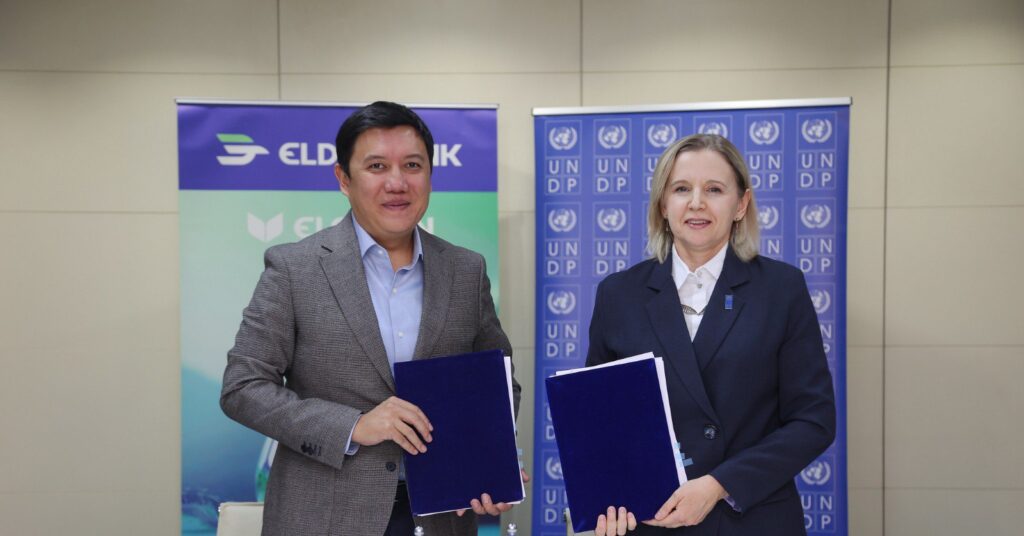
Kyrgyzstan is taking a significant step toward building a greener and more resilient economy. On September 9, state-owned Eldik Bank and the United Nations Development Programme (UNDP) signed a memorandum of understanding to deepen cooperation in sustainable finance.

The agreement aims to mobilize climate-related investments, develop sustainable financial products, and integrate Environmental, Social, and Governance (ESG) principles into Kyrgyzstan’s banking sector. It also outlines plans for joint research and knowledge exchange in climate finance, including the creation of tools to assess climate risks in lending operations.

This initiative supports Kyrgyzstan’s updated Nationally Determined Contributions (NDC 3.0) under the Paris Agreement, which commit the country to reducing greenhouse gas emissions, expanding renewable energy, and enhancing climate resilience. It also aligns with the National Development Program through 2030, which prioritizes expanding the regulatory framework for green finance.

“UNDP supports the development of sustainable finance solutions that reduce the carbon footprint of the economy, enable the green transformation of businesses, and create new opportunities for investment,” said Alexandra Solovieva, UNDP Resident Representative in Kyrgyzstan.

For Eldik Bank, the partnership represents more than a financial commitment; it is a strategic step toward becoming a catalyst for climate-conscious economic development. “Together with UNDP, we aim to introduce products that promote green growth and sustainable business development for our clients,” said Ulanbek Nogaev, Chair of the bank’s Management Board.

Green finance is gaining traction across Central Asia, a region still heavily reliant on extractive industries but increasingly vulnerable to climate risks such as water scarcity, extreme weather, and glacial melt. Kyrgyzstan’s efforts to empower domestic financial institutions signal that achieving climate goals will require more than policy declarations; it will demand concrete investments and innovation.

The Eldik Bank-UNDP partnership also underscores the importance of regional cooperation. Similar initiatives are under discussion in neighboring countries, as Central Asia seeks to attract international capital for renewable energy, sustainable agriculture, and green infrastructure projects.

If effectively implemented, Kyrgyzstan’s model could serve as a regional benchmark, demonstrating how national banks can help transform global climate commitments into tangible, growth-oriented outcomes.

Opinion: The Contact Group on Afghanistan – Central Asia Formulates a Regional Position

On August 26, special representatives on Afghanistan from Kazakhstan, Kyrgyzstan, Tajikistan, and Uzbekistan met for the first time in Tashkent. The meeting resulted in the creation of a permanent regional platform: the Contact Group on Afghanistan.

This gathering was not only a continuation of commitments outlined in the joint statement from the most recent Consultative Summit of Central Asian heads of state, but also a step toward preparing for the next high-level format, scheduled for November in Tashkent.

Formally, Turkmenistan was absent. Available information suggests the reasons were purely technical. Ashgabat was ready to join and expressed support for the results through its foreign ministry channels.

The key outcome is that Central Asian states have, for the first time, shown their readiness to speak with one voice on an issue long shaped by competing external interests. This is not the start of forming a common position; that had already developed de facto in recent years. All Central Asian countries have supported trade and transit with Afghanistan, continued supplying electricity and food, and maintained working contacts with the Taliban, while avoiding extremes. The Tashkent meeting institutionalized this approach: parallel tracks have now shifted, cautiously, toward coordination. Informal unity has been formalized into a tool.

Unlike external players, who often cloak interests in grand rhetoric, Central Asia acts openly and pragmatically. The logic is simple: whatever is done for Afghanistan is, in fact, done for oneself. That is the distinctive feature of the regional approach – no ideological cover, no attempts to reshape Afghanistan.

Examples are straightforward. Electricity continues to flow even when payments are delayed – not as charity, but as an investment in security. A blackout in Afghanistan could trigger refugee flows and threats heading north. Exports of flour and fuel sustain Afghan markets but also expand outlets for Central Asian producers. Participation in trans-Afghan corridors is not a gift to Kabul but an opportunity for Central Asia to anchor itself in southern logistics routes.

Ultimately, every step “for Afghanistan” is primarily for the region itself. If Kabul ignores basic rules, cooperation will simply stop. In politics, there are no eternal friends, only eternal interests.

The new format does not yet imply collective pressure on the Taliban. Rather, it creates conditions for each country to conduct more substantive bilateral dialogue, but grounded in a shared position. Until now, Central Asia has mainly spoken to the Taliban about trade, transit, and infrastructure. The Contact Group now makes it possible to add another dimension: clarifying boundaries of what is acceptable on issues like extremism, border escalation, or water pressure. For now, “red lines” are unlikely, since the Taliban have not crossed them. The situation remains manageable, leaving room for constructive dialogue.

Equally important, the Contact Group is not a threat or ultimatum. Coordination is meant to expand opportunities for dialogue, not limit them. In the long run, this could evolve into a sustainable C5+A format. Afghanistan would then be integrated into regional frameworks not as a problem to be managed, but as a partner engaged in discussions on water, security, logistics, and the environment.

The issue for Central Asia is not who governs Kabul, but whether Afghanistan can function as a competent economic and political actor. What matters is adherence to accepted economic standards and integration into regional formats. For this reason, the C5+1 could become the backbone of future cooperation, regardless of regime.

The recent SCO summit in Tianjin illustrates this pragmatic approach. Its final declaration stated that Afghanistan should become an independent, neutral, and peaceful state, free of terrorism, war, and drugs, and that “the formation of an inclusive government with broad participation of representatives of all ethno-political groups of Afghan society is the only way to achieve lasting peace and stability in this country.” Central Asia, through the Contact Group, is advancing the same principle: cooperation is possible, but some issues are non-negotiable.

This regional subjectivity is also evident within multilateral organizations, particularly the SCO. The 2024 Astana Declaration enshrined Central Asia as the “core of the organization.” President Tokayev’s proposals – specialized SCO centers to tackle security threats, new infrastructure and humanitarian initiatives, and engagement with UN resources – demonstrate that the region is moving beyond declarations to building institutional mechanisms that could also involve Afghanistan.

Attempts to create broad international formats on Afghanistan have consistently stalled under the weight of competing interests. The Tashkent format is different: it is an intra-regional conversation, without outside players. Of course, disagreements remain within Central Asia itself. But the fact that states have created a permanent platform on an issue vital to them is already progress. It strengthens their international standing and tests their ability to overcome differences for a shared purpose.

Cautious optimism is warranted, though it is too early to judge effectiveness. Yet the need for such a platform has long been obvious. It allows the region to set its own agenda instead of waiting for outside decisions.

The new format is not altruism, but calculation: by helping Afghanistan, Central Asia strengthens its own stability. If the Contact Group enhances their ability to negotiate and act together, it will prove an important investment in the region’s future.


The views expressed in this article are those of the author and do not necessarily reflect the official policy or position of the publication, its affiliates, or any other organizations mentioned.

Syrian Forces Intensify Arrests of Uzbek and Foreign Militants in Idlib

Syrian forces under the administration of Ahmed al-Sharaa have escalated their long-running security campaign against foreign fighters in northwestern Syria, targeting individuals affiliated with the Islamic State (ISIS) and other jihadist factions. According to Syrian sources cited by the El Manshar news outlet, the crackdown has gained momentum in recent months, with a focus on detaining commanders and field operatives of various nationalities, particularly in the Idlib region.

Among those detained are several Uzbek nationals. In June 2025, security forces in Idlib arrested Ayoub “Abu Dujana” al-Uzbeki, a military trainer, and transferred him to an undisclosed location. In late August, another Uzbek figure, known as Islam al-Uzbeki, was detained during a raid in the Qasour neighborhood of Idlib. On September 3, Syria’s Internal Security Directorate announced the dismantling of an ISIS cell in the Harem area of western Idlib, with all members taken into custody, including fighters from Iraq and Uzbekistan.

This is not the first time Uzbek militants have been the focus of security operations. Reports from late 2022 documented more than 20 raids on ISIS-affiliated cells across Idlib province, resulting in the arrests of several Uzbek fighters. Since 2020, forces loyal to Sharaa have also targeted the al-Qaeda-linked “Tawhid and Jihad” battalion, detaining senior figures such as its founder, Abu Saleh al-Uzbeki. Those arrests sparked violent clashes with rival jihadist groups.

Analysts suggest the campaign aims to consolidate Sharaa’s authority by bolstering security services, pre-empting the rise of autonomous armed factions, and eliminating groups that resist integration into his command structure. It also appears intended to signal compliance with previous understandings with the United States concerning the handling of foreign fighters in Syria.

Despite these efforts, El Manshar notes that extremist groups continue to maintain a limited but persistent presence in eastern Idlib and along the Turkish border. The campaign, therefore, represents a protracted struggle for dominance rather than a definitive resolution of the foreign fighter issue.