• KGS/USD = 0.01144 0%
  • KZT/USD = 0.00192 -0%
  • TJS/USD = 0.10849 0.37%
  • UZS/USD = 0.00008 0%
  • TMT/USD = 0.28571 0.28%
  • KGS/USD = 0.01144 0%
  • KZT/USD = 0.00192 -0%
  • TJS/USD = 0.10849 0.37%
  • UZS/USD = 0.00008 0%
  • TMT/USD = 0.28571 0.28%
  • KGS/USD = 0.01144 0%
  • KZT/USD = 0.00192 -0%
  • TJS/USD = 0.10849 0.37%
  • UZS/USD = 0.00008 0%
  • TMT/USD = 0.28571 0.28%
  • KGS/USD = 0.01144 0%
  • KZT/USD = 0.00192 -0%
  • TJS/USD = 0.10849 0.37%
  • UZS/USD = 0.00008 0%
  • TMT/USD = 0.28571 0.28%
  • KGS/USD = 0.01144 0%
  • KZT/USD = 0.00192 -0%
  • TJS/USD = 0.10849 0.37%
  • UZS/USD = 0.00008 0%
  • TMT/USD = 0.28571 0.28%
  • KGS/USD = 0.01144 0%
  • KZT/USD = 0.00192 -0%
  • TJS/USD = 0.10849 0.37%
  • UZS/USD = 0.00008 0%
  • TMT/USD = 0.28571 0.28%
  • KGS/USD = 0.01144 0%
  • KZT/USD = 0.00192 -0%
  • TJS/USD = 0.10849 0.37%
  • UZS/USD = 0.00008 0%
  • TMT/USD = 0.28571 0.28%
  • KGS/USD = 0.01144 0%
  • KZT/USD = 0.00192 -0%
  • TJS/USD = 0.10849 0.37%
  • UZS/USD = 0.00008 0%
  • TMT/USD = 0.28571 0.28%
11 December 2025

Three Spaniards, One Australian Detained at Baikonur Cosmodrome

The Baikonur Cosmodrome in a remote part of Kazakhstan has long held allure for people – trespassers included – who are intrigued by its storied role as a facility that pioneered early space exploration and remains a vital part of Russia’s space program.

Three Spanish citizens and one Australian were detained while trying to get into a restricted area housing old space infrastructure at Baikonur on Tuesday night, reported RIA Novosti, a Russian state-owned news agency. It cited an unidentified source. Another Russian media organization, Tass, later reported that the Spaniards had been released and that the Spanish embassy in Astana was working to help them. Tass did not report on the status of the Australian.

The attempted break-in at the Russian-run base occurred in the area of ​​the disused assembly and refueling complex of the Buran spacecraft, a space shuttle that was developed in the 1970s and 1980s by the Soviet Union, whose leaders were concerned that the U.S. space shuttle program posed a possible military threat. The Buran flew once in 1988, but the program was abandoned because of high costs and a lack of purpose.

In 2022, British YouTuber Benjamin Rich documented his trip to Baikonur, where he was also detained by Russian authorities. The journey involved walking with a companion for many hours across the desert, shielding themselves from the sun with umbrellas. They were able to enter the decrepit Buran hangar and see the space shuttle but got caught by guards as they were leaving the facility. Rich said he and his companion paid a fine of $50 each and were released.

Last year, RIA Novosti reported that two French citizens tried to reach Baikonur by the same method, but one died of dehydration during the arduous journey on foot.

The first man to go into space, Yuri Gagarin, and the first woman, Valentina Tereshkova, took off from the Baikonur cosmodrome, which is run by Roscosmos, the Russian space agency, under an agreement with the Kazakh government. Russia continues to launch spacecraft from there, sometimes in joint missions with NASA.

The first launch from Baikonur in 2025 occurred on Feb. 28, when a Soyuz rocket hoisted a Russian spacecraft carrying three tons of food, fuel and other supplies that were delivered to the International Space Station.

EU-Central Asia Summit Opens New Opportunities for Kazakhstan

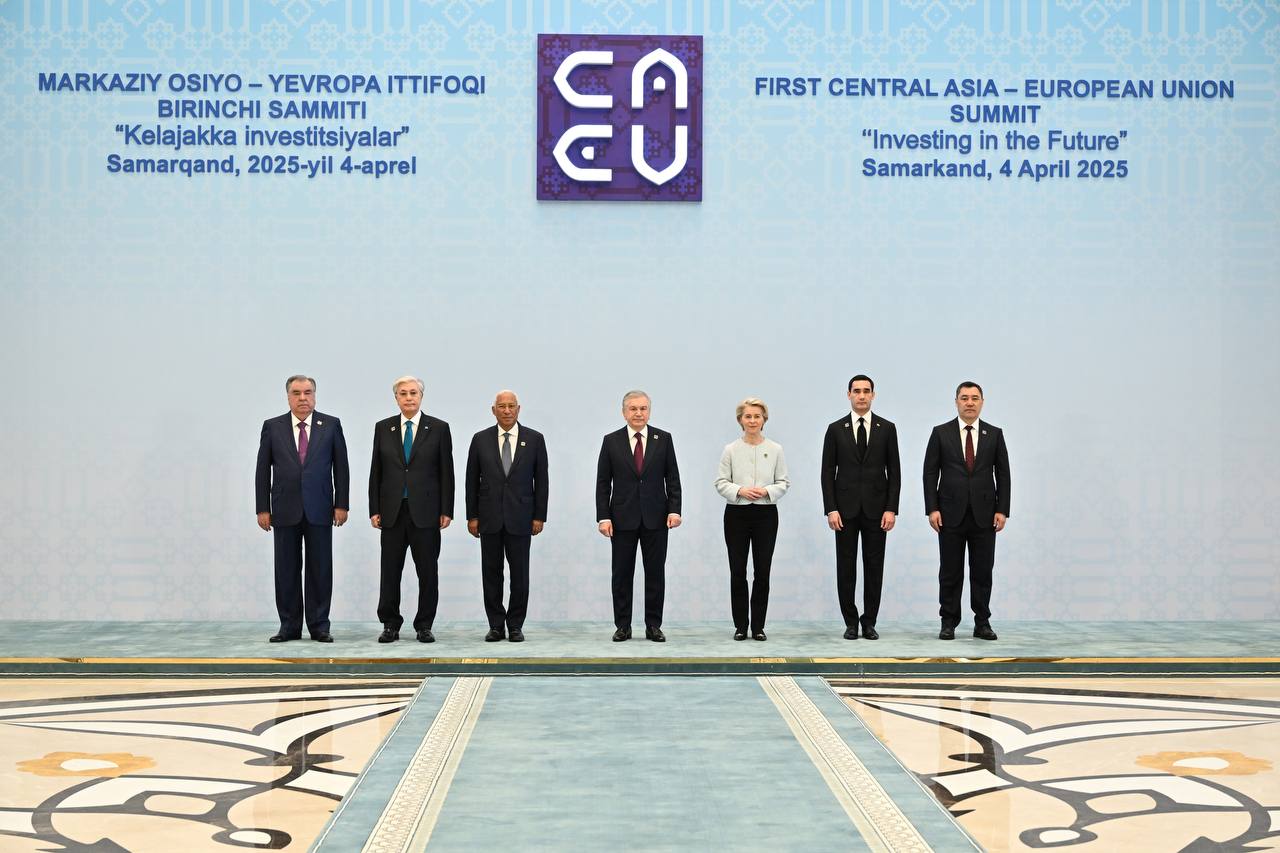
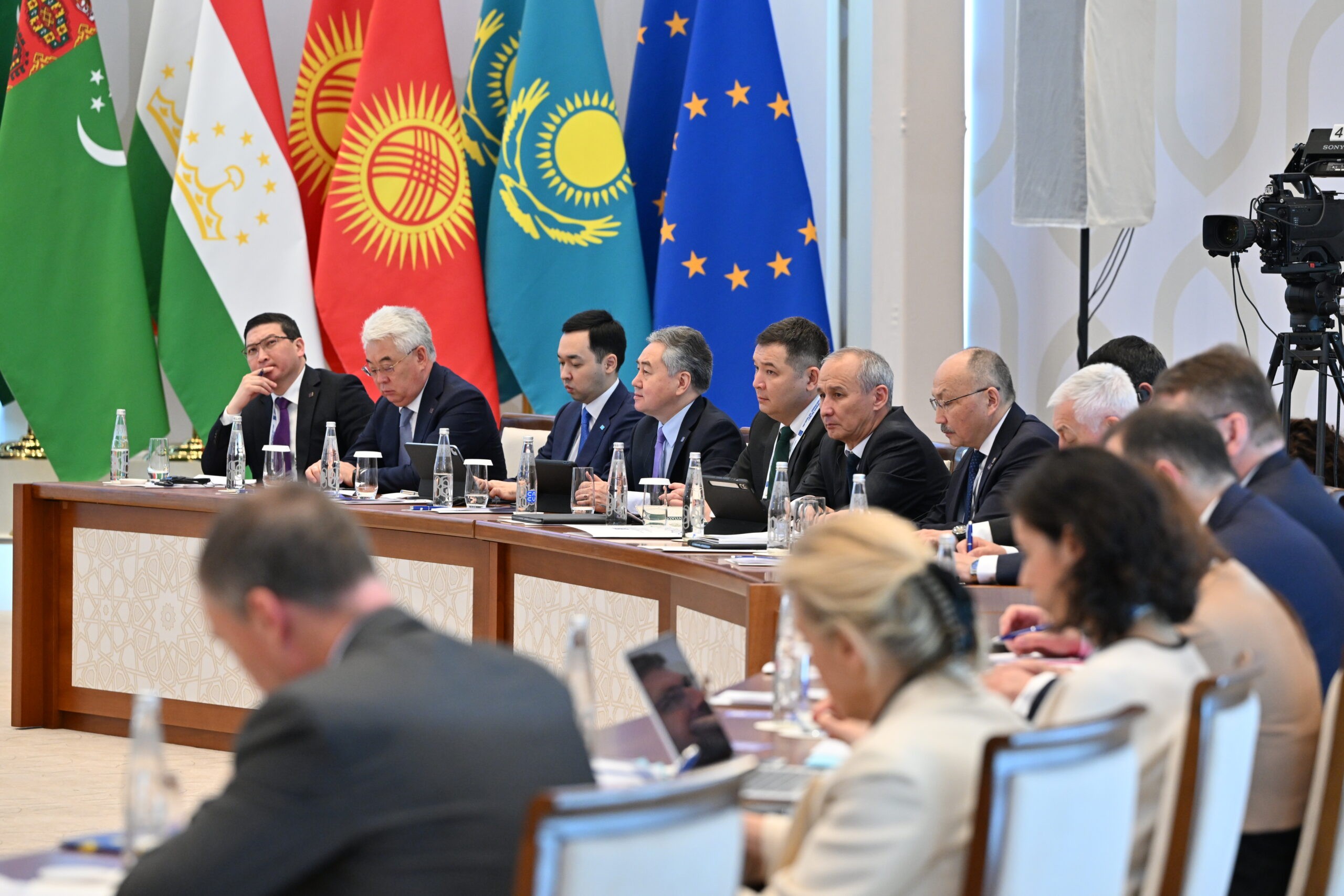
The first-ever summit between the European Union and the five Central Asian countries opened on April 3 in Samarkand, Uzbekistan. The meeting marks a milestone in regional diplomacy, as both sides seek to deepen cooperation amid growing geopolitical shifts.

Kazakhstan, in particular, is entering the summit with growing international clout, thanks to its stable economic performance and balanced foreign policy approach.

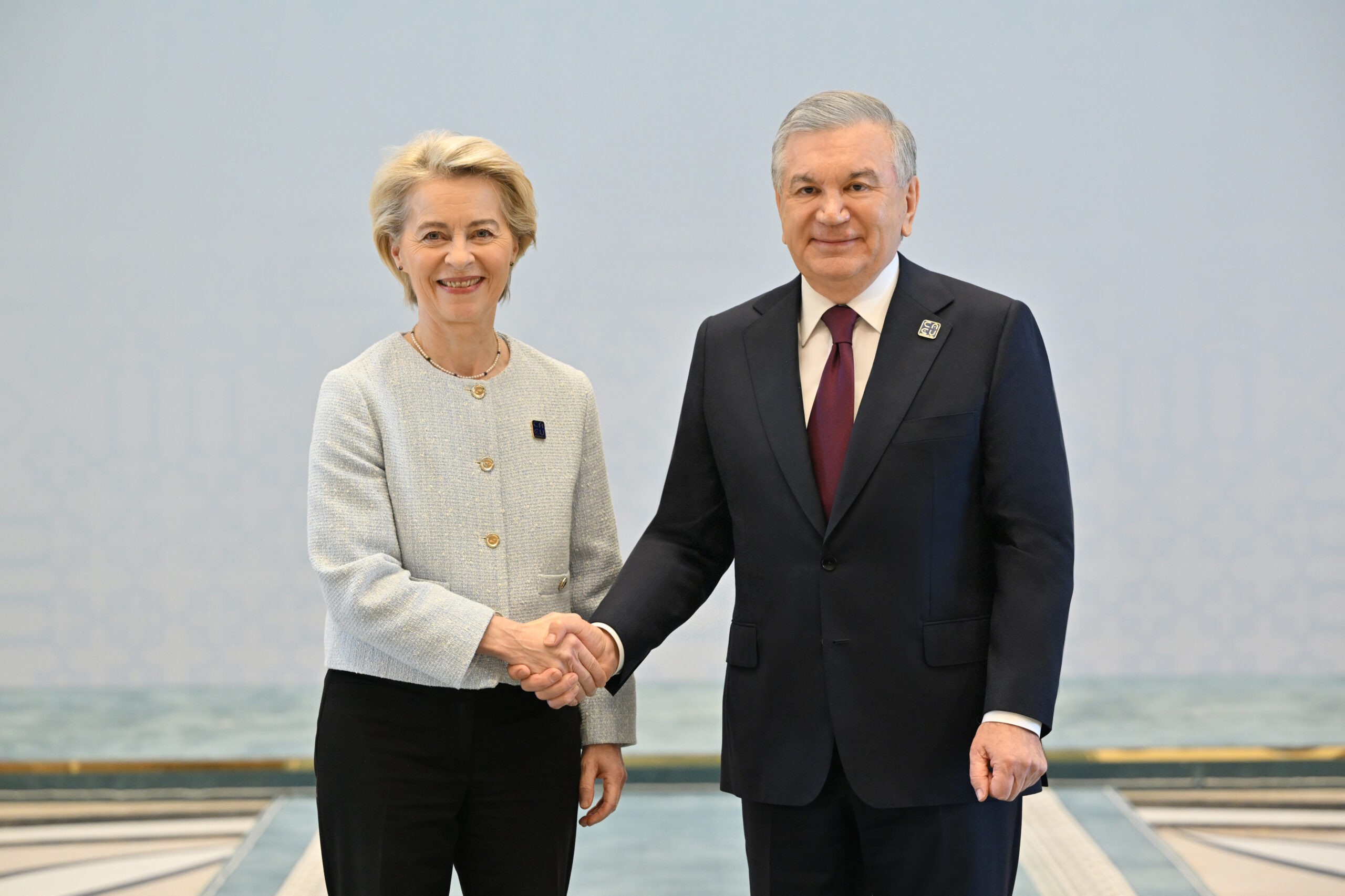
European Council President António Costa and European Commission President Ursula von der Leyen are representing the EU at the summit, which is being chaired by Uzbek President Shavkat Mirziyoyev. According to official sources, the summit aims to demonstrate mutual geopolitical interest and expand collaboration between Europe and Central Asia across key areas.

The agenda includes strengthening multilateral ties, addressing shared security threats, enhancing economic and investment cooperation, and advancing collaboration under the EU’s Global Gateway initiative. Focus areas also include energy, climate neutrality, connectivity, and green transition, along with mobility and cultural exchange.

The EU is already the region’s second-largest trading partner, accounting for 22.6% of Central Asia’s total foreign trade in 2023. It is also the largest source of foreign investment, responsible for over 40% of the region’s total inflows.

Kazakhstan’s President Kassym-Jomart Tokayev is attending the summit, following a bilateral meeting with President Mirziyoyev in Almaty on March 29. Also expected to participate are Kyrgyz President Sadyr Japarov, Tajik President Emomali Rahmon, and Turkmen President Serdar Berdimuhamedov.

At the summit, the EU is set to unveil a substantial investment package for Central Asia, with priority sectors including transportation infrastructure, critical raw materials, energy transmission, and digitalization.

European Commission President von der Leyen emphasized that Central Asia’s significant natural resources and industrial potential align with Europe’s sustainability goals. “Europe aims to create a complete value chain, not merely purchase raw materials. This is vital for generating local employment and upholding high environmental and social standards,” she said. Additional EU funding will be directed toward green energy projects and improvements to Uzbekistan’s water infrastructure.

According to Tair Nigmanov, an international relations expert, the EU’s increased engagement stems from heightened geopolitical rivalry. “We are situated between major powers like Russia and China. The EU, as another global player, wants Central Asia to remain neutral and not gravitate toward any single power center,” Nigmanov told Inform.kz. “To that end, it is offering investment, trade opportunities, and political assurances.”

For Kazakhstan, the summit presents a strategic platform to attract investment, reinforce its non-aligned stance, and leverage its growing geopolitical relevance in an increasingly multipolar world.

Trump’s Tariff Blitz Targets Global Imports, Kazakhstan Faces Harshest Impact in Central Asia

U.S. President Donald Trump has announced sweeping new tariffs on all goods imported into the United States, citing the need to protect American industry and jobs. Speaking at a White House press conference, Trump outlined a base tariff rate of 10% that will apply to 185 countries. However, several nations and blocs face significantly higher rates: China will see a 34% tariff, the European Union 20%, Switzerland 31%, and Israel 17%. The steepest tariffs were imposed on Vietnam (46%), Cambodia (49%), and Laos (48%).

Notably absent from the list are Russia, Belarus, Mexico, Iran, Canada, and Belarus. Ukraine, however, will face the base 10% rate.

Kazakhstan Hit with 27% Tariff

The new U.S. duties also target Central Asian nations. According to a comparative chart published by the White House, Uzbekistan, Turkmenistan, Tajikistan, and Kyrgyzstan will face 10% tariffs on their exports to the U.S. Meanwhile, Kazakhstani goods will be subject to a much higher rate of 27%.

The White House document notes that Kazakhstani imports currently face a 54% tariff in Kazakhstan, figures that surprised local analysts, who have questioned the methodology behind the calculations.

The rationale for the elevated rate on Kazakhstan remains unclear. However, the country’s Ministry of Trade and Integration has initiated consultations with his U.S. counterparts to explore options for exempting certain goods. According to a preliminary analysis, many of Kazakhstan’s key exports fall under exceptions outlined in U.S. regulations.

“In 2024, trade turnover between Kazakhstan and the United States amounted to $4.2 billion,” the ministry stated. “Kazakhstan’s primary exports to the U.S. – crude oil, uranium, silver, and ferroalloys – constitute 92% of total exports and are included in the exemption list under the U.S. President’s decree on reciprocal tariffs.”

Turning Tariffs Into Opportunities

Despite the steep new tariffs, some experts believe the impact on Kazakhstan will be limited. Financial analyst Rasul Rysmambetov argues that Kazakhstan’s marginal role in global trade dynamics shields it from major economic fallout.

“The real battle is between the U.S. and the world’s largest economies, China and the EU,” Rysmambetov wrote on his Telegram channel. “Our trade with the U.S. accounts for less than 1% of Kazakhstan’s total foreign trade. Even with a 27% tariff, the effect will be negligible.”

Rysmambetov noted that Kazakhstan exported over $2 billion worth of goods to the U.S. in 2024, while imports totaled $1 billion, maintaining a trade surplus for the tenth consecutive year. “We’re on the tariff list, but it’s mostly symbolic,” he added, emphasizing that Kazakhstan’s exports largely consist of strategic materials.

Rysmambetov also sees potential upsides: countries facing new duties may seek alternative markets, possibly offering Kazakhstan better terms on imports such as equipment, metals, vehicles, and construction materials. “Global trade tensions can open windows of opportunity, for strategic borrowing, better equipment deals, and expanded exports. But quick action is key,” he concluded.

International Backlash

The U.S. move drew swift condemnation from European Commission President Ursula von der Leyen, who called the policy a “severe blow to the global economy.”

“Uncertainty will increase, leading to heightened protectionism. Millions, especially in vulnerable countries, will be hit hardest by the highest tariffs. This move contradicts our international economic goals,” she wrote on X.

Von der Leyen made the remarks during a visit to Samarkand, Uzbekistan, where the first EU-Central Asia summit is taking place, a meeting Brussels has described as “historic.” Observers suggest that trade and tariffs could emerge as key topics at the summit.

Economists have also voiced concern. David Beckworth, a former U.S. Treasury economist, warned of possible “stagflation,” a scenario where inflation rises as growth stalls. Prolonged tariffs, he cautioned, could disrupt supply chains and raise consumer prices.

Olu Sonola, head of U.S. economic research at Fitch Ratings, added that extended trade barriers could push many economies into recession. “You can throw most forecasts out the window if these tariffs remain in place,” he said.

As global leaders and economists weigh the implications, one point is clear: the U.S. tariffs, and the international response they provoke, are reshaping the global trade order in profound and unpredictable ways.

Kazakhstan’s Oil Exports Uninterrupted Despite Caspian Pipeline Consortium Berth Suspensions

Despite the suspension of two out of three offshore berths operated by the Caspian Pipeline Consortium (CPC), Kazakhstan’s oil exports are proceeding without disruption, according to the Ministry of Energy of the Republic of Kazakhstan.

The ministry stated that there are currently no restrictions on the receipt or shipment of oil through the CPC system. Transshipment is being carried out on schedule via VPU-3, the third remote mooring unit, which has been in operation since 2014.

“Shipments are proceeding normally and according to schedule through the VPU-3 offshore mooring device, which remains operational,” the Ministry of Energy announced.

Temporary Suspension of VPU-1 and VPU-2

Earlier, CPC announced the temporary suspension of VPU-1 and VPU-2 following an unscheduled inspection conducted by Russia’s Rostransnadzor. The inspections are part of a broader review of marine infrastructure safety across the Azov-Black Sea basin, launched in the wake of an oil product spill in the Kerch Strait in December 2024.

Following the inspection, regulatory authorities issued protocols and directives mandating the temporary shutdown of the two berths until the violations identified are addressed. In the meantime, all CPC shipments have been consolidated through VPU-3. Consortium shareholders have been formally notified of the developments.

Similar Measures at Transneft Facility

The crackdown on safety violations has extended beyond the CPC. The eighth oil-loading berth operated by JSC Novorossiysk Commercial Sea Port (NCSP Group), part of Russia’s Transneft, has also been suspended for 90 days. The suspension followed the identification of safety violations related to the handling of hazardous cargo. Transneft has been ordered to correct the deficiencies by June 30.

Strategic Significance of CPC

The CPC is Kazakhstan’s most critical export route for crude oil, linking the giant Tengiz Field with the Yuzhnaya Ozereyevka Terminal on the Black Sea. The pipeline stretches 1,510 kilometers, including 452 kilometers within Kazakhstan, and has an annual capacity of up to 81.5 million tons. In 2024, Kazakhstan exported 54.9 million tons of oil via CPC, accounting for approximately 80% of the country’s total oil exports.

Security Concerns: Drone Attacks Raise Alarms

Security concerns continue to loom over the CPC infrastructure. In February, the Kropotkinskaya station was targeted by seven drones. While the Ministry of Energy reassured that oil deliveries remained unaffected, the incident heightened concerns about operational stability. Although Russia and Ukraine later agreed not to target CPC facilities, Russia alleges that its air defense systems intercepted another drone attack on March 24, the third such incident in a month.

Oil market analyst Olzhas Baidildinov voiced skepticism about the durability of the ceasefire arrangement.

“We shouldn’t count on an end to attacks on CPC infrastructure,” Baidildinov said. “There’s unwarranted optimism in Kazakh media and among some experts, especially against the backdrop of record oil output in February-March. A decline in both oil production and exports seems inevitable, along with a drop in KazMunayGas’ dividend income from CPC and budget revenues.”

He also warned that irregular operations could damage infrastructure designed for continuous, stable use. “Oil pipelines are engineered for consistent operational modes, not for emergency shifts, stop-start adjustments, or ad hoc capacity changes,” he concluded.

Kyrgyzstan to Improve Farmland Monitoring with EBRD and FAO Support

The European Bank for Reconstruction and Development (EBRD) and the Food and Agriculture Organization of the United Nations (FAO) have launched a joint initiative titled Greening Kyrgyzstan’s Economy: Know More, Act Better, Enhance Results. The project aims to foster climate-smart agriculture through the use of geographic information system (GIS) technology, improving farmland management and bolstering food security in Kyrgyzstan.

According to the EBRD, the initiative is supported by its Food and Agribusiness team and involves close cooperation with three key local aggregators: Kaindy-Kant (sugar beet processing), Kirbi (potato processing), and Dan Agro (pulses and legume processing). Together, these partners will help extend the project’s reach to more than 5,000 farmers.

Harnessing GIS Technology

The GIS platform will be managed by Kyrgyzstan’s State Agency for Land Resources, Cadastre, Geodesy and Cartography. It will be accessible to stakeholders across the agricultural sector, including the Ministry of Water Resources, Agriculture and Processing Industry, as well as farmers and aggregators. The system will enable users to identify sown crops, assess land-use efficiency, estimate productivity, and monitor crop rotation and sustainable water use.

With additional funding from the Ministry of Digital Development, the State Agency will also develop a mobile application to improve access and facilitate the adoption of GIS tools at the grassroots level. Meanwhile, the EBRD and FAO will roll out a free e-extension application to provide advisory services to farmers.

This collaboration promises substantial benefits for Kyrgyzstan, where agriculture employs nearly half the workforce and contributes approximately 12% of the national GDP.

Broader Impact and Expectations

The initiative is also expected to deliver environmental gains by enhancing efficiency in a sector responsible for roughly 37% of Kyrgyzstan’s greenhouse gas emissions. These efforts align with the country’s Paris Agreement target of cutting emissions by 16% by 2030.

In addition to supporting environmental goals, the project is set to improve food security for Kyrgyzstan’s growing population, projected to reach 9.6 million by 2050. The data-driven approach to land management is designed to help rural communities adapt to climate change, strengthen agribusiness supply chains, and contribute to sustainable economic development.

Participating aggregators stand to benefit from access to more accurate planting data, which will improve harvest forecasting and help optimize financing strategies.

How Kazakhstan and Azerbaijan Are Rewiring the Middle Corridor

Kazakhstan’s acceleration of its strategic alignment with Azerbaijan signals more than bilateral convergence. It reflects a deeper structural reconfiguration of Eurasian connectivity, a reconfiguration that is not additive but integrative. As documented in multiple announcements and institutional moves across March 2025, their cooperation has crossed the threshold from parallel development to systemic coordination. This evolving dynamic illustrates the emergence of a regionally endogenous axis that, without proclaiming itself as such, is shaping the wider functional geometry of Eurasia.

At the material core of this shift is the Middle Corridor — the Trans-Caspian International Transport Route (TITR) — linking China to Europe via Central Asia, the Caspian Sea, and the South Caucasus. While long viewed as a technical alternative to the Northern and Southern corridors, the Middle Corridor is now exhibiting the dynamics of what in systems theory would be called self-amplifying dynamic feedback loops. (The technical term is “autopoiesis,” literally “self-creation” of “self-production.”) In particular, institutional feedback, infrastructure reinforcement, and regulatory adaptation are all feeding into one another in ways characteristic of an autonomously emergent macroregional logic.

Kazakhstan’s announcement in December 2024 of the financing of a new terminal at Alat port in Azerbaijan, on which construction began in 2025, illustrates this logic in material form. Simultaneously, Kazakhstan is upgrading its Aktau port, backed by Chinese capital from Lianyungang, to triple its container throughput by 2028. This situation exemplifies the transformation of quantity into quality. Specifically, the upgrades are instantiating a network strategy that values not only volumes but also redundancy, flexibility, and strategic optionality.

The new fiber-optic cable agreement signed in March 2025 further reinforces this convergence. A 380-kilometer undersea connection between Sumqayit and Aktau — part of the broader Digital Silk Road — will reduce latency between the two countries from hours to milliseconds. In system-theoretic terms, this is not merely a technical augmentation. It converts the corridor from a physical transit route into a distributed digital platform capable of supporting real-time adaptive coordination. This shift from “throughput” to “synchronization” is foundational.

It also deepens the infrastructure-energy-information triad that has become characteristic of new macroregional systems. Kazakhstan’s expanded use of the Baku-Tbilisi-Ceyhan (BTC) pipeline, projected to carry 1.7 million tons of its oil in 2025, is not simply diversification. It is the strategic concretization of Azerbaijan’s role as a downstream node for Central Asian hydrocarbons. This is occurring alongside green transition signaling, including a modest floating solar project at Lake Boyukshor and a trilateral renewable energy agreement between Kazakhstan, Azerbaijan, and Uzbekistan. The repurposing of hydrocarbon corridors for hybrid energy flows is not substitution but overlay, in effect a dual-pathway system.

Meanwhile, capital commitment is reinforcing the commercial aspect. A $300 million joint investment fund announced by the two countries has already designated the construction of an intermodal terminal at Alat as its inaugural project. Additional integration comes from the UAE-backed $50 million grain terminal at Kuryk, which will further diversify the system’s carrying capacity by drawing agro-logistics into the corridor’s functionality.

In my recent article on the EU’s “new power play” in Eurasia, I explained how Central Asia is increasingly understood not as a buffer zone but as a platform for cooperation. This new strategic consciousness is evident in the March 2025 trilateral meetings between Azerbaijan, Kazakhstan, and Georgia to coordinate the Middle Corridor Multimodal Joint Venture. These are not bureaucratic exercises. They indicate a willingness to institutionalize mutual exposure as mutual benefit, transforming geographic proximity into systemic interdependence.

Security coordination, although still unstated, is becoming structurally implicit. As corridor density increases, so too does vulnerability. The dangers of sabotage, cyber interference, and logistical disruption are all enhanced. The lack of overt defense cooperation does not negate its presence in planning models. Infrastructure without a security architecture is a recipe for systemic fragility, but this aspect of cooperation remains off-record out of strategic discretion.

In this context, the EU’s recalibrated posture — epitomized by Kaja Kallas’s March 2025 tour of Central Asia and the upcoming EU–Central Asia Summit in Samarkand — must be interpreted as an attempt to enter this system as a non-hegemonic but indispensable partner. The EU’s Global Gateway initiative now recognizes the Middle Corridor as a backbone of Eurasian resilience. By embedding digital, energy, and regulatory integration within this initiative, the EU is engaging in a form of complex interdependence that enhances regional agency rather than co-opting it.

Kazakhstan’s position within this evolving system deserves particular attention. As I set out in another recent article, specifically addressing a potential new phase in the development of Kazakhstan’s relations with the U.S., Kazakhstan is becoming a structurally stabilizing actor. It balances the overlapping power-projection interests of multiple actors: Russia, China, Europe, and, increasingly, Turkey. Its bilateral partnership with Azerbaijan epitomizes its broader strategic grammar of non-alignment without passivity and multivectorism with selective depth.

Complex-systems theory teaches that when independent subsystems begin to coordinate across multiple domains (physical, informational, financial, normative), emergent properties appear. These properties cannot be reduced to any single actor’s intention or interest. They become, instead, the architecture within which intentions and interests are expressed. The Middle Corridor is approaching such a threshold. It is no longer merely a logistics route. It is a macroregional construct that channels, modulates, and refracts geopolitical agency.

The future evolution of this emergent system is to be determined, but its formative logic is unmistakable. Kazakhstan and Azerbaijan, through a dense web of investments, agreements, and symbolic cooperation, are constructing more than a corridor. They are laying down the infrastructural and normative tracks for a region that is beginning to generate its own strategic gravitational field. By doing so, they are establishing the broader Caspian region, within Central Eurasia, as a system that is able to define and work toward its own goals.