• KGS/USD = 0.01144 0%
  • KZT/USD = 0.00193 -0%
  • TJS/USD = 0.10866 0.55%
  • UZS/USD = 0.00008 0%
  • TMT/USD = 0.28490 0%
  • KGS/USD = 0.01144 0%
  • KZT/USD = 0.00193 -0%
  • TJS/USD = 0.10866 0.55%
  • UZS/USD = 0.00008 0%
  • TMT/USD = 0.28490 0%
  • KGS/USD = 0.01144 0%
  • KZT/USD = 0.00193 -0%
  • TJS/USD = 0.10866 0.55%
  • UZS/USD = 0.00008 0%
  • TMT/USD = 0.28490 0%
  • KGS/USD = 0.01144 0%
  • KZT/USD = 0.00193 -0%
  • TJS/USD = 0.10866 0.55%
  • UZS/USD = 0.00008 0%
  • TMT/USD = 0.28490 0%
  • KGS/USD = 0.01144 0%
  • KZT/USD = 0.00193 -0%
  • TJS/USD = 0.10866 0.55%
  • UZS/USD = 0.00008 0%
  • TMT/USD = 0.28490 0%
  • KGS/USD = 0.01144 0%
  • KZT/USD = 0.00193 -0%
  • TJS/USD = 0.10866 0.55%
  • UZS/USD = 0.00008 0%
  • TMT/USD = 0.28490 0%
  • KGS/USD = 0.01144 0%
  • KZT/USD = 0.00193 -0%
  • TJS/USD = 0.10866 0.55%
  • UZS/USD = 0.00008 0%
  • TMT/USD = 0.28490 0%
  • KGS/USD = 0.01144 0%
  • KZT/USD = 0.00193 -0%
  • TJS/USD = 0.10866 0.55%
  • UZS/USD = 0.00008 0%
  • TMT/USD = 0.28490 0%
11 December 2025

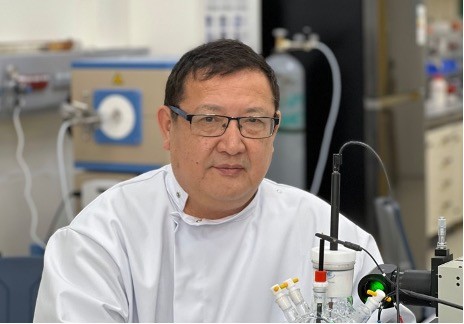
Meet Nurxat Nuraje, One of Kazakhstan’s Most Impressive Scientists

Nurxat Nuraje is a Kazakh scientist who is now well known in the global scientific community. He has spent more than two decades studying and conducting research in the United States.

Drawn to science from an early age, he earned his PhD in chemistry from the City University of New York in 2008, successfully launching his research career.

His main field of research is nanotechnology and its applications. At a time when nanoscience was still emerging, his bold approach to the subject quickly gained recognition. His first major publication was in the Journal of the American Chemical Society – one of the world’s leading chemistry journals.

The paper introduced innovative ideas about nanocircuit fabrication, methods and challenges in their development, computational power, and potential applications. This paper was considered a major contribution to the field at the time.

Soon after, he joined the Massachusetts Institute of Technology (MIT), one of the world’s foremost technology universities, as a postdoctoral researcher. There, he succeeded in finding ways to increase computer storage capacity, which is a crucial question for modern computing. His research on the development and application of specific nanoparticles was published in Advanced Materials, once again establishing his name in global science.

His work was later awarded a silver medal at the International Materials Research Society conference in San Francisco.
“Science doesn’t deliver results overnight. It evolves gradually,” says Nuraje. “The true mission of a scientist is to reshape the world’s thinking through discovery. In the future, we must move from oil to hydrogen energy. That is the energy of tomorrow.”

Since 2013, Nuraje has worked as a research scientist at MIT. He is also credited with developing conductive polymer nanoparticles, which are now widely used.

Together with his students, he continues to design and create practical, everyday-use technologies. In 2015 he received the Joseph Award for his outstanding contribution to nanotechnology. He became the first Kazakh scientist to win this American honor.

Why did MIT invite him to join their team? The answer lies in his PhD dissertation, which was recognized by experts as one of the best in the field. Harvard University, the University of California, and MIT each offered him postdoctoral positions.

One of Nuraje’s remarkable achievements was the development of anti-fogging materials – the kind used on smartphone screens today. Working with MIT professor Angela Belcher, he co-created a new type of photocatalytic material through genetic engineering of the M13 virus. This groundbreaking work was published in Advanced Materials in 2012 and resulted in five international patents. This is a true testament to the Kazakh proverb: “Knowledge conquers all.”

In 2015, he joined Texas Tech University as a professor of chemical engineering, where he established his own research laboratory, The Nurxat Nuraje Lab. There, his team developed solar-powered water-splitting technology to produce hydrogen. His breakthroughs in conductive polymers earned him the American Chemical Society’s Petroleum Research Award in 2016.

In the following years, he was named “Most Distinguished Scientist” at Texas Tech University, and in 2018, the Journal of Materials Chemistry A listed him among the world’s top researchers.

Nurxat Nuraje with his students

In 2019, he returned to Kazakhstan to continue his scientific work at Nazarbayev University. Within three years, he founded four major research laboratories focusing on membranes, conductive plastics, solar hydrogen production, and biomass. These labs now employ over forty young Kazakh researchers.

When we asked Nuraje about the innovations that his team has achieved, he replied: “We’ve developed flexible, conductive rubber materials that can stretch and conduct electricity without breaking, unlike metal. They can be used for sensors, bacterial testing, even TV screens. That’s a major success, and our findings have been published in a high-impact scientific journal.”

Nuraje believes that science must be trusted and valued before it can truly flourish. Together with his students, he continues to promote Kazakhstan’s scientific achievements globally. Recently, his team developed a hydrogen detection sensor. This is a clear example of how passion and dedication to science can yield tangible progress.

Uzbekistan Emerges as Key Market for China’s Real Estate Giants

Since 2021, China’s property sector has been navigating one of the most severe downturns in its history. A combination of mounting developer debt, strict government lending rules, and a large stock of unsold housing has pushed the country’s real estate giants into prolonged distress.

As speculative construction slows at home, Chinese companies are increasingly turning outward. Similar to firms in renewable energy, waste-to-energy, and electric vehicle industries, real estate developers now see foreign markets as essential for restoring balance and sustaining growth.

In this broader search for new opportunities, Uzbekistan has emerged as a highly compelling destination for Chinese investment. The country offers a rare mix of rapid demographic growth and urgent housing needs that few markets can match. Uzbekistan’s population is expanding at a fast pace, and more than 60,000 new households form every year. This demographic surge is placing enormous strain on the country’s already limited housing stock.

Official data shows that around 85,000 families are waiting for housing, yet annual construction increases the existing stock by only one to two percent. The result is a persistent shortage that cannot be resolved without sustained and large-scale capital investment. If this deficit remains unaddressed, it risks creating long-term social frustration.

Against this backdrop, the interests of Chinese real estate developers and Uzbekistan’s housing priorities are beginning to align. Chinese firms looking for stable and high-demand markets increasingly view Uzbekistan as an attractive place to expand. Tashkent, in particular, has become a center of growing cooperation with Chinese partners.

Several recent agreements illustrate this momentum. The Chinese firm TSC HK Investment is preparing a $340 million project for a residential complex and business center in the Chilanzar district of Tashkent. The city authorities have also signed agreements worth about $1 billion with CSCEC, including a major housing development valued at $440 million. Beyond the capital, another Chinese investor plans to allocate $250 million to build a modern complex covering 55 hectares in the city of Babur in the Andijan region.

For Chinese companies, Uzbekistan offers a large and expanding market that helps absorb China’s massive overcapacity in construction services, heavy machinery, and industrial materials such as steel and cement. Investing in Uzbekistan not only eases domestic economic pressure but also allows Chinese firms to demonstrate their capabilities in shaping the daily lives of Uzbek families.

Large residential projects provide opportunities to familiarize local communities with Chinese standards, technologies, and urban design practices. When these projects are executed successfully, they can contribute to a positive image of China and strengthen its soft power presence in the country.

For Uzbekistan, China’s growing involvement brings several advantages. Chinese investment can help meet the country’s rapidly rising demand for housing and reduce the likelihood of long-term social frustration linked to shortages. Chinese developers often work with integrated models that go beyond simple residential blocks. They build high-density and multi-functional complexes combining housing, business centers, educational facilities, and public services.

This approach aligns closely with Uzbekistan’s strategy to encourage sustainable urbanization, improve living conditions, and move away from unplanned urban sprawl. Most importantly, these investments generate employment. The TSC HK Investment project alone is expected to create 1,000 new jobs.

Alongside these benefits, there are legitimate concerns that require attention. The entry of large Chinese construction companies can put Uzbek firms at a disadvantage. Chinese developers typically operate through highly efficient global supply chains and may rely heavily on imported materials and sometimes labor.

Their ability to control everything from raw materials to the final construction creates a fully integrated ecosystem that local firms often cannot compete with. If Chinese companies consistently bypass Uzbek contractors, local businesses may face declining revenues and lose opportunities to develop their own industrial capacities.

The overall picture shows that the growing presence of Chinese real estate companies in Uzbekistan brings significant opportunities, but also risks. To maximize the benefits, Uzbekistan would gain from encouraging structured cooperation between Chinese and local firms. Policies that require the partial use of local contractors, materials, and labor can strengthen the domestic construction sector.

At the same time, Uzbek companies can learn from the international experience of their Chinese counterparts, which would raise local standards and capacities in the long term. A balanced and well-managed partnership can therefore support Uzbekistan’s development goals while offering Chinese companies a valuable external market, creating a mutually beneficial outcome for both sides.

Uzbek Students Invited to First International PROD Software Engineering Competition

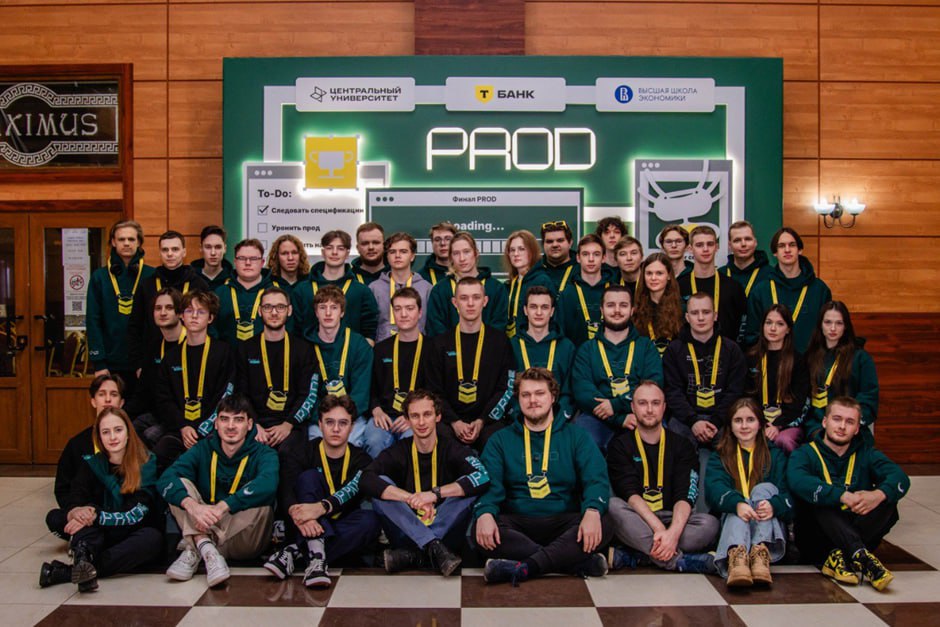
High school students in Uzbekistan are now eligible to participate in the inaugural international PROD software engineering competition, the organizers confirmed to The Times of Central Asia.

The Olympiad is open to English-speaking students in grades 8–12 from any country and is designed to introduce participants to the principles of large-scale software development. It offers hands-on experience that reflects workflows used by leading global IT companies.

Participants will work on real business cases, study automation in modern organizations, and develop digital solutions aimed at improving efficiency and streamlining operations. The format focuses on teamwork, analytical thinking, and cross-border collaboration. While most stages will take place online, finalists will be invited to Moscow for the team-based final stage, with accommodation and meals covered by the organizers.

The competition is organized by major Russian institutions, with mentorship provided by experienced IT professionals who will guide students through the challenges and methodologies of contemporary digital product development.

Registration is open until December 2 on the official PROD website.

No prior programming experience is required, but participants should have a basic understanding of computer science and strong logical reasoning skills. This is the first time the competition is being held internationally, with parallel tracks in both English and Russian.

Green Power Pivot: Bishkek Debuts Waste-to-Energy Plant

On November 14, Bishkek’s newly constructed waste-to-energy plant received its first pilot batch of municipal solid waste, marking a major milestone in Kyrgyzstan’s efforts to modernize waste management and expand sustainable energy infrastructure.

According to the Bishkek municipality, 17 garbage trucks delivered 126 tons of solid waste to the facility. Once the accumulated volume reaches 1,000 tons, the incineration process will begin, generating electricity from waste.

The pilot delivery was attended by Minister of Natural Resources, Ecology, and Technical Supervision Meder Mashiev and Bishkek Mayor Aibek Junushaliev, underscoring the project’s national significance as Kyrgyzstan’s first major waste recycling initiative.

Located at Bishkek’s primary landfill site, the plant was constructed by China’s Hunan Junxin Environmental Protection Co. Ltd. In its initial phase, the facility is expected to process 1,000 tons of waste daily, with plans to scale capacity up to 3,000 tons per day. Total investment in the project stands at $95 million.

The official inauguration is scheduled for December 26, 2025.

The project represents a critical step in addressing the capital’s growing waste management challenges while advancing Kyrgyzstan’s clean energy goals. Solid waste disposal has become increasingly urgent, particularly in Bishkek, the country’s largest city.

According to the 24.kg news agency, Kyrgyzstan collected 1.792 million tons of solid waste nationwide in 2023, up from 1.177 million tons in 2019, equating to approximately 279 kilograms per capita annually. Bishkek’s sanitary landfill alone receives about 200 tons of waste per day from the city and its surrounding areas, according to landfill director Nurlan Jumaliev.

In June, Hunan Junxin also began constructing a similar waste-to-energy facility in Osh, Kyrgyzstan’s second-largest city. That plant will produce both electricity and heat from incinerated waste.

The company is expanding its presence in Central Asia. In August, Kazakhstan’s Ministry of Ecology and Natural Resources announced that Hunan Junxin will build the country’s first waste-to-energy plant in Almaty.

Survey Finds Decline in Kazakh Women Who Justify Domestic Violence

Recent data reveals a marked shift in attitudes toward domestic violence among women in Kazakhstan. While the number of women who justify abuse has declined, certain demographic groups continue to condone it under specific circumstances. These findings are based on a study conducted by analysts at Finprom.kz.

Sharp Decline in Justifying Abuse

Multi-indicator surveys conducted by the National Statistics Bureau in 2015 and 2024 show a significant decrease in the number of women who view domestic violence as acceptable. Approximately 14,400 women aged 15 to 49 participated in the survey. In 2015, 15.1% of respondents said a man has the right to hit his wife or partner. By 2024, this figure had dropped to just 4%.

Respondents who deemed such violence acceptable were asked to specify the justification. The most commonly cited reason was neglect of children (2.8%), followed by refusal to do housework (1.6%), disobedience to the husband (1%), and leaving the house without permission (0.8%). Smaller shares justified violence due to refusal of intimacy (0.3%) or “burning food” (0.2%).

Analysts interpret the declining acceptance of these views as a sign of changing social norms and an evolving understanding of women’s roles within the family.

Who Is More Likely to Justify Violence?

The study revealed a notable divide between urban and rural populations. In rural areas, 6.8% of women still justify domestic violence, down from 20.6% a decade ago. In urban areas, only 2.6% expressed similar views.

Regional disparities were also evident. In the Turkestan region, 10% of respondents believed a husband has the right to beat his wife. High levels of acceptance were also recorded in the Zhetysu region (9.5%) and Kostanay (8.8%). In contrast, the Mangistau region (0.2%), Aktobe (0.4%), and Atyrau (0.5%) reported the lowest figures.

Age was another key factor. Older women were more likely to justify domestic violence: 4.7% of women aged 45-49 and 3.1% of those aged 40-44 approved of it under certain conditions. Younger women, particularly newlyweds, overwhelmingly rejected violence under any circumstances.

Legal Reforms and Shifting Statistics

Finprom.kz analysts compared these survey results with changes in criminal justice data. According to the Committee on Legal Statistics, reported criminal offenses related to domestic violence have increased 7.2 fold over the past decade. However, this spike is attributed to legal reforms. Until mid-2024, charges such as “Assault” and “Causing minor harm to health” were considered administrative violations. Following criminalization, reported cases rose sharply.

From January to October 2025, 3,000 criminal offenses related to family or domestic violence were recorded, up 21.4% year-on-year. Assaults accounted for more than half of the cases (1,700, up 36.8% from June to October 2024), followed by “intentional infliction of minor bodily harm” (680 cases).

Meanwhile, serious crimes showed a decline. Murders fell by 30.1%, rapes by 16.7%, and cases of “intentional infliction of serious harm to health” by 10.5%.

Regional commissions on women’s affairs have also reported encouraging trends. The number of calls to crisis centers dropped from 30,500 in 2013 to 12,900 in 2024. Of these, 7,400 were related directly to violence. The number of women who received assistance declined to 11,400, a 12.2% decrease. Consultations with psychologists and crisis center specialists remain the most requested services, while legal support continues to be used less frequently.

Azerbaijan Joins Central Asia to Build a C6 Corridor Core

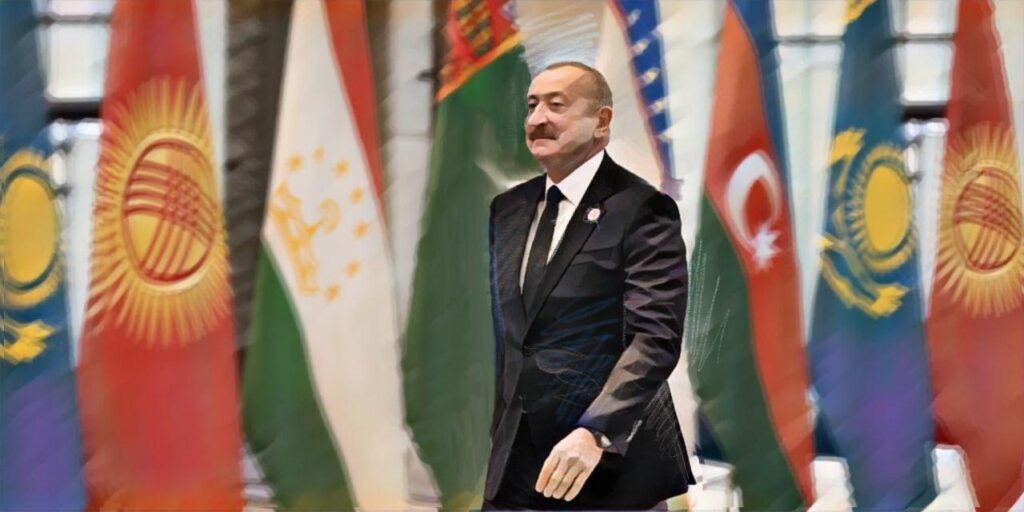
Central Asian leaders met in Tashkent on November 15–16 for the seventh Consultative Meeting of Heads of State. Azerbaijan attended as a guest with full rights, as it had done at the meetings last year and the year before. This time, the leaders agreed that Azerbaijan would sit as a full participant in future meetings, transforming the C5 into the C6. In his opening remarks, Uzbekistan’s President Shavkat Mirziyoyev proposed turning the loose consultative mechanism into a formal regional body under the working title, the “Community of Central Asia.”

Mirziyoyev went further and suggested extending the mandate from economic integration to include security and environmental cooperation for the region as a whole. The Uzbek President called the decision to admit Azerbaijan “historic,” as the leaders framed the welcoming of Azerbaijan not as a courtesy to a neighbor but as part of a wider integration project that already runs across the Caspian and that is now seeking to bring a South Caucasus transit and energy hub directly into the frame.

The consultative format is thus being asked to carry a heavier load than when it was created in 2018 as a careful space for political dialogue and security confidence-building. For governments and external partners, the practical question is whether this emerging “Central Asia plus Azerbaijan” geometry can evolve into a corridor community with its own regional rules, or whether it will remain largely declaratory while decisions continue to track external finance and great-power projects.

Azerbaijan and Central Asia Begin to Co-Author the Agenda

From the start, the consultative meetings of the Central Asian heads of state were conceived as a modest, leader-level forum to ease regional tensions and reopen direct dialogue after a decade of drift. The first gathering in Astana in March 2018 focused on borders, water management, and security issues that had festered since the 1990s, and that format’s agenda had mainly remained focused on political reconciliation and crisis management. The seventh meeting in Tashkent was different in kind. By bringing Azerbaijan formally into the room on a continuing rather than one-off basis, and by placing corridor and digital questions at the center of proceedings rather than on the margins, it reframed the forum from an inward-looking confidence-building device into a platform that aspires to shape external connectivity.

Azerbaijan’s presence at earlier summits in 2023 and 2024 created a transitional phase in which Baku could test how far its own transit and energy agenda resonated with Central Asian priorities. In Tashkent, that ambiguity effectively ended. President Ilham Aliyev’s speech, delivered after the leaders had agreed that Azerbaijan would participate in future meetings as a full member, described Central Asia and Azerbaijan as forming “a single geopolitical and geo-economic region whose importance in the world is steadily growing.” He tied that claim to concrete developments along the Middle Corridor segment through Azerbaijan, the Alat port complex, upgraded customs procedures, and cross-Caspian energy and data links.

For Kazakhstan, the Tashkent meeting offered a complementary opportunity. President Kassym-Jomart Tokayev used his speech to propose the joint drafting of a comprehensive strategy for the development of Central Asia’s transport system explicitly anchored in the consultative format. In a separate passage, he called for work on a declaration on the responsible use of artificial intelligence by Central Asian states. Considered together, the two proposals pushed the consultative format into domains where rules and standards matter as much as physical infrastructure, and where external actors already compete to set the terms.

Dual Anchors and Moving Parts

The UN Special Program for the Economies of Central Asia (SPECA) illustrates how this C6 geometry has existed quietly on paper. Its membership already consists of the five Central Asian republics plus Azerbaijan. In November 2023, the SPECA Governing Council meeting in Baku agreed to establish a multi-partner trust fund and endorsed a roadmap for the digitalization of multimodal data and document exchange along the Trans-Caspian route. In the subsequent Baku Declaration, the states affirmed their intention to enhance SPECA’s role as a platform for economic cooperation and continuous dialogue. What the Tashkent meeting does is to bring the same six states into a political format at the head-of-state level, aligning that forum with corridor and digital issues where SPECA has already done some groundwork.

External finance, however, still runs primarily through Kazakhstan. The European Union’s Global Gateway initiative pledged a total of €10 billion for the Trans-Caspian route at an investors’ forum in early 2024, followed by an additional €12 billion package for Central Asia announced at the first EU–Central Asia summit in Samarkand in April 2025. Of that second package, around €3 billion was earmarked explicitly for transport connections that include Middle Corridor segments. Much of the concrete project pipeline is in Kazakhstan, with the Asian Infrastructure Investment Bank targeting upgrades to key east–west sections and multimodal nodes, while EBRD and EU co-financing is going into the expansion of the country’s inherited mainlines of Caspian ports and associated logistics facilities.

That pattern creates a structural asymmetry that the new C6 format will either reinforce or partially correct. Azerbaijan’s advantage lies in the transshipment hub at Alat, its stakes and operational roles in regional pipelines, and the ability to couple physical transit with undersea fiber and power cables, while Kazakhstan can convene financiers around large-ticket rail and terminal projects on its territory. If the C6 leaders choose to treat this configuration, with SPECA’s help, as a corridor governance core, they can link access to joint standards on tariffs, customs IT, and digital data flows. Azerbaijan and Kazakhstan would become system integrators for the wider region.

Beyond the Caspian Core

The C6 configuration still sits within a wider field of competing and complementary routes. One is the China–Kyrgyzstan–Uzbekistan (CKU) railway, where Beijing, Bishkek, and Tashkent approved a trilateral pact in June 2024 to move from concept to construction, with work already underway on this shorter path offering a direct rail window into China and back to Europe via existing links through Kazakhstan and the Caspian. The railway would reduce Kazakhstan’s monopoly over east–west rail access inside Central Asia without displacing it.

A second family of routes runs south through Afghanistan toward Pakistani ports. Uzbekistan has promoted a Trans-Afghan railway since 2018, and in July 2025, the three governments signed an agreement to accelerate the project, which would extend Afghanistan’s rail network from Mazar-i-Sharif through Kabul and onward to the Torkham crossing and Peshawar. The risk calculus is straightforward: financing, security, and sanctions issues are all more complex than on the Caspian route, which is why Trans-Afghan plans move forward in bursts and pauses rather than on a steady timetable.

Turkmenistan’s gradually changing situation adds another degree of institutional and routing complexity. The EU and Turkmenistan now present the country as a key partner in the Trans-Caspian transport corridor, with European officials visiting Turkmenbashi port under the Global Gateway banner and speaking of support for infrastructure modernization and alignment of standards. In parallel, Turkmenistan has joined Azerbaijan, Georgia, and Romania in advancing a Turkmenbashi–Baku–Black Sea–Constanța route that would add yet another Caspian leg to the wider corridor system. For the new C6 configuration, this means that corridor policy is no longer a purely regional matter: every choice about standards or investment priorities inside the Caspian core interacts with alternative routes that pull traffic east, south, and west at the same time.

A Turning Point for Regional Integration

The Tashkent summit marks a clear shift in how Central Asian leaders present their own role in the region’s connectivity. A forum that began in 2018 as a cautious device for rebuilding trust and talking through old disputes has now been asked to carry a different weight. By bringing Azerbaijan fully into the format and by centering corridor, digital, and technology issues in the discussion, the heads of state have drawn a line under the idea that transit is merely an external project imposed from outside.

The emerging C6 geometry treats the Middle Corridor and related links as a joint asset, yet the practical test will come in how the C6 handles the growing tangle of alternative routes pressing in from every side. The CKU, Trans-Afghan lines to Pakistani ports, the north–south axis through Iran, and new initiatives around Turkmenbashi all compete for cargo, financing, and political attention. A corridor community worthy of the name would use the new political format to align those options with shared regional priorities, rather than letting each project proceed according to its own logic.