• KGS/USD = 0.01144 0%
  • KZT/USD = 0.00217 0%
  • TJS/USD = 0.10456 0%
  • UZS/USD = 0.00008 0%
  • TMT/USD = 0.28490 0%
  • KGS/USD = 0.01144 0%
  • KZT/USD = 0.00217 0%
  • TJS/USD = 0.10456 0%
  • UZS/USD = 0.00008 0%
  • TMT/USD = 0.28490 0%
  • KGS/USD = 0.01144 0%
  • KZT/USD = 0.00217 0%
  • TJS/USD = 0.10456 0%
  • UZS/USD = 0.00008 0%
  • TMT/USD = 0.28490 0%
  • KGS/USD = 0.01144 0%
  • KZT/USD = 0.00217 0%
  • TJS/USD = 0.10456 0%
  • UZS/USD = 0.00008 0%
  • TMT/USD = 0.28490 0%
  • KGS/USD = 0.01144 0%
  • KZT/USD = 0.00217 0%
  • TJS/USD = 0.10456 0%
  • UZS/USD = 0.00008 0%
  • TMT/USD = 0.28490 0%
  • KGS/USD = 0.01144 0%
  • KZT/USD = 0.00217 0%
  • TJS/USD = 0.10456 0%
  • UZS/USD = 0.00008 0%
  • TMT/USD = 0.28490 0%
  • KGS/USD = 0.01144 0%
  • KZT/USD = 0.00217 0%
  • TJS/USD = 0.10456 0%
  • UZS/USD = 0.00008 0%
  • TMT/USD = 0.28490 0%
  • KGS/USD = 0.01144 0%
  • KZT/USD = 0.00217 0%
  • TJS/USD = 0.10456 0%
  • UZS/USD = 0.00008 0%
  • TMT/USD = 0.28490 0%

The Pressure of Tradition: Why Child Marriage Persists in Tajikistan

Although the legal age for marriage in Tajikistan is 18, courts may grant permission for girls to marry at 17 under “exceptional circumstances.” In reality, however, girls are often married off at even younger ages. Parents routinely petition courts with emotional appeals, citing poverty, orphanhood, or the wishes of elderly relatives, to secure early marriages for their daughters.

Legal Loopholes and Judicial Discretion

As explained by lawyers from PRO BONO DE JURE, applicants must justify their request to lower the marriage age and provide supporting evidence. Yet the law offers no clear definition of what qualifies as “exceptional,” leaving judges broad discretionary power.

In practice, economic hardship is the most common justification. Sociologist Gulnora Beknazarova, who reviewed approximately 550 court cases on underage marriage, found that only one involved a couple in love. “The rest were applications from poor families or guardians claiming they couldn’t afford to care for the girl,” she said.

In some instances, judges have approved marriages simply because wedding plans were already in motion and the bride’s age came to light only during registration. “These cases account for just 3%,” noted gender researcher Diana Ismailova, “but their very existence highlights a troubling precedent.”

Social Pressures and Family Expectations

In rural communities, many mothers fear their adolescent daughters may come under “bad influences” and lose their virginity before marriage. “After ninth grade, girls are impossible to control… they ruin their future,” said one woman who arranged her daughter’s marriage at 16, as quoted by Your.tj.

Elder family members also play a significant role. In traditional Tajik households, their wishes often carry the weight of law. For some, marrying off a granddaughter is a final wish, one that younger family members feel obligated to fulfill.

According to Beknazarova, societal expectations enforce a rigid timeline for girls. “There’s a ‘social clock’ that ticks faster for them. If a woman isn’t married by 22, she risks being labeled an ‘old maid,’” she explained. In contrast, men face far less societal pressure regarding marriage age.

“Marriage at 16 isn’t rare,” she added. “Even if not officially registered until 18, society still views it as normal.”

Cultural Norms vs. Practical Realities

Early marriages are often poorly considered. Parents seldom ask: “What if she divorces?” or “How will she support herself?” Divorce rates are rising, but it is typically the woman who ends up raising the children alone.

Beknazarova attributes these decisions to a traditional mindset in which a girl’s path is predetermined: marriage and motherhood. “You marry off your daughter because it’s time, because that’s what everyone does,” she said.

Still, change is slowly taking root. In 2024, amendments to Tajikistan’s Education Act made schooling through grades 10-11 compulsory. More girls are completing their education, and awareness efforts by government and civil society groups are helping shift attitudes around women’s rights.

“Young people are already thinking differently,” Beknazarova said. “And life will sort everything out in time.”


Mother Gives Birth on Uzbekistan Airways Flight to Tashkent

A baby boy has been born on board an Uzbekistan Airways flight from Istanbul to Tashkent. According to the airline, the mother went into premature labor during the flight.

“There were two doctors on board who, together with the crew, quickly provided all the necessary medical assistance,” the company said in a statement. “The flight attendants acted professionally, calmly, and clearly. Their confidence, composure, and care were vital at this important moment.”

The plane made an emergency landing at the airport in the Uzbek city of Urgench, where medics were waiting for the woman and her newborn boy and took them to the hospital.

Uzbekistan Airways congratulated the family on the new addition and expressed its gratitude to the pilots and flight attendants, singling out the two doctors who were on the same flight and organized assistance for the woman in labor.

After landing in Urgench, the plane flew on to Tashkent.

In January this year, the crew of a Uzbekistan Airways plane delivered a baby to a passenger during a flight from Tashkent to New York. The aircraft was forced to land in Keflavik (Iceland), where the mother and child were taken to hospital.

In April 2024, a boy was born on a flight operated by the same airline from Tashkent to Istanbul.

More Lennon, Less Lenin: Clerics to Huddle in Kazakhstan to Give Peace a Chance

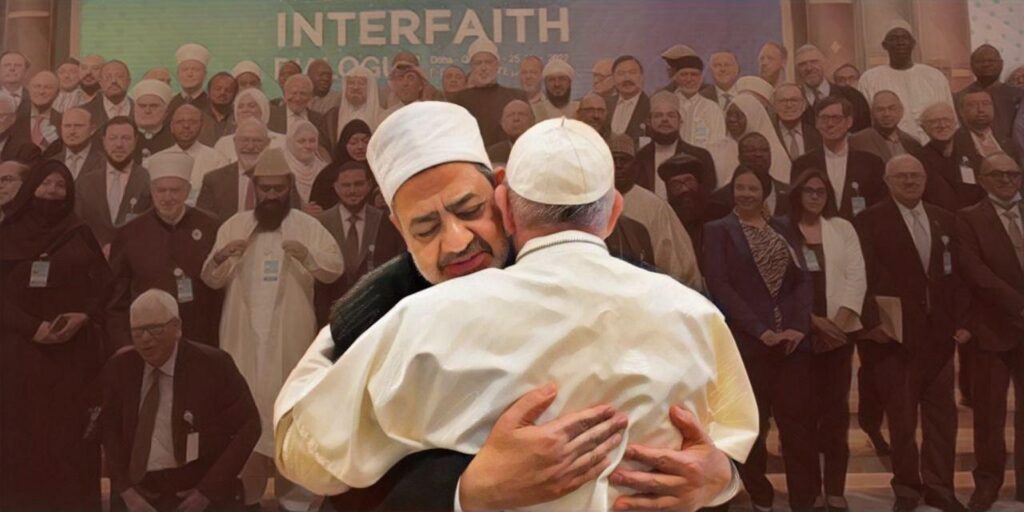
In a world wracked by war, mistrust, and political gridlock, spiritual leaders from across the globe will gather on September 17–18, 2025, in Astana for the Eighth Congress of Leaders of World and Traditional Religions. The event aims to rekindle the hope of peace, not through the exercise of geopolitical power alone, but by revisiting transcendent truths and moral values.

Convened under the patronage of President Kassym-Jomart Tokayev, the Congress is more than a ceremonial dialogue among clerics. Organizers and participants describe it as an urgent appeal to depoliticize religion, recalibrate diplomacy, and — channeling John Lennon — “give peace a chance.”

As the principal architect of the Congress, Kazakhstan President Kassym-Jomart Tokayev is expected to deliver a speech this September that is as optimistic as his keynote at the opening ceremony of the seventh Congress in 2023, despite deepening diplomatic challenges. Two years ago, he said, “Unfortunately, tension, mutual distrust, and even hostility are returning to international relations. What can we rely on to counter today’s challenges? History provides only one answer: goodwill, dialogue, and cooperation. There are no other guarantees of success. Threats, sanctions, and the use of force do not solve problems… We must turn to humanistic ideals, the main custodians of which are, of course, traditional religions.”

This year’s gathering will once again feature a mosaic of spiritual leaders — from representatives of the Vatican and al-Azhar to leaders of Judaism, Buddhism, Hinduism, and Orthodox Christianity. While their theological traditions may differ, their shared focus will be on promoting compassion, truth, and mutual respect in a fractured world.

“The world is spiraling into confrontation because it has lost the language of empathy and the grammar of reason,” Kazakhstan’s former Ambassador to India and Senior Advisor at the International Centre for Interfaith and Interreligious Dialogue, Bulat Sarsenbayev, told The Times of Central Asia in an interview. “The Congress in Astana is not about theology alone — it is about restoring sanity in geopolitics.”

A Platform for Peace

According to Maulen Ashimbayev, Speaker of the Kazakh Senate and Chief of the Secretariat of the Congress, the event can serve to help heal an increasingly fractured global landscape. Visiting China in January, Ashimbayev stated that, “The world faces today a rather complicated geopolitical situation. New challenges and problems arise. In these conditions, the collective and united efforts of religious, political, and public leaders to promote a culture of peace and dialogue are gaining importance. The VIII Congress of Leaders of World and Traditional Religions will be dedicated to this very goal.”

From Ceremony to Substance

This year, the Congress is set to explicitly condemn religious extremism and the weaponization of faith, distinguishing between politicized religion and authentic spiritual leadership. Rather than allowing the precept that “might is right” and faith to be hijacked by ideologues, the forum will call for religion to be a bridge-builder, not a wedge, and for diplomats to engage in genuine dialogue in a spirit of compromise, not one-sided diktat.

Past participants have included Pope Francis, Ahmed El-Tayeb (Grand Imam of al-Azhar), and Jewish and Hindu leaders from across the globe. Their message has been consistent: to be for peace is not to be naïve — it is necessary – and without spiritual dialogue, peace will remain elusive.

Reaffirming Universal Values: A Dialogue of Hope

The 2025 Congress is expected to promote natural law principles — universal ethical norms which transcend any man-made pseudo-religious ideological constructs. These include the inviolability of life, freedom of conscience, and the dignity of the family. Such values, say organizers, are essential for diplomacy that is principled, not cynical.

Sarsenbayev reinforced this in stark terms: “The Congress is not a clerical gabfest nor a spectacle of incense and robes. It is a working dialogue grounded in realism—and in the conviction that values such as compassion, justice, and mutual respect are not relics of a pre-modern world but the foundation stones of any sustainable political order.”

To those who view interfaith gatherings with skepticism, Sarsenbayev has a retort: “Peace is not the absence of conflict; it is the presence of understanding. And understanding begins when people of faith and goodwill — which must include diplomats — refuse to surrender to despair.”

A Sacred Public Space

In an era defined by half-truths, power politics, and polarization, the Astana Congress is aiming to recover a vocabulary of dignity and empathy and challenge the belief that zero-sum thinking and brute force are the only currencies of power.

By bringing religious and moral values into the public arena, the Congress offers a counterweight to despair and an alternative to unprincipled realpolitik. Its ambition is nothing less than to reclaim the moral imagination of diplomacy, and to remind humanity that what unites us is deeper than what divides us.

Despite Kazakh-led Inquiry, Azerbaijan to Take Plane Crash Case to International Courts

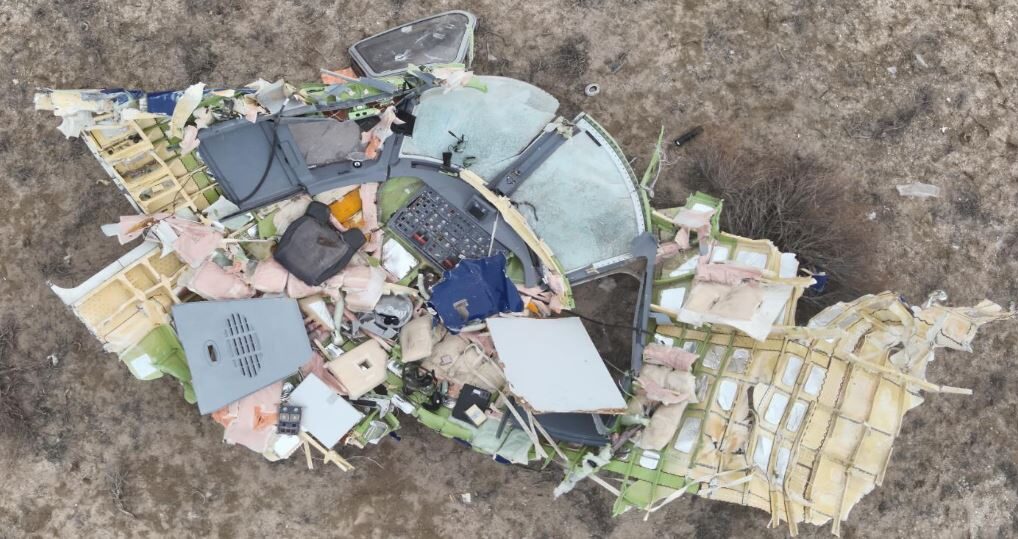
After months of collaborating with an investigation led by Kazakhstan, Azerbaijan now also plans to seek redress in international courts over the Dec. 25, 2024, crash of an Azerbaijan Airlines plane that it says was hit by Russian ground fire before diverting to the western Kazakh city of Aktau.

Azerbaijan’s turn to international institutions reflects frustration with what it views as Russian intransigence in the investigation of what happened to Flight 8243, as well as the sensitivities for Kazakhstan as it leads a probe that could implicate Russia, its powerful neighbor and key trading partner. In a sense, Kazakhstan is caught in the middle, unable so far to satisfy Azerbaijan’s push for accountability for the crash and apparently unable to get full cooperation from Russia in the investigation.

Unlike Azerbaijan, Kazakhstan has refrained from criticism of Russia, even though six Kazakhstanis were among those who died in the plane crash, and Kazakh emergency crews went into potential danger after rushing to pull survivors from the wreckage. Kazakhstan’s low-key approach is possibly an outcome of its efforts to appear impartial during the inquiry as well as its policy of maintaining smooth diplomatic ties, despite any disagreements or tension with major regional players, including Russia and China.

Flush with military victories over Armenia and buoyed by close ties with allies such as Türkiye, Azerbaijan feels less constrained to nurture its traditional relationship with Moscow, its ruler during Soviet and Russian colonial times.

On Saturday, President Ilham Aliyev of Azerbaijan referred to years of international investigations and inquiries that found Russia-backed separatist rebels had shot down Malaysia Airlines Flight 17 over eastern Ukraine in 2014, and that Russia bore responsibility – a conclusion rejected by Moscow. Aliyev said Azerbaijan was prepared to wait just as long to clear up the case of the Azerbaijan Airlines crash, in which 38 of 67 people on board died.

“We will not forget,” Aliyev said, according to Minval Politika, an Azerbaijani news outlet. “We are currently preparing, and we have already informed the Russian side that we are preparing a dossier for submission to international courts on this matter. We understand that this may take time. In the case of the Malaysia Airlines Boeing, it took more than ten years. We are ready to wait ten years, but justice must prevail.”

The remarks by Azerbaijan’s leader at a media forum in the Azerbaijani city of Shusha show that ties between the two nations face protracted tension as long as the dispute persists, though there are other sources of friction between them, including detentions of each other’s citizens. Russian President Vladimir Putin has apologized for the crash without taking responsibility or providing details about what happened at a time when, according to Russia, the area around Grozny was under attack from Ukrainian drones.

Azerbaijan also wants those responsible to be punished, compensation to be paid to families of the victims, and Azerbaijan Airlines to be compensated for the loss of the Embraer 190 plane that crashed.

The aircraft had taken off from Baku, Azerbaijan’s capital, and its destination was Grozny in Russia-controlled Chechnya. However, the flight diverted and crashed near Aktau in western Kazakhstan after suffering fuselage damage that appeared consistent with shrapnel strikes. A preliminary report released by Kazakhstan in February did not clear up whether Russia had fired on the plane, saying only that metal objects had struck the plane, causing damage.

“Unfortunately, we didn’t get any answer from Russian officials about that, though seven months have passed,” Aliyev said, according to AZERTAC, Azerbaijan’s state news agency. “For us, everything is clear. We know what happened, and we can prove it, and we know that Russian officials know what happened, and it’s a question of why they do not just do what any neighbor would have done.”

Azerbaijan has not specified which international courts it plans to petition, but the United Nations could be one channel for its efforts to hold Russia to account.

After Wimbledon Letdown, Bublik Wins Sixth Title in Swiss Alps

Despite a first-round loss at Wimbledon, Alexander Bublik is having his “greatest season” on the tour.

Bublik of Kazakhstan said so in his victory speech on Sunday after winning his sixth ATP Tour singles title – and first title on clay – at Gstaad in the Swiss Alps.

Bublik, 28, defeated Juan Manuel Cerundolo 6-4, 4-6, 6-2 in the final, telling his opponent afterward that the tough match was “complete torture.”

The Russia-born player reached the quarterfinals at the French Open in early June, falling to world No. 1 Jannik Sinner. It was his best performance in a major tournament. Bublik then won the Halle grass court tournament, raising expectations for Wimbledon. But he lost there to Jaume Munar in five sets in the first round. Then came the run to the ATP 250 title in Gstaad, where Bublik said he wouldn’t have minded losing early because the view of the Alps was so beautiful.

Bublik, who was ranked as low as world no. 82 in mid-March, will be back in the top 30 on Monday because of the Gstaad win, according to the ATP.

“This was probably one of the toughest seasons but yet it’s the greatest season I’m having,” he said.

World Bank Report: Central Asia Faces Rising Risks from Extreme Heat

Cities across Central Asia are becoming increasingly vulnerable to extreme heat, posing significant risks to public health, economic productivity, and infrastructure, according to a new report by the World Bank. The study, which covers 70 urban areas in Europe and Central Asia, including Astana, Bishkek, Ashgabat, Tashkent, and several smaller cities in Tajikistan and Turkmenistan, highlights the urgent need for heat adaptation strategies.

Rising Mortality and Economic Losses

The report finds that heat-related mortality is already a serious concern. In Ashgabat, an estimated 25-28 people per 100,000 die annually due to extreme heat. In Astana, Bishkek, and Tashkent, the toll is slightly lower, at approximately 19-21 deaths per 100,000. Without intervention, annual heat-related deaths in cities like Astana and Tashkent could rise dramatically, reaching between 10,000 and 23,000 by 2090.

Economic impacts are also mounting. In 2023, higher temperatures resulted in the loss of over 87,000 full-time jobs across the region. Uzbekistan alone saw more than 22,000 job losses, while nearly 18,000 were reported in Azerbaijan. By 2050, heat-related economic losses could exceed 2% of GDP in some urban centers, such as Ashgabat.

Infrastructure Under Strain

Rising temperatures are damaging infrastructure across Central Asia. In Kyrgyzstan, extreme heat causes deterioration to nearly 200 kilometers of road annually, driving up repair costs and disrupting transportation. Kazakhstan is facing similar challenges: recent heatwaves have warped asphalt and concrete surfaces in the southern and northeastern regions of the country.

Adaptation Measures and Challenges

Despite these threats, the report outlines viable solutions. Urban greening, such as planting trees and creating shaded areas, can help cool city streets. Retrofitting buildings to improve thermal insulation without increasing energy use, establishing early warning systems, and creating cooling centers are also recommended.

Urban planning strategies should incorporate climate resilience by using heat-tolerant materials and factoring climate risks into infrastructure design. Investment in parks and green spaces, alongside the use of heat vulnerability maps, can guide targeted interventions.

However, the report warns that a lack of funding may hinder progress. Without innovative financing mechanisms, many adaptation plans could be stalled despite their potential to mitigate long-term risks.

The World Bank concludes that while the impacts of rising temperatures are already being felt across Central Asia, timely action can prevent far more serious consequences. Policymakers are urged to prioritize heat adaptation to safeguard lives, livelihoods, and infrastructure in an increasingly warming world.