• KGS/USD = 0.01144 0%
  • KZT/USD = 0.00194 -0%
  • TJS/USD = 0.10822 -0.18%
  • UZS/USD = 0.00008 0%
  • TMT/USD = 0.28571 0%
  • KGS/USD = 0.01144 0%
  • KZT/USD = 0.00194 -0%
  • TJS/USD = 0.10822 -0.18%
  • UZS/USD = 0.00008 0%
  • TMT/USD = 0.28571 0%
  • KGS/USD = 0.01144 0%
  • KZT/USD = 0.00194 -0%
  • TJS/USD = 0.10822 -0.18%
  • UZS/USD = 0.00008 0%
  • TMT/USD = 0.28571 0%
  • KGS/USD = 0.01144 0%
  • KZT/USD = 0.00194 -0%
  • TJS/USD = 0.10822 -0.18%
  • UZS/USD = 0.00008 0%
  • TMT/USD = 0.28571 0%
  • KGS/USD = 0.01144 0%
  • KZT/USD = 0.00194 -0%
  • TJS/USD = 0.10822 -0.18%
  • UZS/USD = 0.00008 0%
  • TMT/USD = 0.28571 0%
  • KGS/USD = 0.01144 0%
  • KZT/USD = 0.00194 -0%
  • TJS/USD = 0.10822 -0.18%
  • UZS/USD = 0.00008 0%
  • TMT/USD = 0.28571 0%
  • KGS/USD = 0.01144 0%
  • KZT/USD = 0.00194 -0%
  • TJS/USD = 0.10822 -0.18%
  • UZS/USD = 0.00008 0%
  • TMT/USD = 0.28571 0%
  • KGS/USD = 0.01144 0%
  • KZT/USD = 0.00194 -0%
  • TJS/USD = 0.10822 -0.18%
  • UZS/USD = 0.00008 0%
  • TMT/USD = 0.28571 0%
18 December 2025

Kazakhstan Fast-Tracks Delivery of Caspian Pipeline Equipment

Kazakhstan has expedited the delivery of two new offshore berthing facilities for the Caspian Pipeline Consortium (CPC), a move prompted by recent drone attacks on CPC infrastructure. The initiative aims to restore the stability of oil exports and ensure uninterrupted operations at the key marine terminal in Novorossiysk.

The two new remote mooring devices (RMDs) were procured from a manufacturer in the United Arab Emirates for installation at the CPC Marine Terminal. Kazakhstan’s Energy Minister Yerlan Akkenzhenov announced on December 15 in Astana that the delivery timeline has been moved up from April 2026 to January 2025.

“The Ministry of Energy of the Republic of Kazakhstan and the national oil and gas company KazMunayGas are making every effort to deliver the two new RMD units. We are now pushing ahead with this and plan to deliver them in January,” said Akkenzhenov, highlighting the logistical complexity of transporting the technologically advanced equipment to Novorossiysk.

According to the CPC press service, the two devices being replaced, CPC-1 and CPC-2, were originally commissioned in 2001. The contract for their replacement was signed in January 2024, and both new units are expected to be completed by December 2025.

These upgrades are part of a recovery program following a series of attacks on CPC infrastructure. At the same time, repair work continues on VPU-3, another remote berthing facility. However, efforts have been hindered by severe weather conditions in Novorossiysk, where strong winds and currents have disrupted underwater installation work.

“The weather in Novorossiysk is difficult, with very strong winds causing high waves and currents. Divers are descending under the dome to install underwater hoses,” Akkenzhenov explained.

The Caspian Pipeline Consortium remains one of the largest energy projects in the post-Soviet space. The 1,511 kilometer Tengiz-Novorossiysk pipeline transports more than two-thirds of Kazakhstan’s oil exports, along with output from Russian fields, including those in the Caspian Sea.

The CPC’s marine terminal in Novorossiysk is equipped with three remote mooring devices, enabling tankers to load safely offshore and ensuring continuous export operations.

Since autumn 2025, CPC facilities have been repeatedly targeted. The first attack occurred on September 24, when drones struck the consortium’s office, injuring employees and bystanders. Other key incidents included attacks on the Kropotkinskaya base (February 17 and March 24), the Kavkazskaya facility (March 19), and the Novorossiysk marine terminal (September 24-25).

The most serious incident occurred on November 29, when the terminal’s pier was damaged, rendering VPU-2 inoperable. Kazakhstan’s Ministry of Energy estimated losses of 480,000 tons of oil and condemned the attack as “unacceptable and dangerous for global energy security.”

The emergency acquisition and fast-tracked delivery of the new berthing units are seen as a strategic investment by Kazakhstan, not only to secure its export capacity but also to reinforce the stability of one of the region’s most critical energy corridors.

Kazakhstan Sets New Record for Car Sales

Kazakhstan’s car market set a new record in the first 11 months of 2025, with more than 207,500 new vehicles sold, surpassing the previous annual record of 205,000 units set in 2024.

According to the Kazakhstan Automobile Union (KAS), 25,804 passenger and commercial vehicles were sold in November 2025 alone, marking a 22.7% year-on-year increase. This figure represents the highest monthly sales volume in the history of official car retail in the country. Between January and November 2025, dealerships sold a total of 207,616 new vehicles, 15.6% more than during the same period in 2024.

KAS President Anar Makasheva noted that the market has already exceeded last year’s total sales despite the traditionally active pre-New Year period still ahead. She added that dealers are expanding financial offerings and launching special promotions, as December is typically the most favorable month for car purchases. A further increase is expected by year-end.

Hyundai was the top-selling brand in Kazakhstan during the reporting period, with 45,220 units sold. Chevrolet followed with 33,486, and Kia ranked third with 21,481.

Chinese manufacturers dominated the rest of the top ten: Jetour (13,000), Chery (12,500), Haval (10,400), and Changan (10,100). Toyota came in eighth with 10,000 vehicles sold, followed by Geely (9,000) and Jac (8,700). Among the most popular models in November were the Chevrolet Cobalt (7,100), Hyundai Tucson (1,900), and Kia Sportage (1,300).

As of December 1, 2025, Kazakhstan had 5,843,358 registered vehicles, according to government statistics. The majority, 4,898,203, were category B passenger cars. In comparison, 6,786,876 vehicles were registered as of September 1.

The Ministry of Internal Affairs attributed the discrepancy of nearly 1 million vehicles to a database update that eliminated duplicates, corrected technical errors, and verified first-time registrations.

Earlier this year, The Times of Central Asia reported that Kazakhstani car manufacturers saw a nearly 17% profit increase in the first half of 2025 compared to the same period in 2024.

The Digital Future of Central Asia: Who Is Shaping It, and How?

Digital security is now a key component of most processes in every country. A large share of organizations is moving, or has already moved, their processes online, which requires increased attention and control. Many Central Asian countries are already rolling out AI technologies at the state level.

Financial institutions, social systems, crypto services, rental services, and other high-risk areas can no longer develop effectively without biometric identification and AI. Central Asia is gradually developing its own biometric landscape, and if we look at it not as a set of disparate projects but as an emerging infrastructure, it becomes clear that the countries are moving at very different speeds.

Kazakhstan: Leader in Biometrics and Digital Identity in the Region

Today, Kazakhstan is the undisputed leader in Central Asia in the field of biometric technologies. In this region biometrics has long gone beyond isolated pilots and has become part of the digital infrastructure on which a significant part of the economy operates. 

Unlike neighboring countries, where biometrics is most often limited to video surveillance or exclusively state initiatives, Kazakhstan has developed a mature market of independent developers and technology companies creating competitive products both for private organizations and for government platforms. Thanks to active digitalization, biometrics in the country has become not an add-on, but the primary mechanism for identity verification. The state additionally stimulates this process: it expands the use of biometric identification in ministerial processes, strengthens the requirements for remote verification, and transfers critical services, such as the issuance of an Electronic Digital Signature (EDS), to biometric authentication. In this way, an environment is being built in which online processes gain full legal validity and the population receives convenient access to services without the need to visit physical offices.

Kazakhstan’s key distinction is that it has a full-fledged biometrics market, not just government-driven initiatives. The private sector actively invests in biometric solutions, integrates them into its processes, and competes on the quality of the user experience. Banks strive to reduce entry barriers for clients,   MFIs (software development kits) increase protection against fraud, crypto exchanges strengthen their compliance structure, and marketplaces implement biometric identification to secure transactions. This has created an effect unique for the region: biometrics has ceased to be a one-off project and has turned into an everyday part of business.

Against this background, independent local companies are developing that are capable of creating advanced technological solutions within the country. Among them, Biometric.Vision stands out in particular, an international company originating from Kazakhstan, one of the key players in the Kazakhstani market that has formed its own technological stack and operates across several industries. The company has become a technological partner for banks, financial organizations, government services, and regulated industries, providing software modules for remote identification, biometric verification, liveness checks, and fraud prevention. Local products make it possible to respond quickly to new regulatory requirements, adapt to them, and address the real needs of local businesses.

For Kazakhstan, the presence of local players in the biometrics market is an important strategic advantage, since many Central Asian countries are dependent on external providers. In this region biometrics has become not just a local product, but a full-fledged element of digital sovereignty, thanks to which the country can control high-risk identity infrastructure without relying on external providers. Therefore, biometrics in Kazakhstan has become not just a technological tool, but the foundation of trust between the state, business, and citizens. The presence of independent developers, mature demand from businesses, and active state support is turning the country into the most dynamically developing biometrics market in the region, and it is here that the model is being formed which other Central Asian countries will adopt in the coming years.

Kyrgyzstan: State-Led Development of Biometric Systems

By contrast, neighboring Kyrgyzstan looks very different. While in Kazakhstan biometrics has long since also become a private business tool, in Kyrgyzstan it remains primarily an element of state security systems and document management. The most advanced area here is biometric passports, which have provided enhanced security compared to the ordinary ones since 2021. Such passports comply with ICAO international protection standards. This is a significant step forward that confirms the technological ambitions of the state, but the introduction of digitalization into the processes of private players is severely limited. Another notable segment is video surveillance and access control systems, where solutions with facial recognition are being actively implemented. However, all of this is essentially security infrastructure, not a digital identity ecosystem capable of serving such financial institutions as banks, MFIs, pawnshops, and, in general, any private business sectors and organizations.

In Kyrgyzstan there are still no independent local companies that could offer a full-fledged e-KYC module, provide an SDK, API, a remote identification platform, and take on the legal validity of the process. The commercial biometrics market has in fact not been formed, and businesses that require remote customer identification either rely on external solutions or are forced to make do with simpler mechanisms. The development of biometric passports depended on the German company Mühlbauer and the American company Entrust. The state enterprise Infocom was only responsible for the overall coordination of the project. Private players are even more constrained and are forced to turn to imported solutions from India (Accurascan), which greatly complicates control over the process, adaptation to local regulatory requirements, and the overall development of local technologies in the region.

In terms of the depth of technologies and integration with the digital economy, Kyrgyzstan is noticeably lagging behind Kazakhstan, although in terms of the level of implementation of video surveillance and government documents it is making significant strides, yet it still heavily depends on foreign players.

Tajikistan: Biometrics Without a Market

Tajikistan is at an even earlier stage of development. Here biometrics appears in a fragmented way and mainly through external integrators that, as security measures, install video surveillance cameras, access terminals, or equipment from foreign manufacturers. The most active players in the market remain companies like Sarfaroz, which work with security systems, access control, and video surveillance, but do not develop solutions for remote identity verification. Tajikistan so far does not have a single independent local player capable of offering the market local e-KYC technologies, and the digital identification of citizens remains a domain dominated by the state.

An example of this was the recent decision by the state to move retirees to digital identification. The State Agency for Social Protection has begun implementing mandatory registration through a mobile application, facial recognition, and photographing of documents. This is a major step in digitalization, affecting a large and vulnerable segment of the population. However, the implementation of this project once again highlights the specifics of the Tajik market: the technology contractor is not named, no private developer is visible, and all digital identification is precisely a state mechanism rather than a product created by an independent local company. 

In Tajikistan biometrics is developing from the top down, through government contracts and a narrowly focused security infrastructure, rather than through a private market of technological solutions. The absence of independent local e-KYC developers makes the market one-sided: all significant projects, from video surveillance systems to new mechanisms of digital identification of citizens, are tied to government agencies and integrators working with imported equipment. This limits the flexibility of implementations and slows down the pace of innovation. The country effectively remains in a situation where biometric technologies are applied only where they are initiated by the state, while the private sector has neither the tools nor the capabilities for the independent development of digital identity.

The Future of Digital Identity in Central Asia

Central Asia is gradually entering a stage of digital transformation, where biometrics is becoming one of the key elements of the future socio-economic model. The field of digital identity is shaping a new level of interaction between the state, business, and citizens. Despite a noticeable difference in pace, the countries of the region are moving in the same direction, toward creating a sustainable and secure digital environment that will determine their competitiveness in the coming years.

The future success of Central Asia in the field of digital identity will depend on the ability of the countries to build their own technological competencies, modernize the regulatory environment, and create conditions for the development of local innovative companies. If these factors align, the entire region will be able to move from being a consumer of technology to becoming a creator, forming a space in which biometrics will become not just a means of identification, but a platform for a new digital economy.

Rahmon Outlines Measures to Address Tajikistan’s Winter Power Shortages

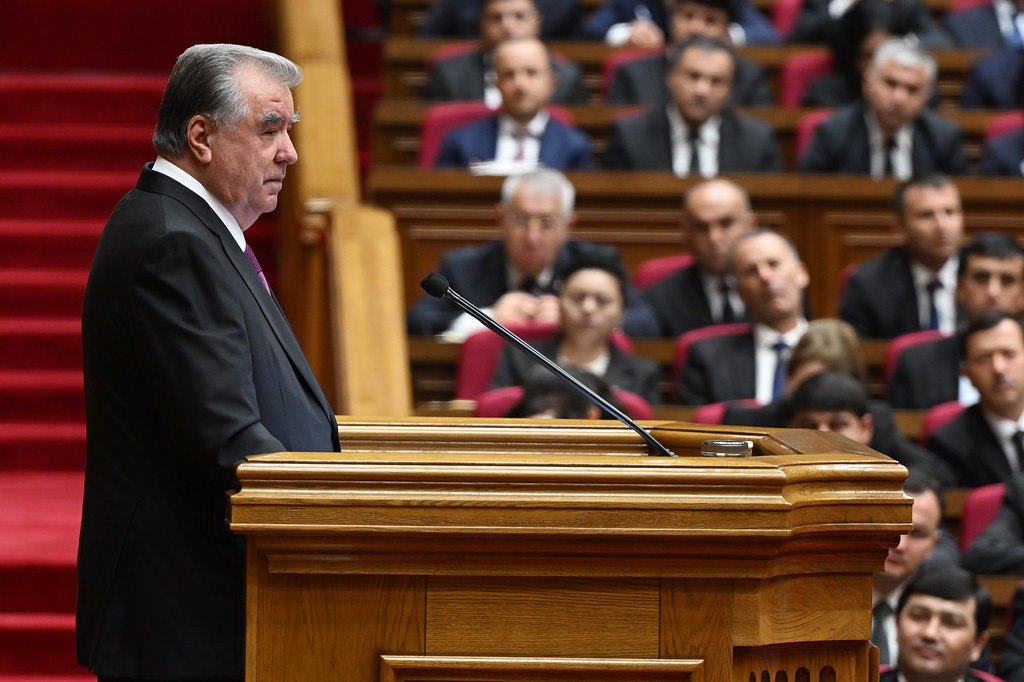
President Emomali Rahmon has acknowledged that Tajikistan’s population continues to endure severe electricity rationing during the winter months, and has outlined steps the government is taking to alleviate the crisis.

“We are fully aware of the challenges faced by the people of Tajikistan during the period of temporary restrictions on electricity supply,” Rahmon said in his annual address to parliament on December 16, adding that authorities are implementing all necessary measures to address the issue.

Rahmon attributed the shortages primarily to rapid population growth and the expansion of industrial production, both of which have significantly increased domestic electricity consumption. He also cited unfavorable weather conditions, including below-average rainfall last autumn, which reduced water inflows into reservoirs that supply the country’s hydropower plants.

He noted that since independence, 1.3 million new homes have been built to accommodate over 8.4 million people. In the past seven years alone, 2,600 new industrial enterprises have begun operations, further raising electricity demand.

Despite these pressures, Tajikistan has steadily increased electricity production. Over the past decade, annual generation has risen by 7 billion kilowatt-hours, from 17.2 billion in 2015 to 24.2 billion in 2025, an increase of approximately 40%. However, domestic demand is projected to grow by an additional 31% by 2030 compared to 2025 levels.

Over the past ten years, investments in the energy sector have added 1,017 megawatts to the country’s installed capacity. A further 200 megawatts were gained through the rehabilitation and modernization of existing plants. One of the most recent projects was the modernization of the Kairakkum Hydroelectric Power Plant, completed in November 2025, which increased its capacity from 114 megawatts to 174 megawatts.

While Tajikistan possesses vast hydropower potential, it has long struggled with chronic energy shortages. In response, the government has prioritized large-scale hydropower projects, particularly the Rogun Dam and Hydropower Plant, which is expected to be central to achieving domestic energy security and establishing Tajikistan as a regional electricity exporter.

Rahmon announced that the third generating unit of the Rogun plant is scheduled for commissioning in September 2027, marking a key milestone on the path to full energy independence.

In parallel, construction has begun on two large solar power plants, each with a capacity of 250 megawatts, in the Sughd and Khatlon regions. Both facilities are expected to be operational by August 2026.

He also emphasized the importance of improving energy efficiency alongside expanding generation capacity. Electricity losses remain high, exceeding 3 billion kilowatt-hours annually. Rahmon called for accelerating the rollout of a nationwide digital billing system, which he said has already reduced losses.

The introduction of modern digital billing and payment technologies revealed that 30% to 40% of households were previously not paying for electricity. Since the system’s implementation, losses have declined. In the first 11 months of 2025, total electricity losses stood at approximately 3 billion kilowatt-hours, 500 million kilowatt-hours less than during the same period the previous year.

Pannier and Hillard’s Spotlight on Central Asia: New Episode Available Now

As Managing Editor of The Times of Central Asia, I’m delighted that, in partnership with the Oxus Society for Central Asian Affairs, from October 19, we are the home of the Spotlight on Central Asia podcast. Chaired by seasoned broadcasters Bruce Pannier of RFE/RL’s long-running Majlis podcast and Michael Hillard of The Red Line, each fortnightly instalment will take you on a deep dive into the latest news, developments, security issues, and social trends across an increasingly pivotal region.

This week, we’re unpacking Turkmenistan’s Neutrality Summit, a rare moment where a string of big names quietly rolled into Ashgabat, and where the public messaging mattered just as much as the backroom deals. We’ll also cut through the noise on the latest reporting from the Tajik–Afghan border, where misinformation is colliding with real security developments on the ground. From there, we’ll take a hard look at the results of Kyrgyzstan’s elections, what they actually tell us about where Bishkek is heading next, and what they don’t, before examining the looming power rationing now shaping daily life and political pressure in two Central Asian states.

And to wrap it up, we’re joined by two outstanding experts for a frank conversation on gendered violence in Central Asia: what’s changing, what isn’t, and why the official statistics may only capture a fraction of the reality. On the show this week: Daryana Gryaznova (Equality Now) Svetlana Dzardanova (Human Rights and Corruption Researcher)

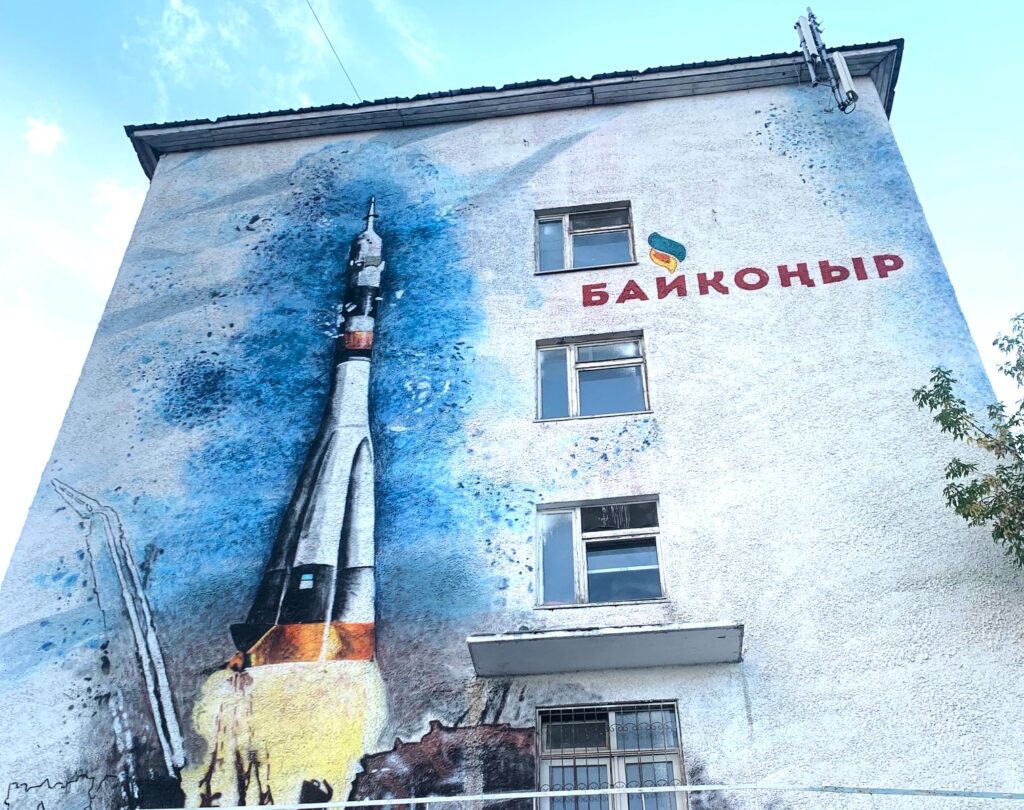
Roscosmos: Damaged Baikonur Launch Pad To Be Ready in Early 2026

Russia’s space agency Roscosmos says a Baikonur Cosmodrome launch pad that was damaged during the lift-off of a crewed spacecraft in late November is being repaired and will be ready to resume operations at the end of February next year.

“The manned program continues,” Roscosmos said following two weeks of speculation about the impact of delays on crewed flights from the leased Baikonur facility in Kazakhstan. If Russia meets its repair schedule, it would beat some predictions that said the launch pad might not back in operation for up to two years.

More than 130 Roscosmos employees, working in two shifts from 8 a.m. to midnight, and 18 heavy vehicles are involved in replacing a service cabin that was damaged in the launch of the Soyuz MS-28 craft that took two Russian cosmonauts and one American astronaut to the International Space Station, the agency said on Monday.

“Work has begun on priming and painting the cabin parts. As they become ready, they will be transported to the launch pad. Some of the equipment is already there,” Roscosmos said. “After priming and painting the parts, specialists will begin installing the cabin and conducting autonomous tests.”

Space journalists and analysts said the previous mobile service platform was not properly secured during the November launch and collapsed into a flame duct below the launch pad. A cargo flight to the International Space Station had been scheduled for this month from Baikonur but was delayed after the mishap.