• KGS/USD = 0.01144 0%
  • KZT/USD = 0.00213 0%
  • TJS/USD = 0.10456 0.19%
  • UZS/USD = 0.00008 0%
  • TMT/USD = 0.28490 0%
  • KGS/USD = 0.01144 0%
  • KZT/USD = 0.00213 0%
  • TJS/USD = 0.10456 0.19%
  • UZS/USD = 0.00008 0%
  • TMT/USD = 0.28490 0%
  • KGS/USD = 0.01144 0%
  • KZT/USD = 0.00213 0%
  • TJS/USD = 0.10456 0.19%
  • UZS/USD = 0.00008 0%
  • TMT/USD = 0.28490 0%
  • KGS/USD = 0.01144 0%
  • KZT/USD = 0.00213 0%
  • TJS/USD = 0.10456 0.19%
  • UZS/USD = 0.00008 0%
  • TMT/USD = 0.28490 0%
  • KGS/USD = 0.01144 0%
  • KZT/USD = 0.00213 0%
  • TJS/USD = 0.10456 0.19%
  • UZS/USD = 0.00008 0%
  • TMT/USD = 0.28490 0%
  • KGS/USD = 0.01144 0%
  • KZT/USD = 0.00213 0%
  • TJS/USD = 0.10456 0.19%
  • UZS/USD = 0.00008 0%
  • TMT/USD = 0.28490 0%
  • KGS/USD = 0.01144 0%
  • KZT/USD = 0.00213 0%
  • TJS/USD = 0.10456 0.19%
  • UZS/USD = 0.00008 0%
  • TMT/USD = 0.28490 0%
  • KGS/USD = 0.01144 0%
  • KZT/USD = 0.00213 0%
  • TJS/USD = 0.10456 0.19%
  • UZS/USD = 0.00008 0%
  • TMT/USD = 0.28490 0%

Kazakh Startup Defect AI Accepted into StartX Accelerator at Stanford University

Kazakhstan-based startup Defect AI, part of the Astana Hub ecosystem, has been selected for the spring 2026 cohort of the StartX accelerator at Stanford University. The program is considered one of the most competitive in Silicon Valley and brings together promising technology projects from around the world.

The platform developed by the startup uses artificial intelligence to analyze medical documentation. According to the developers, the algorithm can reduce the time spent on manual document verification by up to 95%.

The service is designed to help medical organizations comply with regulatory requirements and standards while reducing the administrative burden on doctors. The product is positioned as an AI assistant that structures documentation and processes large volumes of medical data without requiring additional staff.

The startup operates internationally under the brand name Rette, derived from the Kazakh word “retteu,” meaning “to put in order.”

Experience gained from implementing the technology in Kazakhstan allowed the team to test the product in a real healthcare system. However, the company’s main strategic focus is now shifting to the U.S. market.

The Defect AI team operates globally, with key employees based in Kazakhstan, the U.S., Japan, the United Kingdom, and Germany. The team includes specialists with experience at Meta, Google, and Microsoft.

Through its participation in the StartX program, the startup has formed an advisory board that includes practicing doctors and medical technology investors.

Co-founder Sanzhar Myrzagalym said the road to the accelerator was a long one. The team applied four times before being accepted into the program.

Dushanbe and London Agree on Cooperation on Critical Minerals

The Tajik government has approved a draft memorandum of understanding with the United Kingdom on cooperation in the field of critical minerals.

The agreement is expected to be concluded between Tajikistan’s Ministry of Industry and New Technologies and the UK government.

The draft memorandum emphasizes the strategic importance of critical minerals for the global economy. These resources are essential for industrial development, advanced technologies, and the transition to low-carbon energy systems.

The document notes that sustainable and transparent supply chains for such minerals are crucial for economic security. The market for these resources remains vulnerable due to the high concentration of production in a limited number of countries and the risk of supply disruptions.

Cooperation between Tajikistan and the UK aims to diversify supply sources and promote the development of more sustainable international supply chains for the extraction and processing of raw materials.

The parties also intend to implement high sustainable development standards throughout project lifecycles, including environmental, social, and governance (ESG) principles.

The memorandum also includes the possibility of export credit and project insurance, subject to certain conditions.

In addition to business cooperation, the agreement provides for the development of scientific and educational initiatives.

In particular, the following measures are planned:

  • the creation of academic partnerships;
  • the exchange of experience between research institutes;
  • strengthening the institutional capacity of the mining sector.

A joint working group on critical minerals will be established to coordinate cooperation, with meetings planned twice a year. The memorandum will be valid for five years, with the possibility of automatic renewal.

Tajikistan has significant reserves of several strategic resources.

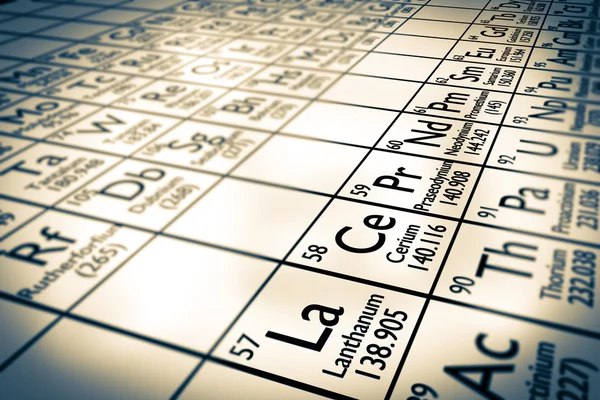
According to geologists, there are indications of lithium deposits in the country, a key metal used in the production of electric vehicle batteries and electronics. Rare earth elements have also been identified, including potential deposits of cerium and praseodymium, which are used in electronics and renewable energy technologies.

In addition, the country has reserves of niobium and tantalum.

UK and Kyrgyzstan Expand Financial Cooperation

The Kyrgyz Republic Capital Markets Day was held in London, where representatives of the UK financial and investment community met with Kyrgyz officials to discuss prospects for expanding banking and investment cooperation.

The Kyrgyz delegation was led by Deputy Minister of Economy and Commerce Mederbek Tumanov.

During his working visit to London, Tumanov held meetings with representatives of the investment banks Oppenheimer and Citi, presenting Kyrgyzstan’s macroeconomic indicators for recent years and outlining the country’s fiscal policy and structural reforms.

According to the Ministry of Economy and Commerce, Kyrgyzstan aims to improve its sovereign credit rating, which would facilitate the country’s access to international capital markets. During the discussions, particular attention was given to creating a predictable regulatory environment for investors.

The Kyrgyz government also seeks to reduce the cost of external borrowing and strengthen the confidence of international investors.

During the visit, the Kyrgyz delegation met with business representatives, including DG and Bankinvest, to discuss opportunities for attracting British private capital to key sectors of the Kyrgyz economy.

According to the Kyrgyz Ministry of Economy, the British delegates expressed interest in expanding investment cooperation.

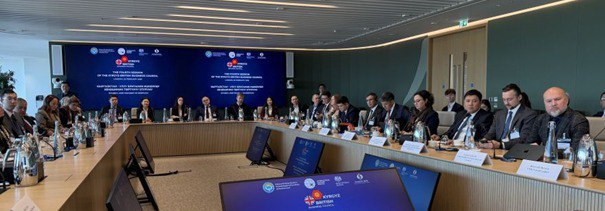
Tumanov also participated in a meeting of the Kyrgyz-British Business Council, where participants discussed prospects for bilateral investment and the promotion of Kyrgyzstan’s economic priorities in the British market.

During the event, the Kyrgyz representatives presented a number of potential investment projects to British investors, including initiatives related to the development of critical minerals, financial market development, and closer banking cooperation.

According to Kyrgyz authorities, the interest shown by British businesses reflects growing international investor attention to Kyrgyzstan and the wider Central Asian region.

Middle East Conflict Tests Central Asia’s Trade Routes and Energy Security

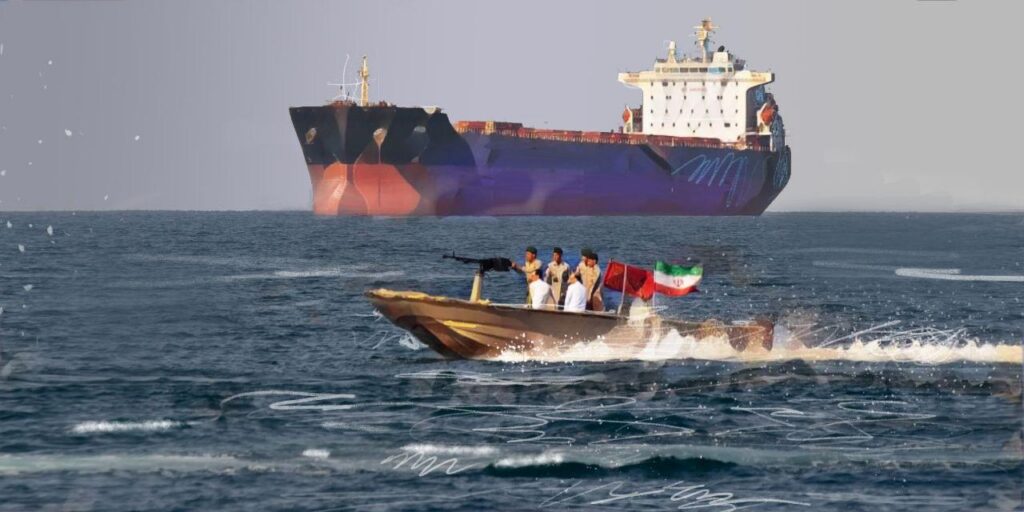
The escalating conflict between Iran, the United States, and their regional partners is raising economic concerns across Central Asia. Turkmenistan shares a long border with Iran, while other Central Asian economies depend on energy markets and trade routes that pass through or around the Persian Gulf. A wider conflict there could ripple across Central Asia through higher fuel prices, disrupted logistics, and pressure on key transport corridors.

For countries such as Kyrgyzstan and Tajikistan, the most immediate risk is rising fuel prices. Both depend heavily on imported fuel. Kyrgyz security expert Taalaibek Jumadylov has warned that Kyrgyzstan could face rising prices for food, clothing, and other essential goods.

For Tajikistan, the closure of the Strait of Hormuz would significantly increase import costs. Tajik media reports that trade between Tajikistan and Iran has grown rapidly over the past five years. Tajik-Iranian trade turnover increased from $377.7 million in 2024 to approximately $484 million in 2025, a rise of around 28%. Tajikistan’s exports totaled about $113 million, while imports from Iran exceeded $371 million, giving Iran a 4.5% share of Tajikistan’s total foreign trade turnover.

If global oil prices rise significantly, Tajikistan could also face additional pressure on its budget. There are indirect risks as well: a slowdown in the economies of Russia, China, or other major partners could affect Tajikistan through trade, investment flows, and remittances.

In Uzbekistan, analysts note that in recent years Iran has actively pursued transport diplomacy with Central Asia, seeking to strengthen its position as a regional logistics hub. Uzbek analyst Nargiza Umarova says this trend aligns with China’s Belt and Road Initiative. Iran and China signed a 25-year cooperation agreement in March 2021, a deal widely described as deepening Iran’s role in Belt and Road-linked connectivity.

Kazakh economist Almas Chukin highlighted the logistical advantages of transport routes through Iran.

“If we take the point where the Turkmenistan railway connects with Iran and the route to the Persian Gulf, it is about 1,200-1,500 kilometers. This is comparable to the distance from Astana to Almaty. Once you cover this distance, you reach the Persian Gulf and its major ports, where you can handle anything from oil transshipment to grain shipments. From there, sea transport to Rotterdam takes about three to four weeks,” he stated.

Chukin added that such routes could simplify exports compared with transporting oil through Russia to Novorossiysk and then via the Black Sea, the Bosphorus Strait, and the Mediterranean. According to his estimates, a rail route to Europe through Iran would be about 3,500 kilometers from the Turkmen border.

The economist suggested that if Iran’s political system changes and sanctions are lifted, Central Asia could benefit significantly. “This would be a huge shift for Central Asia: a region with a population of 80 million, abundant resources, and a young workforce, but constrained by geography, suddenly gaining direct access to global markets,” Chukin argued.

Some analysts also point to emerging competition among regional transport corridors. In the South Caucasus, a proposed Zangezur corridor has been promoted as an alternative logistics route linking the Caspian region to Turkey and Europe.

Kazakh officials, however, currently see limited direct risks from the escalation in the Middle East beyond possible volatility in global oil markets.

Deputy Prime Minister and Minister of National Economy Serik Zhumangarin said Kazakhstan has historically used logistics routes to the Persian Gulf sparingly.

“The conflict between Russia and Ukraine has been ongoing for some time, and logistics have already adapted to it. As for the Persian Gulf, this direction has not been widely used. We have very rarely relied on ports in the Persian Gulf, for example, Bandar Abbas. There were shipments, but not enough to significantly affect us now, as access there has always been quite complicated,” he said.

According to Zhumangarin, the main risk for Kazakhstan is volatility in the tenge exchange rate driven by changes in global oil prices.

“Oil price fluctuations will naturally affect the exchange rate, and exchange-rate volatility is not good,” he said.

Swedish Pracademic and International Business Strategist Alex Matrsson believes that Central Asia, historically a bridge between East and West, is once again gaining strategic importance. During periods of geopolitical turbulence, land transport corridors become increasingly valuable, and Kazakhstan, the region’s largest economy and a key transit hub, plays a central role.

Matrsson noted that President Kassym-Jomart Tokayev’s recent contacts with Emir Tamim bin Hamad Al Thani of Qatar and other Gulf leaders demonstrate a strategy of diversifying partnerships and expanding trade corridors.

“By diversifying trade ties, investing in infrastructure, and strengthening diplomatic relations, Kazakhstan is protecting its economic future and securing Central Asia’s place in a fragile global economy,” Matrsson said.

Bauryzhan Iskakov, an economist and associate professor, shares this view. He believes Kazakhstan could strengthen its position as a regional transit hub, particularly through the Trans-Caspian route.

“This route runs through the Caspian Sea, Azerbaijan, Georgia, Turkey, and Europe. Given instability in maritime shipping in the Persian Gulf region and potential risks to northern routes, Central Asia, including Kazakhstan, could play an important role in shaping alternative export and logistics flows,” he said.

However, Iskakov noted that the Trans-Caspian International Transport Route still requires further development.

“The Trans-Caspian infrastructure does not yet have the scale or capacity of major sea routes or key oil pipelines, so its development must be supported by investment, technical solutions, and new logistics projects,” he said.

Taken together, these factors highlight how closely Central Asia’s economic outlook is tied to developments beyond its borders. Even without direct involvement in the conflict, the region could feel its effects through higher energy prices, disrupted supply chains, and shifting trade routes.

At the same time, the crisis may accelerate efforts across Central Asia to diversify transport corridors. As geopolitical tensions reshape trade flows between Asia, Europe, and the Middle East, the region’s position at the crossroads of Eurasia may become both a vulnerability and an opportunity.

Turkmenistan Opens Additional Crossings as Uzbekistan Evacuates Citizens from Iran

Turkmenistan has opened several additional checkpoints on its border with Iran to allow foreign citizens to leave the country as fighting in the Middle East continues. The Russian Embassy in Ashgabat said the Turkmen authorities have opened four additional crossings along the Turkmen-Iranian frontier: Artyk–Lutfabad, Gaudan–Bajgiran, Akyayla–Incheburun, and Altyn Asyr–Incheburun. These operate alongside the Sarakhs crossing, which had already been used for evacuation transit.

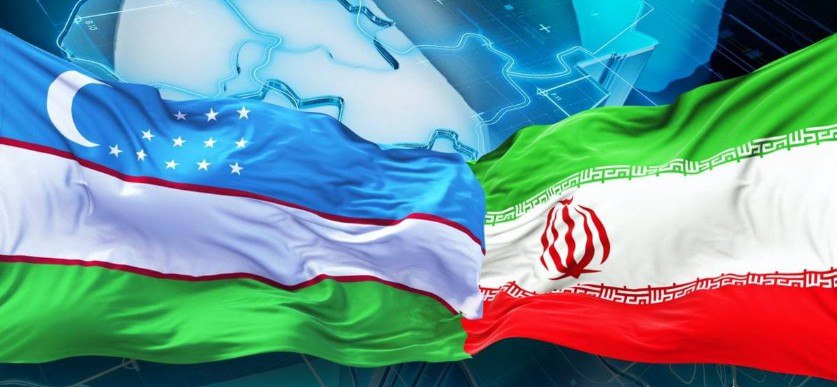
The move expands an overland route through Central Asia for foreigners seeking to leave Iran while air travel across parts of the Middle East remains disrupted. Uzbekistan has begun using this corridor to assist its citizens. The country’s Ministry of Foreign Affairs said diplomatic staff and official vehicles have been deployed to the Sarakhs crossing to receive Uzbek nationals arriving from Iran and organize their onward transport across Turkmenistan toward Uzbekistan.

Uzbek outlet Daryo reported on March 4 that Uzbekistan had already repatriated 13 citizens from Iran via Turkmenistan.

Russia has also pointed citizens toward the Turkmen route. The Russian Embassy in Ashgabat said its citizens unable to leave Iran by air could exit through Turkmenistan and should register with the Russian Embassy in Tehran, which is coordinating assistance for citizens inside Iran. The embassy noted that Turkmenistan maintains strict entry rules and normally requires special permits for foreign visitors. Despite those restrictions, the country has previously allowed evacuation transit from Iran during earlier regional crises.

The additional crossings create another evacuation corridor alongside the route from Iran into Azerbaijan through the Astara border crossing on the Caspian coast. Foreign nationals have already used that crossing to leave Iran in recent days, including citizens from Central Asia. The Turkmenistan route provides a more direct path back into the region for evacuees traveling toward Uzbekistan and other Central Asian countries.

Turkmenistan shares a 1,148-kilometer border with Iran. Ashgabat, the Turkmen capital, sits only about 25 kilometers north of the frontier, and several transport links connect the two countries. Sarakhs functions as an established rail and road gateway used for trade and freight movement between the two countries.

In recent years, Turkmenistan and Iran have also discussed expanding rail and freight transit through the Sarakhs crossing as part of broader regional transport corridors linking Central Asia to southern markets. Turkmenistan also exports natural gas to northern Iran under swap arrangements in which Tehran delivers equivalent volumes to Azerbaijan, which could disrupt regional logistics and energy flows.

The expansion of border crossings increases the capacity for organized departures from Iran and provides foreign governments with an additional land route when other exit corridors become congested. For Central Asian governments, the immediate priority remains the safe movement of their nationals out of the conflict zone. The opening of additional Turkmen checkpoints provides another corridor linking Iran to Central Asia and may ease pressure on evacuation routes through the South Caucasus.

Middle East Conflict May Slow Growth, but Gold and Oil Dynamics Could Cushion Impact

The escalating conflict in the Middle East could weigh on Uzbekistan’s economic growth if it persists, though higher gold prices and oil-driven gains in key partner economies may soften the impact, according to Uzbek economist Mirkomil Kholboyev.

Kholboyev shared his analysis on his Telegram channel, examining both the direct and indirect channels through which the crisis could affect Central Asia’s largest economy.

“Several days of geopolitical tensions in the Middle East have already turned into open military confrontation,” he wrote. “It is still difficult to say how long this situation will last. If it is short-term and the previous status quo is restored, the impact on our economy will likely be limited and temporary. But if the war continues for a longer period, the consequences could be more significant.”

Direct trade exposure appears limited. According to data from Uzbekistan’s national statistics portal, the country exported $157 million worth of goods to Iran in 2025, accounting for just 0.5% of total exports. Imports from Iran totaled $421 million, or 0.9% of overall imports. Trade with Israel was even smaller, with exports of $33 million and imports of $22 million.

“Even a complete halt in trade with these countries would not significantly affect total exports,” Kholboyev wrote, though he noted that export and import growth could slow.

Iran also plays a role as a transit hub. Its ports are part of broader regional logistics networks, including the Central Asia-India corridor via Chabahar and the International North-South Transport Corridor (INSTC). According to a regional analytical report, Uzbekistan accounts for 5.5% of total traffic along this route, compared with 61.1% for Kazakhstan and 29.4% for Turkmenistan.

Kholboyev pointed out that while some of Uzbekistan’s trade passes through Iranian ports, the country is less dependent on them than other Central Asian countries. Still, he cautioned that prolonged fighting would inevitably disrupt both direct trade and transit flows.

“I do not have precise data on how much of our total foreign trade passes specifically through Iranian ports,” he wrote. “That makes it difficult to assess the full effect. But if the war continues, both direct trade and transit through Iran will suffer serious damage.”

Even if trade with the wider region, including Iran and other countries affected by hostilities, were to stop entirely, Kholboyev estimates the impact would remain moderate. The region accounts for about 2.4% of Uzbekistan’s exports and 1.5% of imports. A complete halt could slow export growth by roughly 3% and imports by about 2.5%, reducing overall GDP growth by around 0.6 percentage points. A 50% reduction in trade with the region would shave an estimated 0.2-0.3 percentage points off GDP growth.

Energy markets represent a more significant risk channel. As trading resumed after the latest escalation, global oil prices rose by about 9%, driven by concerns over potential disruptions in the Strait of Hormuz, through which roughly one-fifth of global oil consumption passes.

“If tensions escalate further and oil flows are restricted, or if prices continue rising amid uncertainty, this could slow the global economy,” Kholboyev wrote. He cited estimates suggesting that a 10% increase in oil prices can reduce global economic growth by 0.1-0.2 percentage points.

China’s exposure is also relevant. Around 10-13% of China’s oil imports come from Iran. Given that China is one of Uzbekistan’s main trading partners, slower Chinese growth would likely have spillover effects.

“At the same time, higher oil prices may create relatively favorable conditions for Russia, which is one of our main labor markets and key trading partners,” Kholboyev noted. Improved economic conditions in Russia could support faster growth in remittances to Uzbekistan and stronger demand for Uzbek exports. Kazakhstan, another major partner, could also benefit from elevated oil prices.

Inflation presents another risk. Disruptions in global supply chains could accelerate price growth domestically. Kholboyev recalled that although inflation in Uzbekistan slowed to 10% in 2021, it rose to 12.3% in 2022 following the outbreak of Russia’s war in Ukraine, according to data from the Central Bank. Annual inflation stood at 7.2% in January this year.

“Supply chain disruptions resulting from the war could accelerate inflation, and the Central Bank may respond by tightening monetary conditions,” he wrote.

Gold, however, may act as a counterbalance. Heightened geopolitical uncertainty typically pushes gold prices higher. Gold is Uzbekistan’s main export commodity; in 2025 the country exported $10 billion worth of gold, accounting for 30% of total exports.

“If continued uncertainty leads to a 10% increase in gold exports, this could directly accelerate GDP growth by around 0.7 percentage points,” Kholboyev said. A 20% increase in gold exports could raise growth by as much as 1.4 percentage points.

Overall, Kholboyev described the current situation as a factor likely to slow global growth and exert negative direct and secondary effects on Uzbekistan’s economy. At the same time, he emphasized that rising gold prices and improved economic conditions in oil-exporting partner countries could help offset part of the external shock.