• KGS/USD = 0.01144 0%
  • KZT/USD = 0.00211 0%
  • TJS/USD = 0.10438 0%
  • UZS/USD = 0.00008 0%
  • TMT/USD = 0.28490 0%
  • KGS/USD = 0.01144 0%
  • KZT/USD = 0.00211 0%
  • TJS/USD = 0.10438 0%
  • UZS/USD = 0.00008 0%
  • TMT/USD = 0.28490 0%
  • KGS/USD = 0.01144 0%
  • KZT/USD = 0.00211 0%
  • TJS/USD = 0.10438 0%
  • UZS/USD = 0.00008 0%
  • TMT/USD = 0.28490 0%
  • KGS/USD = 0.01144 0%
  • KZT/USD = 0.00211 0%
  • TJS/USD = 0.10438 0%
  • UZS/USD = 0.00008 0%
  • TMT/USD = 0.28490 0%
  • KGS/USD = 0.01144 0%
  • KZT/USD = 0.00211 0%
  • TJS/USD = 0.10438 0%
  • UZS/USD = 0.00008 0%
  • TMT/USD = 0.28490 0%
  • KGS/USD = 0.01144 0%
  • KZT/USD = 0.00211 0%
  • TJS/USD = 0.10438 0%
  • UZS/USD = 0.00008 0%
  • TMT/USD = 0.28490 0%
  • KGS/USD = 0.01144 0%
  • KZT/USD = 0.00211 0%
  • TJS/USD = 0.10438 0%
  • UZS/USD = 0.00008 0%
  • TMT/USD = 0.28490 0%
  • KGS/USD = 0.01144 0%
  • KZT/USD = 0.00211 0%
  • TJS/USD = 0.10438 0%
  • UZS/USD = 0.00008 0%
  • TMT/USD = 0.28490 0%

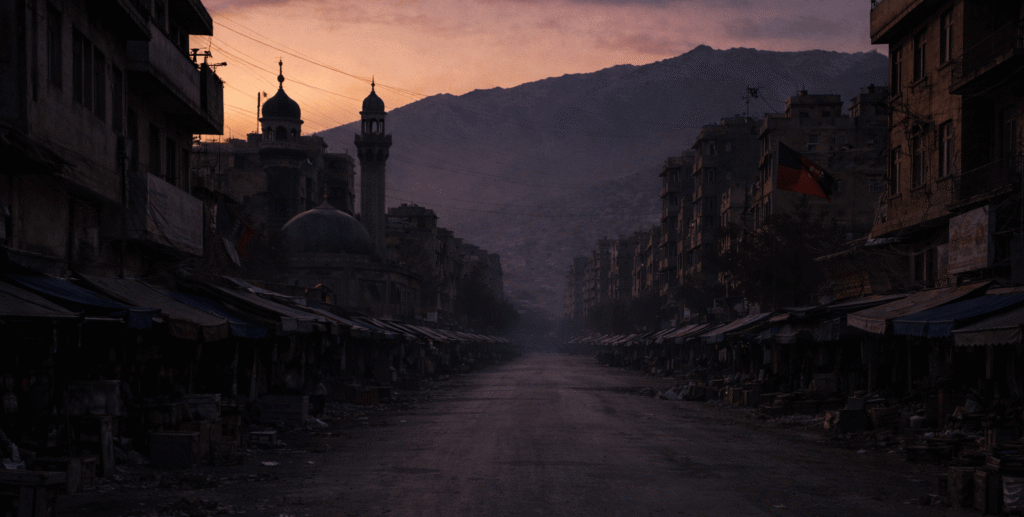
Pakistan Declares “Open War” with Afghanistan’s Taliban as Cross-Border Attacks Escalate

Pakistan launched airstrikes inside Afghanistan on Friday following a Taliban-announced offensive against Pakistani military posts along the shared border, marking a sharp escalation in tensions between the two long-hostile neighbors. The Taliban has said it is open to talks.

Pakistan’s Defense Minister Khawaja Muhammad Asif said on social media that “our patience has now run out. Now it is open war between us,” framing Islamabad’s actions as a response to cross-border attacks.

According to Reuters, the Afghan authorities said operations began across several eastern provinces bordering Pakistan, while Islamabad confirmed retaliatory strikes targeting what it described as militant positions.

Both sides have released sharply conflicting casualty figures, none independently verified. Pakistani officials said more than 200 Taliban fighters were wounded and over 130 killed in retaliatory operations, while reporting Pakistani military casualties. The Taliban authorities rejected those figures and claimed dozens of Pakistani troops were killed.

The clashes threaten a fragile ceasefire reached in October 2025 after earlier border fighting. Pakistan has repeatedly accused the Taliban of allowing Tehrik-e-Taliban Pakistan (TTP) militants to operate from Afghan territory, an allegation Kabul denies. The Durand Line border has long been a flashpoint, but analysts say the scale of recent airstrikes — including reported strikes near Kabul — marks a significant escalation beyond previous localized clashes.

For Central Asian states, renewed instability between Pakistan and Afghanistan carries direct strategic and economic implications. Uzbekistan has invested heavily in the proposed Termez–Mazar-i-Sharif–Kabul–Peshawar railway, a flagship trans-Afghan corridor intended to link Central Asia to Pakistani ports and expand southbound trade. The CASA-1000 electricity transmission project, designed to export surplus hydropower from Kyrgyzstan and Tajikistan to Afghanistan and Pakistan, also depends on security conditions in Afghan territory.

Turkmenistan’s TAPI gas pipeline project faces similar vulnerabilities. Escalating violence risks delaying these connectivity initiatives and raising concerns about militant spillover into northern Afghanistan, an area closely watched by Tajikistan and Uzbekistan. Central Asian governments have pursued pragmatic engagement with the Taliban authorities to stabilize their southern frontier; sustained confrontation between Kabul and Islamabad could complicate that strategy and undermine regional integration plans.

The United Nations and regional actors have called for restraint. While both governments describe their actions as defensive, the rhetoric surrounding the latest exchange suggests a dangerous deterioration in bilateral relations. Independent verification of battlefield claims remains limited as diplomatic efforts to contain the escalation continue.

Kazakhstan to Focus on Skilled Migrants in New Migration Policy

Kazakhstan is shifting toward a more pragmatic migration policy aligned with the needs of the national economy. The government’s newly approved Migration Policy Concept through 2030 prioritizes attracting in-demand highly skilled professionals and encouraging internal migration to regions experiencing labor shortages.

According to the Ministry of Labor and Social Protection, the number of foreign labor migrants in Kazakhstan reached 16,100 in 2025.

Minister of Labor Askarbek Yertayev said that greater emphasis will be placed on assessing the professional qualifications of foreign workers. Priority will be given to specialists with relevant education, work experience, and competencies sought in the domestic labor market. By 2030, the share of skilled workers among labor migrants is expected to increase to 95%.

To support these objectives, the ministry has launched a pilot project on the digital platform migration Enbek.kz. The initiative introduces a comprehensive scoring system to evaluate applicants when issuing permanent residence permits and granting kandas status, a designation for ethnic Kazakhs returning to their historical homeland.

A draft law has also been prepared that includes revising fees for hiring foreign labor, tightening regulation of private employment agencies, and formally integrating the digital scoring mechanism into migration decision-making processes.

The quota for attracting foreign workers in 2026 has been set at 0.25% of the total national workforce, according to official data.

The main countries of origin for officially employed foreign nationals remain China, Uzbekistan, Turkey, and India.

At the same time, the government is strengthening measures to manage internal migration. In 2025, 14.7% of participants in state-supported interregional resettlement programs relocated to northern regions of the country.

Major cities such as Almaty and Astana continue to attract young people from less economically developed regions, exacerbating territorial imbalances.

Kashagan and Karachaganak: Will Kazakhstan’s Claims Lead to Changes in the Shareholder Structure?

The beginning of 2026 has been marked by a new round of confrontation between Kazakhstan and the international consortia developing the country’s largest oil and gas fields, North Caspian Operating Company N.V. (Kashagan) and Karachaganak Petroleum Operating B.V. (Karachaganak). Below is an overview of the current situation and the possible scenarios.

Arbitration proceedings initiated in early 2023 have expanded from $16.5 billion to more than $170 billion. Over three years, Kazakhstan has secured preliminary victories on several claims, enough, in my view, to suggest that the era of foreign oil consortia dominating Kazakhstan’s strategic projects may be coming to an end.

Ecology and NCOC Violations

This week, Bloomberg reported in its article “Oil Majors Seek Arbitration Over $5 Billion Kazakh Sulfur Fine” that the NCOC consortium is filing in international arbitration to challenge a Kazakh court decision to collect 2.3 trillion tenge (KZT). The Bloomberg headline, however, presents the issue inaccurately.

Environmental violations, including the excessive storage of approximately 1 million tons of sulfur, were identified during an inspection in March 2023, when the exchange rate stood at 451.71 KZT per $1. The rate later rose to 520-540 and currently stands at around 500 KZT per $1. According to investment forecasts, it may reach 600 KZT per $1 by the end of 2026.

As a result, the dollar equivalent of the fine has decreased significantly. At the March 2023 rate, 2.3 trillion KZT amounted to approximately $5.1 billion. At 500 KZT per $1, it equals about $4.6 billion. At 600 KZT per $1, it would fall to roughly $3.8 billion, a difference of about $1.3 billion.

After my earlier publications arguing that foreign consortia should be fined in foreign-currency equivalent at the exchange rate prevailing at the time of filing, the proposal was also raised in Parliament. Such an approach would be logical: the consortia export their oil and receive revenue in foreign currency, yet fines are imposed in tenge.

After several rounds of appeals, the consortium lost what became the largest environmental dispute in Kazakhstan’s history, initially involving more than 20 systematic violations of environmental legislation. Correspondence between consortium members published in Western media indicated they were aware of the violations but considered remediation and compliance financially costly. NCOC’s annual revenue is approximately $10 billion.

Media reports also stated that the consortium offered around $110 million, roughly 50 times less than the fine, for regional social programs in exchange for waiving environmental claims. Neither NCOC nor the Kazakh government confirmed such negotiations.

In 2010-2011, similar environmental and tax claims against the Karachaganak consortium resulted in Kazakhstan receiving a 10% stake in the project.

The current ownership structure of NCOC is:

  • ENI (Italy) – 16.81%
  • ExxonMobil (U.S.) – 16.81%
  • CNPC (China) – 8.33%
  • INPEX (Japan) – 7.56%
  • TotalEnergies (France) – 16.81%
  • Shell (UK) – 16.81%
  • KazMunayGas (Kazakhstan) – 16.88%

Total investment in Phase One of Kashagan is estimated at $60 billion. By analogy with Karachaganak, the environmental fine could hypothetically lead to an increase in Kazakhstan’s share by 5-7 percentage points, to 20-23%.

Under normal circumstances, a company that loses an appeal must pay the fine within a specified period. Failure to do so may result in account freezes and restrictions on senior management until the fine and penalties are paid in full. It remains to be seen what enforcement mechanisms will be applied in this case, given that environmental violations are not formally subject to international arbitration under the production sharing agreement.

Kazakh media have not raised the issue of responsibility among senior managers at KazMunayGas, even though KMG is an equal shareholder in NCOC.

If the consortium were required to pay a sum equivalent to roughly half of its annual revenue at once, the consequences could be serious, including production disruption, unpaid wages, and delayed payments to suppliers and contractors.

Whether oil companies would risk comparable environmental violations in their home jurisdictions is a rhetorical question. The shareholders may have expected to resolve these environmental issues through negotiation, but the policy vector has clearly shifted toward defending national interests.

Arbitration on Karachaganak

At the end of January 2026, Bloomberg reported that the London Court of International Arbitration ruled in favor of PSA LLP (which manages the country’s shares in NCOC and KPO) in a dispute concerning $2-4 billion in allegedly unjustified and uncoordinated expenses by the Karachaganak consortium. The consortium retains the right to appeal.

Initially, PSA LLP filed a claim for $3.5 billion under the Production Sharing Agreement, which specifies international arbitration, rather than Kazakh courts, as the venue for disputes, and later increased the claim to $6.5 billion.

The Kazakh side argued that audits had revealed inflated expenses that reduced the state’s share of revenue, as consortium costs under the PSA are reimbursed from the sale of Kazakh oil.

The shareholder structure of KPO is:

  • ENI (Italy) – 29.25%
  • Shell (UK) – 29.25%
  • Chevron (U.S.) – 18%
  • LUKOIL (Russia) – 13.5%
  • KazMunayGas (Kazakhstan) – 10%

Sanctions affecting Russian energy companies, including LUKOIL, may also influence the future balance of power in Kazakhstan’s extraction and pipeline projects, though that requires separate analysis.

The arbitration ruling strengthens Kazakhstan’s position in other disputes with NCOC, including claims exceeding $16.5 billion in allegedly unjustified expenses, roughly a quarter of total investment, and $160.5 billion in claimed lost profits linked to delays in the second and third phases of Kashagan’s development.

NCOC currently produces 400,000-450,000 barrels per day of oil and gas condensate. Phase Two envisaged output of around 800,000 barrels per day, while Phase Three targeted more than 1-1.2 million barrels per day.

NCOC and KPO vs. Tengiz

Against the backdrop of multi-billion-dollar disputes involving NCOC and KPO, the Tengiz project appears comparatively stable, despite $48.5 billion spent on the Future Expansion Project, which is expected to add about 250,000 barrels per day.

Tengiz shareholders are:

  • Chevron (U.S.) – 50%
  • ExxonMobil (U.S.) – 25%
  • LUKOIL (Russia) – 5%
  • KazMunayGas (Kazakhstan) – 20%

A key difference lies in the contractual framework. Tengiz operates under a stabilized contract with consistent management, whereas Kashagan and Karachaganak operate under production sharing agreements with rotating operators and more fragmented governance. This dispersion of authority complicates long-term planning, investment decisions, and the construction of gas-processing facilities needed to sustain or increase production.

It is also possible that dissatisfaction among certain shareholders regarding project management could affect future alignments.

Changes Are Inevitable

The ongoing court proceedings, both domestic and international, are likely to result in changes to shareholder structures and possibly management models. At the same time, KazMunayGas currently lacks the operational capacity to independently manage projects of this scale, meaning that one of the shareholders, existing or new, would likely assume a leading management role.

Both KPO and NCOC are seeking to extend their production sharing agreements, which expire in 2038 and 2041, respectively. This underscores the continued strategic importance of oil and gas for the global economy before and after 2050.

Kazakhstan’s recent arbitration successes strengthen its legal position ahead of potential ownership changes in other sectors, including mining and metallurgy.

Three additional factors may shape future developments:

  • A proposed constitutional referendum would enshrine the priority of national legislation over certain international decisions, potentially affecting the enforceability of external rulings.
  • Further legal scrutiny could extend to officials who approved cost increases under disputed arrangements.
  • Over the next five years, Kazakh projects are expected to remain among the most profitable globally for Western shareholders, with projected cumulative net cash flow exceeding $101 billion across Tengiz, Kashagan, and Karachaganak.

From Africa to Antarctica: How Kazakh Mountaineer Anar Burasheva Conquered Seven Continents

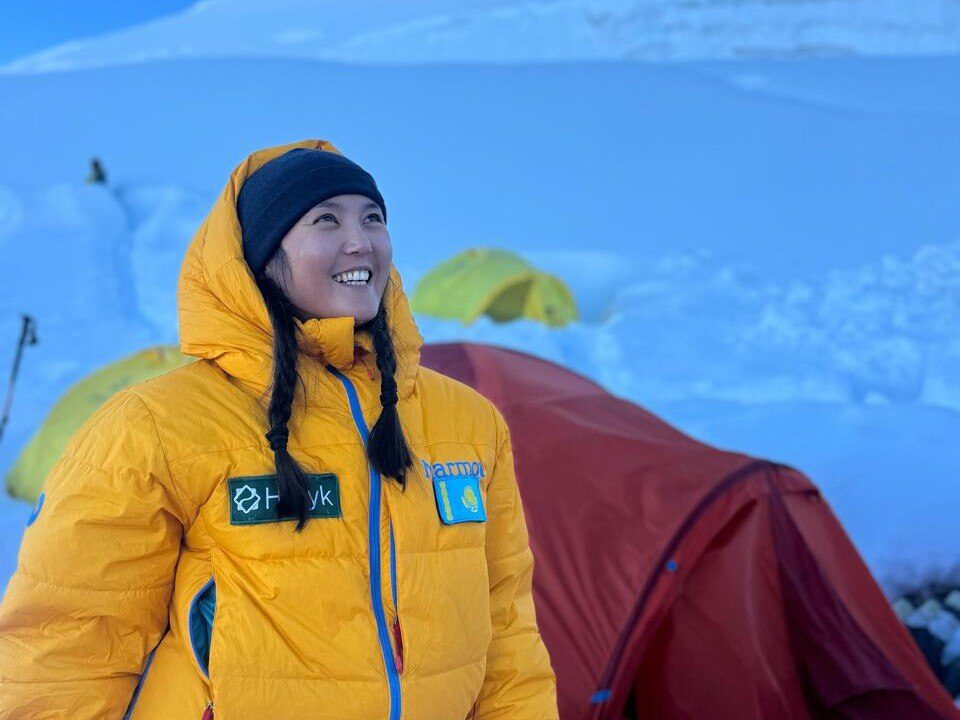
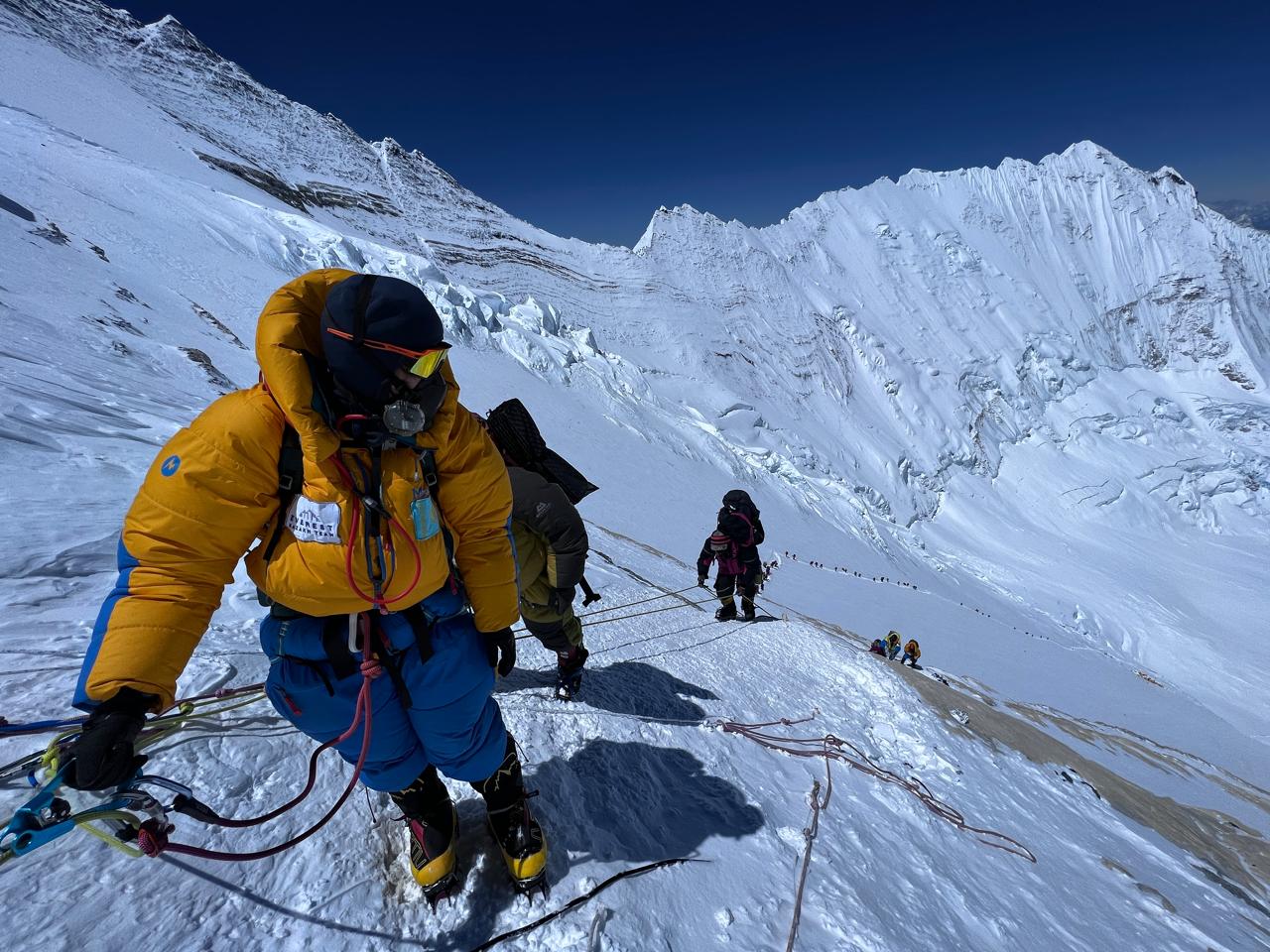
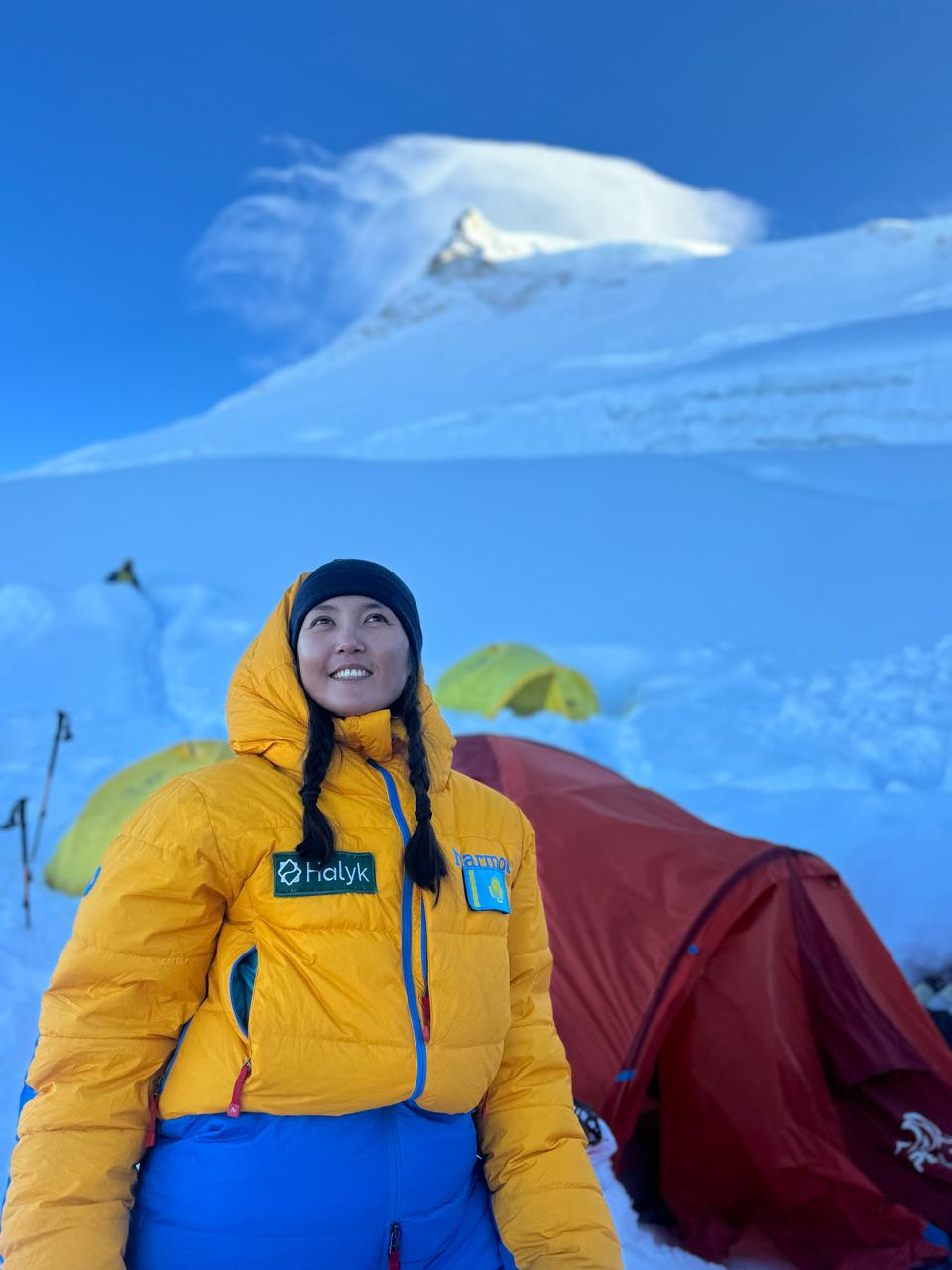
Mountaineer Anar Burasheva is the first Kazakh woman to climb the highest peaks on all seven continents and has already summited three of the world’s fourteen eight-thousanders. Her path is demanding and dangerous, yet, as she notes, it is achievable with discipline and preparation.

On some summits, she can remain only for a few seconds, as lingering would be unsafe; on others, she is able to pause briefly, take in the view, and absorb the scale of the landscape. Above 8,000 meters, however, one rule always applies: descend on time.

In an interview with The Times of Central Asia, Burasheva discusses why the mountains erase distinctions of gender, why turning back can be the wisest decision, and how extreme altitude reveals a person’s true character.

TCA: You are in high demand right now. Is that because you are one of the few women engaged in such an extreme sport?

Burasheva: That plays a role, but I think the main reason is that the approach to covering such achievements has changed. In the past, women’s accomplishments in our society did not receive sufficient attention. Now the opposite is true, and that’s good; it creates role models for young girls.

TCA: You are currently in Ridder, in East Kazakhstan. Is that your hometown? Is that where your love of mountaineering began?

Burasheva: Ridder is where my mother lives. I was born in Serebryansk, also in East Kazakhstan, but our family moved to Ridder long ago, and from there I later moved to Almaty. Yes, the region is mountainous. Our peaks are not as high as those near Almaty, but they are wilder, two- and three-thousand-meter mountains. From certain points in Serebryansk, you can clearly see Mount Belukha, about 4,500 meters high, with its snow-white summit covered in glaciers year-round.

TCA: Have you climbed it?

Burasheva: Not yet. Even though it is lower than the eight-thousanders I have climbed, it still requires serious preparation. It’s a difficult peak. I hope to climb it this year or next. My love for the mountains began in childhood in East Kazakhstan, but my passion for high-altitude mountaineering developed in Almaty.

TCA: You became the first Kazakh woman to complete the Seven Summits. What did you feel standing on the final summit?

Burasheva: Pride and gratitude that everything worked out despite the difficulties. But emotions depend on the summit and the weather. On Denali, the highest peak in North America, we stayed on top for just 11 seconds. We took photos and immediately descended because of strong winds. One person in our group showed signs of frostbite; the tip of their nose turned white, so we had to leave quickly.

TCA: And on Everest?

Burasheva: We stayed about half an hour. Conditions were more favorable. But Everest is above 8,000 meters, the so-called death zone, and you cannot remain there long because oxygen is limited. On Aconcagua, by contrast, it was so warm that I was even able to rest briefly at the summit while waiting for the other Kazakh climbers.
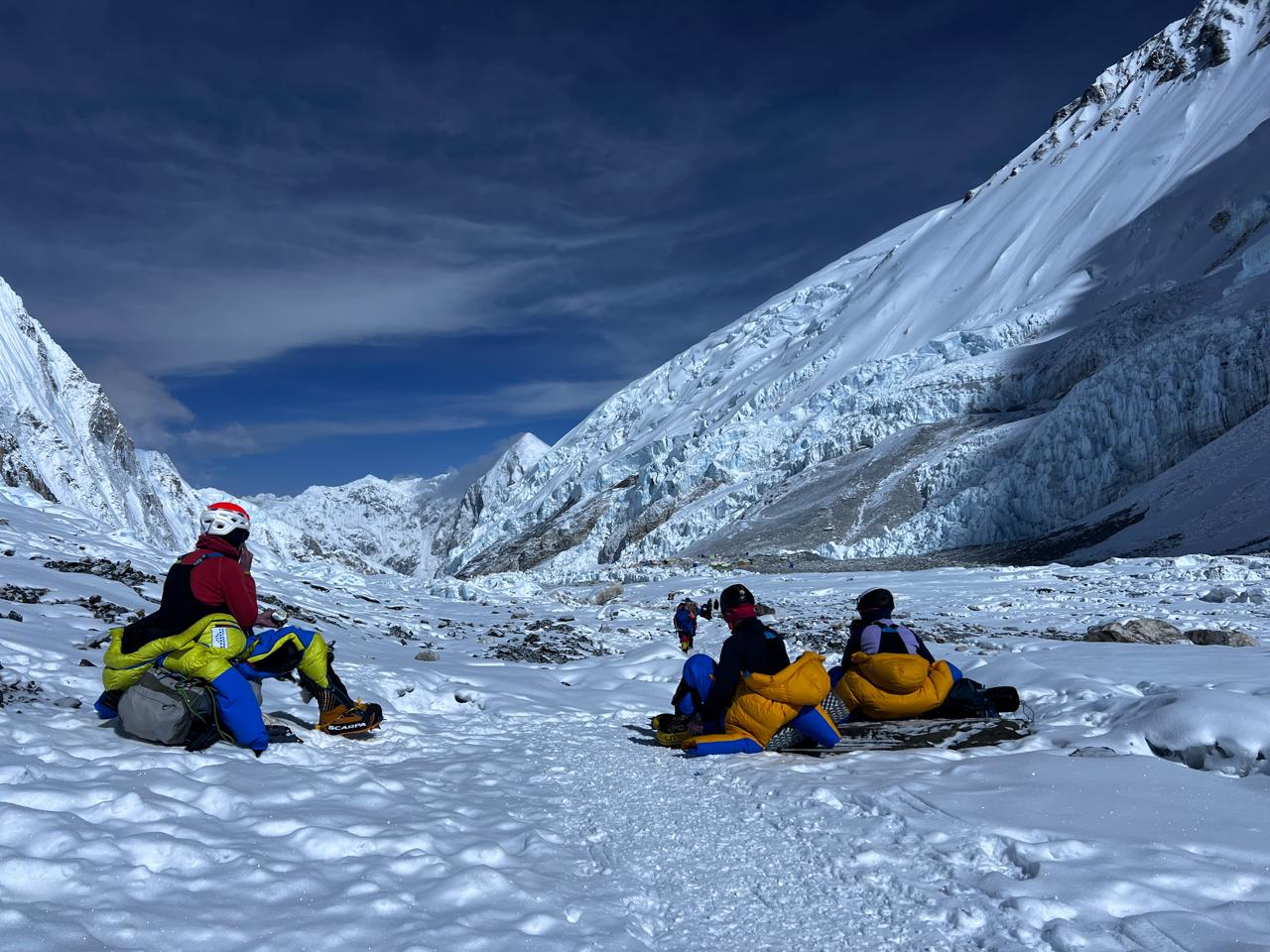
TCA: Do you leave flags on the summit?

Burasheva: No. Nothing should be left there except snow and ice. We always take everything back with us.

TCA: You have climbed the highest peaks on all seven continents and several eight-thousanders?

Burasheva: Yes, these are two separate programs. I completed the Seven Summits: Kilimanjaro in Africa, Everest in Asia, Elbrus in Europe, Aconcagua in South America, Denali in North America, Carstensz in Oceania, and Vinson in Antarctica.

At the same time, I began working on the fourteen eight-thousanders. So far, I have climbed three: Everest, Manaslu, and Cho Oyu. There are fourteen in total. If sponsorship continues, and these expeditions are very expensive, I could complete the program within two to three years. I am currently 34 and in peak physical condition.

TCA: How much does one ascent cost?

Burasheva: From $40,000. It’s expensive. That’s why climbers spend as much time negotiating sponsorships as they do training. You can have one sponsor for multiple climbs or divide the funding among several.

TCA: What about gender equality in mountaineering? Are physical abilities equal?

Burasheva: I believe women are as physically strong as men and often more enduring. We may not lift 60 kilograms like Sherpas or some men, but in high-altitude mountaineering, there is no gender division. You are a full member of the team.

TCA: So you carry the same weight?

Burasheva: Exactly. Shared equipment is distributed evenly. There is no reduction because someone is a woman. On one expedition, each of us carried 11 kilograms of common gear.

TCA: How much weight do you carry in total?

Burasheva: It depends on the mountain. On eight-thousanders, you usually carry 10–15 kilograms, since Sherpas assist and loads can be staged higher in advance. But on Denali, for example, you carry everything yourself for 21 days. I had 25 kilograms in my backpack and another 25 kilograms on a sled.

TCA: How long do expeditions last, and how long does recovery take?

Burasheva: Eight-thousander expeditions can last 40 days or more. Afterward, I usually need one or two weeks of rest before returning to training. After my first eight-thousander, Everest, recovery took about a month. But after my last two climbs, which were back-to-back, I resumed training almost immediately.

TCA: How many major climbs can you do in a year?

Burasheva: It depends on the individual. Some climbers move extremely fast. In the era when Maxut Zhumayev and Vassiliy Pivtsov completed all fourteen eight-thousanders without supplemental oxygen, without Sherpas, and without fixed ropes, it was a completely different level of mountaineering. Completing the program quickly was almost impossible.

TCA: Are there climbers who have completed all fourteen more than once?

Burasheva: Yes. Nirmal Purja and Sanu Sherpa have completed the program multiple times and are working toward a third completion. Maxut Zhumayev continues to climb regularly and has repeated several eight-thousanders.

TCA: Has mountaineering become easier?

Burasheva: It has become more adapted to modern realities. Equipment is more advanced, and supplemental oxygen is widely used. You no longer need to pass strict selection processes as in Soviet times.
TCA: Do climbers share certain personality traits?

Burasheva: Not really. Everyone is different. But professional climbers need endurance, composure, and the ability to make fast, correct decisions.

TCA: Do mountains have character?

Burasheva: Yes. Every mountain has its own energy. All mountains are difficult and potentially deadly. Even those we consider “home” mountains have seen many recent accidents, avalanches, storms, and severe weather.

TCA: Mountain peaks are sacred in many cultures. What do they mean to you?

Burasheva: For me, they are sacred too. All fourteen eight-thousanders are located in Asia, in Nepal, Tibet, and Pakistan, within the Himalayas and Karakoram. Anyone who has been to Nepal feels the special energy there.

I believe that the higher you go, the closer you are to God. You should approach the mountains with pure thoughts. At the summit, it feels as if you are in the palm of God’s hand. In everyday city life, this feeling is not so strong, but at altitude it becomes clear. You understand who you are and which goals are truly yours. You come face to face with your true self.

TCA: Which climbs were the most difficult? Did you ever consider quitting?

Burasheva: I never considered quitting mountaineering. I love it and believe it is what I am meant to do. But I have turned back when conditions were too dangerous. In October 2024, we retreated from Camp Four on Manaslu. It was the right decision. When sponsors are involved, there is responsibility and pressure. But the mountains will always remain. Our task is to return home alive and well.
TCA: What happens after you return?

Burasheva: It’s cyclical: climb, rest, train again. But training is no longer just preparation for a specific summit; it is part of my life. I run at least three times a week, hike, climb, and train for strength. Of course, there are more intense periods, but basic training is constant.

TCA: Before mountaineering, you worked as a financial analyst. Can this be combined with a conventional profession?

Burasheva: Yes, many people do exactly that to fund their climbs. In Almaty’s mountaineering community, most climbers work full-time. I am fortunate to have sponsorship support and can focus entirely on climbing.

Kazakhstan Suspends Extradition of Navalny Associate as Courts Weigh Asylum Claim

Kazakhstan has suspended the extradition of Yulia Yemelyanova, a former staff member of Alexei Navalny’s St. Petersburg office, to Russia. Yemelyanova was detained in Almaty in August 2025 after the Russian authorities requested her transfer. The Prosecutor General’s Office halted the extradition after her lawyers filed appeals linked to her asylum claim.

Earlier this month, authorities approved Russia’s request despite her pending asylum application. Her lawyer subsequently stated that he would challenge that approval before the Supreme Court.

Russian investigators have accused Yemelyanova of theft linked to a 2021 case. Her defense rejects the charge and argues that the prosecution is politically motivated.

Yemelyanova’s case fits into a broader pattern of extradition proceedings involving Russian nationals who relocated to Kazakhstan after Russia launched its full-scale invasion of Ukraine in February 2022. In late September 2022, Kazakhstan’s Interior Ministry stated that nearly 100,000 Russians had entered the country following Moscow’s announcement of partial mobilization on September 21.

“Most of them have to leave because of the hopeless situation. We have to take care of them and secure their safety,” Kazakh President Kassym-Jomart Tokayev said at the time.

Many have remained. Kazakhstan’s Interior Ministry reported that more than 80,000 Russian citizens received work-related residence permits between January 2023 and September 2024.

Opinion in Kazakhstan on Navalny spans a wide and often divergent spectrum. When news of his death in a Russian penal colony broke in February 2024, responses across Central Asia ranged from sympathy to indifference. In Kazakhstan, some civic activists expressed concern over political repression in Russia, while others recalled Navalny’s past nationalist rhetoric and critical comments about migration from Central Asia.

Those divergent views form the domestic context for cases involving former members of Navalny’s political network. Extradition proceedings unfold within a society that interprets Russian opposition politics through its own historical experience and social priorities.

The relocation wave reshaped rental markets in Almaty and Astana in late 2022, as IT firms, logistics companies, and service businesses absorbed skilled migrants. At the same time, authorities tightened migration rules and reduced the duration of visa-free stays, signaling that temporary entry did not guarantee long-term residence.

In 2024 and 2025, Russian extradition requests began to draw greater public attention, with several defendants seeking asylum while contesting their transfer.

One prominent case involved Mansur Movlayev, a Chechen activist critical of Ramzan Kadyrov. In January 2026, Kazakhstan approved Russia’s extradition request after denying him refugee status. The UN Human Rights Committee registered a complaint in Movlayev’s case and requested that Kazakhstan refrain from extraditing him while the review proceeded. Kazakhstan’s Supreme Court subsequently suspended the extradition decision pending review connected to his asylum appeal.

Kazakhstan’s Criminal Procedure Code governs extradition decisions and provides appeal mechanisms, with the Law on Refugees establishing procedures for reviewing asylum claims and defining protections from removal. International law reinforces these safeguards; the principle of non-refoulement prohibits returning a person to a country where they face serious threats to their life or freedom.

Kazakhstan’s extradition decisions are unfolding within a shifting geopolitical and economic landscape, as Russia’s war in Ukraine has accelerated diversification of the country’s strategic partnerships. Sitting beside Vladimir Putin at the St. Petersburg International Economic Forum in June 2022, President Kassym-Jomart Tokayev refused to recognize what he called the “quasi-state territories” of Donetsk and Luhansk, a remark that drew sharp criticism from Russian commentators and officials.

In 2023, China overtook Russia as Kazakhstan’s largest trading partner and maintained that lead through 2024 and 2025. Bilateral trade with China reached approximately $43.8 billion in 2024, accounting for approximately 30% of total trade turnover. Russia ranked second, with a turnover of roughly $27 billion, representing about 19% of total trade. The shift reflects the expansion of energy and mineral exports to Asian markets and the rapid diversification of transport routes.

Despite China’s rise as Kazakhstan’s largest trading partner, Russia remains structurally embedded in the country’s economy and security system. The Caspian Pipeline Consortium continues to carry the majority of Kazakhstan’s crude exports to global markets via Russia’s Black Sea port of Novorossiysk, making the route central to state revenue and export stability. Kazakhstan’s membership in the Eurasian Economic Union and the Collective Security Treaty Organization also anchors customs alignment and defense cooperation. Cross-border trade, transport infrastructure, and labor mobility along the long Kazakh-Russian border sustain that structural connection.

At the same time, Astana has widened its strategic options. In addition to China, engagement with the European Union has expanded in infrastructure and energy cooperation, while Turkey has strengthened economic and transport ties with Kazakhstan as part of a broader Eurasian partnership. Cooperation with the United States has also deepened through the C5+1 platform, with a growing focus on critical minerals, energy security, and regional connectivity.

The government is actively promoting the Trans-Caspian International Transport Route, or Middle Corridor, as an alternative east-west trade route that links China to Europe via the Caspian Sea and the South Caucasus, reducing reliance on Russian transit.

Extradition cases involving Russian political activists now sit within that broader diplomatic and economic balance. Approving a transfer request affirms treaty-based cooperation with Russia; suspending extradition during appellate review reflects the operation of domestic courts and asylum safeguards.

Before 2022, extradition cooperation between Kazakhstan and Russia rarely attracted sustained public attention. The relocation of tens of thousands of Russian citizens altered that environment — courts now grapple with cases that combine criminal allegations, asylum claims, and geopolitical sensitivities.

Recent proceedings reveal a recurring sequence: prosecutors approve Russian requests under existing legal frameworks; defense teams appeal and invoke refugee protections; higher courts review the case. Extradition may be paused during that process.

Yemelyanova’s case now follows that path. The suspension keeps her in Kazakhstan while courts assess the legality of extradition alongside her asylum claim. The final ruling will determine whether judicial safeguards prevent the transfer or whether extradition proceeds once appeals are concluded.

Kazakhstan continues to process extradition requests under established legal frameworks, but those frameworks now operate under the weight of geopolitical consequences. Cooperation with Russia remains intact, yet judicial review and refugee protections are shaping how far that cooperation extends. As regional alignments evolve, politically sensitive extraditions are no longer technical matters — they are signals of how Kazakhstan balances treaty obligations, domestic law, and strategic autonomy.

Central Asia’s Population Could Reach 96 Million by 2040, Raising Infrastructure Pressures

Central Asia’s population could grow to 96 million by 2040, a trend expected to stimulate economic expansion while placing significant strain on infrastructure, energy systems, and water resources across the region, according to Russia’s state news agency TASS.

In an interview with TASS, Nikolai Podguzov, Chairman of the Management Board of the Eurasian Development Bank (EDB), said demographic growth would be one of the defining factors shaping Central Asia’s long-term development.

“By 2040, according to our estimates, the population of Central Asia may reach 96 million. This should become a driver of economic growth, but at the same time such numbers will create enormous pressure on infrastructure,” he said.

As previously reported by The Times of Central Asia, Central Asia’s population exceeded 84 million in 2025, continuing a rapid upward trend after surpassing 80 million in 2024. Projections indicate that the population could exceed 100 million by 2050, underscoring the scale of demographic and economic transformation facing the region in the coming decades.

Podguzov added that the region would require significant progress in energy efficiency, modern transport systems, and water management to ensure sustainable development.

He described Central Asia as one of the regions of the world most vulnerable to climate change. According to EDB forecasts, water shortages are expected to intensify, with an annual deficit potentially reaching between 5 and 12 cubic kilometers by 2028. A substantial portion of water resources is already lost due to outdated irrigation and distribution systems.

Podguzov said the bank is financing projects to modernize irrigation networks, introduce water-saving technologies, and implement digital water accounting mechanisms across the region.

To address these challenges, the EDB has proposed a Eurasian Transport Framework, a network of transport corridors aimed at lowering logistics costs and accelerating trade flows. While existing routes predominantly run east to west, Podguzov emphasized the growing importance of north-south connections, including the potential Trans-Afghan corridor, which could provide access to markets in South Asia and the Persian Gulf.

The bank projects that the combined economies of Central Asia’s five countries will reach approximately $600 billion in 2026, positioning the region among the fastest-growing globally. However, Podguzov stressed that demographic expansion, transport development, and water security are closely interconnected challenges that require coordinated policy responses.