• KGS/USD = 0.01144 0%
  • KZT/USD = 0.00210 0%
  • TJS/USD = 0.10559 0.19%
  • UZS/USD = 0.00008 0%
  • TMT/USD = 0.28530 0%
  • KGS/USD = 0.01144 0%
  • KZT/USD = 0.00210 0%
  • TJS/USD = 0.10559 0.19%
  • UZS/USD = 0.00008 0%
  • TMT/USD = 0.28530 0%
  • KGS/USD = 0.01144 0%
  • KZT/USD = 0.00210 0%
  • TJS/USD = 0.10559 0.19%
  • UZS/USD = 0.00008 0%
  • TMT/USD = 0.28530 0%
  • KGS/USD = 0.01144 0%
  • KZT/USD = 0.00210 0%
  • TJS/USD = 0.10559 0.19%
  • UZS/USD = 0.00008 0%
  • TMT/USD = 0.28530 0%
  • KGS/USD = 0.01144 0%
  • KZT/USD = 0.00210 0%
  • TJS/USD = 0.10559 0.19%
  • UZS/USD = 0.00008 0%
  • TMT/USD = 0.28530 0%
  • KGS/USD = 0.01144 0%
  • KZT/USD = 0.00210 0%
  • TJS/USD = 0.10559 0.19%
  • UZS/USD = 0.00008 0%
  • TMT/USD = 0.28530 0%
  • KGS/USD = 0.01144 0%
  • KZT/USD = 0.00210 0%
  • TJS/USD = 0.10559 0.19%
  • UZS/USD = 0.00008 0%
  • TMT/USD = 0.28530 0%
  • KGS/USD = 0.01144 0%
  • KZT/USD = 0.00210 0%
  • TJS/USD = 0.10559 0.19%
  • UZS/USD = 0.00008 0%
  • TMT/USD = 0.28530 0%

Kyrgyzstan Seeks to Increase Automobile Imports from China

On April 8, the National Investment Agency of Kyrgyzstan and A-CAR (Chuan Yi LLC) signed a memorandum on investment cooperation in the automotive industry, including the supply and sale of new Chinese cars in Kyrgyzstan and the development of service infrastructure.

The Chinese company plans to establish a dealer network and open an official representative office for Central Asia.

A-CAR supplies vehicles from leading Chinese and international brands and provides a full range of services, including technical maintenance, vehicle registration, and insurance.

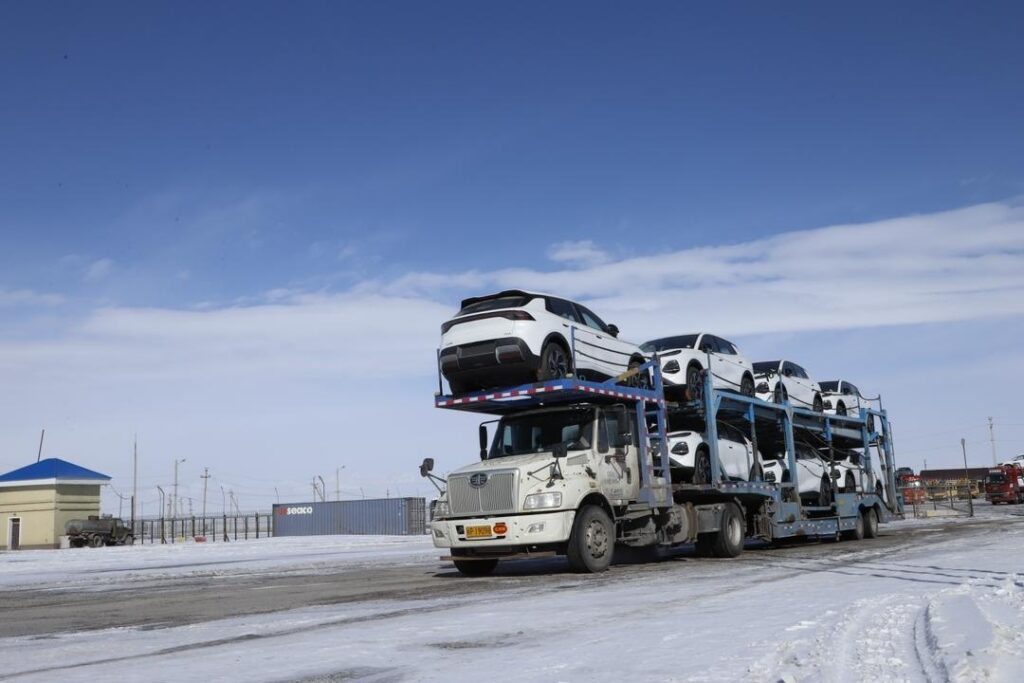
A significant portion of vehicles imported from China to Kyrgyzstan are re-exported to Russia rather than remaining in the local market.

The duty-free regime for electric vehicles in Kyrgyzstan has significantly boosted imports of Chinese electric cars. As a member of the Eurasian Economic Union (EAEU), Kyrgyzstan benefits from an annual quota allowing the duty-free import of up to 15,000 electric vehicles.

Sergey Tselikov, director of Russian automotive analytics agency Autostat, wrote on his Telegram channel that Kyrgyzstan remains the second-largest import channel for new passenger cars into Russia after China. He said 84% of the new passenger cars imported through Kyrgyzstan were manufactured in China, including Chinese, European, and Japanese brands.

According to Autostat, Kyrgyzstan is the largest supplier of new passenger cars to Russia among EAEU member countries. In 2025, 53,600 new passenger cars were imported to Russia from Kyrgyzstan, followed by 17,100 cars from Belarus, 11,000 from Kazakhstan, and 344 from Armenia.

Kyrgyzstan is also seeking to collaborate with Chinese companies to develop electric vehicle (EV) charging infrastructure.

In late March, Energy Minister Taalaibek Ibrayev visited China, where he held a series of meetings with energy and technology companies involved in EV infrastructure development. Negotiations focused on cooperation in energy infrastructure, including the development of EV charging stations and energy storage systems in Kyrgyzstan.

These initiatives align with government efforts to promote environmentally friendly transport and reduce air pollution in Bishkek and other major cities.

The number of EVs in Kyrgyzstan has been rising steadily, with more than 200 electric vehicles imported into the country daily under a value-added tax (VAT) exemption scheme, according to official figures.

Despite this growth, EVs still account for a small share of the country’s total vehicle fleet, about 0.8%, or approximately 15,200 vehicles, according to the Ministry of Natural Resources, Ecology, and Technical Supervision.

Kazakhstan’s Logistics: Mukhtar Tolegen on Infrastructure and Reform

Kazakhstan has invested tens of billions of dollars in transport infrastructure in recent years and has positioned itself as a key transit link between Europe and Asia. Yet the country still ranks in the middle of the World Bank’s Logistics Performance Index (LPI). Why have these large investments not produced a sharper improvement, and what reforms are needed to change that?

The Times of Central Asia spoke with Mukhtar Tolegen, executive director for transport logistics at the Union of Transport Workers of Kazakhstan, “KAZLOGISTICS.”

TCA: What is Kazakhstan’s current position in the LPI, and how has it changed?

Mukhtar:
In the World Bank’s 2023 LPI ranking, Kazakhstan ranks 79th out of 139 countries, with an overall score of 2.7 on a five-point scale. This represents a decline from the previous ranking, when the country ranked 71st.

It’s important to note that the index’s methodology was updated in 2023. In addition to expert assessments, the calculation now includes real-world cargo tracking data, including GPS-based data. This made the ranking more objective and simultaneously increased competition between countries.

Despite its decline, Kazakhstan is demonstrating steady progress in a number of areas. This is primarily due to the development of transport infrastructure, the construction of new highways, the modernization of checkpoints, and the creation of transport and logistics centers.

Strengthening the country’s transit potential within international transport corridors, including the Middle Corridor, the North-South Corridor, and the China-Kazakhstan-Europe route, is also playing a significant role.

At the same time, digitalization of logistics is rapidly advancing, including electronic customs solutions, cargo tracking systems, and other technological tools.

An additional driver is the growing interest of international investors, including in the context of the Belt and Road Initiative.

TCA: How does a country’s position in the ranking affect its economy and investment attractiveness?

Mukhtar: The LPI index is not simply a reflection of the state of the logistics system, but an important indicator of a country’s economic competitiveness. The higher a country’s ranking, the lower its logistics costs for exports and imports, the faster cargo flows across borders, and the higher the level of trust among international partners and investors.

Low scores, on the other hand, indicate bottlenecks, for example, in customs procedures or infrastructure. Under such conditions, large international companies may choose alternative routes, which reduces the country’s transit potential.

Thus, the LPI serves as a tool that directly influences the development of international trade, investment attractiveness, and the country’s strategic position in the global market.

TCA: In which index components is Kazakhstan showing progress, and where are challenges remaining?

Mukhtar: The LPI index is based on six key components, and the dynamics of these components in Kazakhstan remain uneven.

Quality of Infrastructure

Steady progress is being observed here, driven by large-scale investments in the transport system. The modernization of the Dostyk-Moiynty railway section has significantly increased the capacity of the Kazakhstan-China route. Projects are underway to build new lines, including a bypass of Almaty, as well as the Moiynty-Kyzylzhar, Darbaza-Maktaaral, and Ayagoz-Bakhty routes.

At the same time, the Aktau and Kuryk seaports are being modernized, container terminals are being developed, and the road network is being upgraded. In 2025 alone, over 13,000 kilometers of roads were built and repaired.

Customs Efficiency

Despite the introduction of electronic systems, this component remains under development. Bureaucratic procedures and delays at the border continue to have a negative impact. In response, the government is expanding digital solutions, but further process simplification and integration with international standards are required.

Cargo Tracking

Notable progress has been observed here thanks to the implementation of digital technologies. The use of GPS monitoring and route management systems increases the transparency of supply chains and enables the prompt identification of problem areas.

On-Time Delivery

The dynamics remain mixed. Delivery times are decreasing on key transit routes, but bottlenecks at the junctions of transport systems and dependence on external operators continue to hinder overall progress.

Competence of Logistics Services

Gradual improvement is being observed due to the development of educational programs, the attraction of international players, and the implementation of modern supply chain management standards.

Organization of International Transportation

There is positive momentum, particularly on the Asia-Europe route via the Middle Corridor. The development of multimodal transportation and international cooperation increases the stability of supply chains but requires further coordination and infrastructure integration.

TCA: What initiatives does the KAZLOGISTICS Union propose to improve the situation?

Mukhtar:
The Kazakhstan Transport Workers’ Union has been implementing a systematic approach to industry development. Since 2016, two-year action plans to improve LPI indicators have been approved in conjunction with government agencies.

One of the key tools is border and checkpoint timekeeping, which has been conducted since 2014. This allows us to identify real delays and formulate practical recommendations.

Additionally, the Domestic LPI study is conducted annually, assessing the country’s domestic logistics system.

Priority areas include developing container shipping between China and Europe, reducing railcar downtime, modernizing infrastructure, digitalizing processes, developing multimodal transportation, simplifying administrative procedures, and training personnel.

These measures are aimed at eliminating systemic barriers and strengthening Kazakhstan’s position as a transit hub for Eurasia.

TCA: How has the $35 billion investment impacted industry development?

Mukhtar:
Investments in the transport industry over the past 15 years have created a modern infrastructure foundation. Key transport hubs, roads, ports, and logistics centers have been modernized.

This has led to increased speed and reliability of transportation, the development of multimodal routes, and increased containerization. As a result, Kazakhstan’s role as a transit hub between Europe and Asia has strengthened.

Today, these investments are laying the foundation for further growth of the LPI through digitalization, improved quality of logistics services, and the development of human capital.

TCA: What are the key constraints hindering growth in the ranking?

Mukhtar:
Currently, our main efforts are focused on several areas: further digitalization of customs and border procedures, development of multimodal and container transportation, optimization of key transit routes, improving the competencies of logistics operators, and the use of analytical tools, including the LPI, for industry management.

These objectives reflect current growth areas and define the agenda for future reforms.

TCA: When is the next ranking expected, and what are the forecasts?

Mukhtar:
The World Bank typically publishes the LPI every two to three years. Given the current dynamics, Kazakhstan has the potential to improve its position through infrastructure development, increased container shipping, and deeper digitalization. However, the final outcome will depend both on domestic reforms and the pace of development in other countries.

Kyrgyz Bank Wins Brussels Court Case Over Sanctions Accusations

Kyrgyzstan’s Bakai Bank has announced victory in a Brussels court case against the non-governmental organization Open Dialogue Foundation (ODF), which had previously published materials calling for sanctions against the bank. The court said the allegations were not supported by sufficient evidence.

According to the bank, it filed the lawsuit to protect its business reputation after the Open Dialogue Foundation published materials in 2023 calling for sanctions against the financial institution to be considered.

The ODF publications alleged that the bank may have been involved in schemes to circumvent European Union anti-Russian sanctions. Bakai Bank denied these allegations and initiated legal proceedings in Brussels.

According to the bank’s statement and reporting on the ruling, a Brussels court held that ODF had made serious allegations without sufficient evidence.

As a result, the court ordered the organization to remove the relevant publications, publish the text of the court decision on the main page of its website, and reimburse legal costs. At the time of publication, the Open Dialogue Foundation had not publicly commented on the court’s decision. Bakai Bank stated that the court’s decision stands as confirmation of the allegations’ groundlessness.

“We welcome this decision, which confirms the lack of basis for the charges and protects the bank’s business reputation. We consistently comply with international law and adhere to the principles of transparency in our operations,” the bank’s representatives said.

Askat Alagozov, press secretary to the President of Kyrgyzstan, commented on the situation on social media. He noted that this is not the first time Kyrgyz banks have faced accusations of evading sanctions. Specifically, Keremet Bank has been sanctioned by the United States and the United Kingdom, while Capital Bank of Central Asia, also known as Kapital Bank, has been sanctioned by the United Kingdom.

According to Alagozov, such measures are accusatory in nature, and no public evidence of violations has been presented.

He also added that President Sadyr Japarov previously rejected such accusations and stated the country’s readiness to conduct an independent international audit of the banking sector. Moreover, Capital Bank of Central Asia, one of the banks targeted by sanctions, is state-owned.

Uzbekistan’s International Reserves Decline After Seven Months of Growth

Uzbekistan’s gold and foreign currency reserves declined in March after seven consecutive months of growth, according to data released by the Central Bank.

As of April 1, the country’s total international reserves stood at more than $68.99 billion, marking a monthly decrease of over $8.09 billion, or around 10%. The Central Bank attributed the drop primarily to a fall in global gold prices during March, when the price per ounce declined from $5,174.1 to $4,553.95.

Gold remains the largest component of Uzbekistan’s reserves. Its total value fell by $6.82 billion to $60.85 billion, ending an eight-month growth streak. At the same time, the physical volume of gold held by the Central Bank continued to increase, rising by 0.3 million troy ounces to reach 13.4 million troy ounces, or approximately 416.8 tons.

Foreign currency reserves also declined over the same period. In March, they dropped by $1.26 billion, or 14.3%, to $7.57 billion. Of this amount, $1.3 billion is held in foreign central banks and the International Monetary Fund, while $4.71 billion is deposited in foreign commercial banks.

In addition, the value of foreign securities purchased by the Central Bank reached $1.545 billion, accounting for 2.24% of total reserves.

The latest figures follow a period of strong growth in Uzbekistan’s reserves. As previously reported by The Times of Central Asia, the country’s international reserves rose sharply in 2025, increasing by $25.1 billion to reach a record $66.3 billion as of January 1, 2026. This growth, equivalent to a 61% increase over the year, was largely driven by high global gold prices, alongside gains in foreign currency holdings.

Pannier and Hillard’s Spotlight on Central Asia: New Episode Out Now

As Managing Editor of The Times of Central Asia, I’m delighted that, in partnership with the Oxus Society for Central Asian Affairs, from October 19, we are the home of the Spotlight on Central Asia podcast. Chaired by seasoned broadcasters Bruce Pannier of RFE/RL’s long-running Majlis podcast and Michael Hillard of The Red Line, each fortnightly instalment will take you on a deep dive into the latest news, developments, security issues, and social trends across an increasingly pivotal region.

This week, we examine a series of significant developments across Central Asia, from the deepening fallout of Kyrgyzstan’s political power struggle, with fresh arrests, widening investigations, and reports of military build-ups in one of the country’s key districts, to a meeting of the Organisation of Turkic States carrying implications that could reverberate well into the rest of the year. We also look at Kazakhstan’s announcement of a new oil discovery so substantial it comes close to rivalling Kashagan, alongside the decision by four of Central Asia’s five states to dispatch aid convoys in support of the humanitarian response in Iran, as well as a notable diplomatic development where two neighbouring states are finally moving to establish formal relations for the first time since 2021. Before finally turning to the escalating conflict between Afghanistan and Pakistan, where some of the heaviest fighting in months is raising fresh questions about border stability, regional security, and the risk of wider spillover.

Special guest on the show this week:

– C. Christine Fair, professor in the Security Studies Program within the Edmund A. Walsh School of Foreign Service at Georgetown University, and an expert in the Pakistani military and Afghan relations.

Opinion – Kazakhstan’s New Constitution Sends a Key Signal for Global Partners

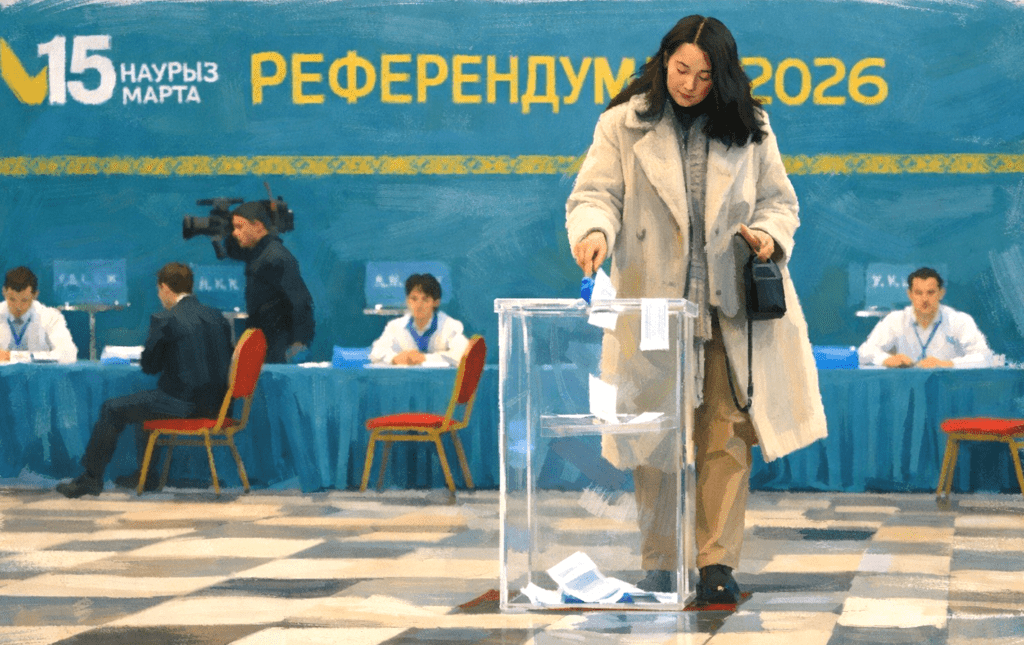
In a nationwide referendum on March 15, over 87% of voters approved a new constitution for Kazakhstan. It was a significant victory for President Tokayev and his administration, all the more so because voter turnout exceeded 73%.

Kazakhstan’s new constitution is a key signal for global partners. It replaces the old bicameral system with a unicameral legislature, establishes the Halyk Kenesi (People’s Council), an advisory body intended to promote national dialogue, and creates a vice presidency to provide for clearer succession at the top of the state.

The new constitution is the outcome of a strategy that has been building for some time. Now, backed by a clear majority, Kazakhstan’s leadership is seeking to strengthen governance by redistributing power, lessening political ambiguity, and grounding politics in shared values—however difficult that may be to accomplish. All of this is being pursued despite—and perhaps because of—the nation’s history of corruption and nepotism.

Kazakhstan’s constitutional reforms were deliberate, structural measures designed to reorient the country’s governmental machinery toward what supporters describe as the common good. That, at least, is the stated intention, reflected in a slogan often used by backers of the new constitution: “A strong president, an influential parliament, and an accountable government.”

Some outside observers have viewed the new constitution favorably, framing it as an effort to streamline governance and clarify institutional roles, while others have warned that the changes could impede sociopolitical progress and human rights by prioritizing stronger governance. Some also see the reforms as signaling a move toward more restrictive political practices.

These alarmist interpretations are overstated.

Astana’s constitutional reforms fit into an ongoing political effort, using the law to strengthen civic involvement and the well-being of the community as a whole, not just individual interests. The new constitution did not emerge ex nihilo for the purpose of freezing elite advantages at the expense of the people, as others in Kazakhstan and the broader region have done in the past. That interpretation of constitutional change in Central Asia overlooks the government’s broader reform agenda, whatever its perceived shortcomings.

In his March 31 article, A New Constitution for a Just, Strong, and Prosperous Kazakhstan, President Tokayev framed Kazakhstan as a rules-oriented state, emphasizing rights, judicial independence, and impartial institutions—an approach that stands out regionally despite open questions about follow-through.

Tokayev emphasized that “The new constitution is about people, not just better government.” The constitution’s largest section is dedicated to protecting freedoms and rights based on common sense and traditional values, including privacy, personal data, private property, and home inviolability. Judicial independence is reinforced to ensure that all citizens receive qualified, impartial defense – at least that’s the intent. Amendments require a public referendum, ensuring that fundamental choices remain popular. Religious liberty is guaranteed in a secular society.

The constitution also presents Kazakhstan as a more attractive and predictable place to do business, for both domestic and foreign investors. The constitution, according to Tokayev, “sets clear rules for economic activity.” As such, the reforms create a political culture that aims to be transparent and investor-friendly, using the opportunity to boost entrepreneurship while curbing economic predation, including abusive rent-seeking or elite wealth hoarding that flourished under a previously uneven playing field favoring entrenched interests. In turn, the measures are framed as helping create a fuller, more welcoming economic environment. Tokayev states that “Kazakhstan is already the leading destination for foreign direct investment (FDI) in Central Asia, attracting nearly 70% of the region’s FDI.”

A new political architecture built on unity and responsibility

Kazakhstan’s constitutional reforms are designed around the idea that nations thrive when citizens pair civic participation with moral virtue and personal responsibility. Supporters argue that this focus is essential to meeting the demands of citizenship in an increasingly turbulent and unmoored world. The new constitution also reflects a broader governing philosophy: that radical individualism, whether cultural or economic, is not conducive to nation-building.

Not everyone accepts Kazakhstan’s view that political reform is most effective when anchored in both human dignity and traditional moral values within a market economy oriented toward the common good; that premise, however, is persuasive. Astana’s attempt to tie democratic stability to moral education grounded in traditional values echoes Alexis de Tocqueville, a theme I explored in my earlier article, Tokayev’s National Kurultai Address: A Moral Message, Not a Political One.

For this reason, some Western observers find the new constitution unsettling. Where they expect to find an emphasis on metrics of efficiency and order, which are “means to an end” rather than “ends in themselves,” this constitution focuses on Kazakhstan’s people and the common good. Moreover, critics overlook the extent to which tradition and family shape Kazakh society. After all, the aim of any constitution ought to be the well-being of the nation and its citizens.

For example, Article 30 states unambiguously that marriage will no longer be considered a union of two people but rather is “a voluntary and equal union of a man and a woman.” It further codifies that “the care and upbringing of children shall be the natural right and duty of parents” and that “adult able-bodied children shall be obliged to care for their incapacitated parents.” Supporters of traditional marriage have welcomed these measures, whereas critics—especially activists backing a broader definition like Kazakhstan’s earlier formulation of “a union of any two people” have been disappointed by the changes and opposed them.

Article 6, which requires that information on funds and assets received by non-profit organizations from foreign sources be publicly accessible under Kazakh law, has also alarmed critics, who argue that it could stifle independent civil society. Supporters, by contrast, present it as a transparency measure to protect against foreign-backed influence activities by state or non-state actors.

In the end, Kazakhstan’s leadership understands that the success or failure of its constitutional reforms will be measured by results over time: stable employment, decent wages, openness, public safety, and national unity. If the reforms are to succeed, they will have to deliver for both elites and, more importantly, ordinary citizens—in public life, at work, and at home. On that test, Kazakhstan appears to be moving in the right direction, though the outcome will depend on what follows.


The views expressed in this article are those of the author and do not necessarily reflect the official policy or position of the publication, its affiliates, or any other organizations mentioned.