• KGS/USD = 0.01144 0%
  • KZT/USD = 0.00212 0%
  • TJS/USD = 0.10456 0%
  • UZS/USD = 0.00008 0%
  • TMT/USD = 0.28490 0%
  • KGS/USD = 0.01144 0%
  • KZT/USD = 0.00212 0%
  • TJS/USD = 0.10456 0%
  • UZS/USD = 0.00008 0%
  • TMT/USD = 0.28490 0%
  • KGS/USD = 0.01144 0%
  • KZT/USD = 0.00212 0%
  • TJS/USD = 0.10456 0%
  • UZS/USD = 0.00008 0%
  • TMT/USD = 0.28490 0%
  • KGS/USD = 0.01144 0%
  • KZT/USD = 0.00212 0%
  • TJS/USD = 0.10456 0%
  • UZS/USD = 0.00008 0%
  • TMT/USD = 0.28490 0%
  • KGS/USD = 0.01144 0%
  • KZT/USD = 0.00212 0%
  • TJS/USD = 0.10456 0%
  • UZS/USD = 0.00008 0%
  • TMT/USD = 0.28490 0%
  • KGS/USD = 0.01144 0%
  • KZT/USD = 0.00212 0%
  • TJS/USD = 0.10456 0%
  • UZS/USD = 0.00008 0%
  • TMT/USD = 0.28490 0%
  • KGS/USD = 0.01144 0%
  • KZT/USD = 0.00212 0%
  • TJS/USD = 0.10456 0%
  • UZS/USD = 0.00008 0%
  • TMT/USD = 0.28490 0%
  • KGS/USD = 0.01144 0%
  • KZT/USD = 0.00212 0%
  • TJS/USD = 0.10456 0%
  • UZS/USD = 0.00008 0%
  • TMT/USD = 0.28490 0%

Opinion: Uzbekistan’s Strategic Reorientation in an Evolving International System

Almost as if responding to the pressures of a transforming international environment, the early twenty-first century has witnessed the emergence of Uzbekistan as a state seeking to redefine its strategic identity after decades of caution and relative isolation.

When Shavkat Mirziyoyev assumed the presidency of Uzbekistan in 2016, he inherited a state possessing considerable demographic weight, a pivotal geographic position, and untapped economic potential, yet constrained by regional mistrust and international isolation.

His policy has combined internal reform with a multi-vector diplomacy grounded in pragmatic calculations of national interest rather than ideological aspirations.

At the global level, Mirziyoyev has pursued a diplomacy of equilibrium. Rather than aligning unequivocally with any major power, Uzbekistan engaged simultaneously with Russia, China, the United States, and Europe, seeking economic modernization and strategic autonomy in equal measure. This multivectorism is tantamount to a classical calculation: that for a state situated at the crossroads of great-power interests, independence is preserved not by isolation but by balanced engagement.

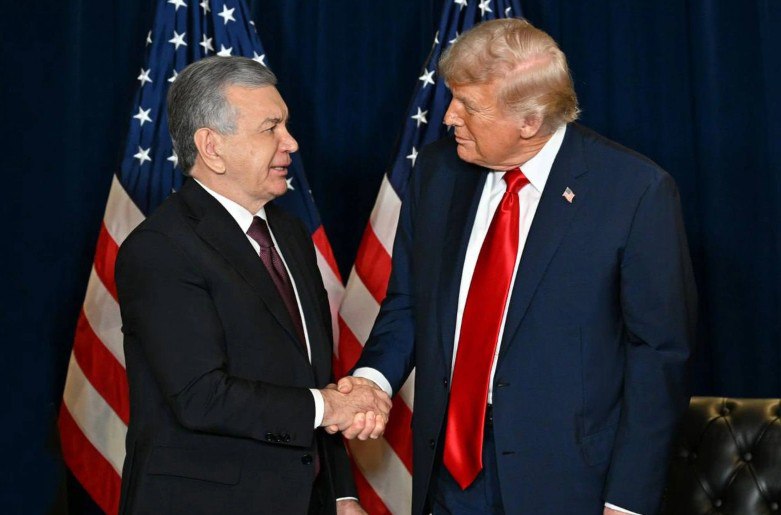
In that sense, Uzbekistan’s involvement in the Board of Peace established by U.S. President Donald Trump highlights Tashkent’s readiness to engage in emerging diplomatic frameworks beyond traditional multilateral institutions.

In his address during the first summit of the Board of Peace on February 19, Mirziyoyev stressed that “…Uzbekistan has supported the peacebuilding initiative of establishing the Board of Peace, and firmly declared its commitment to take a practical part in its successful implementation.” He added, “…Uzbekistan is ready to make a tangible contribution to the construction of residential buildings, kindergartens, schools, and hospitals.”

Uzbekistan is driven by several motivations in joining the new organization beyond its multi-vector diplomacy. First and foremost, Tashkent seeks to elevate U.S.–Uzbekistan relations to the level of a strategic partnership grounded in economic cooperation and selective collaboration on global security and peace initiatives.

In addition, Uzbekistan’s seat at the organization means its contribution to solving global crises, not just regional issues, which enhances its image as a ‘middle power’ in the foreseeable future. Secondly, this organization is aimed at maintaining international peace and stability through economic development.

In this regard, it creates an opportunity for Uzbek construction and engineering firms to gain access to Middle Eastern markets and form partnerships with major global contractors by being involved in construction, engineering, and infrastructure development.

This experience earns credibility for future projects. It should be noted that significant supply chains are needed for reconstruction, which presents Uzbekistan with opportunities to participate through its transport companies, air cargo services, transit routes, and railway logistics. Also, it is perfectly aligned with Uzbekistan’s vision of presenting itself as a regional connectivity hub.

From a political perspective, supporting U.S.-led initiatives can secure potential diplomatic backing from international financial institutions and open avenues for partnerships across multiple sectors, particularly in technology.

It sends a strong signal to Western investors that Uzbekistan is a reliable and responsible partner, which would potentially lead to increasing foreign direct investment. Political backing should be added to this list as the U.S. would assist Central Asia, including Uzbekistan, to address pressing regional issues.

Uzbekistan has consistently supported global peace and stability, as demonstrated by Mirziyoyev’s leadership in fostering cordial relations among Central Asian states and promoting the collective resolution of regional problems. The objectives of this newly established organization are consistent with Uzbekistan’s foreign policy goals of contributing to international peace and stability, thereby elevating the country’s role from a regional mediator to a more active contributor to international peace and security.

In the past, such a degree of partnership between the United States and Uzbekistan would have been almost unimaginable. However, the recent reorientation of Uzbekistan’s foreign policy, shaped by current geopolitical realities, reflects Mirziyoyev’s vision of a “New Uzbekistan” as a more open, modern, and citizen-oriented state.


The views expressed in this article are those of the author and do not necessarily reflect the official policy or position of the publication, its affiliates, or any other organizations mentioned.
An Early European View of Nomadic Central Asia

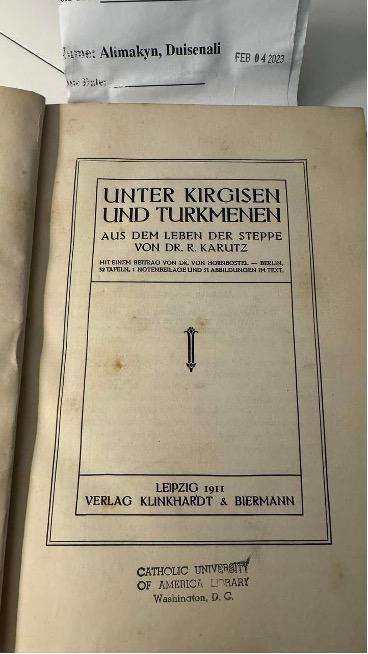
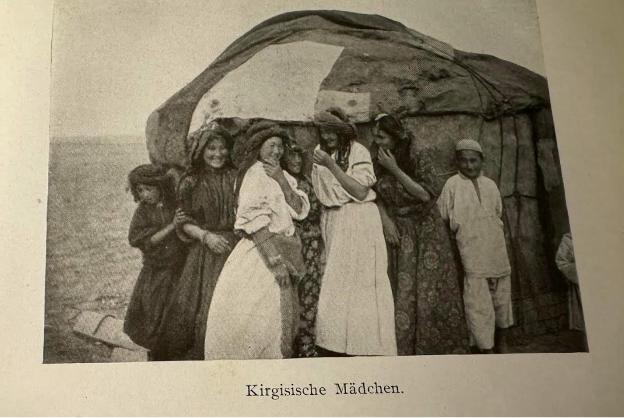
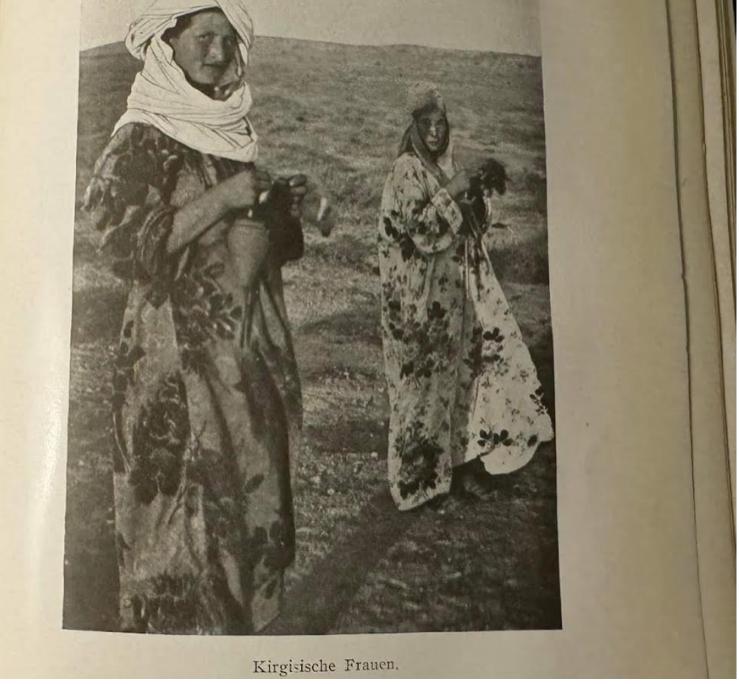
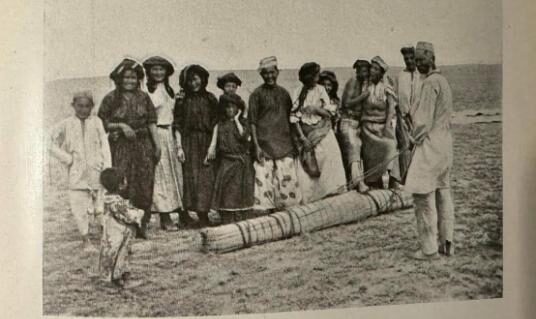
During a period when Central Asia remained largely unknown to European audiences, Among Kirghiz and Turkimans offered Western readers a rare first-hand account of the vast steppe and desert regions.

The book was written in the late nineteenth century by Richard Karutz, a German traveler whose work belongs to the broader tradition of European exploratory travel literature.

I first encountered this book while studying in the United States and later incorporated it into my research. A copy preserved in the library of the Catholic University of America in Washington, D.C., was published in Leipzig in 1911. Since then, it has been regarded as one of the more noteworthy works in early European writing on Central Asia.

Who Was Richard Karutz?

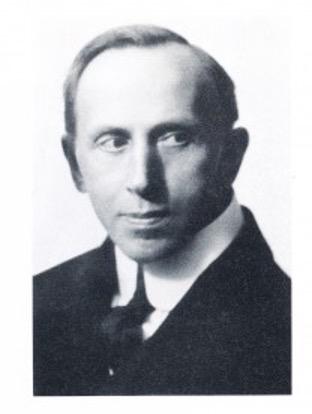
Richard Karutz was a late nineteenth-century German traveler and writer who journeyed through parts of the Russian Empire’s Central Asian territories. Though not widely known today compared to some British or Russian explorers, Karutz represents a generation of European intellectuals fascinated by the perceived “frontier zones” of empire, regions seen as remote, exotic, and culturally distinct.

Richard Karutz

He was neither a colonial administrator nor a military officer; rather, he traveled as an independent observer. His writings reflect the curiosity of an educated European shaped by the intellectual currents of his era, including Orientalism and the growing interest in ethnography. Like many travelers of his time, Karutz sought to document ways of life he believed were on the verge of transformation under imperial modernization.

Across the Steppe and Desert

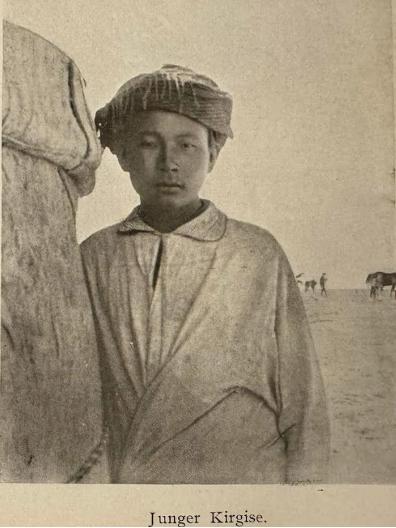
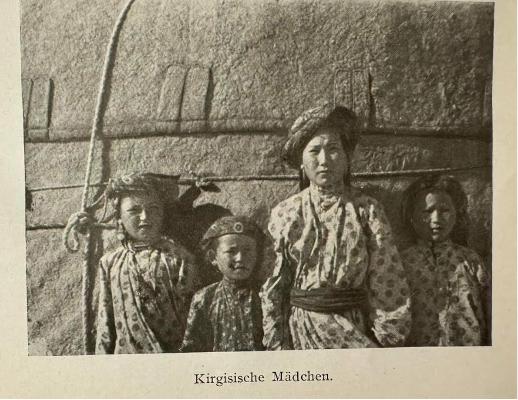
In Among Kirghiz and Turkimans, Karutz traveled among communities then commonly referred to in Russian and European sources as “Kirghiz”, a historical term often applied to Kazakhs, as well as Turkmen tribes. His route took him across vast grasslands, caravan routes, and oasis settlements shaped by pastoral migration, tribal organization, and Islamic traditions.

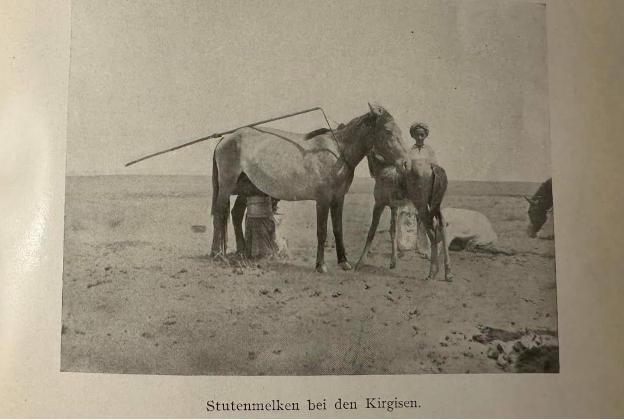
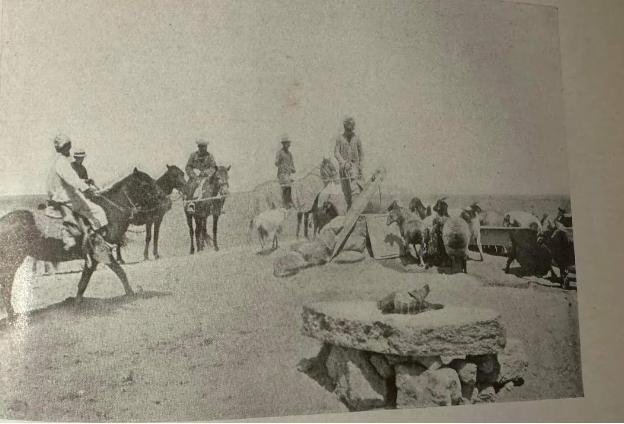
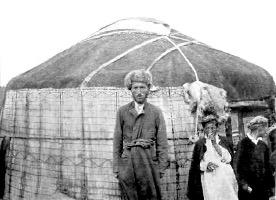
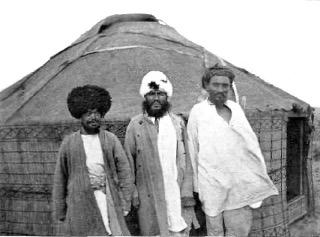
Rather than producing an official report or military survey, Karutz wrote in a personal and descriptive style typical of travel literature. His narrative often reads as impressionistic reflection rather than systematic analysis. He documents everyday life, including nomadic encampments and felt yurts, equestrian culture and elaborate codes of hospitality, tribal leadership and clan loyalty, as well as desert trade routes and caravan movement.

Mangyshlak, a peninsula on the eastern coast of the Caspian Sea in present-day Kazakhstan, features prominently in his descriptions. Significant mineral deposits were later discovered there, leading to its designation as a “peninsula of treasures.” Mangyshlak is characterized by stark desert landscapes and was once described as a barren land consisting largely of sand and stone. In the Middle Ages, it served as a gateway for trade between East and West. The region also played a role in the early history of Turkmen communities. Karutz’s writing attempts to capture both the hardship and the quiet grandeur of steppe existence.

Depicting Nomadic Society

A central strength of the book lies in its attention to social organization. Karutz was particularly struck by the mobility of Kazakh life, seasonal migrations, a livestock-based economy, and a strong attachment to land understood as ancestral heritage rather than private property.

He described the ways of life of Turkmen and Kazakh communities in detail: nomadic movements, settlements and dwellings, clothing, and the human life cycle, including birth, childhood, marriage, family life, illness, and death, as well as beliefs and customary practices.

Karutz encountered these cultures at a time when they had not yet been fully transformed by imperial policies. He provided detailed accounts of everyday life and material culture, examining the close relationship between daily practices and religion. He identified both shared and distinctive features of Kazakh culture in comparison with other Islamic nomadic societies. He also noted elements of pre-Islamic belief systems, including the use of amulets and protective charms, which he interpreted as remnants of earlier traditions. His work includes descriptions of children’s games and toys, traditional Islamic education, interethnic contacts, and perceptions of foreign cultures.

Between Expanding Empires

Karutz traveled during a period of significant geopolitical change. Russian imperial expansion was reshaping Central Asia through railways, administrative reforms, and military consolidation. Although his account is not overtly political, it captures a transitional moment: nomadic autonomy remained visible even as imperial authority strengthened and indigenous systems of governance coexisted with expanding external control.

The book therefore preserves a snapshot of Central Asia before full imperial consolidation and long before Soviet transformation.

Landscape as Identity

Karutz frequently dwells on the landscape. The vast steppe horizons, the sands of the Karakum Desert, and the silence of open plains become active forces shaping human character in his narrative. For him, geography helps explain culture: mobility fosters resilience; isolation encourages independence; boundless space invites contemplation. The environment is not merely a backdrop but a formative influence on identity.

Among Turkmen communities, he describes strong tribal cohesion, warrior traditions, and detailed honor codes. He also comments on craftsmanship, particularly carpet weaving, noting the artistic sophistication embedded in nomadic culture. At the same time, his perspective is shaped by nineteenth-century European intellectual frameworks. His observations, while valuable, reflect the assumptions of an outsider influenced by Orientalist thinking. Modern readers must therefore approach the text critically, balancing appreciation for its ethnographic detail with an awareness of its historical limitations.

A Record of Cultural Encounter

Today, Among Kirghiz and Turkimans remains significant for several reasons. First, it preserves nineteenth-century descriptions of customs, clothing, and social practices. Second, it reveals how Central Asian nomadic societies were interpreted by Western observers. At the same time, the book invites reconsideration: How were images of the “steppe nomad” constructed in European writing? How did such portrayals shape later academic and political narratives?

Ultimately, Among Kirghiz and Turkimans is more than a travel memoir. It is a document of cultural encounter, at times perceptive, at times constrained by the worldview of its era. Karutz writes as an outsider attempting to interpret societies with deep historical roots. For readers interested in Central Asian history, nomadic civilization, or the evolution of European travel literature, his work remains a meaningful, though imperfect, window into a region on the threshold of profound change.

Why Tajikistan’s Courts Rarely Hand Down Acquittals

The issue of extremely rare acquittals in Tajikistan has once again become the focus of public debate following a statement by the chairman of the Supreme Court. The authorities explain these statistics by pointing to the high quality of investigative and judicial work, while lawyers cite systemic problems related to objectivity and respect for human rights.

Supreme Court Chairman Rustam Mirzozoda said at a press conference that the absence of acquittals reflects compliance with the law and the professional performance of law enforcement agencies.

According to him, each criminal case is examined in strict accordance with the requirements of the Criminal Procedure Code, and courts do not issue acquittals because the defendants’ actions are determined to constitute a crime. In 2025, city and district courts referred 16 criminal cases involving 21 individuals for further investigation, but all of the defendants were subsequently convicted.

By comparison, in previous years acquittals were handed down, albeit extremely rarely: three cases in 2023, 11 in 2021, and two in 2020. Even then, they accounted for less than 1% of the total number of decisions.

Part of the legal community views the absence of acquittals as an alarming signal. Lawyer Navruz Odinaev notes that in developed legal systems, acquittals are a normal part of the criminal process.

In his view, the lack of acquittals requires serious analysis, as it affects the fundamental principles of justice, fairness, judicial independence, and the presumption of innocence.

Lawyer Uguloy Bobova highlights another aspect, the potential reputational consequences for law enforcement agencies. An acquittal means that a person’s freedom was unlawfully restricted and therefore that investigative authorities made an error. In addition, an acquittal entails full rehabilitation and entitles the individual to compensation, creating additional legal and reputational risks for the state.

Statistics show that the proportion of acquittals in Tajikistan has remained below 1% in recent years. In international practice, such a low figure is often regarded as an indicator of a possible bias toward conviction in criminal proceedings.

Turkic States Set to Expand Mutual Trade and Strengthen Economic Integration

The 14th meeting of ministers responsible for economy and trade of the Organization of Turkic States (OTS) was held on February 20 in Turkistan, Kazakhstan. The gathering brought together ministerial delegations from member states to advance economic cooperation, deepen trade ties, and promote sustainable and inclusive growth across the Turkic region.

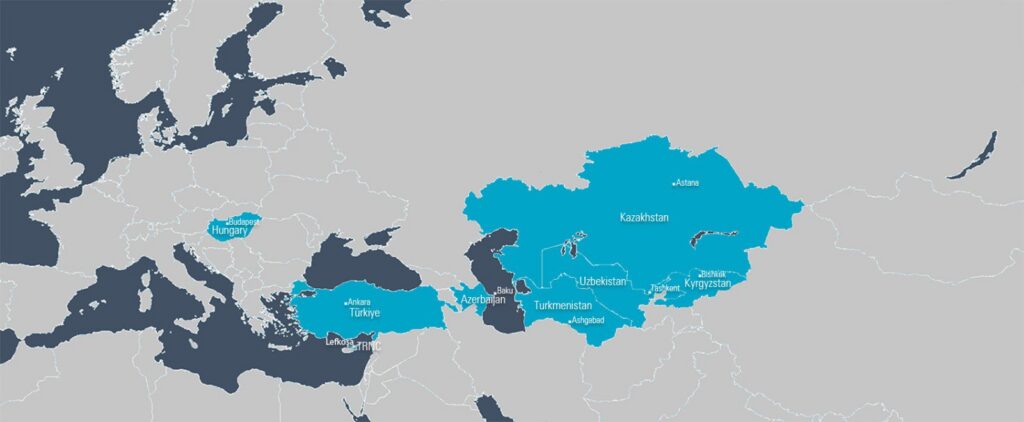
Founded in 2009 to foster comprehensive cooperation among Turkic-speaking nations, the OTS includes Azerbaijan, Kazakhstan, Kyrgyzstan, Turkey, and Uzbekistan as full members. Turkmenistan, Hungary, and Northern Cyprus participate as observers.

According to the OTS Secretariat, the Turkic region recorded an average economic growth rate of 6.86% in 2025, more than double the global average. Despite this performance, OTS Secretary General Kubanychbek Omuraliev called for intensified efforts to expand intra-regional trade.

Omuraliev highlighted ongoing negotiations on the Agreement on Services and Investment Facilitation, describing it as a decisive step toward deeper economic integration. He also pointed to strengthened institutional mechanisms, including the Council of Central (National) Banks of the OTS, the Turkic Green Finance Council, enhanced cooperation among Financial Intelligence Units and Competition Authorities, and closer coordination between the Turkic Investment Fund and the Union of Turkic Chambers of Commerce and Industry (TCCI).

Delegations discussed practical measures to increase intra-OTS trade, improve the investment climate, and enhance regional connectivity. Participants emphasized the need for coordinated policies to reduce trade barriers, support small and medium-sized enterprises, and facilitate cross-border commerce.

Kazakhstan’s Deputy Minister of National Economy, Asan Darbayev, underscored the symbolism of holding the meeting in Turkistan, a historic spiritual center of the Turkic world and a key node of the ancient Silk Road. He noted that the OTS is steadily evolving from a dialogue platform into a mechanism for practical cooperation, building new value chains and expanding trade links.

In 2025, mutual trade among OTS member states exceeded $11.9 billion. Kazakhstan’s largest trade volumes were with Turkey ($4.9 billion), Uzbekistan ($4.3 billion), Kyrgyzstan (nearly $2 billion), and Azerbaijan ($425 million).

Investment ties are also strengthening. Between 2005 and 2025, foreign direct investment from OTS countries into Kazakhstan surpassed $6.3 billion. Over the same period, Kazakh investments in OTS economies reached $5 billion, including more than $1.3 billion in 2025 alone.

The meeting concluded with the signing of a Memorandum of Understanding on Partnership in Trade and the adoption of a Roadmap for Cooperation in Economy, Trade, Investment, and Finance.

As previously reported by The Times of Central Asia, in December 2025 the Board of Governors of the Turkic Investment Fund announced that the fund would begin operations in the first quarter of 2026.

Headquartered in Istanbul, the Turkic Investment Fund is the first joint financial institution established by OTS member states. Its mandate is to promote economic cooperation, boost intra-regional trade, and finance major joint initiatives aimed at strengthening long-term regional integration.

Storms and Abnormal Heat: Turkmenistan Experiences Severe Weather

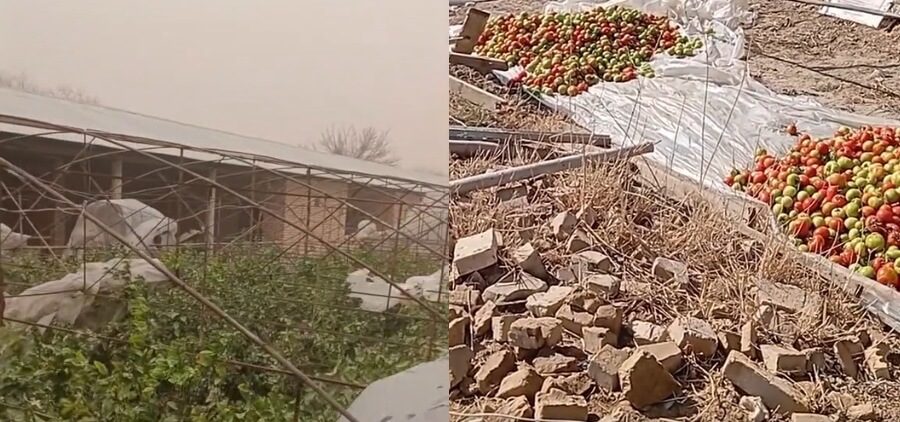
From February 20 to 22, dust storms with storm-force winds swept across Turkmenistan. The storm damaged greenhouses and crops in a number of regions, and the week was memorable not only for the destruction it caused but also for the historic temperature records it set.

Strong winds hit the country on February 20. In the Akhal region, gusts reached 18-23 m/s, and in the Mary region, 17-22 m/s. On the Beaufort scale, these readings are classified as storm force. In other regions, the wind was also very strong.

Dust storms broke out in the east of the country and in some parts of the Ahal region. In the town of Turkmenabat, wind speeds reached 23 m/s, and visibility was reduced to 500 meters. Similar readings were recorded in the towns of Serkhetabat and Bayramali. In the town of Mary, visibility dropped to 300 meters, and in the village of Tagta-Bazar to only 200 meters.

The storm knocked down trees, damaged road signs, and affected some buildings. The most significant damage occurred in rural areas.

In the Mary and Lebap region, private farms and plots were affected. The wind blew away greenhouses, and their frames collapsed directly onto the beds, destroying cucumbers, tomatoes, and other crops.

Flower growers also suffered serious losses. Many had expanded their acreage and hired additional workers to prepare for the peak sales period around March 8, but the storm deprived them of their harvest and any chance of compensating for months of low demand.

The region has previously faced the devastating effects of natural disasters. In 2020, a hurricane caused extensive damage in the Mary and Lebap regions, knocking down buildings and trees and claiming dozens of lives. Some families have still not recovered from those events. At the same time, despite the regular occurrence of strong winds, no effective system has been created to protect farms and the population from such phenomena.

As noted by Meteozhurnal, the current weather situation is due to the northwestern intrusion of air masses. High wind speeds continued on February 23, prolonging the period of adverse conditions.

The week was marked not only by storms but also by unprecedented heat.

For several days, temperatures were more typical of April or May. The peak occurred on February 19, 2026. 

In the city of Esenguly in the Balkan region, located in the southwest of the country on the coast of the Caspian Sea, the temperature reached 36.2°C. This is the absolute maximum in the history of meteorological observations in Turkmenistan. The previous record of 32.9°C was set in 1946 in Serakhs, Akhal region.

On the same day, temperatures above 30°C were recorded in several regions. In the Balkan region, the thermometer rose to 33.4°C in the town of Etrek and 30.6°C in Makhtumkuli. In Baharden, Akhal region, it reached 33°C. Records were also broken in other cities, albeit with lower values.

From Denis Ten to Mikhail Shaidorov: Kazakhstan’s Thorny Path to a Gold Medal at the Winter Olympics

The 2026 Winter Olympic Games in Milan, Italy have officially come to a close. At the end of the competition, the Kazakh team won one gold medal and placed 19th in the overall medal standings. This is the country’s best result since 1994, when the team finished 12th at the Lillehammer Olympics, with skier Vladimir Smirnov winning gold.

This time, Kazakhstan’s only medal was secured by figure skater Mikhail Shaidorov, who became the first Olympic champion in the history of Kazakh figure skating. It is not the country’s first Olympic medal in the sport, however: in 2014 figure skater Denis Ten won bronze.

On February 14, Shaydorov paid tribute to Denis Ten, Kazakhstan’s bronze medalist at the 2014 Olympics.

“I think Denis Ten influenced not only me but also figure skating in Kazakhstan as a whole. He opened the door for many skaters, including me. And that is incredibly important. I hope that the medal I won today will open new doors for the younger generation, the children of Kazakhstan, who will know that there are no limits,” he said. 

Denis Ten, who tragically died at the hands of petty thieves in the center of Almaty, did much to popularize figure skating in Kazakhstan. He dreamed of opening his own school and founding an ice show for this purpose.

Shaidorov is one of dozens of boys and girls inspired by the achievements of the Almaty native, who learned to skate at the Ramstor shopping center. The future champion took his first steps on the same rink. As residents often say, Almaty is a big village where everyone knows one another.

In fact, there is limited accessible ice in Almaty, which is why Shaidorov was forced to train in the Russian city of Sochi, as Denis Ten had previously trained in Moscow.

One of the defining stories behind the young skater’s journey is connected to his training. His father, Stanislav Shaidorov, a former professional figure skater and multiple national champion, helped him pursue his ambitions, including selling a car to invest in his son’s training.

Stanislav is acquainted with Russian coach and Olympic champion Alexei Urmanov. In 2017, Urmanov held training camps in Yoshkar-Ola, Russia, where young Mikhail Shaidorov performed his first double axel.

“Six months later, we returned to Urmanov. He assessed Misha’s progress. Over the course of a year, we learned all the triple jumps, but we had to constantly change rinks. We called every day to arrange a time, which was not always convenient for us. Finally, in the fall of 2018, we were faced with a choice: continue renting ice in Almaty at our own expense or move to Russia to train properly. I called Alexei Evgenievich. He said, ‘Okay, come on over.’ That same day, I sold my car, and the next day we bought tickets and flew to Sochi, where Urmanov works,” recalled Stanislav Shaidorov. 

Mikhail, who was 14 at the time, later said in an interview that he had asked his father to leave Almaty, where he felt his development as an athlete was stalling due to the lack of available ice.

“And my dad literally sold the car in a day or two, and with that money we went to Sochi so that I could train. For four or five years, I trained almost exclusively in Sochi. It was very difficult for me. Figure skaters don’t really have an off-season. Even during that period, you’re still training. You have two weeks a year when you can go somewhere. But I was usually sick during those two weeks, and I came home to Almaty a couple of times to be with my family. But most of the time I was in Sochi,” said the Olympic champion. 

Denis Ten @olympic.kz

In the summer of 2018, Denis Ten died after confronting thieves who had broken the side mirror on a car he had borrowed from his father. He was stabbed during the incident and later died from his injuries.

A monument to Denis Ten soon appeared at the site of his death, a fragile bronze figure at whose feet residents of Almaty continue to lay flowers. On the day Mikhail Shaidorov brought Olympic gold to Kazakhstan, city residents once again placed bouquets at Ten’s monument, expressing gratitude for his contribution to the development of the sport. 

Following Shaidorov’s victory, sports officials recalled that the Olympic champion had trained for a long time without pay, and had even been quietly removed from the national team. In response to public criticism, the Ministry of Tourism and Sports published details of his salary as well as the total amount, $527,000, reportedly spent on his training.

In an interview, Mikhail admitted that he “was upset that confidential information about my salary was made public.”

“I think this is not very respectful towards me as an athlete and a person. I don’t understand why they needed to make such a fuss about it, because I was just doing my job, training, competing, and working toward results without rest,” he said, adding that the situation created the impression that the ministry had issued him a check specifically for the gold medal. 

Although the Kazakh figure skater’s path to Olympic gold was thorny and marked by personal and national loss, Kazakhstan as a whole felt the void left by Denis Ten’s sudden death, particularly those who admired his talent, new challenges accompany victory. Congratulating Shaidorov on behalf of the National Olympic Committee of Kazakhstan, renowned boxer Gennady Golovkin wished him not only continued success but also the ability to remain grounded.