• KGS/USD = 0.01144 0%
  • KZT/USD = 0.00193 -0%
  • TJS/USD = 0.10876 0.55%
  • UZS/USD = 0.00008 0%
  • TMT/USD = 0.28490 0%
  • KGS/USD = 0.01144 0%
  • KZT/USD = 0.00193 -0%
  • TJS/USD = 0.10876 0.55%
  • UZS/USD = 0.00008 0%
  • TMT/USD = 0.28490 0%
  • KGS/USD = 0.01144 0%
  • KZT/USD = 0.00193 -0%
  • TJS/USD = 0.10876 0.55%
  • UZS/USD = 0.00008 0%
  • TMT/USD = 0.28490 0%
  • KGS/USD = 0.01144 0%
  • KZT/USD = 0.00193 -0%
  • TJS/USD = 0.10876 0.55%
  • UZS/USD = 0.00008 0%
  • TMT/USD = 0.28490 0%
  • KGS/USD = 0.01144 0%
  • KZT/USD = 0.00193 -0%
  • TJS/USD = 0.10876 0.55%
  • UZS/USD = 0.00008 0%
  • TMT/USD = 0.28490 0%
  • KGS/USD = 0.01144 0%
  • KZT/USD = 0.00193 -0%
  • TJS/USD = 0.10876 0.55%
  • UZS/USD = 0.00008 0%
  • TMT/USD = 0.28490 0%
  • KGS/USD = 0.01144 0%
  • KZT/USD = 0.00193 -0%
  • TJS/USD = 0.10876 0.55%
  • UZS/USD = 0.00008 0%
  • TMT/USD = 0.28490 0%
  • KGS/USD = 0.01144 0%
  • KZT/USD = 0.00193 -0%
  • TJS/USD = 0.10876 0.55%
  • UZS/USD = 0.00008 0%
  • TMT/USD = 0.28490 0%
11 December 2025

Archaeologists unlock Secrets of Ancient Civilization in Turkmenistan

Large-scale archaeological research continues in the Karakum desert at the ancient site of Gonur-Depe. This unique monument, discovered in 1972, is the key to unlocking the mysteries of the ancient civilization Margush, which flourished in the delta of the Murghab River about four millennia ago.

The Turkmen-Russian Margush Archaeological Expedition, operating under the international agreement, is nearing the end of another field season. The scientists uniting specialists from the Institute of Ethnology and Anthropology of the Russian Academy of Sciences, the Institute of History of Material Culture of the Russian Academy of Sciences, and Turkmen researchers continue painstaking work to study and describe numerous artifacts found at this ancient settlement.

The excavation season brought some interesting findings. Among them, a miniature cylindrical seal made of talc-agalmatolite, a fragment of a clay bulla with imprints of a snake-shaped seal, and a unique clay lid from a vessel with imprints of a rope and a cloisonné seal stands out.

Of particular interest are sets of semi-precious stone beads found in five burials. The skill of ancient jewelers has astonished modern researchers—some lapis lazuli beads have a diameter of only 1 millimeter.

Archaeologists have also conducted research aimed at studying the technologies of ancient builders. For the first time, a gypsum kiln was described in detail, making it possible to reconstruct the technological process of producing building materials in ancient Gonur-Depe.

The results of these studies will be presented at an international scientific conference in Ashgabat, where scientists from different countries will discuss the discoveries and their significance as regards understanding the history of the ancient civilization of Margiana.

The discoveries made in Gonur-Depe not only shed light on the life of the ancient inhabitants of these places but also emphasize the importance of international cooperation in archaeology and history. Each discovery brings us closer to understanding the rich cultural heritage left by an ancient civilization in the heart of the Karakum desert.

Decrease Expected in Central Asia’s Economic Growth

According to the World Bank, economic growth in Europe and Central Asia (ECA) is expected to slow to 3.3% this year, down from 3.5% in 2023. This is much lower than the average growth of 4.1% seen between 2000 and 2019, and is not enough for many of the region’s middle-income countries to become high-income.

Growth in the region has mainly been driven by an increase in people’s spending, rising wages, and government policies, while demand from outside the area, especially from the EU, remains weak.

Although the average yearly inflation rate had dropped to 3.6% by August 2024, from 4.6% at the end of last year, it is still higher than the 2.7% average seen in 2018-2019. Prices of goods have grown more slowly in most countries, but prices for services remain high because of rising labor costs. Some central banks have lowered interest rates as inflation has slowed, but are cautious. Government spending has not been reduced in most of the region’s countries and indeed, has dramatically increased, especially on public wages, pensions, social benefits, and defense.

The economies of Central Asia are expected to grow by 4.3% in 2024; slower than the 5.6% growth seen last year. In Kazakhstan, growth is predicted to slow to 3.4%, down from 5.1% in 2023, mainly because the expansion of the Tengiz oil field is taking longer, and the government is spending less. For other Central Asian countries, growth estimates have been raised by an average of nearly one percentage due to increased consumer spending, more government spending, and ongoing support from money sent home by workers in Russia and trade with Russia. However, despite these improvements, the growth per capita GDP (the average income per person) in Central Asia is only expected to be 2.7% this year, making it the slowest in the region, apart fromTurkey.

The Central Asian sub region, with growth expected at 5%, will outpace all other sub regions in 2025. This is driven primarily by renewed strong growth in Kazakhstan amid rising oil production. However, growth in the rest of Central Asia is projected to slow as trading and remittance flows from Russia normalize.

The lowest median consumer price growth rate was recorded in the South Caucasus, at 1.5% year-on-year in August 2024. In contrast, Central Asia had the highest median consumer price inflation rate, at 6.1%. This rate reflects 10% inflation in Uzbekistan, driven by removing energy subsidies in May 2024.

Russia Floats Idea of Help from Kazakh Airlines

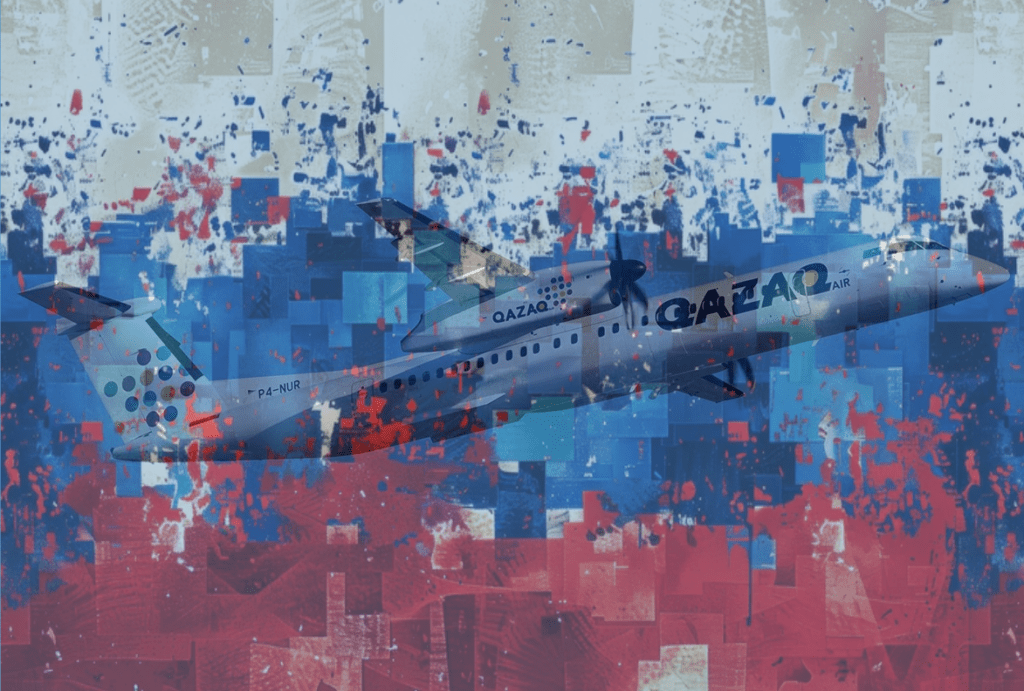
Russia is talking to Kazakhstan and other “friendly countries” about the possibility of foreign airlines flying domestic routes inside Russia, according to Russian state news agency Tass.

The report comes as Russia’s civil aviation industry struggles under the impact of Western sanctions that were implemented after Russia’s full-scale invasion of Ukraine in early 2022. Russian Transport Minister Roman Starovoit did not mention the sanctions in comments that were reported by Tass this week, but he referred generally to a global shortage of aircraft.

“We are negotiating with friendly countries,” Starovoit said to journalists at a forum in Yekaterinburg, Russia. “For example, we are negotiating with Kazakhstan.”

The minister, who took office this year, said Kazakhstan had experienced a 35% increase in “aviation mobility” this year.

“The fact is that there is currently a shortage of aircraft all over the world,” Sarovoit said, according to Tass. “And we see that against the backdrop of growth in transportation in foreign countries, the shortage of aircraft leads to a deficit of them, and it is difficult for other countries to solve these problems.”

He was referring to a process called cabotage, under which an aircraft registered in one country is used for transportation from one point to another within another country. It is unusual in the case of commercial aircraft because countries want to boost their domestic airlines and markets, though the rules can be more relaxed for some private or business aircraft.

Russian airlines have traditionally relied on Western aircraft and were vulnerable to sanctions aimed at depriving them of spare parts and supplies. Western companies had demanded that Russia return hundreds of leased aircraft because of the war, but Russia refused. The industry is heavily reliant on state support to keep it going.

“Russian aviation, disconnected from suppliers and from experience and knowledge transfer networks, will likely survive, but increasingly as a stand-alone operation,” Anastasia Dagaeva wrote in a March blog post for the Kennan Institute, a research center on Eurasia affiliated with the Washington-based Wilson Center.

In contrast, civil aviation in Kazakhstan has been experiencing considerable growth and the Central Asian country is a more popular destination for transit flights because of restrictions affecting Russian airspace. Though the Kazakh industry faces its own challenges, including a shortage of staff.

Kazakhstan and Kyrgyzstan to Cooperate on Snow Leopard Conservation

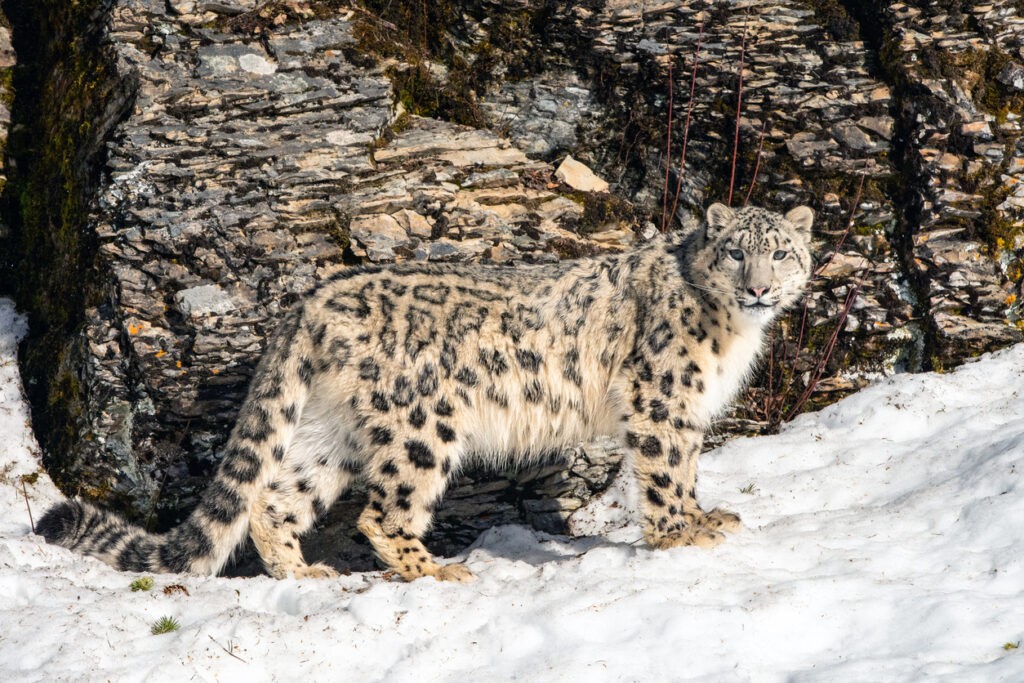
As reported by the United Nations Development Programme (UNDP) in Kazakhstan, a memorandum of understanding on snow leopard conservation was signed on October 17 between Kazakhstan’s and Kyrgyzstan’s  protected nature reserves.

Initiated by UNDP in Kazakhstan with the support of the Global Environment Facility (GEF), the five-year agreement aims to conserve the snow leopard and its habitats in the northern Tien Shan Mountains within four of the countries’ Specially Protected Nature Areas: the Kolsay Kolderi State National Park, the Almaty State Nature Reserve, the Ile-Alatau State National Park in Kazakhstan, and the Chon Kemin State Nature Park in Kyrgyzstan.

The two countries will coordinate joint measures and share experiences in researching and strengthening snow leopard protection. Over the next five years, the parties will also develop and implement several initiatives to monitor the snow leopard, its habitats and food supply, promote transboundary and international cooperation, and increase public awareness and participation through snow leopard conservation programs.

Nurken Sharbiyev, Vice Minister of Ecology and Natural Resources of Kazakhstan, citing the fact that the country’s snow leopard population has increased by over 20% since 2019, to between 152 and 189 animals, stated, “This memorandum will strengthen the links between our countries to conserve this globally important species.”

Mirslav Amankulov, Vice Minister of Natural Resources, Ecology and Technical Supervision of Kyrgyzstan, said that Kyrgyzstan currently has over 400 snow leopards but noted: “As it is a migratory species, its habitat is not limited to the territory of the country. To study and preserve the snow leopard and its habitat, prevent the impact of serious threats such as illegal hunting and reduction of food supply and habitats due to human activities, interaction between stakeholders is needed, which will be facilitated by the implementation of measures under the signed memorandum between Kazakhstan and the Kyrgyz Republic.”

The snow leopard is recognized as a rare or endangered species in 12 countries and its population is indicative of the stability and health of the mountain ecosystem, which occupies a third of the globe.
At the first International Forum on Snow Leopard Conservation in Bishkek in 2013, with the support of representatives of 12 snow leopard range countries and the international community, the Bishkek Declaration on the Protection of the Snow Leopard was unanimously adopted, and the Global Snow Leopard and Ecosystem Protection (GSLEP) Program was approved. Later, in December 2023, Kyrgyzstan’s President Sadyr Japarov signed a Decree “On recognizing the snow leopard as a national symbol of the Kyrgyz Republic.”

Karakalpak Activists Facing Charges in Uzbekistan, Granted Asylum in the United States

The waiting, worrying, and wondering are finally over for four Karakalpak activists who were detained in Kazakhstan some two years ago, and faced possible extradition back to Uzbekistan.

Zhangeldi Zhaksimbetov, Tleubike Yuldasheva, Raisa Khudaybergenova, and Ziuar Mirmanbetova received word on October 15 that they had been granted asylum in the United States.

It ended more than two years of uncertainty that started with the unrest in Karakalpakstan on July 1, 2022.

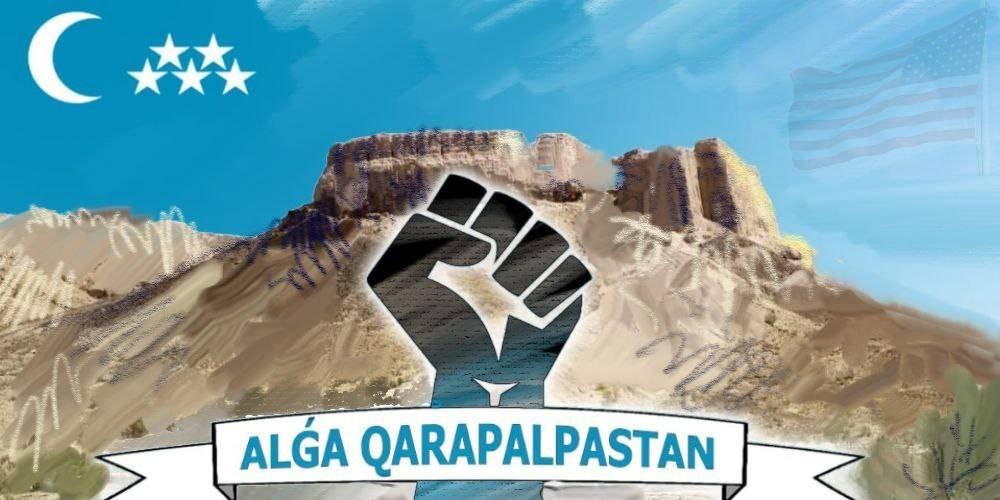
Karakalpakstan is part of Uzbekistan, but has a special status as a sovereign republic with its own parliament and constitution that allows the region to hold a referendum on seceding from Uzbekistan. Those unique privileges are also enshrined in Uzbekistan’s constitution, but in spring 2022 parliament proposed making amendments to the constitution.

The main reason for the amendments was to change the presidential term from five to seven years so that incumbent President Shavkat Mirziyoyev, who was serving his second and constitutionally last term at the time, could extend his stay in power.

However, the commission drafting the constitutional changes also dropped the articles referring to Karakalpakstan’s sovereign status and right to secede.

Those rights were nominal as there was no chance Uzbek authorities would allow Karakalpakstan to fully govern itself or secede.

Karakalpakstan accounts for some 37% of Uzbekistan’s territory, and also has large oil and natural gas reserves that have just started being developed in the past ten years.

The special rights Karakalpakstan had might have been nominal, particularly since ethnic Karakalpaks make up only about one-third of Karakalpakstan’s two million inhabitants. But these distinctions, albeit it only on paper, were important to the Karakalpaks, and when the proposed amendments were published at the end of June 2022, tensions started rising immediately in Karakalpakstan.

On July 1, Karakalpak community leaders went to apply for permission to hold a public meeting against the planned changes affecting Karakalpakstan. The group’s leader, activist and lawyer Dauletmurat Tazhimuratov, was detained.

Word spread and a large group numbering at least several thousand gathered, protesting peacefully outside the administration building in the Karakalpakstan capital, Nukus.

When police and security forces attempted to disperse the crowd, violence broke out, and when it was over and order finally restored, at least 21 people were dead and 243 injured.

Nearly all the casualties were Karakalpaks, and police and security forces were accused of using unnecessary and indiscriminate force against the protesters.

News of the proposed amendments, and the ensuing violence spread to the Karakalpak communities in other countries, notably to neighboring Kazakhstan, where, according to various estimates, anywhere from 50,000 to 200,000 Karakalpaks live.

Most have Kazakh citizenship, but some simply work in Kazakhstan and remain citizens of Uzbekistan.

Karakalpak activists in Kazakhstan followed events in Karakalpakstan in late June and early July 2022 and posted about it on social networks, sometimes with words of support for the protesters.

After Uzbek authorities had restored order in Kazakhstan and arrested more than 500 people, Uzbek officials requested the Kazakh government detain Karakalpaks in Kazakhstan who had been posting statements and information on social networks before, during, and after the violence.

Based on a warrant from Uzbekistan, Zhaksimbetov and Koshkarbai Toremuratov were detained in Almaty on September 13, 2022. Uzbek law enforcement accused them of encroaching on the constitutional order of Uzbekistan and disseminating material that threatened public safety and order in Uzbekistan.

On September 16, Karakalpak activist Khudaybergenova was detained in an Almaty suburb on the same charges from Uzbekistan, and at the start of October, Almaty police detained Mirmanbetova.

On October 14, 2022, Human Rights Watch released a statement calling on the Kazakh authorities not to extradite the Karakalpak activists to Uzbekistan, but Kazakhstan’s then-Foreign Minister Mukhtar Tleuberdi said his country’s position was that the four were citizens of Uzbekistan.

On November 13, Kazakh border guards apprehended Yuldasheva as she was trying to cross the border into Russia.

In all five cases, the Kazakh authorities initially ordered the Karakalpaks be held for 40 days, then extended their terms of detention to approximately one year.

All were released after that time, but they remained in legal limbo, trying to find political asylum in a third country while always fearing they could be detained again in Kazakhstan at any moment and sent back to Uzbekistan, where they would almost surely be imprisoned.

Toremuratov left for Poland, where his request for asylum is still under review.

Zhaksimbetov, Yuldasheva, and Khudaybergenova and her family left for the United States on October 15. Mirmanbetova is reportedly waiting for paperwork for a member of her family to be cleared, then they will both also depart for the United States.

Several Karakalpak activists are still being held in Karakalpakstan, notably Aqylbek Muratbai, who became the Karakalpaks’ main spokesman on what has been happening in Karakalpakstan since the July 2022 unrest.

For these Karakalpak activists remaining in custody in Kazakhstan, the fortuitous turn of events for Zhaksimbetov, Yuldasheva, Khudaybergenova, and Mirmanbetova is a good sign they too might be released from detention and find asylum in the United States.

Chinese Investment in Major Trade and Logistics Center in Northern Kyrgyzstan

On October 17, the Chairman of the Cabinet of Ministers of Kyrgyzstan, Akylbek Japarov, and the Chinese Ambassador to Kyrgyzstan, Du Dewen, attended a capsule-laying ceremony for the construction of a large trade and logistics center in the village of Leninskoye in the country’s northern Chui region.

Located just north of the capital, Bishkek, and a few kilometers from the border with Kazakhstan, the Manas Trade and Logistics City, will include a trading hub, an international exhibition center, a warehouse and logistics center with bonded areas, retail marketplaces, hotels, and residential compounds.

The facility will be built in partnership between a Chinese investor and a management company in which the Kyrgyz Cabinet of Ministers will have a 49% share.

In his address at the ceremony, the Cabinet’s head, Japarov, stated: “We are launching a major project—not just the construction of a trade and logistics center, but an entire town. It will have 30,000 retail outlets, -cover-700 hectares, and a total investment of $4.2 billion. $700 million will be invested in the first stage of construction. This center can be compared with the largest sea ports in terms of its importance and functions.”

Japarov added that the creation of the facility will significantly contribute to the expansion of regional and international trade, the creation of new jobs, and the improvement of conditions for product exports.

China is now one of Kyrgyzstan’s largest trading partners. According to official statistics, bilateral trade reached $20 billion in 2023, 32% more than in 2022.