• KGS/USD = 0.01144 0%
  • KZT/USD = 0.00196 -0%
  • TJS/USD = 0.10899 -0%
  • UZS/USD = 0.00008 -0%
  • TMT/USD = 0.28490 0%
  • KGS/USD = 0.01144 0%
  • KZT/USD = 0.00196 -0%
  • TJS/USD = 0.10899 -0%
  • UZS/USD = 0.00008 -0%
  • TMT/USD = 0.28490 0%
  • KGS/USD = 0.01144 0%
  • KZT/USD = 0.00196 -0%
  • TJS/USD = 0.10899 -0%
  • UZS/USD = 0.00008 -0%
  • TMT/USD = 0.28490 0%
  • KGS/USD = 0.01144 0%
  • KZT/USD = 0.00196 -0%
  • TJS/USD = 0.10899 -0%
  • UZS/USD = 0.00008 -0%
  • TMT/USD = 0.28490 0%
  • KGS/USD = 0.01144 0%
  • KZT/USD = 0.00196 -0%
  • TJS/USD = 0.10899 -0%
  • UZS/USD = 0.00008 -0%
  • TMT/USD = 0.28490 0%
  • KGS/USD = 0.01144 0%
  • KZT/USD = 0.00196 -0%
  • TJS/USD = 0.10899 -0%
  • UZS/USD = 0.00008 -0%
  • TMT/USD = 0.28490 0%
  • KGS/USD = 0.01144 0%
  • KZT/USD = 0.00196 -0%
  • TJS/USD = 0.10899 -0%
  • UZS/USD = 0.00008 -0%
  • TMT/USD = 0.28490 0%
  • KGS/USD = 0.01144 0%
  • KZT/USD = 0.00196 -0%
  • TJS/USD = 0.10899 -0%
  • UZS/USD = 0.00008 -0%
  • TMT/USD = 0.28490 0%
08 December 2025

British Museum Opens Silk Roads Show – With Help from Uzbekistan, Tajikistan

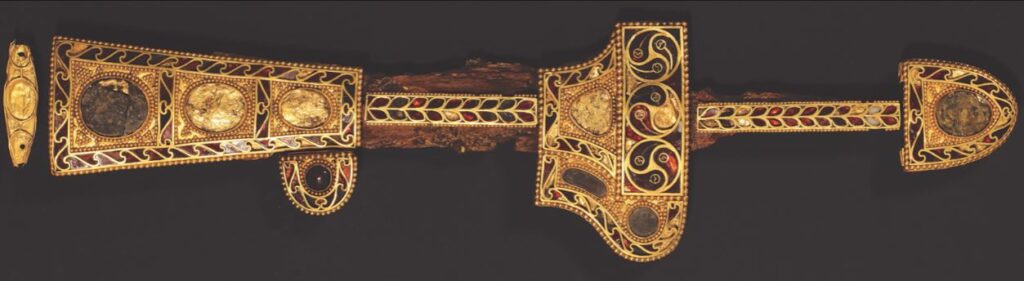
The British Museum opened Silk Roads to the public on Thursday, delivering a highly anticipated exhibition about the vast, interlocking routes that connected cultures across Asia, Africa and Europe for centuries and includes ancient chess pieces and other items on loan from Uzbekistan as well as Tajikistan.

The show, which runs until Feb. 23, 2025, aims to get beyond traditional notions of spices, camels and sand dunes, as well as the misconception that there was one “Silk Road” – a single pathway that ran across Central Asia, linking traders in the West with those in the East. While the Silk Roads network lasted for millennia, the British Museum is focusing on the period between AD 500 and 1,000, when contacts accelerated and religions and technology flourished across far-flung regions.

“Rather than a single trade route from East to West, the Silk Roads were made up of overlapping networks linking communities across Asia, Africa and Europe, from East Asia to Britain, and from Scandinavia to Madagascar,” the museum says in its introduction to the London show.

The British Museum worked with 29 national and international partners on the exhibition, which includes objects from Uzbekistan and Tajikistan that have never been on display in Britain and highlight the importance of Central Asia to the continent-sweeping saga of the Silk Roads.

Uzbekistan, home to Khiva, Bukhara and Samarkand and other sites associated with the ancient network, is a big player in the exhibition. It is lending “the oldest group of chess pieces ever found” and a six-meter-long wall painting from the ‘Hall of the Ambassadors’ in Afrasiab, an ancient spot in Samarkand, according to the Uzbekistan Art and Culture Development Foundation.

“The painting evokes the cosmopolitanism of the Sogdians from Central Asia who were great traders during this period,” the state foundation said.

Saida Mirziyoyeva, a daughter of Uzbek President Shavkat Mirziyoyev and a senior presidential aide, attended the exhibition roll-out this week.

“A must-see for anyone passionate about Silk Road history!” she said on X.

The National Museum in Tajikistan, which started working with the British Museum on plans for Silk Roads in 2022, has said it is lending items “related to the Buddhist culture of the 7th and 8th centuries, found in the monuments of Ajinateppa, Kafarnihon, and Vakhsh.”

Objects on display include a Buddha figurine found in Sweden; an Islamic-style map drawn for the Christian king of Sicily; a Chinese ceramic dish found in a shipwreck in Indonesia; a gilded silver cup whose components indicate links between Scotland and West Asia; a gold shoulder clasp with Indian garnets that was found at the Sutton Hoo ship burial in Suffolk; and a gold bowl found in Romania that was linked to the Avars, an originally nomadic group from the northeast Asian steppe.

The exhibition is not just about physical objects. There are also stories about an African king, a Chinese princess and other characters whose lives were connected to the Silk Roads, and insights into religious encounters and the spread of knowledge that occurred across the centuries.

Mirziyoyev Proposes Green Energy Development Program for Central Asia

On September 25-26, the annual meeting of the Board of Directors of the Asian Infrastructural Investment Bank (AIIB) was held in Samarkand, Uzbekistan.

The ninth meeting of the Board was devoted to the theme “Creating Sustainable Infrastructure for All.” Current issues on the agenda of the global economy were considered, and strategic programs and plans for infrastructure development in Asia and other regions of the world were discussed.

About 2,000 representatives from more than 100 countries participated in the summit.

Uzbekistan became a member of AIIB in November 2016, and in recent years, it has become one of the bank’s biggest beneficiaries.

Uzbek President Shavkat Mirziyoyev gave a speech on the first day of the meeting.

“The complex geopolitical situation, global economic instability, food and energy resources scarcity, poverty, and environmental problems are becoming increasingly acute. For instance, the average global temperature is projected to rise by 1.5 degrees Celsius by 2040; however, we are concerned that, based on current trends, this could happen as early as 2030.
A quarter of the world’s population lacks clean drinking water. As climate change accelerates, food shortages have become a global threat. As a result, about 800 million people in the world live in extreme poverty,” Mirziyoyev said.

Mirziyoyev noted that the poverty rate in Uzbekistan has been reduced from 23% to 11%. This year, the aim is to reduce this indicator to 9%, and by 2030, it will be halved.

Furthermore, in the last eight years, the enrollment of children in preschool education has increased from 27% to 74%, and higher education has increased from 9% to 38%. It plans to invest $2 billion to open 100 new schools of the most advanced standards in all cities and villages yearly.

Another issue that Mirziyoyev paid attention to is logistics, interruptions in the product supply chain, and the increase in the price of raw materials and consumer goods. The head of state noted that all this will sharply increase the load on the existing infrastructure and will be a significant obstacle to global economic development.

According to experts, by 2030, the world will need $15 trillion of investment for new infrastructure. Also, foreign investments have decreased by 10% over the past two years, and the value of financial resources globally has almost doubled.

Mirziyoyev said that projects worth $200 million for developing medium-sized cities and $130 million for improving infrastructure in rural areas are launched in cooperation with the AIIB.

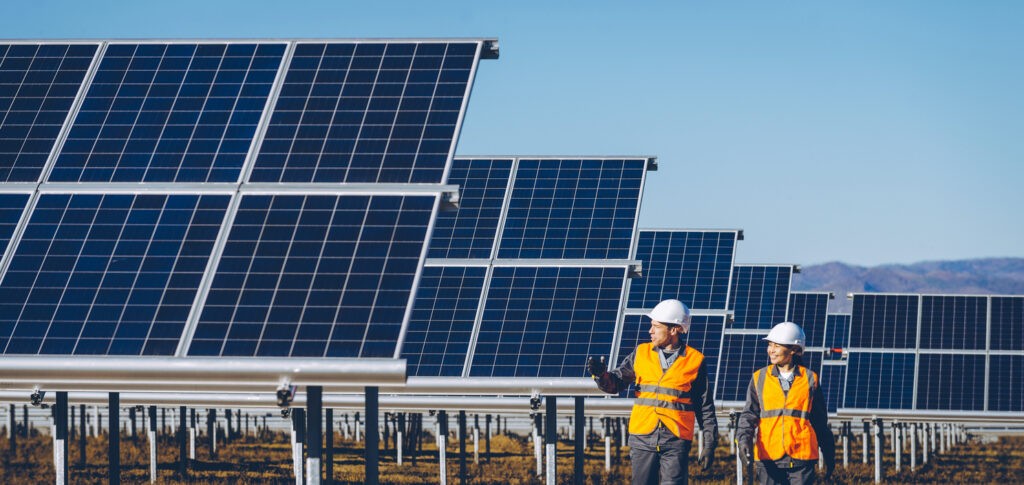
To develop the “green” economy, it is aimed to reach 40% of “green” energy sources by 2030. In the coming years, another 18 gigawatts of solar and wind power, 3 gigawatts of hydropower plants, 5 gigawatts of energy storage capacity, and $5 billion worth of power grids will be implemented.

“I would like to note that neighboring countries have also started major projects on renewable energy. We are taking great steps to make Central Asia, a rich renewable energy source, a major exporter of ‘green’ energy into world energy markets in the coming years. In this regard, I would like to emphasize that the project for the construction of the Transcaspian Energy Route has great potential.” Mirziyoyev proposed implementing the “green” energy development program in Central Asia under the leadership of the AIIB.

He noted that the problems of food security and shortage of water resources are becoming particularly acute in Central Asia. Uzbekistan has started big projects to save 15 billion cubic meters of water by increasing water efficiency by 25% in the next five years. “But solving the water problem requires the countries’ cooperation from the region and international financial organizations. Therefore, I would like to promote the establishment of a regional center for the wide implementation of water-saving technologies in cooperation with the Asian Infrastructure Investment Bank. I think our neighbors will also support this initiative,” Mirziyoyev concluded.

Turkmen Designers Present Their Works at an Evening of Art in Brussels

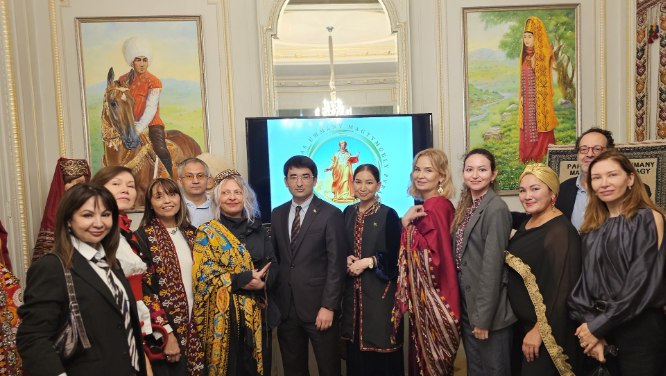
An evening dedicated to Turkmen art and traditions, organized by the Embassy of Turkmenistan within the framework of cultural exchange, was held in Brussels. The event brought together cultural sector representatives from Central Asia and Europe, including fashion and art figures.

The Ambassador of Turkmenistan to Belgium, Sapar Palvanov, opened the meeting, noting that Turkmen culture is a heritage that needs to be protected and passed on to new generations. The diplomat emphasized the role of cultural diplomacy as a means of strengthening ties between peoples. “Culture has always been a neutral sphere that unites people,” Palvanov stated.

An essential part of the program was a speech dedicated to the 300th anniversary of the great poet, Makhtumkuli. The Ambassador spoke about how his ideas continue to inspire not only Turkmen, but people of other nations, influencing Turkmenistan’s cultural ties with Europe.

The evening’s guests were presented with the works of talented Turkmen designers, Sheker Akiniyazova, Shemshat Tachmammedova, and Ogulbeg Berdimiradov. Their collections combined traditional elements with modern fashion. The designers also participated in the Brussels cultural program and presented at European institutions.

Elena Kharitonova, founder of Caravan Cultura CreArt Agency in the Netherlands who co-organized the event emphasized the preservation of cultural values through modern projects and her support for young Turkmen designers.

Uzbekistan’s Path to Reform: Navigating the 2024 Elections with a New Electoral System

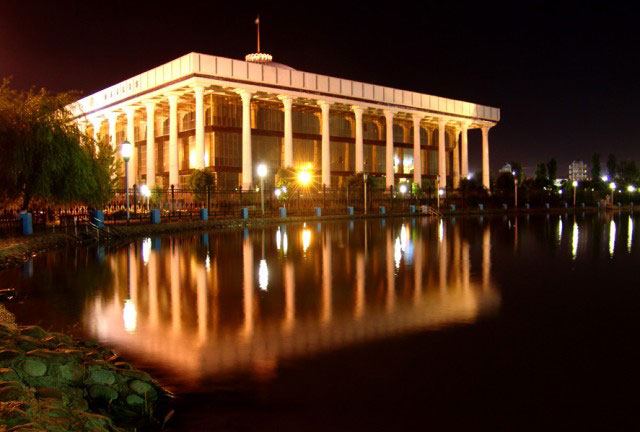
Uzbekistan’s upcoming parliamentary elections, scheduled for October 27, 2024, mark an important step in the country’s political evolution. These elections will fill 150 seats in the Legislative Chamber, the lower house of the Oliy Majlis, and determine the composition of various regional, district, and city councils. In addition, 65 members of the Supreme Council of the Autonomous Republic of Karakalpakstan will also be elected. These elections are notable not only because of their timing — shifting from December to October under a 2021 reform — but also due to the adoption of a mixed electoral system that was introduced in December 2023. This shift represents an important evolution from the previous majority-based system, introducing a balance between majority and proportional representation, which will shape the composition of Uzbekistan’s Legislative Chamber.

The new system reflects a broader attempt at political reform and modernization. Of the 150 seats, 75 will be decided through single-mandate districts, where the candidate with the most votes will win, while the remaining 75 will be allocated proportionally based on party results. Uzbekistan’s political landscape, however, remains limited, with only five officially registered parties. In the 2019 elections, the Liberal Democratic Party (UzLiDeP), which is closely linked to the presidency, won the most seats. While this mixed system represents a potential step forward, challenges persist in terms of political pluralism and genuine competition.

Uzbekistan, in its journey toward stronger democratic practices, can find inspiration in the electoral processes of other established democracies, particularly India — the world’s largest democracy. India’s electoral system, honed over decades, has become a model for managing elections in a complex and diverse society. The parallels between Uzbekistan’s emerging political landscape and India’s robust democratic traditions offer an opportunity for learning and adaptation.

The Illusion of Influence: The CSTO’s Journey From Symbolic Maneuvers To Real Challenges

Accompanied by a picture of military hardware – though in reverse gear as if symbolically – today, the CSTO (Collective Security Treaty Organization) website announced that “From 26 to 30 September, formations participating in the command-staff exercise ‘Unbreakable Brotherhood-2024’ with the CSTO Peacekeeping Forces are regrouping in the Republic of Kazakhstan. Contingents of CSTO troops are being sent from the Republic of Belarus, the Kyrgyz Republic, the Russian Federation, and the Republic of Tajikistan to the exercise area in accordance with the plan.”

In reality, the history of the CSTO is one of refusals, inaction, and sometimes unexpected successes.

On August 31, Armenia announced it had frozen its participation in the CSTO. Prime Minister Nikol Pashinyan said he would not name the day when Armenia would leave the CSTO and called the decision to freeze the republic’s participation in all structures of the organization correct “at this stage.” In many ways, this half-hearted decision reflects a certain amorphousness that originally characterized the CSTO.


History

The history of the structure’s emergence reflects this lack of crystalline form. The Collective Security Treaty (CST) was signed in Tashkent between Armenia, Kazakhstan, Kyrgyzstan, Russia, Tajikistan and Uzbekistan on May 15, 1992. Azerbaijan, Belarus and Georgia later joined in 1993. The treaty came into effect in 1994 and was set to last five years.

During the 1990s and the disintegration of Soviet-era institutions, organizations such as the CSTO or the previously created Commonwealth of Independent States (CIS), whose founding protocol was signed in Almaty, were created to facilitate a smooth “divorce” between the newly independent states. The CSTO was also seen as a force capable of curbing the regional conflicts which were boiling over, such as the Mujaheddin in Afghanistan. Tashkent’s bet on Russian weapons in case of conflicts with the Taliban did not work out, however. From the turn of the 1990s into the 2000s, two serious fissures across the borders of Uzbekistan and Kyrgyzstan took place; the republics fought back with their own military and weapons, in addition to Kazakhstan coming to the rescue.

The Collective Security Treaty expired in 1999, with Uzbekistan, Azerbaijan, and Georgia withdrawing, whilst Armenia, Belarus, Kazakhstan, Kyrgyzstan, Russia, and Tajikistan soldiered on under a new pact. The remaining states later transformed the CST into the Collective Security Treaty Organization in 2002. Uzbekistan joined as a full member of the CSTO in 2006 but then flip-flopped and suspended its membership in 2012.


A powerless organization

While the CSTO was still developing, with President Vladimir Putin coming to power in Russia, the Kremlin’s foreign policy changed substantively from that of the Yeltsin era, when Moscow remained indifferent to Nursultan Nazarbayev’s integration initiatives. The new direction of Russian foreign policy was expressed in the concepts of “Russia rising from its knees” and the “gathering of lands.” Over time, this evolved into joint war games and military operations with the West in the Middle East and Africa, and for a period the Kremlin seemed to lose interest in Central Asia.

This is probably why in 2010, when a second revolution in Kyrgyzstan turned into an outright massacre in the Uzbek enclaves around Osh and interim President Roza Otunbayeva called on the Kremlin and the CSTO to bring in troops to restore order, her request was flatly ignored. Tashkent, having failed to receive any justice for the Uzbeks in Kyrgyzstan who suffered massively in those events, suspended its membership in the CSTO and has not resumed it to this day.

The position of the CSTO was also criticized by Belarusian President Alexander Lukashenko, who a year earlier refused to sign an agreement between CSTO member states on the creation of the Collective Rapid Reaction Force (CRRF). At that time, relations between Moscow and Minsk were going through a rough period due to the so-called “milk war,” when dairy products from Belarus fell under the ban on imports into Russia. It was believed that the Kremlin implemented this ban to induce Lukashenko to resign as president of Belarus. At that time, Russia was headed by Dmitry Medvedev, for whom Lukashenko seen as an “inconvenient partner.”

In the same year, Medvedev attempted to persuade Viktor Yanukovych, then president of Ukraine, to join the CSTO, but this staunch Russian ally refused the overtures.


Article 4

It wasn’t until January 2022 that the CSTO proved itself as a structure capable of stopping the escalation of violence and helping to restore constitutional order. This happened during Qantar (Bloody January) in Kazakhstan, which, according to the official narrative, was the result of an attempted coup d’état.

As the violence escalated, Kazakh President Kassym-Jomart Tokayev appealed to the CSTO for support, referring to Article 4 of the Collective Security Treaty which reads: “If one of the participating States is subjected to aggression (armed attack threatening security, stability, territorial integrity, and sovereignty), it will be considered by the participating States as aggression against all the participating States of this Treaty. In the event of aggression against any of the States Parties, all other States Parties shall, at the request of that State Party, immediately provide the necessary assistance, including military assistance, as well as support with means at their disposal in the exercise of the right of collective defense in accordance with Article 51 of the UN Charter.”

The peacekeeping troops that arrived in Kazakhstan did not engage in direct confrontation with protesters and criminal elements, however, instead guarding strategically important facilities. They were deployed primarily in Almaty and Astana, the capital of Kazakhstan, freeing up police and military forces to restore order. During the entire time they were in the country, sentiments such as “Russia is here for the long haul” were often fostered, but at the end of the mission, CSTO peacekeeping forces left Kazakhstan in an orderly manner. and as early as February of that same year there was not even the slightest hint of interest in engaging when Russian troops were sent on their so-called “Special Military Operation” in Ukraine.


Kursk anomaly

In terms of the Russia-Ukraine conflict, which Central Asian governments have commented on in terms of “a bad peace [being] better than a good war,” it is important to discuss a recent episode in this military misadventure which directly relates to the CSTO and Article 4’s pledge for member states to help each other in case of violation of territorial integrity and threats to sovereignty.

The reason for the invasion of Ukraine was repeatedly referred to by Vladimir Putin as being a preventive measure in response to threats to its sovereignty. From this stance, there are vague grounds for Russia inviting CSTO allies to participate in the race across Ukraine. However, this year, there has been a counter-invasion of Russia itself, with the occupation of territories in the Kursk region, which has now been ongoing for more than a month. Even in this case, however, Russia has not called upon its CSTO colleagues for assistance.

Obviously, the Kremlin understands that such a request would lead to the end of the organization and thus dispel the the last illusion of Russia’s military influence in the region faster than any other action or inaction it is currently taking.

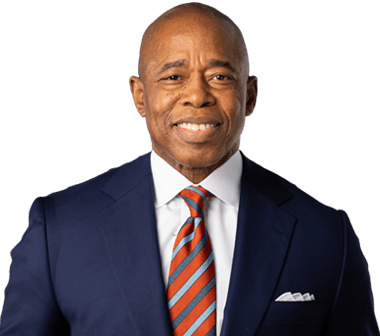
Uzbekistan Implicated in U.S. Investigation of NYC Mayor Eric Adams

Uzbekistan has been implicated in a serious investigation into the sources of donations to New York City Mayor Eric Adams’ 2021 campaign.

The investigation appears to be intensifying, a source said, after federal prosecutors issued subpoenas to his team members, including the mayor himself, in July.

The US investigation into the mayor of New York spans six countries. It includes Adams’ ties to Turkey, Israel, Qatar, China, South Korea, and Uzbekistan.

The big question investigators are trying to answer is whether his 2021 mayoral campaign conspired with Turkey’s government to receive illegal foreign donations, and whether the fire department was pressured to approve a new high-rise Turkish consulate despite safety concerns.

Prosecutors seek additional information on Adams’ relations with the other countries, including Uzbekistan – the only one of the six that Adams has not visited.