• KGS/USD = 0.01144 0%
  • KZT/USD = 0.00192 -0%
  • TJS/USD = 0.10879 0.28%
  • UZS/USD = 0.00008 0%
  • TMT/USD = 0.28571 0%
  • KGS/USD = 0.01144 0%
  • KZT/USD = 0.00192 -0%
  • TJS/USD = 0.10879 0.28%
  • UZS/USD = 0.00008 0%
  • TMT/USD = 0.28571 0%
  • KGS/USD = 0.01144 0%
  • KZT/USD = 0.00192 -0%
  • TJS/USD = 0.10879 0.28%
  • UZS/USD = 0.00008 0%
  • TMT/USD = 0.28571 0%
  • KGS/USD = 0.01144 0%
  • KZT/USD = 0.00192 -0%
  • TJS/USD = 0.10879 0.28%
  • UZS/USD = 0.00008 0%
  • TMT/USD = 0.28571 0%
  • KGS/USD = 0.01144 0%
  • KZT/USD = 0.00192 -0%
  • TJS/USD = 0.10879 0.28%
  • UZS/USD = 0.00008 0%
  • TMT/USD = 0.28571 0%
  • KGS/USD = 0.01144 0%
  • KZT/USD = 0.00192 -0%
  • TJS/USD = 0.10879 0.28%
  • UZS/USD = 0.00008 0%
  • TMT/USD = 0.28571 0%
  • KGS/USD = 0.01144 0%
  • KZT/USD = 0.00192 -0%
  • TJS/USD = 0.10879 0.28%
  • UZS/USD = 0.00008 0%
  • TMT/USD = 0.28571 0%
  • KGS/USD = 0.01144 0%
  • KZT/USD = 0.00192 -0%
  • TJS/USD = 0.10879 0.28%
  • UZS/USD = 0.00008 0%
  • TMT/USD = 0.28571 0%
12 December 2025

Chinese Firms to Build Waste-to-Energy Plants in Astana and Shymkent

Kazakhstan is advancing the modernization of its waste management system with the launch of new waste-to-energy projects in Astana and Shymkent, its second- and third-largest cities.

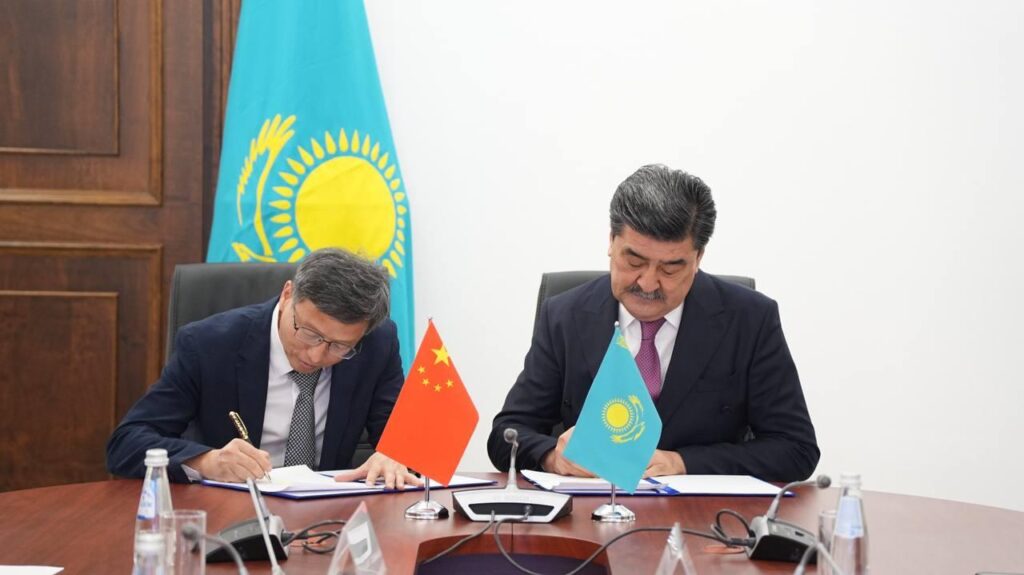
On October 31, the Ministry of Ecology and Natural Resources announced the signing of investment agreements with China’s Shaanxi Construction Engineering Kazakhstan Co., Ltd. and East Hope LLP to construct the new facilities.

In Astana, East Hope LLP will invest approximately $180 million to build a plant with a daily processing capacity of 1,500 tons of municipal solid waste, equating to around 550,000 tons per year.

In Shymkent, Shaanxi Construction Engineering Kazakhstan Co., Ltd. will invest $100 million in a plant capable of processing 1,000 tons of waste daily, around 360,000 tons annually.

Together, the two projects are expected to create more than 550 jobs during the construction phase and approximately 200 permanent positions once operational.

The plants aim to significantly reduce the volume of waste sent to landfills while generating clean electricity, contributing to Kazakhstan’s broader environmental and energy goals.

In August, the Ministry signed a separate agreement with China’s Hunan Junxin Environmental Protection Co. Ltd. to construct Kazakhstan’s first waste-to-energy facility in Almaty. That plant will process at least 1,600 tons of solid waste daily and generate up to 60 megawatts of electricity. The total investment in the Almaty project is estimated at $269 million.

Tokayev Proposes Employing Top Foreign Graduates in Kazakhstan

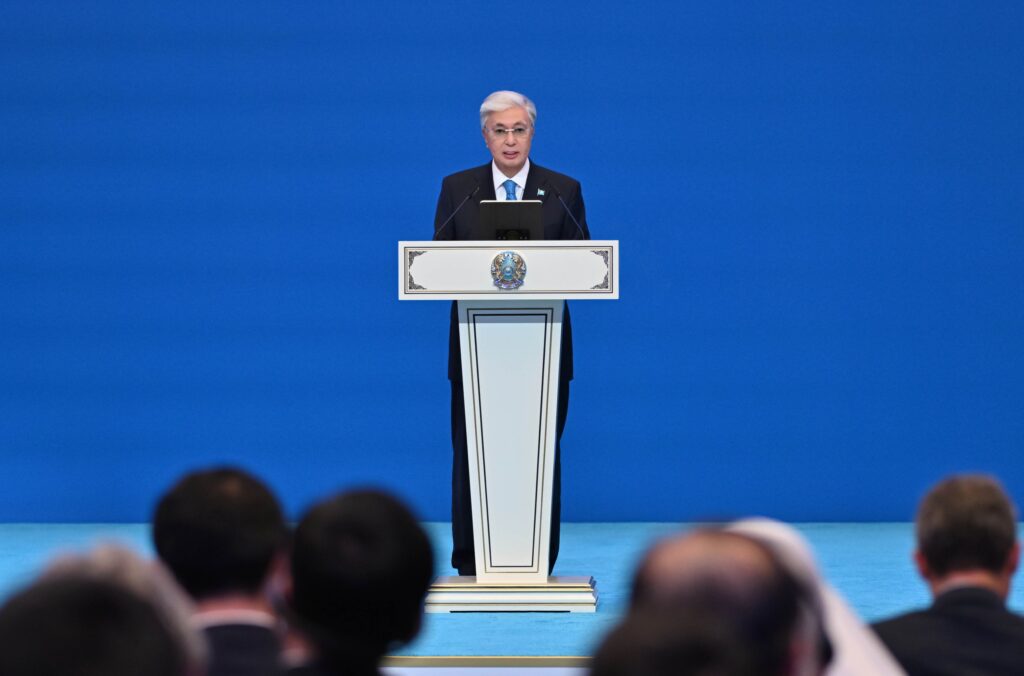
President Kassym-Jomart Tokayev has proposed launching a program to employ the most talented foreign graduates of Kazakh universities, allowing them to begin their professional careers within the country. He announced the initiative during the Strategic Partners Forum, Kazakhstan – Territory of Academic Education.

According to Tokayev, over 31,000 foreign students are currently studying at Kazakh universities, a national record. The government aims to increase this figure to 100,000 by 2029 through visa liberalization and improved learning conditions.

The employment program will enable top-performing international graduates to stay in Kazakhstan, contributing to the national economy. Simultaneously, the country plans to expand the number of foreign university branches in Kazakhstan, with a particular focus on technical disciplines.

“The opening of branches of foreign universities is fully in line with our goal of developing engineering and IT education,” Tokayev said.

Kazakhstan currently hosts three Lu Ban workshops, which serve as centers for applied engineering training. Special emphasis is being placed on preparing skilled personnel for the nuclear energy sector.

“Our task is to ensure a direct link between education and science and the real sector of the economy. There are already successful examples: the partnership between Kozybayev University and the University of Arizona has led to the development of a technology to convert sulfur into innovative polymers. This is a vital project for our country, which has significant sulfur reserves. It will spur growth in the chemical industry and contribute to solving environmental challenges,” Tokayev noted.

Since 2019, Kazakhstan has tripled its investment in education and science. Five Kazakh universities have been included in the Times Higher Education global rankings, and higher education institutions now enjoy greater autonomy.

Tokayev emphasized that investment in education is an investment in Kazakhstan’s future. He said the country sees the demographic potential of Central Asia and neighboring regions as an opportunity to grow its higher education sector and attract international students.

“Kazakhstan has set itself the ambitious goal of becoming part of the global knowledge market. To this end, we have partnered with 40 leading universities worldwide and opened 33 foreign university branches. Many of these institutions offer courses in English, Russian, and Chinese. Multilingualism is the key to openness and competitiveness for both universities and nations,” he said.

To help foreign students better understand local culture, all foreign university branches are required to offer mandatory courses in the Kazakh language and the history of Kazakhstan.

Tokayev also named digital state development and the integration of artificial intelligence (AI) technologies among the country’s top priorities. He noted that by 2030, AI is projected to contribute over $15 trillion to global GDP, and Kazakhstan intends to play an active role in this transformation.

“Since the beginning of the year, we have launched the AI-Sana program, completed by more than 540,000 students. Courses on artificial intelligence have become mandatory in all schools and universities. An AI university is currently in development,” Tokayev said.

He cited agreements reached with OpenAI during his September visit to the United States, under which Kazakhstan is piloting education tools based on ChatGPT. The initiative, he said, “contributes to the comprehensive digital transformation of education.”

Kazakhstan is also actively integrating AI across its economy and government. The government is developing an AI-based system to assist in lawmaking, while the Ministry of Energy is launching a national digital platform, EnergyTech, to manage the fuel and energy sector.

Central Asia Faces Billions in Climate Adaptation Costs, UNEP Warns

Central Asia ranks among the most climate-vulnerable regions in the world and will require tens of billions of dollars to adapt to the accelerating effects of global warming, according to a new report by the United Nations Environment Programme (UNEP).

The report identifies Central Asia as one of the fastest-warming areas globally. However, current adaptation funding remains drastically insufficient to meet the growing threat.

A Region Under Threat

Developing countries worldwide, including those in Central Asia, will need up to $310 billion annually by 2035 to adapt to climate change. UNEP highlights the region’s specific challenges: rapidly melting glaciers, widespread soil degradation, worsening water scarcity, and increasing aridity, all of which endanger food security and energy sustainability.

“If we don’t start investing in adaptation now, we will face increasing costs every year,” said UNEP Executive Director Inger Andersen.

Tajikistan and Kyrgyzstan are particularly exposed, with more than 70% of their populations employed in agriculture, which depends heavily on mountain rivers fed by glacial runoff. According to UNEP, glacier volumes in the region have shrunk by over 30% in the past decade.

The changing flow of the Amu Darya and Syr Darya rivers threatens not only agriculture but also the hydropower sectors in both countries. Diminished access to water could lead to socio-economic instability in vulnerable communities.

Funding Gap Widens

UNEP estimates that developing countries in Europe and Central Asia need roughly $51 billion annually for adaptation. Yet, only a fraction of that figure is currently being met.

Tajikistan, for example, has outlined total climate financing needs of $8 billion by 2030 and $17 billion by 2050. In Uzbekistan, the cost of modernizing irrigation and water management systems alone is expected to approach $10 billion by 2030.

UNEP has urged governments in the region to accelerate the updating of national adaptation plans, many of which have not been revised in over a decade, and to enhance cooperation in the Amu Darya and Syr Darya basins. Priority areas include investment in irrigation infrastructure, early warning systems, and flood control.

From Glaciers to Farms

In response to UNEP’s findings, international organizations have begun to fund targeted adaptation initiatives. The Green Climate Fund, for instance, has approved $250 million for the From Glaciers to Farms program, spearheaded by the Asian Development Bank.

The project aims to strengthen agricultural and water resilience in glacier-dependent countries in Central Asia, the South Caucasus, and parts of South Asia. It covers four major river basins: the Naryn and Panj in Central Asia, the Kura in the South Caucasus, and the Swat in Pakistan, benefiting approximately 13 million people.

Funding will support the development of irrigation networks, reservoir construction, glacier monitoring, and early warning systems. The program also places a strong emphasis on empowering women entrepreneurs in agriculture and improving the financial sustainability of rural communities.

TikTok to Boost Support for Kazakhstani Entrepreneurs

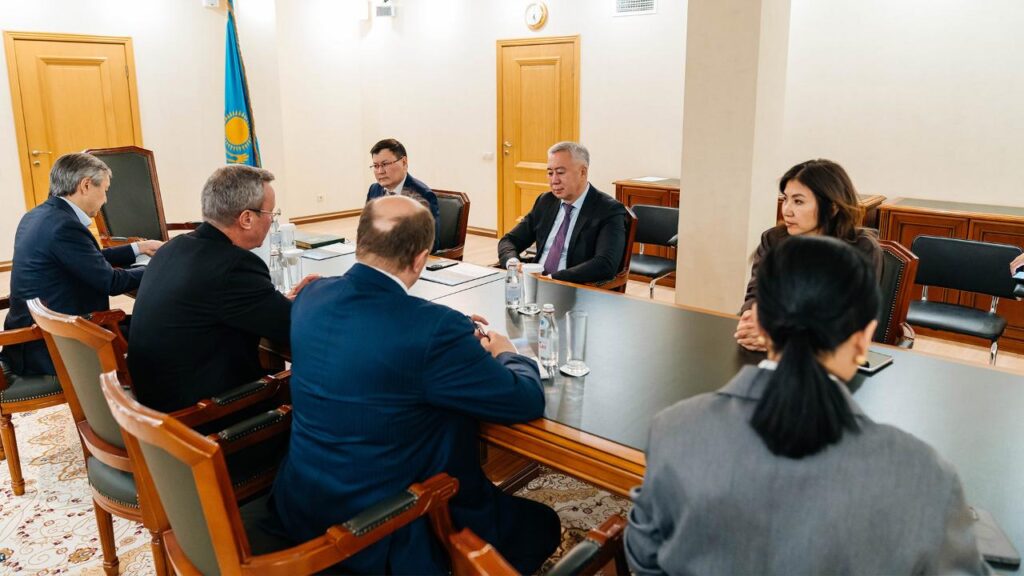
Kazakhstan’s Deputy Prime Minister and Minister of National Economy, Serik Zhumangarin, met with Sergey Sokolov, Director of Government Relations and Corporate Affairs for TikTok in Russia, Eastern Europe, Central Asia, and Mongolia, to discuss the platform’s tools for promoting local businesses.

During the meeting, TikTok representatives presented findings from a joint study conducted with the Atameken National Chamber of Entrepreneurs on the platform’s impact on entrepreneurship in Kazakhstan. The survey included over 300 micro and small business owners from 20 regions across the country.

According to Raimbek Batalov, Chairman of Atameken, the partnership with TikTok is already producing tangible results. As part of the “One Village, One Product” initiative, entrepreneurs have received training on using digital tools to market their products and grow their sales.

“Among companies that post content weekly, one in eight earns more than half of its revenue through the platform. Overall, 63% of businesses report that at least 5% of their annual income is directly tied to TikTok,” Batalov said.

In collaboration with the state-backed Damu Fund, plans are underway to expand training programs on TikTok’s digital tools. Batalov noted that the integration of digital solutions remains a key area for the development of small businesses in Kazakhstan.

Sergey Sokolov described Kazakhstan as one of the region’s fastest-growing markets and emphasized the platform’s untapped potential in advancing digital entrepreneurship. “We are ready to collaborate with Atameken and state authorities to elevate digital business tools to a new level,” he said.

The study highlighted that companies in the creative and service sectors, including hospitality, entertainment, beauty, and wellness, have experienced the strongest results from their TikTok presence. Educational and tourism-related content also shows high growth potential, with Kazakhstani teachers and cultural projects attracting millions of views.

Previously, Kazakh officials and TikTok representatives explored opportunities to promote Kazakhstan’s tourism potential to international audiences via the platform.

Kazakhstan’s Development Bank Launches $1 Billion Program for Rare Earth Metals Processing

The Bank for Development of Kazakhstan (BDK) has announced the launch of a $1 billion program to finance projects for the extraction and processing of rare, rare earth, and critical materials between 2025 and 2030.

According to a press release from the bank, the new program is intended to support the mining and metallurgical industries as part of Kazakhstan’s strategic push into high-tech sectors. The minimum project financing threshold has been reduced to $9.4 million, down from the usual $13 million. Funding will be available in various currencies, including dollars, euros, and yuan, for terms of up to 20 years.

The bank stated that it will not charge commissions for organizing or altering the terms of financing under this initiative. Borrowers will also benefit from grace periods.

BDK described the program as strategically important for diversifying Kazakhstan’s industrial base and integrating the country into global value chains. It will also support the implementation of the 2024-2028 Comprehensive Development Plan for the Rare and Rare Earth Metals Industry.

“The launch of the program reflects BDK’s strategic focus on supporting new growth points in the economy. We are creating conditions for Kazakhstan to become a producer of finished products with high added value. This will allow us to form new technological chains, increase the competitiveness of domestic industry, and strengthen the country’s position in the global market for critical materials,” said Marat Yelibaev, Chairman of the Board of BDK.

The financing will target projects in the metallurgical industry, including mining enterprises with processing capabilities. All applicants must confirm reserves in accordance with the JORC international standard, which governs reporting on geological exploration, mineral resources, and ore reserves.

Eligible materials include lanthanides, scandium, yttrium, lithium, cobalt, tungsten, germanium, gallium, graphite, and other critical elements used in advanced technologies, green energy, and electronics.

Separately, Kazakhstan’s Minister of Industry and Construction, Yersayin Nagaspayev, announced during the Kazakhstan Global Investment Roundtable (KGIR) that the country plans to launch more than $6 billion worth of mining projects. “Investments in this sector have already reached $3.6 billion. In the near future, we plan to implement five major projects worth over $6 billion, which will create about 8,000 new jobs,” he said.

Nagaspayev emphasized Kazakhstan’s global standing in reserves of tungsten, uranium, and chrome ores, and its role as a top producer of manganese, silver, and zinc. In 2024, the mining sector accounted for 8% of GDP, with total production surpassing $29 billion and metallurgical exports totaling $21 billion.

“Today, Kazakhstan is one of the key suppliers of non-ferrous, ferrous, and rare earth metals. We are actively working to diversify both our export products and sales markets,” Nagaspayev noted.

Recent geological studies suggest that Kazakhstan’s rare earth metal reserves exceed previous estimates, bolstering the country’s potential as a global supplier of these strategic resources. To support this shift from raw material exports to domestic processing, Kazakhstan also plans to open an internationally accredited rare earth metals laboratory.

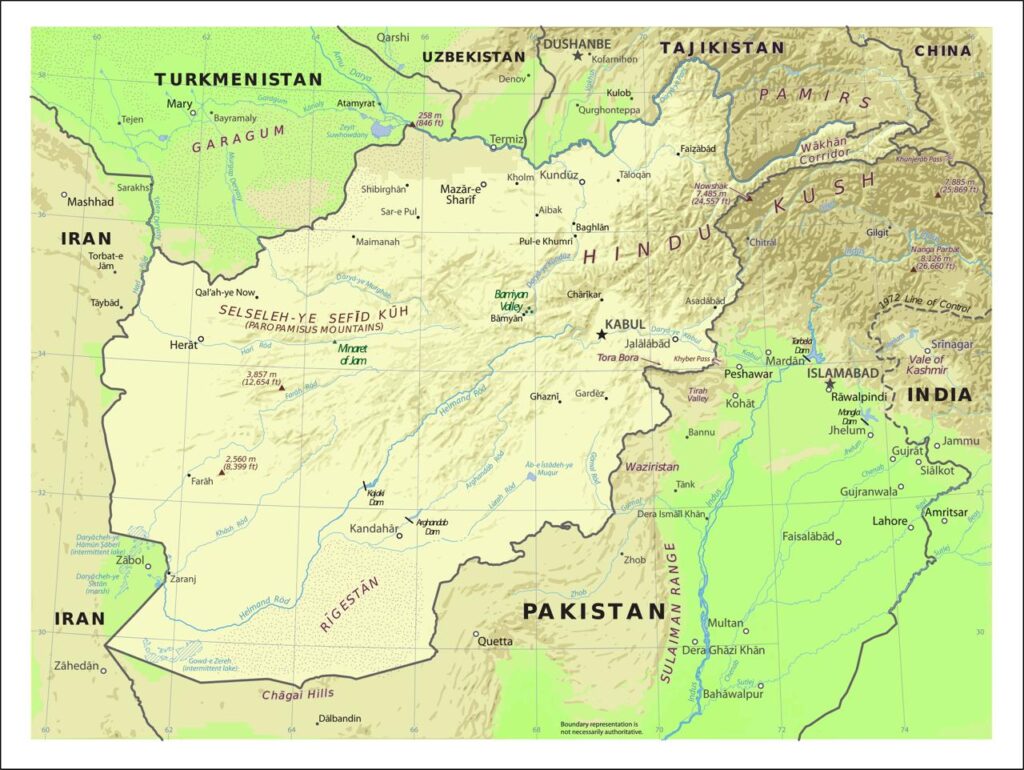
Border Violence Between Afghanistan and Pakistan: A New Risk for Central Asia

The escalating tensions between Afghanistan and Pakistan are forcing a reassessment of Afghanistan’s viability as a “partner space.” With cross-border clashes increasingly resembling a prolonged pattern rather than isolated incidents, and with both sides showing little willingness to compromise, the question grows more urgent: Can Afghanistan realistically become a partner for Central Asian countries, or is it destined to remain a persistent source of regional instability?

This confrontation is deeply unsettling for the countries of Central Asia. Still in the early stages of formulating coherent policies toward Afghanistan, they have tentatively linked their development strategies to the hope of having a stable neighbor to the south – one that might serve as a bridge to South Asia. Against this backdrop, deteriorating Afghan-Pakistani relations breed more frustration and anxiety than hope.

No country in the world, except Russia, has recognized the Taliban regime de jure. This broad reluctance reflects deep skepticism; few are willing to assume legal obligations or share responsibility for Kabul’s actions. Yet, Afghanistan remains far from isolated. Its geographic centrality makes it impossible to ignore.

Accordingly, Central Asia has developed a distinct approach to dealing with its southern neighbor. It can be summarized as: We do not recognize, but we cooperate; we do not trust, but we verify; we do not agree, but we engage.

In essence, Afghanistan’s neighbors, particularly the ones in Central Asia, have adopted a pragmatic, long-term strategy: engage without illusions or formal recognition, while maintaining the flexibility to adjust based on Kabul’s behavior.

For these countries, Afghanistan does not stand as an independent priority. Its role is evaluated solely within the broader regional framework. In the most favorable scenario, Afghanistan serves as a transit corridor linking South and Central Asia. Yet even this utility is not indispensable; viable alternatives through Iran, the South Caucasus, Turkey, and China already exist and are expanding.

Looking ahead, three broad scenarios can be envisioned:

Optimistic: The Taliban demonstrate readiness for responsible engagement. This would enable Afghanistan’s gradual integration into trade and transport initiatives, expansion of economic ties, and a firm establishment as a bridge between Central and South Asia.

Pessimistic: Afghanistan remains a chronic risk factor and flashpoint for regional crises. The ongoing Afghan-Pakistani confrontation, no longer a fleeting episode but an entrenched conflict, is a clear warning sign. If this becomes the norm, it will deter serious investment, no stakeholder will commit to a country that cannot guarantee peace with its neighbors.

Inertia: Central Asian states continue their cautious balancing act under the logic that “a bad peace is better than a good war.” While cooperation continues at a minimal level, countries prioritize alternative routes and avoid deep commitments.

Under this status quo, ambitious projects like the Trans-Afghanistan Railway and the TAPI pipeline are unlikely to materialize. The former risks losing the “trans” prefix; the latter may, for now, become little more than a Turkmenistan-Afghanistan venture.

Nonetheless, there remains a window for diplomacy. Pressured by Turkey and Qatar, Kabul and Islamabad have agreed to resume negotiations aimed at a long-term de-escalation framework. This opens the door to a political resolution, and lowers the risk of irreversible rupture.

If Pakistan and Afghanistan seek regional stability, they have no choice but to move forward with mutual accommodation. Pakistan, unlike the Taliban-led emirate, is a full member of the international system and must continue engaging regional partners, including China, Iran, Russia, the countries of Central Asia, and the United Nations.

At the same time, the Taliban, in pursuit of international recognition, must show flexibility and a willingness to compromise. Their greatest risk is not just isolation, but irrelevance. Should regional powers shift decisively toward alternative transit corridors, Afghanistan may forfeit its only strategic asset, its geography. Rather than a bridge, it risks becoming a void on the regional map.

Progress in talks with Pakistan presents the Taliban with a chance to demonstrate that Afghanistan can act as a responsible stakeholder in regional security. If those negotiations transition into a formalized institutional process, it would mark a significant step forward, not just for Afghanistan and Pakistan, but for Eurasian connectivity as a whole.