• KGS/USD = 0.01144 0%
  • KZT/USD = 0.00194 0%
  • TJS/USD = 0.10886 -0.09%
  • UZS/USD = 0.00008 0%
  • TMT/USD = 0.28490 0%
  • KGS/USD = 0.01144 0%
  • KZT/USD = 0.00194 0%
  • TJS/USD = 0.10886 -0.09%
  • UZS/USD = 0.00008 0%
  • TMT/USD = 0.28490 0%
  • KGS/USD = 0.01144 0%
  • KZT/USD = 0.00194 0%
  • TJS/USD = 0.10886 -0.09%
  • UZS/USD = 0.00008 0%
  • TMT/USD = 0.28490 0%
  • KGS/USD = 0.01144 0%
  • KZT/USD = 0.00194 0%
  • TJS/USD = 0.10886 -0.09%
  • UZS/USD = 0.00008 0%
  • TMT/USD = 0.28490 0%
  • KGS/USD = 0.01144 0%
  • KZT/USD = 0.00194 0%
  • TJS/USD = 0.10886 -0.09%
  • UZS/USD = 0.00008 0%
  • TMT/USD = 0.28490 0%
  • KGS/USD = 0.01144 0%
  • KZT/USD = 0.00194 0%
  • TJS/USD = 0.10886 -0.09%
  • UZS/USD = 0.00008 0%
  • TMT/USD = 0.28490 0%
  • KGS/USD = 0.01144 0%
  • KZT/USD = 0.00194 0%
  • TJS/USD = 0.10886 -0.09%
  • UZS/USD = 0.00008 0%
  • TMT/USD = 0.28490 0%
  • KGS/USD = 0.01144 0%
  • KZT/USD = 0.00194 0%
  • TJS/USD = 0.10886 -0.09%
  • UZS/USD = 0.00008 0%
  • TMT/USD = 0.28490 0%
15 December 2025

Kyrgyzstan Advances Digital Asset Strategy with Support from Binance

The second meeting of Kyrgyzstan’s National Council for the Development of Virtual Assets and Blockchain Technologies was held in Bishkek on October 24, with the participation of President Sadyr Japarov and Changpeng Zhao, founder of Binance, the world’s largest cryptocurrency exchange.

Following the meeting, Zhao, who serves as a public adviser to Japarov on digital asset development and is a member of the Council, announced on X that Kyrgyzstan’s national stablecoin, the KGST, has officially launched on @BNBChain. The KGST is pegged to the Kyrgyz som. Zhao also confirmed the creation of a National Cryptocurrency Reserve and the full localization of the Binance app for Kyrgyz-speaking users.

Japarov and Zhao previously met in May to discuss the digital future of Kyrgyzstan. Their agenda included developing a national digital asset ecosystem, integrating blockchain into public administration, and strengthening cybersecurity. Zhao pledged Binance’s support through training and expertise for specialists working on the country’s digital currency initiative.

As part of this collaboration, the National Council and Binance are preparing to launch an online educational platform in the Kyrgyz language, aimed at providing basic knowledge about virtual assets. The platform will be accessible to the general public.

During the Council meeting, Japarov underscored Kyrgyzstan’s pioneering role in the region, highlighting that the country has enacted legislation to regulate virtual assets and is actively pursuing a coherent government policy in the sector. He noted the national market is expanding, with an increasing number of licensed participants, a stronger regulatory framework, and new infrastructure projects emerging.

Japarov pointed to several national advantages, including a flexible institutional environment, a motivated and tech-savvy youth population, and the ongoing digitalization of public services, as key factors driving Kyrgyzstan’s ambition to become a regional hub for digital finance.

“The combination of these factors makes the goal of transforming the country into a regional hub for virtual assets realistic and achievable,” he stated.

Melis Turgunbaev, Chairman of the National Bank of Kyrgyzstan, announced that the digital som project has entered its practical implementation phase. The initiative aims to create a fully regulated blockchain-based payment system under the control of the National Bank, which will oversee the issuance and circulation of the digital currency.

Dinosaur Fossils Unearthed in Uzbekistan and Tajikistan Illuminate Central Asia’s Prehistoric Past

Rare dinosaur remains estimated to be around 75 million years old have been uncovered in Uzbekistan’s Karakalpakstan region, according to the State Geological Museum. The discovery adds to a growing body of paleontological evidence shedding light on Central Asia’s ancient ecosystems.

On October 12, Akhmadjon Akhmedshaev, Director of the State Geological Museum, visited the excavation site near the Khodzhakul foothills in the Sultan Uvays mountain range, where the “Uzbek Geologiya Qidiruv” expedition had uncovered fossilized dinosaur bones during a geological survey. Found at a depth of approximately three meters, the remains are believed to belong to a large dinosaur from the Cretaceous period, dating back roughly 65-75 million years. The fossils include fragments of vertebrae, ribs, and leg bones, all remarkably well preserved.

Scientists believe the find could offer valuable insights into the types of dinosaurs that once inhabited what is now western Uzbekistan. The region is thought to have been a humid, coastal environment during the late Cretaceous. The fossils are currently undergoing analysis at the State Geological Museum to determine their species and any potential connections to previously identified dinosaurs from Central Asia.

Meanwhile, paleontologists from St. Petersburg State University have announced a second significant find, this time in Tajikistan. Researchers uncovered a well-preserved fragment of a duck-billed dinosaur skull. According to spbdnevnik.ru, the fossil’s exceptional condition may enable scientists to accurately identify the species and potentially describe a new genus. Comparative analysis is now underway with fossil collections from other countries to trace its evolutionary lineage.

Poverty in Central Asia: Who Is Living and Who Is Just Surviving

A new analysis by Ranking.kz reveals that Kazakhstan currently has the most favorable poverty indicators among Central Asian countries, while Tajikistan records the highest levels of deprivation. The findings also reflect significant shifts in global poverty estimates following a revision of the World Bank’s methodology.

According to Our World in Data, by 2024, the global number of people living in extreme poverty had risen to 817 million, an increase of 125 million compared to previous figures. However, this jump does not signal worsening global conditions. Instead, it stems from a change in measurement criteria. In June 2024, the World Bank raised the international poverty line from $2.15 to $3 per day in purchasing power parity (PPP), based on 2021 prices. This methodological update expanded the scope of people counted as poor, even as real incomes among the poorest rose by approximately 16%.

Sub-Saharan Africa continues to bear the brunt of global poverty. Of the 30 countries with the highest poverty rates, 24 are located on the continent. In Central Asia, Tajikistan ranks as the region’s poorest nation, with 61.3% of its population living on less than $3 per day. In contrast, the poverty rate stands at just 2.74% in Kyrgyzstan, 2.72% in Uzbekistan, and 1.93% in Armenia. Kazakhstan reports the region’s lowest rate of extreme poverty; just 0.04% of the population lives below the international threshold. Data for Turkmenistan is not available.

According to Kazakhstan’s National Statistics Bureau, the share of citizens earning less than the cost of the basic food basket declined from 0.2% in 2023 to 0.1% in 2024. For the first time, the gap between urban and rural poverty disappeared; previously, rural areas had higher rates. In absolute terms, 16,500 people lived below the food minimum in the first quarter of 2025.

The proportion of the population earning less than the national subsistence minimum also decreased, falling from 5.2% in 2023 to 5% in 2024. The breakdown shows 3.8% in cities and 6.9% in villages. The total number of people below the subsistence minimum dropped to 1 million. As of early 2025, the figure had improved further to 4.5%, with the minimum raised to 52,500 tenge (approximately $98) per capita.

In terms of daily consumption, Kazakhstani citizens spent an average of $7 per day in 2024. Based on World Bank data, the international dollar was equivalent to 160.93 tenge, reflecting the amount needed in Kazakhstan to purchase a comparable basket of goods and services to that of $1 in the United States.

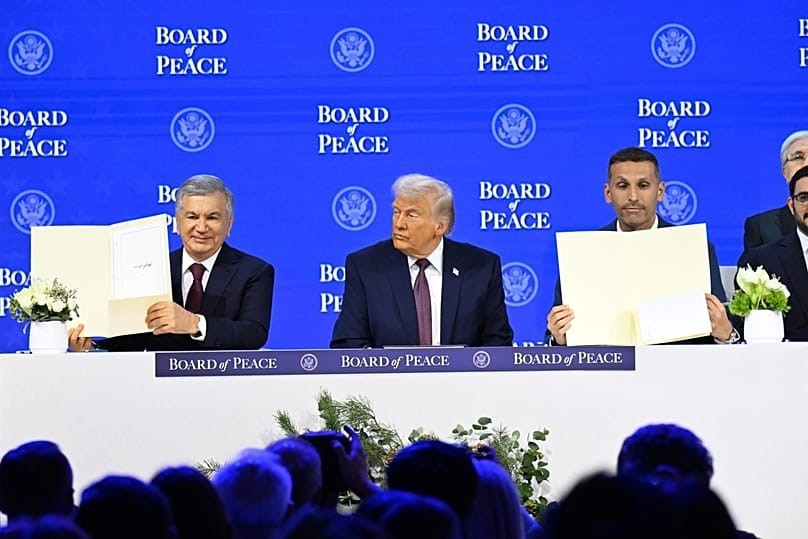
Trump to Host U.S.-Central Asia Summit on November 6

Kazakhstan’s presidency says a Central Asia–United States summit will be held in Washington on November 6.

President Kassym-Jomart Tokayev sent a letter to U.S. President Donald Trump to thank him for the invitation to participate in the summit on that date in the U.S. capital, Tokayev’s press office said on Sunday.

President Tokayev regarded the initiative of the American leader as both timely and important, the office said. “The Head of State also noted that he shares the key principles of President Trump’s domestic and foreign policy, in particular the advocacy of traditional values based on common sense, as well as dedication to safeguarding peace and security.”

The summit would mark the tenth anniversary of the C5+1 diplomatic forum, which includes the United States and the five Central Asian countries of Kazakhstan, Kyrgyzstan, Tajikistan, Turkmenistan, and Uzbekistan.

Citing unidentified sources in Uzbekistan’s presidential administration, Gazeta, a media outlet in Uzbekistan, confirmed the summit plan, saying Uzbek President Shavkat Mirziyoyev was among the Central Asian leaders who had received invitations from Trump to attend the November 6 meeting in Washington. Kyrgyz media have also reported that President Sadyr Japarov will attend the C5+1. According to Azattyq, the invitation was extended to all five Central Asia leaders.

The announcement of the summit coincides with a visit to Kazakhstan and Uzbekistan by Sergio Gor, U.S. Special Envoy for South and Central Asia, and Deputy Secretary of State Christopher Landau.

Trump met Tokayev and Uzbek President Shavkat Mirziyoyev on the sidelines of the U.N. General Assembly last month. Multi-billion-dollar business deals were announced in connection with those meetings.

The U.S. president is currently on an Asia tour during which he is expected to meet Chinese President Xi Jinping to discuss trade tensions. A summit with Central Asian leaders could potentially help the U.S. counter the influence of Russia and China in that region.

In an Oct. 20 letter, a U.S. congressional foreign affairs panel urged Trump to host a summit with Central Asian leaders before the end of the year. It noted U.S. interests such as the development of critical minerals, including tungsten, antimony, lithium, and rare earth elements; the full repeal of the Jackson-Vanik amendment, a Cold War-era law that imposes some restrictions on trade with several countries in Central Asia; and counterterrorism efforts against the regional branch of the Islamic State group.

From the Highlands to the Steppes: The Long Journey of the Bagpipe

On 28 July 2025, as the skirl of bagpipes echoed across the windswept greens of President Trump’s Turnberry golf resort, two world leaders met under the Scottish flag. U.K. Prime Minister Keir Starmer and U.S. President Donald Trump gathered for “wide-ranging talks” on trade and global conflicts — yet it was the sound of a Scottish pipe band that first captured attention. For President Trump, whose mother was born in the Outer Hebrides, the music carried a personal resonance.

The bagpipe, long a symbol of Scotland’s spirit, continues to speak across generations and continents — from clan gatherings and state ceremonies to moments of diplomacy. Its sound is unmistakably Scottish: bold, mournful, and proud. Yet across the ancient world, far beyond the Highlands, other peoples once drew the same haunting tones from leather and reed — among them the nomads of what is now Kazakhstan.

Echoes from the East

Centuries before the first Highland marches, nomadic Turkic peoples were playing an instrument remarkably similar in design — the zhelbuaz. Crafted from goat or sheepskin and fitted with two or more reed pipes, it produced the same soulful harmony that defines the modern bagpipe. When filled with air and played from horseback or during ceremonies, it created a sound that was at once haunting and powerful, much like the music that still moves crowds today.

As the people of the Central Asian steppes were largely nomadic for most of their history, there is scant hard evidence. However, early scholars described the zhelbuaz (or mes-syrnai) as an ancient wind instrument made from a single piece of animal skin or stomach. Al-Farabi wrote of a “wineskin flute” among the Turkic tribes, and the Chinese traveler Wen Sun, visiting the Orkhon region in the 7th century, reportedly recorded a Turk playing a “leather instrument with two pipes, whose sound deepens the sadness of the mourners.”

The Journey Westward

Over centuries, the idea of the air-filled reed instrument migrated westward — first through trade and migration, and then through cultural contact. Variants appeared in Eastern Europe: the duda in Poland, the tulum in Azerbaijan, and the musette in France. Linguists note that modern terms such as duu (meaning “song” in Mongolian) and düdük (meaning “whistle” in Turkish) suggest a shared onomatopoetic pattern for wind instruments and vocal sound across Eurasia, hinting at, though not proving, a linguistic thread connecting these distant traditions.

But it was in Scotland that the instrument found its fullest voice. There, in the hands of Highland clans, it became more than music — it became identity. The Great Highland Bagpipe emerged as a call to arms, a hymn of remembrance, and a symbol of a people’s endurance. Its power lies not just in its sound, but in what it represents: honor, courage, and belonging.

Image: Ykhlas Museum of Folk Musical Instruments

The Zhelbuaz Remembered

In Kazakhstan, the zhelbuaz gradually disappeared from everyday life, its haunting voice surviving only in oral memory and museum collections.

Today, musician Abzal Arykbaev of the Turan Ethno Folk Band describes the zhelbuaz’s distinctive power: “The unique feature of this instrument is that it allows you to produce two different tones simultaneously.”

Samat Malimbay, conductor, composer, and senior lecturer at the Kazakh National Pedagogical University, told The Times of Central Asia, “The instrument is quite difficult to make. Nomads who were engaged in cattle breeding made it from the skin or stomach of a lamb or goat, while residents of coastal areas made it from the stomach of a seal. The skin is carefully cleaned of wool, soaked, softened, stretched, and dried. Then, holes were made in two places for sound, into which reed pipes were inserted. After installing the pipes, the edges of the instrument were carefully processed, and the surface was painted with natural paint made from lichen.

“Usually, the instrument is 65-70 cm long and 30-35 cm wide, and is also known by the names “zhel-kobyz,” “kuyk-kep,” “mes-kobyz,” and “zhel-saz.” Since the shape of the instrument resembles the swollen udder of a pregnant cow, it was named zhelbuaz (literally “inflated with air”).

“There is a scientific opinion that the Kazakh kobyz is the ancestor of instruments such as the violin, viola, and cello. It is believed that the kobyz was brought to Europe by the Huns. Therefore, it is possible that the zhelbuaz could have also come to Europe with the Huns and, perhaps, became the ancestor of the Scottish bagpipes.”

According to Malimbay, the zhelbauz was first introduced into an orchestra by conductor and composer Nurgisa Tlendiev. In 1982, when creating the Otyrar Sazy folk and ethnographic orchestra, Tlendiev ordered a zhelbauz in Latvia and then adapted Ykylas’s kuy (national instrumental piece) “Erden” for it.

“Unfortunately, there are currently no people left who know how to play this instrument,” Malimbay told TCA. Nurgisa Tlendiev once taught a musician to play it, but that person has since passed away.”

Kindred Spirits Across the Steppe and the Glen

That same dual resonance of the zhelbauz — one tone steady and grounding, the other soaring and expressive — finds an echo in the Great Highland Bagpipe, a reminder that across continents and centuries, human creativity has discovered remarkably similar ways to voice emotion through sound.

In Scotland, the bagpipe represents independence, strength, and unity — a music that has rallied clans, celebrated victories, and endured through centuries of change. Its sound belongs to the mountains and the marches, to a people who have never forgotten who they are.
In Kazakhstan, the ancient zhelbuaz spoke to a similar spirit. The nomadic peoples of the steppe were unbound, self-reliant, and resilient — survivors in vast, untamed lands. While evidence of the zhelbuaz’s use among early nomads is limited, its rediscovery evokes that same ethos of endurance and freedom. It is no surprise that they, too, would have cherished an early form of the bagpipe: an instrument capable of capturing both the loneliness and the freedom of life beneath the endless sky.

Separated by geography but united by instinct, these two traditions reveal the timeless truth that a human heart filled with courage and longing produces the same music everywhere.

U.S. Special Envoy and Deputy Secretary of State to visit Central Asia

The U.S. Department of State has published a statement announcing that the Special Envoy for South and Central Asia, Sergio Gor, and Deputy Secretary of State Christopher Landau will travel to Kazakhstan and Uzbekistan from October 26 to October 30. According to the statement, “Special Envoy Gor and Deputy Secretary Landau will meet with Kazakh and Uzbekistani government counterparts to discuss a wide range of economic and security issues. The United States will continue to work with our Central Asian counterparts to strengthen relations and expand commercial ties. We look forward to enhancing bilateral cooperation between our countries and also recognizing ten years of U.S.-Central Asian partnership through the C5+1 diplomatic platform.”

No further details were provided in the announcement.

Gor was born as Sergio Gorokhovsky on November 30, 1986, in Tashkent, Uzbekistan, which was part of the Soviet Union at the time. Gor’s lawyer, Robert Garson, confirmed by email that his client was born in Tashkent.

The previously unannounced visit is a continuation of recent talks held by the leaders of Astana and Tashkent with President Trump, and comes in the wake of new sanctions imposed on Russia last week, which directly affect countries in the region. In addition, last week, the U.S. Congressional Foreign Affairs Panel asked U.S. President Donald Trump to host a meeting in Washington, D.C. with leaders from Central Asia by the end of 2025.