• KGS/USD = 0.01144 0%
  • KZT/USD = 0.00211 0%
  • TJS/USD = 0.10438 0%
  • UZS/USD = 0.00008 0%
  • TMT/USD = 0.28490 0%
  • KGS/USD = 0.01144 0%
  • KZT/USD = 0.00211 0%
  • TJS/USD = 0.10438 0%
  • UZS/USD = 0.00008 0%
  • TMT/USD = 0.28490 0%
  • KGS/USD = 0.01144 0%
  • KZT/USD = 0.00211 0%
  • TJS/USD = 0.10438 0%
  • UZS/USD = 0.00008 0%
  • TMT/USD = 0.28490 0%
  • KGS/USD = 0.01144 0%
  • KZT/USD = 0.00211 0%
  • TJS/USD = 0.10438 0%
  • UZS/USD = 0.00008 0%
  • TMT/USD = 0.28490 0%
  • KGS/USD = 0.01144 0%
  • KZT/USD = 0.00211 0%
  • TJS/USD = 0.10438 0%
  • UZS/USD = 0.00008 0%
  • TMT/USD = 0.28490 0%
  • KGS/USD = 0.01144 0%
  • KZT/USD = 0.00211 0%
  • TJS/USD = 0.10438 0%
  • UZS/USD = 0.00008 0%
  • TMT/USD = 0.28490 0%
  • KGS/USD = 0.01144 0%
  • KZT/USD = 0.00211 0%
  • TJS/USD = 0.10438 0%
  • UZS/USD = 0.00008 0%
  • TMT/USD = 0.28490 0%
  • KGS/USD = 0.01144 0%
  • KZT/USD = 0.00211 0%
  • TJS/USD = 0.10438 0%
  • UZS/USD = 0.00008 0%
  • TMT/USD = 0.28490 0%

Kazakhstan’s Auto Market Enters an Era of Industrial Warfare

In 2026, Kazakhstan’s automotive market is undergoing a fundamental transformation. The era of unregulated gray-market imports is coming to an end, while large corporate players are replacing independent importers. The government is deliberately changing the rules of the game by introducing strict tax and administrative barriers to unofficial vehicle imports.

Chinese automakers are the main beneficiaries of these changes, rapidly displacing traditional Western brands. For local industrial groups, deep localization is no longer optional but has become a prerequisite for survival, triggering competition for exclusive contracts with Chinese manufacturers and access to government incentives.

Legislative Barriers

For many years, private imports accounted for a significant share of the market. At their peak in 2023, more than 60% of cars were imported through gray-market schemes.

However, new administrative measures are making this model economically unviable. First, a strict quantitative limit has been introduced: an individual may now import only one car per year.

Second, importing cars older than three years has become financially prohibitive. The base rate for initial registration has risen to $4,250, while recycling fees have increased and a 15% customs duty applies.

Third, technical requirements have been tightened. Vehicles must now comply with the Euro-5 standard, possess a Vehicle Design Safety Certificate (VDS), and be equipped with an emergency call system (EVAK). At the same time, importing vehicles less than three years old is permitted only for legal entities holding a Vehicle Type Approval (VTA) certificate.

Additionally, the cancellation of VAT exemptions has stripped independent dealers of their price advantage.

As a result, gray imports have declined steadily. They accounted for about 35% of the market in the first half of 2025 and approximately 30% by the end of the year.

In 2026, China exerted additional pressure. From January 1, the so-called “180-day rule” took effect: vehicles registered for less than six months cannot be exported without the manufacturer’s permission. This has significantly complicated re-export schemes and slowed capital turnover.

Consequently, the gray market has been largely paralysed, and retail sales have shifted under the control of official distributors.

The Dominance of Chinese Brands

The decline in gray imports has coincided with a broader global realignment of supply chains. Chinese automakers have been the primary beneficiaries.

According to the Kazakhstan Automobile Union, by March 2026 Chinese brands had captured more than 40% of the domestic market.

Six brands, Chery, Jetour, Changan, Haval, Geely and JAC, now rank among the top ten in sales. They are steadily displacing traditional leaders. A telling example is Toyota, which has fallen to tenth place after losing nearly 60% of its sales year on year. Meanwhile, the electric and hybrid segment is expanding rapidly: sales of China’s BYD have surged by almost 800%.

This growth is driven not only by competitive pricing and technological innovation but also by large-scale investment in dealer infrastructure. Under current conditions, Western and Japanese brands appear unlikely to regain their former positions in the near term.

Capitalisation in Service and Logistics

The shift to a corporate model requires substantial investment. The key competitive advantage is no longer price but supply stability and service reliability. Consumers are increasingly unwilling to wait months for spare parts, forcing distributors to build large warehouse reserves.

In Almaty, for example, more than 1.2 million parts are stored in a facility covering over 8,300 square metres. Capital tied up in inventories is estimated in the billions of tenge. Approximate investments include:

  • Chery – about $5.1 million 
  • Changan – about $3.4 million 
  • GWM (Haval and Tank brands) – about $2.7 million 

These measures have raised parts availability to around 85%, meaning eight out of ten vehicles can be repaired without waiting for deliveries. However, only large market players can sustain such investments, increasing the risk of consolidation and potential monopolisation.

A Course Toward Deep Localisation

The final stage of this transformation is the relocation of production within Kazakhstan. The government is combining import restrictions with incentives for domestic manufacturing. Companies are expected to move from large-component assembly to full-cycle CKD production, including robotic welding and painting.

Data from early 2026 illustrates the scale of change: output rose by 37.3%, exceeding 13,000 vehicles.

Localisation is becoming a crucial tool in price competition. This is particularly significant given the ageing vehicle fleet, with more than 41% of cars older than 20 years. By producing vehicles locally, companies can access state incentives and reduce dependence on import duties. For instance, the launch of the Astana Motors Manufacturing Kazakhstan plant has enabled price reductions of 7-15% for locally produced models.

The transformation of the automotive sector is affecting not only the market but the wider economy. The shift towards high-tech manufacturing requires skilled labour and is shaping new educational standards. Companies are investing in training ecosystems. At Allur’s corporate university, for example, more than 4,000 specialists completed training in a single year.

Kazakhstan’s automotive market has thus moved from a spontaneous trading model to an industrial one. A new ecosystem is emerging in which competition centres not on individual sales but on control over production chains, investment flows and technological development.

The Iran Conflict Is Stress-Testing Central Asia’s Southern Corridors

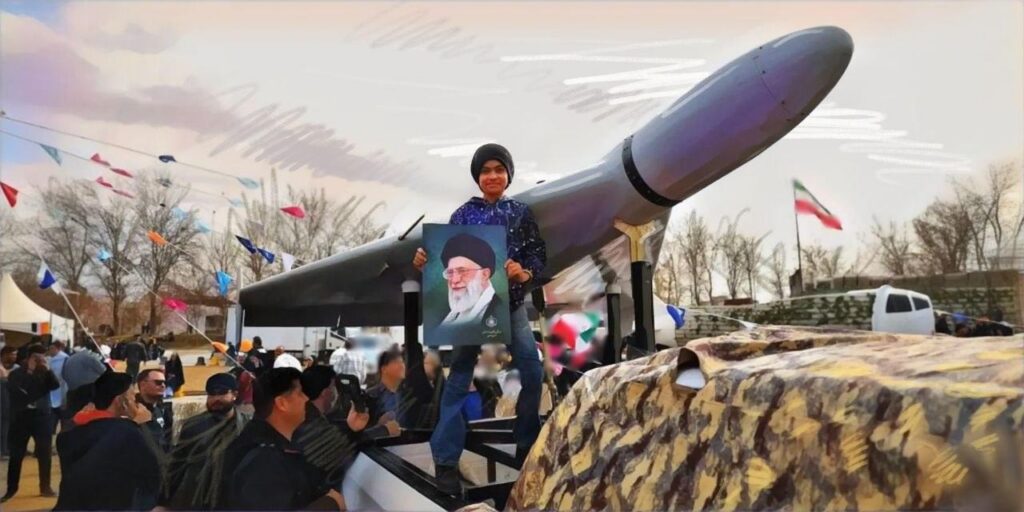
Kazakhstan President Kassym-Jomart Tokayev’s proposal of Turkestan city as a venue for Iran-war negotiations shows how directly the conflict had already begun to affect Central Asia itself. The region is no longer simply observing events in Iran. By the time Tokayev made the offer, Central Asian governments were already dealing with evacuations, route disruption, emergency diplomatic coordination, and growing concern over the war’s economic effects.

The Iran war has thus become a real test of Central Asia’s southern diversification strategy. Governments across the region have, in recent years, sought to widen access to world markets through Iran, the South Caucasus, and, in some cases, Afghanistan and Pakistan. These channels reduce dependence on northern routes by opening access to Türkiye, Europe, Gulf markets, and the Indian Ocean. The present crisis subjects that strategy to wartime conditions. The strain of war makes it easier to distinguish durable links, conditional ones, and routes that remain more aspirational than real.

The C6 and Crisis Coordination

The first effects have been practical. Turkmenistan has opened four additional checkpoints along its frontier with Iran, supplementing the Serakhs crossing, while Azerbaijan’s overland route through Astara became another critical outlet, evacuating 312 people from 17 countries between February 28 and March 2. Turkmenistan, according to official reporting, transited more than 200 foreign citizens from 16 countries during the same period. Uzbekistan used the Turkmen route to repatriate its citizens, while Kazakhstan directed its nationals toward overland exits through Turkmenistan, Azerbaijan, Armenia, and Türkiye. The war is already affecting borders, consular work, and the regional diplomatic agenda.

This immediate response gives sharper political meaning to the widening of the Central Asian C5 into a C6 with Azerbaijan. The March 2 call among the five Central Asian foreign ministers and Azerbaijan showed that the format was already there to be used under pressure. What had until now appeared mainly as a corridor framework shaped by summit diplomacy and expert work appeared instead as a working format for crisis coordination linking Central Asia to the South Caucasus. The C6 idea is becoming more practical and more overtly diplomatic.

The Organization of Turkic States adds a second, broader layer. Its foreign ministers met in Istanbul on March 7 and issued a joint statement expressing concern over the escalation in the Middle East, condemning actions that endanger civilians, warning against further regional destabilization, and affirming that threats to the security and interests of member states concern the organization as a whole. The statement was cautious, and the OTS is not turning into a military instrument. Even so, the war is testing whether a Turkic political space extending from Turkey through the South Caucasus to Central Asia can do more than express concern as regional security deteriorates. The C6 is becoming a working format for immediate coordination, while the OTS remains the broader political frame within which that coordination takes on institutional meaning.

Corridor Stress and Resilience

The trans-Iran transit option offers Central Asia a continuous land arc from regional railheads and road networks onward to Türkiye and connected European systems, with the further possibility of reaching southern ports on the Gulf of Oman and the Persian Gulf. Under ordinary conditions, that continuity is its main advantage over routes that require repeated port and rail transfers: it reduces transshipment points, shortens the route in practice, and can make timing more predictable. Under wartime conditions, however, the same corridor is exposed to airspace closures, border disruption, sanctions complications, financing friction, insurance risk, and broader political uncertainty.

The Trans-Caspian International Transport Route, or Middle Corridor, avoids Iran-linked routes and instead depends on a more segmented chain. It relies on port capacity, scheduling, and political stability across a wider set of nodes: rail or road to Caspian shipping ports such as Aktau or Kuryk, sea passage across the Caspian, and stable conditions in the South Caucasus to keep traffic moving on time through Azerbaijan and Georgia toward Türkiye and Europe. Tehran’s March 5 drone strike on Azerbaijan’s Nakhchivan exclave, one of the most serious recent incidents in bilateral relations, showed how directly the conflict could affect the Middle Corridor.

Uzbekistan complicates the picture because alternatives through Afghanistan and Pakistan toward the Arabian Sea and Gulf markets pass through it. Uzbekistan is not just a single-corridor user. It is one of the main gateways for several southward routes at once: west-southwest through Turkmenistan and Iran, south through Afghanistan toward Pakistani ports, and east-west through projects linking China, Kyrgyzstan, and Uzbekistan more closely to downstream routes. None of these options can simply substitute for another, and none escapes the wider instability to the south. Current conditions cast doubt on all of them. The war is testing not just routes through Iran but the broader logic of southward diversification.

Second-order Stress Transmission

The same pressure is now visible in the skies. Europe-Asia flight patterns have already shifted as carriers avoid Iranian and other risky airspace. TCA reported that Central Asia’s airspace has value not as a substitute for Gulf hubs but in a narrower, more practical sense, as overflight space when southern corridors become harder to use. The European Union Aviation Safety Agency has meanwhile kept in force a conflict-zone bulletin warning operators about Iranian and neighboring airspace. Disruption in the usual geometry of Europe-Asia air traffic increases the importance of Central Asia’s skies.

TCA also noted early in the crisis that a wider conflict could reverberate across Central Asia through rising energy prices and pressure on major transport corridors. Spillover from the Iran war affects not only routes that stop functioning. It also forces airlines onto longer routes with higher fuel costs, alters shipping and insurance calculations, and raises logistics costs more generally. The cost, timing, and insurability of goods movement to and through landlocked Central Asia already depend on long-distance logistics. Changes here channel the effects of a distant war into domestic economies.

Turkmenistan offers the clearest early sign of how fast an Iranian supply shock can spread across Central Asia. Retailers and consumers in Ashgabat have told Reuters that prices for key goods imported from Iran have risen sharply because cross-border trade has slowed. Kyrgyzstan has also seen direct disruption of logistics, forcing importers and logistics firms to seek alternative arrangements, as freight forwarders told TCA that cargo transit through Iran had effectively stopped. These are concrete examples of how the war’s shocks are spreading through Central Asia. The broader regional question is how far such pressures extend into Kazakhstan, Uzbekistan, and Kyrgyzstan through fuel, shipping, construction inputs, consumer goods, and supply costs more generally.

Implications for the Caspian Region and Beyond

The conflict’s movement toward the Caspian Sea littoral broadens the stakes. Israeli strikes on Iranian naval targets in the Caspian brought the war into a maritime zone relevant to regional energy and transit flows. The issue is no longer limited to Gulf shipping or borderland evacuation. It now reaches into a maritime-energy space central to Central Asian economic security and wider Eurasian connectivity. For Central Asia, the immediate question is where resilience must now be strengthened: in evacuation coordination, alternative routes, transport-risk management, and protection against import shocks. The deeper question concerns regional agency. The current shock exposes logistical weak points. It could strengthen corridor diversification, but only if the region finds ways to act on those weaknesses rather than merely react to them.

The wider Eurasian significance extends beyond Central Asia. China has an interest in containing instability to preserve reliable westward and southward corridors. Greater instability around the Caspian is not in Moscow’s interest, even if Russia may benefit when southern alternatives weaken. The European Union has a clear stake in resilient non-Russian connectivity across the Caspian and South Caucasus, not least because many of its current assumptions about Eurasian connectivity depend on those corridors functioning with reasonable predictability. The United States, for its part, has an interest in regional stability and in preventing Central Asia’s room for maneuver from narrowing under the pressure of war. The deeper question is whether Central Asia can remain connected on terms that preserve strategic flexibility across Eurasia in a more sharply divided order.

Pannier and Hillard’s Spotlight on Central Asia: New Episode Out Now

As Managing Editor of The Times of Central Asia, I’m delighted that, in partnership with the Oxus Society for Central Asian Affairs, from October 19, we are the home of the Spotlight on Central Asia podcast. Chaired by seasoned broadcasters Bruce Pannier of RFE/RL’s long-running Majlis podcast and Michael Hillard of The Red Line, each fortnightly instalment will take you on a deep dive into the latest news, developments, security issues, and social trends across an increasingly pivotal region.

This week, the team examine a series of major developments across Central Asia, from the results of Kazakhstan’s constitutional referendum to the announcement of new Chinese-funded border outposts and fortifications along Tajikistan’s frontier. We also look at the continuing fallout from the security shake-up in Kyrgyzstan, with further arrests and resignations, as well as the increasingly strange foreign movements of Turkmenistan’s senior leadership while war continues to rage just across the border in Iran, alongside Tehran’s threats to strike Turkmen infrastructure. The episode then turns to the escalating conflict between Afghanistan and Pakistan, where some of the heaviest fighting in months is raising fresh questions about border stability, regional security, and the risk of wider spillover. Finally, for our main story, we bring on a panel of experts to discuss the growing issues surrounding the Rogun Dam and its resettlement project, and how both are likely to affect the states downstream.

On the show this week:

– Eugene Simonov (Rivers Without Boundaries Coalition) – Mark Fodor (Coalition for Human Rights in Development)

Drone Strikes on Russian Baltic Ports Raise Risks for Kazakhstan’s Oil Exports

Drone attacks on Russian Baltic ports have heightened concerns about potential risks to Kazakhstan’s oil export routes. Ukrainian drone strikes targeted the ports of Primorsk and Ust-Luga in Russia’s Leningrad Oblast earlier this week, disrupting operations at both major oil export hubs. Primorsk has an estimated capacity of around one million barrels of crude oil and approximately 300,000 barrels of diesel fuel per day. Large fuel storage facilities are also located at both ports.

Further strikes were reported on March 25, when drones again targeted both ports. Media reports indicated that shipments of oil and petroleum products were suspended, and that fires broke out at Ust-Luga. As of March 26, loadings at both ports were reportedly still suspended following the latest strikes, with no confirmed return to normal operations.

Kazakhstan has increasingly used Baltic routes for part of its oil exports following periodic disruptions to the Caspian Pipeline Consortium (CPC) system. Commenting on the situation, Kazakh oil and gas journalist Oleg Chervinsky said that the port of Ust-Luga has been used to export Kazakh crude marketed under the KEBCO brand, with volumes rising after earlier challenges affecting CPC shipments.

Kazakhstan’s national pipeline operator, KazTransOil, transports crude through Russian pipeline infrastructure under agreements with Russia’s Transneft. From there, oil can be delivered to Germany, shipped via Baltic ports such as Ust-Luga, or exported through Black Sea terminals, including Novorossiysk, which has also been targeted by drone attacks in the past year.

According to open-source intelligence analysts cited in international media, energy infrastructure in the Ust-Luga industrial zone, including facilities linked to NOVATEK’s gas processing complex, was affected by the latest strike. The Ust-Luga site is located roughly 850 kilometres from the Ukrainian border.

A similar attack on infrastructure in the Ust-Luga area was reported in August 2025. At that time, Kazakhstan’s Ministry of Energy stated that Kazakh oil exports had not been affected.

As of March 26, the ministry had not publicly commented on the latest incidents. Officials have previously emphasized the importance of diversifying export routes amid geopolitical risks and infrastructure disruptions.

Caspian Escalation Raises Stakes for Central Asia

Central Asia, which has increasingly sought to present itself as a coordinated actor on the global political stage, has until recently maintained a cautious, non-aligned stance regarding the escalation in the Middle East. However, attacks affecting infrastructure in the Caspian region have altered the diplomatic balance.

The Caspian Sea is a critical transit zone for Central Asia, linking Kazakhstan and Turkmenistan to Azerbaijan and onward to European and Middle Eastern markets. It forms part of key east–west and north–south trade corridors that have gained importance since Russia’s war in Ukraine disrupted traditional transit routes.

In recent years, regional dynamics have also been shaped by Azerbaijan’s growing engagement with Central Asian states, including its formal inclusion in the expanded Central Asian consultative format, which has effectively evolved from the C5 into the C6. Baku has played an important role in regional connectivity. It has developed close relations with both Turkey and Israel, factors that influence geopolitical calculations in the Caspian basin, which directly borders Kazakhstan and Turkmenistan. This growing alignment has reinforced efforts to develop the Middle Corridor across the Caspian, linking Central Asia to Europe via the South Caucasus.

Turkey maintains political, economic, and cultural influence in Kazakhstan, Kyrgyzstan, and Uzbekistan through the Organization of Turkic States. Russian political discourse has at times portrayed this cooperation as part of a broader pan-Turkic geopolitical project, a characterization widely dismissed by officials and analysts in Central Asia. Nevertheless, Astana and Baku continue to maintain strong relations with Ankara, a development that has periodically caused concern in Moscow.

Under President Kassym-Jomart Tokayev, Kazakhstan has also strengthened ties with Gulf states. Qatar, Kuwait, the United Arab Emirates, and Saudi Arabia have become significant investors in the country’s economy. In this context, Iranian attacks on Gulf states not directly involved in the conflict have shaped Astana’s diplomatic positioning during the current crisis. Reports of drone attacks widely blamed on Iran targeting the Azerbaijani exclave of Nakhchivan have further heightened regional tensions.

At the initial stage of the escalation, Kazakhstan’s response was largely limited to diplomatic contacts with regional leaders. At the same time, several Central Asian countries, along with Azerbaijan, expressed concern over the humanitarian consequences of the conflict and began dispatching aid to Iran. Azerbaijan sent nearly 30 tons of food and medical supplies on March 10, followed by another 82 tons of humanitarian aid on March 18. Uzbekistan delivered approximately 120 tons of humanitarian supplies, including flour, vegetable oil, sugar, and canned food, according to regional media reports. Turkmenistan also sent humanitarian aid consisting of medicines, medical supplies, and other goods, primarily intended for children. The Tajik government reported sending a convoy of 110 heavy trucks carrying humanitarian cargo to Iran, with a total weight of 3,610 tons.

The diplomatic environment shifted further after Israeli air strikes on March 18 targeting Iranian naval facilities in the Caspian Sea. According to Israeli military statements cited by international media, the targets included a major port of the Iranian Navy, where, reportedly, “dozens of ships were destroyed,” as well as “the central command post of the Iranian Navy and infrastructure used for the repair and maintenance of Iranian military vessels.”

The basin is also central to regional energy flows, with offshore infrastructure, shipping routes, and pipeline-linked export systems connecting Caspian producers to global markets. Any expansion of conflict into this space raises risks for both energy exports and maritime transport.

Security in the Caspian basin is a shared concern for both littoral states and their regional partners. According to analyst Denis Borisov, Iran’s Caspian transport infrastructure forms part of regional corridors used by Central Asian states, making stability in the basin strategically important.

Kazakhstan, one of the five Caspian littoral states, began actively signaling support for de-escalation shortly after the strikes. On March 21, speaking in the Turkestan region, President Tokayev called for an end to attacks on civilian and economic targets and urged parties to engage in negotiations. He reiterated Kazakhstan’s readiness to host potential peace talks.

On March 22, the presidents of Kazakhstan and Iran exchanged congratulatory messages on the occasion of Eid al-Fitr and Nauryz. Tokayev expressed hopes for strengthened unity and stability in the Middle East.

Diplomatic contacts intensified on March 23, when Azerbaijan’s Foreign Minister Jeyhun Bayramov held a telephone conversation with his Iranian counterpart Seyed Abbas Araghchi to discuss regional developments and possible steps toward reducing military tensions, including the need to maintain security in the Caspian region.

On the same day, Turkmenistan’s Foreign Minister Rashid Meredov also spoke with Araghchi. Iranian readouts of the call warned that recent strikes could have security and environmental consequences for the Caspian Sea.

Also on March 23, Tokayev received the United Arab Emirates Ambassador to Kazakhstan, Mohammed Said Mohammed al-Ariqi. During the meeting, Tokayev expressed concern over Iranian bombardments targeting the UAE, reiterated Kazakhstan’s opposition to involving neutral states in the conflict, and once again offered Kazakhstan as a platform for peace talks.

The escalation affecting the Caspian region has therefore acted as a catalyst for intensified diplomatic engagement by Central Asian states and Azerbaijan aimed at steering the crisis toward dialogue. As Tokayev has suggested, such efforts may prove critical before the window for negotiated solutions narrows. As the conflict edges closer to key transit and energy routes, the stakes for Central Asia are no longer peripheral, but immediate.

Monument to Human Chain Rescue Unveiled in Almaty

In 2016, residents of Almaty formed a human chain to rescue a dog and its owner who had become trapped in a river. Ten years later, in March 2026, an art installation commemorating the dramatic rescue was unveiled on the Ulken River, which flows into the Sairan Reservoir, one of the city’s most popular recreational areas.

The sculpture stands near the site of the incident. The dog had fallen into the water and was unable to climb out because of the steep riverbanks. Its owner climbed down in an attempt to help but also became stranded. Witnesses then joined forces to pull them to safety. A video of the rescue quickly went viral, reportedly attracting about 15 million views on the Daily Mail’s Facebook page and a further 6.5 million views across other social media platforms. International television networks also covered the story.

The installation depicts a chain of people holding onto one another, symbolizing solidarity and mutual assistance. The hand of the final figure extends beyond the fence, allowing visitors to grasp it and symbolically take part in the rescue. City officials said the sculpture was funded by private donations. According to media reports, the identities of the individuals who took part in the rescue remain unknown.

“The concept of the installation is based on the ideas of mutual aid, solidarity, and unity. The composition shows figures linked in a chain, symbolizing support and collective action in overcoming difficulties. It is inspired by an image that resonated widely with the public and reflects values close to every resident,” an official statement said.

Still from the 2016 rescue video

The installation was created by Yerbosyn Meldibekov, a prominent contemporary artist from Kazakhstan whose works are held in museum collections in Antwerp, Hong Kong, Singapore, and other cities.

This is not the first time that acts of animal rescue in Kazakhstan have inspired artistic tributes. In 2019 in Almaty and in 2020 in Karaganda, murals were painted on residential buildings in memory of forestry inspector Yerlan Nurgaliyev, who was killed by poachers. The murals depict him holding a rescued saiga calf and are based on a photograph that went viral after his death.

The incident took place in January 2019 in the Karaganda Region. Game wardens Pyotr Nitsik and Yerlan Nurgaliyev were pursuing poachers illegally hunting saiga antelopes when they were attacked. Nurgaliyev was killed, while his colleague survived with serious injuries. The perpetrators were later detained. Nurgaliyev was posthumously awarded the Order of Barys for bravery and self-sacrifice in the line of duty, and Nitsik also received a state award.