• KGS/USD = 0.01144 0%
  • KZT/USD = 0.00212 0%
  • TJS/USD = 0.10432 -0.29%
  • UZS/USD = 0.00008 0%
  • TMT/USD = 0.28490 0%
  • KGS/USD = 0.01144 0%
  • KZT/USD = 0.00212 0%
  • TJS/USD = 0.10432 -0.29%
  • UZS/USD = 0.00008 0%
  • TMT/USD = 0.28490 0%
  • KGS/USD = 0.01144 0%
  • KZT/USD = 0.00212 0%
  • TJS/USD = 0.10432 -0.29%
  • UZS/USD = 0.00008 0%
  • TMT/USD = 0.28490 0%
  • KGS/USD = 0.01144 0%
  • KZT/USD = 0.00212 0%
  • TJS/USD = 0.10432 -0.29%
  • UZS/USD = 0.00008 0%
  • TMT/USD = 0.28490 0%
  • KGS/USD = 0.01144 0%
  • KZT/USD = 0.00212 0%
  • TJS/USD = 0.10432 -0.29%
  • UZS/USD = 0.00008 0%
  • TMT/USD = 0.28490 0%
  • KGS/USD = 0.01144 0%
  • KZT/USD = 0.00212 0%
  • TJS/USD = 0.10432 -0.29%
  • UZS/USD = 0.00008 0%
  • TMT/USD = 0.28490 0%
  • KGS/USD = 0.01144 0%
  • KZT/USD = 0.00212 0%
  • TJS/USD = 0.10432 -0.29%
  • UZS/USD = 0.00008 0%
  • TMT/USD = 0.28490 0%
  • KGS/USD = 0.01144 0%
  • KZT/USD = 0.00212 0%
  • TJS/USD = 0.10432 -0.29%
  • UZS/USD = 0.00008 0%
  • TMT/USD = 0.28490 0%

Kazakhstan and China Launch Project to Double Capacity of Shymkent Oil Refinery

Kazakhstan and China have agreed on the basic parameters of a major expansion project at the Shymkent oil refinery, which will double its processing capacity from over 6 million to 12 million tons of oil per year.

According to national oil company KazMunayGas, the Shymkent refinery became Kazakhstan’s leading facility in 2025 in terms of processing volume, handling 6.23 million tons of oil. By comparison, the Pavlodar Petrochemical Plant processed 5.76 million tons, and the Atyrau Oil Refinery 5.47 million tons. Shymkent also topped production output, delivering over 2.28 million tons of gasoline and more than 2.1 million tons of diesel fuel.

The refinery is jointly owned by KazMunayGas JSC and China National Petroleum Corporation (CNPC). The two partners plan to expand the plant’s production capacity by constructing new processing infrastructure.

A delegation from Kazakhstan’s Ministry of Energy, led by Daulet Arykbayev, Director of the Oil Transportation and Refining Department, participated in a strategic meeting in Qingdao, China, to prepare a feasibility study for the expansion. Following the meeting, both sides approved the project’s basic framework.

A central decision was the adoption of the “6+6” configuration: two processing lines, each with a 6-million-ton annual capacity, fully integrated into the refinery’s existing operations. Officials stressed the importance of meeting project deadlines, with the core feasibility work scheduled for completion by 2032 under the framework agreement.

The Ministry of Energy also noted that, under Kazakhstan’s broader refinery modernization program, the goal is to increase total national processing capacity from 18 million to 39 million tons of oil per year. Simultaneously, the government is seeking investors for the construction of a new refinery with an annual capacity of up to 10 million tons.

The Times of Central Asia previously reported on state plans to attract foreign investment for a proposed fourth major refinery. Government estimates suggest that expanding the three existing refineries to 39 million tons will require investments of $15-19 billion.

In March 2025, the Agency for the Protection and Development of Competition recommended partial privatization of the Pavlodar and Atyrau plants to boost efficiency and attract private capital. However, in December, Energy Minister Yerlan Akkenzhenov stated that KazMunayGas currently has no plans to privatize these assets.

Kazakhstan Plans to Ban Dismissal of Single Parents Regardless of Gender

Kazakhstan’s lawmakers have proposed amendments to labor legislation that would prohibit the dismissal of single parents, regardless of gender. Currently, such legal protections apply only to single mothers.

Yerlan Sairov, a deputy of the Mazhilis (the lower house of parliament), said the provision is part of a bill to amend and supplement the Labor Code. The bill proposes replacing the term “single mothers” with “single parents,” thereby extending protection from dismissal to single fathers raising children on their own.

The Mazhilis has already approved the bill in its second reading and forwarded it to the Senate for consideration.

The draft law also introduces significant reforms in pension rights. Under the proposed changes to the Social Code, time spent by non-working fathers caring for young children will be counted toward their length of service when calculating old-age pensions. This amendment follows a February 2025 ruling by the Constitutional Court, which found gender inequality in the previous legislation after a citizen filed a constitutional appeal.

The bill covers a range of related areas. New provisions are being introduced into the Code on Public Health and the Healthcare System regarding the classification of occupational injuries. It also mandates the inclusion of rules on benefits and compensation, such as those related to workplace accidents, in collective labor agreements. Notably, occupational safety and health officers will be required to report directly to the head of the organization, thereby establishing management’s personal accountability for workplace conditions.

On the government’s initiative, the draft law includes amendments to the Law “On Permits and Notifications,” introducing licensing requirements for the provision of special social services in the field of social protection. It also outlines specific types of production that cannot be halted during strikes.

The bill expands the powers of the authorized labor body to approve procedures for providing employees with therapeutic and preventive nutrition. It further proposes setting permissible ratios between the highest and lowest salaries for a given profession or position within an organization, to be included in collective agreements.

As previously reported by The Times of Central Asia, the government is considering broader labor law reforms to address workforce shortages in key sectors. In January, lawmakers discussed lowering the retirement age for shepherds and herders amid a shortage of workers in rural areas.

The “Central Asia 2030” Roundtable in Astana: From External Interest to Regional Choice

Discussions about Central Asia’s long-term strategic future are increasingly shifting from a focus on external attention to one of growing regional agency.

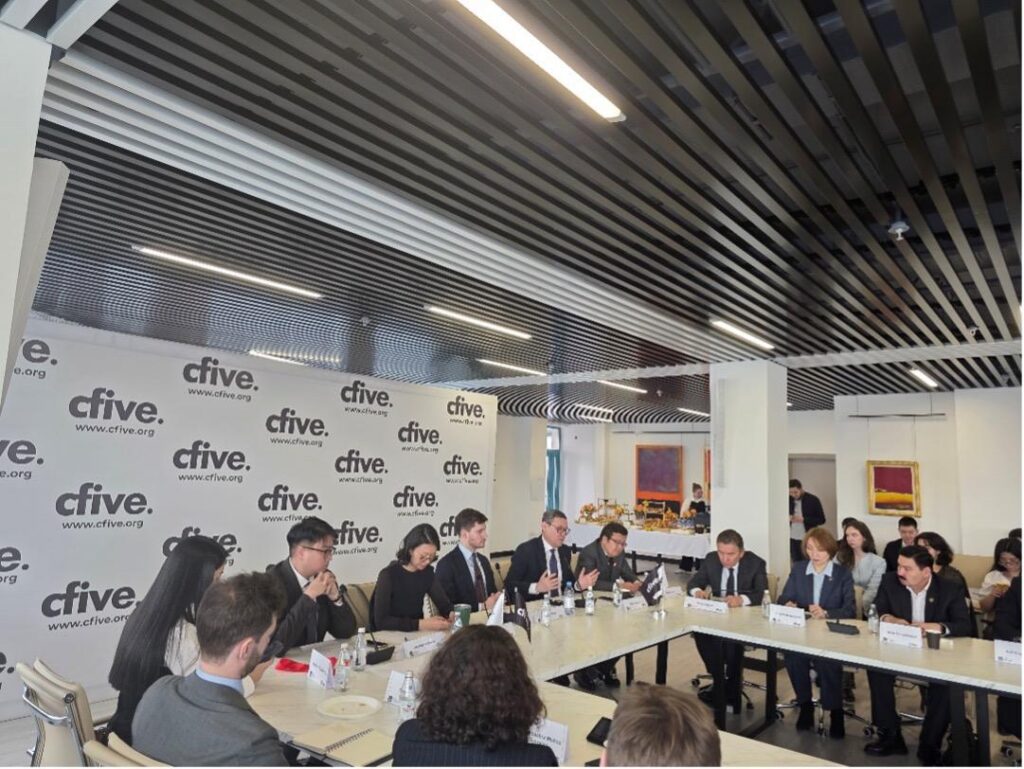
On Monday, Astana International University hosted the first roundtable in the series Central Asia 2030: Strategic Horizons and Regional Choices. Speakers included Andrew D’Anieri, Deputy Director of the Atlantic Council’s Eurasia Center; Yerkin Tukumov, Special Representative of the President of Kazakhstan; Ambassador-at-Large Zulfiya Suleimenova; and Dauren Aben, Deputy Director of the Kazakhstan Institute for Strategic Studies under the President of Kazakhstan.

Pragmatism, Regional Choice, and the Logic of the “Grand Bargain”

In his remarks, Andrew D’Anieri emphasized that Central Asia is increasingly viewed in the U.S. not as a peripheral zone but as an independent strategic partner.

He noted that “environmental, water, and climate issues considered within a regional framework are fully supported by the U.S.” However, he added that “long-term commercial and investment projects are impossible without long-term stability, which in turn requires coordination between neighbors, engagement on sensitive issues, and pragmatic regional cooperation.”

D’Anieri also pointed to Afghanistan as “an integral part of regional logic,” and described formats such as C5+1 as evidence of Central Asia’s growing subjectivity. He highlighted the first-ever C5+1 summit at the presidential level in Washington as a landmark event, especially under the administration of Donald Trump, known for its preference for bilateral over multilateral formats.

Trump and the Possibility of a Visit: Only with a “Big Deal”

When asked whether a visit by President Trump to Central Asia is realistic, D’Anieri offered a candid assessment: “Such a visit is only possible if there is a large, symbolically and economically significant deal.” Whether in aviation, technology, or infrastructure, these high-visibility projects are typically what draw Trump’s engagement.

He added that “the region has work to do in developing a package of initiatives that could interest the U.S. president and justify a high-level visit.” Potential areas include mining, transport, and logistics.

Reframing Afghanistan’s Role in the Region

Special Representative Yerkin Tukumov focused on the importance of reframing the region’s relationship with Afghanistan. For too long, he said, Afghanistan has been viewed primarily “through the prism of security threats,” resulting in a narrow and often misleading approach.

Tukumov argued for a broader, more pragmatic view that considers economic, humanitarian, and cross-border dimensions. He described the C5+1 format not as a replacement for bilateral diplomacy, but as “an additional level of coordination where Central Asia can speak with a more consolidated voice without losing national autonomy in foreign policy.”

He stressed the need to move beyond “ideological and declarative approaches,” toward practical, interest-based mechanisms of cooperation.

Ecology, Water, and the Case for a Global Water Agency

Ambassador-at-Large Zulfiya Suleimenova addressed the strategic urgency of regional coordination on water and climate. She emphasized that “water issues are transboundary in nature,” and that efforts to resolve them solely within national frameworks are bound to fall short.

“Regional coordination in Central Asia is not a political slogan, but a functional necessity,” she said. Suleimenova argued that jointly promoting initiatives in international forums “strengthens the region’s negotiating position, reduces mistrust, and increases legitimacy.” She described water as “not a factor of division, but a platform for cooperation.”

She also criticized the inefficiency of current global water governance mechanisms. “International formats are overloaded, poorly managed, and often fail to yield results, particularly in the water sector,” she said. In this context, she expressed support for President Kassym-Jomart Tokayev’s proposal to establish a dedicated UN water agency.

Regional Choice as Strategic Imperative

Throughout the roundtable, the theme of Regional Choices emerged as central. As Dauren Aben noted, “Central Asia remains a region of natural competition and differences in national interests.” Attempts to reduce it to integrationist or geopolitical binaries, he warned, oversimplify a far more complex reality.

Aben posed what he sees as the defining question: “To what extent are Central Asian states ready to define who they want to be by 2030 and what projects should shape their future?” Conscious coordination, he argued, is essential to resisting imposed external frameworks and maintaining control over internal agendas.

A Strategic Message from the Caspian Policy Center

A written message from Efgan Nifti, Director General of the Caspian Policy Center, was also presented. Though unable to attend, Nifti offered his perspective on the regional moment.

He described 2025 as “a year of alignment and strategic rapprochement in the Trans-Caspian region,” highlighting Kazakhstan, Azerbaijan, and Georgia as key pillars of the emerging Middle Corridor. These states, he argued, “possess unique tools to strengthen economic and logistical connectivity between Europe and Asia.”

Nifti also noted that the European Union stands to benefit significantly from the development of trans-Caspian routes, gaining more secure and diversified supply channels.

Toward 2030: From Reaction to Institution-Building

The roundtable demonstrated that Central Asia is increasingly moving beyond reactive politics. The region is beginning to see itself not as a subject of external agendas, but as a planner of its own future, one in which security, ecology, water, the economy, and diplomacy are part of a shared strategic framework.

The challenge now is to transform that agency into durable institutions and implementable projects by 2030.

Kazakhstan Reshapes Copper Export Flows Amid Rising Global Demand

As global demand for copper continues to increase, driven by energy transition and the digital economy, Kazakhstan, a major global producer, is not only increasing its output but also significantly reshaping its export geography.

Analysts at Energyprom.kz have examined the current shifts in the sector and the evolving landscape of Kazakhstan’s copper exports.

With its substantial reserves and a developed metallurgy sector, Kazakhstan is well positioned to benefit from this strategic opportunity. According to preliminary data from the National Statistics Bureau, the country produced 471,000 tons of refined copper in 2025, an increase of 7,100 tons, or 1.5%, from 2024’s 463,900 tons. This suggests a gradual stabilization of the industry following previous fluctuations.

Production trends over recent years have been inconsistent. In 2018, Kazakhstan produced 442,600 tons of refined copper. Output rose 7.7% to 476,500 tons in 2019 and grew modestly in 2020 to 482,900 tons (+1.3%). However, production dropped sharply in 2021 to 403,300 tons, a decline of 16.5%, due to major repairs and upgrades at key processing facilities, including a furnace overhaul at the Balkhash Copper Smelter operated by Kazakhmys Smelting LLP, and disruptions caused by the Covid-19 pandemic.

By 2024, output had rebounded to 474,900 tons, up 17.8% from the 2021 low, signaling the industry’s return to pre-crisis levels.

Despite global demand, Kazakhstan’s total exports of refined copper declined in 2025. However, the structure of those exports shifted notably. Deliveries to Turkey rose from 142,200 to 164,000 tons, an increase of 21,800 tons, or 15.3%. Turkey’s share of Kazakhstan’s copper exports rose from 32.5% to 40.9%, making it the country’s second-largest export destination.

Combined, China and Turkey accounted for about 90% of Kazakhstan’s copper exports from January to November 2025, indicating a still high level of market concentration. However, exports to other countries grew 4.4 times from 9,200 tons to 40,100 tons, raising their share from 2.1% to 10%. This points to early signs of diversification.

These shifts in Kazakhstan’s export strategy coincide with major developments in global demand. According to a forecast by S&P Global, global copper consumption is projected to grow from 27.3 million tons in 2024 to 42.3 million tons by 2040, an increase of 15 million tons, or approximately 55%. The primary drivers include electric vehicles, renewable energy development, power grid upgrades, artificial intelligence, data centers, and rising defense sector needs.

By 2040, copper use in the energy transition sector is expected to more than double from 7.6 million tons in 2024 to 15.6 million tons. Copper demand for AI and data centers is forecast to rise from 1 million to 2.5 million tons. Even traditional sectors like construction and mechanical engineering will grow, projected to increase from 17.8 million to 23.3 million tons.

China will remain the world’s largest consumer of refined copper. According to Fitch Solutions, Chinese demand is expected to rise from 15.9 million tons in 2023 to 18.9 million tons by 2028, an increase of 19%, or more than 3 million tons. This would allow China to maintain a consumption share of around 60% of global demand.

While Kazakhstan’s share of the Chinese market declined in 2025, analysts believe the country is unlikely to move away from China as a strategic export destination. At the same time, growing interest from Turkey, India, and other Asian markets is opening opportunities for diversification and greater resilience in Kazakhstan’s copper export model.

B5+1 in Bishkek: Business at the Center of Regional Integration Strategy

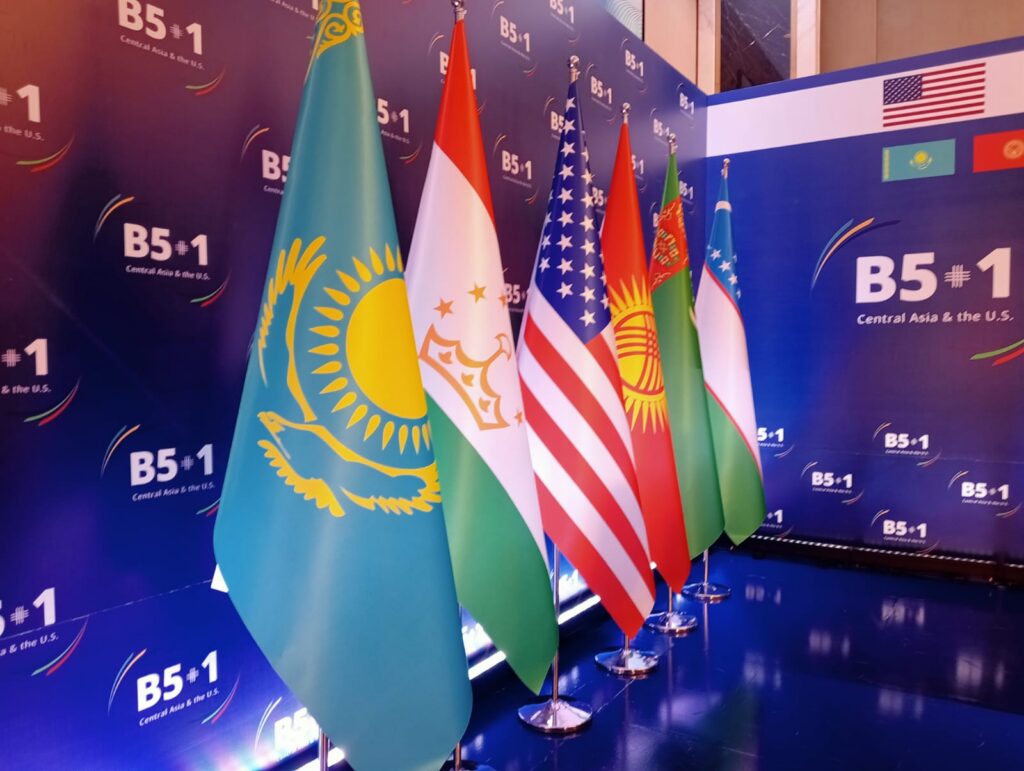
A two-day B5+1 business forum is underway in Bishkek, bringing together government officials from Central Asian countries, regional business leaders, and a U.S. delegation. Once viewed as a business extension of the C5+1 diplomatic dialogue, participants now describe the format as evolving into an independent and pragmatic economic platform.

The forum is organized by the Center for International Private Enterprise (CIPE), in cooperation with the Cabinet of Ministers of Kyrgyzstan, under the IBECA program supported by the U.S. Department of State.

A defining feature of this year’s forum is the size and prominence of the U.S. business delegation. More than 50 representatives from major corporations, which, according to official documents, include Boeing, GE Healthcare, Nasdaq, Abbott, Pfizer, Honeywell, Coca-Cola Company, Mastercard, FedEx, Apple, Wabtec, and Franklin Templeton, have convened in Bishkek. Discussions are structured around panel sessions and working groups focusing on key sectors: transport and logistics, agriculture, e-commerce, information technology, and critical mineral extraction.

U.S. Special Envoy for South and Central Asia Sergio Gor stated he has arrived in Bishkek with a “clear message from Donald Trump.” He emphasized that Central Asia is among the top foreign policy priorities of the current U.S. administration.

At a press conference, Gor underlined a strategic shift away from traditional intergovernmental agreements toward support for private enterprise and the development of commercially viable projects. “The U.S. government is ready to expand its tools for supporting investment cooperation, and today’s discussion is only the first step toward further joint development,” he said.

Focus on Regional Connectivity

Transport infrastructure and regional connectivity were major themes on the opening day of the forum. Gor highlighted the U.S.-backed TRIPP initiative, which aims to establish a transport corridor through the South Caucasus linking Central Asia to Western markets. He argued that expanding alternative trade routes would support deeper economic integration within the region and boost its position in global trade networks.

Forum participants echoed this sentiment, stressing that major international investors are increasingly evaluating Central Asia not as isolated national markets but as a single economic space. Representatives from Central Asian governments noted that the region’s aggregated potential, in logistics, natural resources, and consumer demand, is what attracts large multinationals.

Kazakhstan’s Minister of Industry, Yersayin Nagaspayev, said over 600 American companies are currently operating in Kazakhstan, with many managing regional operations from within the country. “Our shared goal is to position Central Asia as a reliable, competitive, and attractive region for long-term business cooperation,” he stated.

Redefining the Role of Business in Governance

Kyrgyzstan’s Minister of Economy, Bakyt Sydykov, emphasized that the B5+1 platform is reshaping the nature of business-state interaction. “Today, business is not just a participant in the process, but a full-fledged co-author of economic reforms,” he said.

He noted that the working groups had proposed recommendations in line with Kyrgyzstan’s ongoing reform agenda. These include reducing administrative barriers, digitizing public services, and improving access to finance for small and medium-sized enterprises.

Toward a New Geopolitical Self-Image

The forum in Bishkek also reflected a broader regional trend: Central Asia’s pursuit of a new geopolitical identity. Participants and observers noted that, despite pressure from larger global players, the region is gradually distancing itself from its post-Soviet image.

Some analysts believe that, under favorable conditions, the United States could play a facilitating role in this process. Others remain cautious, suggesting the forum may simply serve as a strategic “market study.” Regardless, Central Asia will have to continue navigating the competing interests of major powers.

The B5+1 forum in Bishkek offers further evidence of Central Asia’s ambition to redefine its geopolitical identity. Despite quiet resistance from certain major regional players, the region is increasingly eager to shed the image of a post-Soviet periphery as it looks to continue balancing the competing interests of global powers. This is precisely what makes the B5+1 notable as a potential anchor for a new logic of regional engagement.

Small but Always Present: Kyrgyzstan at the Winter Olympics

Since independence in 1991, Kyrgyzstan has sent just one or two athletes to every edition of the Winter Olympics, a reflection of its modest stature in winter sports as well as its persistence in being represented among the world’s best every four years. 

This year is no different. Alpine skier Timur Shakirov and cross-country skier Artur Saparbekov, both 19 years old, will compete for Kyrgyzstan at the games that run from February 6 to February 22 in Milan, Cortina d’Ampezzo in the Dolomites and other locations in northern Italy.

Shakirov will participate in the giant slalom and slalom at the Bormio resort, while Saparbekov will also compete in two disciplines – the classic sprint and the 10-kilometer freestyle – at Val di Fiemme.

The athletes recently showed off their national uniforms for the games – a dark blue one for training and a white one with a white kalpak, the traditional Kyrgyz headgear, for ceremonial events. 

Kyrgyzstan’s National Olympic Committee said it had provided the athletes with Olympic scholarships worth $21,000, starting in November 2023. 

“A coaching workshop on skiing was also held in 2025, and in 2026, a biathlon workshop aimed at upgrading specialists and developing winter sports in the country is planned,” the committee said. 

Kyrgyzstan’s mountainous terrain offers potential for the development of winter sports, but limited funding and a lack of top-level training facilities has held back progress. 

After the collapse of the Soviet Union, Kyrgyzstan first participated in the Winter Olympics at the 1994 games in Lillehammer, Norway, with Yevgeniya Roppel competing in the biathlon, a sport that involves cross-country skiing and rifle shooting. The country of about seven million people has sent a delegation to the games every four years since then, a notable feat because athletes have to get through qualifying rounds. The first Winter Olympics were held in 1924. 

With a delegation of three-dozen athletes, Kazakhstan is sending the biggest team from Central Asia to the Games in Italy. Uzbekistan planned to send four athletes, but a figure-skating pair is unable to compete because of an injury. Tajikistan and Turkmenistan are not participating.