• KGS/USD = 0.01144 0%
  • KZT/USD = 0.00196 -0%
  • TJS/USD = 0.10899 -0%
  • UZS/USD = 0.00008 -0%
  • TMT/USD = 0.28490 0%
  • KGS/USD = 0.01144 0%
  • KZT/USD = 0.00196 -0%
  • TJS/USD = 0.10899 -0%
  • UZS/USD = 0.00008 -0%
  • TMT/USD = 0.28490 0%
  • KGS/USD = 0.01144 0%
  • KZT/USD = 0.00196 -0%
  • TJS/USD = 0.10899 -0%
  • UZS/USD = 0.00008 -0%
  • TMT/USD = 0.28490 0%
  • KGS/USD = 0.01144 0%
  • KZT/USD = 0.00196 -0%
  • TJS/USD = 0.10899 -0%
  • UZS/USD = 0.00008 -0%
  • TMT/USD = 0.28490 0%
  • KGS/USD = 0.01144 0%
  • KZT/USD = 0.00196 -0%
  • TJS/USD = 0.10899 -0%
  • UZS/USD = 0.00008 -0%
  • TMT/USD = 0.28490 0%
  • KGS/USD = 0.01144 0%
  • KZT/USD = 0.00196 -0%
  • TJS/USD = 0.10899 -0%
  • UZS/USD = 0.00008 -0%
  • TMT/USD = 0.28490 0%
  • KGS/USD = 0.01144 0%
  • KZT/USD = 0.00196 -0%
  • TJS/USD = 0.10899 -0%
  • UZS/USD = 0.00008 -0%
  • TMT/USD = 0.28490 0%
  • KGS/USD = 0.01144 0%
  • KZT/USD = 0.00196 -0%
  • TJS/USD = 0.10899 -0%
  • UZS/USD = 0.00008 -0%
  • TMT/USD = 0.28490 0%
08 December 2025

Uzbekistan Signs $5.9 Billion Deal to Build Central Asia’s First Green Aviation Fuel Plant

Allied Biofuels FE LLC Uzbekistan has signed key land and water agreements with the Khorezm regional government, marking a significant step toward building Central Asia’s first integrated biorefinery for zero-carbon aviation fuel.

The announcement was made during the International Investment Forum in Khiva, where Khorezm Governor Jurabek Rakhimov met with a company delegation led by Chairman and Managing Director Alfred Benedict.

The $5.9 billion project will be located in Tuproqqal’a district in the city of Khorezm, and aims to establish a climate-aligned aviation fuel supply chain in Uzbekistan. Once operational, the facility is expected to produce 382,000 tonnes of Sustainable Aviation Fuel (SAF), 152,000 tonnes of Electro-Synthetic SAF (e-SAF), and 11,000 tonnes of renewable green diesel annually. The refinery will be supported by 2 GW of PEM electrolysers, making it one of the largest initiatives of its kind in the region.

Benedict described the agreements as “a landmark moment for Allied Biofuels and for Khorezm,” emphasizing that the project combines international expertise with local support to help Uzbekistan achieve its net-zero emissions target by 2030. “This facility will not only supply sustainable aviation fuel at scale but also foster economic growth in the region,” he said.

Uzbekistan has committed to becoming carbon-neutral by the end of the decade, and the Khorezm biorefinery is expected to play a central role in that transition. By producing zero-carbon fuels for transport and industry, the project aims to reduce fossil fuel dependency and lower greenhouse gas emissions.

Rakhimov welcomed the decision to site the project in Khorezm, highlighting its significance for regional development. He stated that the initiative will create hundreds of skilled jobs, strengthen Khorezm’s position as a hub for green energy, and boost the local economy. Rakhimov also pledged to personally oversee the allocation of land and infrastructure needed to ensure successful implementation.


Central Asia and Regional Integration: Logistics, Water, Energy

Central Asia is undergoing a profound transformation, where questions of domestic development and the region’s ability to act in a coordinated way are coming to the forefront. For many years, Central Asian states were viewed as fragmented, each pursuing separate strategies that often put them in competition. Today, however, shared challenges and growing interdependence are making gradual convergence increasingly likely.

The region now confronts common pressures such as water scarcity, energy imbalances, environmental degradation, and the fallout of instability in Afghanistan — issues that no single country can effectively address in isolation. Increasingly, regional platforms such as the Interstate Commission for Water Coordination (ICWC) are being leveraged to mediate water-energy tradeoffs, while joint initiatives in transport, transit, and energy infrastructure foster new integration. Moreover, leading actors like Kazakhstan and Uzbekistan are pushing coordinated strategies — modernizing rail and aviation links, coordinating transboundary water allocations, and exploring nuclear cooperation — that point toward a more interconnected regional future.

Shared Challenges and Points of Convergence

The region faces problems that no country can solve alone. These include water shortages, energy imbalances, environmental risks, and instability in Afghanistan. Such challenges can be seen as both threats and opportunities, since they also represent areas of overlapping interest. Joint action in these fields can deliver more than fragmented national strategies.

Water is particularly important, remaining one of the most sensitive issues in interstate relations. Yet it also offers opportunities for coordinated action through existing regional platforms, such as the Interstate Commission for Water Coordination of Central Asia. The “water for energy” model is increasingly seen as a practical tool, already under discussion and applied in bilateral and multilateral projects.

Environmental issues are similarly shared. The disappearance of the Aral Sea, land degradation, air pollution, and glacier melt create threats that transcend national borders. Joint monitoring, data exchange, and coordinated adaptation measures, particularly within the United Nations Regional Centre for the Sustainable Development Goals for Central Asia and Afghanistan, opened in August 2025 in Almaty, could become a new direction for regional cooperation.

Afghanistan remains another risk factor that affects the security of the entire region. At the same time, transportation and energy projects linking Central Asia with South Asia through Afghan territory can turn a challenge into an opportunity. Reducing instability and integrating Afghanistan into regional trade and transit networks serves the interests of all Central Asian states.

Kazakhstan and Uzbekistan as leading forces

To understand how closer integration might work in practice, it is useful to examine the strategies of the region’s two key players: Astana and Tashkent. The major agreements concluded by Kazakhstan and Uzbekistan with the United States in transport and aviation should be viewed not as isolated deals, but as evidence of the complementary strengths of the two largest economies in Central Asia.

Kazakhstan signed its largest locomotive contract to date with U.S. company Wabtec, a $4.2 billion agreement for 300 TE33A freight locomotives to be assembled at the Wabtec Kazakhstan plant in Astana, along with servicing support. This will modernize Kazakhstan’s rail fleet as part of large-scale infrastructure investment, including plans to upgrade 11,000 kilometers of track by 2029.

These projects aim to shorten transit routes from hubs such as Khorgos, Almaty, and Astana to the port of Aktau, while creating new Northern and Middle corridors to complement the Western Europe–Western China route. Kazakhstan already handles more than 80 percent of cargo transit from China to Europe. Its strategy gives priority to developing the Middle Corridor across the Caspian Sea and the Caucasus, offering faster and more cost-effective freight options than traditional routes.

Meanwhile, Uzbekistan Airways has signed a contract with Boeing for 14 Boeing 787-9 Dreamliner aircraft, with an option for eight more. Deliveries are set to begin in 2031.

By modernizing its fleet and investing in aviation, Tashkent is positioning itself as a central hub for passenger and cargo traffic. For a landlocked country, air transport is a vital complement to overland routes. An expanded widebody fleet will increase passenger capacity, improve schedule reliability, and broaden the route network to link Central Asia with North America, Europe, the Middle East, and the Asia-Pacific.

Together, these two strategies form the basis of a combined model of regional integration: rail and air transport reinforce each other rather than compete. Kazakhstan anchors land transit, while Uzbekistan anchors air connectivity. Together, these strategies point to growing opportunities for regional cooperation.

Prospects for gradual convergence

Step-by-step cooperation in transport, energy, and water management is shaping broader regional collaboration, with tangible results already visible.

The water ministries of Kazakhstan and Uzbekistan are coordinating on transboundary distribution. From October 2024 to October 2025, Uzbekistan is set to supply about 16 billion cubic meters of water to Kazakhstan, which is 1.8 billion cubic meters directed to the North Aral Sea, 120 million cubic meters more than originally projected.

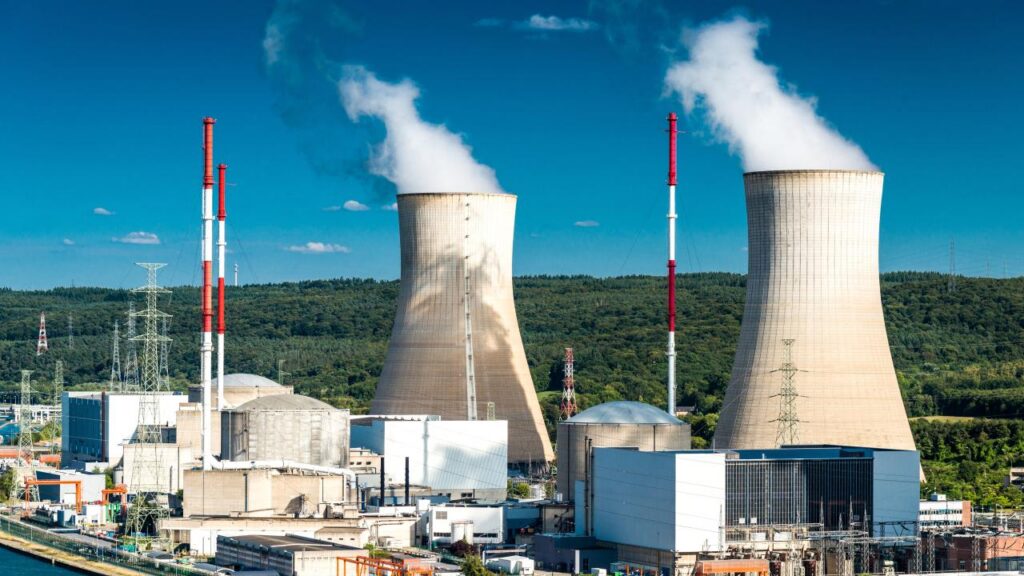
Energy cooperation is also expanding. Kazakhstan is advancing two nuclear power plants: one with Russia’s Rosatom at Ulken and another under preparation with China’s CNNC. Uzbekistan is pursuing a program with Rosatom that combines large-capacity reactors and small modular units, including in the Jizzakh Region. In August 2025, the two countries met in Tashkent to discuss nuclear energy development and a joint emergency response mechanism for energy facilities.

Together, Kazakhstan and Uzbekistan account for the majority of Central Asia’s GDP and act as the region’s main decision-making centers. Their cooperation reduces competition for investment and strengthens Central Asia’s bargaining power with China, Russia, the U.S., Turkey, and the European Union.

It is too early to discuss a single political body, but gradual coordination in practical areas may lead to flexible new formats of cooperation that serve all Central Asian states. The key task is to turn shared problems into drivers of convergence. Integrating logistics, energy, and water management can enhance resilience, strengthen the region’s bargaining position, and help Central Asia move from being an object of external competition to an independent player shaping its own agenda in global politics.
In conclusion, Central Asia’s path toward integration is incremental but tangible. The overlapping dangers of drought, border water disputes, energy shortfalls, environmental threats, and regional instability — especially linked to Afghanistan — are shifting incentives toward cooperation. Kazakhstan and Uzbekistan, as the largest economies and transit hubs, are already aligning policies in transport, aviation, water sharing, and nuclear energy to reduce competition and strengthen their collective bargaining power.
Cross-border infrastructure and energy projects (from modern rail corridors to synchronized nuclear planning) are concrete testbeds for deeper collaboration. While a formal political union remains off the table, these functional alliances may evolve into flexible governance formats offering all Central Asian states a means to act collectively. If sustained, this convergence could help the region transcend external pressures, bolster resilience, and chart a course as a more coherent actor in global affairs.

Learning About Glaciers: Scientists Extract Ice Cores in Tajikistan

A group of international scientists is on a complex, arduous expedition to learn more about the glaciers of the Pamir Mountains in Tajikistan, drilling and extracting two deep ice cores in what the team descibes as a race against the impact of global warming. 

Scientists from the Swiss-funded PAMIR Project and their Tajik partners are working at an altitude of 5,800 meters on the Kon Chukurbashi ice cap, taking ice samples down to the bedrock at an estimated depth of just over 100 meters.  

“The Pamirs remain to date one of the last major high-altitude regions where no deep ice core has ever been retrieved,” the PAMIR Project said in a statement. “If many glaciers in the Pamir Mountains of Tajikistan still seem resilient in the face of global warming, scientists do not know how long this will last.”

The two-week expedition began on September 24. If successful, it will secure environmental information from air bubbles and chemical trace concentrations and isotopes, and possibly organisms trapped in the ice, and help future generations anticipate and adapt to changes in Earth’s climate and ecosystems, the project said.  The expedition is being coordinated by the University of Fribourg in Switzerland and conducted by the National Academy of Sciences of Tajikistan along with Swiss, Japanese, and American universities.

Because of the extreme altitude, team members had prepared for gradual acclimatization with a plan for a base camp and a camp at higher altitude. Logistical difficulties and the challenges of site access have prevented such an expedition in the past. 

The Pamir glaciers are a riddle to scientists who have observed both health and decay in the reaction of the high-altitude ecosystems to climate change. Various theories, including more wind-induced precipitation at high elevations and summertime cooling, have been put forward. But field measurements are lacking and the theories have not been tested against scientific data. 

At an international conference on glacier preservation in Dushanbe this year, President Emomali Rahmon of Tajikistan called for the establishment of a regional lab to study the topic. Most of Central Asia’s glaciers are in Tajikistan.  

The United Nations said last month that some 1,000 glaciers out of the total number of 14,000 that have existed in Tajikistan in recent decades have disappeared and many small ones are expected to vanish in the next 30-40 years. 

A recent study published in the Communications Earth & Environment journal noted the relative stability of some glaciers in Central Asia, but said there had been a recent drop in glacier health in the Northwestern Pamirs following significantly lower snowfall and snow depth since 2018. 

One of the authors of that study is Evan Miles, a Switzerland-based glaciologist who is leading the current PAMIR Project expedition.

“This ice holds hundreds and possibly even thousands of years of physical records of snowfall, temperature, dust, and atmospheric chemistry,” Miles said, according to the project statement. “We are racing against time to retrieve it before climate-change induced melt damages these natural archives forever.” 

Of the two ice cores marked for extraction, one will be used for research and the other will go to a storage site to be built at the French-Italian Concordia station in Antarctica. 

The goal of the site is to “collect, save and manage ice cores from selected glaciers currently in danger of degradation or disappearance, with their yielded information for decades and centuries to come,” said the Ice Memory Foundation, a France-based group that was created by scientific institutions. 

Almaty’s “Tselinny” Cultural Center Featured on Cover of Architectural Record

Kazakhstan’s architectural and cultural landscape has gained rare international recognition: Almaty’s Center for Contemporary Culture “Tselinny” has been featured on the cover of Architectural Record, the world’s oldest architectural magazine, published in the United States since 1891.

International Recognition

In its latest issue, journalist Andrew Ayers, who visited Almaty for Tselinny’s opening, described the project as “a new face for a former Soviet cinema” and “a gesture of reinterpreting Kazakhstan’s colonial past.” The article emphasized that the design team prioritized local context, with all work carried out by Kazakhstani contractors and interior contributions from young Almaty-based architects.

@Laurian Ghinițoiu

“Unlike many new museums, the architecture of the center sought to remain rooted in the local context,” the piece noted. Beyond its architectural merits, Architectural Record highlighted Tselinny’s institutional role, describing it as a platform for bolstering Kazakhstan’s still “fragile contemporary art scene.” The cover photograph was taken by Romanian photographer Laurian Ghinitoiu, renowned for his documentation of global architectural landmarks.

History of the Building

The center officially reopened in September 2025 following a seven-year reconstruction process that weathered both the COVID-19 pandemic and the legal troubles of its principal investor, businessman Kairat Boranbayev.

Originally built in 1964 as the Tselinny cinema, the building underwent several renovations during the 1990s and early 2000s. A major overhaul in 2000 saw the main cinema hall divided, the foyer reconfigured, and a celebrated sgraffito mural by artist Yevgeny Sidorkin concealed behind plasterboard.

@Laurian Ghinițoiu

Boranbayev acquired the building in 2016. Four years later, a comprehensive reconstruction led by British architect Asif Khan began. The project restored the foyer’s original dimensions, revealed Sidorkin’s mural, though now in subdued tones, and transformed the cinema hall into a flexible space for exhibitions and screenings.

Today, Tselinny includes a library, café, and workshop spaces. Notably, the reopening ceremony was led by Amantai Kusainbay, who has worked at the site since 1999 and continues to manage its daily operations.

Afghanistan’s Qosh Tepa Canal Raises Water Security Fears

Water has long been one of Central Asia’s most contested resources, shaping agriculture, energy policy, and diplomacy across the region. Recently, Afghanistan’s Qosh Tepa Canal project has emerged as a central point in this debate. Promoted by the Taliban as a vital step toward achieving food security and economic growth, the canal also raises alarm bells among downstream neighbors who heavily depend on the Amu Darya River. Now, according to Islamic Emirate spokesman Zabihullah Mujahid, the second phase of the project is expected to be completed within five months, raising further concerns among downstream countries about its potential impact on regional water security.

Progress on the Ground

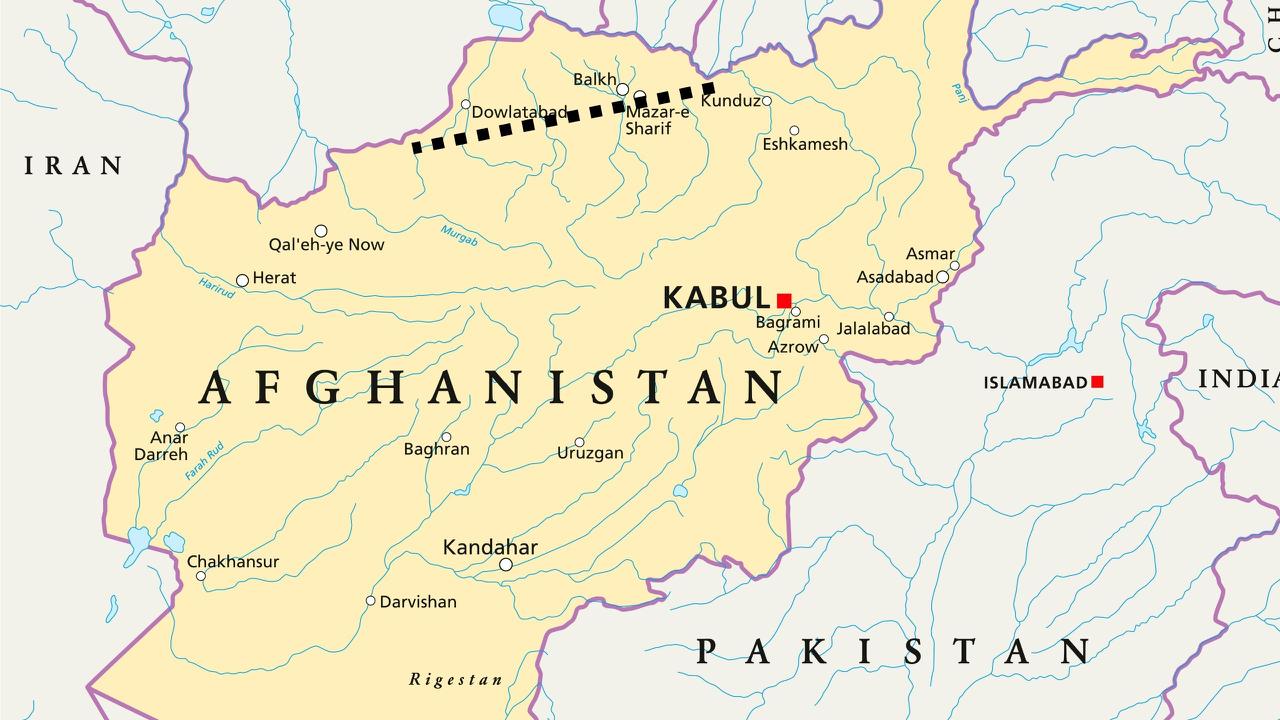
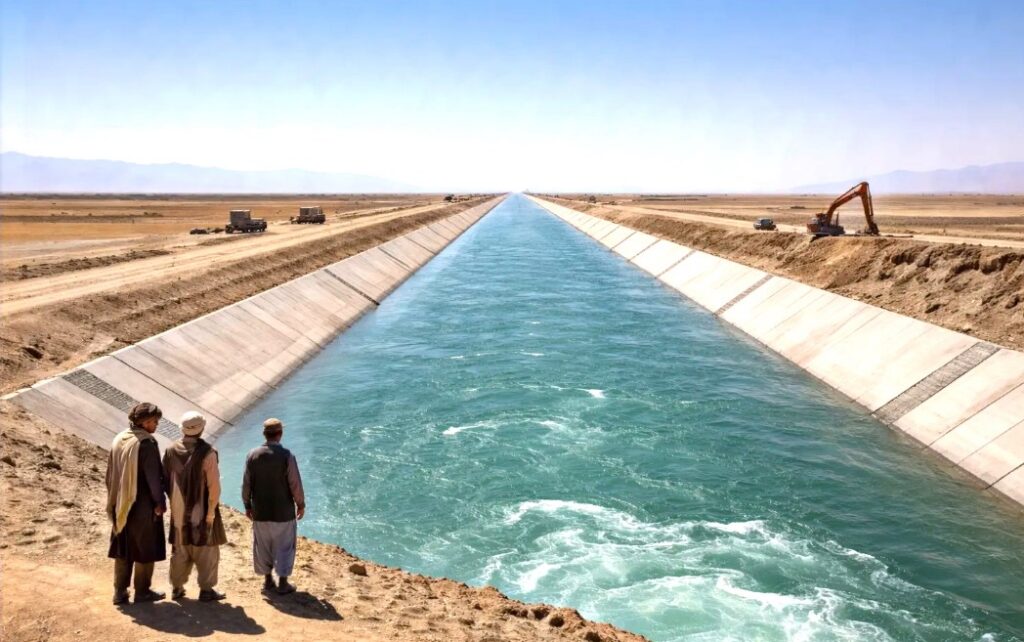
In August, the Afghan authorities stated that 93% of the second phase had been completed. Videos show the canal lined with concrete and stone in some sections, alongside the construction of large and medium-sized bridges to link surrounding settlements. The project spans 128 kilometers from Dawlatabad district in Balkh province to Andkhoy district in Faryab province and involves over 60 contractors, making it one of Afghanistan’s largest infrastructure projects.

Origins and International Support

The canal’s roots trace back to earlier international efforts. While some sources attribute its conceptual origins to Soviet or British engineers in the 1960s, significant development began in 2018 under President Ashraf Ghani. The project was supported by the U.S. Agency for International Development (USAID) and Indian engineering firms.

According to the Scientific-Information Center of the Interstate Commission for Water Coordination (SIC ICWC), a $3.6 million feasibility study was launched in Kabul in December 2018, funded by USAID and conducted by AACS Consulting and BETS Consulting Services Ltd. The study was coordinated with several Afghan ministries, but has not been published.

Following the Taliban’s takeover, the Islamic Emirate held an official inauguration ceremony on March 30, 2022. The full canal is designed to stretch 285 kilometers, measuring 100 meters wide and 8.5 meters deep, and is expected to divert an estimated six to ten cubic kilometers of water annually from the Amu Darya. Afghan media have quoted water management expert Najibullah Sadid, who projected the canal could generate between $470 million and $550 million in annual revenue.

Regional Concerns and Environmental Risks

The project has raised alarm in Uzbekistan, Turkmenistan, and Tajikistan, countries that depend heavily on the Amu Darya for irrigation. Experts at SIC ICWC point out that no environmental impact assessment was conducted for downstream states, nor were they formally notified of the construction, as required by international water conventions.

In December 2022, Uzbek President Shavkat Mirziyoyev called for practical dialogue with Afghanistan and the international community to strengthen regional water security.

Adroit Associates estimates that the canal could eventually divert up to 13 billion cubic meters annually, nearly one-quarter of the Amu Darya’s average flow.

Environmental risks are also mounting. Analysts warn that Uzbekistan, which relies heavily on the river for agriculture, could face soil degradation and declining crop yields. Turkmenistan, where agriculture accounts for 12% of GDP, may also suffer severe disruptions. Some studies suggest Uzbekistan and Turkmenistan could lose up to 15% of their Amu Darya water supply, with flow volumes potentially down by 30% within five to six years.

Environmental groups caution that, as with the Karakum Canal, the Qosh Tepa may raise groundwater levels, causing widespread soil salinization and the long-term loss of arable land across the region.

A Test for Regional Water Diplomacy

The canal was a key topic at a recent international conference on water security held in Astana, which brought together Central Asian experts, diplomats, and government officials. Speakers stressed the need for coordinated regional strategies to manage transboundary water resources.

“Kazakhstan has no common border with Afghanistan, but we understand that water withdrawal volumes will have consequences,” said Aslan Abdraimov, Kazakhstan’s Vice Minister of Water Resources and Irrigation.

Currently, no formal water-sharing agreement exists between Afghanistan and its northern neighbors. Although Afghanistan is entitled to use the Amu Darya under international law, the Taliban’s unilateral construction of the canal highlights the absence of coordination.

Observers note, however, that Uzbekistan supplies electricity to Afghanistan, and Turkmenistan continues to export gas to the country. These economic ties could provide a foundation for future cooperation on shared water resources.

As the Qosh Tepa Canal nears full operation, its implications reach far beyond Afghanistan’s borders. For Kabul, the project symbolizes sovereignty and a bid to feed its population. For Tashkent, Ashgabat, and Dushanbe, it represents a looming test of water security in a river system already under strain from climate change and overuse. Whether the canal becomes a source of regional cooperation or conflict will depend not only on engineering but on diplomacy, and whether Afghanistan and its neighbors can find a shared framework before water starts to run short.

Electronic Queue System Launched at Key Kyrgyz-Uzbek Border Crossing

An Electronic Queue Management System (e-QMS) has been launched at the Dostuk border crossing, the primary checkpoint between Kyrgyzstan and Uzbekistan along the Osh-Andijon road.

The initiative, developed through cooperation between the Kyrgyz government, the European Union, and the International Trade Centre (ITC), is part of the “Ready4Trade Central Asia” project (2024-2028), which aims to streamline trade procedures and boost economic competitiveness across the Trans-Caspian Transport Corridor.

Funded by the European Union, the project is designed to simplify cross-border operations and improve conditions for small and medium-sized enterprises. The e-QMS platform, developed by the ITC in collaboration with Kyrgyzstan’s State Customs Service and Ministry of Economy and Commerce, allows transport operators to pre-book border crossing times online or via a mobile app.

The system is expected to reduce waiting times, ease congestion, and improve the predictability of border transit, benefiting both carriers and customs authorities through greater transparency, efficiency, and safety.

“For Kyrgyzstan, the implementation of e-QMS is a cornerstone in creating a business-friendly environment for exporters. The new system simplifies procedures, reduces costs for exporters and carriers, and makes trade more transparent and efficient,” said Iskender Asylkulov, Kyrgyzstan’s Deputy Minister of Economy and Commerce.

The system was initially piloted at the Kyzyl-Kiya border crossing in November 2024, where it processed more than 12,000 vehicles in its first six months. Following positive feedback from transport operators and significant reductions in wait times, the system has now been expanded to Dostuk, one of the region’s busiest crossings. In 2024 alone, over 87,000 vehicles passed through Dostuk, including more than 21,000 import consignments, nearly 8,000 export shipments, and over 58,000 transit movements.

The deployment of the e-QMS is expected to further boost trade between Kyrgyzstan and Uzbekistan, which reached $846 million in 2024. From January to June 2025, bilateral trade turnover totaled $430.2 million, $50 million more than during the same period in 2024, according to data from Uzbekistan’s National Statistics Committee.