The Kyrgyz authorities and international partners are seeking to help transform the village of Min-Kush, one of the country’s former uranium mining centers, into a new tourist destination as part of broader efforts to promote sustainable economic development in remote mountain communities.
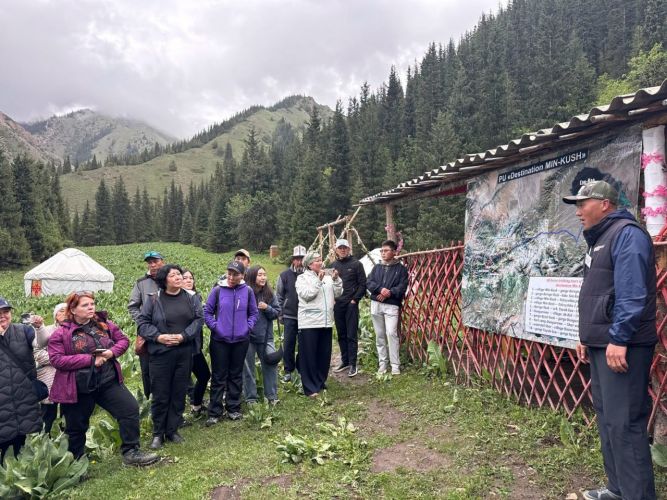
The issue was the focus of the forum “Development of Min-Kush Village Through Sustainable Tourism: Revival of Forgotten Cities,” held in Min-Kush, in the Jumgal district of the Naryn Region, from May 21 to 23.
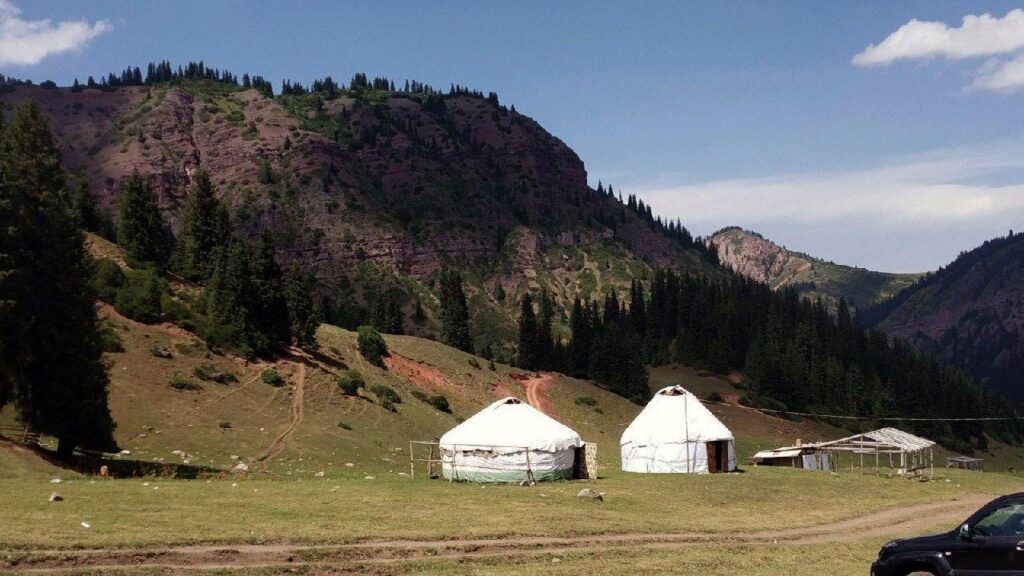
The forum brought together government officials, international organizations, tourism professionals, civil society groups, and local residents to discuss the tourism, environmental, historical, cultural, and gastronomic potential of Min-Kush and the wider Jumgal district.
Founded in 1947 as a uranium mining settlement, Min-Kush became one of the Soviet Union’s major uranium production centers. After the collapse of the USSR and the closure of the mines, the village experienced decades of economic decline.
Today, Min-Kush is undergoing environmental rehabilitation efforts supported by the Kyrgyz government and international partners aimed at addressing the legacy of uranium mining.
Speaking at the forum, Dinara Kemelova, the Kyrgyz president’s special representative for the mountain agenda, said Min-Kush is now safe for both residents and visitors and has significant potential for the development of a green economy, agriculture, and tourism.
An important part of the event was a roundtable discussion devoted to strengthening cooperation among communities located near former uranium legacy sites.
Participants emphasized the importance of coordinating the efforts of government institutions, international organizations, businesses, and local communities to transform uranium legacy areas into new centers of green economic growth and sustainable tourism in Kyrgyzstan.
The forum was organized by the Kyrgyz government together with the NGO Destination Min-Kush, in cooperation with the OSCE Programme Office in Bishkek and the United Nations Development Programme in Kyrgyzstan, with financial support from the European Union.
During the event, UNDP highlighted its grant support mechanism for local initiatives in communities located near uranium legacy sites.
Through small grant programs, local civil society organizations, women’s groups, youth initiatives, artisans, and entrepreneurs receive support for practical, community-driven projects aimed at improving livelihoods, increasing environmental awareness, preserving local heritage, and encouraging economic activity.
Rémi Duflot, ambassador of the European Union Delegation to Kyrgyzstan, said the forum provided Min-Kush with an opportunity to demonstrate its tourism potential while building on both its natural assets and its unique history as a former uranium mining site.
“The EU will continue supporting the efforts undertaken by national and local authorities, in partnership with the EBRD, OSCE, and UNDP, to provide better opportunities for populations living near uranium legacy sites in Kyrgyzstan,” Duflot said.