Uzbekistan used the opening of this year’s Tashkent International Investment Forum to make a broader pitch than investment alone: the country is presenting itself as a platform for data-driven governance, value-added mineral processing, and large-scale urban development.
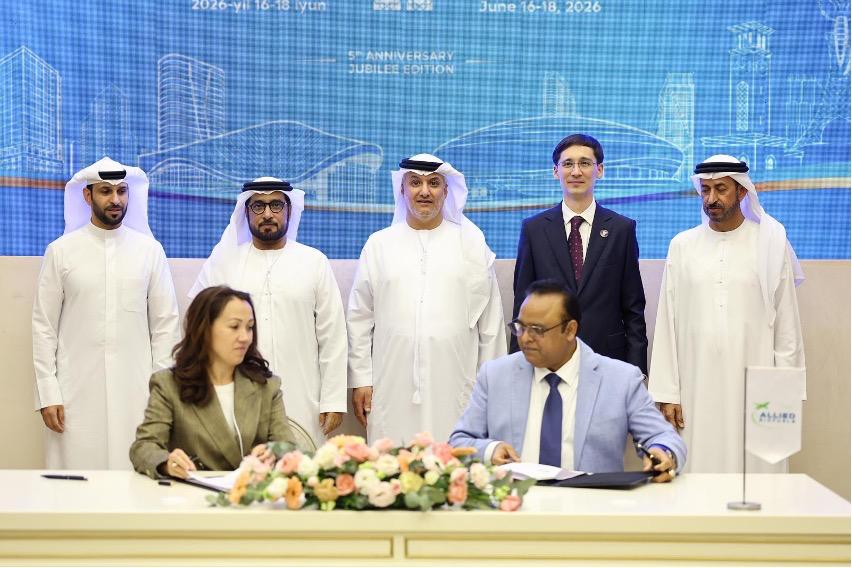
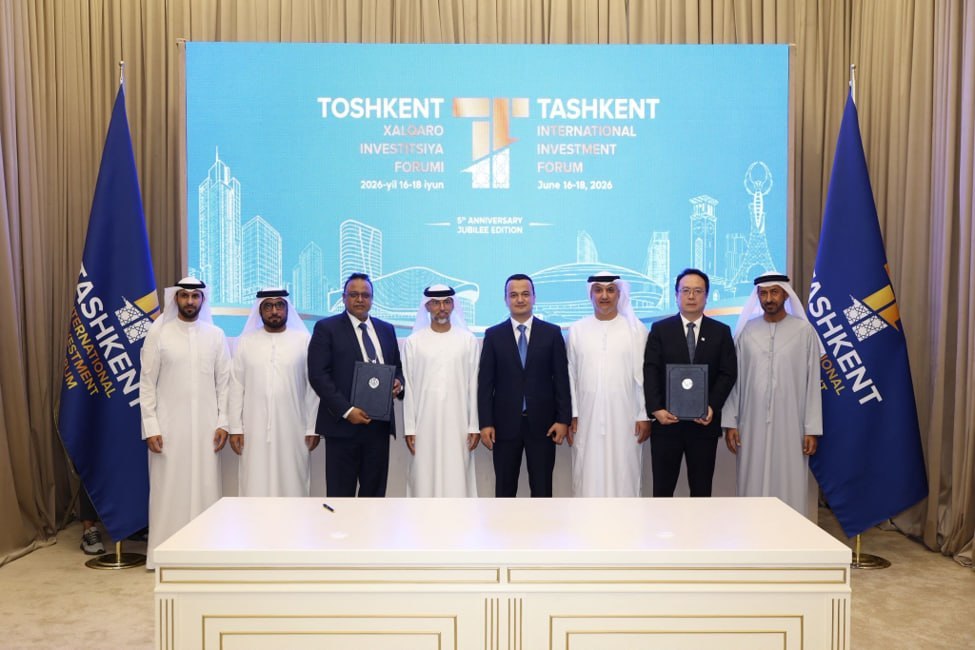
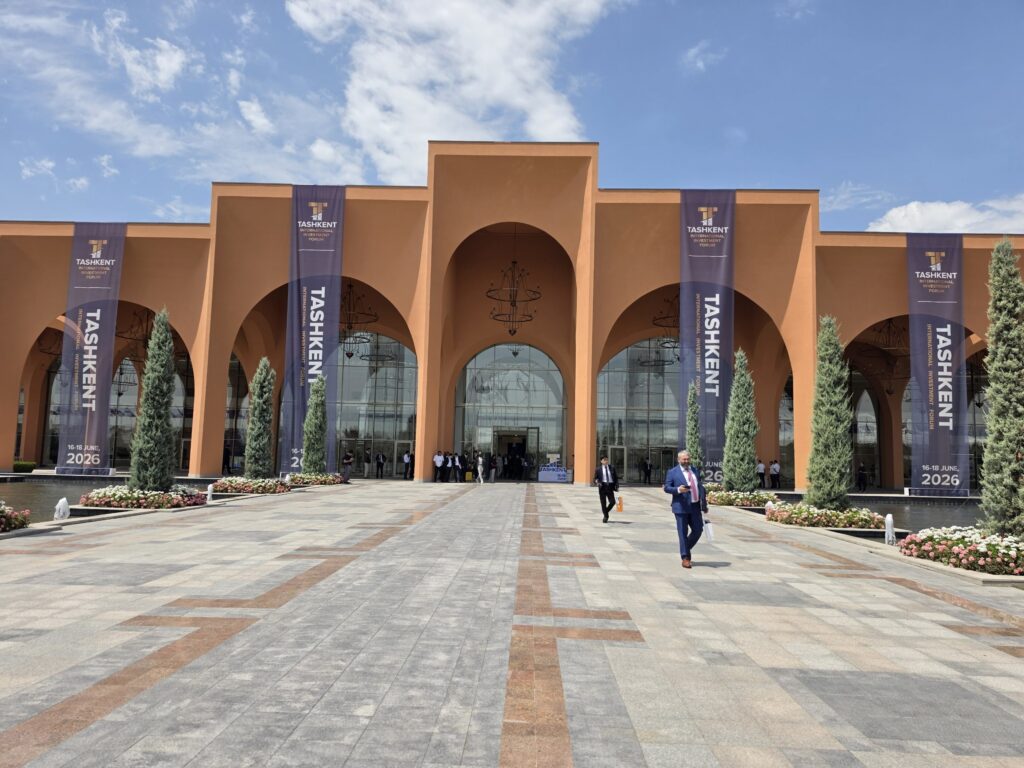
The fifth Tashkent International Investment Forum is being held in the Uzbek capital from June 16-18, bringing together government officials, international financial institutions, business leaders, and investors as Uzbekistan seeks to reinforce its position as one of Central Asia’s leading investment destinations.
Held under the theme “Investment Resilience: New Frontiers, New Partnerships,” TIIF 2026 comes as Uzbekistan continues to promote reforms aimed at attracting capital, expanding industrial production, developing digital infrastructure, and moving higher up global value chains.
Mirziyoyev Sets Out Investment Priorities
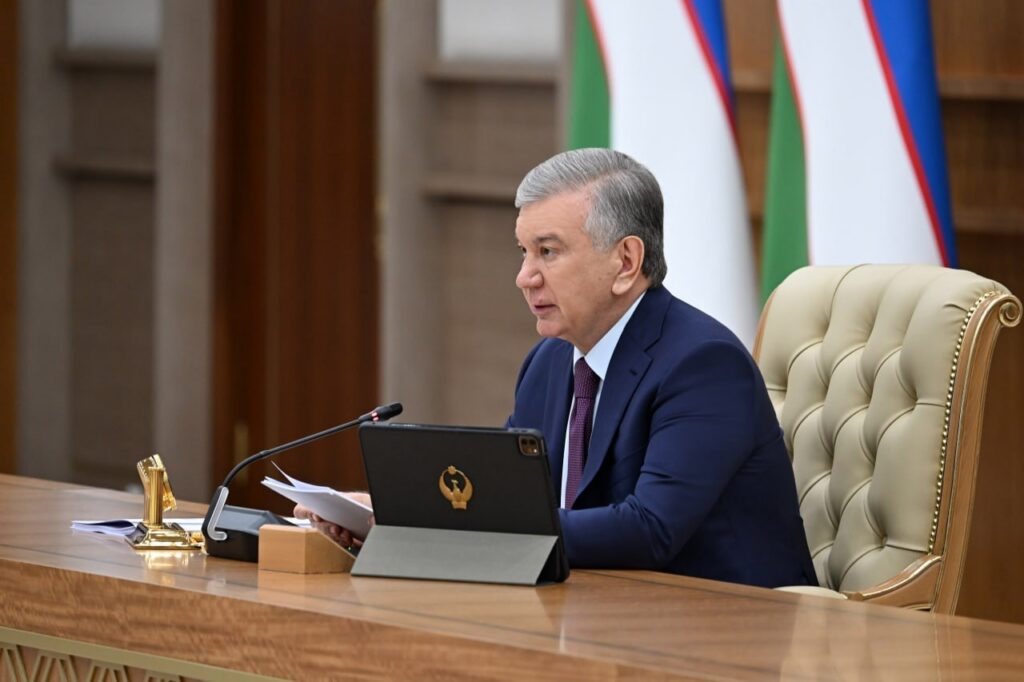
Addressing the forum on June 17, President Shavkat Mirziyoyev presented Uzbekistan’s recent economic performance as evidence of growing investor confidence. He said the country had attracted more than $150 billion in foreign investment in recent years, including $123 billion over the past five years.
According to the president, nearly 4,000 foreign guests from more than 100 countries are attending this year’s forum, reflecting its expanding international profile. The event brought together heads of state, prime ministers, representatives of international financial institutions, and business executives from around the world.
Mirziyoyev said Uzbekistan remained committed to creating a favorable investment environment through reforms designed to protect investors’ rights and broaden economic opportunities. He said GDP grew by 7.7% in 2025, foreign investment reached $43 billion, international reserves exceeded $70 billion, and Uzbekistan rose 14 places in the Index of Economic Freedom, joining the group of economies classified as “moderately free.”
He also emphasized the pace of economic growth. Four years ago, he said, Uzbekistan set a target of reaching a $100 billion economy by the end of 2026; now, he said, GDP is expected to exceed $180 billion this year.
Mirziyoyev also announced plans to establish the Tashkent International Financial Center, a tax- and customs-free zone operating under a special legal regime based on English common law principles. He said the center would offer zero rates on profit tax, value-added tax, property tax, and customs duties, while guaranteeing free capital movement and payments in any currency.
Delta Y: A Data Infrastructure Startup Looks to Uzbekistan
One of the companies drawing attention at the forum was Delta Y, a Lisbon-based data infrastructure startup seeking to help governments and cities turn fragmented information into practical decision-making tools.
Founded in 2025, Delta Y describes itself as a “data infrastructure layer” for governments, institutions, and advisory firms. Its goal is to use data engineering and artificial intelligence to turn disconnected datasets into usable analysis.
Co-founder Afonso Carvas said the idea emerged from his experience working with data teams in technology companies and from a broader question: whether governments and cities could gain access to the same quality of data infrastructure used by leading global companies. That question eventually led the company to Uzbekistan.
Why Uzbekistan?
Carvas said Delta Y first began looking at Uzbekistan after a World Bank conference featured a presentation on the country’s census and data modernization efforts. The company then began studying Uzbekistan’s digital infrastructure and public data systems, reaching out to local contacts, private sector clients, and officials in the digital sector.
According to Carvas, those conversations left the company “super impressed with the mindset that the people have.” He said Uzbekistan’s reform trajectory reminded the team of economies that had grown rapidly by investing in infrastructure, governance systems, and technology.
“We believe Uzbekistan can become one of the next global economic success stories,” Carvas said.
Delta Y has started working with local authorities in different parts of the country and hopes to eventually expand cooperation at the national level.
An AI Analyst for Public Data
Delta Y’s core product includes an AI-powered data analyst that the company says can generate reports, dashboards, and presentations from properly structured datasets.
Carvas said the key challenge is not only artificial intelligence, but data quality.
“Once we have amazing data for some partner, which might be Uzbekistan, then the analysis on top of this data can be done both by humans or by AI agents,” he said.
He said users could ask the system to build a report, dashboard, or slide presentation on subjects such as education, investment, employment, or regional development.
“We essentially view that as a way for governments, as well as for private companies, to have access to an analyst that’s always on and can always help them with these analytical insights,” Carvas said.
A Demonstration Using More Than 2.3 Million Data Points
Delta Y’s materials refer to an anonymous demonstration in Uzbekistan involving more than 2.3 million data points. Carvas said the company is working on two related projects.
The first is a public platform designed to show economic and social indicators about Uzbekistan. He said it integrates data from Uzbekistan’s open data portal, the National Statistics Committee, and local statistical organizations.
“We wanted to integrate all of that into a cohesive data platform that anyone in the world, in any language, especially outside of the country, can check,” Carvas said.
The second project is a more detailed data product being developed for Andijan. Carvas described it as a digital twin-style data platform for the city and region, developed through a proof of concept with partners in the local IT Park.
Expansion Plans in Central Asia
Carvas said Delta Y would eventually like to work in other Central Asian countries, but for now its focus is Uzbekistan.
“We would love to. We want to take it slow. Now we’re so interested in Uzbekistan that we just want to focus here for a little bit,” he said.
The company is meeting regional leaders from Navoi, Tashkent region, Tashkent city, Andijan, and Fergana. Carvas said Delta Y sees significant work to be done in Uzbekistan and remains “extremely bullish and excited” about the country’s economic future.
Building an Uzbek-Language Platform
Delta Y’s website is available in Uzbek, and Carvas said the company uses both artificial intelligence and local partners to improve translation quality.
“Initially AI, but then our local partners in Andijan and Tashkent region always look at the slide decks and the websites that we build,” he said. “If there’s stuff that’s not great, they help us correct it.”
He said the translation process should improve as more local users work with the platform.
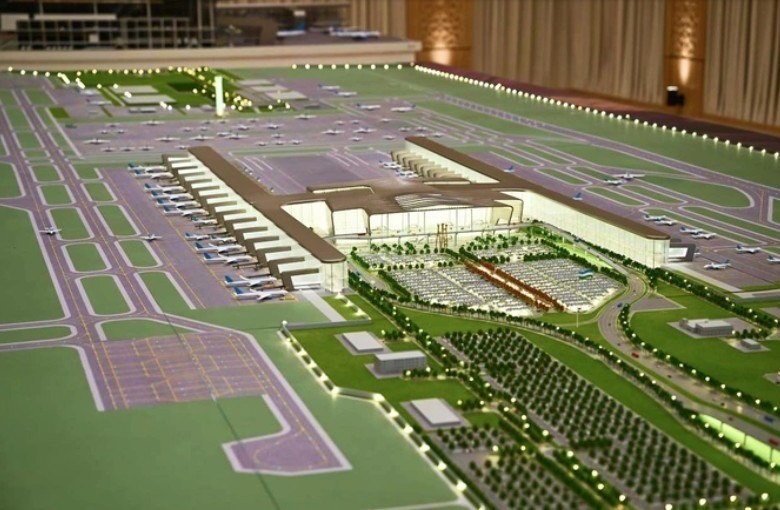
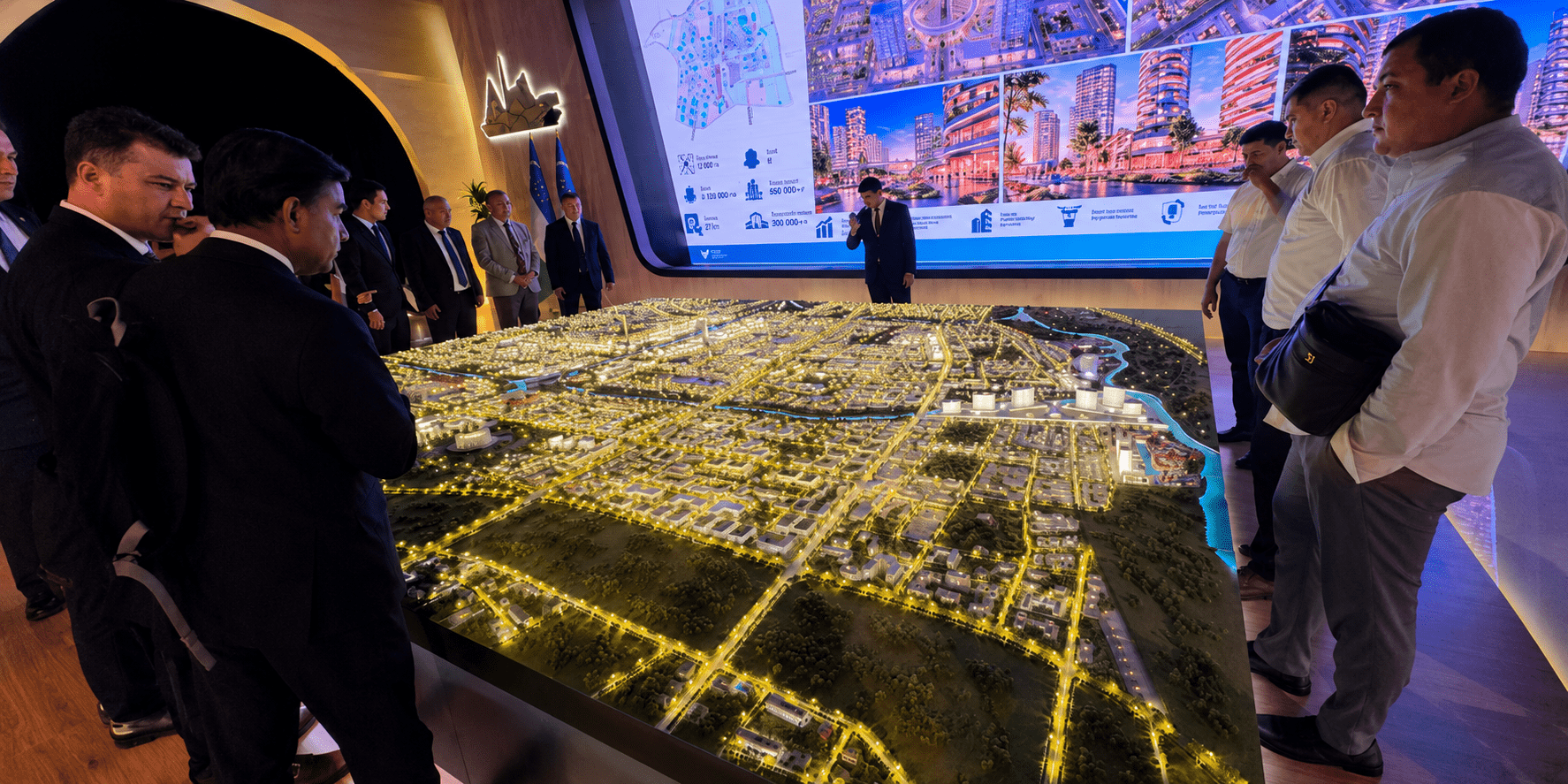
Image: TCA, New Tashkent Master Plan Model
TMK: Uzbekistan’s Critical Metals Strategy
Another major participant at the forum was the Uzbekistan Technological Metals Complex, known as TMK, a state-owned enterprise established to develop Uzbekistan’s critical raw materials portfolio. TMK says it oversees more than 100 assets and research and development projects across 25 strategic mineral commodities, including tungsten, molybdenum, lithium, germanium, and graphite.
TMK’s presence at TIIF reflected increasing international attention to strategic minerals needed for clean energy technologies, electronics manufacturing, and data infrastructure.
The company promotes what it calls a “mine-metal-market” strategy. Rather than focusing only on extracting raw materials, it aims to build integrated value chains that include processing, manufacturing, and the production of higher-value industrial products inside Uzbekistan.
Exhibition materials highlighted Uzbekistan’s resources in aluminum, zinc, graphite, molybdenum, tungsten, lithium, titanium, vanadium, and rare earth elements. Molybdenum and tungsten were among the resources receiving particular attention at the forum.
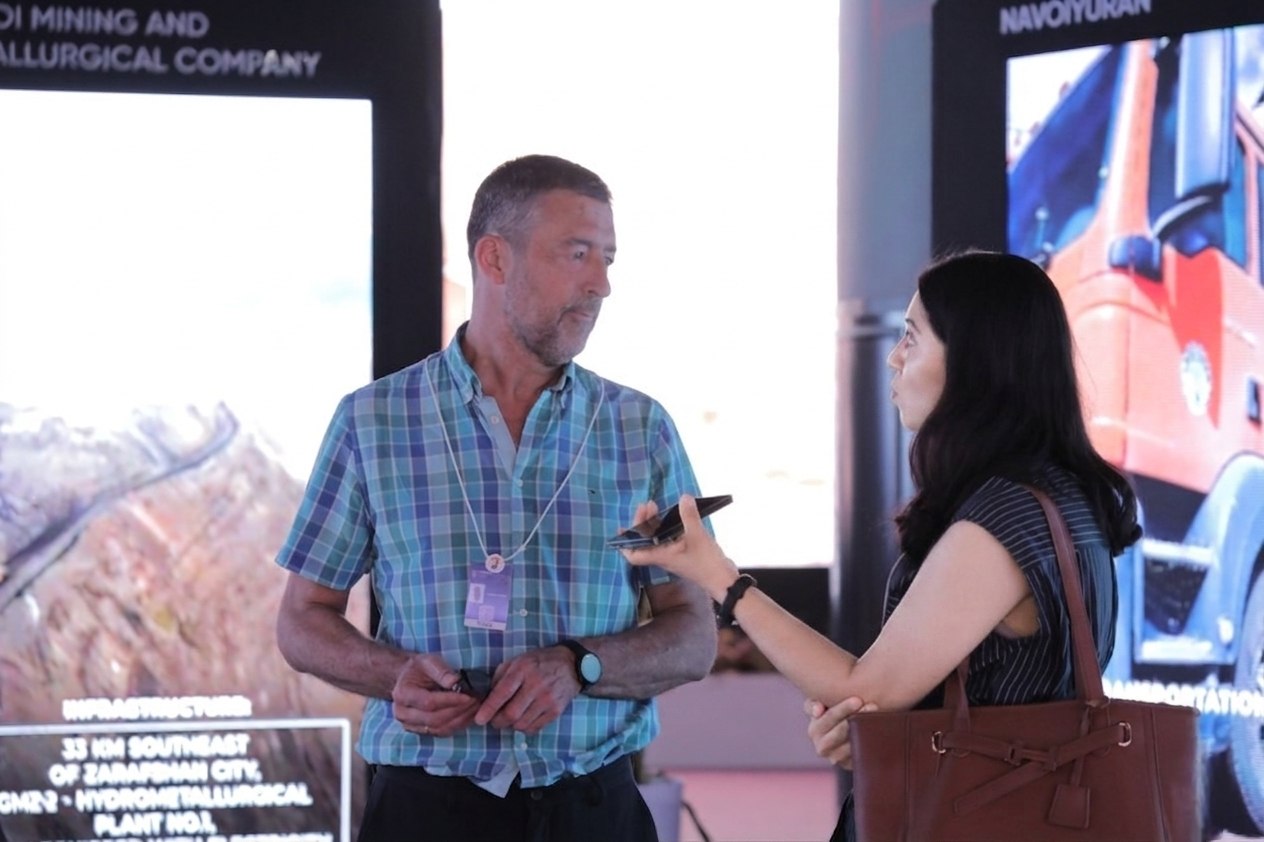
Speaking to The Times of Central Asia, TMK adviser Mike Beare said the company was created approximately three years ago to help unlock Uzbekistan’s critical minerals potential.
Beare, a mining engineer with more than three decades of industry experience, said TMK’s role is not simply to extract minerals, but to maximize the amount of value retained inside Uzbekistan.
“The goal is to mine the metal, process it, move it downstream into industrial products, and keep as much value as possible in the country,” Beare said.
According to Beare, tungsten is currently one of TMK’s most advanced areas of development.
Part of that work involves reviewing historical geological records and exploration data collected over previous decades. “There is a huge amount of information that was collected in past years,” he said. “We are revisiting many of those discoveries and evaluating their potential.”
TMK is also examining opportunities to recover critical minerals from industrial waste streams, including byproducts generated by metallurgical facilities and the oil and gas sector. Beare said global demand for critical minerals continues to rise, driven by several sectors at once. Data centers require large quantities of metals, while renewable energy systems depend on them.
“Tungsten is among the materials receiving the most attention right now,” he said.
Source: TMK
New Tashkent: A Future Administrative Center
While technology and mining dominated many discussions at TIIF, one of the forum’s most visually striking presentations focused on urban development.
Suhrob Norbutaev, a chief specialist at the Directorate for New Tashkent Construction under the Cabinet of Ministers, said the first phase of the project is planned through 2031.
“The administrative center you see behind us will be here,” Norbutaev said. “Almost 90% of government offices, ministries, committees, and agencies are expected to move here. A few have already moved and started working.”
The wider New Tashkent masterplan is designed as a major expansion of the capital. Publicly available project descriptions describe a first development phase of 6,000 hectares, with broader plans for a much larger new urban center between the Chirchiq and Qorasuv rivers.
Both state and private companies are involved in construction. According to Norbutaev, state-backed projects include Sharq Bahori, with 14,000 apartments. Near the business center, the Metropolis project spans 4.5 hectares and includes nearly 1.1 million square meters of planned construction; the Marjon project covers 41 hectares along a major road, with 80% residential and 20% non-residential and office space. Other planned developments include Xon Ayvon, Sport City, and Silk City.
The New Uzbekistan Stadium will have a capacity for 55,000 spectators. The Uzbek president’s office said construction began in November 2025, and that the stadium is intended to meet FIFA requirements.
Transport infrastructure is also central to the plan. Project officials said a metro extension connected to Tashkent’s existing network is expected to pass through New Tashkent, linking administrative and residential zones. Current plans call for the metro connection to be completed in 2028.
The project also includes green areas, recreational facilities, public spaces, and cultural attractions. Among the more ambitious proposals is a fountain that officials hope will qualify for recognition as the tallest in the world. Norbutaev said it is expected to open around Uzbekistan’s Independence Day in September 2026.
Natural waterways connected to the Chirchiq River and Qorasuv canal system are expected to flow through parts of the development. Plans also envision a large green area known as Renaissance Hill, which could eventually host major public events and national celebrations.
“One of the main advantages of New Tashkent is that everything is conveniently located within a 15-minute distance,” Norbutaev said. “You can easily travel from one part of the city to another, and 35% of the city’s area is dedicated to green spaces and parks.”
Investor interest has been strong, according to Norbutaev. He said representatives from China, the Gulf states, and several European countries had shown openness to opportunities connected to the project.
Looking Ahead
Across the forum, the common thread from Delta Y’s data infrastructure work to TMK’s critical minerals strategy and the urban planning behind New Tashkent was Uzbekistan’s effort to present itself as more than a destination for capital. The country is positioning itself as a partner in digital, industrial, and urban transformation.
By prioritizing data-driven governance, value-added mineral processing, and large-scale urban development, Uzbekistan is trying to lay the groundwork for a more diversified economy. The challenge will be turning forum announcements and investor interest into projects that deliver long-term economic value.
Follow our interactive critical minerals timeline tracing the partnerships, investments, and policies reshaping U.S. engagement with Central Asia.