IT Park Uzbekistan has opened a new season of the President Tech Award, the country’s largest technology competition, and launched a separate national contest focused on artificial intelligence, the President AI Award.
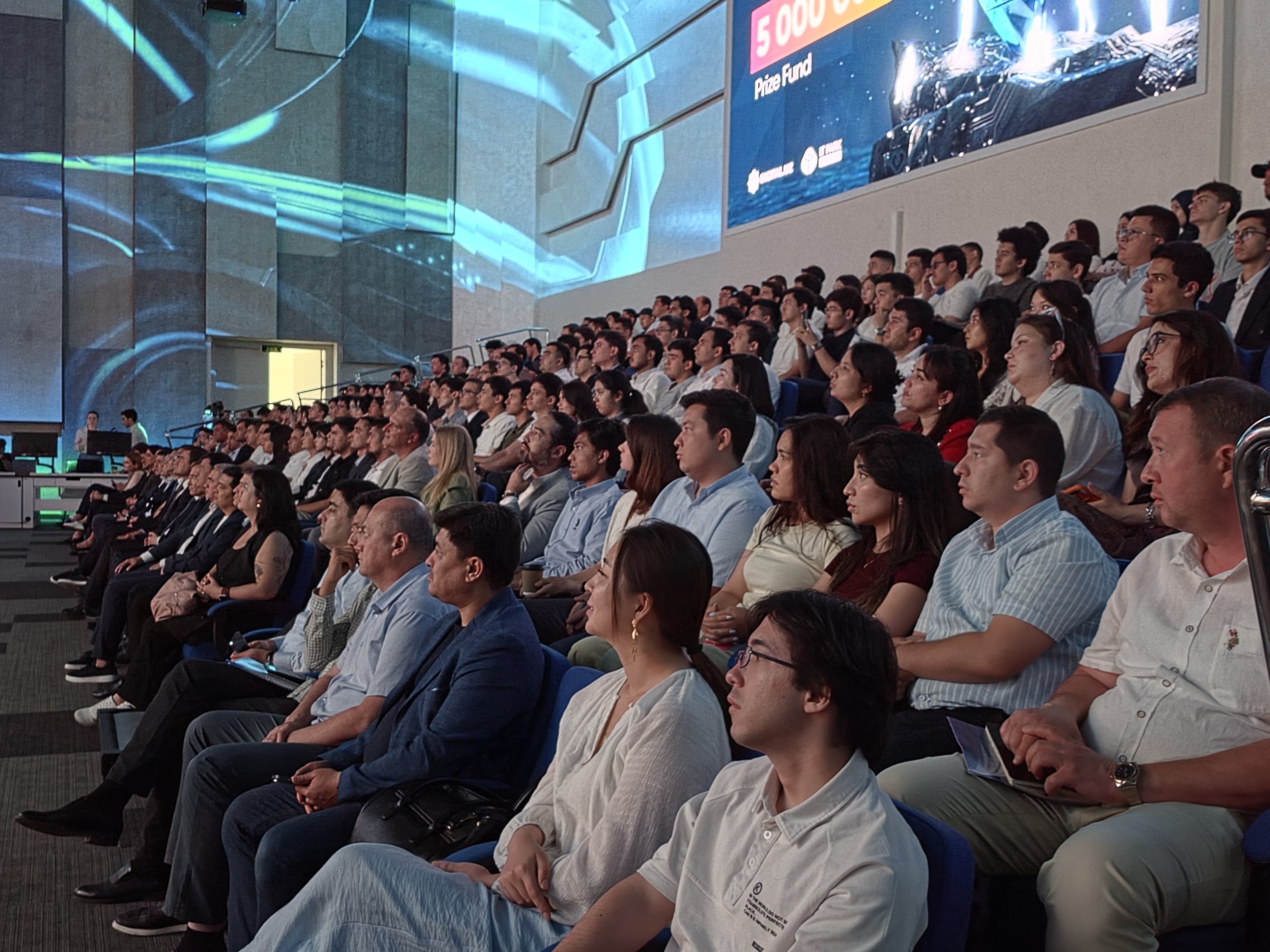
The official presentation of both programs took place on July 1 during the Powering the Startup Ecosystem event at the Congress Hall of Uzbekistan’s Ministry of Digital Technologies. Organizers said the competitions will support technology startups through grants, venture investment, mentoring, and access to international markets.
Azamat Karamatov, CEO of IT Park Uzbekistan, said the decision to increase the President Tech Award prize pool to $5 million and create the President AI Award reflected investment in a new generation of technology companies.
“Our task is to create conditions under which talented developers and entrepreneurs can turn ideas into global products and contribute to the development of Uzbekistan’s digital economy,” he said.
Launched on a presidential initiative, the President Tech Award has become one of Uzbekistan’s main platforms for technology projects. Organizers said more than 6,000 people took part in the most recent cycle and 862 startup teams competed, nearly double the previous season’s figures.
Since the competition began in 2023, more than 13,000 people have applied and around 1,800 teams have been formed. Of the 45 projects that previously received awards, winners have created more than 400 jobs and attracted more than $10 million in post-competition investment.
For 2026, the President Tech Award prize fund has been increased from $1 million to $5 million. The total includes $1 million in non-repayable grants and $4 million in venture investment for selected startups.
The program will include three tracks. Early-stage teams will enter an incubation track focused on product-market fit and international mentoring, with 25 winners sharing $1 million in grants. Startups in the growth stage will compete for $1.5 million in investment through the acceleration track. A third track, Best Startup Project, will offer $2.5 million in investment from IT Park Ventures across 10 sectors, with winners selected by an international jury.
The President AI Award is Uzbekistan’s first state competition dedicated fully to AI startups. It is designed to identify and develop AI projects that offer practical solutions for economic and social needs. The competition will focus on public administration, industry and entrepreneurship, healthcare, education, and the green economy and agritech.
After selection, 25 startups, five from each field, will enter an acceleration program. They will work with mentors and experts to refine their products, prepare investor pitches, and raise their profile in Uzbekistan. The total investment pool for the President AI Award is $1 million, with 15 winners to receive financing across the five fields.
Awards will be distributed as investments in two tranches tied to agreed performance indicators. Each field will have three winners, with $100,000 for first place, $60,000 for second, and $40,000 for third.
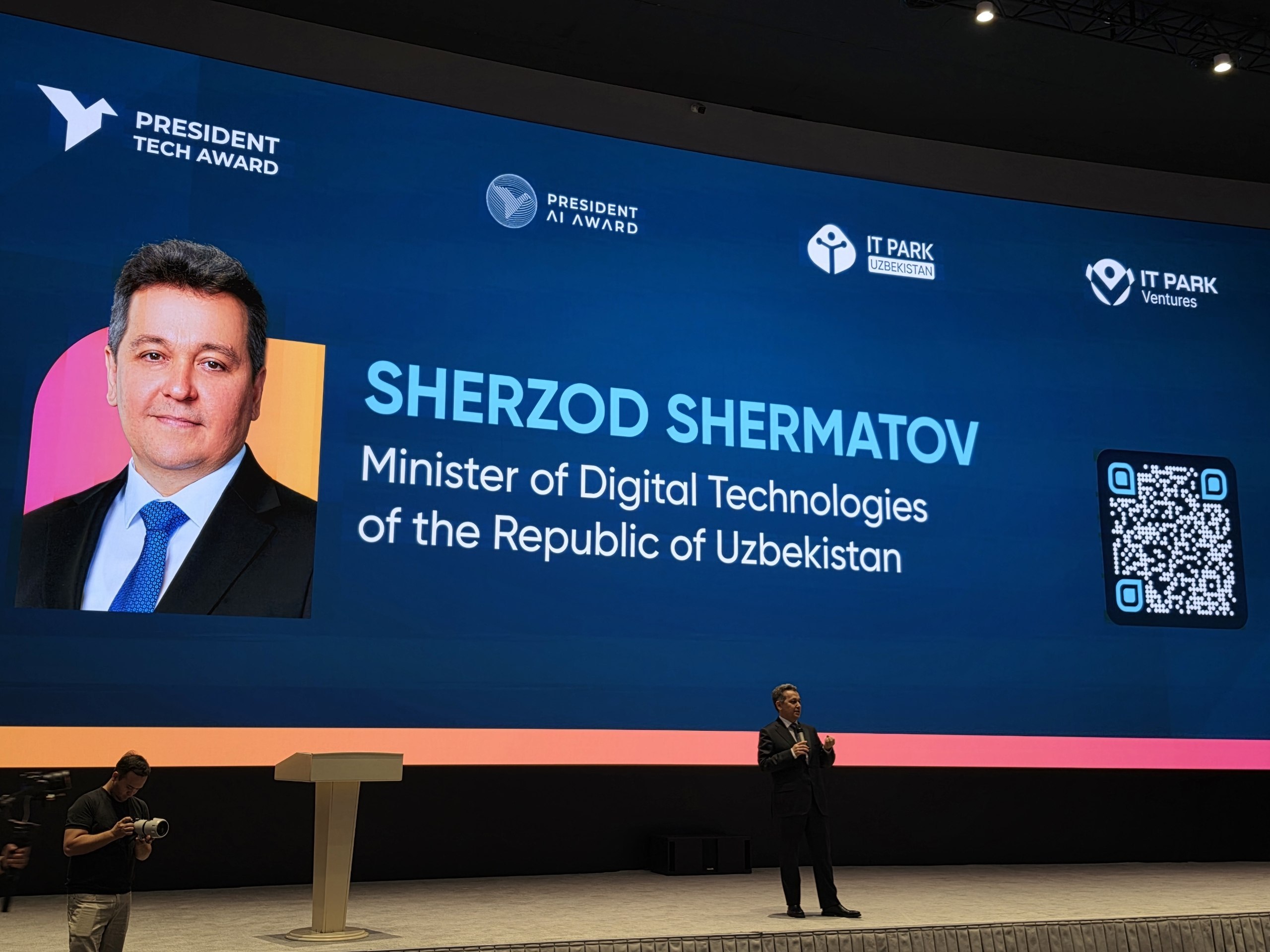
Sherzod Shermatov, Minister of Digital Technologies, traced the awards to a shift in national policy. Uzbekistan initially promoted an outsourcing-focused IT sector, he said, but soon saw a rapid rise in local talent and startups.
“To stimulate this talent growth, our president initiated this President Tech Award,” Shermatov said.
Shermatov added that the competition has helped move the sector from an outsourcing base toward an ecosystem that produces startups founded in Uzbekistan. He also cited StartupBlink’s ranking, which named Uzbekistan the world’s fastest-growing startup ecosystem, with an annual growth rate of 227%, roughly 13 times the global average.
Speaking exclusively to The Times of Central Asia, Abdulaziz Sultonov, an expert at Uzbekistan’s Ministry of Digital Technologies, said the new AI competition builds on the momentum created by the President Tech Award.
“Over three seasons, more than 13,000 young people participated,” he said. “Thousands of new digital products and innovations were created, and 45 startups became winners.”
According to Sultonov, the decision to increase the President Tech Award’s funding from $1 million to $5 million followed the measurable success of previous winners.
“Those 45 startups have already created more than 400 new jobs and attracted over $10 million in venture investment,” he said. “That encouraged our president to provide even greater support so that many more startups can receive assistance.”
The expanded competition will also change how support is delivered. Rather than receiving grants or investments only after judging, startups will now go through structured incubation and acceleration programs before competing for funding. Early-stage teams will receive mentoring to develop their ideas, while more mature companies will focus on scaling their businesses and preparing for investment.
“We are no longer only providing grants or venture investments,” he said. “Now we will also educate startups, helping them increase their competitiveness and prepare for international markets.”
He noted that many previous winners have already shown that startups from Uzbekistan can compete outside Central Asia. “About half of the 45 winning startups have already entered foreign markets. Honestly, we never imagined that services created by young Uzbek developers would become in demand in countries as far away as Peru, Brazil, and Colombia. Today, we already have such examples.”
Despite growing financial support, Sultonov said funding alone does not solve the main challenge facing ambitious founders. Finding international partners, customers, and investors often proves more difficult than raising initial capital.
To address this, the government has introduced several related initiatives. Under a presidential decree adopted in October 2024, selected startups can receive financial support to join recognized accelerator programs abroad, with travel and accommodation costs covered.
“So far, around ten startups have benefited from this mechanism,” Sultonov said. “Entering prestigious foreign accelerators remains highly competitive, but we are helping our companies gain that opportunity.”
Uzbekistan is also working to bring global startup organizations into the country instead of relying only on sending entrepreneurs overseas. Silicon Valley-based Plug and Play has established operations in Uzbekistan, while Techstars entered the country in 2025. Sultonov said international accelerators give local founders access to global expertise without requiring them to leave home.
Another initiative under preparation is Enterprise Uzbekistan, a special jurisdiction expected to operate under English law. According to Sultonov, the project is intended to make Uzbekistan more attractive to international venture capital funds and technology investors, many of whom prefer familiar legal frameworks.
The ministry also continues to support startups through IT Park’s Local2Global program, which helps technology companies from Uzbekistan take part in international exhibitions, conferences, and networking events abroad.
Fariza Islomova, events and partnerships manager for the President Tech Award, told The Times of Central Asia that this year’s competition marks a change in approach.
“The biggest change is that we are now covering all stages of startup development,” she said.
Rather than focusing only on selecting winners, organizers have redesigned the program around longer-term startup growth.
“We are inviting organizations that will run incubation and acceleration programs, as well as organizations that have helped build at least five unicorn companies,” Islomova said.
She added that the President Tech Award expects around 300 participants this season, with about 100 startups entering each competition track. Participation remains limited to citizens of Uzbekistan.
International experts attending the launch also saw opportunities beyond the competitions themselves. Dickie Currer Ganguly, co-founder of Australia’s APAC Innovation Hub, described Uzbekistan’s progress as one of the biggest surprises of his first visit to the country.
“I’ve been blown away by the scale of the IT sector, how it’s growing, the intention from the government, and seeing that Uzbekistan is now the world’s fastest-growing startup ecosystem. It’s incredible.”
For Ganguly, the launch of a dedicated AI competition reflects global trends rather than technological fashion.
“AI is changing everything,” he said. “It’s changing how we build startups, how we build technology companies, and ultimately how we live. Programs like the President AI Award are a great way to encourage founders to build AI companies that can genuinely transform society.”
Asked what still prevents more international investment, Ganguly pointed to awareness rather than regulation or financing.
“I think the biggest barrier is simply that many people don’t understand Uzbekistan. People need to learn about the country, its culture, and the opportunities here. In Australia, many people probably couldn’t even point to Uzbekistan on a map.”
Greater international visibility, he argued, will be essential if Uzbekistan wants to attract more global investors and strategic partners.
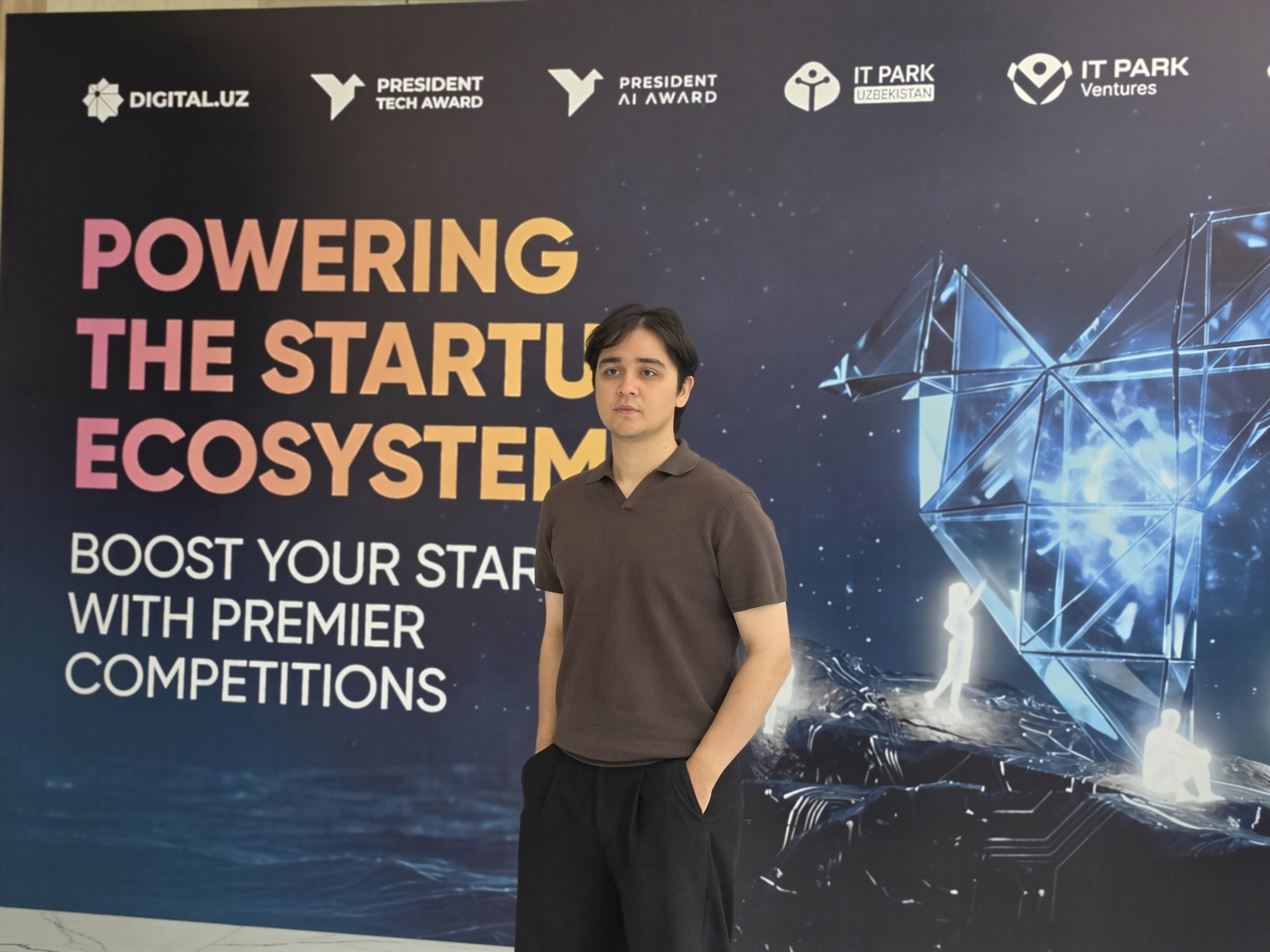
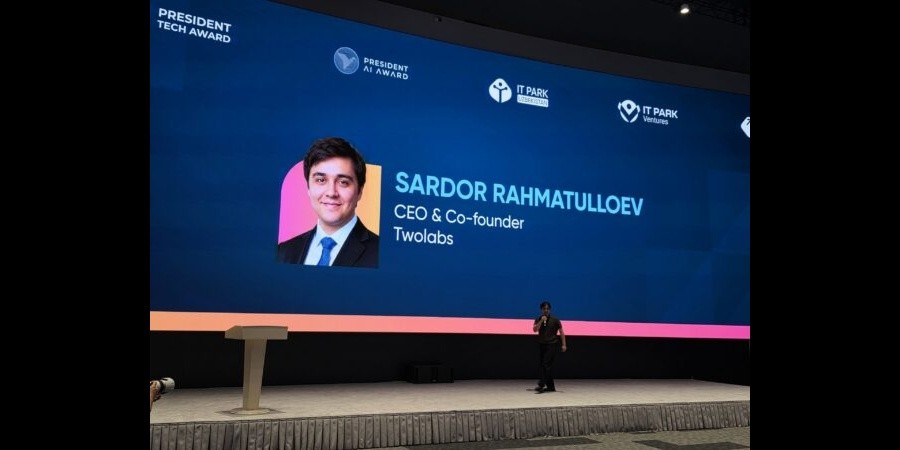
Sardor Rahmatulloev, founder and CEO of Twolabs
Among the entrepreneurs attending the launch, Sardor Rahmatulloev, founder and CEO of Twolabs, welcomed the government’s expanding support but said policy could go further. Twolabs is backed by Y Combinator and DOMiNO Ventures.
Uzbekistan already has several venture funds, including DOMiNO Ventures, Yoshlar Ventures, and AloqaVentures, Rahmatulloev said. However, founders who establish United States-registered companies still face legal obstacles when seeking investment from venture funds in Uzbekistan.
“It would be amazing if Uzbek funds could directly invest in American C-corporations founded by Uzbek entrepreneurs,” Rahmatulloev said. “That would help put Uzbekistan on the global stage.”
He compared Kazakhstan’s success with Kaspi.kz, arguing that internationally recognized technology companies can improve a country’s global reputation.
Drawing on his own experience raising international investment, Rahmatulloev also encouraged founders to become more visible rather than relying only on competitions or funding opportunities. “Post online. Show your product. Tell people about your team. Write blogs. At the end of the day, investors invest in founders before they invest in products.”
Applications for both competitions are now open through the official portal, where participants can find details on eligibility requirements, competition rules, and the application process.