Senator Steve Daines’s July 7–9 visit to Azerbaijan, Kazakhstan, and Turkmenistan brought three bilateral relationships into a single, compressed Caspian itinerary. In Baku, he met President Ilham Aliyev and senior economic and foreign-policy officials; in Astana, President Kassym-Jomart Tokayev and representatives of government and business; and in Ashgabat, President Serdar Berdimuhamedov, Foreign Minister Rashid Meredov, and Gurbanguly Berdimuhamedov. Although official accounts treated each stop separately, the sequence suggests a regional pattern whose significance exceeds any single announcement.
Daines had already supplied the clearest public articulation of the governing logic in his June 11 speech to the Caspian Policy Center’s Trans-Caspian Forum. There he joined Central Asia and the South Caucasus in a discussion about westward connectivity, investment, and supply-chain diversification. Daines identified critical minerals, energy, telecommunications, and physical and digital infrastructure as fields for public and private investment, while calling for TRIPP, a Caspian gas interconnector, and a continuous route from Central Asia to Western markets that avoids Russia and Iran.
Together, these sectors give the proposed route both commercial and strategic content, though not the form of a single named program. Read against the June speech, Daines’s itinerary marks an emerging corridor-centered effort aligned with the Trump administration’s broader Caspian engagement, even without a formal declaration of purpose.
Azerbaijan Anchors the Corridor’s Western Connections
Baku gives the corridor logic its strongest institutional and bilateral footing. Aliyev and Daines discussed Azerbaijan’s geopolitical role, regional peace, and TRIPP’s importance for transport connectivity. Separate meetings with Foreign Minister Jeyhun Bayramov and Economy Minister Mikayil Jabbarov extended the agenda to economic cooperation.
With SOCAR President Rovshan Najaf, Jabbarov and Daines took up the Middle Corridor, energy, transport, digital development, and critical-mineral extraction and processing. Across the meetings, political, commercial, and technical portfolios converged around Azerbaijan’s place at the corridor’s western Caspian egress.
The U.S.–Azerbaijan Strategic Partnership Charter, signed in February, places the Middle Corridor alongside energy, trade, transit, digital connectivity, and critical-mineral movement. It identifies Azerbaijan as an energy, transport, trade, and logistics hub for the Caspian region. Working groups regularize cooperation on trade, energy, connectivity, digital development, and security. The charter also calls for project lists and implementation roadmaps within three months of signing and for meetings at least once a year.
In June, the first Azerbaijan-U.S. Economic Dialogue began translating that direction into an operational agenda. Government, financial institutions, and private-sector participants met on regional connectivity and transit, energy security, investment, artificial intelligence, and digital infrastructure. The agenda connected the Middle Corridor and TRIPP with logistics, the Southern Gas Corridor, critical mineral supply chains, transport and energy investment, and the Alat Free Economic Zone. Closing documents covered digital infrastructure, technology transfer, and industrial solutions. The workstreams are clear, but the consolidated project portfolio and its financing have yet to take public form.
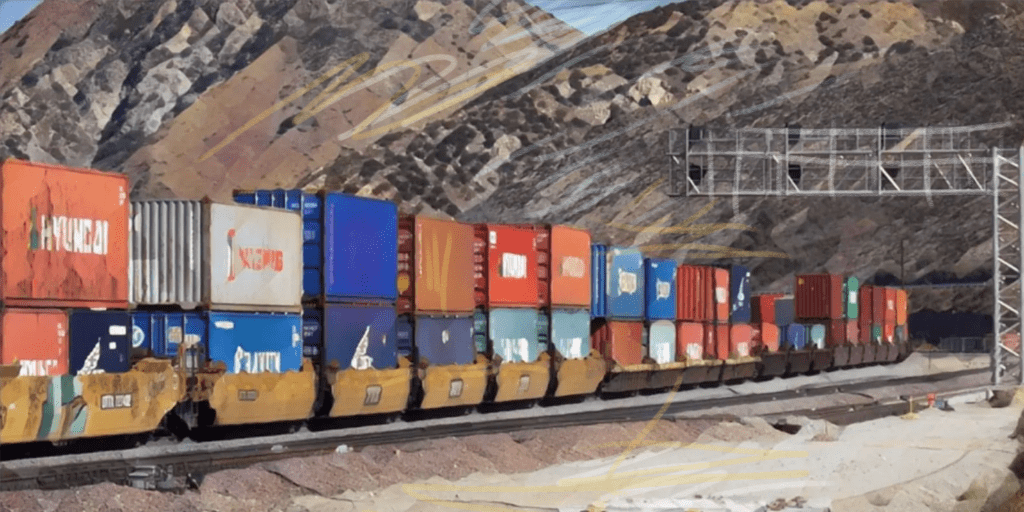
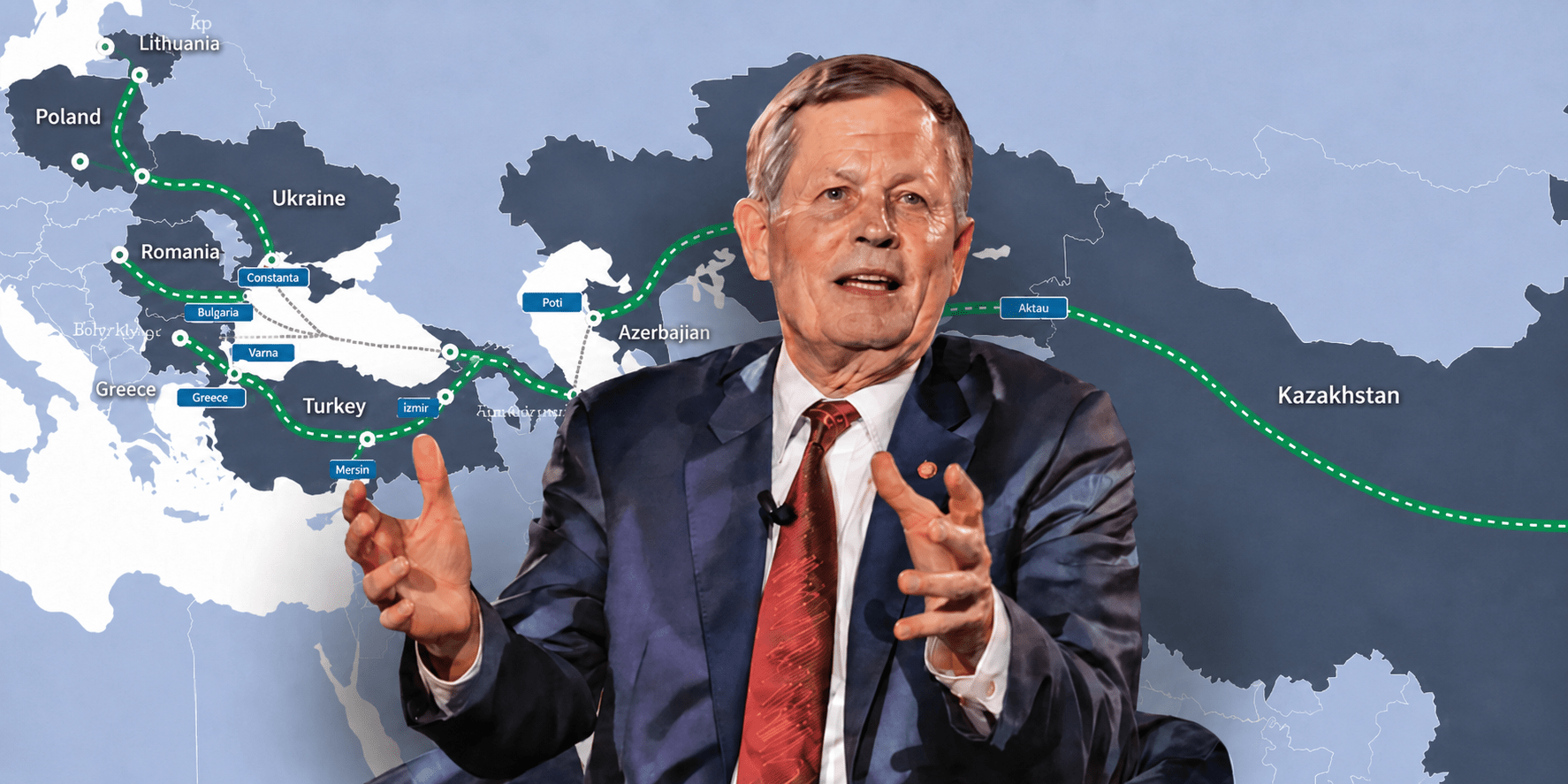
Azerbaijan’s role also rests on physical infrastructure already in use. The established Middle Corridor crosses Kazakhstan and the Caspian before passing through Azerbaijan and Georgia, then onward toward Türkiye or Europe via the Black Sea. At Alat, 70 kilometers south of Baku, the port handled 7.6 million tons of cargo in 2024. Its annual capacity is 15 million tons and 100,000 TEU; the planned second phase would raise those figures to 25 million tons and 500,000 TEU.
Westward links already carry some oil from Kazakhstan and Turkmenistan, and the Trans-Adriatic Pipeline has transported gas to Europe since the end of 2020. TRIPP would add a route through southern Armenia toward Nakhchivan and the existing Azerbaijan-Georgia-Türkiye network. The immediate policy challenge is to expand operating routes and complete unfinished connections within a system already carrying traffic.
Kazakhstan Anchors the Corridor’s Eastern Caspian Reach
Astana has demonstrated how the regional framework outlined in Baku connects with Central Asia’s largest economy, a major source of Middle Corridor freight, and an expanding critical minerals base. Tokayev and Daines discussed expanding trade and investment, implementing earlier bilateral agreements, deepening the strategic partnership, and repealing Jackson–Vanik restrictions. The U.S. Embassy recorded an American Chamber of Commerce breakfast attended by representatives of Exxon, Caterpillar, and Apple, together with meetings involving the foreign affairs, industry and construction, and energy authorities. Its account referred to supply chains, trade, and energy innovation.
As Central Asia’s largest economy and the principal source of Middle Corridor freight, Kazakhstan is not simply one link in the route. It is an indispensable co-shaper of any commercially viable Trans-Caspian strategy.
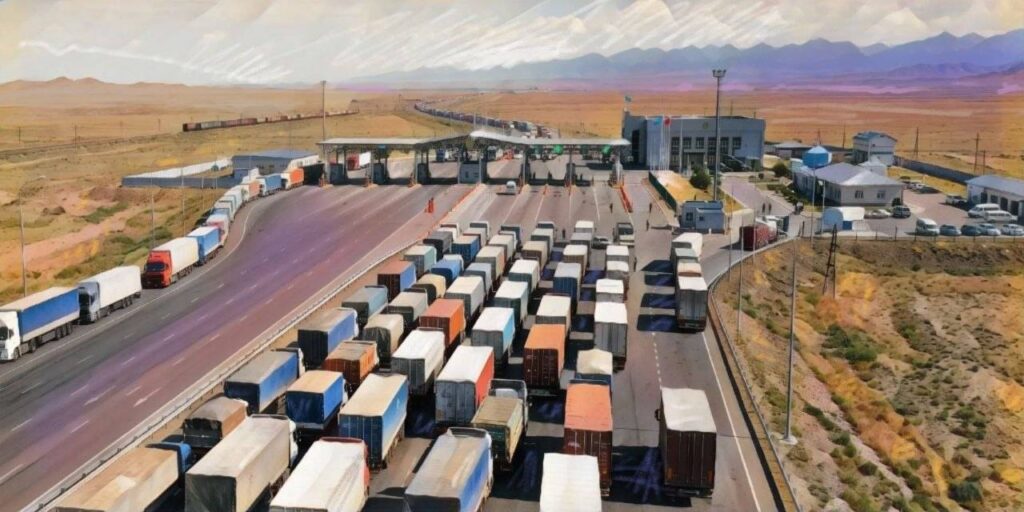
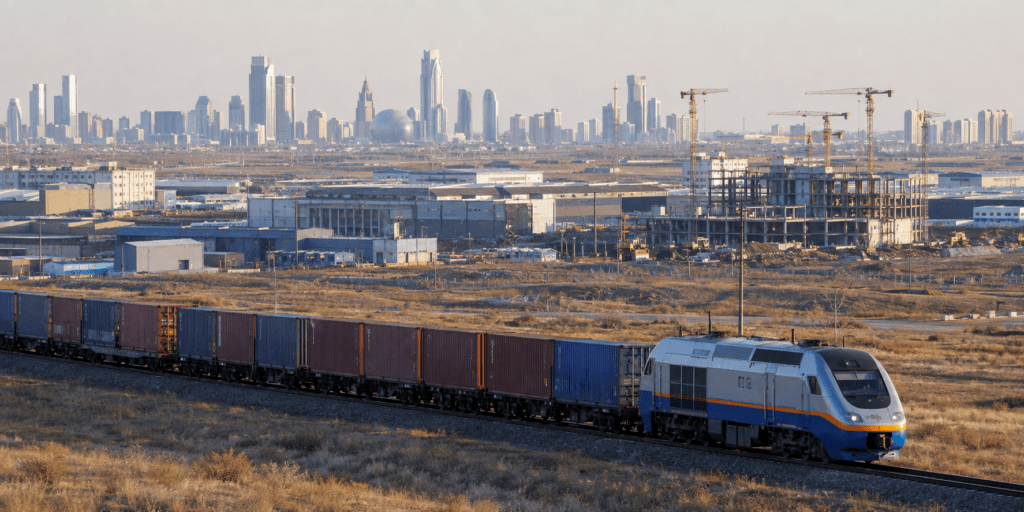
That role is already visible in Caspian freight flows, port expansion, and investable mineral projects. A U.S. trade mission visited Aktau in 2025 to examine Trans-Caspian opportunities. Kazakhstani authorities reported Middle Corridor freight of 4.5 million tons in 2024, while government plans would raise container-handling capacity from 80,000 to 300,000 TEU by 2029 and reduce route times from 18 to 10 days.
A separate package of U.S.-Kazakhstan agreements included a $1.1 billion tungsten venture with domestic processing, possible U.S. Ex-Im support of $900 million, and priority U.S. access to output. Together, these plans and projects give the Middle Corridor’s eastern side both freight scale and mineral stakes. They also provide relevant context for Daines’s visit, even where the official readouts did not enumerate every project.
Turkmenistan Adds Energy Optionality
In Ashgabat, the same themes appeared in a bilateral relationship whose institutional architecture remains less formalized. Daines met President Serdar Berdimuhamedov, Foreign Minister Rashid Meredov, and former president Gurbanguly Berdimuhamedov. Official accounts ranged across trade, energy, transport, investment, logistics, advanced technology, regional connectivity, and the Turkmenistan-U.S. Business Council; the readout of the meeting with Gurbanguly also cited work with Boeing, GE, John Deere, and Case. The only pipeline named in the public accounts was TAPI, the long-planned route through Afghanistan and Pakistan to India. The short Caspian interconnector that Daines has advocated elsewhere did not appear on the documented July agenda.
Turkmenistan’s gas reserves nevertheless leave open another export direction across the Caspian. The U.S. Energy Information Administration estimates proved reserves at over 11 trillion cubic meters and identifies China as the dominant destination for pipeline exports, including 34 billion cubic meters in 2022. Daines has placed a connection to European-bound pipelines within his regional program, and Turkmenistan’s leaders have endorsed Trans-Caspian export diversification. Yet no agreed intergovernmental project, financing structure, or timetable establishes the interconnector as work in progress.
A Caspian Strategy Taking Shape
The three countries contribute complementary strengths: Kazakhstan provides economic scale, freight volumes, and mineral potential; Turkmenistan adds energy optionality; and Azerbaijan supplies the western Caspian hub, established onward infrastructure, and the most developed U.S. institutional framework. None of these roles is exclusive. Kazakhstan also produces energy, Azerbaijan also supplies it, and Turkmenistan also operates transport infrastructure. Their distinct but overlapping functions give the three bilateral relationships regional weight.
The emerging approach is best understood as a diversification of the three countries’ geoeconomic options, not an attempt to sever them from Russia or China. Additional routes and partners can widen their sovereign room for maneuver, reduce concentrated exposure, and connect regional resources and production to more investors and markets. That logic is compatible with Kazakhstan’s multi-vector diplomacy and with the broader regional preference for practical, non-exclusive partnerships. The Middle Corridor’s strategic value lies not in immediately redrawing regional alignments but in gradually expanding commercial and strategic autonomy. Regional stability acquires a commercial meaning here: infrastructure and investment require politically usable routes, predictable transit arrangements, and sustained cooperation across the Caspian Sea and the South Caucasus.
Daines’s tour gave visible momentum to an emerging U.S. strategy for connecting Central Asia and the South Caucasus, consistent with the Trump administration’s emphasis on commercially grounded partnerships. Its institutional and financial architecture remains incomplete, but the direction is increasingly clear.
There is no single three-country framework. The relationships are advancing through bilateral charters, dialogues, commercial agreements, and high-level visits. For now, the common direction appears in the sequence and convergence of U.S. initiatives rather than in a unifying institution. Project selection, financing, and delivery remain the proper tests of Washington’s effort. A durable regional structure will emerge from those results rather than from a declaration alone.