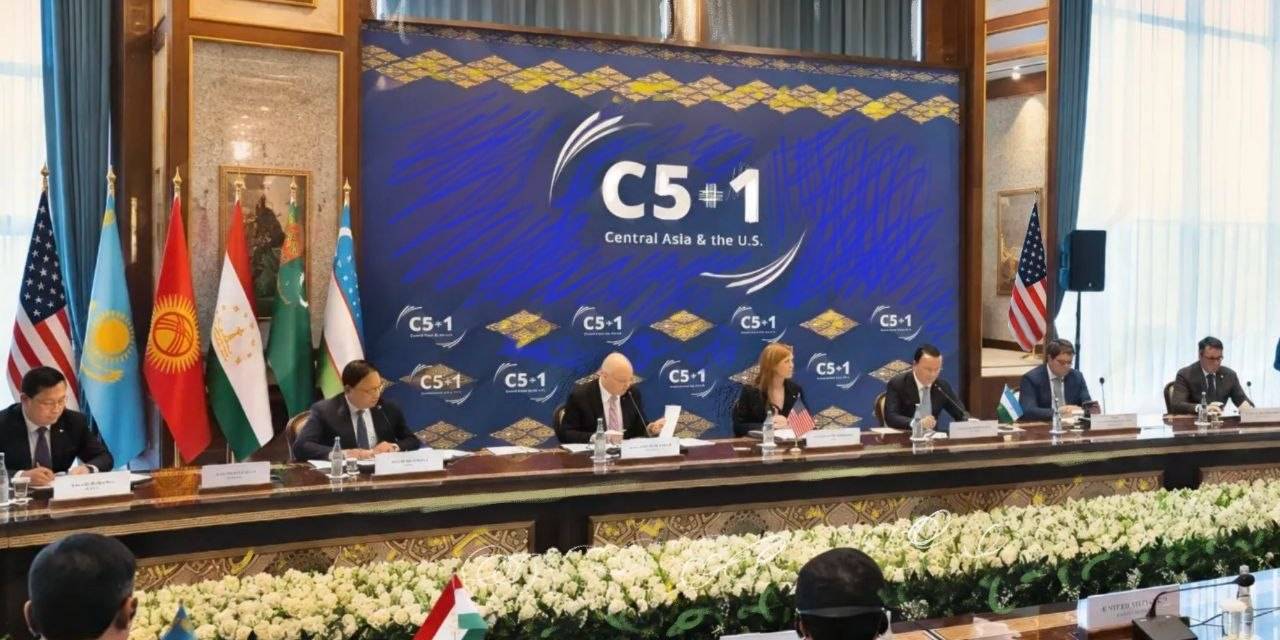
For years, Central Asia was one of those regions that Washington periodically rediscovered and then forgot. Officials visited and announced new initiatives, but the relationship hardly changed. That is no longer the case.
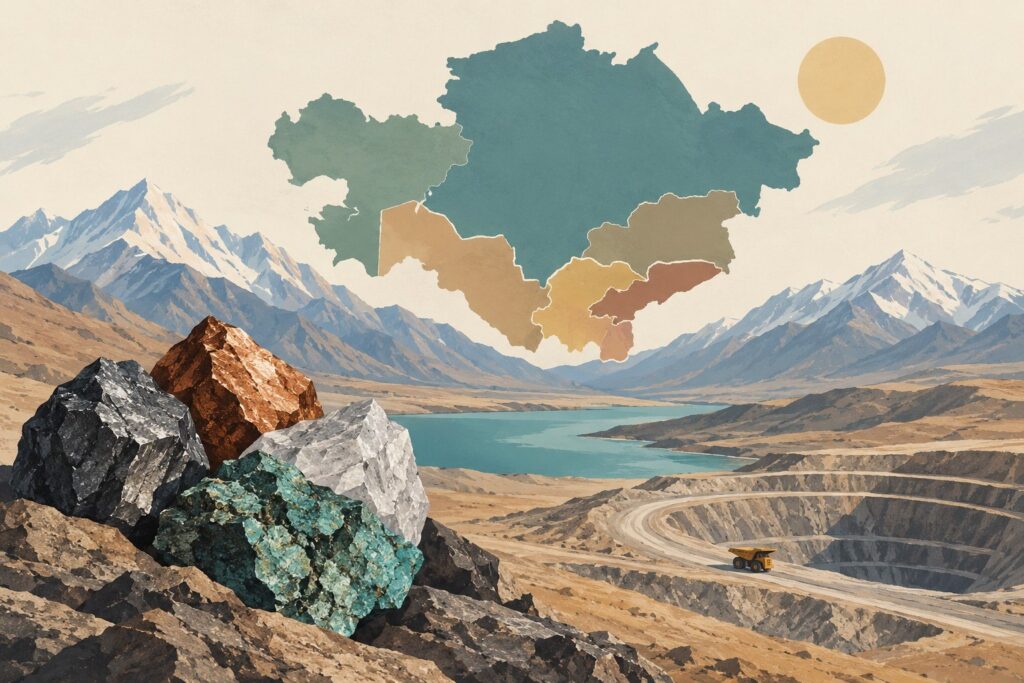
Many pundits see the current surge of American interest in Central Asia through the lens of transactional foreign policy: nowadays the focus has been on critical minerals, supply-chain security, and competition with China. Valid so far as it goes, this approach misses the larger story. Central Asia is not suddenly important because of its minerals or because Washington has decided that it is. Increasingly, Washington must pay attention to Central Asia because the region itself is changing, and in largely positive directions.
Over three decades, American investors largely dismissed the region as too poorly governed and too distant. Now the region itself is working to change the conditions that made it unattractive. The transformation is far from complete, but it is real. When the Central Asian states emerged from the Soviet Union in 1991, they faced grave disadvantages. State enterprises dominated their economies, and they fell short of Western investors’ expectations in both the rule of law and transparency. While such problems have not disappeared, they are being addressed everywhere.
Uzbekistan provides the clearest example. Since 2017, Tashkent has undertaken reforms to liberalize its economy and improve the environment for private investment. The World Bank now describes Uzbekistan as one of the world’s top reformers.
Kazakhstan has also built more sophisticated financial and regulatory institutions. Its goal is to position itself as a regional hub for logistics, energy, and finance. The World Bank’s new 2026–31 country strategy emphasizes a “business-ready Kazakhstan,” with greater private-sector participation, improved infrastructure, and better natural-resource management.
The pace of change in Kyrgyzstan, Tajikistan, and Turkmenistan has been slower, for understandable reasons. Kyrgyzstan’s early political reforms long left the government rudderless, Tajikistan endured a five-year civil war, and Turkmenistan was stymied by Russia’s total control of its gas industry. Now these countries, too, are belatedly advancing.
Central Asia has not become Switzerland. Corruption, political interference, and governance problems still afflict the countries’ economies, and the OECD continues to identify these as important obstacles to investment. The question is not whether Central Asia has solved these problems but whether it has changed enough to become investable. The answer increasingly is yes, it has.
Moscow’s offensive in Ukraine accelerated changes Washington had sought for decades. Secondary sanctions compelled Central Asians to develop new commercial avenues not subject to American prohibitions. While Central Asian governments maintain important relations with Russia, they all seek pragmatic alternatives that reduce their former reliance on Moscow.
The countries are expanding regional cooperation while reaching across the Caspian to the South Caucasus and beyond. The resulting Middle Corridor promises direct access to global markets. The measure of its success will be whether Kazakhstan and Turkmenistan gain trans-Caspian pipelines to transport their resources directly to Europe.
In short, Central Asia is doing what Washington has long wanted it to do: become more sovereign, more interconnected, and less dependent on any single outside power.
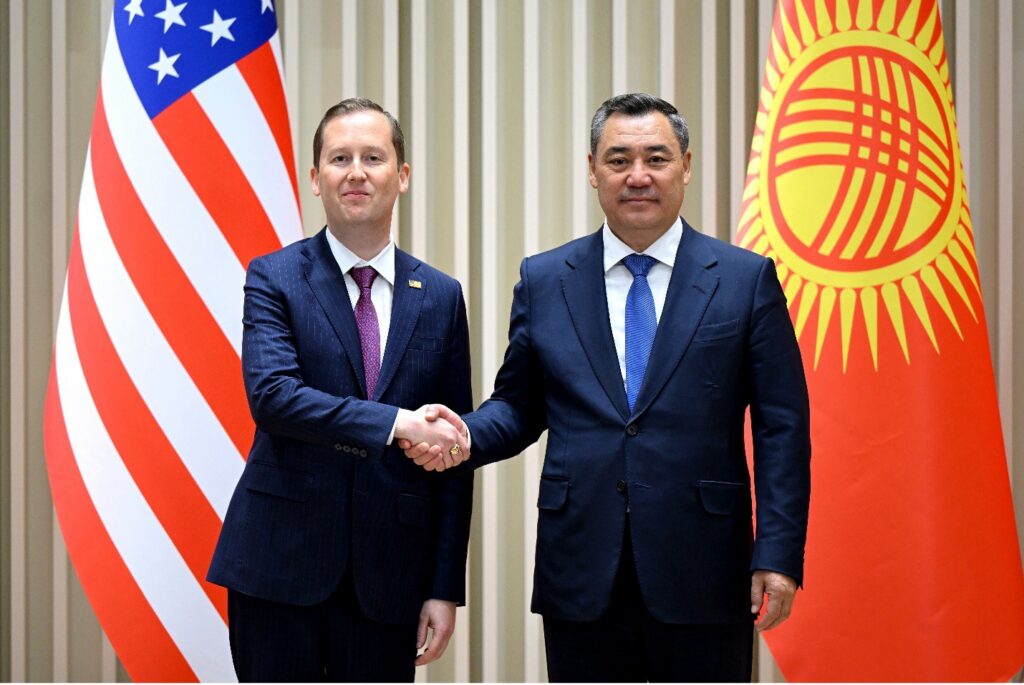
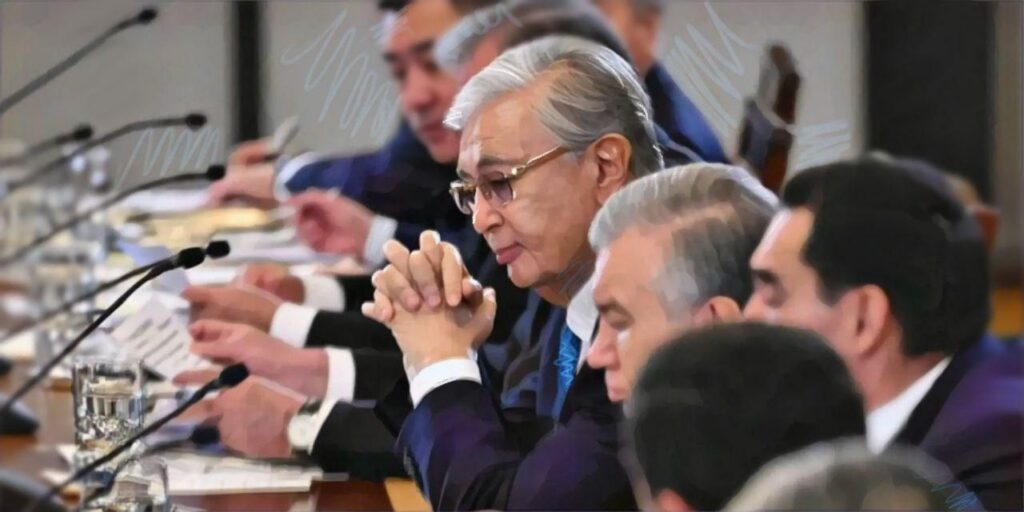
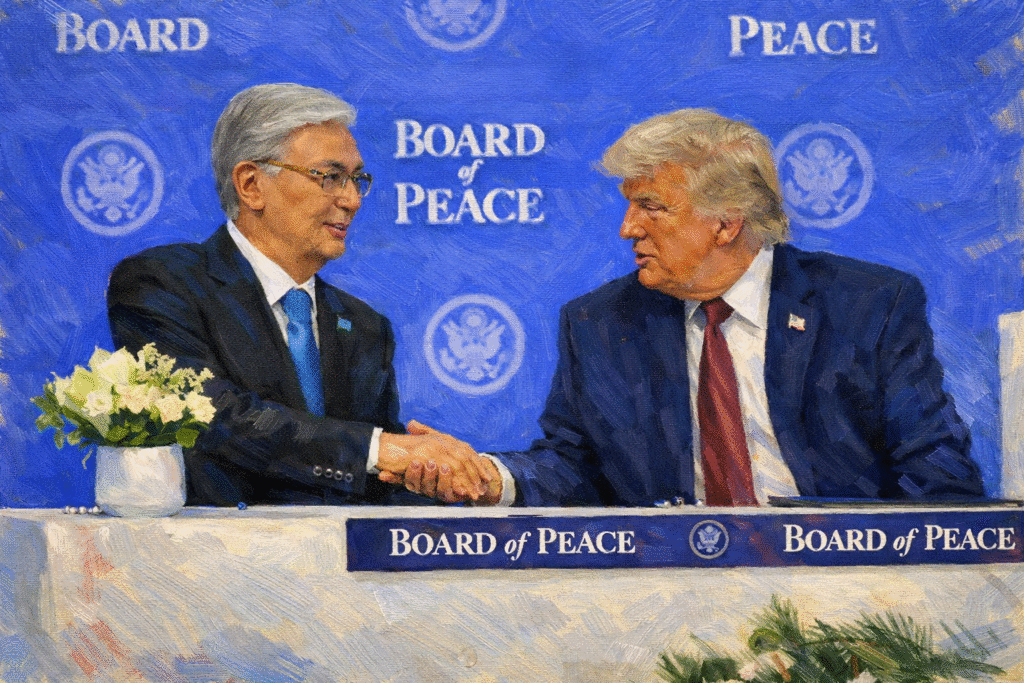
Evidence of these changes is America’s increased attention to the region. In 2015, the United States established a diplomatic framework known as the C5+1. In 2019, this led to a “U.S. Strategy for Central Asia” that provided a basis for relations in many sectors. However, C5+1 languished until international sanctions were imposed on Russia in 2022. These prompted President Biden to use the C5+1 format to minimize the impact of sanctions on the region’s economies. When the C5+1 leaders met in Washington in November 2025, President Trump showcased more than $25 billion in commitments between American companies and Central Asia. This showed that the U.S. government and industries now saw sufficient commercial value in the region to put serious capital on the table.
The second Trump administration focused initially on China’s potential to dominate the supply chain for rare-earth and strategic minerals. It links support for Central Asian minerals with its support for the Middle Corridor as a potential export route. Kazakhstan and Uzbekistan joined the U.S.-led Minerals Security Partnership Forum. In the same spirit, in late 2025 Washington backed a $1.1 billion deal involving California-based Cove Capital to develop tungsten deposits in Kazakhstan—the first major U.S. entry into the country’s critical-minerals sector.
However logical this emphasis, it soon came face to face with the reality of geographical distance. Central Asia is far away and its transportation infrastructure is inadequate, besides the fact that Russian companies were already developing Central Asian mineral resources. Most American companies judged that the potential returns from the region did not justify the costs.
Meanwhile, Central Asians have worked hard to enhance their self-determination. They do not need Washington to tell them that critical minerals matter, that diversification is important, or that alternative transport routes are needed. Bluntly, the region has gained agency, which has enabled the region to pivot sharply to deeper global engagement. The question for Washington is how it can gain from the region’s increasingly diversified alignments and what it can offer in exchange.
The potential gains from deeper relations with Central Asia are striking. The region’s educated manpower is already attracting business interest well beyond the United States. Legal and financial initiatives by the U.S., Europe, and Central Asians themselves have created a far more welcoming investment climate. And increased coordination among the Central Asian states (as well as their addition of Azerbaijan to their de facto consortium) discourages the kind of “divide and conquer” tactics in which tsarist, Soviet, and Putinist Russia engaged. The result of all this is the gradual emergence of a belt of relatively open societies in the heart of Asia. This emerging zone of openness contrasts sharply with what otherwise would be the case, namely an uninterrupted band of authoritarian regimes stretching from the border of North Korea and China clear to the Persian Gulf.
The reciprocal benefits to Central Asia include access to American capital markets, technology, and expertise. To the extent that the Middle Corridor succeeds in connecting the region with Europe, it will introduce an element of market diversity that is now lacking. Above all, an active relationship with the U.S. will contribute to the geopolitical balance that the region has lacked since 1991.
Some suggest that Central Asia’s prominence in Washington discourse will disappear with the next administration. This is a misconception. Washington’s present openness to Central Asia was launched under Democratic administrations and developed under a Republican administration. For the first time, diverse American economic and political interests are now in play and will insist on maintaining and building the relationship. Moreover, Russia for the coming decade will be nursing its own self-imposed wounds, while China, inevitably a formidable presence, will also face challenging domestic issues, as well as ever more complex relations worldwide.
Central Asia has emerged on Washington’s radar because the present administration seized on it. It did so initially because of a legitimate concern for access to critical minerals. That issue may have brought it to prominence, but today it is one strand of a complex and expanding web of economic, geopolitical, and cultural interests, each supported by growing constituencies within the United States. The challenge today is to transform a convergence of interests into a durable regional partnership.
The views expressed in this article are those of the author and do not necessarily reflect the official policy or position of the publication, its affiliates, or any other organizations mentioned.