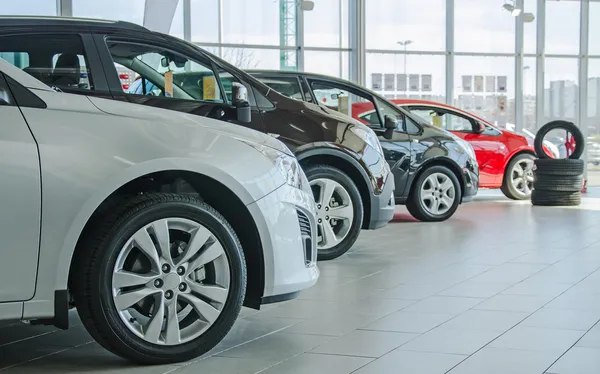
On April 8, the National Investment Agency of Kyrgyzstan and A-CAR (Chuan Yi LLC) signed a memorandum on investment cooperation in the automotive industry, including the supply and sale of new Chinese cars in Kyrgyzstan and the development of service infrastructure.
The Chinese company plans to establish a dealer network and open an official representative office for Central Asia.
A-CAR supplies vehicles from leading Chinese and international brands and provides a full range of services, including technical maintenance, vehicle registration, and insurance.
A significant portion of vehicles imported from China to Kyrgyzstan are re-exported to Russia rather than remaining in the local market.
The duty-free regime for electric vehicles in Kyrgyzstan has significantly boosted imports of Chinese electric cars. As a member of the Eurasian Economic Union (EAEU), Kyrgyzstan benefits from an annual quota allowing the duty-free import of up to 15,000 electric vehicles.
Sergey Tselikov, director of Russian automotive analytics agency Autostat, wrote on his Telegram channel that Kyrgyzstan remains the second-largest import channel for new passenger cars into Russia after China. He said 84% of the new passenger cars imported through Kyrgyzstan were manufactured in China, including Chinese, European, and Japanese brands.
According to Autostat, Kyrgyzstan is the largest supplier of new passenger cars to Russia among EAEU member countries. In 2025, 53,600 new passenger cars were imported to Russia from Kyrgyzstan, followed by 17,100 cars from Belarus, 11,000 from Kazakhstan, and 344 from Armenia.
Kyrgyzstan is also seeking to collaborate with Chinese companies to develop electric vehicle (EV) charging infrastructure.
In late March, Energy Minister Taalaibek Ibrayev visited China, where he held a series of meetings with energy and technology companies involved in EV infrastructure development. Negotiations focused on cooperation in energy infrastructure, including the development of EV charging stations and energy storage systems in Kyrgyzstan.
These initiatives align with government efforts to promote environmentally friendly transport and reduce air pollution in Bishkek and other major cities.
The number of EVs in Kyrgyzstan has been rising steadily, with more than 200 electric vehicles imported into the country daily under a value-added tax (VAT) exemption scheme, according to official figures.
Despite this growth, EVs still account for a small share of the country’s total vehicle fleet, about 0.8%, or approximately 15,200 vehicles, according to the Ministry of Natural Resources, Ecology, and Technical Supervision.