• KGS/USD = 0.01144 0%
  • KZT/USD = 0.00210 0%
  • TJS/USD = 0.10523 0%
  • UZS/USD = 0.00008 0%
  • TMT/USD = 0.28571 0%
  • KGS/USD = 0.01144 0%
  • KZT/USD = 0.00210 0%
  • TJS/USD = 0.10523 0%
  • UZS/USD = 0.00008 0%
  • TMT/USD = 0.28571 0%
  • KGS/USD = 0.01144 0%
  • KZT/USD = 0.00210 0%
  • TJS/USD = 0.10523 0%
  • UZS/USD = 0.00008 0%
  • TMT/USD = 0.28571 0%
  • KGS/USD = 0.01144 0%
  • KZT/USD = 0.00210 0%
  • TJS/USD = 0.10523 0%
  • UZS/USD = 0.00008 0%
  • TMT/USD = 0.28571 0%
  • KGS/USD = 0.01144 0%
  • KZT/USD = 0.00210 0%
  • TJS/USD = 0.10523 0%
  • UZS/USD = 0.00008 0%
  • TMT/USD = 0.28571 0%
  • KGS/USD = 0.01144 0%
  • KZT/USD = 0.00210 0%
  • TJS/USD = 0.10523 0%
  • UZS/USD = 0.00008 0%
  • TMT/USD = 0.28571 0%
  • KGS/USD = 0.01144 0%
  • KZT/USD = 0.00210 0%
  • TJS/USD = 0.10523 0%
  • UZS/USD = 0.00008 0%
  • TMT/USD = 0.28571 0%
  • KGS/USD = 0.01144 0%
  • KZT/USD = 0.00210 0%
  • TJS/USD = 0.10523 0%
  • UZS/USD = 0.00008 0%
  • TMT/USD = 0.28571 0%

The Battle to Keep Kazakhstan Reading

Mika’s Books and Pencils was a hole-in-the-wall bookstore in Almaty, but in December 2025, it was forced to vacate its former premises in the center of the city.

“The rent was simply too high,” the store’s owner, Elmira Kireyeva, told The Times of Central Asia.

Mika’s is not Kazakhstan’s only struggling bookseller. Kireyeva describes the situation for bookstores across the country as “extremely difficult,” even for the large chains.

Physical bookstores are firstly threatened by the growth of e-commerce. In 2024, Kazakhstanis purchased over 2.3 million books on Wildberries, a Russian site similar to Amazon. This represented a 52% increase from 2023.

But the economic situation is also having an effect.

“Taxes have increased, including VAT on books. At the same time, people’s incomes are shrinking, so books are becoming a luxury,” Kireyeva said, noting that books are often printed abroad, which has seen them become a victim of the falling purchasing power of the national currency, the tenge.

More worryingly for booksellers is that people are reading less than they once did. This is part of a global phenomenon, particularly among the young. A large share of undergraduate students in the United States claim to have never read a book. British historian Sir Niall Ferguson has recently argued that this decline is evident across the West, while the number of Russians who read at least once a week fell from 49% to 28% between 1994 and 2019.

Many believe technology is to blame.

“In the age of social media, human attention faces unprecedented competition,” Shyngys Muqan, founder of Mazmundama, a Kazakh-language publisher, told TCA. “Platforms built around short-form video are especially effective because they exploit a basic neurological tendency: the pursuit of dopamine with minimal cognitive effort. Compared to reading, scrolling requires little concentration, imagination, or sustained mental work, yet it delivers immediate emotional reward.”

Kireyeva agrees that screens have certainly had an effect. “It’s not just phones; it’s also information overload. People can’t read long texts anymore – social media has trained us to read only short fragments,” she said.
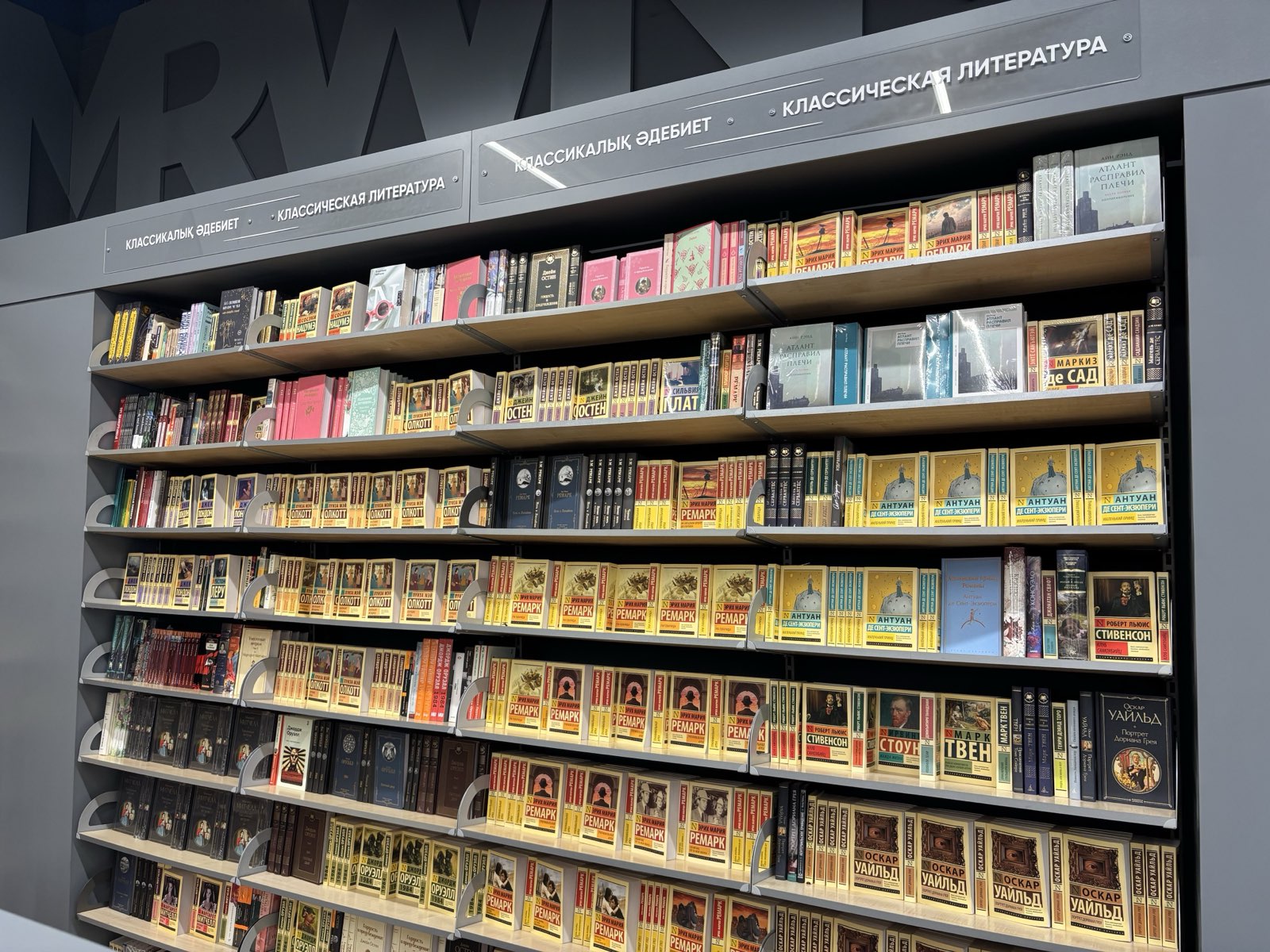
The classic literature section in Meloman, one of Kazakhstan’s largest book chains; image: Joe Luc Barnes

Kazakhstan has been affected worse than most. According to CEOWorld’s Book Reading Index 2024, Kazakhstanis read less than almost every country in the world. Of the 102 countries surveyed, Kazakhstan ranked 95th, with the average Kazakhstani reading just 2.77 books a year. This was behind every other Central Asian country surveyed (Kyrgyzstan – 3.96; Turkmenistan – 3.18; Tajikistan – 4.01), and far behind Russia (11).

The results led one local newspaper to quip that, at this rate, it would take the average Kazakhstani 2.5 years to read the entire Harry Potter series.

There are various structural factors which make Kazakhstan a particularly barren zone for readers. The first is geography – people in rural areas are very poorly served, and library collections are small. While Almaty residents spend an average of 2,300 tenge ($4.50) per family per quarter on books, an average family in Mangystau spends just a quarter of that, and Shymkent barely 10%.

Then there is the language issue.

“In Soviet times, literacy and education in general were emphasized as a priority,” said Kireyeva, noting a strong focus on Russian classics. “Now, Kazakhstan is gradually moving away from the Russian language and culture for various reasons, including what Russia is currently doing to Ukraine. There is a sense of rejection.”

However, the gap left by this growing rejection of Russian culture has not been filled by Kazakh language texts.

Muqan tells of how he grew up in a Kazakh-speaking village and studied at Kazakh speaking school, only to arrive at university to find that all of his study materials were in Russian.

“Russian functioned as a bridge between Kazakh and other foreign languages. Without strong Russian, it was genuinely difficult to access global knowledge,” he said. It was this that inspired him to found Mazmundama.

Research at the Eurasian National University in Astana in 2023 found that the higher one goes up the educational ladder, the more Russian predominates. While 64% of students read books in Russian and 33% in Kazakh, the figure reading in Kazakh drops to just 15% amongst doctoral students.

In the classic literature section of Meloman, one of Kazakhstan’s largest book chains, the vast majority of the books are in Russian. Even in the Kazakh section, many of the novels are translations of Russian classics.

This is largely down to a lack of resources, says Muqan. Accurate translation remains painstakingly slow and expensive.

“On average, a translator may produce 4–6 finished pages per day, and often fewer for complex philosophical, economic, or scientific texts,” he said. “If you combine translation, editing, and proofreading, a single serious book can easily represent 800 to 1,200 hours of human labor.”
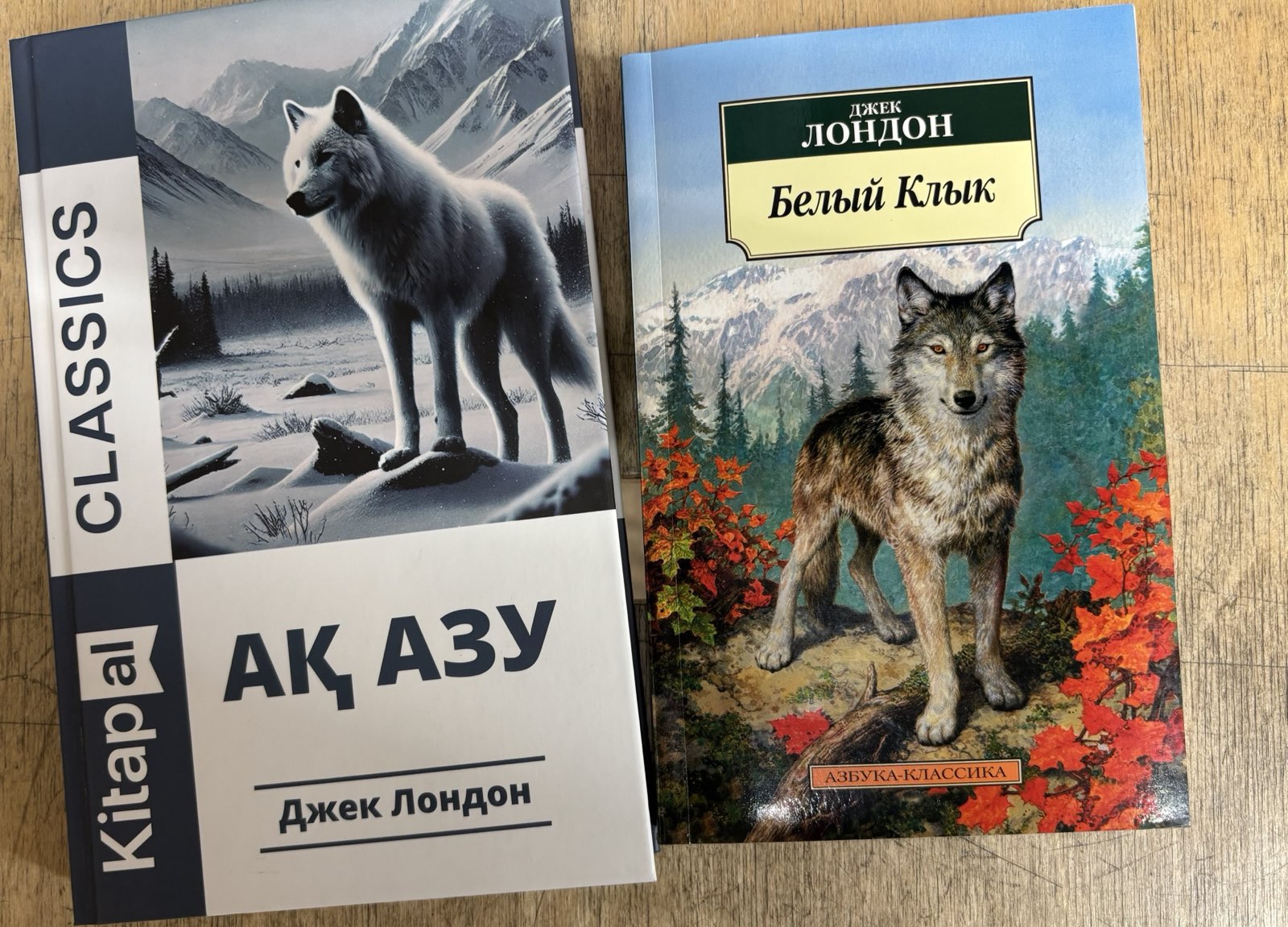
A Kazakh and Russian version of Jack London’s White Fang. The latter is 30% cheaper; image: Joe Luc Barnes

The shift away from reading longer texts has side effects that are becoming increasingly pronounced in schools.

“Only a third of students read the books included in the curriculum in any given grade,” Zhandos Duisebay, a teacher at an Almaty High School, told TCA. “As a teacher, I can clearly see the difference between those who read and those who don’t.”

He notes that those who read absorb knowledge better and faster due to their ability to concentrate. “They are also more goal-oriented, can articulate their thoughts better, and use less profanity,” he added.

Other studies warn about the political effects. A detailed survey in May 2023 noted the profound role that sites such as Facebook, YouTube, and Instagram play in the dissemination of news across Central Asia. On all of these platforms, news is often curated by individual vloggers. Research points to information disseminated in video format being more emotional and less likely to be fact-checked, leading to a less well-informed and potentially angrier public.

“There’s definitely a danger of radicalization,” noted Kireyeva. While Muqan believes there is a growing realization of the benefits of reading in combating this.

“Long-form reading is not only a way to consume information or enjoy aesthetic pleasure, but also a form of mental training,” he said.

The government has slowly begun to support such initiatives. In 2024, Kazakhstan declared its first National Book Day – April 23 – as well as an initiative called Reading Nation, which aims to foster a culture of reading in the country.

The situation is improving. At the turn of the century, only around 1% of books were in Kazakh; now that figure is closer to 10% and rising.

Muqan sees a growing appetite in the 25-45 age cohort who have begun purchasing books for self-education or professional development. Meanwhile, parents are increasingly buying Mazmumdama’s books for their children.

“Many of them grew up reading in other languages and are now deliberately rebuilding a Kazakh-language reading habit,” he said.

Kireyeva notes that it is still early days. “There isn’t yet a critical mass,” she said, “for people to read in their own language, and for there to be a sufficient amount of high-quality literature.”

Another positive trend is the proliferation of books in the major cities, particularly since the pandemic.

“Maybe it’s fatigue from technology, from constant gadgets,” Kireyeva said.  Her own book club, Joyce Club, focuses on the slow reading of classic texts, and she relishes the different interpretations that a book club can bring. “The art of discussion is something we’re not very good at. We tend to fight immediately instead of listening,” she said.

Kazakhstan’s national statistics bureau, when contacted for this article, also noted that library use across the country has sharply risen, with over 37 million visits to libraries across the country between January and October 2025. They noted a “notable increase” in Kazakh classics and philosophy.

But these are small steps. Duisebay is not impressed by the apparent growth in library users. He notes that the majority are young people between 17 and 25 who go there because they have to complete projects. “We have a greater number of students now, so naturally we’ve seen more people going to libraries,” he said.

He believes that any growth in readership is mainly concentrated in large cities. “Unfortunately, in smaller towns, the older generation lacks interest in any kind of personal growth, which negatively impacts their children,” he said.

Kireyeva agrees – “I wish I could say everyone will read. But realistically, there will be two groups: a small reading group and a larger group focused on survival,” she told TCA.

For Muqan, the importance of reading cannot be overstated. He sees reading as the “basis of lifelong learning, which modern societies cannot function without. When authors write, human knowledge and culture continue to expand,” he said. “Without it, meaningful development – whether scientific, cultural, or civic – becomes impossible.”
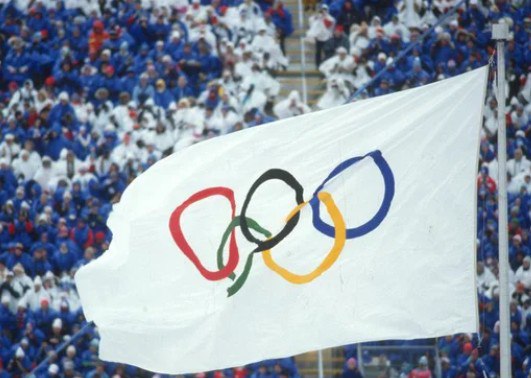

Kazakhstan to Send More Athletes Than Expected to Winter Olympics

At least 36 Kazakh athletes have secured spots at the upcoming Winter Olympics in Italy this February, exceeding initial expectations. The number could still increase if the International Olympic Committee (IOC) allocates additional quota places.

The XXV Winter Olympic Games will take place in Milan and Cortina d’Ampezzo from February 6 to 22. More than 3,500 athletes from 93 countries will compete for 116 sets of medals across 16 sports. Qualification for all disciplines concluded on January 20.

Kazakhstan had originally aimed to secure 35 Olympic licenses for the Games. However, according to the Ministry of Tourism and Sports, the final count has reached 36.

“The Kazakh national team will include 36 athletes at the Olympics,” the ministry’s press service stated.

Half of these licenses are named, meaning they are tied to specific athletes. The remaining half are open slots, with final athlete selection to be determined by the coaching staff of the respective national teams. Kazakh athletes currently hold 18 named licenses across five sports.

Named license holders include figure skaters Mikhail Shaydorov and Sofya Samodelkina (men’s and women’s singles), alpine skiers Rostislav Khokhlov and Alexandra Skorokhodova, and short track speed skaters Abzal Azhgaliyev, Denis Nikisha, Olga Tikhonova, and Yana Khan. Freestyle aerialists Dinmukhammed Raimkulov, Sherzod Khashirbaev, Roman Ivanov, Asan Asylkhan, and Ayana Zholdas have also secured confirmed slots.

Kazakhstan’s speed skating team has been finalized and will feature Evgeny Koshkin, Kristina Silaeva, Elizaveta Golubeva, Nadezhda Morozova, and Arina Ilyashchenko.

As for the remaining, non-named spots, Kazakh athletes will also compete in freestyle moguls (four athletes), biathlon (two men and two women), Nordic combined (one athlete), ski jumping (two athletes), and cross-country skiing (three men and four women).

“These figures reflect the results of the licensing stages from the 2025-2026 season. Additional quotas may still be allocated by the IOC. Final information on Olympic licenses will be available at the end of January,” the sports ministry noted.

As previously reported by The Times of Central Asia, Kazakhstani athletes achieved a strong showing at the 2025 Asian Winter Games, placing fourth overall in the medal standings among 34 participating countries.

Astana Accelerates Northern Aral Sea Recovery Plan

The Kazakh government plans to accelerate the second phase of the project to restore the Northern Aral Sea. Prime Minister Olzhas Bektenov has instructed the Ministry of Water Resources and Irrigation to secure financing for the second phase of the project by the end of 2026. The goal is to increase the volume of water in the Northern Aral Sea by around 10–11 billion cubic meters over the next four to five years.

History of Degradation and Early Restoration Results

The Aral Sea, which straddles the border between Kazakhstan and Uzbekistan, began to shrink rapidly in the 1960s due to large-scale irrigation projects that diverted water from the Amu Darya and Syr Darya rivers for cotton cultivation and other agricultural needs.

As a result of the sea’s degradation, the Northern Aral Sea separated in 1987 and has since been sustained largely through the construction of the Kokaral Dam. In 2012, the sea and the Syr Darya delta were added to the Ramsar List of Wetlands of International Importance. Since then, Kazakhstan has undertaken systematic efforts to restore the northern part of the former Aral Sea.

Unlike earlier efforts to save the Aral Sea as a whole, Kazakhstan’s approach since the mid-2000s has been shaped by a narrower and more pragmatic premise: that partial restoration is environmentally and politically achievable, while attempts to revive the entire basin are not. The construction of the Kokaral Dam marked a turning point, demonstrating that targeted hydraulic interventions could stabilise water levels, reduce salinity, and revive fisheries in the northern basin, provided expectations were kept within achievable limits. The recovery has already enabled the return of small-scale fishing, improved local livelihoods, and reduced dust storms from the exposed seabed around Aralsk. This strategy reflected a deliberate acceptance that restoring the Northern Aral would come at the expense of the southern basin, prioritising long-term ecological viability over symbolic ambitions.

Over the past several years, roughly 5 billion cubic meters of water have been redirected into the Northern Aral Sea basin, increasing its total volume to more than 23 billion cubic meters. This exceeds the targets set out in Kazakhstan’s Water Resources Management Concept, which had forecast reaching 20.6 billion cubic meters by 2025, with that volume previously expected only by 2029.

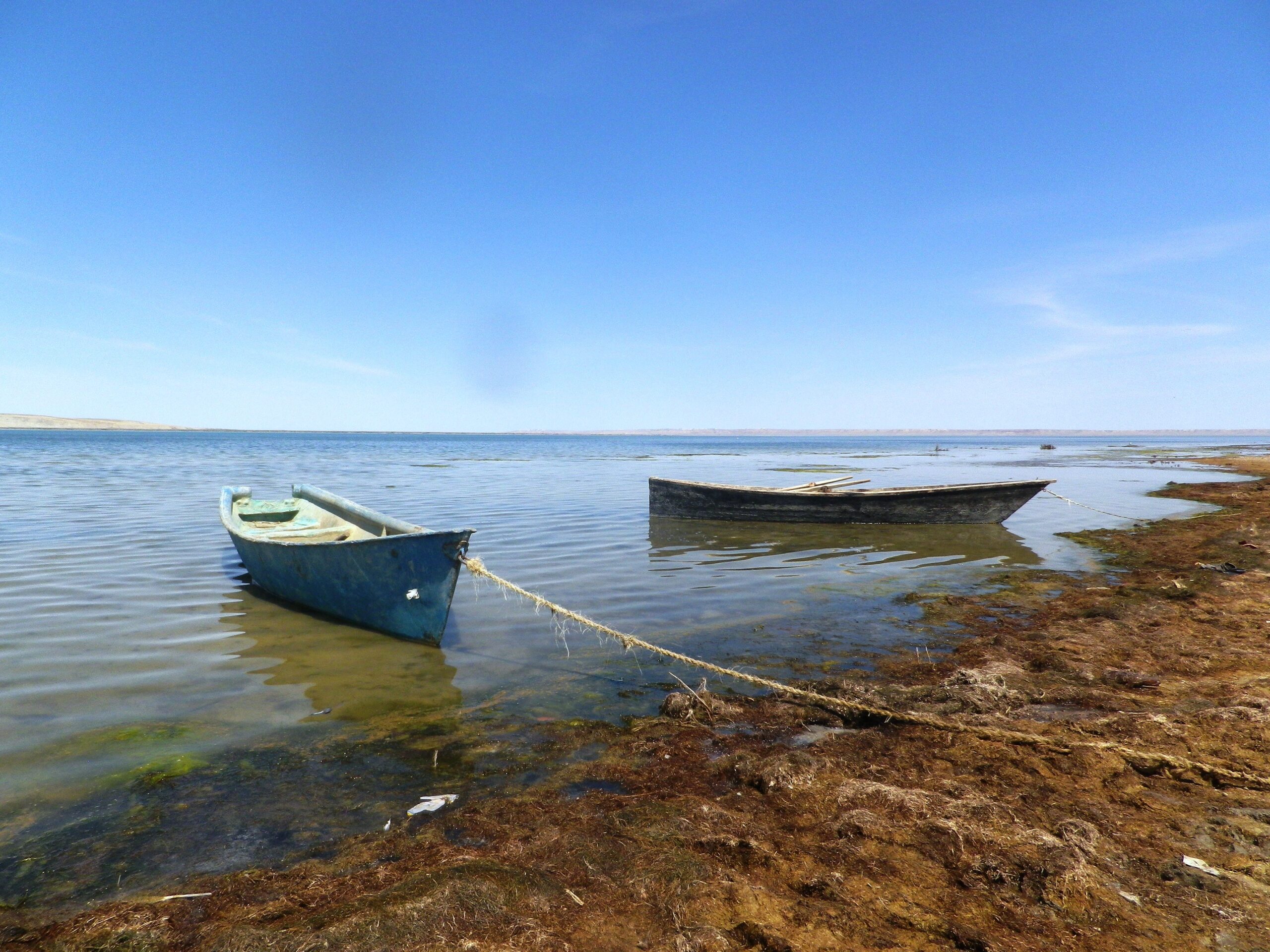
Tastubek Bay, Northern Aral Sea; image: TCA, Stephen M. Bland

Infrastructure Plans and International Support

With the support of the World Bank, Kazakhstan is considering raising the height of the Kokaral Dam by up to two meters and constructing a new hydraulic facility. These upgrades aim to increase both the volume and quality of water in the Northern Aral Sea, rehabilitate the Syr Darya delta, and reduce salt dispersion from the exposed seabed.

The second phase of the initiative targets increasing the sea’s volume to 34 billion cubic meters.

Bektenov has directed the Ministry of Water Resources and Irrigation to finalize technical preparations by mid-2026 and secure financing by the end of the year, including through international partnerships. The second phase of the project has long been discussed by policymakers and researchers but repeatedly delayed by technical and institutional uncertainty, including disagreements over dam height and the scale of the intervention required. Observers note that the original Kokaral design was deliberately conservative, leaving open the possibility of future expansion once ecological recovery and water inflows proved sustainable. The current decision to accelerate Phase II, therefore, represents less a change in direction than a delayed continuation of a strategy that has already reshaped the Northern Aral’s ecosystem.

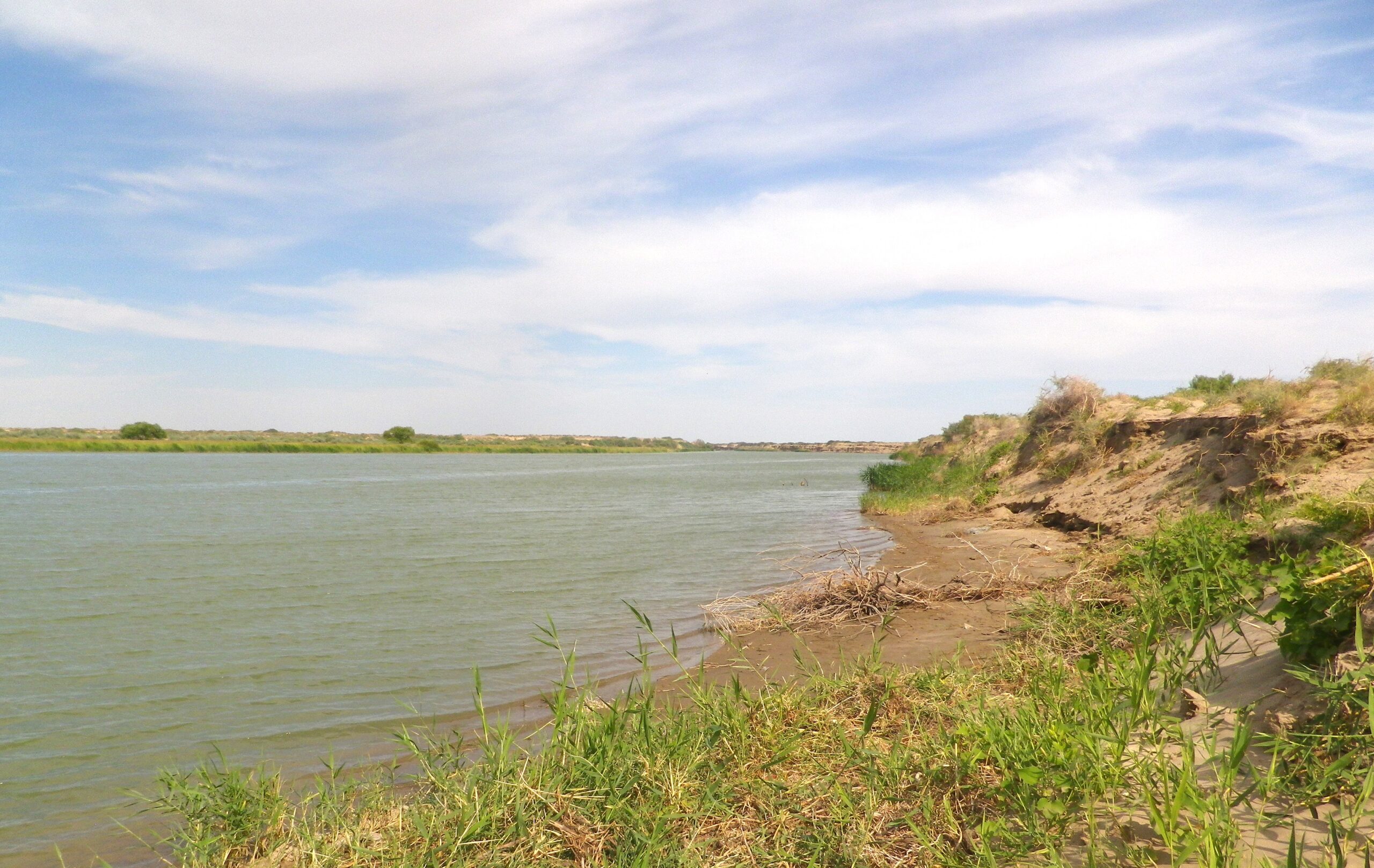
The Syr Darya delta; image: TCA, Stephen M. Bland

Details of Phase Two

Minister of Water Resources and Irrigation Nurzhan Nurzhigitov outlined the second phase, which is set to be completed within four to five years. Nurzhigitov said the second phase aims to increase the Northern Aral Sea’s volume from about 23 billion to 34 billion cubic meters, raise the water level to 44 meters, expand the surface area from roughly 3,065 to 3,913 square kilometers, and restore the Syr Darya delta ecosystem.

Nurzhigitov also said that improved water diplomacy and coordination with Uzbekistan have helped maintain stable inflows to the Aral Sea even during low-water periods.

Water Efficiency and Regional Sustainability

In parallel, the government is implementing large-scale irrigation infrastructure upgrades. In the Turkestan and Kyzylorda regions, according to the ministry, 167 projects are underway to improve water efficiency. The introduction of water-saving technologies across 143,100 hectares has already conserved approximately 500 million cubic meters of water, a portion of which is being used to sustain the Northern Aral Sea ecosystem.

“The preservation and restoration of the Northern Aral Sea remains not only an environmental issue, but also a social and strategic priority. Allocating conserved water to support ecosystems is an investment in regional sustainability and the health of future generations,” Nurzhigitov stated.

As previously reported by The Times of Central Asia, in December 2025, President Kassym-Jomart Tokayev proposed the creation of a dedicated United Nations body to address global water management challenges.

Authorities view the accelerated restoration of the Northern Aral Sea as a cornerstone of Kazakhstan’s long-term water security strategy and a potential model for regional cooperation in Central Asia.

Finland’s President Stubb Warns Russia’s Imperial Thinking Poses Risks for Central Asia

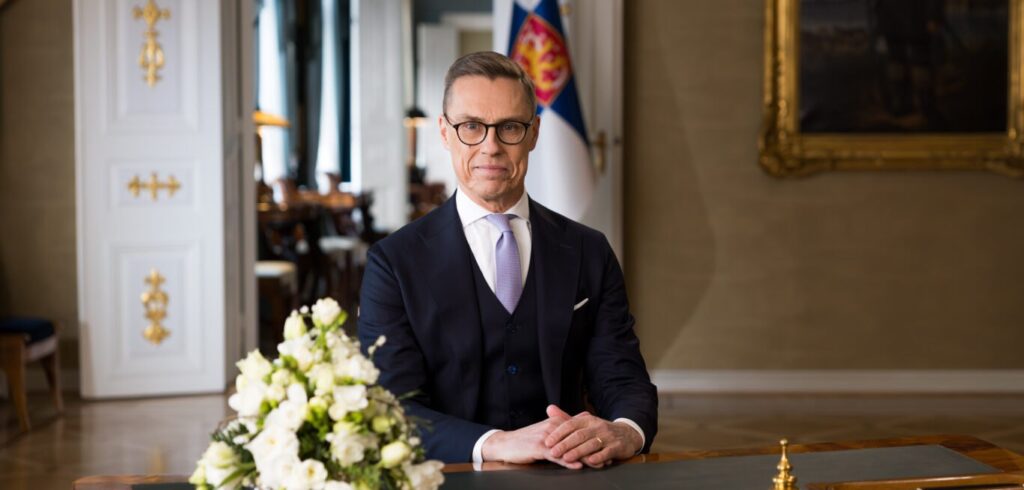
Russia’s imperial worldview may pose a greater long-term risk to Central Asia and the South Caucasus than to NATO member states, Finnish President Alexander Stubb said in an interview with The Washington Post, highlighting concerns that continue to resonate across the post-Soviet space.

Speaking with columnist David Ignatius, Stubb referenced Finland’s long and complex history with its eastern neighbor, noting that expansionist thinking remains deeply rooted in Russian political culture. “I think the DNA of Russia is still expansion and imperialism,” he said, arguing that President Vladimir Putin views the collapse of the Soviet Union as a historical injustice.

While much of the Western debate centers on potential threats to NATO countries such as the Baltic states, Finland, or Poland, Stubb suggested that more vulnerable regions lie elsewhere. “I think the more worrying aspect for others is the Central Asian countries, the Southern Caucasus and others,” he said, pointing to what he described as a top-down political system driven by the ideology of Russkiy mir, or the “Russian world.”

Stubb also spoke about his personal interactions with Russian officials, including Putin and Foreign Minister Sergei Lavrov, stressing that meaningful political dialogue remains unlikely while the war in Ukraine continues.

As previously reported by The Times of Central Asia, Russian television host Vladimir Solovyov sparked backlash after suggesting that Moscow could conduct “special military operations” in Central Asia and Armenia. The remarks were widely condemned by Uzbek scholars, journalists, and analysts as destabilizing and provocative.

More recently, Russian ultranationalist Alexander Dugin, often described as an ideologue of the “Russian world”, publicly questioned the sovereignty of several former Soviet republics, including Uzbekistan, Kazakhstan, Tajikistan, and Kyrgyzstan. A video of his comments circulated widely online, drawing sharp criticism across the region.

Russia’s Foreign Ministry later sought to distance the Kremlin from such statements. Spokesperson Maria Zakharova stated that Solovyov’s remarks did not reflect official policy and reaffirmed that Moscow’s relationships with Central Asian countries are based on partnership and respect for sovereignty.

EBRD to Allocate €10 Million to Tajikistan for Electric Public Transport

The European Bank for Reconstruction and Development (EBRD) is continuing to support the green transformation of Tajikistan’s transport sector. Its latest project focuses on the city of Bokhtar, the administrative center of Khatlon region, and will fund a large-scale upgrade of municipal public transport with electric buses.

The total financing for the Bokhtar project amounts to €10 million, of which €6.4 million is provided as a loan and €3.6 million as an investment grant.

Additionally, technical assistance valued at more than €600,000 will be allocated to support the implementation of the new electric transport system.

The funds will enable the municipality to acquire 50 modern electric buses. These vehicles will be accessible to passengers with disabilities and will be supported by the necessary charging infrastructure to ensure full operational capacity.

Beyond the procurement of buses, the project encompasses the full integration of electric transport into Bokhtar’s urban environment.

According to the EBRD, the introduction of electric buses is expected to significantly reduce carbon dioxide emissions and improve air quality in the city. The project will also create new jobs and includes a training program for personnel responsible for operating and maintaining the new fleet.

Bokhtar and the EBRD have been partners in public transport development since 2018. In an earlier phase of modernization, the city constructed a bus depot and acquired 41 low-floor buses.

To date, the EBRD has invested over €1 billion in Tajikistan through 190 projects.

Kazakhstan Joins OpenAI’s Education for Countries Initiative

Kazakhstan has joined OpenAI’s Education for Countries program, becoming one of the first nations selected for the global initiative aimed at integrating artificial intelligence into national education systems.

The program, launched by U.S.-based AI research and deployment company OpenAI, developer of ChatGPT, is part of the broader OpenAI for Countries framework. Kazakhstan joins the inaugural cohort alongside Estonia, Greece, Italy’s Conference of University Rectors, Jordan, Slovakia, Trinidad & Tobago, and the United Arab Emirates.

Kazakhstan’s participation marks the beginning of a nationwide rollout of ChatGPT Edu, OpenAI’s education-focused AI platform.

According to the Ministry of Science and Higher Education, the initiative is considered strategically important for Kazakhstan’s long-term education policy.

Amid global debates over AI’s role in education, Kazakh officials stress that artificial intelligence is not intended to replace teachers, but to support them by reducing administrative burdens, enhancing teaching capacity, and enabling personalized instruction.

The introduction of ChatGPT Edu is expected to streamline lesson planning, improve assessment processes, and support individualized learning.

The project is being implemented under agreements reached during President Kassym-Jomart Tokayev’s official visit to the United States in November 2025. The key agreement was signed by OpenAI, Inc., Freedom Holding Corp., and Bilim Group.

Crucially, the initiative is fully financed through private funding, with no allocations from the state budget or international grants.

Minister of Artificial Intelligence and Digital Development Zhaslan Madiyev noted that Kazakhstan’s inclusion in the first cohort coincides with the country declaring 2026 the Year of Artificial Intelligence and Digitalization.

“We view ChatGPT Edu as a practical tool to support educators and strengthen the research environment,” Madiyev said, adding that the initiative reflects the government’s systematic approach to AI deployment in priority sectors.

As part of the national rollout, 165,000 free ChatGPT Edu licenses will be distributed, including:

  • 100,000 licenses for teachers in preschool, secondary, technical, and vocational education
  • 62,800 licenses for university faculty and administrative staff
  • 2,200 licenses for participants in the Astana Hub technology ecosystem

ChatGPT Edu will enable educators to prepare materials, tests, and assignments in Kazakh, Russian, and English, with content tailored to students’ academic levels.

Beginning in January 2026, nationwide training programs will be launched in cooperation with OpenAI specialists, focusing on the practical use of AI in teaching, administration, and research.

Minister of Science and Higher Education Sayasat Nurbek called the partnership with OpenAI a foundational step in shaping the future of Kazakhstan’s education system.

“Artificial intelligence is not a replacement for humans. When used critically and responsibly, it enhances thinking,” Nurbek said. “In education and science, AI accelerates material preparation, improves feedback quality, and opens new research opportunities. Kazakhstan is not training users of artificial intelligence we are training its creators.”

Kazakhstan currently leads Central Asia in AI adoption.

According to Microsoft’s AI Economy Institute report Global AI Adoption in 2025 – A Widening Digital Divide, Kazakhstan ranked 72nd out of 147 countries, with 13.7% of its working-age population using AI tools by the end of 2025. By comparison:

  • Kyrgyzstan ranked 117th (8.2%)
  • Uzbekistan 141st (6.3%)
  • Tajikistan 145th (5.6%)
  • Turkmenistan 146th (5.6%)

In a January 5 interview with Turkistan newspaper, Tokayev underscored the strategic importance of artificial intelligence for Kazakhstan’s long-term competitiveness.

“The emergence of artificial intelligence has created a dividing line between countries that will move into the future and those that will be left behind. That is why digital technologies and artificial intelligence have been declared national development priorities,” he stated.

Kazakhstan’s participation in Education for Countries places it among a small group of early adopters embedding generative AI into education not as a pilot, but as core infrastructure.