• KGS/USD = 0.01144 0%
  • KZT/USD = 0.00196 -0%
  • TJS/USD = 0.10904 0%
  • UZS/USD = 0.00008 0%
  • TMT/USD = 0.28490 0%
  • KGS/USD = 0.01144 0%
  • KZT/USD = 0.00196 -0%
  • TJS/USD = 0.10904 0%
  • UZS/USD = 0.00008 0%
  • TMT/USD = 0.28490 0%
  • KGS/USD = 0.01144 0%
  • KZT/USD = 0.00196 -0%
  • TJS/USD = 0.10904 0%
  • UZS/USD = 0.00008 0%
  • TMT/USD = 0.28490 0%
  • KGS/USD = 0.01144 0%
  • KZT/USD = 0.00196 -0%
  • TJS/USD = 0.10904 0%
  • UZS/USD = 0.00008 0%
  • TMT/USD = 0.28490 0%
  • KGS/USD = 0.01144 0%
  • KZT/USD = 0.00196 -0%
  • TJS/USD = 0.10904 0%
  • UZS/USD = 0.00008 0%
  • TMT/USD = 0.28490 0%
  • KGS/USD = 0.01144 0%
  • KZT/USD = 0.00196 -0%
  • TJS/USD = 0.10904 0%
  • UZS/USD = 0.00008 0%
  • TMT/USD = 0.28490 0%
  • KGS/USD = 0.01144 0%
  • KZT/USD = 0.00196 -0%
  • TJS/USD = 0.10904 0%
  • UZS/USD = 0.00008 0%
  • TMT/USD = 0.28490 0%
  • KGS/USD = 0.01144 0%
  • KZT/USD = 0.00196 -0%
  • TJS/USD = 0.10904 0%
  • UZS/USD = 0.00008 0%
  • TMT/USD = 0.28490 0%
08 December 2025

Afghanistan Appeals for Quake Relief; Central Asia Likely to Help

Uzbekistan and Tajikistan, which border Afghanistan, have often taken the lead among Central Asian countries in providing relief to Afghan communities after deadly earthquakes. Once again, Afghanistan is desperately in need after a 6.0 magnitude earthquake killed at least 800 people and injured many more in the eastern part of the country late Sunday.

The Taliban government has appealed for international aid to help survivors of the quake as Afghanistan struggles with other problems, including the legacy of decades of war, a cut-off of U.S. aid for medical and other services under the administration of President Donald Trump, and the return of many Afghan citizens who were expelled from neighboring Pakistan and Iran.

The death toll is likely to rise because some villages that were hit by the quake are in mountainous areas that are difficult to reach, and bad weather has hindered rescue efforts. There was devastation across four eastern provinces in Afghanistan, including Nangarhar and Kunar, according to the United Nations. The U.S. Geological Survey said the epicenter of the earthquake was 27 kilometers east-northeast of the Afghan city of Jalalabad, which is Nangarhar’s provincial capital and lies near the border with Pakistan.

President Kassym-Jomart Tokayev of Kazakhstan “expressed deep condolences to the leadership of Afghanistan in connection with the numerous human casualties as a result of the earthquake in that country,” the presidency said on Telegram.

Uzbekistan and Tajikistan have provided humanitarian aid to Afghanistan after past earthquakes, including in 2022 and 2023, and have also helped with logistics as the United Nations and non-governmental groups transported relief supplies across their borders. Turkmenistan, which also shares a border with Afghanistan, has had involvement in such efforts as well.

Central Asian countries have been building relations with Afghanistan in recent months, seeking to diversify trade routes while remaining concerned about security threats and other obstacles to stability. The Trans-Afghan Corridor construction project, for example, would provide easier access to Indian Ocean ports for regional countries. It would constitute a core railway that runs from Termez, southern Uzbekistan through Kabul, Afghanistan, and onward to Peshawar, Pakistan.

Some Central Asian countries have expressed concern about human rights in Afghanistan, including the treatment of women and girls, but have not made the issue a centerpiece of their growing ties with the Taliban.

Kazakhstan Considers Criminal Penalties for Promoting Online Casinos

Kazakhstan’s Financial Monitoring Agency (FMA) has identified 34 bloggers promoting online casinos on social media, with 11 already facing administrative penalties. The agency has stated that fines alone are not deterring repeat offenders and is now considering introducing criminal liability for such activities.

A law passed in 2024 strictly prohibits outdoor advertising for bookmakers, online casinos, and betting pools, as well as their promotion in media, films, and video content. According to the FMA, over the past two and a half years, more than 200 illegal gambling operations have been dismantled, and 224 individuals have been held criminally accountable. However, the agency notes that the primary threat now stems from online casinos based abroad.

Since the beginning of this year, authorities have blocked more than 17,000 links, mostly mirror sites for foreign platforms. Despite these efforts, some Kazakhstani payment service providers continue to facilitate transactions linked to such websites. The FMA has pledged to intensify investigations into these financial intermediaries.

Influencer marketing remains a key channel for online gambling promotion. In the first half of the year alone, 34 influencers were identified as advertising gambling services, with 11 fined. But according to the FMA, revenues from such promotions far exceed the cost of the fines, creating incentives for repeated violations.

In response, the agency is exploring whether bloggers’ actions could be legally interpreted as aiding and abetting illegal gambling, a charge similar to promoting financial pyramid schemes, which already carries criminal penalties under Kazakhstani law.

Currently, fines for illegal advertising on social media start at 200,000 KZT (approximately $420).

Central Asia Advances Agenda at Record-Breaking SCO Summit in Tianjin

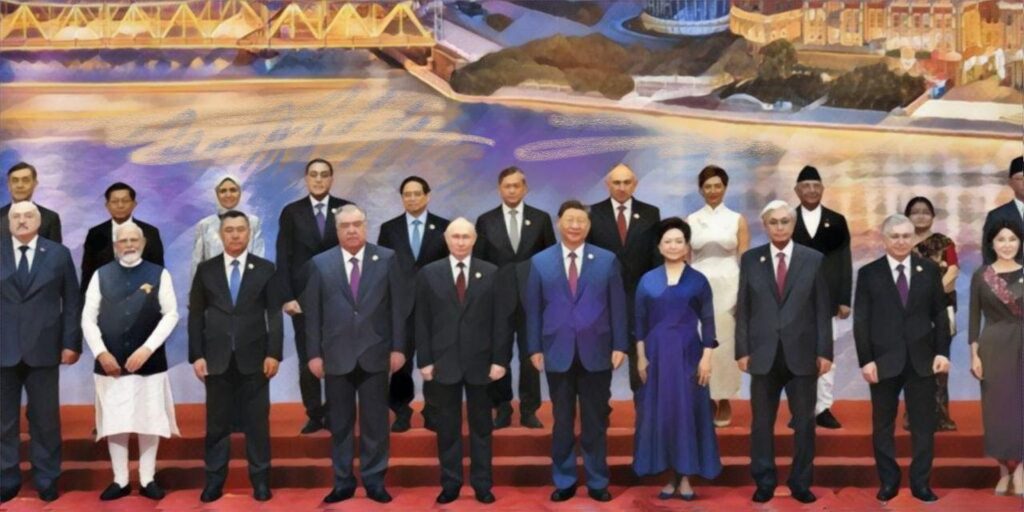
At the opening ceremony of the SCO Summit in Tianjin on August 31, Chinese President Xi Jinping, Russian President Vladimir Putin, and India’s Prime Minister Narendra Modi joined Central Asian leaders in a group photo. The Tianjin summit – China’s second time hosting the SCO and its “largest-ever” summit – was attended by all five Central Asian presidents alongside a host of key countries. In his welcome speech, Xi highlighted that the SCO now bears “greater responsibility” for safeguarding regional peace and stability, and said the summit was expected to produce a new 10-year development strategy.

Xi proposed fast-tracking an SCO development bank, pledging 2 billion yuan ($280 million) in aid plus 10 billion yuan in loans to seed the fund. Xi also urged members to oppose a “Cold War mentality” and support an inclusive, multilateral trading system in a pointed rebuke to recent U.S. tariffs.

Central Asian Leaders and Their Messages

Kazakh President Kassym-Jomart Tokayev opened the summit for his delegation, thanking Xi and praising China’s “consistent policy aimed at strengthening security, stability, economic cooperation, and cultural ties within the SCO framework.” In his address, Tokayev marked the symbolic 80th anniversaries of the end of World War II, noting the value of unity and solidarity which he said the SCO embodies. Tokayev reaffirmed Kazakhstan’s support for a multipolar world order, respect for sovereignty, and mutually beneficial trade and investment, and pledged to keep combating the “three evils” of terrorism, separatism, and extremism.

Beyond the opening remarks, Central Asian leaders used the summit to lay out their strategic priorities. Speaking at the heads-of-state meeting, President Shavkat Mirziyoyev of Uzbekistan called for further reform of SCO institutions and expansion of its dialogue partners. Mirziyoyev advocated for new cooperation mechanisms – a regional center for critical materials, a “Unified SCO Transport Space” linked to China’s Belt and Road Initiative, digital platforms, and green energy corridors – and proposed measures to boost intra-regional trade. Notably, Mirziyoyev urged the signing of an Agreement on Trade Facilitation, saying it “will give a boost to the growth of intra-regional trade within the SCO area.” In his closing remarks, he congratulated Kyrgyzstan’s Sadyr Japarov on assuming the SCO chairmanship for 2026, setting up the next summit.

Tajik President Emomali Rahmon did not address the leaders’ meeting, but in a pre-summit interview, he highlighted China’s role in the SCO, crediting China with significant investment in Tajik infrastructure and energy, and welcoming Beijing’s proposal to locate an SCO Anti-Drug Center in Dushanbe. “We are confident that the center will make tangible contributions to strengthening regional cooperation and combating illicit drug trafficking,” he stated. As a founding member, Rahmon stressed that the SCO’s top priority has long been Central Asian security and said that Tajikistan fully backs China’s Tianjin agenda, citing Beijing’s support for roads, tunnels, and power lines in Tajikistan.

The incoming 2026 chair, Sadyr Japarov of Kyrgyzstan, met with Xi on August 31, reviewing plans to deepen all-around cooperation. Xi stated that China will fully support Kyrgyzstan in taking over the rotating presidency of the SCO, while Japarov, for his part, thanked China, noting that an “amicable and close neighbor is an invaluable asset of a nation,” and pledging to back China on core issues. The two sides signed multiple bilateral agreements covering connectivity, transport, education, civil aviation, and other fields.

China and Regional Cooperation

A major theme in Tianjin was China’s deepening economic ties with Central Asia. On the sidelines, Xi and Tokayev oversaw the signing of over 20 cooperation agreements spanning energy, technology, housing, education, sports, environmental protection, and more. The deals aim to diversify trade and investment in Kazakhstan, from hydropower and chemicals to high-tech collaboration. Xi’s talks with President Japarov, meanwhile, yielded agreements on cross-border roads and renewable energy projects that tie into China’s Belt and Road connectivity strategy.

Beyond the mooted SCO development bank, China used Tianjin to roll out a new Global Governance Initiative (GGI), while Japarov backed deeper cooperation with China on clean energy, AI, and connectivity. Framed as a platform to reform multilateral institutions and promote a “more just and equitable global governance system,” the GGI is an attempt to position the SCO as a key vehicle in that role.

For the Central Asian states, deepening ties with India and Iran were also on the agenda. India’s Prime Minister Narendra Modi attended the summit – his first China visit in seven years – and held multiple bilateral talks. Addressing Modi, Xi said that China and India should be “partners, not rivals,” while Modi noted there is now an “atmosphere of peace and stability” between them, easing strains after recent trade frictions.

India also underscored its investment in Central Asia, where it is a growing trade partner of Uzbekistan and Kazakhstan. Meanwhile, Iran – now a full SCO member – was represented by President Masoud Pezeshkian. Though no new Iran-Central Asia deals have been reported, Iran’s presence reflects its long-standing ties with Tajikistan and Turkmenistan, with which it shares cultural and energy interests, respectively.

Russia’s role was also at the forefront. At the summit’s opening, Putin echoed calls for integration, for example, urging the use of national currencies in trade. Russian officials signed energy agreements with Kazakhstan and Tajikistan on the sidelines – continuing existing oil and gas ties – but official communiqués focused on global security. According to Putin, the SCO has revived “genuine multilateralism”, which, in turn, lays the “political and socio-economic groundwork for the formation of a new system of stability and security in Eurasia.”

Summit Declarations and Future Steps

By the summit’s end, the assembled leaders had approved a sweeping set of 24 documents aimed at deepening cooperation on security, economic, and cultural exchanges. A landmark joint Tianjin Declaration was issued, along with a new SCO development strategy for 2026–2035. These look to build on decisions made at the 2022 Samarkand summit and set the direction for the next decade.

Statements were also issued on current issues: commemorating the 80th anniversary of World War II’s Allied victory, and expressing unified support for an open, multilateral trading system. “The global situation remains volatile and turbulent,” Xi stated, adding in a thinly veiled reference to comments he had previously made regarding U.S. tariffs, that “We must reject bullying.” The SCO also expanded its outreach: Laos was admitted as the 15th SCO dialogue partner, underscoring the group’s move toward a Global South orientation.

Outlook: Central Asia in a Changing Order

The Tianjin summit underscored China’s diplomatic activism and Central Asia’s pivotal role. By agreeing on joint initiatives and hundreds of millions in new project funding, the summit signaled Beijing’s intent to strengthen ties in Central Asia amid global shifts.

For the region, the outcome is generally positive: Central Asian states secured closer trade and infrastructure ties with China as the SCO widens. Kazakhstan and Uzbekistan, in particular, were in the spotlight for securing new deals, while Kyrgyzstan is gearing up to host the 2026 SCO summit, aiming to build on the Tianjin agenda. The summit also cemented the SCO as a platform for Eurasian cooperation that, while once centered on security, is now increasingly pursuing economic development, reflecting its Central Asian members’ priorities.

Kyrgyzstan Independence Day Marked by Celebrations

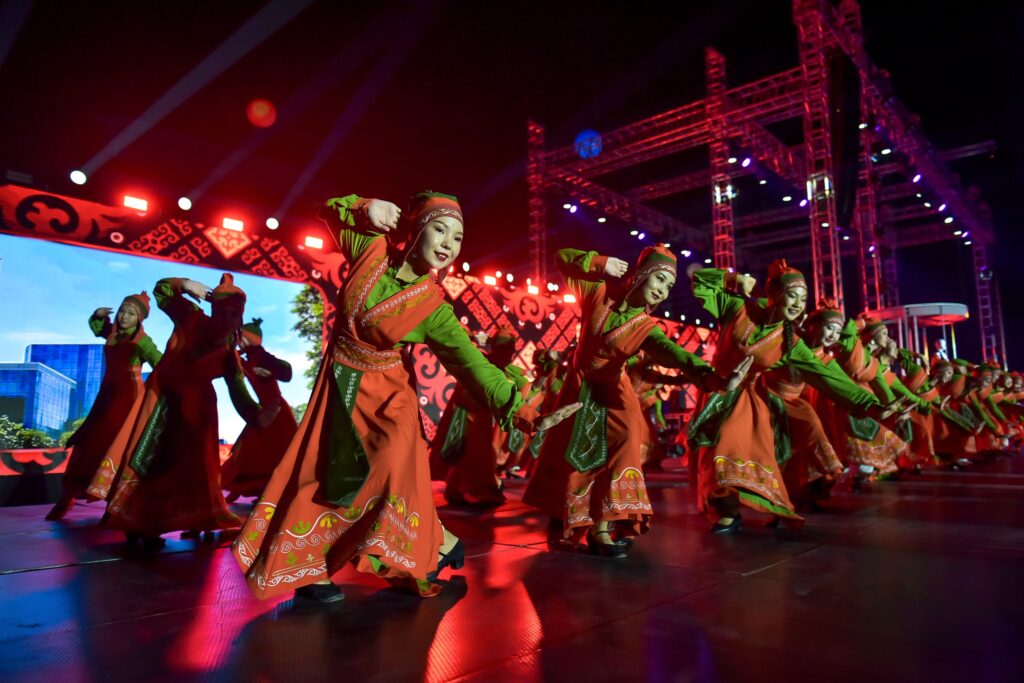
Kyrgyzstan marked the 34th anniversary of its independence on August 31 with large-scale celebrations across the country. For the first time, the central venue for the national festivities was the southern city of Jalal-Abad, the country’s third largest urban center. 

The official program featured cultural, social, and sporting events, including a large-scale choreographic performance titled Future Kyrgyzstan, involving 600 dancers in the city’s main square.

@president.kg

@president.kg

Celebrations Nationwide

Events were held across all regions. In Bishkek, several thousand people gathered in Ala-Too Square for a garrison parade by the Internal Affairs Directorate. In the Issyk-Kul region, festivities included traditional equestrian competitions and other national games.

Development and Investment

During the festivities, President Sadyr Japarov inaugurated 100 new social facilities and more than 60 industrial facilities via online launch. He also encouraged domestic and foreign investors to take advantage of the country’s ready-made industrial zones: “We invite all business structures, from small to large enterprises. We have ready-made industrial zones, we can provide land, help with infrastructure and documentation,” he said.

@president.kg

In Jalal-Abad, Japarov also opened a new art school and a 450-unit social housing complex.

Concluding his address, Japarov offered a metaphor for the country’s trajectory: “Kyrgyzstan is like a galloping horse,” he said. “Thirty-four years of independence is only the beginning of our long journey.”

Tajikistan Raises Minimum Monthly Wage to $110 Amid Broad Income Hikes

Effective September 1, Tajikistan has implemented a nationwide increase in salaries, pensions, and scholarships, ranging from 10% to 30% across various sectors.

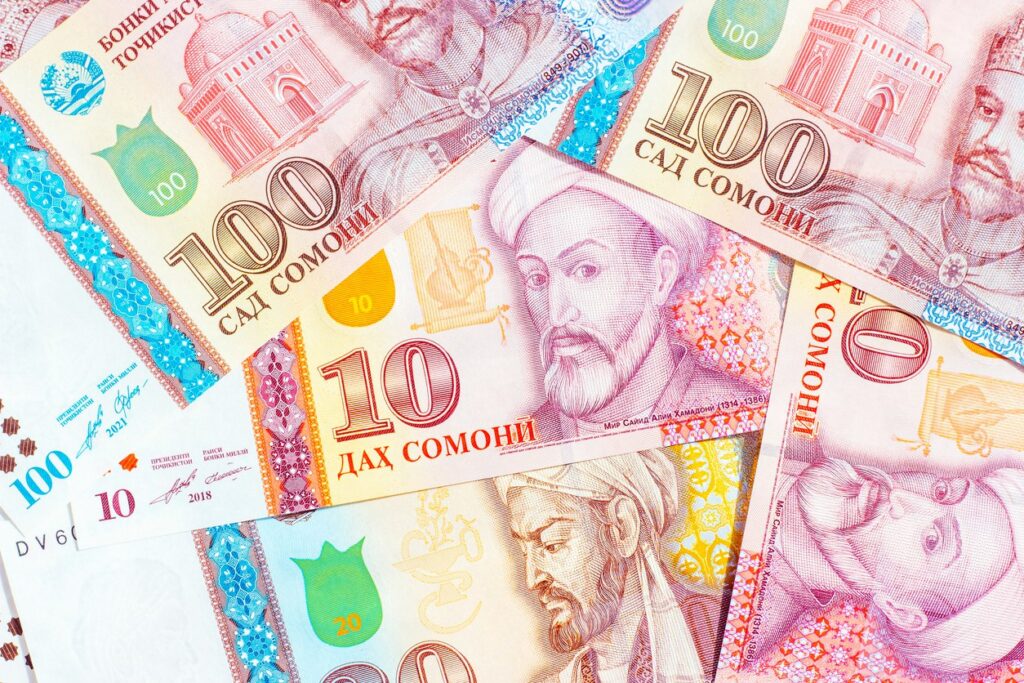
The country’s minimum wage is now officially set at 1,000 Tajikistani somoni (TJS) per month, approximately $110. This marks a 25% increase from the previous rate of 800 TJS ($88).

“This means that from September 1, 2025, the monthly salary of employees of all institutions, organizations, and enterprises, regardless of ownership, must not be less than 1,000 TJS,” the official decree states.

The salary hikes apply broadly. Employees of kindergartens and general education schools will see a 30% increase. Teachers at universities and research institutions will receive a 20% raise, matching the increase granted to doctors, chief physicians, nurses, and other healthcare personnel.

The same 20% boost also extends to social workers, including staff at elderly care homes and facilities for people with disabilities, as well as to cultural sector employees, such as those working in theaters, libraries, museums, media, and public broadcasting.

Civil servants at all levels of government have also received a 20% salary increase.

In parallel, insurance, labor, and social pensions have been increased by 10%. Scholarships, including presidential scholarships and other academic grants, have also been raised, with the exception of stipends for cadets in military universities and the Academy of the Ministry of Internal Affairs.

The 2025 state budget includes provisions to finance these increases. Funding sources include surplus revenue collections, local taxes, free budget balances, the Social Insurance and Pension Fund, and reallocation of reserve and discretionary funds.

Total budget revenues are projected at TJS 49.6 billion (approximately $5.45 billion), with around 65% expected to come from tax revenues. The government forecasts a 20.8% increase in tax collections compared to 2024.

Spending on public sector wages, pensions, and scholarships now accounts for more than 35% of the national budget. In 2025, the total wage fund has reached nearly TJS 13 billion ($1.43 billion), marking a 35.7% rise year-on-year. Pension allocations total TJS 5.1 billion ($561 million), while benefits and scholarships are funded at TJS 350 million ($38.5 million) and TJS 280 million ($30.8 million), respectively, each reflecting a 25% to 26% increase over last year.

Despite the official wage growth, low salaries remain a persistent issue for many Tajik citizens. As consumer prices continue to rise, the increases are widely viewed as a form of income indexation rather than a substantial improvement in living standards.

Chinese Firm to Build Kazakhstan’s First Waste-to-Energy Plant in Almaty

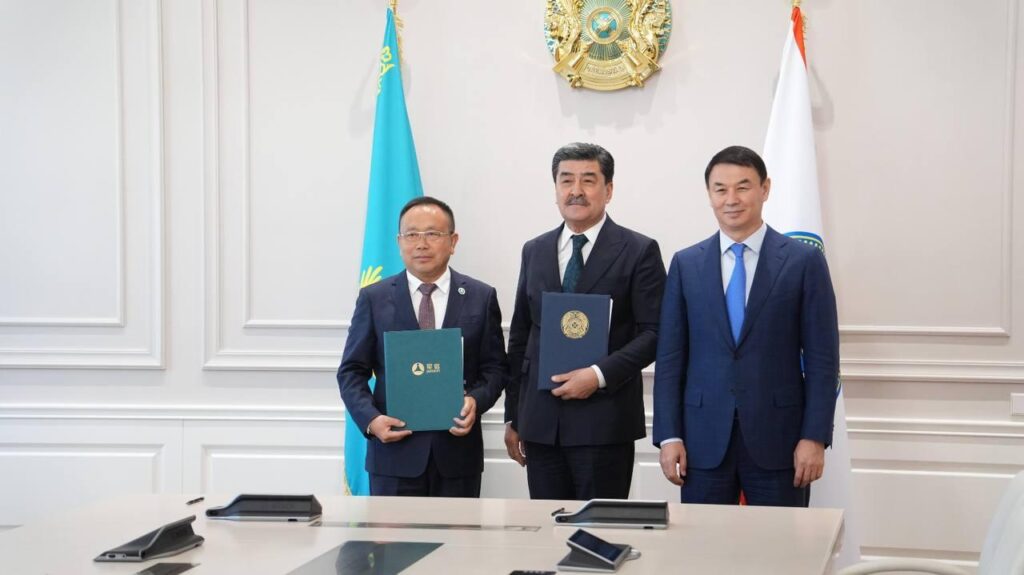
Kazakhstan has taken a major step toward modernizing its waste management infrastructure with the signing of a landmark investment agreement with China’s Hunan Junxin Environmental Protection Co. Ltd. On August 29, the Ministry of Ecology and Natural Resources announced that the company will build the country’s first waste-to-energy plant in Almaty.

The facility will be capable of incinerating at least 1,600 tons of solid municipal waste per day, generating 60 megawatts of electricity. The total investment in the project is estimated at 145 billion tenge (approximately $269 million).

The plant will utilize advanced waste-to-energy technology that complies with European Union emission standards. It will also be equipped with an automated system for continuous environmental monitoring. The project is expected to create around 700 jobs during construction and at least 120 permanent positions upon completion.

Hunan Junxin Environmental Protection has previously announced plans to invest up to $600 million in three waste-to-energy facilities across Kazakhstan.

Regional Expansion and Experience

The company is already active in neighboring Kyrgyzstan. In June, it began construction of a $95 million solid waste incineration facility in Osh, Kyrgyzstan’s second-largest city. That facility will generate both electricity and heat from municipal waste.

In Bishkek, Hunan Junxin is constructing a solid waste recycling facility at the city’s main landfill. The plant is initially expected to process 1,000 tons of waste per day, with capacity slated to increase to 3,000 tons by the time of its projected completion in December 2025.

In China, the company reported recycling 3.2 million tons of municipal waste in 2024, generating over 1.47 billion kWh of electricity.