• KGS/USD = 0.01144 0%
  • KZT/USD = 0.00210 0%
  • TJS/USD = 0.10438 0%
  • UZS/USD = 0.00008 0%
  • TMT/USD = 0.28490 0%
  • KGS/USD = 0.01144 0%
  • KZT/USD = 0.00210 0%
  • TJS/USD = 0.10438 0%
  • UZS/USD = 0.00008 0%
  • TMT/USD = 0.28490 0%
  • KGS/USD = 0.01144 0%
  • KZT/USD = 0.00210 0%
  • TJS/USD = 0.10438 0%
  • UZS/USD = 0.00008 0%
  • TMT/USD = 0.28490 0%
  • KGS/USD = 0.01144 0%
  • KZT/USD = 0.00210 0%
  • TJS/USD = 0.10438 0%
  • UZS/USD = 0.00008 0%
  • TMT/USD = 0.28490 0%
  • KGS/USD = 0.01144 0%
  • KZT/USD = 0.00210 0%
  • TJS/USD = 0.10438 0%
  • UZS/USD = 0.00008 0%
  • TMT/USD = 0.28490 0%
  • KGS/USD = 0.01144 0%
  • KZT/USD = 0.00210 0%
  • TJS/USD = 0.10438 0%
  • UZS/USD = 0.00008 0%
  • TMT/USD = 0.28490 0%
  • KGS/USD = 0.01144 0%
  • KZT/USD = 0.00210 0%
  • TJS/USD = 0.10438 0%
  • UZS/USD = 0.00008 0%
  • TMT/USD = 0.28490 0%
  • KGS/USD = 0.01144 0%
  • KZT/USD = 0.00210 0%
  • TJS/USD = 0.10438 0%
  • UZS/USD = 0.00008 0%
  • TMT/USD = 0.28490 0%

Tajikistan Completes Modernization of Kairakkum Hydropower Plant

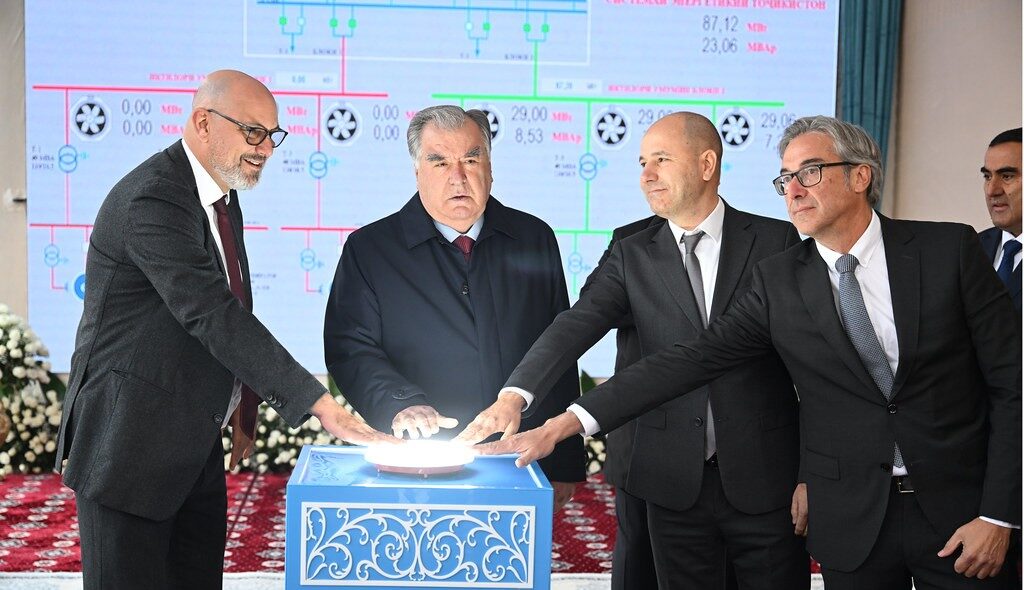
On November 20, Tajik President Emomali Rahmon officially inaugurated three newly modernized hydroelectric units at the Kairakkum Hydropower Plant (HPP) in Guliston, located in the northern Sughd region.

Situated on the Syr Darya River, the Kairakkum HPP comprises six hydroelectric units, the last of which was commissioned in 1957. Over nearly seven decades of operation, the plant’s equipment had become outdated, leading to a decline in generation capacity. The facility currently provides electricity to approximately 500,000 residents in Sughd province.

A modernization project for the aging plant began in August 2019. The first three upgraded units were brought online in September 2024. With the completion of the remaining three units, all six have now been fully renovated.

Image: president.tj

Each upgraded unit now has a capacity of 29 MW, bringing the plant’s total capacity from 126 MW to 174 MW, an increase of 60 MW. As a result, annual electricity generation has risen from 650 million kWh to 900 million kWh.

The modernization was backed by a $196 million financing package led by the European Bank for Reconstruction and Development (EBRD), which included:

  • An $88 million EBRD loan
  • A $37 million loan from the European Investment Bank
  • A $50 million loan and grant from the Green Climate Fund
  • A $21 million loan and grant from the Climate Investment Funds (CIF), directed to state-owned utility Barki Tojik.

Tajikistan, which possesses vast hydropower potential but suffers from chronic energy shortages, has prioritized hydropower projects in recent years. Chief among them is the ongoing construction of the massive Rogun Dam and hydropower plant. These initiatives aim not only to address domestic supply issues but also to establish Tajikistan as a regional electricity exporter.

Kazakhstan vs Eni: How a Swiss Lawsuit Could Reshape the $160 Billion Kashagan Dispute

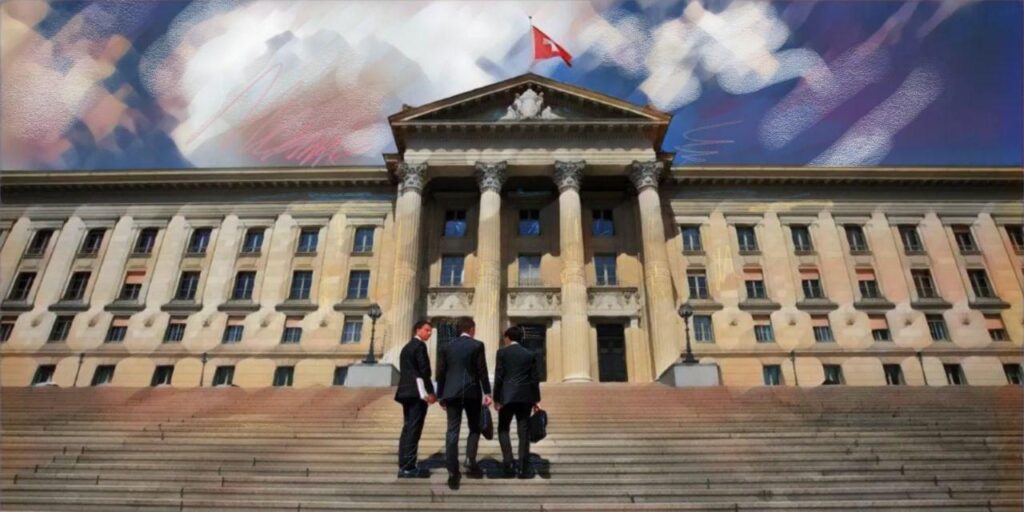
The legal landscape surrounding Kazakhstan’s energy sector has taken an unexpected turn. What began as a closed commercial arbitration dispute has now entered the public sphere in Switzerland’s courts. This marks a significant escalation in Astana’s confrontation with international oil and gas majors.

According to Bloomberg, PSA LLP, a structure representing Kazakhstan’s interests in production-sharing agreements (PSAs), has significantly broadened its claims. The lawsuit now directly targets alleged schemes involving units and executives of the Italian company Eni. Kazakhstan alleges that during the early development of Kashagan infrastructure, including the Bolashak processing plant and pipeline systems, corruption and fraud may have occurred.

Arbitration claims against the NCOC consortium, which includes Shell, ExxonMobil, TotalEnergies, and Eni, exceed $150 billion. Within this context, the Swiss case has become the most sensitive element. The Swiss case itself is much smaller – $15 million plus interest – and is being used to gather evidence and strengthen the larger arbitration case.

While the financial stakes are high, the proceedings reflect a deeper political shift. Kazakhstan is moving away from the 1990s model of offering investors exceptional privileges. Under President Kassym-Jomart Tokayev’s “Fair Kazakhstan” policy, the state is aiming to secure more balanced and equitable cooperation with foreign partners.

Distinctiveness of Swiss Proceedings

The Swiss case is distinctive due to the nature of its allegations. The plaintiffs claim that during the tenure of Agip KCO (an Eni subsidiary) as project operator, contracts were awarded amid corrupt practices. Allegations include inflated prices and kickbacks to contractors.

Targeting Eni is deliberate. The company led the project during its most troubled phase from 2001 to 2008. Kashagan’s budget swelled during this period, with repeated delays. Following a 2013 gas leak, production was halted for nearly three years. Kazakh officials have long linked Kashagan’s massive cost overruns and technical failures to poor procurement and mismanagement, and the current legal offensive zeroes in on alleged corrupt tenders. Cost estimates rose from a few tens of billions of dollars to around $60 billion, and by 2007, projections for total project costs had reached about $136 billion.

Why Switzerland?

The selection of the Swiss jurisdiction is strategic. Switzerland’s laws on corruption and financial crimes allow for the prosecution of both corporations and individual executives. Moreover, many entities connected to Kashagan’s operations are registered there.

Another factor is the PSA’s stabilization clause, which forbids altering the contract’s terms. However, under international legal norms, if corruption is proven in the contract’s formation, such protections can be voided. This opens the door for Kazakhstan to challenge key financial terms of the agreement.

Resource Nationalism 2.0: Legal Strategy Meets Political Logic

Astana’s current posture can be described as a form of “new-generation resource nationalism.” Rather than using administrative leverage, the state is deploying legal tools to address grievances. This is driven in part by Kazakhstan’s fiscal needs, ranging from infrastructure upgrades to social spending.

Amid these pressures, the vast expenditures reported by Kashagan operators have drawn public skepticism. Kazakhstan’s claims aim to re-evaluate the cost recovery model that enables companies to deduct expenses before profit-sharing begins. Should the Swiss court validate even part of the allegations, Astana would gain legal grounds to renegotiate the revenue-sharing framework.

The lawsuit of up to $160 billion represents not only a bid to recover historical losses but also an effort to replenish the National Fund, which has recently sustained significant setbacks.

Investors’ Perspective: Between Risk and Realpolitik

For international firms, the greatest risk may not be immediate divestment, but rather the suspension or deferral of future investments. The NCOC consortium is currently deliberating on Phase 2 of Kashagan’s development, yet legal uncertainties could delay approval. Shell CEO Wael Sawan has previously stressed capital discipline and shareholder value, which generally makes the company cautious about high-risk, high-uncertainty projects.

However, a wholesale exit by foreign investors appears unlikely. Kazakhstan remains one of the few major untapped hydrocarbon sources accessible to European markets, particularly amid sanctions-related shifts in energy flows from Russia. Moreover, companies have already invested tens of billions of dollars in Kashagan, making withdrawal economically prohibitive.

The Swiss litigation unfolds against a backdrop of evolving Eurasian energy dynamics. Kazakhstan has emerged as a key oil supplier to Germany and other EU states, replacing sanctioned Russian volumes. China, too, is monitoring developments closely; a potential weakening of Western firms could potentially create openings for CNPC and Sinopec.

For the EU, diminished influence at Kashagan carries strategic implications. It enhances Kazakhstan’s leverage as it pushes for more equitable terms.

Ultimately, the Swiss proceedings will test the maturity of Kazakhstan’s economic governance. The country is aiming to defend its national interests through legal avenues rather than political coercion. The outcome will indicate whether Kazakhstan can achieve a more just arrangement under existing international frameworks while preserving its appeal to long-term investors.

U.S. Treasury Blacklists Uzbek IT Firm Over Alleged Links to Russia’s Tech Sector

The U.S. Department of the Treasury’s Office of Foreign Assets Control (OFAC) has updated its Specially Designated Nationals and Blocked Persons (SDN) list, adding an Uzbekistan-based company over alleged ties to Russia’s technology sector.

The Tashkent-registered firm Datavice was designated for its alleged role in supporting Russia’s IT industry. According to OFAC, the company is involved in schemes connected to Russian cyber operations and efforts to help sanctioned entities evade U.S. restrictions. As a result, all Datavice assets under U.S. jurisdiction are frozen, and U.S. persons and businesses are barred from engaging in financial transactions with the company.

The updated SDN list also includes firms based in the United Kingdom, Serbia, and Russia. U.S. officials described the move as part of a broader package targeting entities believed to be aiding Moscow in circumventing international sanctions imposed following the invasion of Ukraine.

The blacklisting comes amid growing economic cooperation between Uzbekistan and the United States. On November 12, President Shavkat Mirziyoyev signed a decree establishing the Uzbekistan-U.S. Business and Investment Council. The council will be jointly chaired by senior officials from both countries and is expected to oversee major trade and investment initiatives.

The council’s goals include attracting foreign capital through a dedicated investment fund, with backing from the U.S. International Development Finance Corporation, the European Bank for Reconstruction and Development, and the Asian Development Bank.

Central Asian Countries Agree to Recognize Each Other’s University Degrees

The governments of Kazakhstan, Kyrgyzstan, Tajikistan, Turkmenistan, and Uzbekistan have officially agreed to mutually recognize higher education diplomas issued within the region. Kazakhstan approved the relevant draft on November 12, as documented in an intergovernmental agreement.

The initiative aims to create a unified educational space in Central Asia and eliminate barriers related to qualification recognition.

Under the agreement, all five countries will automatically recognize university diplomas that are legally valid, officially accredited, and issued by state higher education institutions in any of the participating countries.

Recognition will apply in three key areas:

  • Employment in another Central Asian country
  • Internships
  • Continuing education at the next academic level

However, qualifications must meet common higher education standards. Recognition may be denied only if substantial differences in the educational systems are identified.

The agreement outlines a clear implementation mechanism: each country will appoint a designated authority responsible for diploma recognition and notify the depositary, which will in turn inform the other signatories. If the structure or authority of the appointed body changes, the state is required to issue an immediate notification through diplomatic channels.

Despite agreeing on a shared framework, the countries still maintain varying standards for recognizing foreign university degrees.

Uzbekistan, Kyrgyzstan, Turkmenistan, and Tajikistan have agreed to recognize diplomas from universities in any participating country, provided those institutions are legally operating and issue officially recognized state diplomas.

Kazakhstan, however, has adopted stricter criteria. It will only recognize diplomas from regional universities that appear in the top 1,000 of the following international rankings:

  • Quacquarelli Symonds World University Rankings (QS)
  • Times Higher Education (THE)
  • Academic Ranking of World Universities (ARWU)

Diplomas from these universities will allow holders from participating countries to work, intern, or pursue further studies in Kazakhstan, subject to an application process.

The agreement is expected to ease the movement of skilled professionals within Central Asia and reduce bureaucratic barriers to regional academic and professional mobility.

Kazakhstan Government to Cut Social Spending

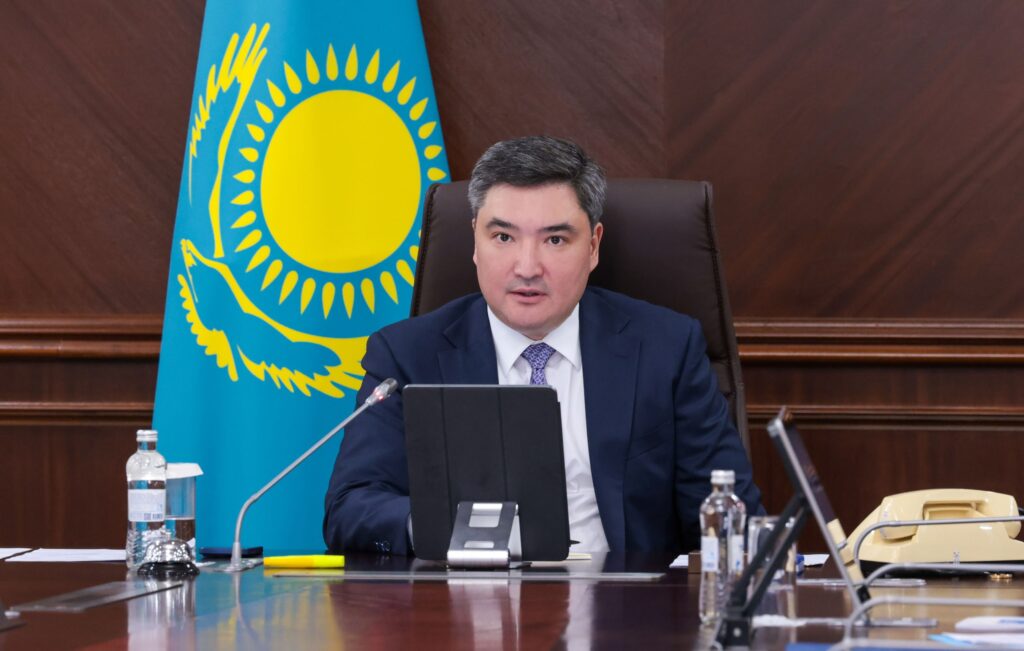
The Kazakh government plans to reduce budgetary spending on social support. Prime Minister Olzhas Bektenov told parliament that only citizens who are objectively unable to work will continue receiving state assistance.

According to the Cabinet of Ministers, approximately $16.9 billion was allocated to the social sector in 2024, representing 37.3% of total budget expenditures. Of that amount, $10.2 billion went toward social security and direct assistance to the population. In 2025, social spending is projected to rise to $18.4 billion, or 37.2% of the overall budget, with social payments continuing to represent a significant portion.

“The social sector places a very heavy burden on the budget: benefits, payments, and various support measures account for about 60% of the total budget. For many years, these expenditures exceeded 40% of the republican budget. When forming the budget for the next three years, we reduced them to 38%,” Bektenov said during his remarks in parliament.

He added that the government will continue its optimization efforts. Only citizens who are unable to work for objective reasons will qualify for state support, while those capable of working are expected to support themselves.

According to the Ministry of Labor and Social Protection, as of October 1, 2025, targeted social assistance (TSA) was being provided to 274,400 individuals from 51,000 families. The total amount disbursed thus far in 2025 was $47 million, out of a planned $190 million for the full year. TSA is distributed quarterly to low-income families, with employable recipients required to participate in state employment programs.

As previously reported by The Times of Central Asia, Deputy Prime Minister Serik Zhumangarin stated that the government would revisit the issue of increasing the minimum wage no earlier than 2027.

Food Conditions in the Turkmenistan Army Under Scrutiny

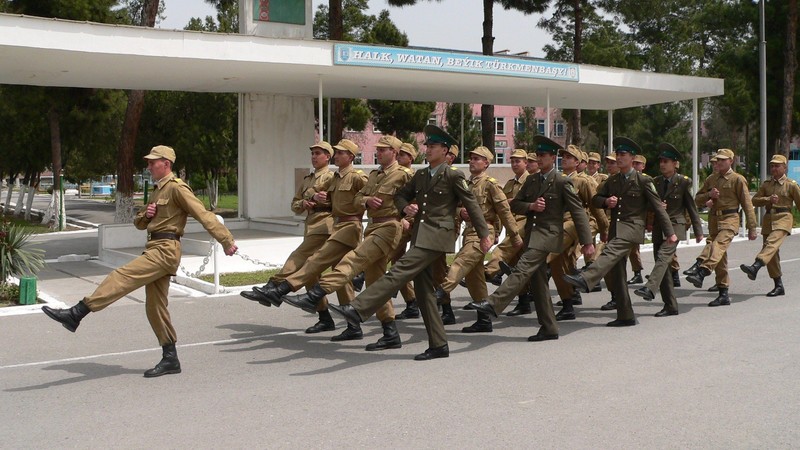
Conscripts returning from military service in Turkmenistan have reported severe food shortages, stark inequality between soldiers and officers, and institutional indifference. Against a backdrop of chronic malnutrition, instances of illness, interpersonal conflict, and even fatalities have been documented.

According to former soldiers, food rations in the Turkmen armed forces are grossly inadequate and fall far short of nutritional standards. Daily meals typically consist of boiled pumpkin, stewed cabbage, beets, and rice porridge for breakfast and dinner. Lunch includes a thin soup reportedly containing only “pieces of carrot” and little else.

Bread quality is a major concern. Flatbread made from locally sourced flour is often undercooked, forcing conscripts to eat it half-raw, leading to widespread gastrointestinal issues.

Meanwhile, soldiers from wealthier families reportedly fare much better. Their relatives send money, which conscripts use to pay canteen cooks for preferential treatment. These soldiers are served separately, receiving meat dishes, salads, fruit, soft drinks, and properly baked bread.

In some regions, such as the Balkan region, entrepreneurs have been officially allowed to open cafes near military checkpoints. There, soldiers can purchase rice, samsa, and other local dishes, funded either by family support or their own limited savings.

One tragic incident occurred this summer at a base in the Balkan region. A fight broke out outside the canteen when a soldier from a well-off family refused to share his meal. The altercation escalated, ending in the death of one private and a lengthy prison sentence for the other.

Discontent is also reportedly growing among officers. Despite earning relatively high salaries for the region, between $860 and $1,140 per month, many do not receive housing, forcing their families to pay substantial rents, which significantly reduces their disposable income.

Graduates of the Ministry of Defense’s Military Institute are required to serve a minimum of five years before becoming eligible for discharge. However, approval for resignation remains at the discretion of the command, and with ongoing personnel shortages, such requests are frequently denied.