• KGS/USD = 0.01144 0%
  • KZT/USD = 0.00213 0%
  • TJS/USD = 0.10456 0.19%
  • UZS/USD = 0.00008 0%
  • TMT/USD = 0.28490 0%
  • KGS/USD = 0.01144 0%
  • KZT/USD = 0.00213 0%
  • TJS/USD = 0.10456 0.19%
  • UZS/USD = 0.00008 0%
  • TMT/USD = 0.28490 0%
  • KGS/USD = 0.01144 0%
  • KZT/USD = 0.00213 0%
  • TJS/USD = 0.10456 0.19%
  • UZS/USD = 0.00008 0%
  • TMT/USD = 0.28490 0%
  • KGS/USD = 0.01144 0%
  • KZT/USD = 0.00213 0%
  • TJS/USD = 0.10456 0.19%
  • UZS/USD = 0.00008 0%
  • TMT/USD = 0.28490 0%
  • KGS/USD = 0.01144 0%
  • KZT/USD = 0.00213 0%
  • TJS/USD = 0.10456 0.19%
  • UZS/USD = 0.00008 0%
  • TMT/USD = 0.28490 0%
  • KGS/USD = 0.01144 0%
  • KZT/USD = 0.00213 0%
  • TJS/USD = 0.10456 0.19%
  • UZS/USD = 0.00008 0%
  • TMT/USD = 0.28490 0%
  • KGS/USD = 0.01144 0%
  • KZT/USD = 0.00213 0%
  • TJS/USD = 0.10456 0.19%
  • UZS/USD = 0.00008 0%
  • TMT/USD = 0.28490 0%
  • KGS/USD = 0.01144 0%
  • KZT/USD = 0.00213 0%
  • TJS/USD = 0.10456 0.19%
  • UZS/USD = 0.00008 0%
  • TMT/USD = 0.28490 0%

U.S. Backs Private Bid for Kazakhstan’s Tungsten

The United States is facilitating a private American bid by Cove Kaz Capital Group LLC for Kazakhstan’s Upper Kairakty and North Katpar tungsten deposits, in competition with state-backed Chinese bidders. Tungsten is not a rare earth element, but it is a critical raw material. In particular, it underpins armor-piercing ammunition, penetrators, and high-temperature tooling used across aerospace and industrial manufacturing. Reporting indicates direct engagement by senior U.S. officials and active coordination with Kazakhstan’s sovereign-wealth ecosystem.

The metal’s significance elevates the commercial negotiation into a strategic policy. The policy driver is diversification away from China’s dominance along the mine-to-powder supply chains. China accounts for well over four-fifths of global tungsten production and processing, and tightened export controls in 2025 have upset pricing and availability. The U.S. has established a procurement deadline of 2027 to avoid sourcing from China or Russia for covered defense uses. All this adds urgency to securing non-Chinese volumes. Kazakhstan’s revived tungsten sector includes a newly opened processing plant, with destinations not yet announced for the concentrate to be produced. The country thus offers a practical non-Chinese source of tungsten.

Strategic Stakes and Principal Actors

The American role would be one of facilitation and financing, rather than ownership. The administration has supported talks linking Cove Kaz to Kazakhstan’s Samruk-Kazyna and relevant mining entities. Commerce Secretary Howard Lutnick is mentioned as a key interlocutor. Potential financial tools include the U.S. International Development Finance Corporation (DFC) and the Export-Import Bank. Insurance (EXIM), guarantees, or direct loans from these institutions would offset pricing and risk advantages historically offered by Chinese bidders. The U.S. government’s approach is to enable a private operator to compete without placing federal equity as an asset.

Kazakhstan’s Samruk-Kazyna and its mining arm Tau-Ken Samruk coordinate with the national exploration company Qazgeology. Kazakhstan has pursued a wider critical-minerals investment agenda, signaling its openness to joint ventures and privatization pathways under a special legal regime that provides a familiar legal and compliance framework for Western partners. That structure streamlines licensing and dispute resolution and has already been used for joint ventures in other critical minerals projects.

China remains the current market leader, dominating tungsten mining, ammonium paratungstate (APT) conversion, and downstream powders and carbides. Beijing’s 2025 export controls cover tungsten, tightening an already narrow global market and raising the policy value of non-Chinese options. Reports of Chinese interest in Vietnam’s Nui Phao tungsten complex underscore that non-Chinese sources face active competition, framing Kazakhstan’s appeal to Western buyers.

The Assets and Kazakhstan’s Capacity Rebuild

Kazakhstan suspended tungsten production after the 1990s but has moved over the past several years to re-establish a mine-to-processing base, with corporate and ministerial communications emphasizing the strategic nature of these deposits for long-term development. Upper Kairakty (also rendered as Verkhneye or Upper Kayrakty) and North Katpar sit in the Karaganda Region and feature repeatedly in Samruk-linked materials as the top tungsten prospects. Upper Kairakty is by itself the world’s largest tungsten deposit, and represents over two-thirds of the total tungsten reserves across the ex-Soviet territories.

One report places combined reserves above 40,000 tons of tungsten at North Katpar and Upper Kairakty together, while other public commentary sometimes cites a multi-million-ton national endowment across numerous deposits. Estimates can vary depending on whether sources report ore tonnage or contained tungsten, which among different legitimate reporting standards they use, and what cut-off grade they assume.

Kazakhstan’s rebuilding of capacity on the processing side has been significant. In November 2024, the first tungsten processing plant in the Almaty Region was launched, implemented with Chinese partners. Government, trade-press, and regional outlets consistently describe design throughput of about 3.3 million tons of ore per year, producing a 65% concentrate at steady state. That facility creates domestic value-add and export options that were not present during the long post-Soviet hiatus.

Beyond tungsten, other projects are advancing. Signaling extends beyond tungsten. The Luxembourg-based Eurasian Resources Group, 40% owned by the Kazakhstan government with the remainder split evenly among the families of the three Kazakhstani founder-shareholders, plans to begin gallium production in 2026. This would add a non-Chinese source for a semiconductor input that has largely come from China. In practice, additional mineral projects make it easier to fund and run the transport links and services a tungsten mine needs.

Deal Mechanics, the 2027 Clock, and Financing Paths

The 2027 U.S. defense-sourcing deadline creates a practical cut-off for primes and suppliers. Every tungsten-bearing component will face tighter origin checks. As the date approaches, compliant, auditable supply gains value, and contracts tied to Chinese or Russian feedstock become less acceptable. Early, verifiable offtake from Kazakhstan would therefore carry both policy and price advantages in U.S. defense procurement.

Financing is the step that makes production and delivery possible. DFC and EXIM can supply political-risk insurance, direct loans, loan guarantees, and buyer credits that reduce the cost of capital and counter concessional terms from Chinese institutions. A structured package aligned with environmental and social safeguards can support mine development, processing, and dedicated transport, without U.S. public ownership. Properly arranged, such a stack can also accelerate project timelines to intersect with the 2027 window.

The near-term watchlist for project implementation includes definitive agreements with Samruk-Kazyna and Tau-Ken Samruk, pre-feasibility updates, and any non-binding documents outlining the key financial terms (hence technically called “term sheets”) and conditions of a potential loan or other financing arrangement. Term sheets typically set the groundwork for future, legally binding contracts, and indicate that a project has passed initial reviews and is moving toward final approval.

Precedent exists for how U.S. private capital can work with Kazakhstan’s state entities under the legal framework of the Astana International Financial Centre (AIFC), a special legal regime based on the law of England and Wales, including joint ventures in adjacent critical minerals domains. AIFC law includes regulations on company incorporation, corporate governance, intellectual property, and financial services that can shorten the learning curve for a tungsten joint venture and clarify dispute-resolution pathways. In a competitive tender against Chinese state-backed bidders, procedural speed and regulatory clarity can matter as much as headline price.

A Tungsten Pathway

If completed, a Cove Kaz-led development of Upper Kairakty and North Katpar would constitute a credible, scalable non-Chinese tungsten pathway in Central Eurasia. It would align U.S. diversification policy with Kazakhstan’s industrial strategy, connect to an emerging domestic processing base, and begin to shift allied tungsten procurement away from a single dominant source. The policy timing is tight but actionable if financing and governance align.

Risks are real and should be explicit. Resource and grade dispersion require additional work; capital intensity and operating inputs must be benchmarked against international peers; permitting and environmental review must be thorough; and Chinese commercial and diplomatic pushback should be assumed. Even so, the combination of processing capacity, policy alignment, and institutional financing tools gives this bid a foundation that earlier efforts lacked. The next twelve months will show whether this opportunity becomes signed agreements and pilot shipments in time to meet the 2027 constraint.

The lens of “strategic transactionalism” reveals that a Kazakhstan tungsten deal is not about new blocs or security guarantees. Rather, it is a practical bargain between sovereign actors to trade value for market access, finance, and predictability, without asking anyone to subordinate their identity or policies. This approach matches Washington’s current habit of favoring specified, commercial deliverables over open-ended commitments, and it suits Astana’s preference to diversify partners while keeping decisions at home. The U.S. role is that of a facilitator and buyer, not a garrison power.

Uzbek Militants Become Mediators in Syria Stand-Off

Brandishing assault rifles, the Uzbek fighters in Syria arrived ready to fight. They ended up helping to mediate an end to a confrontation between another group of militants and government security forces. 

Fighting broke out early last week when Syrian forces raided a stronghold of the Islamic militant group Fiqrat al-Ghuraba, whose leader, identified as Omar Diaby, is a French national of Senegalese origin. Authorities accused the group of kidnapping and other crimes, though some analysts say the government is under international pressure to rein in foreign fighters who helped oust former leader Bashar al-Assad last year but have resisted integration into the military of Syria’s new, relatively moderate leadership.

The confrontation erupted in the city of Harem in Idlib province in northern Syria. Ethnic Uzbek fighters deployed to the area, saying they were prepared to reinforce the so-called French jihadis. Uzbek combatants play a prominent role in two groups of foreign fighters in Syria that are known by the acronyms KIB and KTJ and retain ties to al-Qaida and the Taliban, according to a recent West Point analysis.

But the Syrian Observatory for Human Rights, which tracked the country’s long civil war, said an agreement to end the fighting was reached with the mediation of Uzbek fighters and members of the Turkistan Islamic Party, a mostly Uyghur extremist movement. As part of the deal, heavy weapons were to be withdrawn from the region and the mediators were “entrusted to track the fate” of Omar Diaby, according to the observatory. 

While the agreement resolved the local stand-off, it didn’t address the broader question of how the Syrian government will deal with the many foreign militants who joined the fight against al-Assad and remain, with their weapons, in the country. At least in the short term, the deal seemed to benefit the extremists who demonstrated leverage in their talks with authorities.

Foreign fighter groups had shared the same goal as Hayat Tahrir al-Sham, a group with al-Qaida roots that led the rebel push to overthrow al-Assad and whose leader, Ahmed al-Sharaa, is now trying to project an inclusive image as Syria’s president. 

The French-led extremists have accused Syrian authorities of collaborating with France to detain them and turn them over to French authorities. China, which is concerned about Uyghur militants, has also urged Syria’s transitional government to crack down on designated terror groups.

Kyrgyzstan Advances Digital Asset Strategy with Support from Binance

The second meeting of Kyrgyzstan’s National Council for the Development of Virtual Assets and Blockchain Technologies was held in Bishkek on October 24, with the participation of President Sadyr Japarov and Changpeng Zhao, founder of Binance, the world’s largest cryptocurrency exchange.

Following the meeting, Zhao, who serves as a public adviser to Japarov on digital asset development and is a member of the Council, announced on X that Kyrgyzstan’s national stablecoin, the KGST, has officially launched on @BNBChain. The KGST is pegged to the Kyrgyz som. Zhao also confirmed the creation of a National Cryptocurrency Reserve and the full localization of the Binance app for Kyrgyz-speaking users.

Japarov and Zhao previously met in May to discuss the digital future of Kyrgyzstan. Their agenda included developing a national digital asset ecosystem, integrating blockchain into public administration, and strengthening cybersecurity. Zhao pledged Binance’s support through training and expertise for specialists working on the country’s digital currency initiative.

As part of this collaboration, the National Council and Binance are preparing to launch an online educational platform in the Kyrgyz language, aimed at providing basic knowledge about virtual assets. The platform will be accessible to the general public.

During the Council meeting, Japarov underscored Kyrgyzstan’s pioneering role in the region, highlighting that the country has enacted legislation to regulate virtual assets and is actively pursuing a coherent government policy in the sector. He noted the national market is expanding, with an increasing number of licensed participants, a stronger regulatory framework, and new infrastructure projects emerging.

Japarov pointed to several national advantages, including a flexible institutional environment, a motivated and tech-savvy youth population, and the ongoing digitalization of public services, as key factors driving Kyrgyzstan’s ambition to become a regional hub for digital finance.

“The combination of these factors makes the goal of transforming the country into a regional hub for virtual assets realistic and achievable,” he stated.

Melis Turgunbaev, Chairman of the National Bank of Kyrgyzstan, announced that the digital som project has entered its practical implementation phase. The initiative aims to create a fully regulated blockchain-based payment system under the control of the National Bank, which will oversee the issuance and circulation of the digital currency.

Dinosaur Fossils Unearthed in Uzbekistan and Tajikistan Illuminate Central Asia’s Prehistoric Past

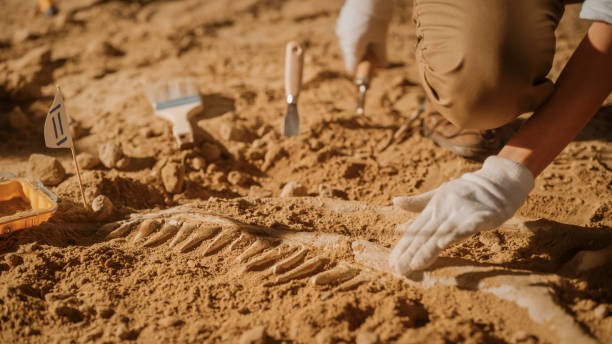
Rare dinosaur remains estimated to be around 75 million years old have been uncovered in Uzbekistan’s Karakalpakstan region, according to the State Geological Museum. The discovery adds to a growing body of paleontological evidence shedding light on Central Asia’s ancient ecosystems.

On October 12, Akhmadjon Akhmedshaev, Director of the State Geological Museum, visited the excavation site near the Khodzhakul foothills in the Sultan Uvays mountain range, where the “Uzbek Geologiya Qidiruv” expedition had uncovered fossilized dinosaur bones during a geological survey. Found at a depth of approximately three meters, the remains are believed to belong to a large dinosaur from the Cretaceous period, dating back roughly 65-75 million years. The fossils include fragments of vertebrae, ribs, and leg bones, all remarkably well preserved.

Scientists believe the find could offer valuable insights into the types of dinosaurs that once inhabited what is now western Uzbekistan. The region is thought to have been a humid, coastal environment during the late Cretaceous. The fossils are currently undergoing analysis at the State Geological Museum to determine their species and any potential connections to previously identified dinosaurs from Central Asia.

Meanwhile, paleontologists from St. Petersburg State University have announced a second significant find, this time in Tajikistan. Researchers uncovered a well-preserved fragment of a duck-billed dinosaur skull. According to spbdnevnik.ru, the fossil’s exceptional condition may enable scientists to accurately identify the species and potentially describe a new genus. Comparative analysis is now underway with fossil collections from other countries to trace its evolutionary lineage.

Poverty in Central Asia: Who Is Living and Who Is Just Surviving

A new analysis by Ranking.kz reveals that Kazakhstan currently has the most favorable poverty indicators among Central Asian countries, while Tajikistan records the highest levels of deprivation. The findings also reflect significant shifts in global poverty estimates following a revision of the World Bank’s methodology.

According to Our World in Data, by 2024, the global number of people living in extreme poverty had risen to 817 million, an increase of 125 million compared to previous figures. However, this jump does not signal worsening global conditions. Instead, it stems from a change in measurement criteria. In June 2024, the World Bank raised the international poverty line from $2.15 to $3 per day in purchasing power parity (PPP), based on 2021 prices. This methodological update expanded the scope of people counted as poor, even as real incomes among the poorest rose by approximately 16%.

Sub-Saharan Africa continues to bear the brunt of global poverty. Of the 30 countries with the highest poverty rates, 24 are located on the continent. In Central Asia, Tajikistan ranks as the region’s poorest nation, with 61.3% of its population living on less than $3 per day. In contrast, the poverty rate stands at just 2.74% in Kyrgyzstan, 2.72% in Uzbekistan, and 1.93% in Armenia. Kazakhstan reports the region’s lowest rate of extreme poverty; just 0.04% of the population lives below the international threshold. Data for Turkmenistan is not available.

According to Kazakhstan’s National Statistics Bureau, the share of citizens earning less than the cost of the basic food basket declined from 0.2% in 2023 to 0.1% in 2024. For the first time, the gap between urban and rural poverty disappeared; previously, rural areas had higher rates. In absolute terms, 16,500 people lived below the food minimum in the first quarter of 2025.

The proportion of the population earning less than the national subsistence minimum also decreased, falling from 5.2% in 2023 to 5% in 2024. The breakdown shows 3.8% in cities and 6.9% in villages. The total number of people below the subsistence minimum dropped to 1 million. As of early 2025, the figure had improved further to 4.5%, with the minimum raised to 52,500 tenge (approximately $98) per capita.

In terms of daily consumption, Kazakhstani citizens spent an average of $7 per day in 2024. Based on World Bank data, the international dollar was equivalent to 160.93 tenge, reflecting the amount needed in Kazakhstan to purchase a comparable basket of goods and services to that of $1 in the United States.

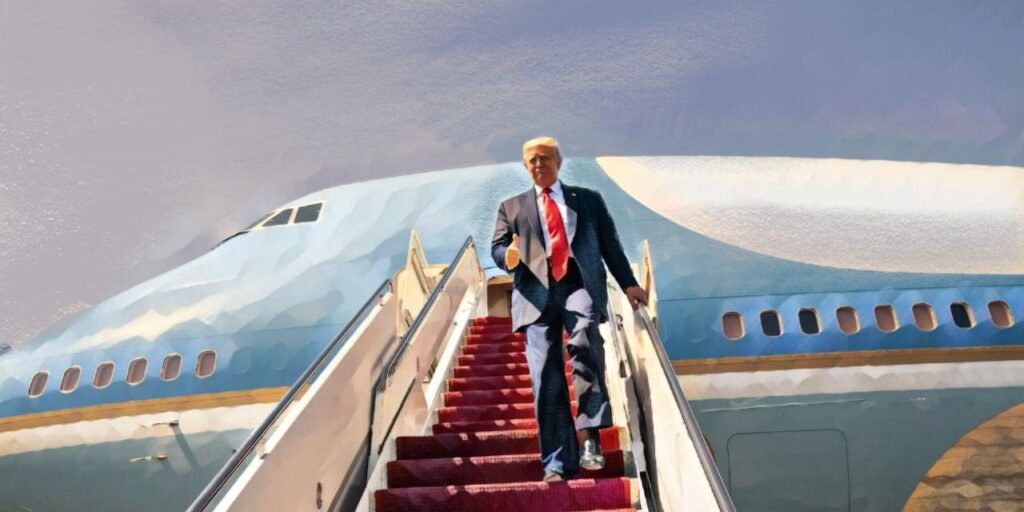
Trump to Host U.S.-Central Asia Summit on November 6

Kazakhstan’s presidency says a Central Asia–United States summit will be held in Washington on November 6.

President Kassym-Jomart Tokayev sent a letter to U.S. President Donald Trump to thank him for the invitation to participate in the summit on that date in the U.S. capital, Tokayev’s press office said on Sunday.

President Tokayev regarded the initiative of the American leader as both timely and important, the office said. “The Head of State also noted that he shares the key principles of President Trump’s domestic and foreign policy, in particular the advocacy of traditional values based on common sense, as well as dedication to safeguarding peace and security.”

The summit would mark the tenth anniversary of the C5+1 diplomatic forum, which includes the United States and the five Central Asian countries of Kazakhstan, Kyrgyzstan, Tajikistan, Turkmenistan, and Uzbekistan.

Citing unidentified sources in Uzbekistan’s presidential administration, Gazeta, a media outlet in Uzbekistan, confirmed the summit plan, saying Uzbek President Shavkat Mirziyoyev was among the Central Asian leaders who had received invitations from Trump to attend the November 6 meeting in Washington. Kyrgyz media have also reported that President Sadyr Japarov will attend the C5+1. According to Azattyq, the invitation was extended to all five Central Asia leaders.

The announcement of the summit coincides with a visit to Kazakhstan and Uzbekistan by Sergio Gor, U.S. Special Envoy for South and Central Asia, and Deputy Secretary of State Christopher Landau.

Trump met Tokayev and Uzbek President Shavkat Mirziyoyev on the sidelines of the U.N. General Assembly last month. Multi-billion-dollar business deals were announced in connection with those meetings.

The U.S. president is currently on an Asia tour during which he is expected to meet Chinese President Xi Jinping to discuss trade tensions. A summit with Central Asian leaders could potentially help the U.S. counter the influence of Russia and China in that region.

In an Oct. 20 letter, a U.S. congressional foreign affairs panel urged Trump to host a summit with Central Asian leaders before the end of the year. It noted U.S. interests such as the development of critical minerals, including tungsten, antimony, lithium, and rare earth elements; the full repeal of the Jackson-Vanik amendment, a Cold War-era law that imposes some restrictions on trade with several countries in Central Asia; and counterterrorism efforts against the regional branch of the Islamic State group.