• KGS/USD = 0.01144 0%
  • KZT/USD = 0.00193 -0%
  • TJS/USD = 0.10866 0.55%
  • UZS/USD = 0.00008 0%
  • TMT/USD = 0.28490 0%
  • KGS/USD = 0.01144 0%
  • KZT/USD = 0.00193 -0%
  • TJS/USD = 0.10866 0.55%
  • UZS/USD = 0.00008 0%
  • TMT/USD = 0.28490 0%
  • KGS/USD = 0.01144 0%
  • KZT/USD = 0.00193 -0%
  • TJS/USD = 0.10866 0.55%
  • UZS/USD = 0.00008 0%
  • TMT/USD = 0.28490 0%
  • KGS/USD = 0.01144 0%
  • KZT/USD = 0.00193 -0%
  • TJS/USD = 0.10866 0.55%
  • UZS/USD = 0.00008 0%
  • TMT/USD = 0.28490 0%
  • KGS/USD = 0.01144 0%
  • KZT/USD = 0.00193 -0%
  • TJS/USD = 0.10866 0.55%
  • UZS/USD = 0.00008 0%
  • TMT/USD = 0.28490 0%
  • KGS/USD = 0.01144 0%
  • KZT/USD = 0.00193 -0%
  • TJS/USD = 0.10866 0.55%
  • UZS/USD = 0.00008 0%
  • TMT/USD = 0.28490 0%
  • KGS/USD = 0.01144 0%
  • KZT/USD = 0.00193 -0%
  • TJS/USD = 0.10866 0.55%
  • UZS/USD = 0.00008 0%
  • TMT/USD = 0.28490 0%
  • KGS/USD = 0.01144 0%
  • KZT/USD = 0.00193 -0%
  • TJS/USD = 0.10866 0.55%
  • UZS/USD = 0.00008 0%
  • TMT/USD = 0.28490 0%
10 December 2025

Uzbekistan Raises Concerns Over Mistreatment of Citizens During Russian Raids

Uzbekistan has expressed serious concern over the reported mistreatment of its citizens during recent police raids in Russia.

On June 10, Uzbekistan’s Ministry of Foreign Affairs held a scheduled meeting with Russian officials to discuss migration issues. A ministry spokesperson stated that the Uzbek side raised alarm over reports of disrespectful and aggressive behavior toward its nationals during identity checks.

“In several instances, our citizens have faced unauthorized inspections and mistreatment,” the ministry said. “Such actions do not correspond to the friendly relations between our countries. We believe that concrete measures must be taken to prevent such incidents.”

The ministry emphasized that safeguarding the rights and interests of Uzbek citizens abroad remains a priority. It urged Russian authorities to treat migrants with dignity and adhere to international human rights standards.

The concerns follow a large-scale raid on June 8 in Moscow’s Strogino district, where Russian law enforcement reportedly targeted a dormitory housing migrants from other Eurasian countries. The building is located near a facility belonging to the Russian Defense Ministry, according to the Russian Telegram channel Baza.

During the operation, members of OMON, Russia’s special police forces under the National Guard, were seen using excessive force. Videos, some filmed by the officers themselves, show migrants being forcibly removed from their rooms, insulted, beaten, and in some instances, shocked with electric devices. The nationalities of those affected have not been confirmed.

In a separate incident in St. Petersburg, approximately 200 individuals were reportedly left to sleep outdoors overnight following a similar raid.

In response to these events, the Uzbek embassy in Moscow submitted an official note to the Russian Ministry of Foreign Affairs, requesting an explanation and a legal assessment of the law enforcement actions. The embassy described the incidents as unacceptable and called on Russian authorities to uphold the dignity of Uzbek nationals.

Uzbekistan’s Migration Agency also issued a statement affirming it was closely monitoring the situation. It confirmed that five or six individuals with documentation issues had been detained for further investigation.

The Foreign Ministry said it would continue to track developments and take further action if necessary.

Uzbek authorities have encouraged citizens affected by these events to contact their nearest consulate or the Migration Agency’s office in Russia.

A British Scholar’s Glimpse into Kazakh Life a Century Ago

A century ago, in 1925, British historian, writer, and revolutionary Ralph Fox published People of the Steppes, a compelling account of his travels offering rare insights into the life and culture of the Kazakh people. Fox (1900–1936) was no ordinary observer. A journalist, Marxist, and author of biographies on Lenin and Genghis Khan, he traveled through Soviet Central Asia in the early 1920s and spent his final years working at the Marx-Engels Institute in Moscow, where he wrote his last major tome.

In the foreword to People of the Steppes, Fox states that his aim was not political propaganda but to record what he had witnessed. His observations, written as he journeyed through the steppe from the Orenburg region to the Aral Sea, provide a vivid portrait of nomadic life.
As the train carried him across Turkestan, Fox was struck by the sights outside his window: “For the first time I see, through the train windows, the round black tents of the nomads, shaped like broad beehives, and I whisper to myself that under just such a tent was Chingiz Khan born… Sometimes there passes a family on the march, the elders and children perched above their household goods on the beautiful shaggy Bactrian camels, the youths on horseback, small, sturdy ponies. It is all strange to me and I feel a beauty of slowness and order in their movements, the eternal rhythm of a wandering shepherd’s life.”

Fox shortly visited a nomadic camp, recording his impressions in the sub-section “The Tents of the Kazakhs”.

“We sat on some empty crates and watched the hens scutter across the floor,” he wrote, “while his wife, a quiet, kindly woman, brought us a bowl of Kummis (Mare’s milk) to drink.”

The hospitality of the Kazakhs left a lasting impression: “ They roused me when the meal was ready. ‘The Kazaks, men and women, sat round the pot in the dim tent, for smoke filled all the upper part now, and the sun had set. Brown arms were thrust into the mess, or painted wooden spoons, while we dainty whites were given wooden bowls. ‘The meat was tough and greasy, and to me only the little cakes of dough were palatable, though they were gritty with sand, so I did not eat much… It was all fantastic around that evil-smelling fire.”

The next day, Fox encountered a group of Lesser Horde Kazakhs migrating from Siberia along the Syr Darya River. He noted that some had already settled in Torgai, while others aimed to reach the Urals. “ Once there, they would willingly sell off their surplus stock to buy their necessities on the bazaars to last them through the following year, at Kazalinsk, at Jussali, at Perovsk and ‘Turkestan, the great bazaars of the Syr Daria.”

Fox also explored the broader historical and cultural context of the Kazakhs, noting that their nomadic lifestyle limited the development of written literature but fostered rich oral traditions and epic poetry: “It is hard to unravel their history from songs and legends, and the very nature of their nomadic life has perforce prevented the making of more certain records.”

Perhaps most striking is Fox’s clarity in using the correct national name instead of the commonly misused “Kirghiz Kazak,” a misnomer often repeated by Western writers of the time. Fox explicitly states that the “Kirghiz Kazaks have no connection with them and no right at all to the name Kirghiz. Nor do they themselves use it, but speak of their nation as Kazaks only, and so they are known by all the peoples of Asia.”

This detail is highly significant. At the time of Fox’s writing, the name “Kazakh” had only recently been officially restored in 1923, replacing years of historical misnaming. That Fox recognized this signals his careful attention to facts and respect for cultural identity.

Fox also wrote about Kazakh customs, including the baibishe-tokal (senior and junior wives) tradition, the people’s devotion to Islam, and the impact of Bolshevik policies on traditional life. His reflections end with a haunting question: “So for months we knew and loved the people… What will become of them and their steppe? Are they doomed to a sordid extinction like the [natives] of America? Or does the future still hold for them some fate not altogether unworthy of their past?”

Fox’s century-old observations remain a valuable window into the life, culture, and historical self-awareness of the Kazakh people. In our modern age, as we reclaim and re-examine our past, his account deserves renewed attention.

Lenin Falls in Osh: Central Asia Redefines Its Soviet Legacy

The recent removal of a towering 23-meter-tall monument to Vladimir Lenin in Osh, Kyrgyzstan, has ignited heated debate both domestically and abroad. While many are surprised the monument remained in place for more than three decades after the fall of the Soviet Union, its dismantling is part of a broader regional trend of de-Sovietization, a complex process involving the renaming of cities, removal of Soviet-era symbols, and the reassertion of national identity across Central Asia.

A Symbol Removed, A Debate Ignited

Lenin Monument in Osh, October 2024; image: TCA, Jonathan Campion

On June 7, Osh authorities dismantled what was once the tallest Lenin statue in Central Asia. Originally installed in 1975, the monument is to be relocated to a city park, according to the local government. Officials stressed the move was intended to improve the city’s architectural landscape, not to make a political statement, and have warned against “politicizing” the issue.

Despite official reassurances, the move has sparked sharp reactions on social media and in the press, with Russian media outlets characterizing the relocation as an anti-Russian gesture. Generational divides have become apparent: younger residents tend to support the removal, while older citizens have expressed dismay over what they see as the erasure of history.

“It’s a shame. It was more than a monument, it was part of our lives,” Elena, a local schoolteacher told The Times of Central Asia. “We joke that Lenin crossed the ‘red line’ and got demolished.”

Irina Bayramukova, a 68-year-old public figure, called the decision a mistake.

“The Lenin monument by Nikolai Tomsky was not only artistically significant, it represented an era. Removing it is like declaring war on those who identify with that past,” she told TCA.

Kyrgyzstan, like other Central Asian republics, has been distancing itself from its Soviet legacy since gaining independence in 1991. One of the earliest symbolic moves was the renaming of the capital, once called Frunze after a Bolshevik military leader, back to Bishkek, a modified version of its pre-Soviet name.

A Museum to Mikhail Frunze still stands in Bishkek, where the thatched-roof hut of his boyhood was purportedly transported brick by brick. A supporter of Stalin’s rival Zinoviev, when forced to undergo routine surgery by Uncle Joe in 1925, Frunze “mysteriously” died of chloroform anesthetic poisoning.

Redefining History

Lenin Monument in Bishkek; image: TCA, Stephen M. Bland

Originally erected in 1984 in the Central Square of Bishkek, a Lenin statue was relocated behind the State Historical Museum in 2003. As previously reported by TCA, earlier this year a debate on removing the monument altogether flared up.

In 2022, the National Historical Museum of the Kyrgyz Republic in Bishkek finally reopened its doors after being closed in 2016 for renovations which were planned to take less than a year but ended up taking six years. Several government officials were charged with misappropriating funds designated for the renovations, with former Prime Minister Sapar Isakov sentenced to 18 years in prison. Reportedly, over 307 million Som ($3.8 million) were stolen from the project.

The reopened museum, however, has seen most of the Soviet-era displays removed, including the section dedicated to the history of the Bolshevik Revolution, and statues of Lenin and Marx. The murals on the roof, which included an image of an American skeleton wearing a cowboy hat while riding a nuclear bomb are also gone, with the museum now focusing on Kyrgyz traditional pre-Soviet culture.
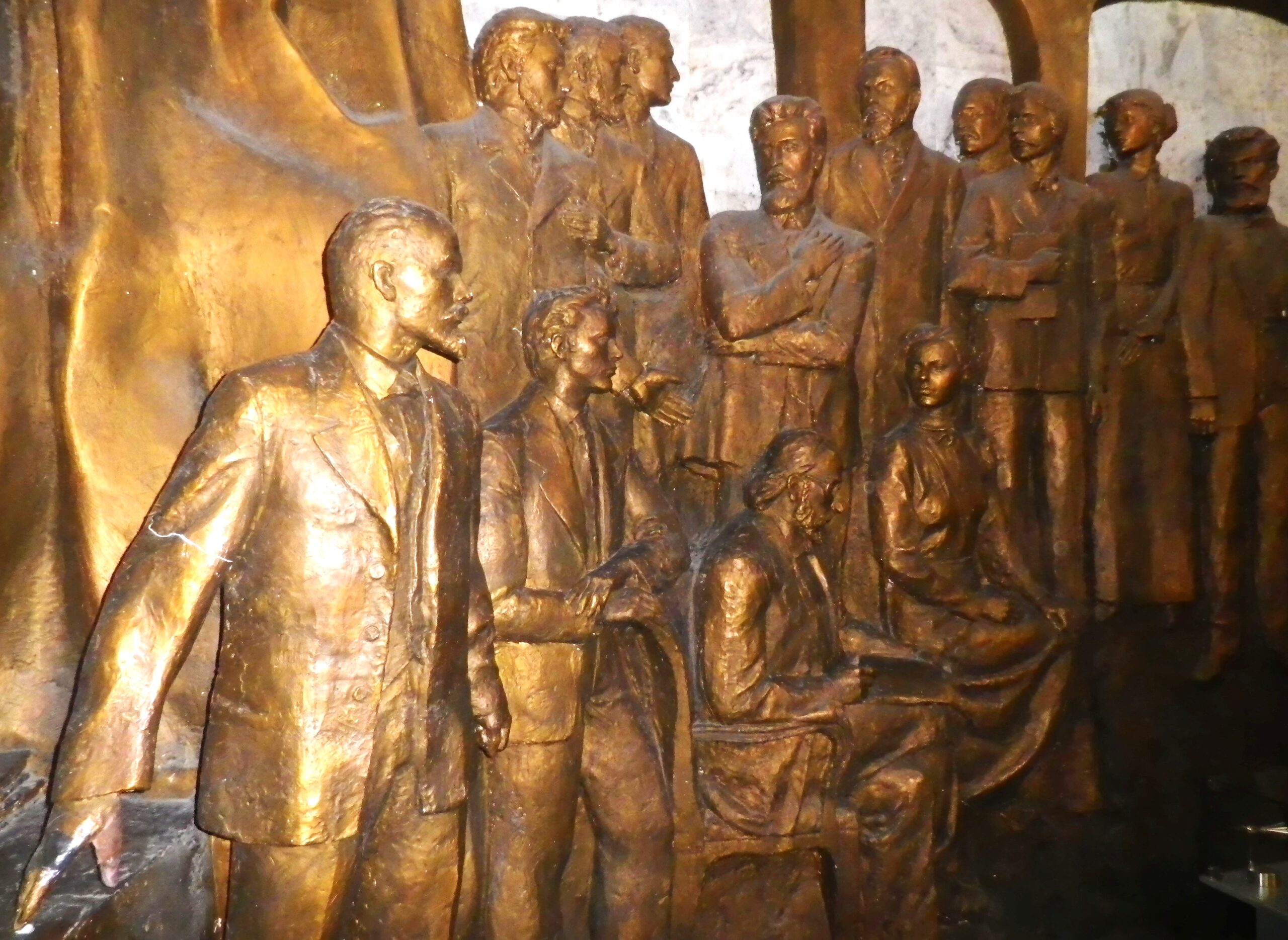
Bishkek National Historical Museum, 2015 – Lenin with arm glued and fingers masking taped back on; image: TCA, Stephen M. Bland

Parallels and Precedents

Supporters of the relocation of the Lenin statue in Osh point to similar developments within Russia itself, where numerous monuments to Soviet leaders have been removed from public squares and relocated to parks or peripheral areas. Major Russian cities have also shed their Soviet names, with Leningrad reverting to St. Petersburg, Sverdlovsk to Yekaterinburg, Gorky to Nizhny Novgorod, and Kuibyshev to Samara.

Kazakhstan was among the first in the region to systematically relocate Soviet monuments to designated parks and squares. Cities like Almaty, Astana, and Atyrau host clusters of statues depicting Lenin, Kirov, Kalinin, and Maxim Gorky, often near playgrounds and amusement areas. While the statues may appear somber and out of place, they have become fixtures for public interaction and informal education. 

Kazakhstan has also been a frontrunner in renaming cities. Since the 1990s, dozens of towns have reverted to their pre-Soviet or Kazakh names: Shevchenko became Aktau, Guryev became Atyrau, and Semipalatinsk became Semey. Even the Ural River is now often referred to as the Zhayik within Kazakhstan’s borders.

The country’s capital, meanwhile, has changed its name six times, earning it a spot in the Guinness Book of Records. From Akmolinsk to Tselinograd, Akmola, Astana, Nur-Sultan, and back again to Astana, the city’s evolving identity mirrors Kazakhstan’s shifting national narrative. 

Proposals to rename cities such as Petropavlovsk and Pavlodar have provoked strong public debate, underscoring the tensions that can accompany such symbolic changes.

Remembering History or Rewriting It?

Uzbekistan has seen its own controversies over the treatment of Soviet-era monuments. Russian media outlets have been particularly vocal in criticizing the demolition of monuments honoring World War II heroes. Nevertheless, President Shavkat Mirziyoyev has overseen the restoration of several key memorials, including those commemorating Sabir Rakhimov, a Soviet war hero, and the Shammahmudov family, known for sheltering evacuated children during the war. 

One reason cities in Uzbekistan have retained their historical names is their antiquity. Cities such as Tashkent, Samarkand, Bukhara, Khiva, and Kokand, many of which are over 1,500 years old, were left with their original monikers, even by the Soviets.

Tajikistan, meanwhile, has taken a more definitive approach. The last major Lenin monument was removed in 2016 in the south of the country. In the capital, Dushanbe, Lenin’s statue was replaced in 1999 by one of Ismail Samani, the 10th-century founder of the first Tajik state. 
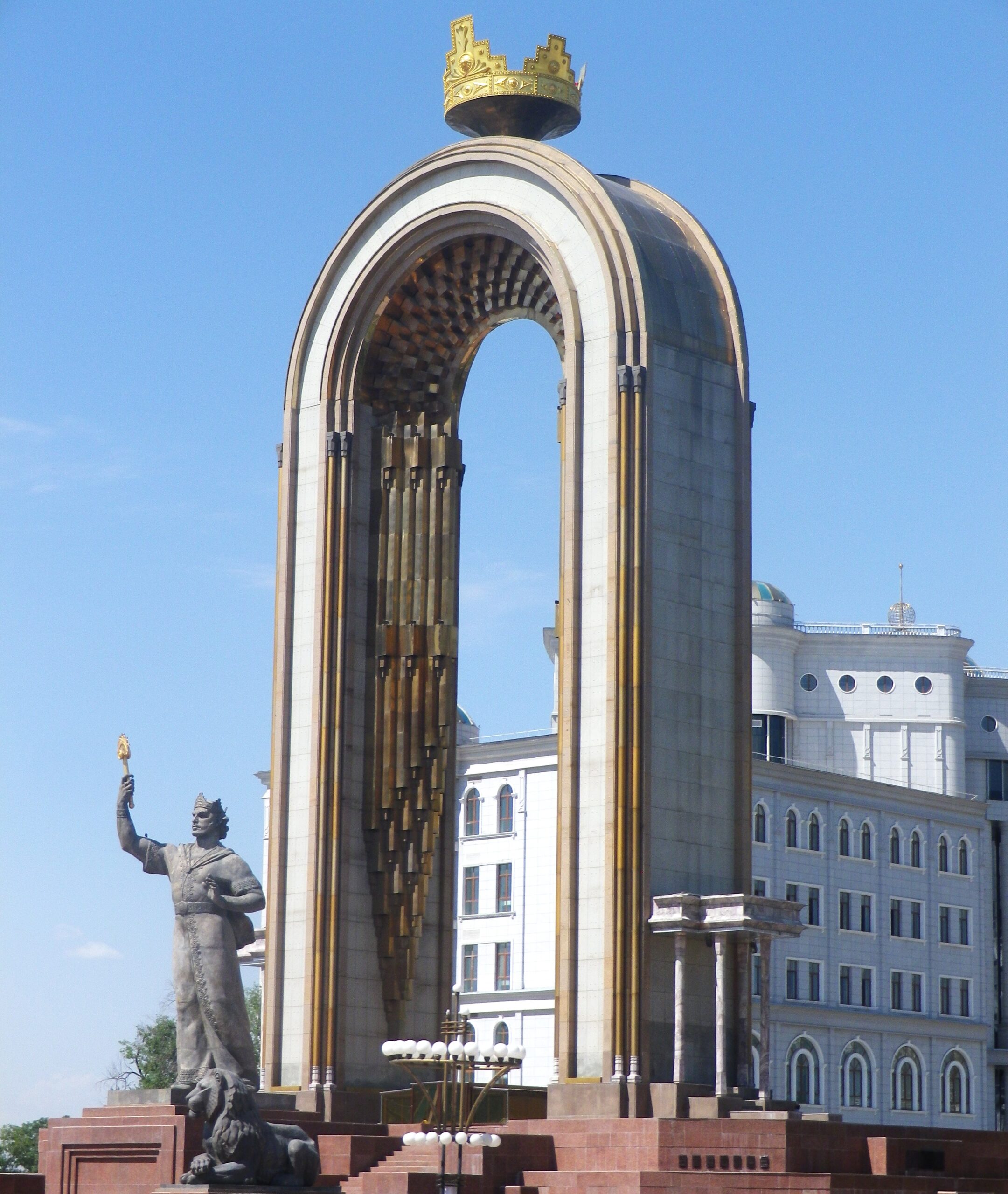
The Samani Monument in Dushanbe, Tajikistan, replaced a statue of Lenin in 1999; image: TCA, Stephen M. Bland

Several city names have changed since independence. Kalininabad became Sarband and then Levakand, whilst Chkalovsk was renamed Buston in 2016. Perhaps most notably, Leninabad reverted to its ancient name, Khujand, a city believed by some historians to be the site of Alexandria Eschata, founded by Alexander the Great. 

In Turkmenistan, a Lenin monument in Ashgabat once stood atop a pedestal styled after traditional Turkmen carpets. Though it remained in place until relatively recently, it too has since been removed. 

The “Breadwinner”

Soviet sculptors once called Lenin the “breadwinner,” because designing such monuments was well paid, though only those deemed the most “worthy” – members of the Union of Artists who had won state awards – were commissioned.  There are approximately 7,000 Lenin statues still standing globally, compared to 15,000 in 1991. At the dawn of its independence in 1991, Ukraine was home to 5,500. Three-hundred and fifty are said to remain, largely in occupied Crimea, Donetsk, Luhansk, and the Chornobyl Exclusion Zone.

Lenin monument in Chornobyl; image: TCA, Stephen M. Bland

As of 2021, 341 Lenin statues had been demolished in Kazakhstan since independence. It is unknown how many still stand in Central Asia.

What Comes Next?

The dismantling of Soviet monuments and renaming of cities across Central Asia reflects a broader effort to redefine national identities in the post-Soviet era. While many view these changes as long overdue, others see them as cultural erasure or politically charged acts that risk alienating segments of society.

Whether these efforts lead to cultural rejuvenation or social division remains to be seen. What is clear is that the legacy of the Soviet Union continues to cast a long shadow, and in Central Asia, history is not easily consigned to the past.

Central Asian Glaciers Shrinking Irreversibly, Expert Warns

Glaciers in Central Asia are melting at an alarming rate with no signs of recovery, according to Tohir Majitov, head of the Uzbek public organization “Suvchi,” in an interview with Kazinform.

Majitov highlighted the escalating pressure on water supplies due to population growth and agricultural expansion across the region. “In 1991, Central Asia had nearly 6 million hectares of irrigated land. By 2024, this figure has grown to over 10 million hectares. The population has also increased from around 45 million to more than 80 million. Water supply for this growing population is now a serious issue,” he explained.

He noted that Uzbekistan and Kazakhstan heavily depend on the Syr Darya and Amu Darya rivers, which originate in the mountainous regions of Kyrgyzstan and Tajikistan. A critical challenge arises from the differing water needs: upstream countries store water during summer for hydropower generation in autumn and winter, while downstream nations like Kazakhstan and Uzbekistan require substantial water primarily during the summer growing season.

Majitov issued a stark warning about the region’s largest glacier, Tajikistan’s Fedchenko Glacier, which has reportedly lost over 40% of its mass. “Between 1990 and 2005, the glacier shrank by 50 meters,” he stated. “Its length is 77 kilometers, width 2.4 kilometers, and depth reaches one kilometer. Glaciers in Kyrgyzstan have also lost over 30% of their mass.”

To tackle these pressing water challenges, Majitov proposed the formation of a regional body. “We suggest creating an Aral Sea Committee to improve water management and ensure food security. It may take several years, but all Central Asian countries should take part,” he urged. He believes that efficient water use could enable the region to expand irrigated land by 2-3 million hectares, potentially feeding up to 100 million people.

Previously, The Times of Central Asia reported concerns from other experts on the region’s water crisis. A fundamental conflict exists between upstream countries, like Kyrgyzstan and Tajikistan, which have water but need to release it in winter for electricity generation, and downstream countries, such as Uzbekistan and Turkmenistan, that require that water in summer for agricultural purposes.

What was once primarily a technical concern has now evolved into a complex regional problem, exacerbated by climate change. Nations are increasingly constructing dams, engaging in disputes over water allocation, and experiencing a decline in mutual trust. The future stability of Central Asia may hinge on its capacity to effectively manage this escalating water crisis.

Kazakhstan Inaugurates Major Container Hub at Aktau Port

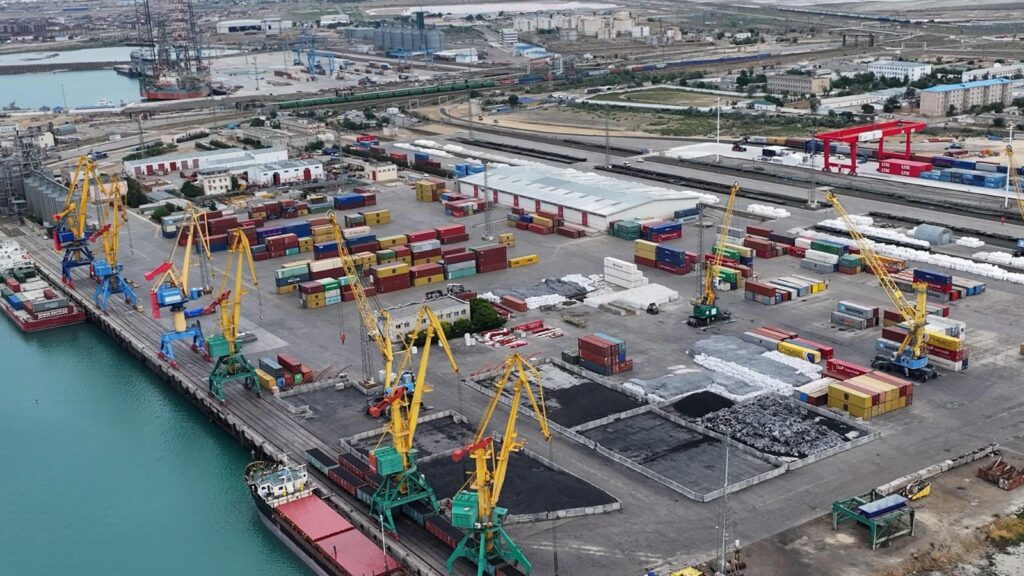
On June 9, Kazakhstan officially launched the largest container hub on the Caspian Sea, situated within its Aktau port. 

The project, spearheaded by Kazakhstan’s national railway company, Kazakhstan Temir Zholy (KTZ), was implemented in collaboration with China’s Lianyungang port and the Aktau International Sea Trade Port. China Communications Construction Company, a prominent Chinese state corporation specializing in transport infrastructure, served as the general contractor.

During the opening ceremony, Nurlan Zhakupov, Chairman of the Board of the National Welfare Fund Samruk-Kazyna, highlighted the joint efforts of Samruk-Kazyna and KTZ in advancing Kazakhstan’s transit and transport potential, a key strategic objective for the nation. “Over the 10 years of KTZ’s partnership with the port of Lianyungang, the Kazakh-Chinese terminal in Lianyungang, the Khorgos Gateway Dry Port, and now the container hub in Aktau have been opened. This project is an important step in the development of transport and logistics in Kazakhstan,” he stated.

The newly inaugurated hub is expected to significantly accelerate the processing of containerized cargo, enhance transit capabilities, and reinforce Kazakhstan’s pivotal role as a strategic link on both the East-West and North-South transport routes.

The operational launch of the hub was marked by the arrival of the 100,000th container from China, transported via the Trans-Caspian International Transport Route (TITR), a rapidly expanding trade corridor connecting China and Europe through Kazakhstan.

Kyrgyz Government Urges Foreign Citizens to Legalize Their Status Ahead of Deadline

Over 12,000 foreign citizens are currently employed in Kyrgyzstan, according to Jumabek Myrzabayev, head of the Migration Department at the Ministry of Labor, Social Security and Migration, who shared this information with Birinchi Radio. 

Foreign nationals are primarily engaged in the construction, light industry, manufacturing, trade, and services sectors. The majority of work permits have been issued to citizens from China, Bangladesh, India, Pakistan, Turkey, and Uzbekistan.

For 2025, Kyrgyzstan has set a foreign labor force quota of 25,000 individuals.

The Kyrgyz government has provided a short window for foreign citizens who have violated the country’s migration laws to legalize their stay. This amnesty, which concludes today, June 10, 2025, applies to individuals with expired visas or residence permits, those without valid documents confirming legal stay, and those who have breached their purpose of entry or transit rules. 

Authorities have warned that after today’s deadline, foreign citizens remaining in Kyrgyzstan illegally will face deportation.

Myrzabayev reported that more than 3,000 applications have been submitted by foreigners seeking to regularize their status in Kyrgyzstan.