• KGS/USD = 0.01144 0%
  • KZT/USD = 0.00213 0%
  • TJS/USD = 0.10699 0%
  • UZS/USD = 0.00008 0%
  • TMT/USD = 0.28571 0%
  • KGS/USD = 0.01144 0%
  • KZT/USD = 0.00213 0%
  • TJS/USD = 0.10699 0%
  • UZS/USD = 0.00008 0%
  • TMT/USD = 0.28571 0%
  • KGS/USD = 0.01144 0%
  • KZT/USD = 0.00213 0%
  • TJS/USD = 0.10699 0%
  • UZS/USD = 0.00008 0%
  • TMT/USD = 0.28571 0%
  • KGS/USD = 0.01144 0%
  • KZT/USD = 0.00213 0%
  • TJS/USD = 0.10699 0%
  • UZS/USD = 0.00008 0%
  • TMT/USD = 0.28571 0%
  • KGS/USD = 0.01144 0%
  • KZT/USD = 0.00213 0%
  • TJS/USD = 0.10699 0%
  • UZS/USD = 0.00008 0%
  • TMT/USD = 0.28571 0%
  • KGS/USD = 0.01144 0%
  • KZT/USD = 0.00213 0%
  • TJS/USD = 0.10699 0%
  • UZS/USD = 0.00008 0%
  • TMT/USD = 0.28571 0%
  • KGS/USD = 0.01144 0%
  • KZT/USD = 0.00213 0%
  • TJS/USD = 0.10699 0%
  • UZS/USD = 0.00008 0%
  • TMT/USD = 0.28571 0%
  • KGS/USD = 0.01144 0%
  • KZT/USD = 0.00213 0%
  • TJS/USD = 0.10699 0%
  • UZS/USD = 0.00008 0%
  • TMT/USD = 0.28571 0%

Fuel Prices Surge in Tajikistan Amid Middle East Conflict

Fuel prices at gas stations in Dushanbe have risen sharply since early March, increasing on average by 8-9%. The increase has been driven by domestic factors as well as adverse developments in the global energy market.

The most widely used AI-92 gasoline has risen in price from $1.05 to $1.13 per liter. Diesel has followed a similar trend, increasing from $1.14 to $1.24 per liter. Prices for liquefied petroleum gas (LPG) have risen more modestly, by about 6%, to $0.62 per liter. Prices also vary by location, with drivers noting that fuel in central Dushanbe is traditionally more expensive than in outlying areas.

Suppliers attribute the increases to higher prices from producers, but the situation largely depends on external supply chains. Russia remains the primary source of petroleum products for Tajikistan. In 2025, the country imported more than 1.2 million tonnes of fuel and LPG from Russia, accounting for over 70% of total imports. Supplies also come from Kazakhstan, Uzbekistan, and Turkmenistan, though their share is significantly smaller.

According to official statistics, Tajikistan imported more than 325,000 metric tons of petroleum products in the first quarter of this year, valued at over $251 million, or approximately $772 per metric ton. Compared with the same period last year, import volumes increased by 11.4%, while their total value rose by 8.6%.

Experts say external factors are the main driver of rising prices. They point to international media reports that the conflict involving the United States, Israel, and Iran has triggered a chain reaction in the fuel market, affecting the supply chain from crude oil to refining and retail prices. A key factor has been disruption in the Strait of Hormuz, through which roughly 20% of global oil supplies pass.

At the same time, price trends have varied significantly across countries. Al Jazeera reported that fuel prices rose by nearly 70% in Cambodia, 50% in Vietnam, 35% in Nigeria, 33% in Laos, and 28% in Canada.

In Central Asia, however, price increases have been more moderate, ranging from 2% to 5% in March and April. In Uzbekistan and Turkmenistan, prices have remained largely stable, which analysts attribute to pricing policies by Russian producers and the availability of domestic fuel supplies.

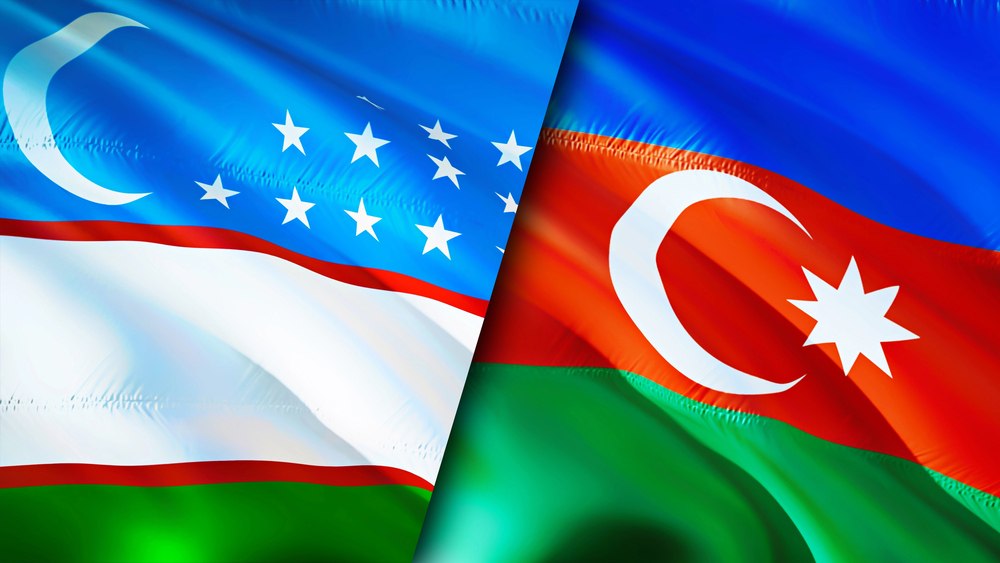
Uzbekistan and Azerbaijan Plan New Parks in Tashkent and Baku

Uzbekistan and Azerbaijan have agreed to establish new public parks in each other’s capitals as part of broader efforts to expand bilateral cooperation, Uzbekistan’s Ministry of Investment, Industry and Trade has reported.

The announcement followed an official visit to Azerbaijan from April 22 to 24 by a delegation led by Minister Laziz Kudratov. During the trip, talks were held with Azerbaijan’s Ministry of Economy and senior executives from major companies on joint projects and future cooperation.

According to the ministry, both sides identified several priority areas, including mining, construction materials, transport and logistics, urban planning, agriculture, and pharmaceuticals. Particular attention was given to plans to create an “Uzbekistan” park in Baku and an “Azerbaijan” park in Tashkent, alongside expanding pharmaceutical retail networks and developing fruit and vegetable processing projects.

Trade between the two countries has been growing steadily. In 2025, bilateral trade turnover reached $307.3 million, marking a 14.6% increase compared to the previous year, the ministry said.

The Times of Central Asia previously reported that trade rose by 25% in 2024, while the number of joint ventures approached 300, with a combined project portfolio valued at around $4 billion. The two countries have set a target of increasing annual trade and investment to $1 billion by 2030, supported by a comprehensive cooperation program covering sectors such as industry, infrastructure, agriculture, healthcare, tourism, and banking.

Progress has also been noted in transport and energy cooperation. Both sides highlighted growing cargo volumes along the Trans-Caspian International Transport Route, also known as the Middle Corridor. Uzbek shipments along the route increased by 25% in 2024, exceeding one million tonnes, aided by the introduction of a new electronic permit system.

Turkmenistan to Pay WWII Veterans Around $10, Far Below Regional Levels

Payments to World War II veterans ahead of Victory Day continue to vary significantly across Central Asia, with Turkmenistan offering one of the lowest levels of support in the region.

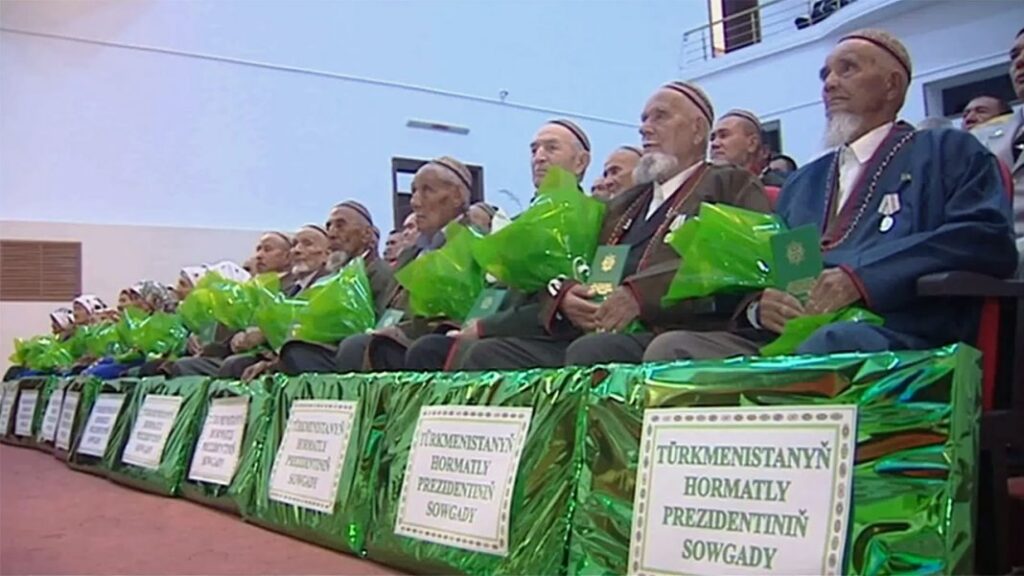
At a government meeting on April 24, President Serdar Berdimuhamedov, discussing traditional commemorative events for May 9, instructed officials to organize the distribution of commemorative gifts to veterans and women who worked on the home front during the war.

A cash payment is also expected. According to available information, as in previous years, it may amount to 200 manats, approximately $57 at the official exchange rate or about $10 at the unofficial rate. The latter figure is more commonly used for cross-country comparisons.

Against this backdrop, support levels in neighboring countries appear significantly higher.

In Kyrgyzstan, veterans are set to receive a one-time payment of around $2,300.

In Uzbekistan, payments will amount to approximately $2,400.

Kazakhstan offers the highest payments in the region, with veterans set to receive about $10,500 each.

Final figures for Tajikistan have not yet been announced, although last year veterans received around 4,810 somoni (approximately $440-$480, depending on the exchange rate).

Technology and Investment: What Kazakhstan Stands to Gain from Its Middle East Outreach

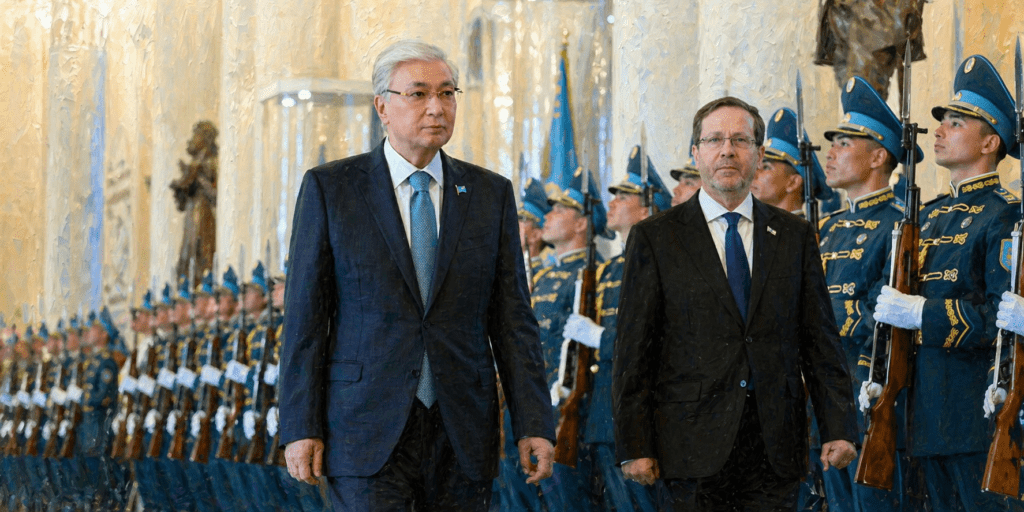
The ongoing escalation in the Middle East, with Iran at its epicenter, appears to be accelerating economic rapprochement between countries in the region and Central Asia. Kazakhstan’s diplomacy has emerged as a key driver of this process. In recent days, Kazakhstan’s foreign minister has visited several Gulf states, while Israeli President Isaac Herzog arrived in Astana on April 27 for an official visit.

Kazakhstan’s Foreign Minister Yermek Kosherbayev has visited the United Arab Emirates and Qatar. In the UAE, he delivered a written message from Kassym-Jomart Tokayev to President Sheikh Mohammed bin Zayed Al Nahyan on bilateral relations, and held talks with Deputy Prime Minister and Minister of Foreign Affairs Sheikh Abdullah bin Zayed Al Nahyan.

The sides discussed the consequences of Iranian missile strikes on the UAE and other countries, as well as their impact on international shipping security, energy supply, the global economy, and regional stability. Kosherbayev reaffirmed Kazakhstan’s support for the UAE in taking measures to protect its sovereignty, territorial integrity, and the safety of citizens and residents. Senior UAE officials responsible for energy and sustainable development also participated in the meeting.

In Qatar, the minister met with Prime Minister and Foreign Minister Sheikh Mohammed bin Abdulrahman Al Thani. Discussions focused on investment cooperation, with both sides emphasizing the importance of implementing joint projects in priority sectors such as energy, telecommunications, digital technologies, agriculture, and transport and logistics.

Regional escalation was also addressed, with Kosherbayev reiterating that President Tokayev’s proposal to host peace negotiations in Turkestan remains in place.

While in Qatar, the minister also met with the leadership of Power International Holding and Milaha. Talks with Power International Holding Chairman Moutaz Al-Khayyat focused on cooperation in gas processing, natural gas transportation, and electricity generation.

Transport and transit issues were central to discussions with Milaha CEO Fahad Saad Al-Qahtani. The parties explored opportunities to develop multimodal transport and expand access to port infrastructure, which could significantly increase cargo transit through Kazakhstan’s Caspian ports.

Kazakhstan’s engagement with Middle Eastern countries is increasingly reciprocal. Representatives from the region are also visiting Astana. Recently, Oman’s Deputy Prime Minister for Economic Affairs, Sayyid Theyazin bin Haitham Al Said, visited Kazakhstan.

President Tokayev, who received him, expressed support for the people of Oman during the current period of regional instability. According to the presidential press service, the sides discussed expanding trade and economic cooperation, with a focus on energy, metallurgy, transport and logistics, agriculture, and digitalization. They also emphasized the importance of strengthening cultural and humanitarian ties.

At the conclusion of the meeting, Tokayev awarded Theyazin bin Haitham Al Said the Order of Dostyk (Friendship), First Class, for his contribution to strengthening bilateral cooperation.

Kazakhstan and Oman currently maintain a joint portfolio of five major investment projects worth $3 billion. Two projects worth $1.1 billion, covering energy and railway transport, have already been implemented, while additional projects in ore processing are under development.

The following day, in the presence of Olzhas Bektenov, Samruk-Kazyna and the Oman Investment Authority signed a Heads of Terms agreement on investment cooperation. The document provides for the implementation of projects in priority sectors, including industry, energy, healthcare, logistics, and mining, with investments directed toward both existing assets and new projects in Kazakhstan and Oman.

Astana is now hosting President Isaac Herzog, which is expected to continue the intensified dialogue that began last year with the visit of Knesset Speaker Amir Ohana. In January 2026, Israeli Foreign Minister Gideon Sa’ar visited Astana for the first time in 16 years. During that visit, the sides held the 12th round of political consultations and organized a business forum in B2B and B2G formats, laying the groundwork for new joint projects.

Experts note that Kazakhstan currently enjoys a positive perception in Israel in light of recent political decisions by its leadership.

“In Israel, Kazakhstan’s active and constructive position is generally viewed positively, particularly its willingness to engage in broader conflict-resolution formats, including possible alignment with the logic of the Abraham Accords. There is also recognition of Kazakhstan’s initiatives to participate in international mechanisms aimed at stabilizing the situation in Gaza,” said Israeli political analyst Yuri Bocharov.

Kazakhstan’s growing focus on the Middle East and its efforts to deepen cooperation with Arab states and Israel reflect not only geopolitical positioning but also a clear economic rationale. Sustained improvements in living standards depend on a steady inflow of foreign investment and advanced technologies both of which Gulf states and Israel can provide.

Kazakhstan Looks to Armenia for a Future Middle Corridor Branch

Kazakhstan’s deepening engagement with Armenia has made TRIPP, part of the Armenia–Azerbaijan peace formula, a practical question for the Middle Corridor. The Armenia–U.S. implementation framework published in January presents the Trump Route for International Peace and Prosperity (TRIPP) as a project for unimpeded, multimodal transit connectivity on Armenian territory. The means for its realization remain under discussion.

TRIPP has thus become relevant to Kazakhstan, even though Astana is not a direct party to the prospective Armenia–Azerbaijan settlement. Recent Kazakhstani diplomacy with Baku and Tbilisi has confirmed that the existing Azerbaijan–Georgia route remains the operative western channel of the Middle Corridor. A route through Armenia would not replace the Azerbaijan–Georgia line; it would widen the Middle Corridor’s western options. If constructed, it would link the main body of Azerbaijan with Nakhchivan and open new transit opportunities from Central Asia and the Caspian to Europe.

Astana Brings Yerevan into the Route System

Armenian Prime Minister Nikol Pashinyan visited Astana in November 2025. His talks with President Kassym-Jomart Tokayev emphasized economic sectors, including trade, infrastructure, transport, agriculture, and air transport, together with humanitarian sectors such as education and culture. The official Armenian account also recorded the leaders’ interest in unblocking regional communications, importing wheat from Kazakhstan to Armenia by rail, and bringing TRIPP to life. Tokayev described the first shipment of Kazakhstani wheat reaching Armenia through Azerbaijan as having both political and economic significance. The cargo moved along existing lines, through Russia, Azerbaijan, and Georgia. Astana’s April 2026 Regional Ecological Summit showed the same regional widening from another angle: it brought Armenia, Azerbaijan, and Georgia into a forum that connected environmental pressure with economic security and regional cooperation.

The Kazakhstan–Armenia agenda has since become more specific. Foreign Minister Yermek Kosherbayev visited Yerevan as part of an official delegation earlier this month. Kosherbayev’s presence gave the visit added weight, bringing recent cabinet experience and a record on politically sensitive regional issues rather than merely protocol standing. His talks with Foreign Minister Ararat Mirzoyan on April 8 extended the discussion to a broader institutional basis, including the bilateral Intergovernmental Commission and the Kazakhstan–Armenia Business Council. The two parties agreed that transit and logistics interconnectivity create new opportunities for market integration between Central Asia and the South Caucasus. The talks did more than raise the bilateral profile. They brought Armenia closer to the network already carrying Kazakhstan’s westbound trade.

Regional connectivity received more detailed treatment on April 9, when Kosherbayev met with Pashinyan to discuss transport, transit, and trade within the 2026–2030 Roadmap for Trade and Economic Cooperation. Kosherbayev also reaffirmed Kazakhstan’s interest in long-term agricultural exports, especially grain and meat, and informed the Armenian side about measures to establish regular direct air connections. These meetings showed Astana and Yerevan moving toward the same practical premise: Armenia may become part of the wider route system.

TRIPP Becomes a Middle Corridor Question

Azerbaijan has completed infrastructure up to the Armenian border, but TRIPP has not yet begun construction through Armenia itself. It remains tied to the Armenia–Azerbaijan peace process and to U.S. sponsorship. The January implementation framework says its success depends on further institutionalization of peace between Armenia and Azerbaijan, progress toward Armenia–Turkey normalization, and regional stability. It is also framed to respect sovereignty, territorial integrity, and jurisdiction. TRIPP therefore requires political consent and effective state capacity before it can become a transport fact.

For Kazakhstan, the question is whether the Middle Corridor can gain another workable western route. The Trans-Caspian chain running through Azerbaijan and Georgia remains Astana’s current South Caucasus route to Europe. A multimodal route through Azerbaijan, Armenia, Nakhchivan, and Turkey toward European markets would give the Middle Corridor a second western branch. That would supplement the existing route, not displace it. Kazakhstan’s interest is in adding another workable path through the South Caucasus.

Tokayev made the connection explicit. The official Armenian account of Pashinyan’s November 2025 visit to Astana recorded the two leaders’ interest in bringing TRIPP to life. Tokayev also acknowledged the possibility of integrating Armenia’s Crossroads of Peace initiative, which is more circuitous and more exposed to security problems than TRIPP, with the Trans-Caspian International Transport Route (TITR, Middle Corridor) linking China, Kazakhstan, the Caspian Sea, Azerbaijan, Georgia, and Europe. Crossroads of Peace is more complicated and less immediately workable than TRIPP, but Tokayev was still pointing to the same transport problem. A future TRIPP route would more readily add capacity, redundancy, and political flexibility to the existing westbound system.

The Railway Constraint

The status of Armenia’s railway system, including repair and reconstruction of its segment through southern Armenia, is perhaps the most nettlesome operational constraint. What is at issue is not ownership of the national railway network per se, but the operating concession held through Russian Railways. South Caucasus Railway, a subsidiary of Russian Railways, has operated Armenia’s railway system under a 30-year concession agreement signed in 2008 that could be extended afterward. Armenian railways thus remain under a structure that ties access, management, and political consent to Moscow.

Pashinyan has floated the possibility that the concession could be transferred to a third country friendly to both Armenia and Russia. Reports have named Kazakhstan, the United Arab Emirates, and Qatar. At the same time, he has signaled that Armenia would not discuss the matter behind Russia’s back or act against Russia. Kazakhstan has officially denied that negotiations are underway for Kazakhstan Temir Zholy to acquire Russia’s concession management of Armenia’s railways. The same report also noted the statement by Russia’s transport minister that Moscow was not negotiating the transfer of the concession management to Kazakhstan.

The denials set the present constraint, but they do not remove the concession from the route question. Russian-language reporting shows why easy progress on the matter is unlikely. Sputnik Armenia has reported a Russian Security Council estimate that any potential buyer would need at least $250 million for rights and compensation, plus additional costs. Such an official Russian figure shows that Moscow views the matter as a serious political and economic issue. Even if the precise numbers are disputed, costs and legal claims would still have to be addressed, together with indirect geopolitical resistance.

A Western Branch Still Taking Shape

The railway issue with Armenia, therefore, concerns the operating concession held through Russian Railways rather than an imminent acquisition of the network by Astana. TRIPP’s significance for Central Asia will depend in part on whether this constraint can be loosened. Promoting reconstruction of the relevant Armenian rail segment would be an ideal contribution for the European Union, but Brussels has shown little interest in the prospect. Kazakhstan’s moves do not prove that the Armenian route will work. They do confirm that Astana is now treating Armenia as a route worth testing.

Europe also has a western opening through Georgia’s Black Sea interface; yet that opening, too, has drawn limited European attention. A 2023 World Bank study pointed toward Georgia’s two commercial ports, Poti and Batumi, distinguishing them from the marine oil terminals at Supsa and Kulevi. The point is sharper because the EU’s November 2025 Georgia report notes that Georgia’s investment agreement with a Chinese consortium for the development of a new deep-water port at Anaklia has been stalled for several years. Georgia’s wider port system is another potential western outlet for Caspian and Central Asian trade.

Kazakhstan’s testing of the Armenian route exposes the larger problem. The Middle Corridor is not yet a fully diversified system of reliable branches; its western options are developing unevenly. Kazakhstan is moving where practical openings appear. It has already moved through Baku and Tbilisi, where the route works. It is now looking toward Yerevan, where TRIPP may add a second branch, while rail governance and outside support still lag behind the route idea.

Opinion: Expect China to take its 2+2 diplomacy to Central Asia

China does not do military alliances. Its declared posture is one of non-interference in other nations’ internal affairs. Yet Beijing has long understood that commercial ties alone cannot anchor strategic relationships; only security partnerships can.

China’s recent experiments with 2+2 security dialogues – bringing together foreign and defense ministers – signal that it is seeking to move beyond an economics-first approach. The most likely next candidates for this format are Kazakhstan, Kyrgyzstan and Tajikistan, all of which share borders with China.

For Central Asian governments, a 2+2 with China may hold appeal, particularly as they seek to manage instability spilling over from Afghanistan at a time when Russia’s security role is being strained by its war in Ukraine. After years of hoping that engagement could stabilize Afghanistan, Central Asian states have largely shifted to a policy of containment – seeking to insulate themselves from cross-border militant threats, narcotics flows and refugee movements rather than attempting to reshape Afghanistan’s internal trajectory.

For Beijing, the objective would be to consolidate partnerships across the Eurasian heartland – an outcome Washington would prefer to counter. China shares Central Asia’s risk-management approach toward Afghanistan. Like its neighbors, Beijing has little appetite for deep involvement inside the country itself, focusing instead on preventing instability from spilling northward toward Xinjiang or disrupting Belt and Road corridors that run through the region. A 2+2 format offers China a way to institutionalize security coordination without violating its long-standing aversion to formal alliances.

Last week, Chinese Foreign Minister Wang Yi and Defense Minister Dong Jun traveled to Phnom Penh to hold China’s first-ever 2+2 dialogue with Cambodia.

Wang told reporters that China is willing to develop the mechanism into a “strategic platform” for enhancing political and defense security cooperation. He described it as a key instrument for cementing mutual assistance and solidarity, and for advancing the construction of a China-Cambodia “community with a shared future.”

Wang also said China was prepared to work with Cambodia to build an “Asian security model” based on shared security and on seeking common ground while reserving differences.

China’s deepening security engagement with Cambodia comes as the Southeast Asian nation remains locked in a border dispute with Thailand. Although Wang’s itinerary took him next to Bangkok, Beijing chose to hold a 2+2 only with Cambodia – notably the non-U.S. ally in this pairing.

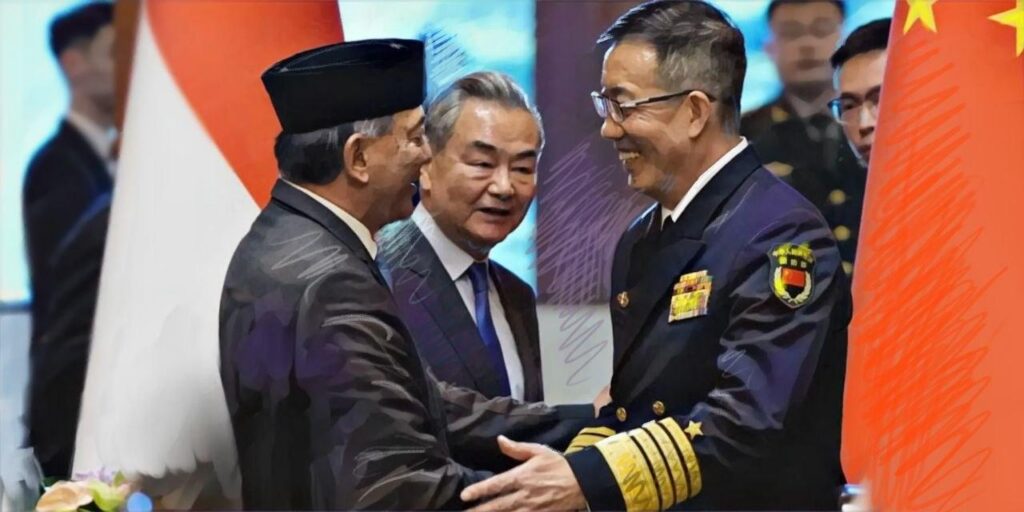
China is new to the 2+2 format. Last April, Beijing hosted its first ever 2+2 with a foreign country – with Indonesia.

The trajectory suggests further 2+2 engagements ahead, including Kazakhstan, Kyrgyzstan and Tajikistan – the three Central Asian states that border China. In several aspects, Central Asia may be a more conducive environment for this diplomacy than Southeast Asia: there are no maritime disputes, and the countries are not embedded in U.S. alliance structures. Instead, there is a convergence around defensive security priorities – particularly border control and crisis management linked to Afghanistan – making the 2+2 format a natural fit.

China under President Xi Jinping has always had an eye on deepening security ties with its western neighbors.

One of the most significant foreign-policy shifts Xi made after becoming top leader in 2012 was to elevate relations with neighboring countries to China’s top diplomatic priority. Previously, “major-country diplomacy” had dominated, under which Beijing focused on learning from advanced powers while biding its time and building national strength.

The first phase of Xi’s neighborhood policy was to build what Beijing calls “a community of shared interests and mutual benefit.” The idea was to link surrounding countries through railroads, pipelines and trade corridors so that China’s economic rise would also lift its neighbors. This was the logic behind the Belt and Road Initiative.

A second, less openly discussed phase was China’s ambition to eventually provide security assurances to neighboring states. Chinese strategists have long argued that economic interdependence alone cannot sustain strategic alignment. Beijing has viewed the roughly 70 treaty and non-treaty alliances the United States enjoyed as one of the main pillars of American power.

China has had only North Korea as a near-equivalent partner. A true great power must have partners that depend on it for protection, the thinking goes.

Scholars have pointed to China’s Central Asian neighbors – Kazakhstan, Kyrgyzstan and Tajikistan – as well as Southeast Asian partners such as Myanmar, Cambodia, Laos, and South Asian countries including Pakistan, Sri Lanka, Bangladesh and Nepal.

China may offer to help Central Asia stabilize its southern frontier – a move that would anchor its influence across Eurasia.

For many years, this security dimension remained largely aspirational. Now, shifting regional realities – including the failure to stabilize Afghanistan and Russia’s reduced capacity to act as Central Asia’s sole security guarantor – are creating space for new external players. And the appearance of the 2+2 format now suggests that Beijing may be moving into the second stage of its Eurasian neighborhood strategy.

The 2+2 dialogue is a format the United States has long used to signal strategic alignment with allies and partners. Washington holds ministerial-level 2+2 meetings with Japan, South Korea, Australia, the Philippines and India, as well as lower-level dialogues with Indonesia and Thailand, among others.

The talks are extensive. The U.S.-Japan 2+2 held in the summer of 2024, during the Biden administration, produced a 10-page joint statement reaffirming both sides’ commitment to uphold a free and open international order based on the rule of law.

Discussions included establishing joint command and control functions, strengthening Japan’s missile capabilities, expanding joint operations in Japan’s Southwest Islands – a stone’s throw from Taiwan – and co-production of defense equipment.


The views expressed in this article are those of the author and do not necessarily reflect the official policy or position of the publication, its affiliates, or any other organizations mentioned.