• KGS/USD = 0.01144 0%
  • KZT/USD = 0.00211 0%
  • TJS/USD = 0.10460 0.19%
  • UZS/USD = 0.00008 0%
  • TMT/USD = 0.28490 0%
  • KGS/USD = 0.01144 0%
  • KZT/USD = 0.00211 0%
  • TJS/USD = 0.10460 0.19%
  • UZS/USD = 0.00008 0%
  • TMT/USD = 0.28490 0%
  • KGS/USD = 0.01144 0%
  • KZT/USD = 0.00211 0%
  • TJS/USD = 0.10460 0.19%
  • UZS/USD = 0.00008 0%
  • TMT/USD = 0.28490 0%
  • KGS/USD = 0.01144 0%
  • KZT/USD = 0.00211 0%
  • TJS/USD = 0.10460 0.19%
  • UZS/USD = 0.00008 0%
  • TMT/USD = 0.28490 0%
  • KGS/USD = 0.01144 0%
  • KZT/USD = 0.00211 0%
  • TJS/USD = 0.10460 0.19%
  • UZS/USD = 0.00008 0%
  • TMT/USD = 0.28490 0%
  • KGS/USD = 0.01144 0%
  • KZT/USD = 0.00211 0%
  • TJS/USD = 0.10460 0.19%
  • UZS/USD = 0.00008 0%
  • TMT/USD = 0.28490 0%
  • KGS/USD = 0.01144 0%
  • KZT/USD = 0.00211 0%
  • TJS/USD = 0.10460 0.19%
  • UZS/USD = 0.00008 0%
  • TMT/USD = 0.28490 0%
  • KGS/USD = 0.01144 0%
  • KZT/USD = 0.00211 0%
  • TJS/USD = 0.10460 0.19%
  • UZS/USD = 0.00008 0%
  • TMT/USD = 0.28490 0%

Kyrgyzstan Advances Construction of Ala-Too All-Season Ski Cluster

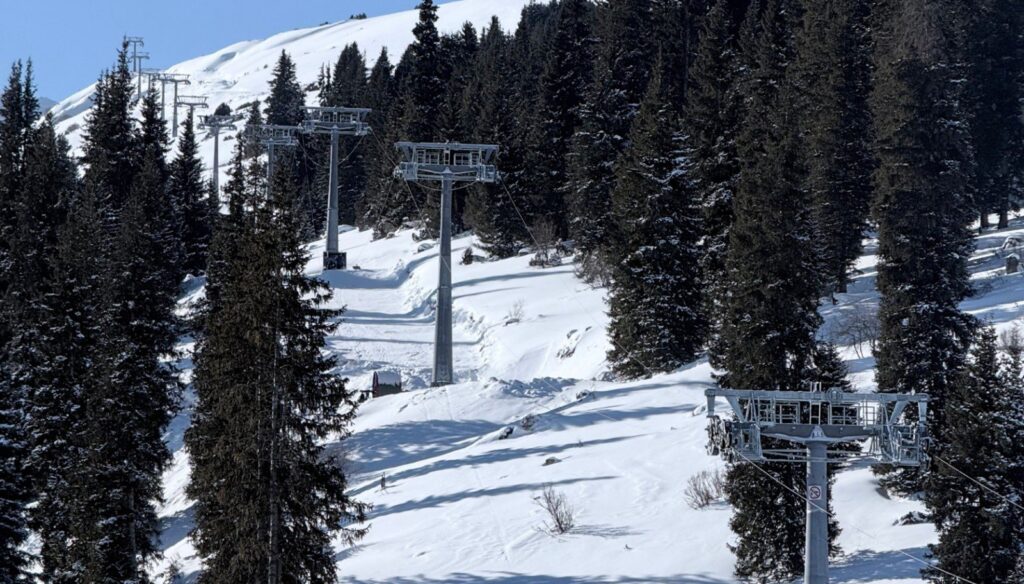
On February 25, Kyrgyzstan’s Ala-Too Resort OJSC and the Austrian company Doppelmayr, a global leader in cable car construction, signed a contract for the installation of four additional cable-car lines at the Jyrgalan resort. The site represents the first phase of the Ala-Too Resort project, a flagship state investment initiative to develop an all-season mountain ski cluster in the Issyk-Kul region, east of Lake Issyk-Kul.

Construction of the Ala-Too Resort cluster, which will combine three resorts, Jyrgalan, Ak-Bulak, and Boz-Uchuk, began in August 2025.

The new agreement follows a contract signed last year under which Doppelmayr is currently building two cable-car lines at Jyrgalan. Their commissioning is scheduled for May 2026.

The four additional cable-car lines are expected to be completed by the end of this year, with the official opening of Jyrgalan planned for December. Once operational, the total length of cable-car lines at the resort will exceed 8 kilometers, while ski trails will extend to 46 kilometers.

Doppelmayr has also completed a 1-kilometer cable-car line in the Ala-Archa State Nature Park, located about 30 kilometers from the capital, Bishkek. Officially opened on February 18, it became Kyrgyzstan’s first gondola lift.

According to the Ministry of Economy and Commerce, the Ala-Too Resort project will be implemented in stages through 2038, with total investments estimated at approximately €1.2 billion. The cluster aims to attract up to 4 million tourists annually.

The total area of the mountain cluster will cover 3,916 hectares, with ski slopes extending to 260 kilometers. Project developers state that this would place Ala-Too Resort among the world’s top ten resorts by total trail length and make it the largest ski destination in Central Asia.

The development plan includes the construction of private villas and three- to five-star hotels, as well as a panoramic restaurant, conference facilities, a medical center, a stadium, an amphitheatre, and recreational parks.

Infrastructure works are currently underway, including the construction of power transmission lines, drinking water systems, and wastewater treatment facilities. Reconstruction of the road linking Jyrgalan with Karakol, the administrative center of the Issyk-Kul region, has also begun.

The Ala-Too Resort project is expected to provide a significant boost to Kyrgyzstan’s tourism sector, positioning the country as a major destination for mountain skiing in Central Asia.

Belarus Aims to Increase Trade with Uzbekistan to $2 Billion by 2030

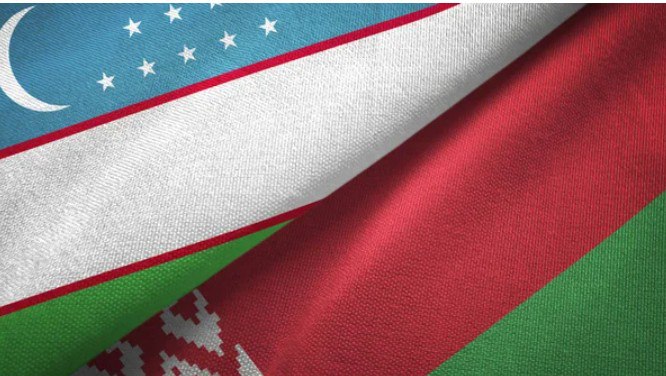
Belarus plans to increase its trade turnover with Uzbekistan to $2 billion by 2030, according to a statement issued by the Council of Ministers of the Republic of Belarus following high-level talks between the two countries’ prime ministers.

Belarusian Prime Minister Aleksandr Turchin announced the target during a meeting with Uzbekistan’s Prime Minister Abdulla Aripov on February 24, underscoring the growing importance of bilateral cooperation. “Undoubtedly, Uzbekistan is one of our key partners in Central Asia and beyond,” Turchin said, adding that relations are supported by what he described as a trusting dialogue between the two presidents.

He noted that both governments are focused not only on implementing previously reached agreements but also on developing new initiatives ahead of a planned high-level meeting later this year. According to the Belarusian government, a bilateral cooperation roadmap is being prepared in advance of President Shavkat Mirziyoyev’s upcoming visit to Belarus.

Turchin described the $2 billion trade target as ambitious but achievable, pointing out that current trade turnover is already approaching $1 billion. “We are committed to fruitful work and open dialogue. A number of large-scale projects are already being implemented,” he said.

Economic cooperation between the two countries has expanded into several strategic sectors. Last year, Uzbekistan and Belarus moved to strengthen collaboration in nuclear energy following talks in Minsk hosted by Belarusian Energy Minister Denis Moroz and attended by a delegation from Uzbekistan’s Uzatom Atomic Energy Agency led by Director Azim Akhmedkhadjaev. Discussions focused on nuclear infrastructure development, specialist training, and radioactive waste management.

Uzbekistan Continues Busy Sporting Year with Tashkent Judo Grand Slam

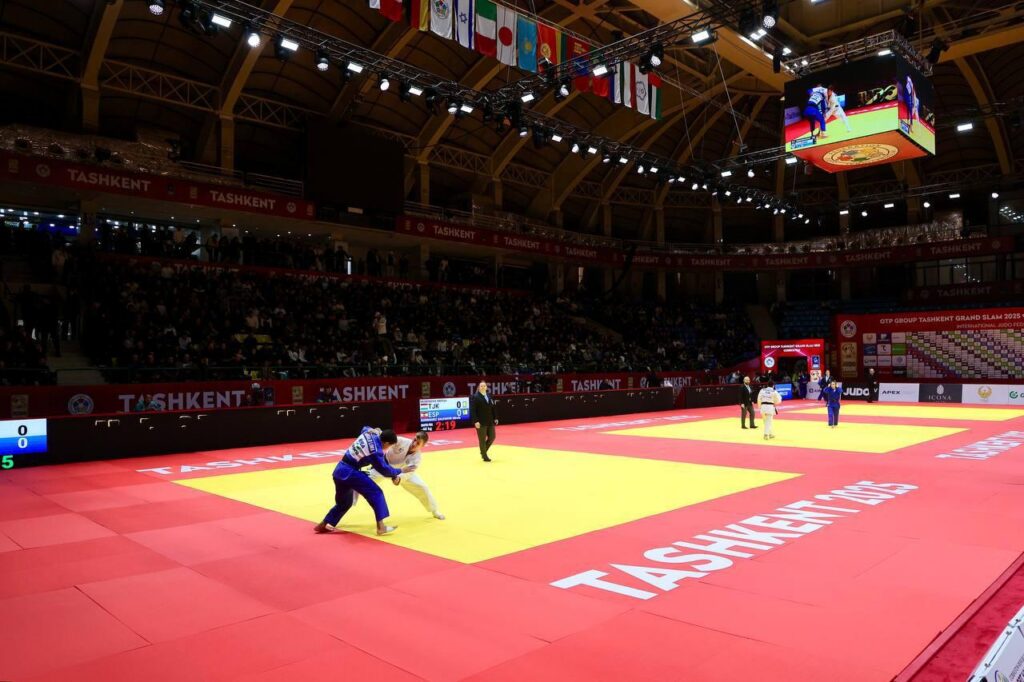
The 12,500-capacity Humo Arena in central Tashkent is preparing to host the OTP Group Tashkent Grand Slam 2026 this week. The three-day elite competition starts on 27 February.

The event is the second stop on the 2026 World Judo Tour, following the Paris Grand Slam, and will feature 400 world-class judokas representing more than 40 countries. Home hopes are resting on the Olympic medallist and World champion Davlat Bobonov, while other high-profile competitors include Olympic champions Hidayat Hedarov and Zelym Kotsoiev from Azerbaijan, and the Georgian Lasha Bekauri.

The Grand Slam is separated into 14 weight categories. Friday’s action focuses on the lighter weight classes, including the women’s 48kg and men’s 60kg divisions. On Saturday the competition switches to the middleweight categories, while the final day on Sunday features the heavyweights.

Uzbekistan is quietly establishing itself as a host for judo tournaments, having previously hosted the 2022 Judo World Championships, and the Grand Slam for the last five years. Uzbek judo is on the rise, with Diyora Keldiyorova winning the country’s first ever gold medal at the Paris 2024 Olympic Games.

“We look forward to welcoming the world’s best judokas to compete in Uzbekistan,” said Otabek Umarov, First Vice President of the National Olympic Committee of Uzbekistan, and Vice-President of the Olympic Council of Asia. “It is a great honour for Tashkent to continue to host major international judo events, and we thank the International Judo Federation for their continued trust. Hosting the Grand Slam not only inspires the next generation of athletes but stands as a testament to Uzbekistan’s dedication to the sport.”

The 2026 Judo Grand Slam comes at the start of a standout year for Uzbek sports. The country’s football team will make its first appearance at a FIFA World Cup at the tournament in North America this summer. Samarkand will host the World Triathlon Championship Series on 25-26 April, then the 46th Chess Olympiad in September. The World Aquatics Swimming World Cup comes to Tashkent in October.

To ensure the spirit of judo remains accessible to all fans and aspiring athletes across Central Asia, the Humo Arena will offer free admission to the public for the duration of the event. For fans abroad, the competition will be broadcast live to a global audience via the JudoTV platform.


Uzbekistan Eyes UKEF Backing and Market Access at C5–UK Talks

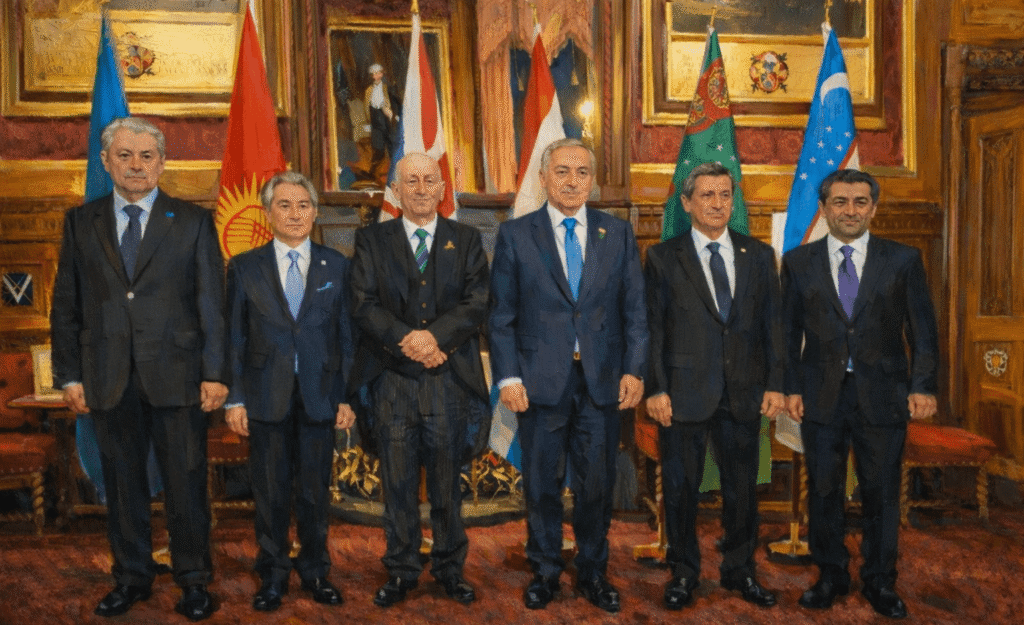
London is hosting the first formal meeting of Central Asian foreign ministers with the United Kingdom on February 26, opening a new “Central Asia–UK” ministerial track after a broader parliamentary program in London earlier in the week. Foreign ministers from Kazakhstan, Kyrgyzstan, Tajikistan, Turkmenistan, and Uzbekistan are attending. Kyrgyzstan’s Foreign Minister Jeenbek Kulubayev is expected to hold bilateral talks with UK Foreign Secretary Yvette Cooper, while Kazakhstan’s Foreign Minister Yermek Kosherbayev has also been holding meetings in London focused on trade, investment, and critical minerals cooperation. With delegations from all five Central Asian countries present, the format provides scope for further bilateral engagements on the margins.

On the eve of the ministerial meeting, Central Asian foreign ministers, led by Kazakhstan’s Yermek Kosherbayev, held a session with the UK’s All-Party Parliamentary Group on Cooperation with Central Asia, with British MPs emphasizing political dialogue, legislative exchange, and deeper interparliamentary ties as foundations for advancing economic and regional cooperation.

For Tashkent, the London meeting comes after a burst of bilateral engagement that has put finance and infrastructure at the center of the relationship. On February 17, President Shavkat Mirziyoyev received the UK Prime Minister’s Trade Envoy to Central Asia and Azerbaijan, Lord John Alderdice, and highlighted how heavily Uzbekistan has leaned on London’s markets: Uzbek sovereign and corporate bonds worth more than $15 billion have been placed on the London Stock Exchange, while trade turnover has doubled over the past five years, according to the presidential press service. Mirziyoyev also flagged potential projects spanning energy, finance, geology, and transport, and the sides agreed to prepare a joint roadmap.

That roadmap is already acquiring project language. Uzbekistan’s Deputy Prime Minister and Minister of Economy and Finance, Jamshid Kuchkarov, met Alderdice in Tashkent with representatives of the London Stock Exchange Group, Arup, and UK Export Finance (UKEF), as well as the UK ambassador, Timothy Smart. According to the Uzbek government, talks focused on transport and logistics infrastructure—rail and road projects, airport modernization—alongside green energy and public–private partnerships. The same meeting produced a memorandum of understanding between Arup and the Ministry of Economy and Finance aimed at engineering and transport infrastructure planning and capacity-building for regions.

Alderdice has also put a number on the UK’s offer. Speaking at a UK–Uzbekistan infrastructure conference, he said the UK has “about £4 billion available for export guarantees in Uzbekistan specifically,” linking the figure to potential backing for projects ranging from rail and airports to urban development. He pointed to London as a venue for Uzbek IPOs and bond issuance and said he was exploring potential collaboration with Uzbekistan’s mining sector, noting that the city also hosts the London Metal Exchange.

The data suggests why Uzbekistan is pushing: the UK reported total trade in goods and services with Uzbekistan of £2.2 billion in the four quarters to the end of Q3 2025, including £545 million in UK exports and £1.6 billion in imports.

Uzbek borrowers have already treated London as more than a diplomatic stop. In 2024, Uzbekistan’s National Bank for Foreign Economic Activity (Uznatsbank) placed two tranches on the London Stock Exchange totaling $411 million, after Uzbekistan’s own sovereign bond placement of $1.5 billion in three currencies earlier that year, as reported by The Times of Central Asia. For a reforming economy that still relies on state-linked finance, repeated access to that market lowers funding costs, widens the investor base, and pressures issuers to improve disclosure and governance.

Regionally, London is seeking to build a coherent Central Asia “offer” around critical minerals and connectivity. Astana and London signed a strategic partnership on critical minerals in 2024, and in February 2026, extended that cooperation by signing a roadmap on strategic partnership in critical minerals that runs through 2027. Kazakhstan — the world’s largest uranium producer and a significant source of copper and other strategic metals — is well positioned to expand its role as an exporter of additional essential metals and materials.

In late 2025, Kyrgyzstan and the United Kingdom followed with a memorandum of understanding focused on exploration, ESG standards, and investment promotion. Uzbekistan represents an additional layer within this evolving framework, increasingly positioning itself as an aspiring participant in diversified mineral supply chains. Taken together, these initiatives illustrate what British policymakers appear to be scaling across the region: structured, project-based cooperation linked to supply-chain resilience and long-term investment.

Transport connectivity is the other pillar. Central Asian governments increasingly pitch the Trans-Caspian “Middle Corridor” as an alternative to routes through Russia and as an economic hedge against disruption in maritime chokepoints. Yet UK engagement has often lagged its rhetoric. Times of Central Asia analysis previously noted British support “in principle.” While London has since signaled up to £4 billion in UKEF export guarantees, the test now is whether those guarantees translate into identifiable, financed projects comparable in scale to the EU’s €10 billion Global Gateway pledge. The London ministerial now serves as a test of whether Britain can shift from endorsement to delivery.

For Uzbekistan, delivery is likely to mean three things. First, converting PPP talk into a bankable project pipeline—roads, rail, airports, power transmission, and the planning capacity to execute them. Second, using London’s financial infrastructure to advance privatization and to bring more Uzbek issuers to international markets on terms that satisfy global investors. Third, defining a minerals agenda that goes beyond extraction and includes processing, logistics, and ESG compliance—precisely the kind of package necessary to attract long-term capital rather than one-off traders.

Politically, Tashkent will want the new format to fit Central Asia’s multi-vector diplomacy. During his 2024 tour of the region, UK Foreign Secretary David Cameron said Britain was not asking Central Asian states to “make a choice” between partners, but was offering cooperation tied to shared security and prosperity. Uzbekistan has been adept at using that space to widen options without signing up to blocs.

If the new C5–UK meeting produces only generalized communiqués, it will be filed away as another well-meaning initiative. If London can align export finance, capital-markets access, and a small number of “nameable” projects—airport upgrades, rail links, power grids, or logistics hubs—the format could become a practical channel through which Uzbekistan and its neighbors finance modernization. Watch for UKEF-backed pipelines, education links, and a timetable for the next ministerial—ideally in Central Asia—to show the format is built to last.

Gender Pricing and Tax Policy in Kazakhstan: Does a “Pink Tax” Exist?

Women often pay more for everyday goods, from hygiene products to personal care services. In public discourse in Kazakhstan, this phenomenon is often referred to as the “pink tax.” But does such a tax exist, or are these differences the result of market pricing strategies?

Is a “Pink Tax” Recognized Under Kazakhstan’s Tax Code?

If understood literally as a separate levy established in the Tax Code, the so-called “pink tax” does not exist in Kazakhstan. The country’s tax system includes corporate and individual income taxes, value-added tax (VAT), excise duties, social tax, property taxes, and other mandatory payments. There is no gender-based category.

In Kazakhstan, the term is generally used to describe a potential “gender markup,” where products marketed to women are priced higher than comparable versions aimed at men, even when their features are largely the same.

These differences are most often observed in items such as razors, shower gels, and other personal care products, where variation may be limited to packaging or branding. However, Kazakhstan lacks large-scale, representative studies on the issue. Most claims are based on retail observations and isolated price comparisons rather than comprehensive market research.

How Tax Policy Affects Essential Hygiene Products: VAT and the “Tampon Tax”

Public debate increasingly uses the term “tampon tax” to describe situations where menstrual hygiene products are subject to the standard VAT rate rather than a reduced rate applied to essential goods.

Starting January 1, 2026, Kazakhstan’s base VAT rate increased to 16%. Reduced VAT rates of 5% (from 2026) and 10% (from 2027), apply only to goods and services, including specific medicines and medical devices that meet established criteria. These benefits do not apply broadly to all health-related goods, only to items included in officially approved lists.

If sanitary pads, tampons, and other menstrual hygiene products are not included in the approved lists, they are subject to the standard VAT rate, like most other consumer goods. The law does not treat “women’s” products as a separate taxable category. As a result, Kazakhstan does not levy a distinct “pink tax” but applies uniform VAT rules. The broader policy debate centers on whether menstrual products should be classified as essential goods for tax purposes.

The social dimension is significant. According to the World Bank and UNFPA, menstrual poverty refers to limited access to hygiene products and related services such as water, sanitation, healthcare, and education. A survey conducted in Kazakhstan by Umai Cup and SOAS (2,116 participants) found that 25% of respondents had no access to hygiene products during their first menstruation, 66% used improvised materials, and 10% missed school due to an inability to purchase sanitary pads.

When a recurring monthly product is taxed at the full VAT rate and rises in price along with inflation, the financial burden falls disproportionately on low-income women. For students, single mothers, and mothers of large families, this may translate into restricted access to basic hygiene.

Why the “Pink Tax” Has a Greater Impact at Lower Income Levels

Even without normative judgments, the economic sensitivity of gender-based price differences increases in the context of income inequality. The issue is not only whether a markup exists, but whose budget it affects.

According to the Bureau of National Statistics of Kazakhstan, the gender wage gap remains persistent. The gap stood at 25.0% in 2020, 21.7% in 2021, 25.2% in 2022, and 25.7% in 2023. Preliminary data for 2025 indicates that the gap remains significant. In the first quarter, the average salary for men was approximately 468,914 tenge ($934), while women earned an average of 344,496 tenge ($686), a difference of roughly 26.5% in favor of men.

These figures are central to understanding the economic implications of gender-based markups. Even small price differences may appear negligible in a single transaction. However, when income levels are systematically lower, recurring additional costs, whether for hygiene products, care goods, or services, represent a larger share of household budgets.

In this sense, the debate extends beyond pricing alone. If one demographic group consistently earns less, then identical tax rates and uniform VAT policies can still translate into unequal financial pressure.

Everyday Experience

The “pink tax” often manifests through product labeling, packaging, and pricing structures. Interviews with young women in Kazakhstan reflect recurring perceptions of gender-based pricing differences.

Samira Olzhakhanova, 18, a student from Almaty, says she has noticed price differences in basic goods: “Disposable razors, face creams, shower gels, if the packaging is pink or labeled ‘for women,’ the price is almost always higher. At first, the difference seems minor, 200-300 tenge, but when it repeats every month, it becomes noticeable.”

Alua Zhanetova, 26, an SMM manager from Taraz, observed similar patterns in children’s retail sections: “Items ‘for girls’ are often slightly more expensive, even though the fabric and quality are the same as in the ‘boys’ section. The difference is small but systematic.”

Valeria Kuznetsova, 22, a programmer from Astana, points to service pricing: “Even if I request only a trim without washing or styling, the price is still higher than for a man’s haircut, though the workload may be similar.”

These accounts illustrate perception rather than statistical confirmation. Without comprehensive market research, it is difficult to determine whether such cases represent systematic pricing strategies or isolated examples.

Taxation is formally gender-neutral, and VAT applies without distinction. However, given the persistence of the gender wage gap, even modest recurring price differences can carry disproportionate weight. In this sense, the “pink tax” debate in Kazakhstan is less about formal taxation policy and more about pricing practices and their economic impact.

Digital Inequality in Central Asia: Who Is Winning the AI Race in Finance?

AI in Central Asia’s financial sector is no longer a fashionable add-on. It has become a dividing line between leaders and laggards. A comprehensive report by the National Bank of Kazakhstan and the Fintech AI Center highlights a stark reality: while some institutions are building sovereign data centers, others are still attempting to automate basic document management processes.

Kazakhstan is setting the pace. In his introduction to the report, Timur Suleimenov, Governor of the National Bank of Kazakhstan, echoes President Tokayev’s digital modernization agenda, writing: “Artificial intelligence is rapidly becoming a new paradigm for the development of the national economy… Our country faces the task of not only avoiding being left on the periphery of the global technological trend, but also of using its potential to accelerate economic modernization.”

The regional AI race in finance is effectively underway, and the findings reveal deep digital inequality.

The Balance of Power: Leaders and Followers

A review of AI implementation across the region shows a pronounced technological divide. Kazakhstan remains the undisputed leader. Its banking sector has moved beyond experimental pilot projects. According to the report, AI is most actively deployed in the development of new products (14% of financial institutions) and marketing (13%), where neural networks enable hyper-personalized offerings. A further 10% of institutions use AI in operational activities and compliance.

Elsewhere in Central Asia, governments are developing ambitious strategies, but implementation in the financial sector remains limited.

Kyrgyzstan plans to launch a National AI Platform under its Digital Transformation Concept for 2024-2028. However, most of the country’s banks remain at the pilot or early implementation stage. Current AI applications focus primarily on decision-making optimization and advertising materials rather than complex financial operations.

Tajikistan has positioned itself prominently at the policy level. It adopted an AI Development Strategy through 2040, the region’s first long-term framework, and initiated a United Nations General Assembly resolution on AI for Central Asia in July 2025. Yet in practice, the country’s financial market is dominated by microfinance organizations (MFOs), which are cautious in adopting advanced technologies. Their AI use is largely confined to risk management and documentation, while automation, software development, and data processing lag behind. Only 7% of institutions apply AI in financial consulting and customer support.

Uzbekistan has taken a different route, prioritizing international and regional partnerships.

In October 2024, the government approved its AI Development Strategy through 2030. Rather than building infrastructure independently, Tashkent is partnering with global technology providers. The state is working with Huawei to develop physical AI infrastructure and deploy ready-made industry solutions.

At the same time, Uzbekistan is strengthening its academic capacity, including investments in high-performance computing for Inha University in Tashkent. Regional integration is also central to its strategy: IT Park Uzbekistan has signed a memorandum with Kazakhstan’s Astana Hub to integrate startup ecosystems. This combination, collaboration with global vendors, academic investment, and regional partnerships, is enabling Uzbekistan to narrow its technological gap more quickly.

People Instead of Servers

Digital inequality is most evident in spending priorities. Investment structures reveal the stage of development each market has reached.

Kazakhstan’s financial sector has largely moved beyond infrastructure acquisition. Its institutions are focusing on market expansion: 14% of AI-related investments target new product development, and 13% are directed toward algorithmic marketing. This spending pattern reflects a sector seeking competitive growth.

Uzbekistan, by contrast, is still building its technological foundation. Under its 2030 strategy and partnership model, investment flows are directed toward servers, data centers, and cloud infrastructure. The logic is straightforward: advanced algorithms require robust physical infrastructure.

In Kyrgyzstan and Tajikistan, where microfinance institutions play a dominant role, a structural challenge has emerged. Budgets indicate that funding is available for software but human capital is limited.

According to the report, 33% of companies in these markets prioritize staff training, while 19% allocate funds to retraining and specialist recruitment. In total, roughly half of AI-related investment is directed at addressing personnel shortages. Meanwhile, 30% of institutions report spending resources on identifying viable use cases. In practical terms, this reflects uncertainty about how to monetize AI investments, an indicator of strategic immaturity rather than technological ambition.

Sovereign Clouds Versus Global Vendors

Despite disparities in funding and capacity, all regional players share one concern: data security and control.

The report cites a position by the Bank for International Settlements stating that AI does not create fundamentally new risks but extends existing ones. Nevertheless, the scale of potential threats, including data breaches, cyberattacks, and algorithmic bias, is increasing.

Kazakhstan has opted for a costly but strategically autonomous model. The National Bank is pursuing sovereign infrastructure rather than relying on foreign cloud providers. Suleimenov states in the report:

“The National Bank has an important mission, to provide a modern, secure, and reliable infrastructure… To fulfill this mission, the National Bank is launching new data centers.”

This signals that the state intends to act as chief infrastructure architect, maintaining physical control over computing capacity and financial data. The approach is designed to mitigate geopolitical and service-disruption risks.

Other Central Asian countries, constrained by financial and technical resources, are relying on alternative strategies. Tajikistan is emphasizing legal frameworks, positioning its long-term strategy and international initiatives as safeguards. Kyrgyzstan and Uzbekistan are pursuing partnership-based models, contracting global technology providers, including Chinese firms, that offer integrated data-protection standards.

These divergent strategies are reshaping the regional financial technology landscape. While Kazakhstan is investing in sovereign infrastructure and regulatory control, its neighbors are integrating into global value chains through partnership models. Astana appears to be positioning itself not only as a fintech leader but as a potential regional infrastructure hub.