• KGS/USD = 0.01144 0%
  • KZT/USD = 0.00196 -0%
  • TJS/USD = 0.10904 0%
  • UZS/USD = 0.00008 0%
  • TMT/USD = 0.28490 0%
  • KGS/USD = 0.01144 0%
  • KZT/USD = 0.00196 -0%
  • TJS/USD = 0.10904 0%
  • UZS/USD = 0.00008 0%
  • TMT/USD = 0.28490 0%
  • KGS/USD = 0.01144 0%
  • KZT/USD = 0.00196 -0%
  • TJS/USD = 0.10904 0%
  • UZS/USD = 0.00008 0%
  • TMT/USD = 0.28490 0%
  • KGS/USD = 0.01144 0%
  • KZT/USD = 0.00196 -0%
  • TJS/USD = 0.10904 0%
  • UZS/USD = 0.00008 0%
  • TMT/USD = 0.28490 0%
  • KGS/USD = 0.01144 0%
  • KZT/USD = 0.00196 -0%
  • TJS/USD = 0.10904 0%
  • UZS/USD = 0.00008 0%
  • TMT/USD = 0.28490 0%
  • KGS/USD = 0.01144 0%
  • KZT/USD = 0.00196 -0%
  • TJS/USD = 0.10904 0%
  • UZS/USD = 0.00008 0%
  • TMT/USD = 0.28490 0%
  • KGS/USD = 0.01144 0%
  • KZT/USD = 0.00196 -0%
  • TJS/USD = 0.10904 0%
  • UZS/USD = 0.00008 0%
  • TMT/USD = 0.28490 0%
  • KGS/USD = 0.01144 0%
  • KZT/USD = 0.00196 -0%
  • TJS/USD = 0.10904 0%
  • UZS/USD = 0.00008 0%
  • TMT/USD = 0.28490 0%
08 December 2025

Asia Now Creating a Market for Central Asian Art in Paris

When we think about spreading knowledge of Central Asian art in Europe, we might think of exhibitions, of festivals, of panels and talks, not necessarily of an art fair. However, in the contemporary art world, it is today the market, more than art critics, which dictates the emergence of certain art scenes as a whole.

For the historically underrepresented Central Asian art market, smaller fairs represent today an important alley, more than the big fairs such as Art Basel – which just had its second Paris iteration this October. Smaller “boutique fairs,” as they are called, often present curated programming which allow a wide public – not just collectors and buyers – to enjoy the art as it was an exhibition. A selling one, of course. 

In Paris, the most relevant fair which has historically presented Central Asian artists to the European public is called Asia Now, and it took place in Paris from October 17 to 20. Entirely dedicated to Asian art, the fair has historically tried to fill the gap for Central Asian art in the European market in the past ten years of its existence.

The fair has selected more than 70 leading and emerging contemporary art galleries from all over the world, presenting more than 220 artists coming from 26 territories from all over Asia and its diaspora, stretching from Central Asia to the Asia-Pacific, including West, South, South-East, and East Asia.

Their commitment to expanding knowledge of Central Asian art in Europe culminated last year in a show which was indeed focused on Central Asia, and curated by the artist group Slav and Tatars.

While seminal Central Asian galleries such as the Aspan Gallery from Almaty and Pygmalion Gallery from Astana didn’t return to Asia Now this year, the fair still presented a number of Central Asian artists and practices, interspersed between the main show, and the booths. 


Central Asian Artists in the Radicant’s Main Show

The main exhibition of Asia Now was curated by Radicants, a collective founded by art critic Nicolas Bourriaud, and it was centered on sacred ceremonies seen as a powerful tool for re-examining societal structures and reconnecting with ancestral roots.

Called “Ceremony,” the main show was co-curated by Nicolas Bourriaud and Alexander Burenkov, a curator of Russian origins who has been working for a long time with Central Asian narratives, which are also featured prominently in the show.
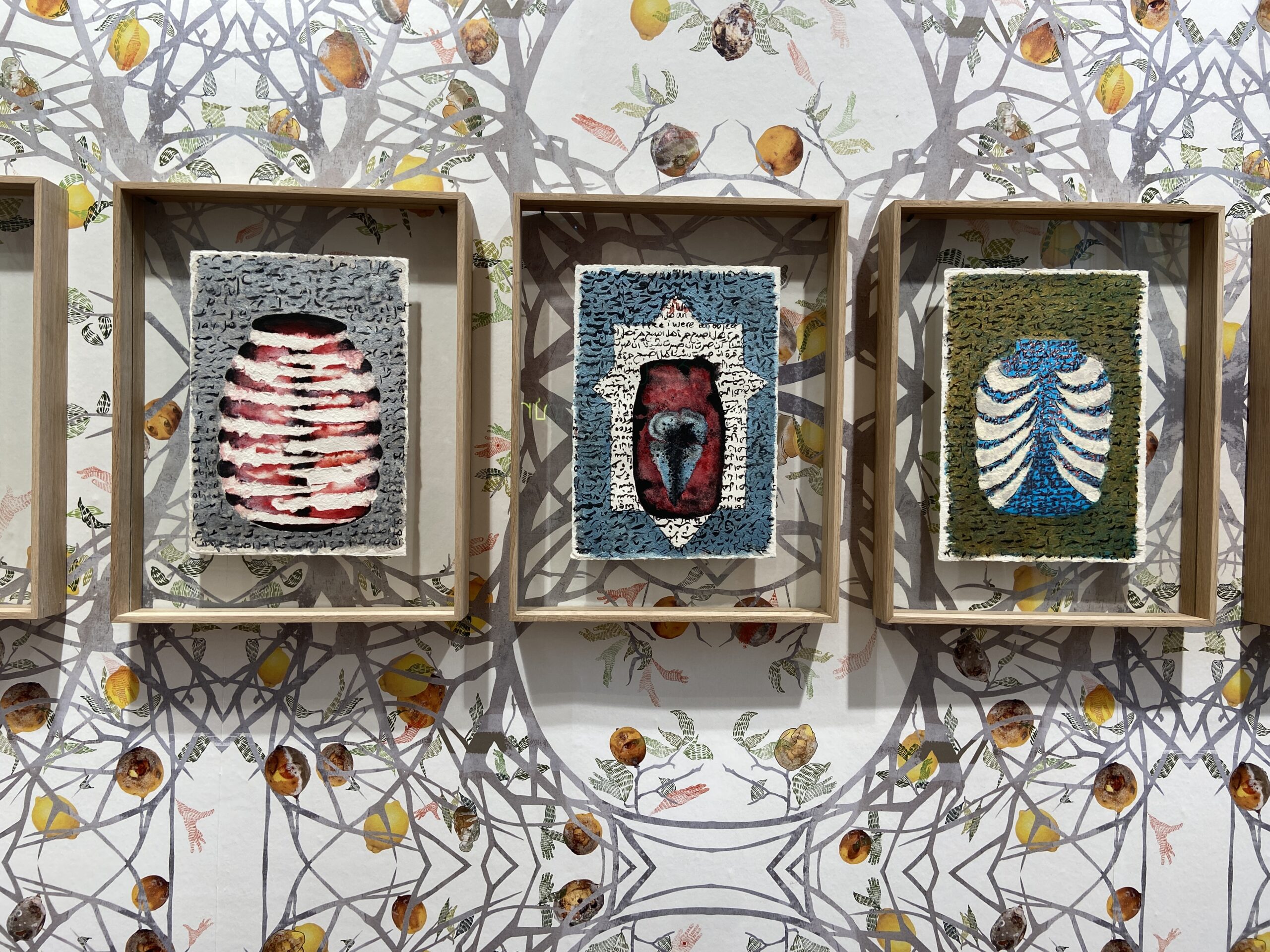
Image: TCA, Naima Morelli

The idea of ceremony ties to the tenth anniversary of the art fair, but at the same time the curators opted to explore the nuances of ritual as both a “celebration of ancestral wisdom” and a “critical tool for interrogating and redefining established traditions and power dynamics.”

As Burenkov noted, the decision to use the theme of ceremony emerged after conversations with Asia Now director Alexandra Fain. “The choice fell on ‘ceremony’ in all its variability and polysemy [was used] to explore the non-obvious meanings of ritual through the eyes of contemporary artists as well as philosophy, science, and poetry which inspire them,” Burenkov stated.

In selecting the 18 artists for the exhibition, Bourriaud and Burenkov brought together both well-known and emerging figures. Their aim was to “put together established and well-known artists with artists completely unknown to the French art scene.” This fusion underscored the show’s mission to amplify often overlooked voices from Asia and Central Asia and to offer new perspectives to a European audience. Through these artists, the curators sought to dispel a simplistic, almost consumeristic notions of celebration, presenting instead an exploration of how rituals shape and transform cultural identity.


Ariuna Bulutova’s Shamanic Rituals

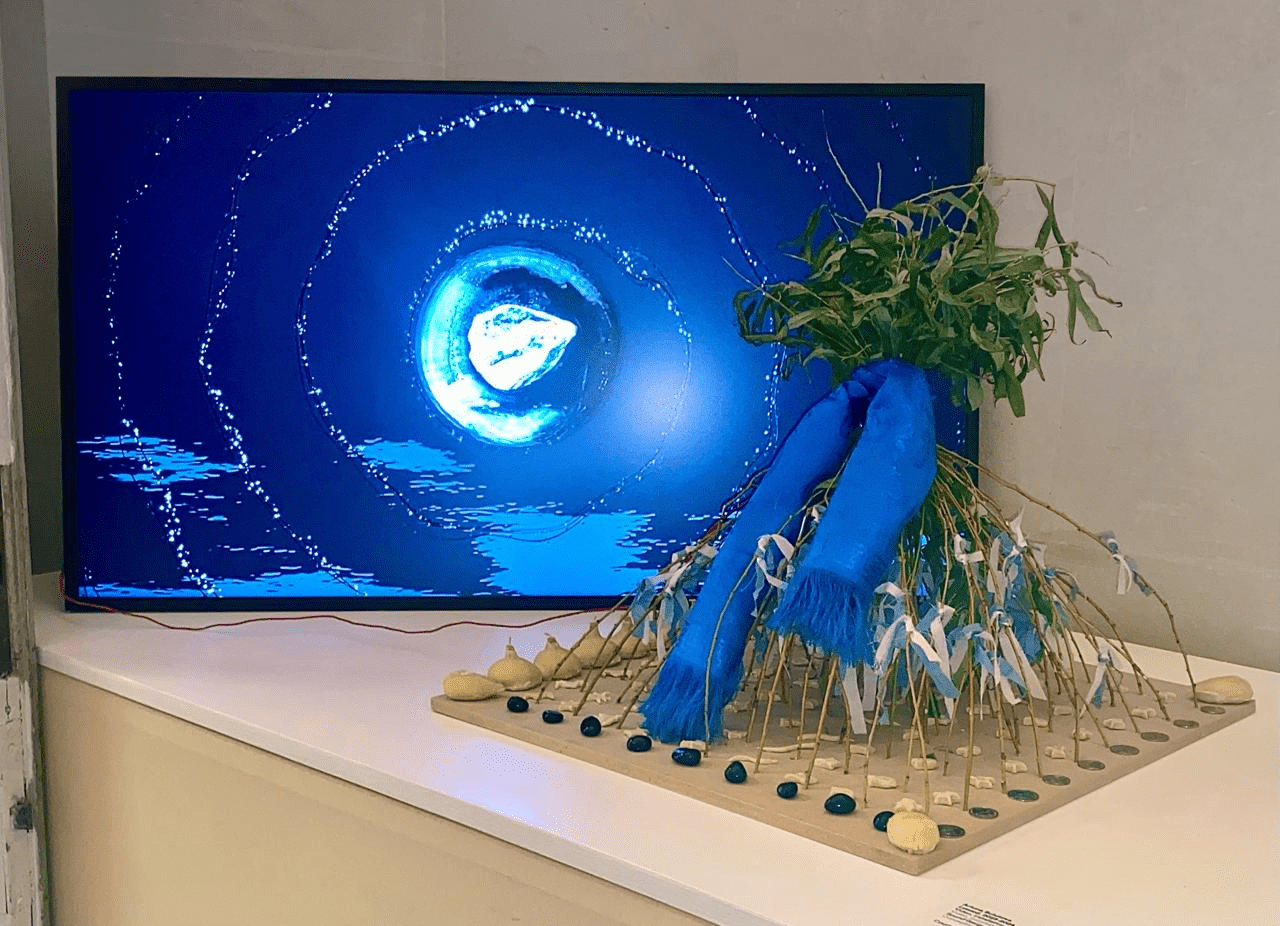
One of the show’s most impactful Central Asian voices is Ariuna Bulutova, a Buryat artist who draws from indigenous practices to explore human relationships with the natural world.
Installation by Ariuna Bulutova; image: TCA, Naima Morelli

“Bulutova’s work is deeply rooted in ‘Lusuud,’ a Buryat shamanic ritual, which she integrates into a video installation guided by her parents, who are practicing shamans,” explained the curator. Bulutova’s art interweaves ancestral knowledge with climate awareness, creating a platform where traditional Indigenous wisdom connects with modern ecological issues. Her work serves as an urgent call for renewed respect for the environment, a quest to heal our relationship with the world beyond the human.

Presenting the show at La Monnaie was challenging, yet inspired the selection of participatory works. “Since the building is a historical monument, nothing can be attached to the walls,” Burenkov noted, explaining the need to create a unique setup that prioritized performative pieces. 

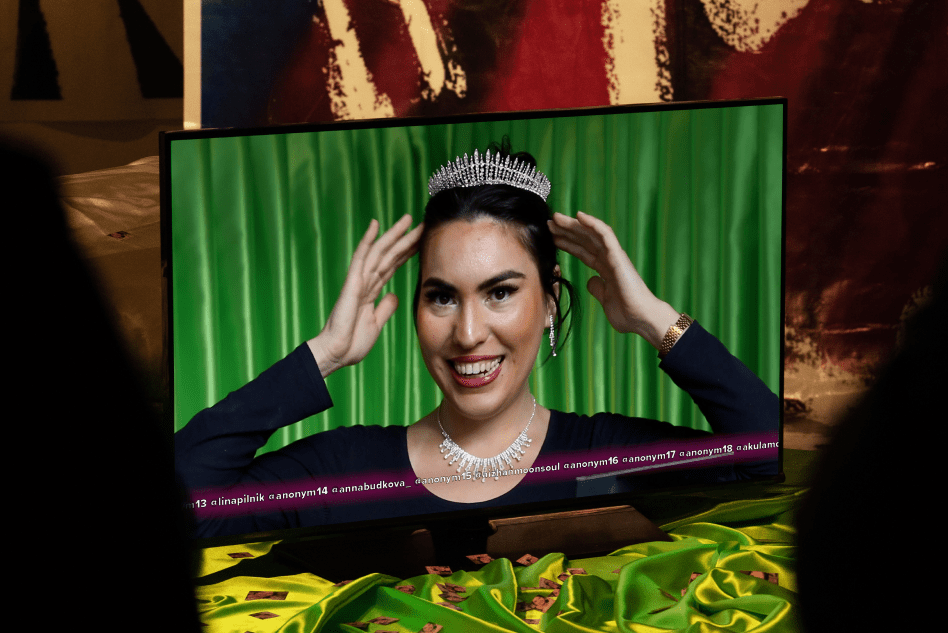
Another Central Asian artist in the show, who presented a striking video piece called “Don’t Miss the POV”, was Uzbek artist Faina Yunusova. Living between Uzbekistan and Germany, Yunusova navigates the complexities of her cultural background, seeking to create artistic representations that resonate with depth and authenticity, while embracing the fluidity of contemporary existence.

In her artistic practice, Yunusova focuses on self-reflection and societal inquiry, exploring themes of memory and communal expectations in the digital age. She is also engaged in postcolonial studies within Central Asia, with a focus on the hybridity and fluidity of cultural identity and self-exoticization. Her expansive portfolio spans monumental painting, photography, video, digital art, artificial intelligence, performance, and installations.

While curating a ritual-focused show within a commercial fair context might be challenging, Burenkov saw it as an opportunity to disrupt market-driven expectations. Performances like Darius Dolatyari-Dolatdoust’s “Flags Parade” invited visitors to engage with questions of identity and belonging, questioning “whether we are local or migrant, European or Asian.” The artist’s work, which involved costumes symbolizing a blend of Iranian, French, Polish, and German heritage, “queers the traditional model of the art fair” and promotes unexpected, transformative encounters.

Reflecting on the role of art fairs as rituals, Burenkov likened curating to “cooking out the show”— a process with its own rhythm and traditions that requires both careful planning and improvisation. 


Gulnur Mukazhanova’s Explorations of Kazakh Craft

Walking between the different booths of the fair, one of the most fascinating installations that jumps out was the work of Gulnur Mukazhanova in the booth of Michael Janssen.

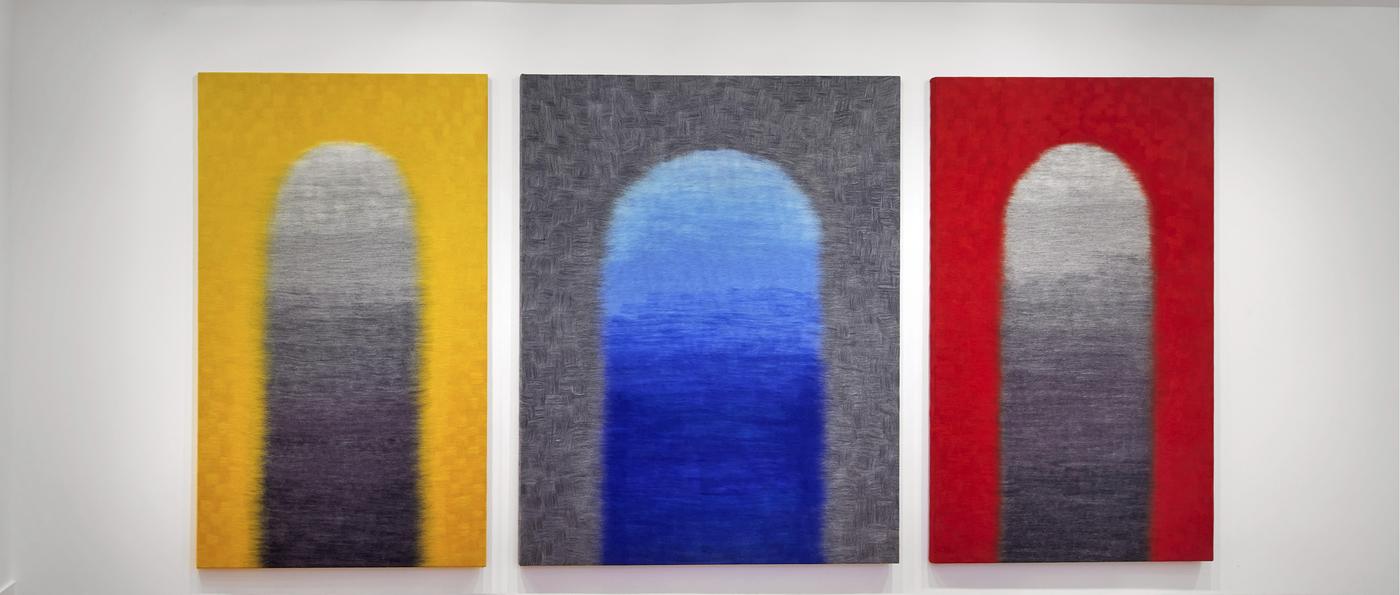
One of the most interesting names on the scene, Mukazhanova’s canvases – made of felt, a material carrying a strong significance – engage deeply with Kazakh cultural heritage and the complexities of post-Soviet identity. 
Artwork by Gulnur Mukazhanova; image: TCA, Naima Morelli

While presented in a commercial context, these works are highly touching and aesthetic encounters, and present a depth which situate them not just as objects for sale, but also meaningful explorations of themes such as nationalism, gender, and inherited trauma.

The artist is employing the traditional Kazakh medium of felt in new and powerful ways. While felt historically holds a central role in Kazakh craft as a material for everyday life, Mukazhanova transforms it into symbolic canvasses through which she addresses hidden wounds and the unconscious impacts of cultural expectations.

This series, shaped by Mukazhanova’s reflections on the societal pressures faced by women in Central Asia, examine how gender expectations are perpetuated and internalized over generations. She describes her use of felt as an abstract, textured language for unpacking complex histories and norms that shape identity. 


Nika Project Space Gallery Dedication to Central Asian Voices

Besides the main show and singular powerful pieces such as Mukazhanova’s, attention to Central Asian narratives was shared by a number of galleries in the stands. Among these, one of the most interesting was certainly the Dubai and Paris-based Nika Project Space. 

While the Nika booth at Asia Now was entirely dedicated to Palestinian artist Mirna Bamieh, the gallerist Veronika Berezina has a deep commitment to showcasing the work of artists with roots in Central Asia. 
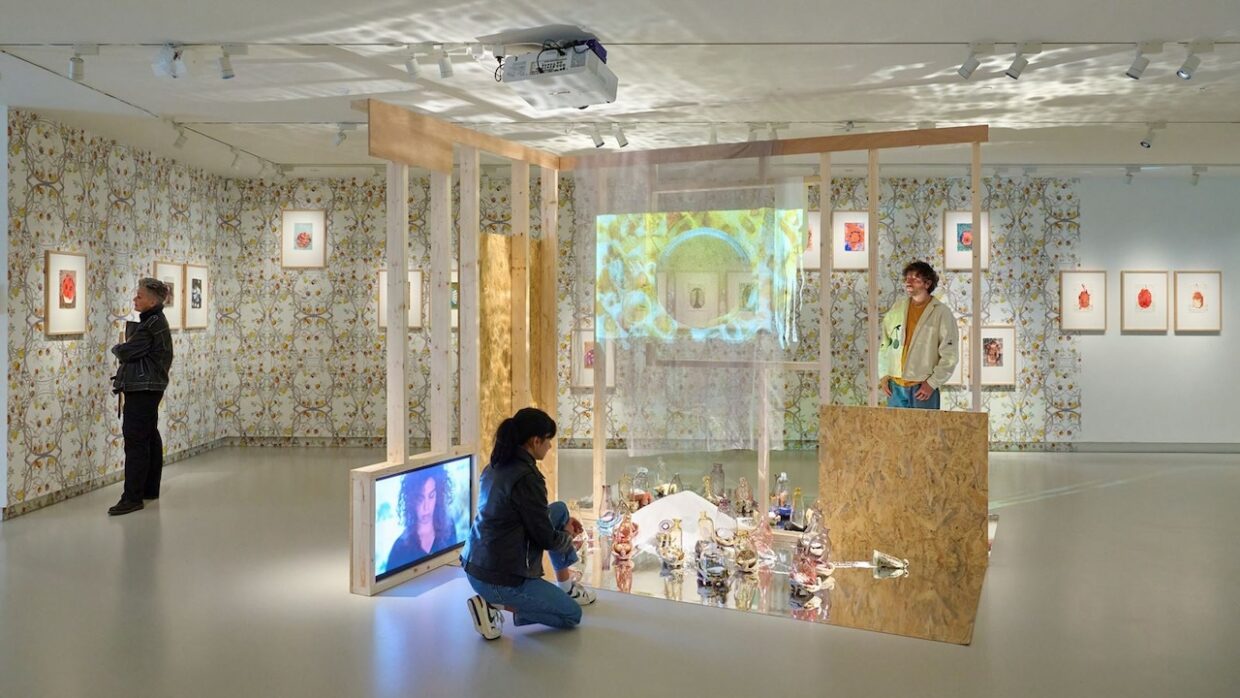
Nika Project Space; image: TCA, Naima Morelli

“Many of the artists we work with have roots in Central Asia, whether they were born there or are part of the region’s vast diaspora,” says Berezina. One such artist is Alexander Ugay, a Kazakh-Korean photographer and videographer whose work explores the experiences of Central Asian immigrants. 

Ugay is the creator of “cinema-objects” within the experimental collective Bronepoezd, which means “armed train” in Kazakh, of which he is one of the founders alongside Roman Maskalev. One of the most active figures in the Kazakh art scene, Ugay was educated at St. Petersburg University and Bishkek University in Kyrgyzstan.

Ugay’s video piece, “100,000 Times,” was featured in a group show at Nika Gallery last year. The work represents a group of Korean migrant workers from post-Soviet countries, with the single, displaced laborer, subject to the brutality of industry, seen as representing and reimagining the dissolution of an exploited community. In another piece, “Elsewhere in Unknown Return”, Ugay uses AI to re-visualize this community in archival form, centered around the 1937 Korean deportation, where multiple architectures of a mass exodus are created and algorithmic inputs adapted to produce accurate results.

As Berezina describes it, “Alexander’s work is deeply rooted in the lived experiences of Central Asians. He himself is part of the third generation of Koreans who were displaced to Kazakhstan during the Stalin era, and that sense of cultural dislocation and the search for identity is palpable in his art.” 

Berezina’s own background as a Russian-born art patron has shaped Nika Gallery’s curatorial vision; “I was always drawn to art, even during my studies in international law,” she says. “When I decided to create my own gallery, it was important to me to focus on artists and practices that are often underrepresented on the global stage.”

By fostering these kinds of deep collaborative relationships with artists, Nika Gallery has established itself as a hub for cultural exchange and cross-pollination. Besides their presence at Asia Now, the gallery’s recent expansion to Paris further solidifies its role as a bridge between the art scenes of the Middle East, Central Asia, and Europe, offering audiences a chance to engage with Central Asian creativity.

As galleries, artists and curators continues to grow their practices and lines of research, it’s heartening to see an increasing number of new nuanced narratives from the Central Asian region coming to the forefront of the European art scene, and somehow becoming more and more relevant in times of “third cultures,” migrations, diasporas, and digital nomadism. 

“Our goal is not just to showcase the work of these artists, but to create a space for dialogue and understanding,” Berezina says. “Central Asia is a region that is often misunderstood or overlooked, and we believe that art has the power to change that narrative, to bring people together, and to celebrate the diversity of human experience.”

This idea is also shared by Asia Now’s founder Alexandra Fain who, with this latest edition of the fair, proved that the Parisian event has remained steadfast in their commitment to amplifying Central Asian voices.


Kazakhstan Leads Central Asia in AI Readiness

According to IMF data analyzed by Ranking.kz, Kazakhstan ranks as the leading Central Asian country in global artificial intelligence (AI) readiness, while Uzbekistan and Tajikistan are at the bottom of the regional standings. The AI readiness index, which covers 174 countries, evaluates factors such as digital infrastructure, human capital, technological innovation, and legal regulation. It draws on data from the World Bank, the International Labor Organization, and other sources.

Kazakhstan ranks within the top 50 countries for AI readiness, holding 48th place with an index score of 0.55, just behind Russia, which ranks 47th. McKinsey & Company has noted Kazakhstan’s use of AI to enhance public services, particularly through geographic information systems and spatial data.

For instance, Kazakhstan has employed a statistical model that integrates geographic, demographic, and economic data to assess infrastructure needs across 6,293 villages, identifying 3,500 villages with the highest potential to cover 90% of the rural population. This approach enables the government to deliver essential services and infrastructure more effectively to rural areas.

Following Kazakhstan in 48th place, with a noticeable gap, is Kyrgyzstan (99th with 0.43). Tajikistan ranks 123rd with an index of 0.37, and neighboring Uzbekistan is in 131st place with an index of 0.35, placing it last among Central Asian and EAEU countries. Turkmenistan was not included in the IMF index.

Artifacts Seized as Illegal Assets Transferred to Kazakh Museum

The Company for the Management of Returned Assets (CMRA) LLP has announced that ancient jewelry, reclaimed as illegal assets from individuals, will now be part of the National Museum of Kazakhstan’s collection.

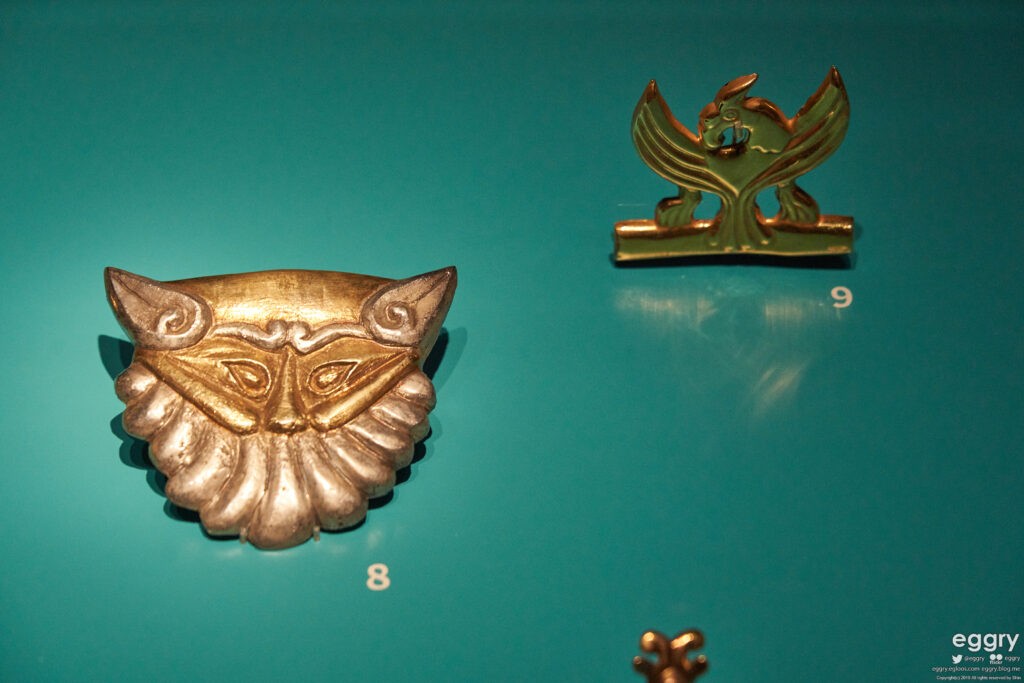
Examinations revealed that the jewelry has significant historical value, dating back to the early Iron and medieval periods. Some of the pieces, identified as ancient artifacts, are linked to the Saka period, a pivotal era in Kazakh history.

According to a letter from the National Museum, several items hold cultural importance, representing Kazakhstan’s history from the Early Iron Age through the Middle Ages. These artifacts will be added to the museum’s permanent collection, making them available for scientific research and accessible to a broader audience.

The collection, which includes jewelry crafted in the traditional “animal style,” weighs approximately 118 grams and dates between the 7th century BC and the 3rd century AD. Notable pieces include an eagle’s head ornament, a depiction of a horned animal in a raised position, figures of a winged lion and a winged horse, a leopard in a dynamic pose, an image of a running deer, ancient coins, two interlocked spiral rings, and a ring with a lion’s head. Additionally, a ring inscribed with Arabic script will undergo further study and re-evaluation.

Previously, the CMRA named the five most valuable pieces of jewelry and accessories recovered and returned to the state.

Uzbekistan Drafting Law to Ban LGBT “Propaganda”

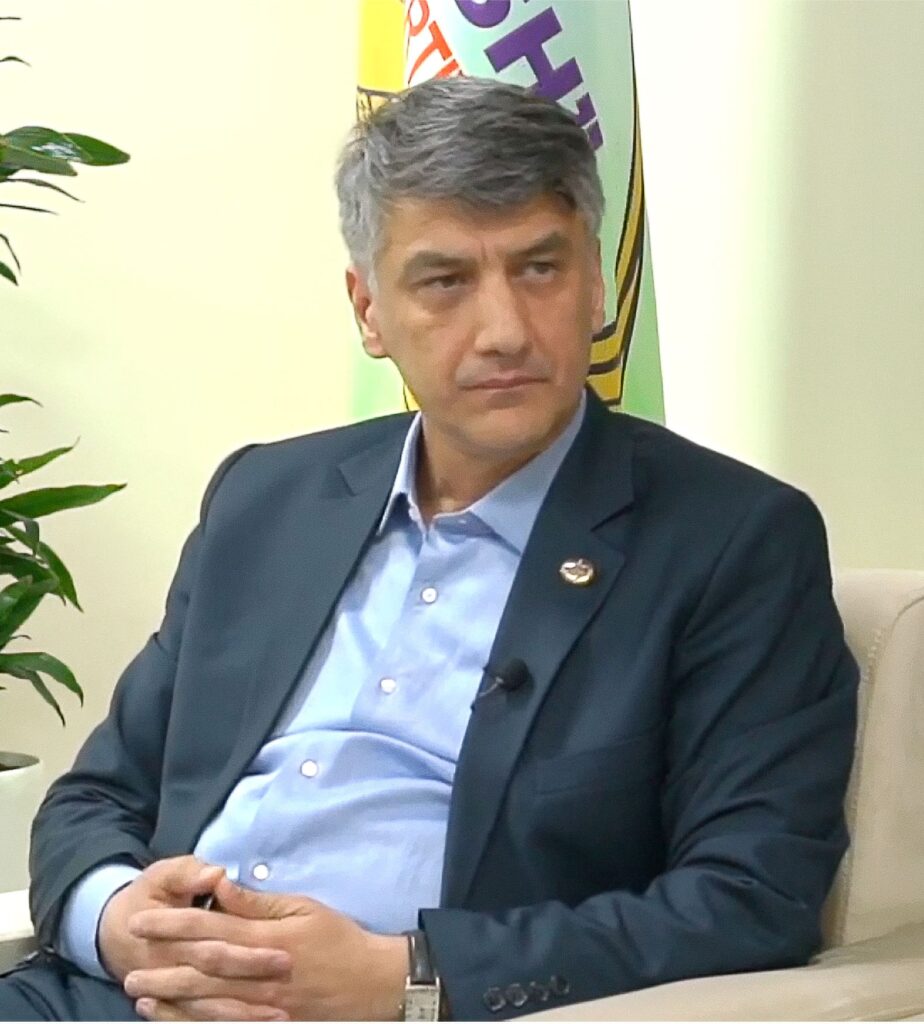
Alisher Qodirov, leader of Uzbekistan’s Milliy Tiklanish (National Revival) party, has announced that a draft law banning the discussion of LGBT topics is being prepared in Uzbekistan.

Qodirov shared this news on his Telegram channel, where he also referenced a social media post by Ivanka Trump, daughter of former U.S. President Donald Trump, who highlighted her father’s plan to cut federal funding for schools promoting “inappropriate sexual content” and “transgender ideology.”

Qodirov commented: “The change in the center of the disease is very good,” suggesting his support for similar measures in Uzbekistan. He added: “We are working on adopting a law prohibiting any kind of propaganda in this regard,” though he did not elaborate further.

In the past, Qodirov has also advocated for banning Soviet ideology and symbols in Uzbekistan.

This stance followed a recent case in Samarkand, where a pensioner wishing to restore the Soviet Union received a three-year restricted freedom sentence for actions deemed a threat to Uzbekistan’s constitutional order.

COP29: Environmental Initiatives in the Real World

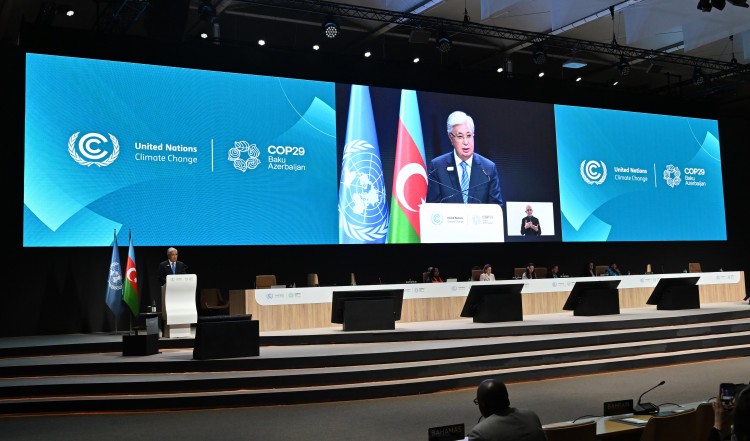
Kazakhstan’s President Kassym-Jomart Tokayev has addressed the World Climate Summit in Baku, Azerbaijan. In his speech he spoke about the country’s environmental problems, but also mentioned opportunities for new eco-friendly projects. At the same time, many world leaders did not attend the summit, and activist Greta Thunberg said climate problems should be discussed at other venues.

Tokayev reaffirmed Kazakhstan’s commitment to the global climate agenda and emphasized the importance of international cooperation in the fight against climate change. He reminded forum participants that carbon neutrality by 2060 can only be achieved with close cooperation and technology exchange.

“Access to predictable funding and state-of-the-art technology is vital to achieving the targets. The NCQG should pay special attention to regions most vulnerable to climate change, including landlocked developing countries. Despite accounting for only 1% of global emissions, Central Asia faces multiple climate risks. To increase efficiency, we must actively utilize advanced technologies such as artificial intelligence, satellite monitoring, and other digital tools to provide early warning and better management of water and land resources,” Tokayev said.

Tokayev added that Kazakhstan has opportunities for transition to better agriculture. According to him, the republic, which has 200 million hectares of agricultural land, is an ideal platform for introducing “carbon farming.” The president said these agricultural production methods can reduce emissions and improve soil quality.

“Our country provides 43% of the world’s uranium supply and plays a significant role in developing low-carbon nuclear power. In October this year, ROK citizens supported the construction of a nuclear power plant in a nationwide referendum. We strive to ensure the safety and efficiency of this project through partnership with the world’s technological leaders in energy”, added Tokayev.

He separately emphasized the problem of the world’s water resources. “Climate change is already seriously impacting the global water cycle. Water-related disasters account for more than 80% of all natural disasters. This year, the ROK faces unprecedented floods. To respond quickly in the future and recover from such emergencies, we are implementing a comprehensive risk management system. In partnership with France, Kazakhstan will hold the One Water Summit in December to actualize the water agenda. Participants of this forum will discuss the problems of global water management,” Tokayev said.

“Today, the Caspian Sea is under threat. Saving the world’s largest lake is a problem that requires long-term international cooperation. We support President Ilham Aliyev’s (Azerbaijan) initiative to create a group of experts from the Caspian littoral states. Additionally, Kazakhstan is taking concrete steps to preserve the Aral Sea,” he added.

Also, within the framework of the World Climate Summit in Baku, an important agreement for Kazakhstan’s water sector was signed. Deputy Prime Minister and Minister of National Economy Nurlan Baybazarov said the Islamic Development Bank will finance Kazakhstan’s $1.1 billion project for water resources development, which will be realized in nine regions.

Kazakhstan is not standing still

Today, Kazakhstan has several major environmental projects in operation. These include the Astana Green Belt, which has significantly improved the city’s ecology, reduced air pollution and created a natural barrier against dust storms. The project continues the mass planting of trees and shrubs and the creation of parks and squares within the city limits.

There is also a multi-year project to restore the Aral Sea. Its main goal is to increase the inflow of water from the Amu Darya River, which will allow the restoration of part of the ecosystem, support biodiversity, and improve the living conditions of the local population. The initiative provides for the construction of canals and dams and land reclamation.

In addition, there is a Biodiversity Conservation Program, which includes expanding protected areas and creating new reserves and national parks. There are also initiatives to combat plastic pollution. Here, one of the key measures was the restriction of the use of plastic bags and the creation of infrastructure for separate waste collection. Recently, Kazakhstan’s Prime Minister, Olzhas Bektenov, said that the mechanism of the payment program for enterprises that collect, transport, and recycle waste has been restarted. Also, environmental education is being introduced in the country’s schools.

A special place is occupied by the concept “Taza Kazakstan” (“Clean Kazakhstan”), approved by the government, aimed at the development of environmental culture for 2024-2029. According to the target indicators, by 2029, it is planned to increase the recycling of municipal waste from 25% to 38% and the share of citizens involved in activities to strengthen environmental education from 15% to 40%. According to the Ministry of Ecology and Natural Resources, more than 745,000 people participated in “Taza Kazakstan” this year; almost 160,000 tons of garbage were collected, and about 326,000 green plants were planted.

Twenty-two environmental initiatives from ten regions of Kazakhstan received financial support under the Global Environment Facility (GEF) Small Grants Program in Kazakhstan, implemented under the auspices of the United Nations Development Program (UNDP) in partnership with Kazakhstan’s Ministry of Ecology and Natural Resources. The projects will cover the Abai, Akmola, Almaty, East Kazakhstan, Zhetysu, Karaganda, Kostanai, Kyzylorda, Turkestan, and Ulytau regions.

According to the Ministry of Ecology, protected areas occupy more than 10% of Kazakhstan’s land surface. There are ten reserves, 14 national parks, seven natural reserves, 50 nature reserves, five protected areas, six botanical gardens, one dendrological park, and 25 natural monuments of local importance.

Three natural sites have been included in the UNESCO World Heritage List: “Saryarka – steppes and lakes of Northern Kazakhstan” (Naurzum and Korgalzhyn reserves); “Western Tien Shan,” jointly with Uzbekistan and Kyrgyzstan (Aksu-Zhabagli and Karatau Nature Reserves and Sairam-Ugam National Park); and “Cold winter deserts of Turan” (Altyn-Emel National Park, Barsakelmes Nature Reserve).

Serious contradictions

Despite the importance of the agenda, many world leaders did not attend the environmental summit in Baku. The Swedish activist Greta Thunberg has spoken out about the staging of the conference in Baku. She took part in a rally in Tbilisi, Georgia, where activists are vocalizing that Azerbaijan does not deserve to host the climate talks because of its repressive policies.

Thunberg called Azerbaijan “a repressive, occupying state that has committed ethnic cleansing and that continues to crack down on Azerbaijani civil society.” She accused Baku of using the summit as “a chance to justify its crimes and human rights violations.” “We cannot give them any legitimacy in this situation, which is why we stand here and say no to the Azerbaijani regime,” Thunberg said. Her article, which shared similar content, also appeared in the Guardian.

At the same time, due to international tensions and political situations in several countries, many leaders did not attend the COP29 summit, including European Commission President Ursula von der Leyen, French President Emmanuel Macron, and German Chancellor Olaf Scholz. Scholz and Von der Leyen explained their absence due to complex internal processes. At the same time, Macron, according to the press, ignored the summit because of the long-standing conflict in Nagorno-Karabakh, where France supported Armenia against Azerbaijan.

U.S. President Joe Biden, Russian President Vladimir Putin, and Brazilian President Luiz Inacio Lula da Silva did not attend the summit. Canadian Prime Minister Justin Trudeau, Indian Prime Minister Narendra Modi, Chinese President Xi Jinping, South African Prime Minister Cyril Ramaphosa, and Australian Prime Minister Anthony Albanese did not come. Most of these leaders sent representatives to Baku.

States already being seriously affected by climate change have expressed dissatisfaction with the slow and ineffective response of the international community. For example, Papua New Guinea Prime Minister James Marape announced that the country would not attend COP29 in protest at the lack of “swift support for the victims of climate change” from major countries. Marape said he was doing so in the interest of all small island nations.

Tajikistan Detains Opposition Activist Ergashev for Two Months

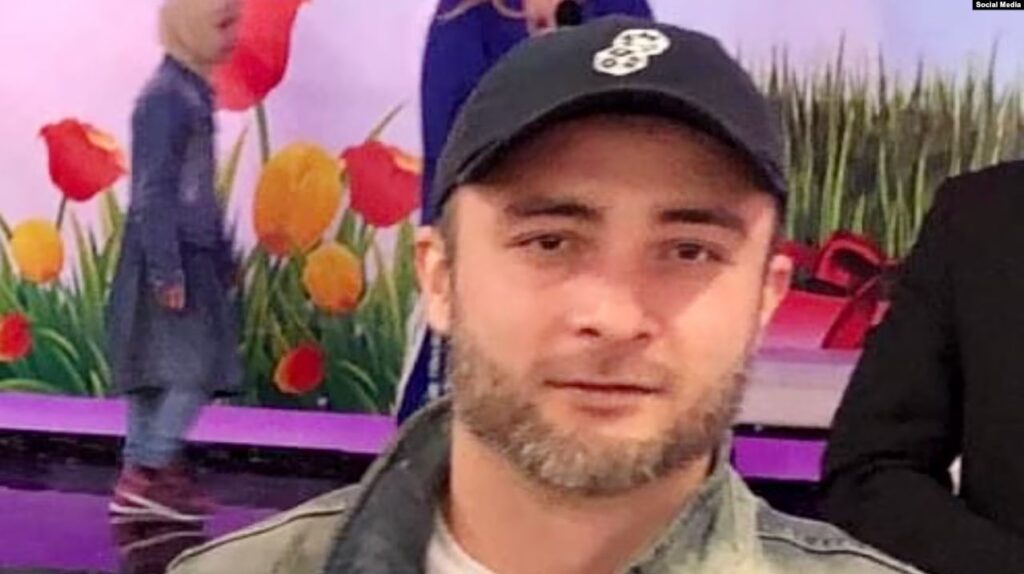
Tajik opposition activist Dilmurod Ergashev, formerly of the Group of 24, was detained and arrested in Dushanbe for two months. This was reported to Radio Ozodi by Sharofiddin Gadoev, leader of the Movement for Reforms and Development of Tajikistan, citing sources. However, Tajik authorities have not officially confirmed the information.

Gadoev stated that Ergashev was brought to Dushanbe on a flight from Istanbul on the morning of November 7 and handed over to local law enforcement immediately upon arrival. The next day, the Sino District Court in Dushanbe, in a closed session, ordered his provisional detention for two months. When contacted, the Sino District Court claimed it had no information on Ergashev’s case and advised journalists to submit an official inquiry.

Gadoev alleges that Ergashev is currently held in Tajikistan’s GKNB pre-trial detention center, where he is reportedly denied access to a lawyer and legal assistance. This information could not be independently verified, and the press office of the Tajik Interior Ministry also stated it was not involved in the case.

The 40-year-old opposition activist was deported from Germany on November 6. According to his lawyer and friends, Ergashev attempted to harm himself by slitting his veins as police prepared to escort him to Düsseldorf Airport. However, following medical treatment, the deportation proceeded.

Ergashev, who had lived in Germany for 13 years, was detained on October 28 in the town of Kleve and taken to a local administrative court, which ordered his deportation to Tajikistan. His lawyers contend that the court overlooked his pending application for political asylum, still under review by another judicial authority.

Since 2015, dozens of Tajik citizens opposing their government have sought asylum in Europe, particularly in Poland and Germany. In recent years, the EU has deported several of these individuals, including Abdullo Shamsiddin, Bilol Kurbonaliev, and Farrukh Ikromov.

Abdullo Shamsiddin, the son of Shamsiddin Saidov—a banned Islamic Renaissance Party of Tajikistan (IRPT) activist—received a seven-year prison sentence, while Bilol Kurbonaliev, another Group 24 member, was sentenced to ten years in prison. Farrukh Ikromov, deported from Poland, received a 23-year sentence. Another activist, Hizbullo Shovalizoda, an IRPT member extradited from Austria in 2020, was sentenced to 20 years in prison in Tajikistan.