• KGS/USD = 0.01144 0%
  • KZT/USD = 0.00216 0%
  • TJS/USD = 0.10637 0%
  • UZS/USD = 0.00008 0%
  • TMT/USD = 0.28530 0%
  • KGS/USD = 0.01144 0%
  • KZT/USD = 0.00216 0%
  • TJS/USD = 0.10637 0%
  • UZS/USD = 0.00008 0%
  • TMT/USD = 0.28530 0%
  • KGS/USD = 0.01144 0%
  • KZT/USD = 0.00216 0%
  • TJS/USD = 0.10637 0%
  • UZS/USD = 0.00008 0%
  • TMT/USD = 0.28530 0%
  • KGS/USD = 0.01144 0%
  • KZT/USD = 0.00216 0%
  • TJS/USD = 0.10637 0%
  • UZS/USD = 0.00008 0%
  • TMT/USD = 0.28530 0%
  • KGS/USD = 0.01144 0%
  • KZT/USD = 0.00216 0%
  • TJS/USD = 0.10637 0%
  • UZS/USD = 0.00008 0%
  • TMT/USD = 0.28530 0%
  • KGS/USD = 0.01144 0%
  • KZT/USD = 0.00216 0%
  • TJS/USD = 0.10637 0%
  • UZS/USD = 0.00008 0%
  • TMT/USD = 0.28530 0%
  • KGS/USD = 0.01144 0%
  • KZT/USD = 0.00216 0%
  • TJS/USD = 0.10637 0%
  • UZS/USD = 0.00008 0%
  • TMT/USD = 0.28530 0%
  • KGS/USD = 0.01144 0%
  • KZT/USD = 0.00216 0%
  • TJS/USD = 0.10637 0%
  • UZS/USD = 0.00008 0%
  • TMT/USD = 0.28530 0%

Insider’s View: Tashkent’s Water Diplomacy – From National Reforms to Regional Synergy in Central Asia

On April 22, a summit of the International Fund for Saving the Aral Sea (IFAS), one of the region’s prominent organizations, takes place in Astana.

The meeting of the Heads of the Founding States is especially significant because it marks the transition of the Fund’s chairmanship to Uzbekistan for the 2027-2029 period.

This will be our country’s third mandate, following leadership terms in 1997-1999 and 2013-2016. Tashkent was at the forefront of the creation of IFAS. Yet returning to this leadership role after a decade comes in a fundamentally transformed regional landscape. Today, Uzbekistan brings not only substantial experience but also a broad portfolio of initiatives that have received international recognition.

The Transformation of Uzbekistan’s Water Sector for Sustainable Development

Facing intensifying climate pressures alongside strong economic and demographic growth, Uzbekistan has made the restructuring of water resource management a core priority of state policy.

The scale of the challenge is clear in the data. Over the last 15 years, per capita water availability in the republic has fallen by more than half, from 3,000 to 1,400 cubic meters per year. According to the Ministry of Water Resources, the annual volume of water resources has dropped to 51-53 billion cubic meters, a 21% decline from 1991 levels of 64 billion cubic meters.

A major challenge remains the country’s high dependence on external sources, as approximately 80% of surface water, or 41 billion cubic meters, originates outside the country. While the water shortage did not exceed 3 billion cubic meters prior to 2015, expert forecasts indicate that the deficit could reach 7 billion cubic meters by 2030 and 15 billion cubic meters by 2050.

Recognizing the scale of these risks, Uzbekistan, under the leadership of Shavkat Mirziyoyev, is pursuing broad technological modernization of the water sector. In less than a decade, the area using water-saving technologies has grown from 28,000 hectares to more than 2.6 million hectares, now covering more than 60% of all irrigated land. At the same time, large-scale work continues across the country on canal concreting and the reconstruction of flume networks. By 2030, these systemic measures are projected to yield annual savings of up to 15 billion cubic meters of water.

At the same time, the sector is undergoing digitalization. Currently, 11 information platforms are being deployed to manage the water cadastre, monitor pumping stations, and track land reclamation status. Over the past four years, the management of 100 major water facilities has been fully automated, the Smart Water system has been introduced at 13,000 water intake points, and more than 1,700 pumping stations have been equipped with real-time online monitoring devices.

At the same time, the national economic model is also adapting. According to the Center for Economic Research and Reforms, the share of agriculture in GDP has declined from 32% in 2017 to 19% by 2024. Notably, against this backdrop, total agricultural production has increased by 17%. This divergence points to a transition toward more efficient resource use and higher productivity.

Regional Synergy and Water Diplomacy

At the same time, Uzbekistan is also advancing on the international water cooperation track. Most of the initiatives proposed by Tashkent within the framework of IFAS have been implemented through consolidated regional efforts and the active support of international partners.

The main focus of this work has been the ecological rehabilitation of the Aral Sea region. A network of local water bodies has been created on the dried bottom of the sea and in the Amu Darya delta, including the Sudochye, Khojakul-Karajar, and Maipost-Domalak lake systems, the Mezhdurechenskoe reservoir, as well as the Muynak, Rybachy, and Zhyltyrbas bays.

In addition, major forest reclamation projects are underway. To date, green plantations have been established across approximately 2 million hectares. In the next two years, protective belts are planned on another 400,000 hectares. The expansion of the protected natural area network, which has now reached 4.6 million hectares in the Aral Sea region, has not only reduced the emission of toxic dust but also created conditions for the revival of local flora and fauna.

International recognition of these efforts took shape in 2019 at a high-level conference in Nukus, where the designation of the Aral Sea region as a ‘Zone of Ecological Innovations and Technologies’ was advanced. The initiative, first proposed by President Shavkat Mirziyoyev at the 72nd session of the UN General Assembly and the IFAS Summit in 2018, received broad support in 2021 when the UN General Assembly unanimously adopted the corresponding resolution.

An important addition to these political initiatives was the launch in 2018 of the UN Multi-Partner Trust Fund for Human Security for the Aral Sea Region. Established at the proposal of Uzbekistan, the fund serves as a mechanism for mobilizing donor resources and coordinating international efforts to address the region’s most pressing socioeconomic and environmental challenges.

Alongside the development of these financial and humanitarian mechanisms, Uzbekistan consistently views IFAS as the preeminent platform for regional interaction in the water and environmental sphere, playing a unique role in ensuring stability in Central Asia. Through the qualitative strengthening of this organization, Tashkent intends to further promote the consolidated interests of the region on the global stage.

Furthermore, Uzbekistan is promoting multilateral cooperation formats. A steadfast commitment to the principles of good-neighborliness and proactivity has paved the way for a constructive dialogue on the joint management of the Amu Darya and Syr Darya water resources.

Concrete examples of this synergy include the agreements between Uzbekistan, Kazakhstan, and Tajikistan on the operation of the ‘Bahri Tojik’ reservoir, as well as the landmark decisions by Uzbekistan, Kazakhstan, and Kyrgyzstan regarding the Toktogul reservoir and the ‘Kambarata-1’ HPP construction project.

In light of the growing water shortage, a logical continuation of these efforts is a shift toward long-term strategic planning. To this end, during the Seventh Consultative Meeting of the Heads of State, the President of Uzbekistan proposed declaring 2026-2036 the Decade of Practical Actions for the Rational Use of Water in Central Asia. Recognizing that effective management is unattainable without a highly skilled workforce, Tashkent also plans to establish a Regional Center of Competence in Water Management at the TIIAME National Research University.

A critical vector of regional water cooperation remains the establishment of a dialogue with Afghanistan. Uzbekistan advocates the gradual involvement of Kabul in regional partnerships on the basis of a balance of interests. As practical steps, Tashkent proposes joint monitoring of transboundary rivers, the real-time exchange of hydrometeorological data, and the creation of permanent expert platforms. These measures are intended to lay the foundation for fair and rational water use throughout the region.

In summary, large-scale internal reforms combined with a proactive foreign policy have created a solid foundation for Uzbekistan’s upcoming chairmanship of IFAS. During its 2027-2029 mandate, the state intends to prioritize the renewal of the Fund’s regulatory and institutional framework. At the same time, efforts will remain focused on improving socioeconomic conditions, strengthening ecological safeguards, and identifying sustainable ways to increase the region’s water supply. Ultimately, Tashkent aims to raise the international standing of IFAS, making water and environmental cooperation a cornerstone of sustainable development and long-term stability in Central Asia.

Astana Is Turning Ecology into Regional Statecraft

On April 22–24, Astana will host the Regional Ecological Summit with the participation of numerous United Nations agencies and international partners. It is expected to produce a joint declaration and a Regional Program of Action for 2026–2030, giving it a formal ambition beyond that of a standard diplomatic conference. Kazakhstan is presenting the event as a region-wide platform through which shared ecological pressures may become a more regular channel for Central Asian coordination.

Officially, the summit is framed as a platform for regional solutions to climate and environmental challenges. It is also a more ambitious test of whether Kazakhstan can use ecology to sustain a more regular pattern of regional cooperation under multilateral auspices. Here, Astana is using ecology to include water, health, food systems, natural-resource management, pollution, resilience, and financing. The broader the issue area becomes, the more usable it is as a basis for cooperation among states whose interests diverge elsewhere.

The summit grew out of the Regional Climate Summit that President Kassym-Jomart Tokayev proposed at the Astana International Forum in June 2023. Since then, the agenda has widened from climate policy in the narrow sense to ecology more generally. This broadening fits the constraints the five Central Asian states share, which extend beyond emissions or adaptation metrics. They include water stress, land degradation, cross-border environmental risks, public-health effects, and the need for outside financing and technical coordination. A climate-only frame would have been too narrow for those overlapping pressures. The broader ecological frame is therefore more politically useful.

The meeting also has a prehistory in earlier regional backing and multilateral development. A key point came on July 21, 2022, at the Fourth Consultative Meeting of Central Asian heads of state in Cholpon Ata, where the Green Agenda Regional Program for Central Asia was adopted. At the same meeting, a joint statement, a roadmap for regional cooperation for 2022–2024, and a concept for Central Asian interaction in multilateral formats were also adopted. The Green Agenda itself was linked to decarbonization, alternative energy, mutual electricity supply, water-saving and environmentally friendly technologies, and the rational use of water resources. Later UNDP material tied that program more explicitly to regional cooperation on climate action, water and energy management, and the use of United Nations platforms for advancing shared initiatives. The Astana summit builds on that earlier momentum.

The scale of the UN presence indicates that the summit is meant as more than a ceremonial gathering. UN Kazakhstan says that 18 UN agencies are co-organizing 27 sessions and five workshops. For a regional meeting of this kind, that is a dense working structure. The same UN summary says that one expected outcome is a Joint Declaration by the Heads of State of Central Asia on regional environmental cooperation, followed by a Program of Action for 2026–2030 developed in partnership with the United Nations. Kazakhstan’s own framing presents the summit as a permanent platform for dialogue among governments, international organizations, scientific institutions, business, and civil society. The event is thus situated at the intersection where regional diplomacy meets multilateral policy design.

The agenda shows why ecology is being used in this way. It brings together climate transition, adaptation, food security, ecosystems, resource use, pollution, finance, and technology under a single policy frame. The operative goals are concrete: reduce emissions, improve energy efficiency, expand renewable energy, protect communities and ecosystems from climate and natural risks, support sustainable agriculture, and safeguard water resources such as the Aral and Caspian Seas. This is a policy bundle rather than a loose thematic list. It connects environmental constraints to economic management, state capacity, and social effects.

The summit’s health-and-environment component shows this broadening especially clearly. It connects ecological deterioration to direct consequences for populations and to problems of governance that no single state can manage effectively on its own. The World Health Organization is hosting a ministerial session focused on the health consequences of environmental degradation in the Aral Sea region. It is expected to bring together government representatives from Central Asia and the Caspian region, along with international organizations and experts. The discussion will focus on coordinated, evidence-based responses and on ways to strengthen cross-border and intersectoral cooperation.

Attention to implementation questions distinguishes the summit from a purely declaratory meeting. Alongside its large UN presence, the preparatory process has produced named initiatives and concrete mechanisms. UNDP Kazakhstan says that the Green Shield initiative and the Harmony with Nature for Sustainable Development of the Region initiative are being prepared for presentation and endorsement at the summit, followed by the adoption of a declaration and a resolution. The same preparatory meeting in Almaty focused on cross-border biodiversity protection, forest restoration, action against land degradation and desertification, and a coordinated system for mobilizing financial resources.

The immediate question, and the practical test, is whether the summit can secure endorsement of the joint declaration and the Regional Program of Action it has been designed to produce. Preparations have been wide-ranging: regional and international consultations, discussions at UN platforms, an updated summit concept, a draft joint declaration, and the launch of more than 20 regional initiatives. However, final bargaining over scope, wording, and priorities often occurs at the meeting itself, and one cannot assume that the political outcome is settled before official action makes that clear.

That outcome will indicate whether shared ecological constraints can be turned into a more routine form of regional cooperation. Through its extensive multilateral preparation, Kazakhstan is trying to make that happen. Success would not mean deep ecological integration across Central Asia. It would mean, however, that ecology had become a standing channel through which the region’s governments could coordinate on problems that already bind them together in practice. Astana is using this summit to see whether that channel can be widened and made sustainable.

Tajikistan to Make Tourism Pitch at Rock Spire Site

Tajikistan, where tourism has long been hindered by security concerns and a lack of infrastructure, plans to host an international tourism conference this summer in one of the country’s most picturesque areas.

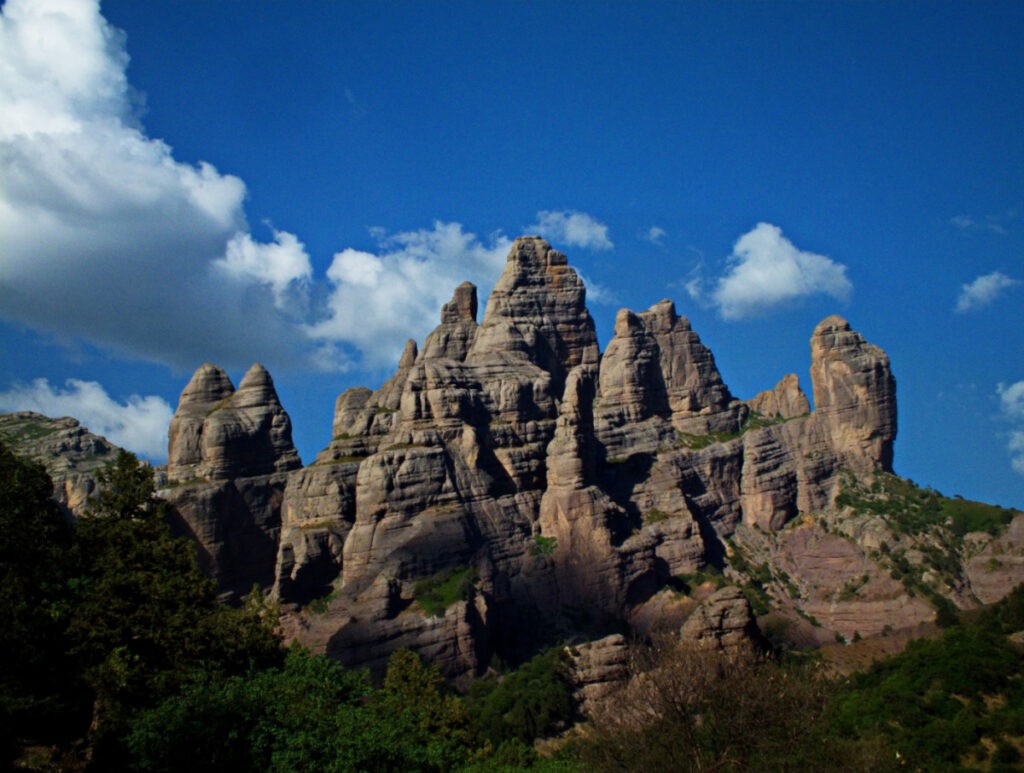
People from more than 20 countries are expected to attend the event in the mountainous region of Childukhtaron on June 4-5, according to tourism officials in Khatlon, the southern province that encompasses the natural spires of rock. The name, Childukhtaron, derives from ancient lore about girls who turned into towering rock formations to thwart an invading force.

Childukhtaron is dozens of kilometers away from Tajikistan’s border with Afghanistan, the scene of occasional incursions into Khatlon from the Afghan side by suspected drug smugglers as well as incidents of deadly attacks on Chinese workers. Tajikistan has stepped up security close to the border and says the area is under control, while tourism officials are confident that Childukhtaron is far enough away from the frontier to be secure.

Still, some travelers might be deterred by long-running safety concerns about Tajikistan. A number of countries warn against travel to the immediate Tajik-Afghan border region and advise caution in other parts of the country because of concerns about terrorism.

Canada, for example, says: “Avoid all travel to within 10 km of the border with Afghanistan due to the dangerous security situation and the threat of terrorism.”

Earlier this year, China advised its nationals to leave the border area.

The Tajik initiative in Childukhtaron is one of the latest efforts to attract visitors to parts of Central Asia that have much to offer tourists, but can be relatively difficult to visit because of long distances, basic infrastructure, and, in Tajikistan’s case, security concerns.

Earlier this month, Turkmenistan hosted an international tourism conference, though it remains to be seen whether one of the world’s most closed countries will significantly ease regulations that deter some travelers. In contrast, Uzbekistan and Kazakhstan have taken big strides in developing tourism infrastructure.

In the case of Khatlon in Tajikistan, authorities say foreign tourism in the province is on the rise. Khatlon officials say 344,000 tourists entered the region in the first quarter of 2026, according to the state Khovar news agency. The agency’s report didn’t provide a breakdown of domestic and foreign tourists or a figure for the same period last year.

Khovar indicated that tourism in Khatlon is a work in progress, referring to the “development potential” of cities and districts there.

Childukhtaron is in the Muminabad district, about 250 kilometers south of Dushanbe, Tajikistan’s capital. That’s a drive of some hours, and some tour operators advise at least an overnight stay in the district. More adventurous travelers can consider renting a jeep or all-terrain vehicle to access remote areas.

Childukhtaron “consists of pyramid-shaped rocks up to 60 meters high, which have been eroded by long-term winds,” Khovar reported. “There have been many legends and traditions about the Childukhtaron Mountains among the population and indigenous peoples since ancient times.”

Kyrgyzstan Expands Small Hydropower to Tackle Rising Energy Deficit

Kyrgyzstan is accelerating its development of small hydropower plants as it seeks to close a widening electricity gap driven by surging demand and limited domestic generation capacity.

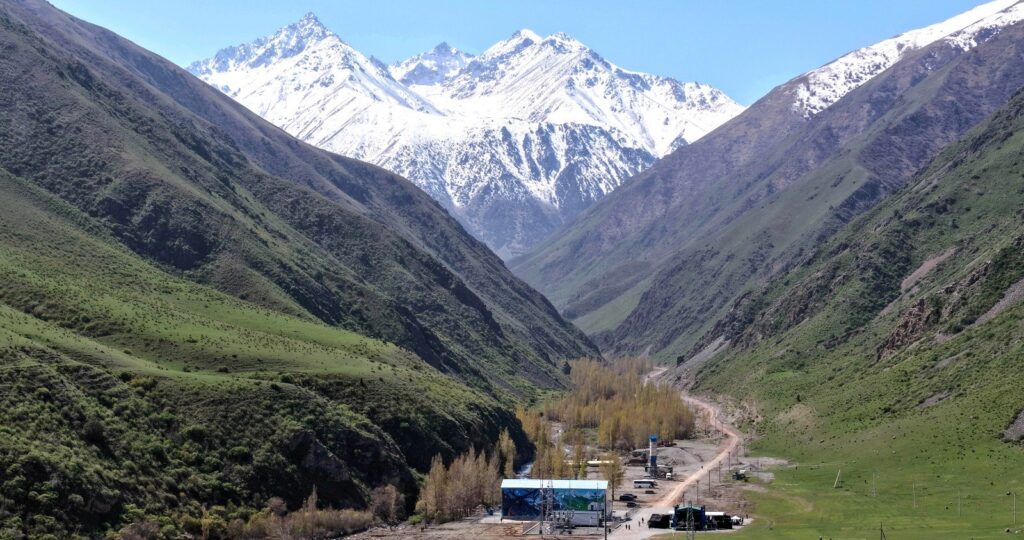
On April 20, two new small hydroelectric power plants (HPPs) were commissioned in the country’s northern Chui region. The Sokuluk-3 HPP has a capacity of 9.5 MW, while the Tuyuk HPP has a capacity of 5.9 MW. Combined, they are expected to generate between 60 million and 70 million kWh of electricity annually.

Speaking at the launch ceremony, President Sadyr Japarov underscored the strategic importance of small-scale hydropower.

“Such projects increase the resilience of the energy system and facilitate the gradual reduction of the energy deficit. Today, 48 small hydroelectric power plants with a total capacity of 180 MW are operating in Kyrgyzstan. They play a significant role in strengthening energy independence and reducing dependence on imports,” he said.

The government is scaling up efforts in the sector, with 50 small HPPs currently under construction across the country. Of these, 13 are scheduled to be commissioned in 2026.

Electricity demand in Kyrgyzstan continues to rise rapidly. In 2025, total consumption reached 19.3 billion kWh, up by 900 million kWh compared to the previous year. Domestic generation accounted for 15.4 billion kWh, while the remaining 3.9 billion kWh was covered through imports from Turkmenistan, Uzbekistan, Kazakhstan, and Russia.

According to Minister of Water Resources, Agriculture, and Processing Industry, Bakyt Torobayev, electricity consumption has grown by more than 25% over the past five years, rising from 15.4 billion kWh in 2020.

“If current electricity consumption rates continue, it could reach 25 billion kWh by 2030,” Torobayev said.

The surge in demand has been driven by rapid housing construction and the launch of new industrial facilities. With Kyrgyzstan’s population now exceeding 7.4 million, the number of electricity consumers is expanding steadily. Over the past three years alone, 4,192 industrial facilities and 96,975 households have been connected to the national grid, according to the Energy Ministry.

Despite the expansion of generation capacity, supply continues to lag behind demand, prompting authorities to prioritize small hydropower as a flexible and scalable solution to improve energy security and reduce reliance on imports.

Turkmenistan Advances Galkynysh Gas Field Development to Increase Exports to China

Chinese Vice Premier Ding Xuexiang and Gurbanguly Berdymuhamedov, Tukmenistan’s former President and the current Chairman of its highest representative body, the Halk Maslahaty, have launched the fourth phase of industrial development of the Galkynysh gas field in Mary region.

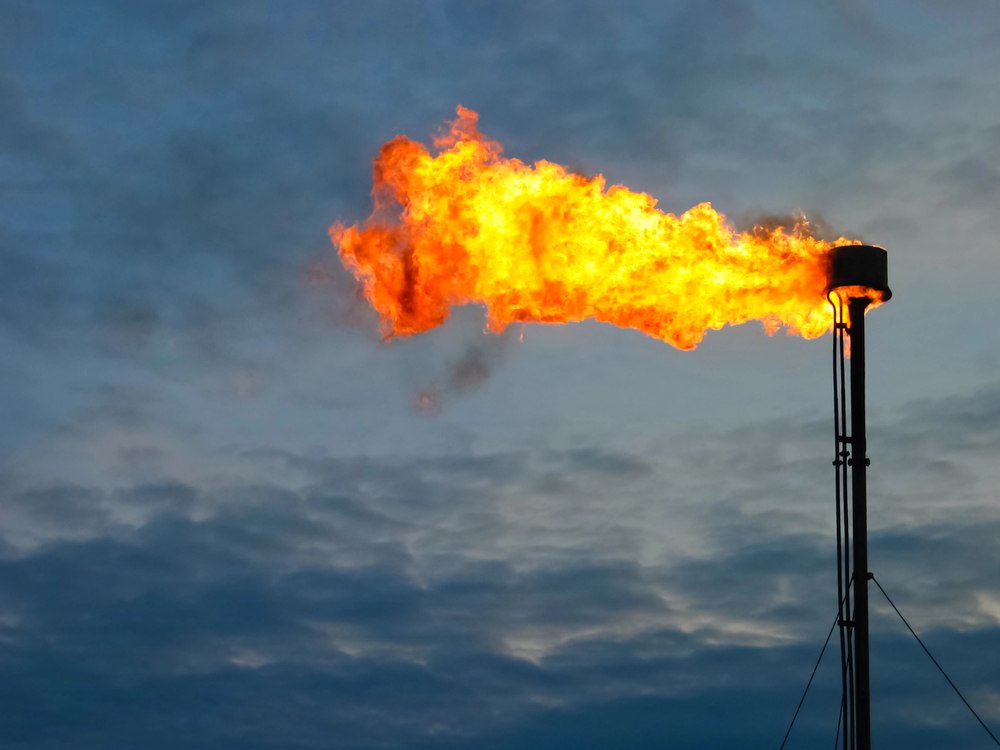
Located about 400 km southeast of Ashgabat, the Galkynysh field has been producing natural gas since 2013 and is considered one of the world’s largest in terms of reserves. The British consulting firm GaffneyCline estimates the reserves of Galkynysh, together with the neighboring fields Garakol and Yashlar, at 27.4 trillion cubic meters of natural gas.

On April 16, the State Concern Turkmengas and China’s CNPC Amudarya Petroleum Company Ltd. signed a contract for the turnkey construction of the fourth phase of the field’s development. The project includes the drilling of production wells and the construction of a gas processing facility with a capacity of 10 billion cubic meters of commercial gas per year.

According to industry publication Nebit-Gaz, the Galkynysh field is being developed in phases. The first phase, which included the construction of three gas processing plants with a total capacity of 30 billion cubic meters per year, is currently operational. The second, third, and fourth phases are planned for the near future. Upon full development, the field’s gross annual production could reach nearly 200 billion cubic meters of natural gas.

The Galkynysh field serves as the main resource base for Turkmen gas exports to China.

China remains the largest buyer of Turkmen natural gas. Three lines (A, B, and C) of the Turkmenistan-China gas pipeline system currently deliver approximately 40 billion cubic meters of gas annually. With the planned commissioning of a fourth line (Line D), export volumes are expected to increase to around 65 billion cubic meters per year.

The resource base of Galkynysh is a key factor in the planned construction of Line D, which is expected to significantly increase gas supplies to China.

According to Guvanch Agajanov, Vice-Chairman of Turkmenistan’s Cabinet of Ministers, total Turkmen gas exports to China have exceeded 462 billion cubic meters over the past 20 years.

The Galkynysh field has also been designated as the resource base for the Turkmenistan-Afghanistan-Pakistan-India (TAPI) gas pipeline, which is under construction and is expected to have a capacity of 33 billion cubic meters per year.

Kazakhstan’s Auto Industry Accelerates: Vehicle Output Up Nearly 37%

Vehicle production in Kazakhstan increased by 36.8% year-on-year in January-March 2026, according to data from the Kazakhstan Automobile Union (KAU).

KAU reported that 45,260 units were produced in the first three months of the year, including passenger cars, trucks, trailers, and semi-trailers. In March alone, output reached 17,462 units, up 42.8% compared to the same month last year and 19.9% higher than in February.

In value terms, total automotive output amounted to approximately $1.2 billion, representing a 27.5% increase year-on-year. The sector’s share of the overall machinery industry rose to 43.1%, up from 39.7% a year earlier.

“Based on the results of the first three months, Kazakhstan’s auto industry is demonstrating steady growth,” said KAU President Anar Makasheva. “The continued strong performance in March confirms positive trends in the sector. Significant growth has also been recorded in the auto components segment: over three months, production of automotive parts and accessories reached 259.8 billion tenge, increasing fourfold compared to the same period last year. Manufacturers will continue to accelerate growth in this segment.”

Passenger cars continue to account for the largest share of output. During the reporting period, 42,115 units were produced, up 37.9% year-on-year. Truck production reached 1,380 units (+16.7%), buses totaled 750 units (+73.2%), and trailers and semi-trailers reached 904 units (+21%). Output of special-purpose vehicles declined to 111 units.

The Kostanay-based Allur plant remained the industry leader, producing 14,234 vehicles. Astana Motors Manufacturing Kazakhstan in Almaty produced 12,778 units, while Hyundai Trans Kazakhstan manufactured 10,755 vehicles. The Kia Qazaqstan plant produced 4,640 units.

Other manufacturers include QazTehna (806 units), SemAZ (627 trucks), Hyundai Trans Almaty (196 units), Daewoo Bus Kazakhstan (148 units), and KAMAZ-Engineering (135 units).

Among the most popular brands produced in Kazakhstan were Hyundai (10,725 vehicles), Chevrolet (8,341), Kia (5,084), Changan (4,102), Haval (4,099), Chery (3,744), Jetour (2,250), Geely Galaxy (1,388), JAC (979), and Tank (833).

The increase in output continues last year’s trend, when Kazakhstan set a record by producing more than 171,000 vehicles in 2025.