• KGS/USD = 0.01144 0%
  • KZT/USD = 0.00196 -0%
  • TJS/USD = 0.10899 0%
  • UZS/USD = 0.00008 0%
  • TMT/USD = 0.28490 0%
  • KGS/USD = 0.01144 0%
  • KZT/USD = 0.00196 -0%
  • TJS/USD = 0.10899 0%
  • UZS/USD = 0.00008 0%
  • TMT/USD = 0.28490 0%
  • KGS/USD = 0.01144 0%
  • KZT/USD = 0.00196 -0%
  • TJS/USD = 0.10899 0%
  • UZS/USD = 0.00008 0%
  • TMT/USD = 0.28490 0%
  • KGS/USD = 0.01144 0%
  • KZT/USD = 0.00196 -0%
  • TJS/USD = 0.10899 0%
  • UZS/USD = 0.00008 0%
  • TMT/USD = 0.28490 0%
  • KGS/USD = 0.01144 0%
  • KZT/USD = 0.00196 -0%
  • TJS/USD = 0.10899 0%
  • UZS/USD = 0.00008 0%
  • TMT/USD = 0.28490 0%
  • KGS/USD = 0.01144 0%
  • KZT/USD = 0.00196 -0%
  • TJS/USD = 0.10899 0%
  • UZS/USD = 0.00008 0%
  • TMT/USD = 0.28490 0%
  • KGS/USD = 0.01144 0%
  • KZT/USD = 0.00196 -0%
  • TJS/USD = 0.10899 0%
  • UZS/USD = 0.00008 0%
  • TMT/USD = 0.28490 0%
  • KGS/USD = 0.01144 0%
  • KZT/USD = 0.00196 -0%
  • TJS/USD = 0.10899 0%
  • UZS/USD = 0.00008 0%
  • TMT/USD = 0.28490 0%
08 December 2025

Kazakhstan Recycles 24% of Waste It Produces

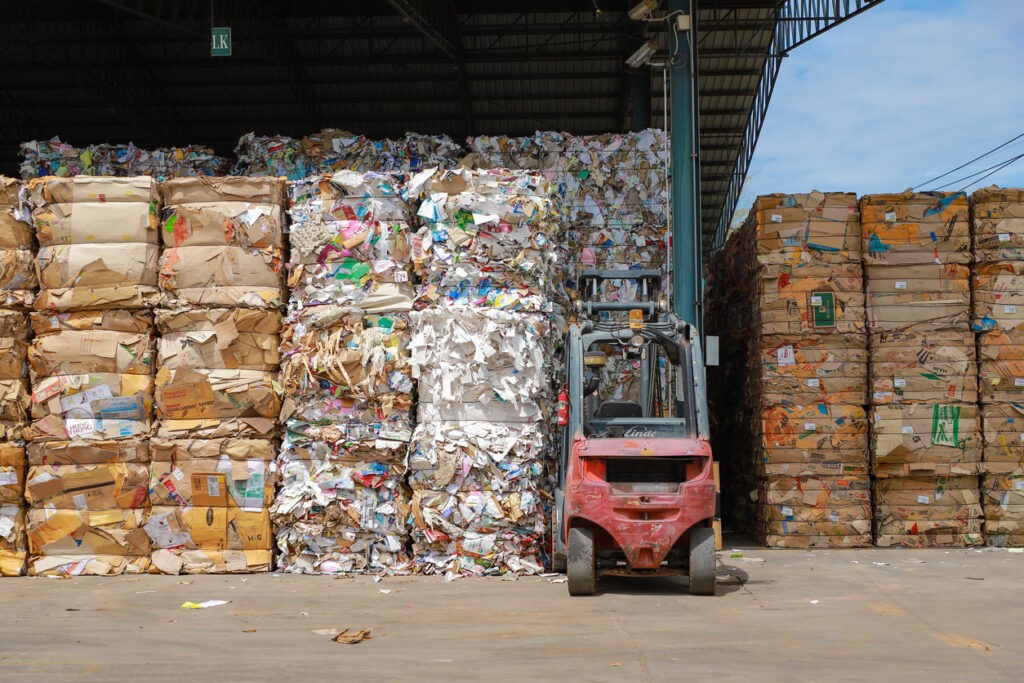
Deputy Minister of Ecology and Natural Resources Zhomart Aliyev said at the VIII Eurasian Business Forum “Green Energy & Waste Recycling” in Astana on October 3 that in 2023, 4.1 million tons of municipal waste were produced across Kazakhstan, and only 24% of that volume was recycled.

According to Aliyev, unauthorized landfills remain a big problem. A total of 4,868 such landfills have been identified, and only 32% of them have been recycled.

As of 2023, only 624 out of Kazakhstan’s 3,016 solid waste landfills met all the environmental requirements.

The government has approved 94 investment projects to construct waste processing plants in Kazakhstan, which is expected to increase the country’s municipal waste processing from 1 million to 2.2 million tons annually.

The government has also approved a resolution on preferential financing for the construction of waste sorting and recycling plants and a plan to modernize existing solid waste landfills.

The government has also drafted a Concept for the Development of Environmental Culture for 2024-2029, which aims to raise public awareness of proper waste management.

Kazakhstan Leads Central Asia in Global Knowledge Index

Kazakhstan performed best among Central Asian countries in the 2024 Global Knowledge Index, conducted by the United Nations Development Program in cooperation with the Mohammed bin Rashid Al Maktoum Knowledge Foundation. The country takes a respectable 74th place out of 133 countries; however, Kazakhstan is 60th out of the 61 countries with very high human development.

The index considers seven indicators covering the countries’ education, information and communication technology, and economic sectors.

Uzbekistan is in 78th place, and the country ranks 14th out of 28 countries with high human development.

Kyrgyzstan has a modest knowledge infrastructure. It is 84th in this rating and is a medium indicator of the country’s knowledge infrastructure. The country ranks 5th out of 25 countries with medium human development.

Tajikistan records the lowest result among the region’s countries in the Global Knowledge Index. With 36.1 points, it takes 111th place among the 133 countries. Regarding medium human development, the country shows the same result as Kyrgyzstan.

Reservoirs in Kazakhstan Make Room for Next-Year Meltwater

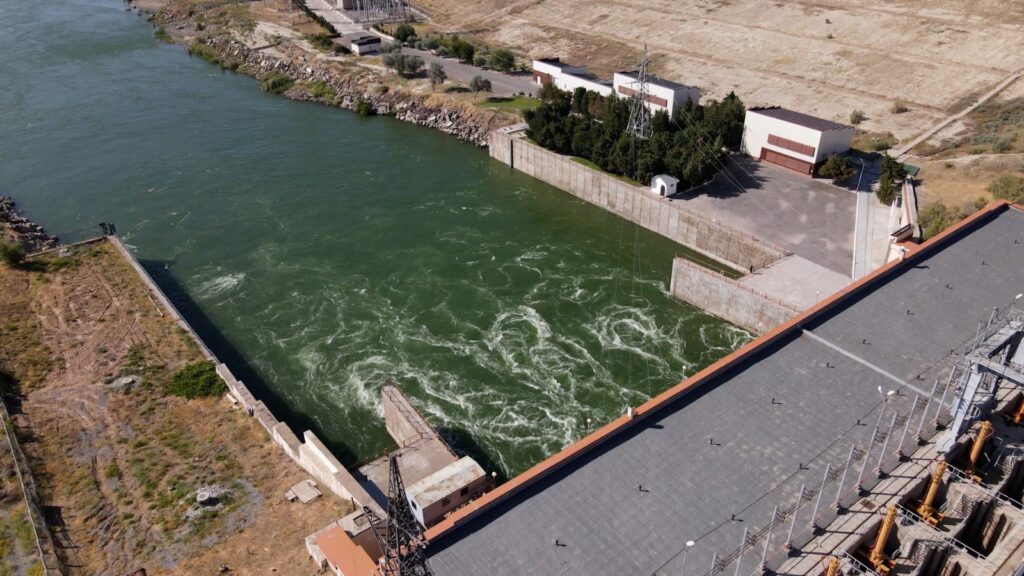
In preparation for potential floods next spring, Kazakhstan’s Ministry of Water Resources and Irrigation is gradually releasing water from reservoirs in the country’s northern, western, central, and eastern regions to ensure they can receive snowmelt water in case of flooding.

In Kostanay Region, the Karatomar reservoir releases 50 cubic meters of water per second.

In Aktobe Region, the Kargalinsky reservoir discharges 15 cubic meters of water per second, and 107 million cubic meters of water were released from the Aktobe reservoir from August 23 to October 1.

In western Kazakhstan, three cubic meters of water per second are released from the Kirov reservoir, 13 cubic meters per second from the Bitik reservoir, six cubic meters from the Dunguluk reservoir, and five cubic meters from the Pyatimar reservoir.

At the same time, reservoirs in dry southern regions of Kazakhstan keep accumulating water for next year’s growing season.

Deputy Minister of Water Resources and Irrigation Nurlan Aldamzharov commented that the country’s reservoirs accumulated 75 billion cubic meters of water this past spring, 15 billion cubic meters more than last year. More than 12 billion cubic meters of that water was flood water.

In the spring of 2024, Kazakhstan’s western and northern regions suffered from unprecedented floods caused by the rapid snowmelt. The floods destroyed thousands of homes and forced almost 100,000 people to evacuate from flood zones.

Qatar To Help Restore Uzbekistan’s UNESCO World Heritage Site, Bibi-Khanym Mosque

During a recent meeting between the Assistant to the President of Uzbekistan Saida Mirziyoyeva and Sheikha Al Mayassa bint Hamad bin Khalifa Al Thani, bilateral cooperation agreements were signed between the Foundation for the Development of Culture and Arts of Uzbekistan, the Aga Khan Trust, and the Qatar Development Foundation.

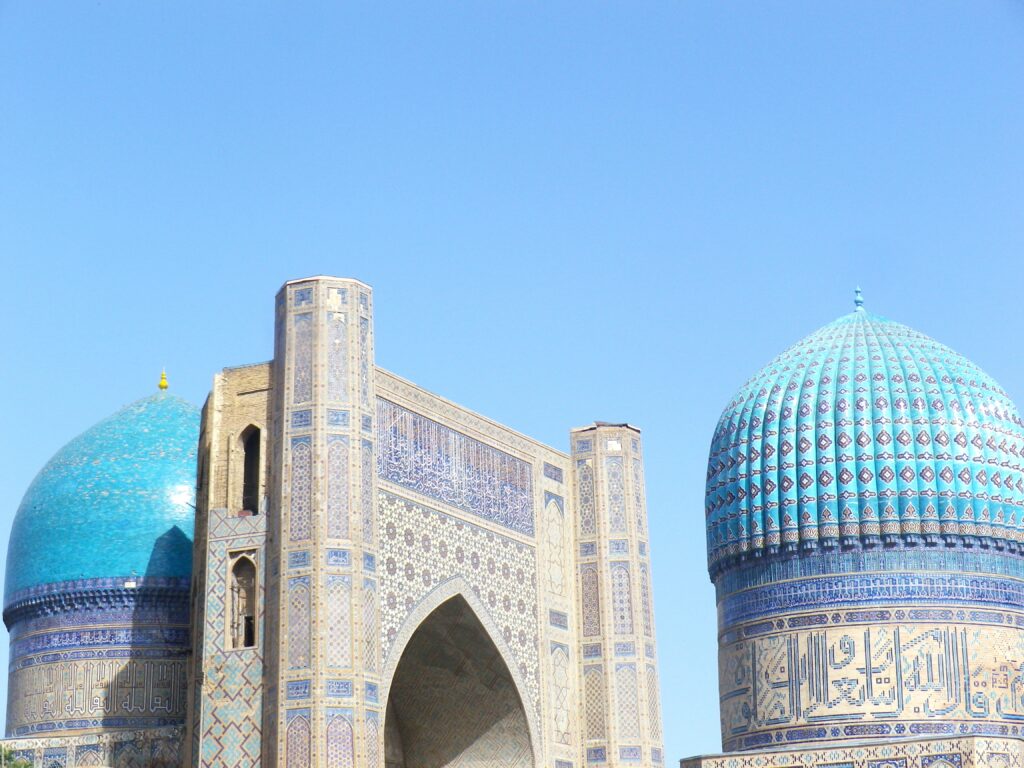
These agreements envisage not only financial support, but also the exchange of experience in the field of restoration of cultural monuments. In particular, the talks focused on restoring the Bibi-Khanym Mosque, built in the 15th century by Timur and a UNESCO World Heritage Site.

According to local media reports, Qatar will actively revitalize this important monument, which attracts tourists from all over the world. Although details of the funding have not yet been disclosed, the work is expected to restore the mosque to its historic appearance, preserving its uniqueness for future generations.

The Bibi-Khanym Mosque in Samarkand was built on the orders of Timur (Tamerlane) after his victorious campaign to India in 1399. The construction used 95 elephants to transport materials. Its high tympanum coated in cobalt blue tile-work, the Mosque stands in a grassy courtyard around a large marble carving of the Quran. Named after Timur’s Chinese wife, local folklore tells how the architect fell in love with her and stole a kiss. Escaping the wrath of Timur by jumping from the minaret, he sprouted wings and flew to Mecca.

At its peak, the mosque could hold up to 10,000 worshipers and became a symbol of Timur’s greatness; however, due to its enormous size, the structure began to deteriorate before it was completed. Since then, the building has undergone numerous restorations, especially during the Soviet era.

Kyrgyz President Applauds Son’s Golf Project Despite Questions

Kyrgyzstan is building the biggest golf course in Central Asia, President Sadyr Japarov says. The man building the golf course? Japarov’s son, Rustam.

Japarov has often said that his friends and family won’t get involved in politics and government, though some media reports and critics say that he hasn’t kept his word in a country where corruption has been a longstanding concern. In an interview this week with the state-run Kabar news agency, the president stuck to his position that family members won’t get mixed up in state affairs.

“I always tell them not to do business with the state. We must learn from the past,” said Japarov, who has previously said that critical media coverage of his government amounted to slander and trafficking in rumors.

“Rustam is busy attracting investors. He is building a golf course in Issyk-Kul. God willing, we plan to open it next year,” said Japarov, who didn’t offer details about the project other than that “it will be the largest golf course in Central Asia.”

The president also praised his son for a project that he started last year to build a football field with lighting in every village in the country.

The area around Lake Issyk-Kul, where the golf course is being built, is one of Kyrgyzstan’s main tourist sites. Its attractions include beaches, hiking and ancient petroglyphs showing deer, leopards and hunting scenes. There are restaurants, wellness centers and conference facilities catering to international delegations. Telegram founder Pavel Durov was spotted there earlier this year.

Japarov’s son, Rustam, drew attention in 2022 when a photo circulating on social media appeared to show him with leaders at a meeting of the Shanghai Cooperation Organization, a regional security group, in Samarkand, Uzbekistan. At the time, the 24.kg news service questioned why he was there since he didn’t hold any government position and wasn’t part of the official Kyrgyz delegation.

In June, President Japarov apologized when news emerged that the fiancé of his niece had proposed marriage after the pair traveled on a rented government helicopter to the mountains near Bishkek. The scandal got worse when the fiancé, Aftandil Sabyrbekov, was arrested on drug charges.

In the Kabar interview that was published on Wednesday, Japarov also disputed any suggestion that the involvement of Taimuras Tashiev, son of a high-ranking government official, in a road project in the town of Özgön was inappropriate. Tashiev’s father is Kamchybek Tashiev, chairman of the State Committee for National Security.

“Why not say thanks to Taimuras,” said the president, who regularly gives interviews to state-run Kabar while some more critical media have faced state prosecutions. “Would Taimuras introduce the company he founded if it would harm the state?”

Navigating Diplomacy: Central Asia’s Strategic Balancing Act Amid Middle East Tensions

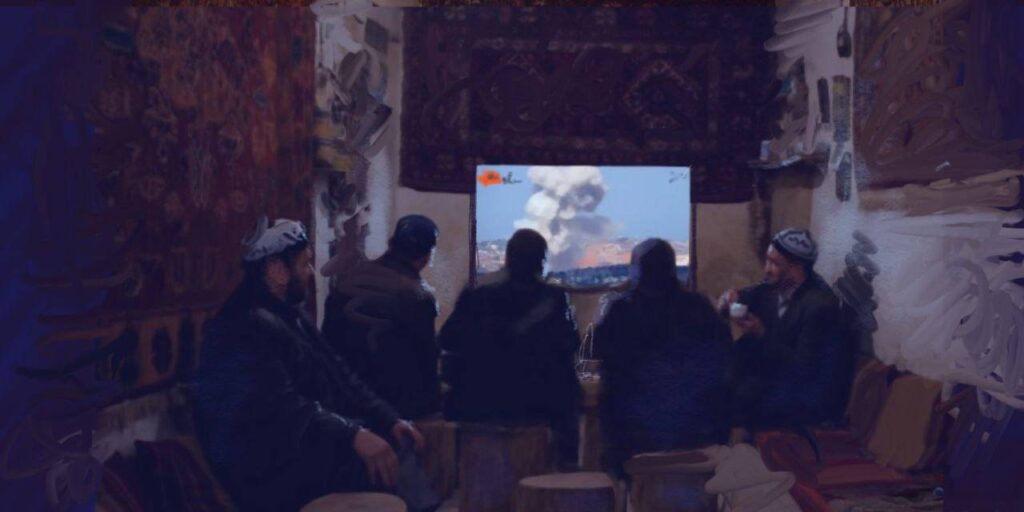
The five Central Asian republics are actively building ties with the outside world, trying to balance the influence of China and Russia in the region. For the former Soviet republics, the Middle East was, until recently, a kind of terra incognita since Moscow carried out all contacts with the area. However, since the nineties, thanks to a growing friendship with Turkey, Kazakhstan, followed by other Central Asian republics, have begun establishing diplomatic, cultural, and trade ties with the Middle East and North African countries. Another escalation in the Middle East has forced the diplomatic departments of the Central Asian countries, whilst avoiding any accusations against either side in the conflict, to inform their citizens about and the address the fate of their compatriots who have found themselves at the epicenter of events.

Kazakhstan

In Kazakhstan, law enforcement agencies reacted before diplomats. Shyngys Alekeshev, head of the Interior Ministry’s Information Policy Department, said in response to journalists’ inquiries that police in the republic have brought their patrol routes closer to synagogues and Israeli diplomatic facilities.

Later, official representative of the Ministry of Foreign Affairs of Kazakhstan, Aibek Smadiarov, said that no Kazakh citizens were injured as a result of the armed escalation between Iran and Israel, and urged Kazakh citizens in the Middle East to exercise caution.

“The Kazakh Foreign Ministry expresses deep concern about the increasing escalation of tensions in the Middle East. We call on all parties involved to exercise restraint and refrain from using forceful methods to avoid civilian casualties and further escalation of the situation in the region, which could provoke a full-scale war. In this regard, we note the importance of taking early measures to resolve differences exclusively through political and diplomatic means within the framework of the principles of the UN Charter and international law,” said Smadiarov.

According to the representative, 120 citizens of the Republic of Kazakhstan, including diplomats and their family members, are registered as being present in Israel, 102 in Iran, and 139 in Lebanon.

“Communication channels have been created with citizens who are in these countries. Constant communication is maintained with them, and necessary recommendations are given depending on the development of the situation in one country or another. Several times, embassies have announced the need to leave the country due to the aggravation of military and political situations. At the same time, the Ministry and authorized bodies are monitoring the situation to work out possible repatriation flights. The evacuation of our citizens is still under consideration and the special control of the Ministry of Foreign Affairs,” said Smadiarov.

Kyrgyzstan

The Kyrgyz Foreign Ministry stated on October 2 that it is deeply concerned about events taking place in the Middle East, stating that it is calling on “the conflicting parties to respect the fundamental principles and norms of international law, including refraining from actions leading to an escalation of the situation in the region. The Kyrgyz Republic urges the global community to completely stop military action as soon as possible, and start a political dialog and peaceful settlement of conflicts.”

The Kyrgyz Foreign Ministry has recommended its citizens refrain from visiting Israel, Iran, and Lebanon because of increased risks associated with instability in the region.

“Citizens of the Kyrgyz Republic who are already in the Middle East region are advised to strengthen their security measures, avoid mass gatherings, as well as strictly follow the requirements and recommendations of the official authorities of the host country,” the Ministry summarized.

Uzbekistan

Uzbekistan believes that settling conflicts in the Middle East requires the creation of a sovereign Palestinian State. However, speeches and rallies supporting this position remain prohibited within the country.

The Uzbek Foreign Ministry commented on the situation in the Middle East on October 3, packing the issue into a press release filled with other responses to inquiries from the republic’s mass media. In particular, questions about the results of the Uzbek delegation’s participation in the UN General Assembly and the Ministry’s attitude towards the strike on the residence of the UAE ambassador in Khartoum were also raised by the media.

The Foreign Ministry said the Uzbek embassy in Israel is working in a reinforced mode, keeping in touch with the state’s authorities and its citizens in the country.

“On the website and pages of the embassy on social networks there are recommendations on personal safety, in particular the need to take cover in bomb shelters during rocket attacks, follow official messages, always carry identity documents and contact information of the Embassy of Uzbekistan. On a 24/7 basis, citizens needing assistance or advice may contact the diplomatic mission by calling the numbers distributed through social networks and personal contacts. The Ministry of Foreign Affairs of Uzbekistan is constantly monitoring the situation,” the Ministry summarized.

Tajikistan and Turkmenistan

Turkmenistan’s government agencies have not reacted to the escalation in the Middle East. A country with its borders largely closed to its citizens, Turkmenistan has no known citizens in Israel, Iran, or Lebanon.

Tajikistan’s Foreign Ministry website, meanwhile, contains a statement dated October 1 regarding its official reaction to the strike on the UAE ambassador’s residence in Khartoum and information dated October 3 about a meeting between the republic’s ambassador and Iran’s Minister of Culture and Islamic Guidance. Nothing further has been forthcoming.

A Delicate balance

In conclusion it is fair to say that the Central Asian republics are navigating a complex geopolitical landscape as they respond to rising tensions in the Middle East, prioritizing the safety of their citizens abroad, while maintaining a delicate diplomatic stance. Kazakhstan, Kyrgyzstan, and Uzbekistan have taken proactive measures to ensure the security of their nationals, emphasizing the need for political dialogue and peaceful conflict resolution. These efforts reflect a broader strategy of balancing the influence of major powers, such as China and Russia, while expanding diplomatic and economic connections with the wider world. Such a position is indicative of a growing commitment to active participation in international affairs, and Central Asia’s evolving role on the world stage.