• KGS/USD = 0.01143 -0%
  • KZT/USD = 0.00192 -0%
  • TJS/USD = 0.10820 0.19%
  • UZS/USD = 0.00008 0%
  • TMT/USD = 0.28575 0%
  • KGS/USD = 0.01143 -0%
  • KZT/USD = 0.00192 -0%
  • TJS/USD = 0.10820 0.19%
  • UZS/USD = 0.00008 0%
  • TMT/USD = 0.28575 0%
  • KGS/USD = 0.01143 -0%
  • KZT/USD = 0.00192 -0%
  • TJS/USD = 0.10820 0.19%
  • UZS/USD = 0.00008 0%
  • TMT/USD = 0.28575 0%
  • KGS/USD = 0.01143 -0%
  • KZT/USD = 0.00192 -0%
  • TJS/USD = 0.10820 0.19%
  • UZS/USD = 0.00008 0%
  • TMT/USD = 0.28575 0%
  • KGS/USD = 0.01143 -0%
  • KZT/USD = 0.00192 -0%
  • TJS/USD = 0.10820 0.19%
  • UZS/USD = 0.00008 0%
  • TMT/USD = 0.28575 0%
  • KGS/USD = 0.01143 -0%
  • KZT/USD = 0.00192 -0%
  • TJS/USD = 0.10820 0.19%
  • UZS/USD = 0.00008 0%
  • TMT/USD = 0.28575 0%
  • KGS/USD = 0.01143 -0%
  • KZT/USD = 0.00192 -0%
  • TJS/USD = 0.10820 0.19%
  • UZS/USD = 0.00008 0%
  • TMT/USD = 0.28575 0%
  • KGS/USD = 0.01143 -0%
  • KZT/USD = 0.00192 -0%
  • TJS/USD = 0.10820 0.19%
  • UZS/USD = 0.00008 0%
  • TMT/USD = 0.28575 0%
13 December 2025

Solar-Powered Irrigation System Launched Outside Tashkent

A new drip irrigation system that runs on solar power has been introduced in the Akkurgan district outside Uzbekistan’s capital Tashkent. The irrigation system is being funded by the European Union, and is part of a project between the United Nations Development Programme (UNDP) and the Uzbek Ministry of Agriculture.

Increasing water scarcity is a serious challenge in rural Uzbekistan. Many families rely on their backyard gardens to grow vegetables, and better irrigation will help rural communities to become more economically sustainable.

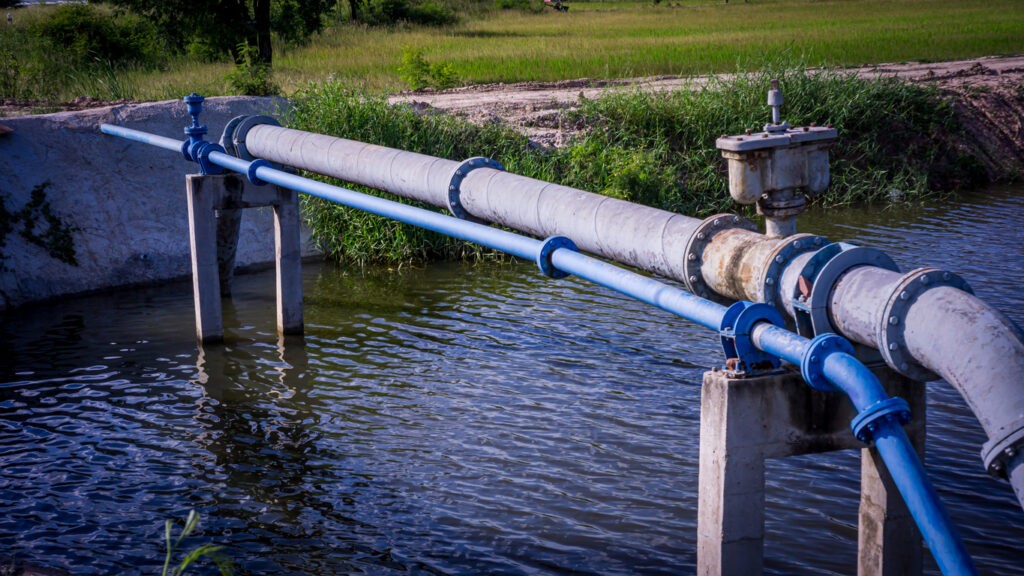
The system includes a water pump that extracts water from a vertical well at a depth of 180 meters, supported by solar panels. The system irrigates 0.8 hectares of land, benefiting 10 households and saving nearly 60% of water compared to traditional irrigation methods. The excess electricity generated by the solar panels is sold to the State Electricity System, and the revenue is used to manage and operate the irrigation well and the drip irrigation network.

Mr. Wim Riepma, Head of Cooperation of the European Union’s Delegation to Uzbekistan, commented: “This solar-powered drip irrigation system not only addresses water scarcity but also paves the way for more sustainable agriculture in Uzbekistan. Most importantly, it directly benefits local families by increasing their access to electricity and water for irrigation, thus enhancing food security and incomes.”

Bishkek’s Iconic Elm and Poplar Trees Suffering From Beetle Infestation

The larvae of the longhorn beetle (Aeolesthes sarta), commonly known as the woodcutter beetle, are destroying green spaces in Kyrgyzstan’s capital Bishkek.

The beetle appeared in the city ten years ago, but biologists have explained that its population has recently increased to worrying levels. The situation is being aggravated by the shortage of irrigation water in Bishkek, a result of faulty irrigation facilities. Trees in the capital are beginning to dry out, and their immunity to the effects of larvae infestation is weakening.

The longhorn beetle lays its larvae in the bark of a tree, and as it matures, it eats the tree from the inside. The larvae’s favorite trees, the elm and poplar, are the most common trees in Bishkek. Unlike other pests, the beetle cannot be irradicated with chemical treatments. Infested spaces must be destroyed completely.

The Bishkek Zelenkhoz municipal enterprise, responsible for maintaining the city’s green spaces, has reported that 90% of all adult elm trees and half of all poplars in the capital have become infected with longhorn beetle larvae.

“Trees with signs of infestation remain green, and do not die immediately. After a while, the top dries up, and then the entire trunk follows. The death process takes about five years,” Yuri Borvinok, head of the laboratory for woody and bush plants at the Kyrgyz Academy of Sciences, told The Times of Central Asia.

Kyrgyz authorities are having difficulty controlling pests because of current laws. In Kyrgyzstan’s populated areas, chemical treatment of greenery is prohibited to prevent harm to people, and burning plant debris such as leaves and branches is also forbidden.

“When we used to burn plants and foliage, these measures deterred the miner moth, woodcutter beetles, and other pests; today, nothing prevents the mass spread of beetles,” Borvinok said.

Municipal officials are looking for an effective method to control the beetles. “Some trees we cut down, take out of town, and burn there. In addition to the elm trees, the woodcutter attacks poplars. There is a danger that it will move to other trees. This beetle can not be taken down by anything. That’s why we are planting new species, linden, maple, and acacia,” said Zhanybek Zhumaliyev, head of the Zelenkhoz enterprise’s planning department.

Baikonur: An Alternative Journey Into Space

The moon landing is imprinted on the Western collective psyche, but Baikonur is not. Like most children growing up in the U.S., I watched William Shatner on Star Trek, and when we think of space, we think of Neil Armstrong and NASA, not Kazakhstan. However, on April 12, 1961, the first man in space, Yuri Gagarin, took off from the Baikonur Cosmodrome in what is now Kazakhstan. Like WWII, however, space is the subject of parallel narratives, and the “Space Race” was an integral part of the Cold War.


Baikonur Is a Place of Firsts

Baikonur is a place of firsts – the first artificial satellite, Sputnik 1, the first dog, Laika, the first higher living organisms to survive a journey to outer space, Belka and Strelka, the first man, Yuri Gagarin, and the first woman, Valentina Tereshkova, all took off from Baikonur. Originally constructed during the Cold War as a missile test site, the area was chosen for several reasons; it’s isolation from densely populated areas and proximity to the equator made it easier to launch rockets, and the flat landscape ensured radio signals would not be disrupted.

The battle for control over space between the U.S. and the Soviet Union was both ideological and military in nature. Baikonur was baptized in Cold War misinformation tactics. Located thirty kilometers south of the launch facilities, the closest town was originally known as Tyuratam. In 1961, Soviet officials swapped its name with a town located some 350 kilometers away, “Baikonur,” to misdirect Western intelligence. A fake spaceport constructed from plywood was erected in the “real” Baikonur to deceive enemy spy planes.

In the early 1960s, the Soviet Union’s covert actions allowed it to advance its space program faster than the United States, which faced public and media scrutiny. While U.S. space missions were broadcast live, exposing any failings, the USSR could operate clandestinely, protecting its missile technology and maintaining a strategic edge. A key example is the R7 rocket used to launch Yuri Gagarin into space; the largest intercontinental ballistic missile of its time, its details were closely guarded.
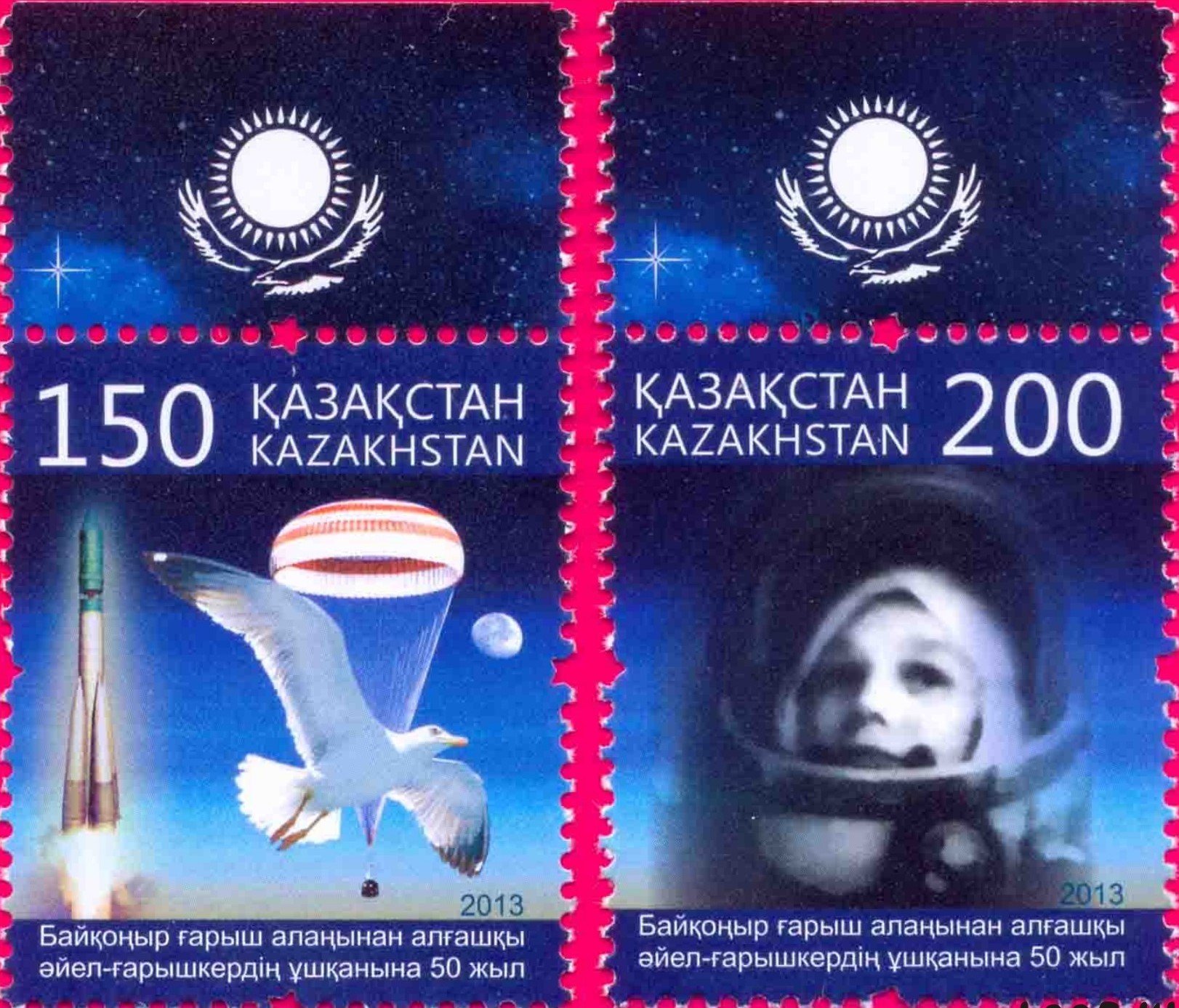

Fifty year commemorative stamp of the first woman in space, Kazakhstan, 2013


“Space Race” Propaganda

Another tool of Cold War propaganda was the flight of Valentina Tereshkova, the “First Lady of Space.” Prior to her journey to the stars in June 1963, Tereshkova had worked on an assembly line in a textiles factory. Her parachuting experience with a local paramilitary flying club proved crucial in her selection. In her three-day flight, the every-woman clocked up more space hours than all American astronauts up to that time combined. Tereshkova may have been a propaganda tool dispatched for Western audiences as proof of gender equality in the USSR, but it would be a nineteen year wait for the next female cosmonaut.

In 2007, at the age of seventy, Tereshkova volunteered for a one-way mission to Mars. Having turned to politics as her primary concern following her spaceflight, in March 2020 she moved an unannounced but obviously stage-managed amendment in the State Duma which could keep Vladimir Putin in office until 2036.

Upon the fall of the Soviet Union, the Russian authorities negotiated with Kazakhstan to keep using the spaceport. Officially Russian territory on Kazakh soil, today Putin appoints the mayor of Baikonur, which is leased out at an annual rate of a $150 million. Still home to Russian launches, in 2005 the Kazakh government signed a new deal allowing their neighbor to stay until at least 2050. “We would like Russia to stay at Baikonur forever,” former cosmonaut and current Director of the Aerospace Agency of Kazakhstan, Talgat Musabayev declared at the time. Relations have not been so rosy recently, however. In 2023, Kazakhstan impounded the spaceport over Roscosmos’ unpaid debts of $29.7 million.
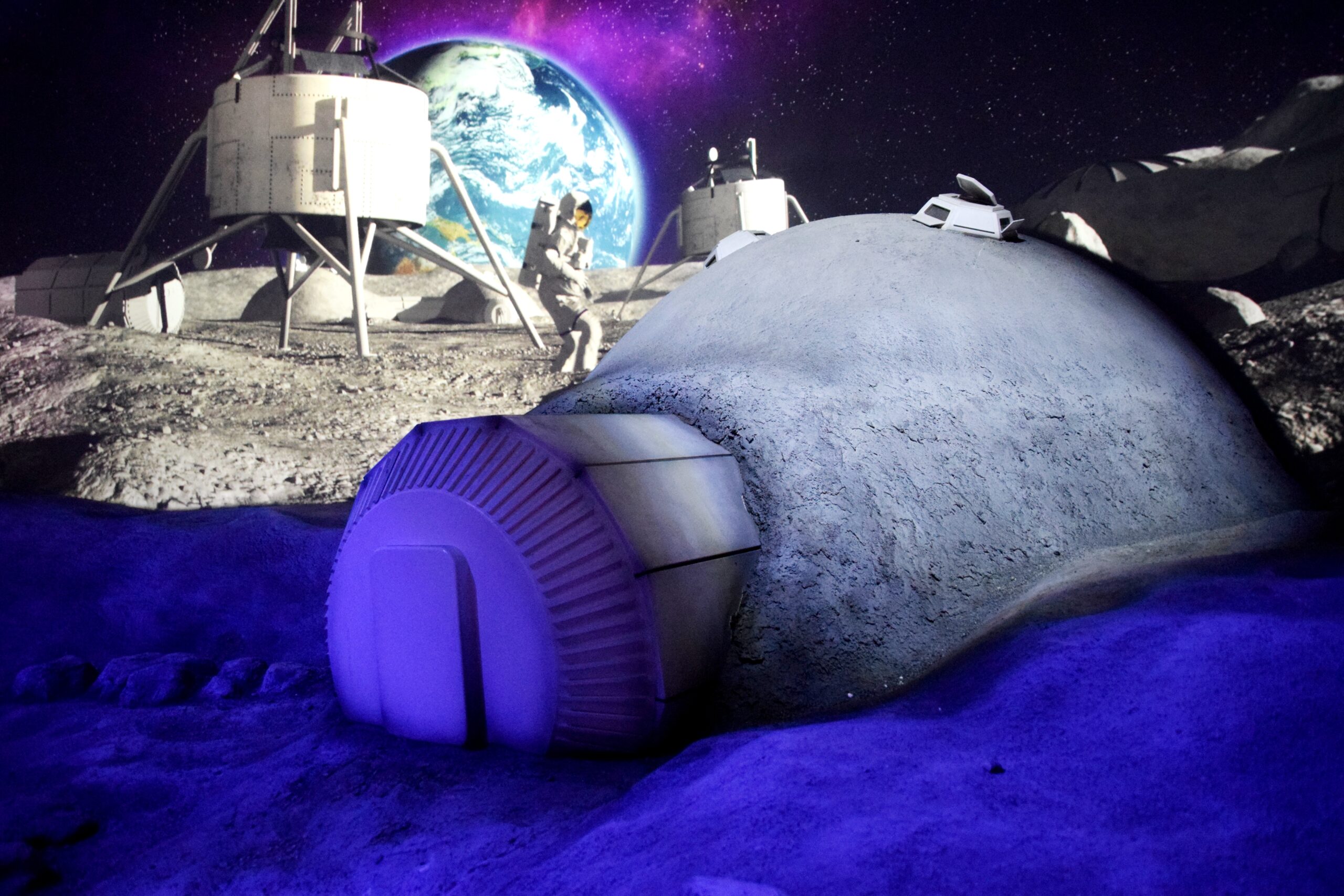

Space exhibit at the Museum of Future Energy, Astana; image: Ola Fiedorczuk


Space Garbage: The Environmental Toll

Baikonur is also increasingly at the center of growing environmental concerns. Reliant on UDMH proton fuel, launches from the site cause carcinogens, acid rain, and are conceivably responsible for the die-out of critically endangered species. In 1988 alone, over 500,000 saiga antelopes were found dead, though whether this was caused by pathogens from a biological weapons facility on Vozrozhdeniya Island or rocket fuel being jettisoned remains unclear. In October 2018, twenty-two tons of kerosene and liquid oxygen were dumped from an altitude of 50 kilometers following a booster malfunction; meanwhile, rats in the vicinity have developed chromosomal instabilities.

These contaminated materials are then sold on the black market, further spreading toxicity. Most of the metal eventually finds its way to China, where it is converted into aluminum foil, the kind of which is used to wrap sandwiches.

Attempting to circumvent Kazakhstan’s protest laws, over the decades campaigners against the base have taken to staging lone vigils, often with a cosmic bent. After Kazakhstan’s space chief dismissed demonstrators as “sick” in January 2013, an activist turned up at the site dressed as an alien in a mock attempt to kidnap the supremo and take him to Mars.

Whilst residents of the oblast have been hospitalized and farmers complain about the debris from rockets crushing their horses, over the years some have been glad to see the spaceport stay. Darting across the desert, for many years the regions scrap metal dealers built a thriving micro-industry upon scavenging fragments which fall from the sky.
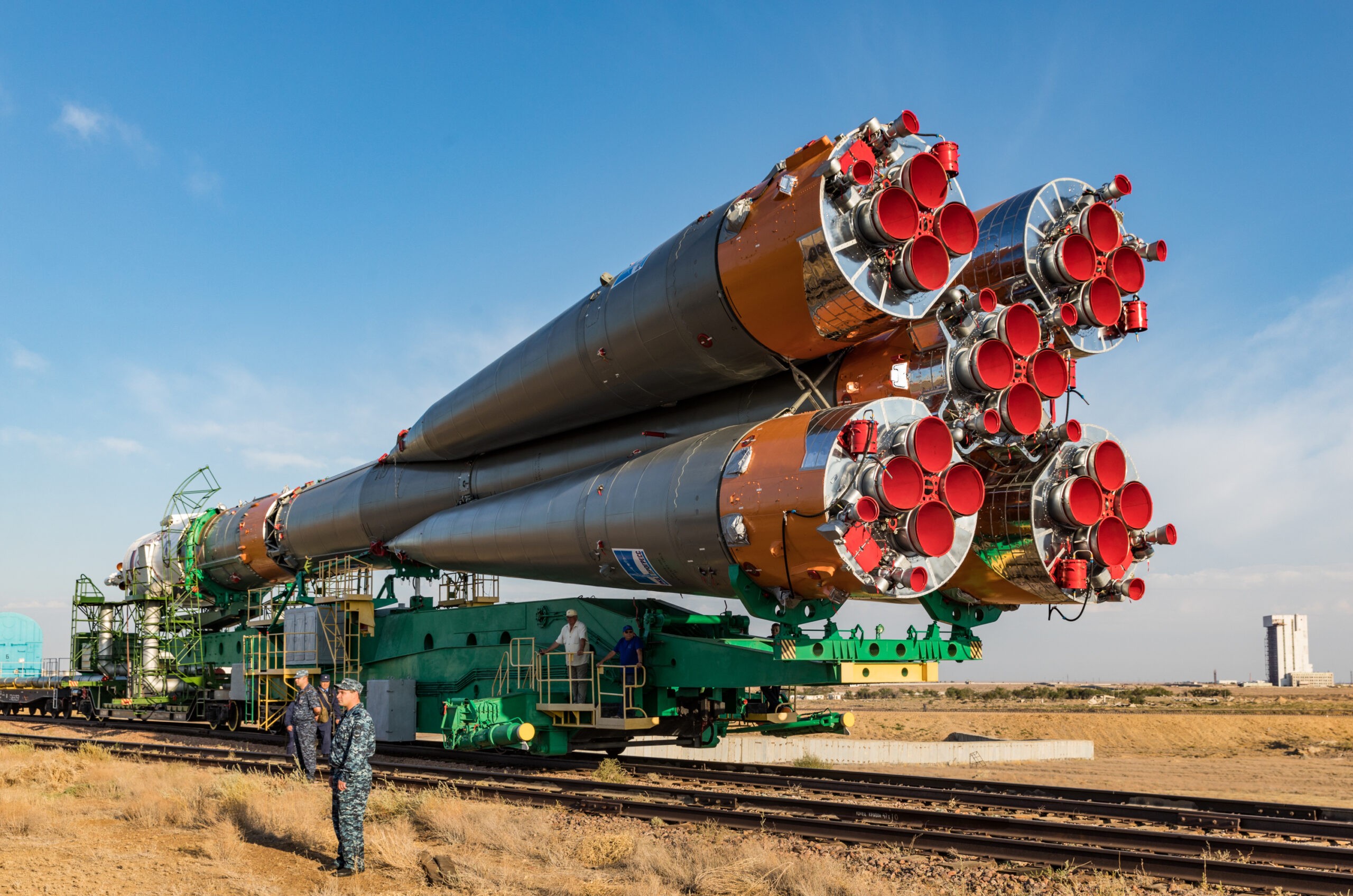

Preparing the spacecraft Soyuz MS-06 for the launch to ISS with two American astronauts and one Russian cosmonaut; image: Ninara


The New Cold War in Space: Cooperation or Alienation

Previously, during the thawing of the Cold War, Baikonur served as a unique symbol for Russian-American partnership. The U.S. Space Shuttle program ended in 2011 leaving no American options for manned spacecraft to reach the International Space Station (ISS) at that time. This satellite boasts international ownership and operation that saw the West working with Russia to facilitate the transport of their astronauts. The service is very costly, however, with a ride for an American astronaut setting NASA back over $90 million.

Currently, the worsening geopolitical situation due to Russia’s war in Ukraine has strained relations to an all-time low. These tensions have recently endangered the fragile agreement that supports the ISS. Russian cosmonauts have used the station for propaganda purposes, and the Kremlin has even threatened to withdraw from the ISS entirely.

Baikonur has a rich and fascinating past filled with many firsts in space travel that should be in the Western curriculum and consciousness. It remains to be seen if those pioneering space achievements will also be part of our current collective quest for the stars.
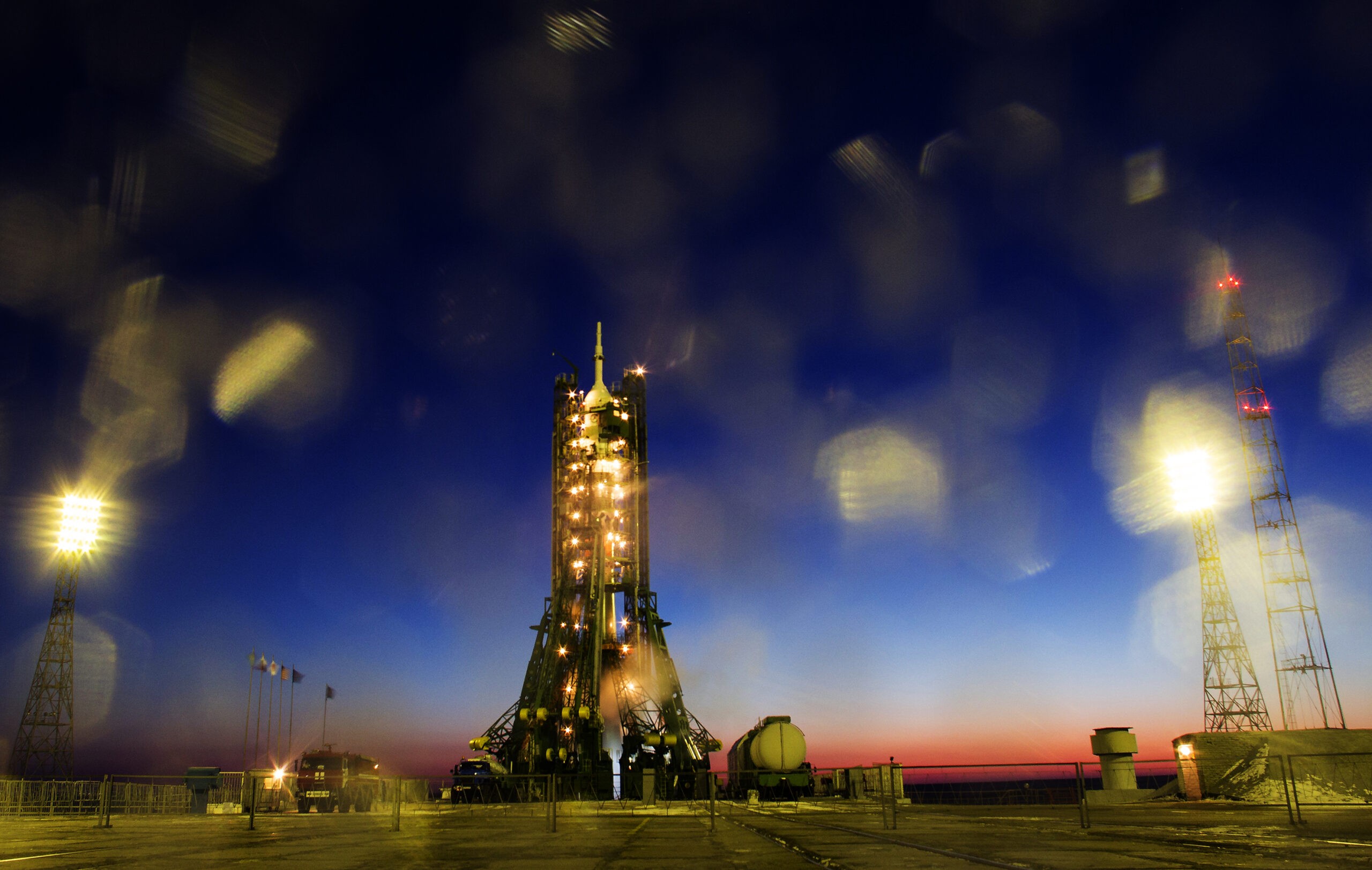

The Soyuz MS-07 on the launch pad, Dec. 17, 2017; image: NASA.


This is part one of a three-part special on Baikonur. Join us soon for part two.

Despite Labor Shortages, Kyrgyzstan Continues to Round-Up Undocumented Migrants

Kyrgyzstan is grappling with a severe labor shortage, yet the government continues to crack down on undocumented migrants. Police raids in Bishkek over the past few days have resulted in the detention of 28 Bangladeshi nationals, who face administrative penalties and were fined for working without valid documentation. This crackdown, however, comes despite an urgent need for laborers, the head of the construction agency in the Kyrgyz Republic stating that the construction industry alone urgently needs at least 10,000 workers.

The tension between labor shortages and the crackdown on migrant workers has been an ongoing theme of President Japarov’s tenure. Since March, Kyrgyz authorities have intensified efforts to find and deport illegal migrant laborers, with some 1,500 Pakistanis and 1,000 Bangladeshis apprehended. This campaign reflects the nationalist policies promoted by Japarov and his longtime ally Tashiyev, emphasizing Kyrgyz traditions and customs, which have gained them significant popularity. The support of young Kyrgyz men, who are a crucial pillar for Japarov and Tashiyev, is evident in their backing of measures to curb undocumented migration.

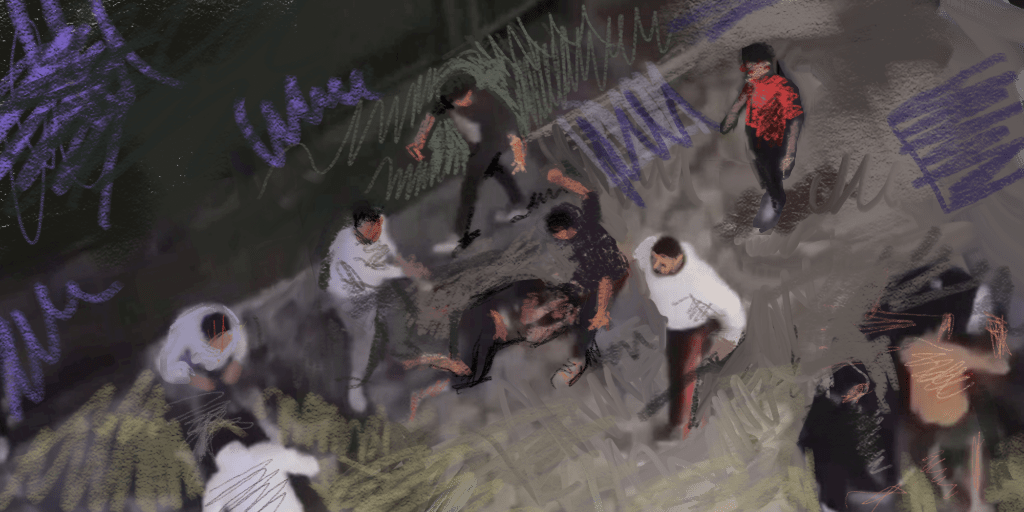
The situation escalated on May 17-18, when unrest broke out in Bishkek, leading to the hospitalization of 41 people. The unrest underscored splits within the government, with Deputy Cabinet Chairman Edil Baisalov labeling the attackers as “hooligans,” while President Japarov defended the actions of “patriotic youth” who demand strict measures against illegal migrants.

The violence targeted foreign students and workers, exacerbating tensions and prompting diplomatic concerns, as seen in the meeting between Kyrgyz Deputy Foreign Minister Almaz Imangaziev and a Pakistani delegation discussing the safety of foreign nationals.

Despite assurances from the Kyrgyz government that such incidents would be prevented in the future, the crackdown on migrant workers continues, highlighting the complex interplay between labor needs and nationalist policies. President Japarov has vowed swift action against any threats to state integrity, signaling a tough stance on both undocumented migration and internal dissent. This ongoing tension reveals the challenges Kyrgyzstan faces in balancing economic demands with political and social stability.

Kazakhstan’s Silk Way TV May Become Unified Central Asian Channel

Central Asia is considering creating a unified television channel and a regional media platform, which would help to strengthen information security and cultural exchange in the region.

The idea was discussed at a meeting of representatives of Central Asian media in Astana.

The project was proposed to be an extension of Kazakhstan’s Silk Way TV channel. According to Kanat Iskakov, Kazakhstan’s deputy minister for culture, Silk Way already broadcasts in more than 120 countries and in six languages.

“At present, the people of our countries are not quite aware of the achievements of neighboring countries. There is a certain lack of information. And in this regard, to fill this gap, we have gathered our colleagues. We have several TV channels that broadcast in Central Asian countries. And we believe that to have a better promotion, these countries can give their content, which we will show not only in the countries of Central Asia but also on international television,” Iskakov said.

Uzbekistan to Supply Extra Water to Kazakhstan for Irrigation

Kazinform has reported that following a  meeting in Astana between Kazakh  Minister of Water Resources and Irrigation, Nurzhan Nurjigitov, and Uzbek Minister of Water Management Shavkat Hamroev, Uzbekistan is to provide Kazakhstan with an additional 500 million cubic meters of water until the end of the irrigation season.

Since April 1, Uzbekistan has supplied more than 4 billion cubic meters of water to Kazakhstan through the Syr Darya. It had been previously agreed that Uzbekistan would provide Kazakhstan with 3.7 billion cubic meters of water within six months but the Uzbek side fulfilled its obligation in just 4 months.

The report states that the key goal was to fully satisfy the demand for irrigation water from farmers of  Kazakhstan’s southern regions and today, the Shardara Reservoir holds 1.5 billion cubic meters of water, almost 500 million more than last year. A total of 4 billion cubic meters of water entered the Shardara reservoir.

Commenting on the success of the project, the official representative of the Ministry of Water Resources and Irrigation of Kazakhstan, Moldir Abdualieva stated, “Due to the preliminary agreement with our neighbors on the working order of the Toktogul and Bahri-Tajik reservoirs, water regularly flows to the Kazakh part of the Dostlik interstate canal. Now, 90 cubic meters of water per second comes to the country through this channel. This is enough to fully supply the farmers of the Turkestan region with irrigation water,”