• KGS/USD = 0.01144 0%
  • KZT/USD = 0.00212 0%
  • TJS/USD = 0.10432 -0.29%
  • UZS/USD = 0.00008 0%
  • TMT/USD = 0.28571 0.28%
  • KGS/USD = 0.01144 0%
  • KZT/USD = 0.00212 0%
  • TJS/USD = 0.10432 -0.29%
  • UZS/USD = 0.00008 0%
  • TMT/USD = 0.28571 0.28%
  • KGS/USD = 0.01144 0%
  • KZT/USD = 0.00212 0%
  • TJS/USD = 0.10432 -0.29%
  • UZS/USD = 0.00008 0%
  • TMT/USD = 0.28571 0.28%
  • KGS/USD = 0.01144 0%
  • KZT/USD = 0.00212 0%
  • TJS/USD = 0.10432 -0.29%
  • UZS/USD = 0.00008 0%
  • TMT/USD = 0.28571 0.28%
  • KGS/USD = 0.01144 0%
  • KZT/USD = 0.00212 0%
  • TJS/USD = 0.10432 -0.29%
  • UZS/USD = 0.00008 0%
  • TMT/USD = 0.28571 0.28%
  • KGS/USD = 0.01144 0%
  • KZT/USD = 0.00212 0%
  • TJS/USD = 0.10432 -0.29%
  • UZS/USD = 0.00008 0%
  • TMT/USD = 0.28571 0.28%
  • KGS/USD = 0.01144 0%
  • KZT/USD = 0.00212 0%
  • TJS/USD = 0.10432 -0.29%
  • UZS/USD = 0.00008 0%
  • TMT/USD = 0.28571 0.28%
  • KGS/USD = 0.01144 0%
  • KZT/USD = 0.00212 0%
  • TJS/USD = 0.10432 -0.29%
  • UZS/USD = 0.00008 0%
  • TMT/USD = 0.28571 0.28%

Central Asian Countries Increasing Defense Budgets

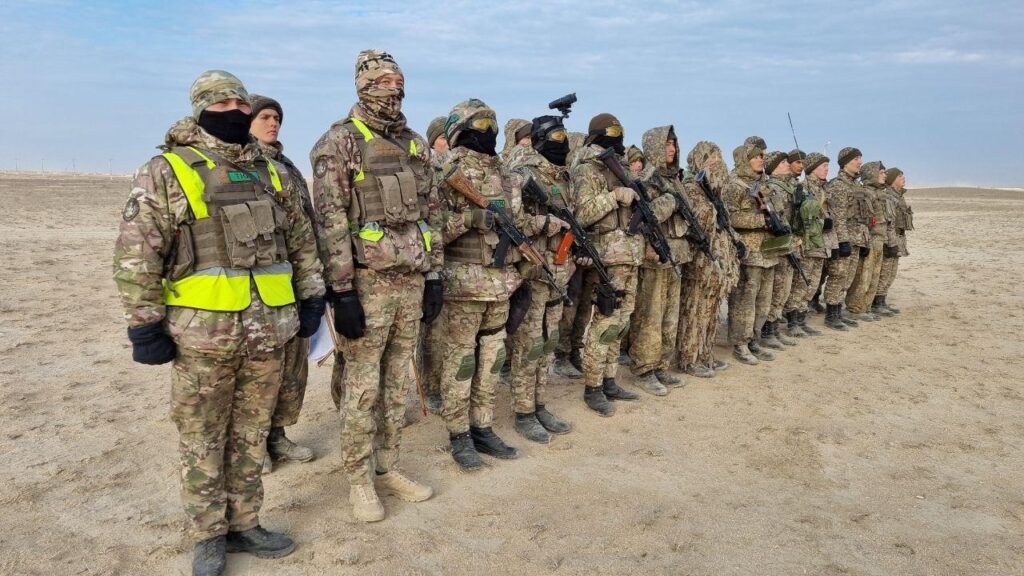
Voice of America has published an article that states that the countries of Central Asia are increasing their spending on defense and military equipment.

Turkey, China, and the United States are now challenging Russia as the main suppliers of this equipment.

According to analysis by the Stockholm International Peace Research Institute, which studies conflicts worldwide, the defense expenses of Kyrgyzstan, Kazakhstan, and Tajikistan totaled $1.8 billion last year. The institute did not explain Uzbekistan’s failure to disclose its defense expenditures, and there is no information on Turkmenistan.

Last year, Kazakhstan’s military budget was 0.5% of its GDP, equal to $259.7 billion. Kyrgyzstan’s military expenditure was 1.5% of its GDP, $13.9 billion, totaling $208.5 million for defense. For Tajikistan, it was 1% of GDP, $12 billion, and $120 million for the military.

The report also noted that Kazakhstan’s defense spending increased by 8.8% compared to last year. Uzbekistan, which does not disclose its military budget, reportedly allocated an additional $260 million to its defense budget last year.

Officials in the region cite conflicts in the Eurasia region – the war in Ukraine and the war between Armenia and Azerbaijan, plus border disputes in Central Asia, and instability in Afghanistan – as reasons for Central Asian states to beef up their military forces.

However, Peter Leonard, a writer specializing in Central Asian affairs, told Voice of America that it was partly a matter of reputation. “Partly, it is a matter of prestige. Authoritarian leaders like to flaunt shiny and expensive weapons. During annual military parades, we see this visually in Turkmenistan, where officials show off their new weapons and vehicles from China, Europe, and elsewhere. We see this trend in all of Central Asia,” he said. “Paradoxically, the intensification of militaries in these countries has not, in fact, exacerbated tensions but has resulted in a different outcome – which is much more cordial and practical dialogue about border demarcation. These countries, which were at a dangerous point, are on the cusp of signing a historic border agreement which will put an end to three decades of conflict.”

Demarcation of the Tajikistan-Kyrgyzstan Border Nears Completion

As reported by Asia-Plus, on July 26, the governor of the Sughd region in Tajikistan, Rajabboy Ahmadzade, announced that the state border between Tajikistan and Kyrgyzstan, which has been closed for three years,  is expected to open soon.

The commission for delineating the border between Tajikistan and Kyrgyzstan has been in progress since 2022 but as stated by Ahmadzade, “To date, 94% of the border line has been fully delineated. We believe that everything will be resolved positively shortly.”

The minister advised that on July 21-24, representatives of the Ministry of Transport of Kyrgyzstan and Tajikistan visited the disputed areas and Tajik towns of Chorkukh and Vorukh. He did not disclose the location of the remaining 6% of disputed territories, but added that the commission would meet again from August 11 – 17 in Botken, Kyrgyzstan.

The armed border between Tajikistan and Kyrgyzstan was closed after clashes on 14-17 September 2021. A year later, officials and representatives of both countries’ border commission met in Sughd to discuss means of resolving the issue.

The conflict was caused by uncertainties regarding the exact demarcation of the border between the two republics which spans some 980 kilometers. With its scant natural resources and dwindling water supplies, the border between Kyrgyzstan and Tajikistan has been the scene of numerous skirmishes for many years. In 2014, all borders between Kyrgyzstan and Tajikistan were closed indefinitely to Kyrgyz and Tajik citizens following clashes over a bypass road in disputed territory; mortars were fired and both armies suffered casualties. Trouble spilled over again throughout 2021 and 2022, reportedly starting over a water dispute in the Vorukh enclave, and leaving an unknown number in the hundreds killed, and up to 136,000 people evacuated. In September 2022, another shooting took place on the border between the two countries.

Kyrgyz Exporters to Trade on Alibaba Marketplace

The second international e-commerce forum, Sellers Forum E-COM.kg, at Lake Issyk-Kul in Kyrgyzstan from July 26 to 28, was attended by Sanjar Bolotov, Deputy Minister of Economy and Commerce of the Kyrgyz Republic, and Tilek Jumaliyev, Deputy Director of the Kyrgyz Export Centre.

During the event, the parties met representatives of the World Bank and Alibaba Group Global Digital Business within the framework of E-GATE; a program, aimed at providing subsidies for small and medium-sized businesses to ensure their entry into the world’s leading B2B e-commerce platforms.

In their discussions , the Deputy Minister emphasized the country’s export potential, the successful export of environmentally -friendly Kyrgyz products to the Chinese market, and the readiness of local producers to interact with Alibaba Group to promote their wares.

The meeting concluded with an agreement to work with the Kyrgyz Export Centre to place Kyrgyz exporters’ products on the Alibaba marketplace and organize training.

Brother of Tajik Opposition Activist Sentenced to 12 Years in Prison

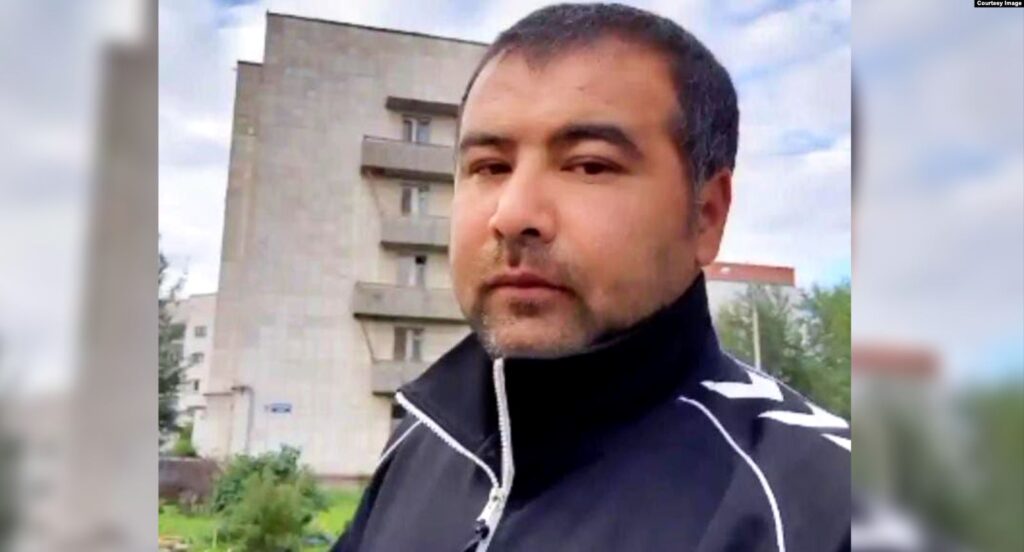
Asliddin Sharipov, the brother of Tajik opposition activist Shavkat Muhammad, has been sentenced to 12 years in prison.

The sentence was handed down in March of this year, but information only appeared on July 29; authorities have not provided an official comment.

One of Sharipov’s acquaintances said that he was transferred from the Khujand pre-trial detention center to a prison in Dushanbe. He had been living in Russia since 2016 but was detained at the request of Tajik authorities in September 2022 and extradited to Tajikistan on October 1, 2023. For almost two months there was no information about his whereabouts. It later became known that Sharipov, 37, was being held in one of the isolation centers in Khujand.

The Tajik authorities have not commented on the reasons for Asliddin Sharipov’s detention. Human rights organizations link Sharipov’s arrest and extradition to the activities of his brother Shavkat Muhammad, editor of the television channel “Payom,” which is banned in Tajikistan and run by the Islamic Renaissance Party.

According to human rights activists and Shavkat Muhammad himself, his brother’s arrest is aimed at silencing him and stopping him from criticizing the authorities.

U.S. Embassy Supports Future Rural Teachers in Kyrgyzstan

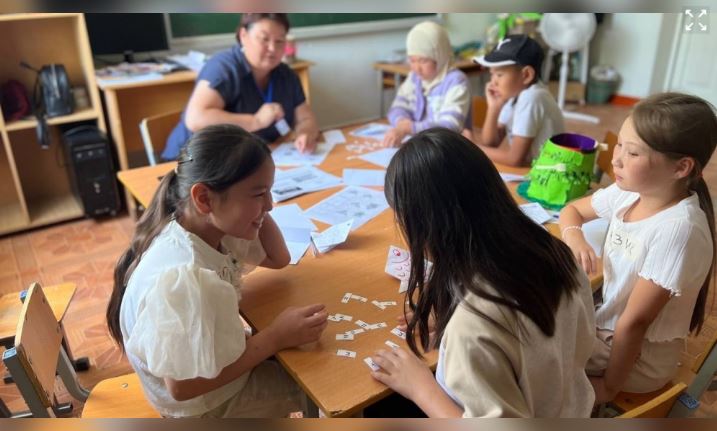
The U.S. Embassy is reporting that 33 participants in the ‘Teach for Kyrgyzstan — Zamanbap Mugalim’ project, which it is supporting, will begin teaching in rural schools in the Chui region in September.

A summer school called Jaratman, which translates to “creators”, will offer four weeks of training and development for future teachers and other educators.

The ‘Teach for Kyrgyzstan’ project will raise funds to place participants in ten pilot schools in the Chui region in the fall of 2024. Schools were selected by staff from the country’s Ministry of Education, as well as educational institutions and public organizations.

“The mission of the [project] is to help children reach their potential, and this institute is one step toward achieving that goal for the children of Chui [region] here in the Kyrgyz Republic,” American ambassador Lesslie Viguerie said of the project.

Can the Aral Sea Be Saved?

Thanks to cooperation between the Central Asian states, the ultimate demise of the Aral Sea has been prevented. This year, the Northern Aral Sea has significantly replenished its water reserves. The Northern portion of the Aral Sea has received 12.5 times more water this year than the previous year – up to 75 cubic meters per second, the Ministry of Water Resources and Irrigation of Kazakhstan stated in July. The Syr Darya River delivers 650 cubic meters of water per second to the Kyzylorda Oblast. “Joint work has been carried out with Uzbekistan and Kyrgyzstan. In particular, approved water supply schedules are being observed,” Minister of Water Resources and Irrigation, Nurzhan Nurzhigitov explained.

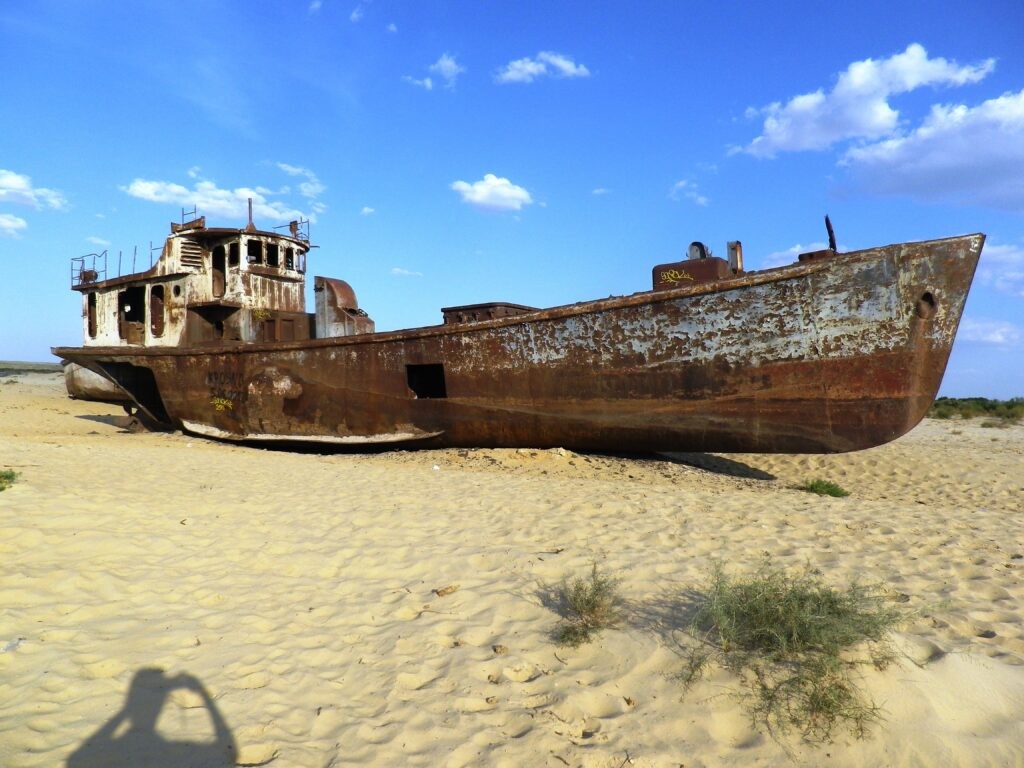
Formerly the world’s fourth-largest lake covering 68,000 km², the destruction of the Aral Sea first dates back as far as the U.S. Civil War, when, finding his supply of American cotton under threat, the Russian Tsar decided to use the sea’s tributaries to irrigate Central Asia and create his own cotton bowl. With 1.8 million liters of water needed for every bale of cotton, the water soon began to run out.

From the 1960s onwards, the sea level began to decline rapidly due to water withdrawal from the main feeder rivers, the Amu Darya and Syr Darya. The local population was growing, and fields needed irrigating. In 1989, the sea split into the Northern (Small) and Southern (Large) Aral reservoirs.
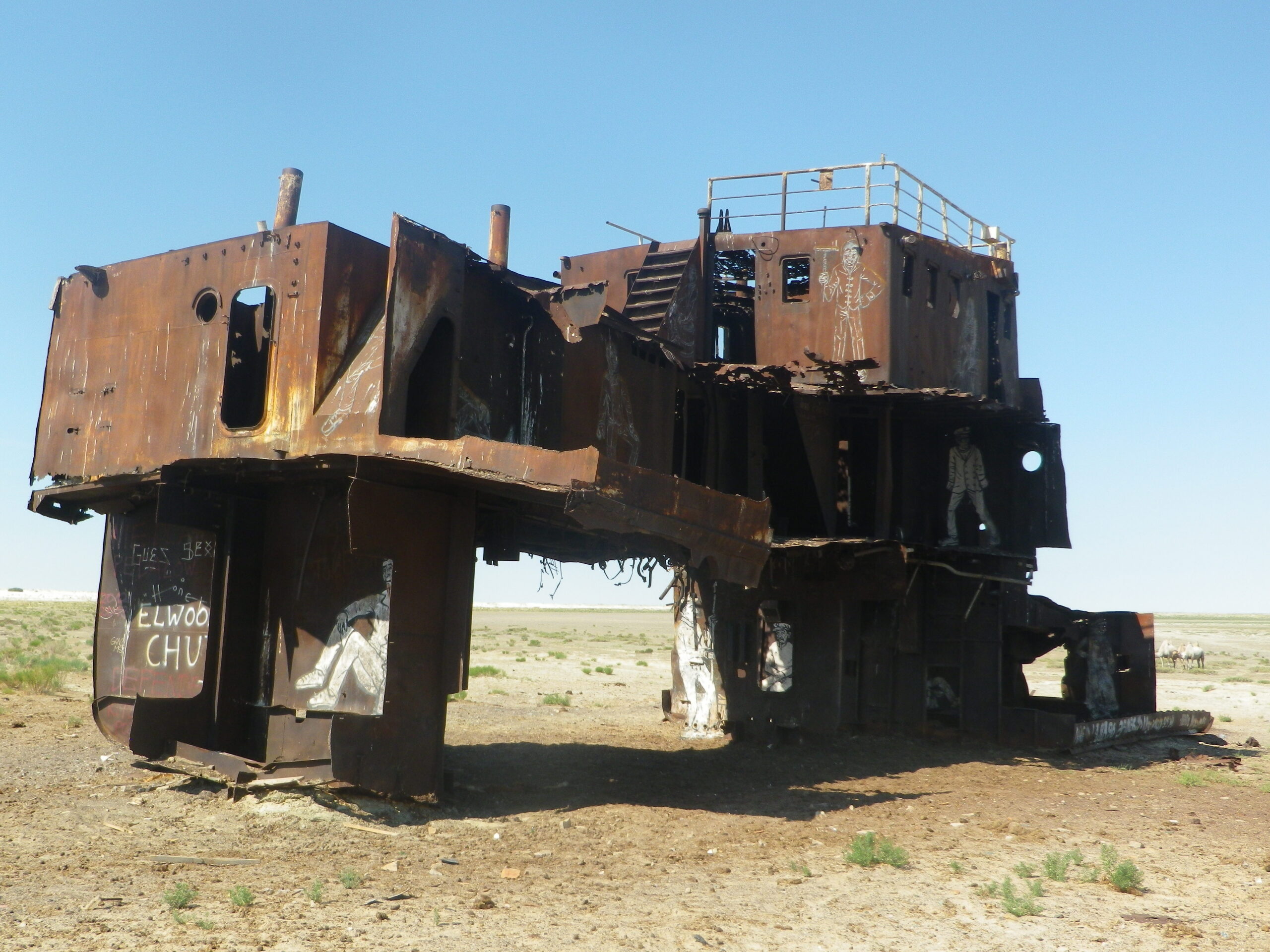

The former port of Zhalanash, Kazakhstan; image: TCA, Stephen M. Bland

Since independence, the rate of shoaling and desertification have continued to increase. Up until the late-1990s, the land surrounding the Aral Sea was still cotton fields; but today, it’s largely an expanse of salinized grey emptiness. The desiccation of the landscape has led to vast toxic dust-storms that ravage around 1.5 million square kilometers. Spreading nitrates and carcinogens, these storms – visible from space – used to occur once every five years, but now strike ten times a year. By 2007, the Aral had shrunk to one-tenth its original size.

In 2014, the eastern part of the Southern Lake dried up completely, and the sea’s area reached a historical low of 7,297 km². Over half a century, the volume of water had decreased 30-fold, and the sea’s salinity has risen sharply.

Nevertheless, Kazakhstan still manages to preserve the remnants of the once colossal lake; the region’s fisheries and farms continue, and rare species of birds still inhabit the lands surrounding the shoreline.

Today, most scientists say restoring the Aral Sea completely is impossible, but Kazakhstan is attempting to preserve the Northern portion, sometimes referred to as the “Small Aral Sea.” In 1993, the International Fund for Saving the Aral Sea (IFSAS) was established, which united Kazakhstan, Uzbekistan, Kyrgyzstan, Turkmenistan, and Tajikistan in this most challenging of tasks. At the time of IFSAS creation, the water area stood at approximately 36,000 km². Over the following decades, it continued to decline, and in 2001 Vozrozhdeniya (Renaissance) Island became connected to the mainland.

Vozrozhdeniya contains the ruins of the Soviet-era Aralsk-7 biological weapons facility. Covered in telegraph poles set one and a half kilometers apart, sensors on the island’s testing range measured the effects of smallpox, brucellosis and bubonic plague on monkeys, sheep and donkeys. Hundreds of tons of anthrax were buried here over the decades and covered only in bleach as a de-contaminant. Vacated in haste upon the collapse of the Soviet Union, its anthrax canisters were purportedly decontaminated by the U.S. for support in the ‘war on terror.’

Kazakhstan took radical action. From 2003 to 2005, stretching from the Kokaral Peninsula to the mouth of the Syr Darya, Kazakhstan built the Kokaral Dam, with a hydro-technical gate which allowed the passage of excess water to regulate the reservoir level. The dam separated the Small Aral from the Large Aral. Thanks to this, runoff from the Syr Darya accumulates in the Small Aral, meaning the water level should rise and salinity decrease. The cost of work of the project’s first phase amounted to $85.79 million, of which the World Bank provided $65.5 million.
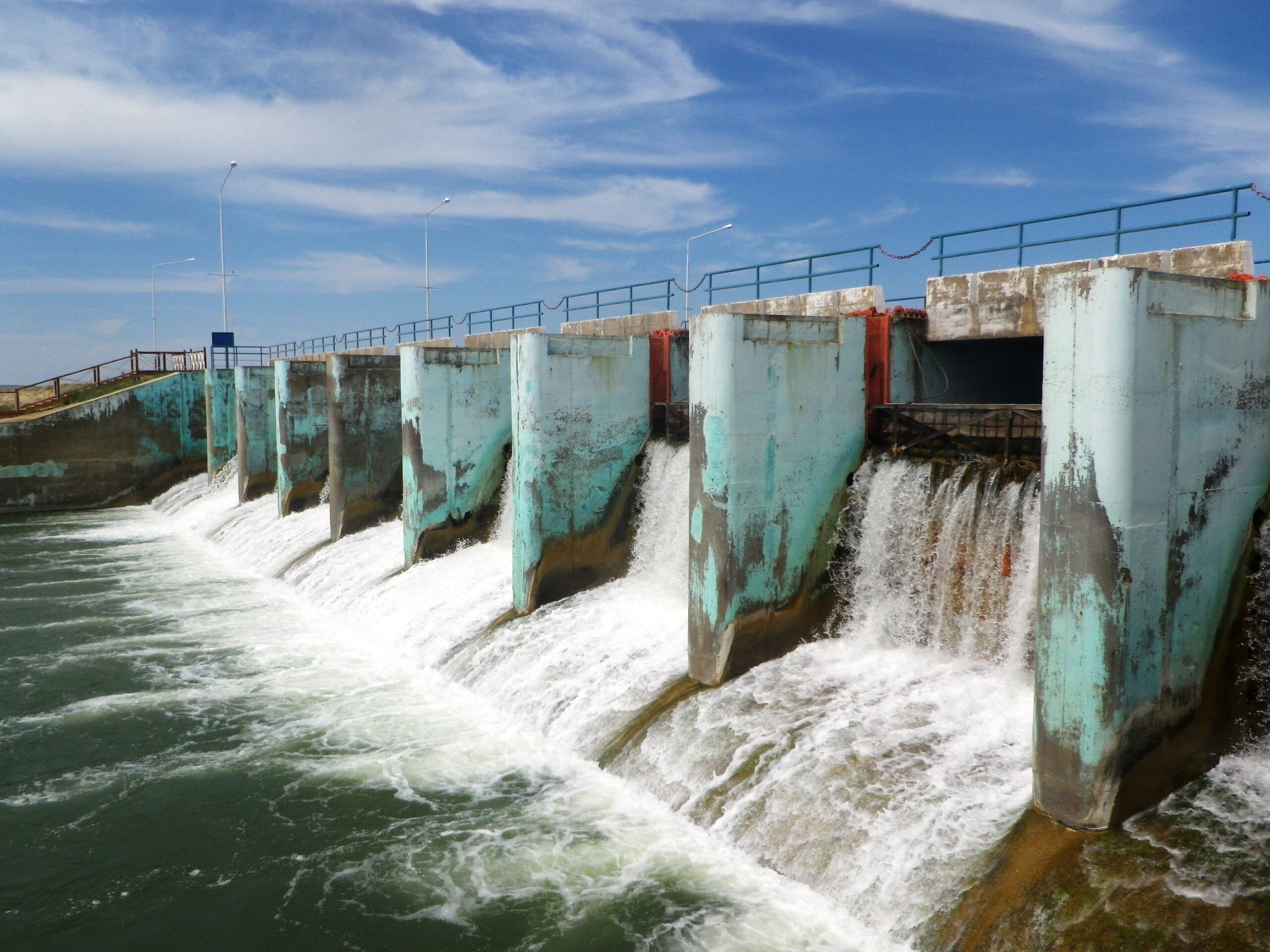

The Kokaral Dam; image: TCA, Stephen M. Bland

Despite these efforts, in 2021 it was stated that less water was flowing into the Small Aral. Villagers and fishermen complained of further salinization and shallowing. In September 2023, President Kassym-Jomart Tokayev warned regional leaders of the consequences of a potential drought at an event marking the 30th anniversary of the International Fund for Saving the Aral Sea.

“Central Asia’s security is threatened by global climate change, the coming period of low water levels, and shortage of irrigation. According to international experts, the temperature in our region is rising much faster than the average around the planet. This reduces the area of glaciers and the main water source in the Aral Sea basin. Their volume has decreased by 30% over the last 50 years. Analysts estimate that by 2050, droughts in Central Asia could cause damage of 1.3% of GDP per year, resulting in about 5 million internal ‘climate’ migrants,” Tokayev stated.

But, he added, IFSAS continues to fulfill its function. “During its existence, the fund has become the essential institution of regional cooperation in the issues of trans-boundary water resources sharing, and solving environmental and socioeconomic problems in the Aral Sea basin. It is difficult to overestimate the Fund’s role in ensuring Central Asia’s security, stability, and sustainable development. Moreover, IFSAS is one of the few successful regional cooperation mechanisms, demonstrating Central Asia’s subjectivity in the international arena,” the President stated.

In June of this year, the Ministry of Water Resources and Irrigation reported that the situation in the Small Aral Sea is improving. The water volume in the northern part of the Aral Sea has increased, and, according to the ministry, 1.1 billion cubic meters of water have entered the Small Aral since the start of the year. Today, the volume of water in the Northern Aral is 21.4 billion cubic meters.
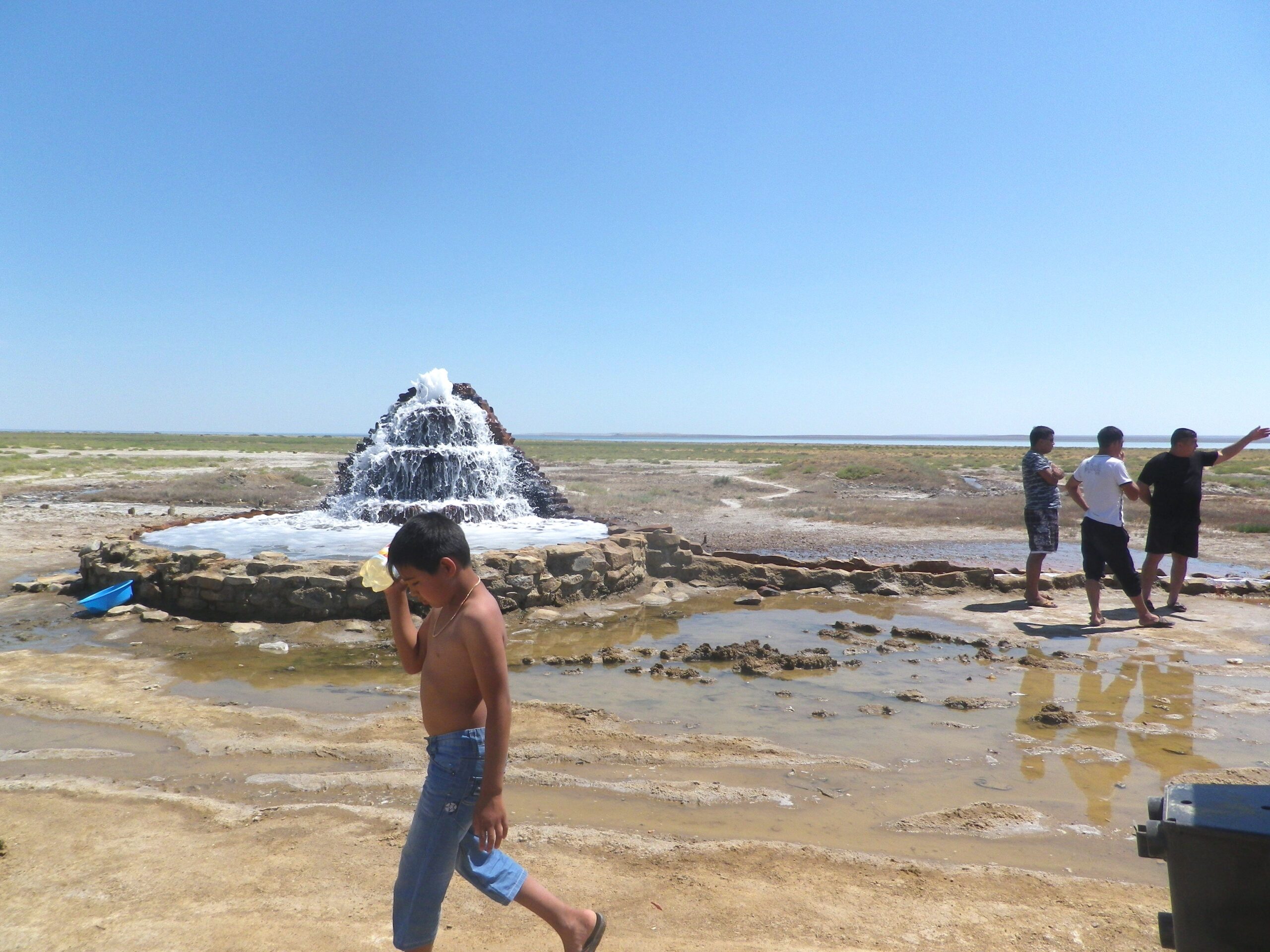

Artesian Well, Northern Aral; image: TCA, Stephen M. Bland

“At the 86th meeting of the Interstate Commission for Water Coordination, which includes Kazakhstan, Kyrgyzstan, Tajikistan, Turkmenistan, and Uzbekistan, the parties agreed that 997 million cubic meters of water will enter the Northern Aral during the irrigation season, and the inflow will be at least 30 cubic meters per second. Now, the sea receives 50 cubic meters of water per second. A year ago, the inflow was six cubic meters per second,” the Ministry stated. According to official data, 75% of the Syr Darya’s flow is formed in Kyrgyzstan, 20% in Uzbekistan, and 5% in Kazakhstan.

In addition, over a million hectares of saxaul (haloxylon) shrubs will be planted on the Kazakhstani side of the Aral seabed to prevent dust storms. The Ministry of Ecology and Natural Resources said 544,500 hectares of forest have been planted in the past three years.

This year, there are plans to plant another 275,000 hectares. As the decimation of the Aral Sea is a global issue, the ministry in Kazakhstan works in cooperation with numerous international organizations, including the International Fund for Saving the Aral Sea (IFSAS), the World Bank, the German Society for International Cooperation (GIZ), the U.S. Agency for International Development (USAID), the Forest Service of Korea, and others.