• KGS/USD = 0.01144 0%
  • KZT/USD = 0.00215 0%
  • TJS/USD = 0.10599 -0.28%
  • UZS/USD = 0.00008 0%
  • TMT/USD = 0.28571 0%
  • KGS/USD = 0.01144 0%
  • KZT/USD = 0.00215 0%
  • TJS/USD = 0.10599 -0.28%
  • UZS/USD = 0.00008 0%
  • TMT/USD = 0.28571 0%
  • KGS/USD = 0.01144 0%
  • KZT/USD = 0.00215 0%
  • TJS/USD = 0.10599 -0.28%
  • UZS/USD = 0.00008 0%
  • TMT/USD = 0.28571 0%
  • KGS/USD = 0.01144 0%
  • KZT/USD = 0.00215 0%
  • TJS/USD = 0.10599 -0.28%
  • UZS/USD = 0.00008 0%
  • TMT/USD = 0.28571 0%
  • KGS/USD = 0.01144 0%
  • KZT/USD = 0.00215 0%
  • TJS/USD = 0.10599 -0.28%
  • UZS/USD = 0.00008 0%
  • TMT/USD = 0.28571 0%
  • KGS/USD = 0.01144 0%
  • KZT/USD = 0.00215 0%
  • TJS/USD = 0.10599 -0.28%
  • UZS/USD = 0.00008 0%
  • TMT/USD = 0.28571 0%
  • KGS/USD = 0.01144 0%
  • KZT/USD = 0.00215 0%
  • TJS/USD = 0.10599 -0.28%
  • UZS/USD = 0.00008 0%
  • TMT/USD = 0.28571 0%
  • KGS/USD = 0.01144 0%
  • KZT/USD = 0.00215 0%
  • TJS/USD = 0.10599 -0.28%
  • UZS/USD = 0.00008 0%
  • TMT/USD = 0.28571 0%

Kazakhstan and China’s Snow Valley Agree to Build $100-200 Million Potato Processing Complex

The administration of Kazakhstan’s Pavlodar region has signed a memorandum of cooperation with China’s Snow Valley Agricultural Group Co. Ltd. to implement a major investment project focused on potato processing, regional authorities have announced.

The document outlines plans to establish a modern agro-industrial complex with an annual processing capacity of between 100,000 and 200,000 tonnes. The agreement was signed by regional governor Asain Baikhanov and representatives of the Chinese side, Wang Dengshe and Zhang Fan.

The project is aimed at producing high value-added products. It includes the construction of a research and breeding center for potato cultivation and seed production, the launch of French fries manufacturing, and the development of storage, logistics, and distribution infrastructure.

Total investment is estimated at between $100 million and $200 million. Regional authorities expect the project to create a full production and supply chain, reduce the shortage of deep-processing capacity in agriculture, and generate new jobs.

“The regional administration is ready to support initiatives aimed at creating high-tech, high value-added production,” Baikhanov said.

Founded in 2007 in Zhangjiakou, China, Snow Valley is a vertically integrated agro-industrial holding covering the entire production cycle from potato breeding and cultivation to deep processing. The company processes more than 800,000 tonnes of raw materials annually, including over 400,000 tonnes of frozen products. Its total storage capacity reaches 700,000 tonnes.

The company is also engaged in breeding programs and has developed more than 80 potato varieties. Its production utilizes advanced technologies, including pulsed electric field (PEF) systems, which improve product quality and reduce oil consumption.

Snow Valley exports its products to more than 40 countries. Following the visit, Chairman Wang Dengshe highlighted the strong potential of Pavlodar region and confirmed the company’s interest in long-term cooperation.

“The Chinese company has confirmed its readiness to implement the project using modern technologies and local resources, while the regional administration has pledged comprehensive support, including infrastructure development, provision of resource bases, and administrative assistance,” the regional press service said.

The project comes amid previous restrictions on potato exports. Kazakhstan earlier introduced a temporary ban on shipments outside the Eurasian Economic Union (EAEU) due to rising domestic prices. In autumn 2025, authorities also did not rule out reinstating such measures, although the market currently remains stable.

Regional Ecological Summit to Open in Astana Amid Pressure on Water, Trade, and Regional Cooperation

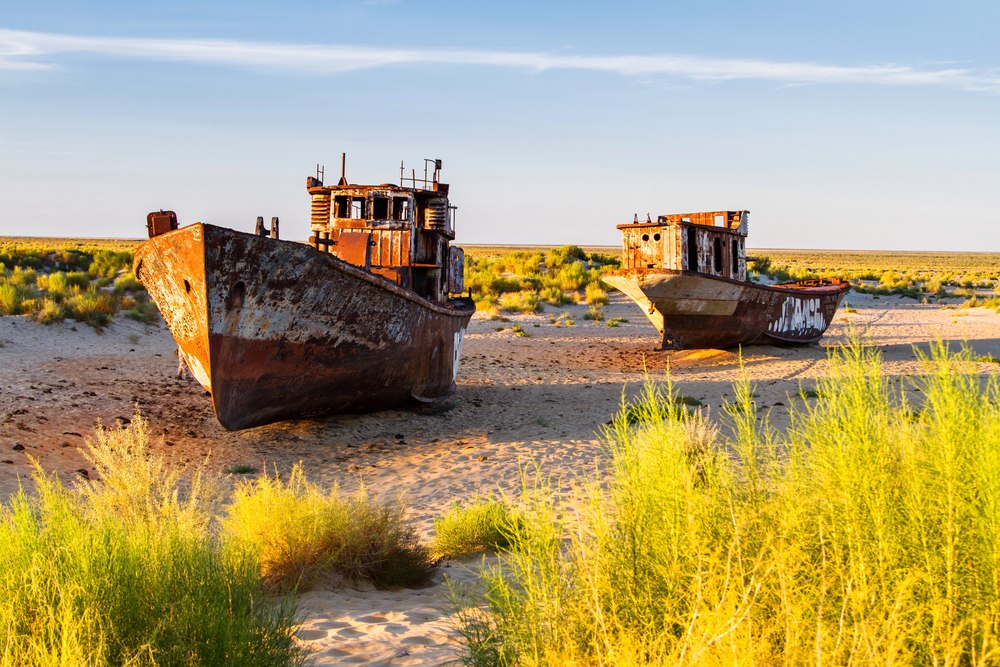
When the Regional Ecological Summit (RES 2026) opens in Astana this Wednesday, the official framing will center on Shared Vision for a Resilient Future, combining practical regional solutions with diplomatic ambitions that include a Joint Declaration and a 2026-2030 Program of Action. Behind that language sits a harder reality. Water and energy officials in Tashkent, Bishkek, and Astana are dealing with a region which is drying out faster than its infrastructure and politics are adapting.

That gives the summit a sharper edge than earlier environmental gatherings. Two issues stand out: the management of winter water-sharing arrangements ahead of the irrigation season, and the way the shrinking Caspian could constrain the Middle Corridor.

The Toktogul Equation: A Fragile “Winter-for-Summer” Swap

The most immediate point of pressure is the Toktogul Reservoir in Kyrgyzstan. In late 2025, an agreement was reached under which Kyrgyzstan would limit winter hydropower generation, preserving water for downstream Kazakh and Uzbek farmers, in exchange for electricity supplies from its neighbors.

The arrangement remains in place, but its durability will be tested as summer demand rises. One question hanging over the summit is whether Kazakhstan and Uzbekistan will provide enough power support to help Kyrgyzstan conserve water without reopening old upstream-downstream tensions.

For downstream states, that is not only a water issue but an agricultural and political one.

The Caspian Emergency: Depth as a Trade Barrier

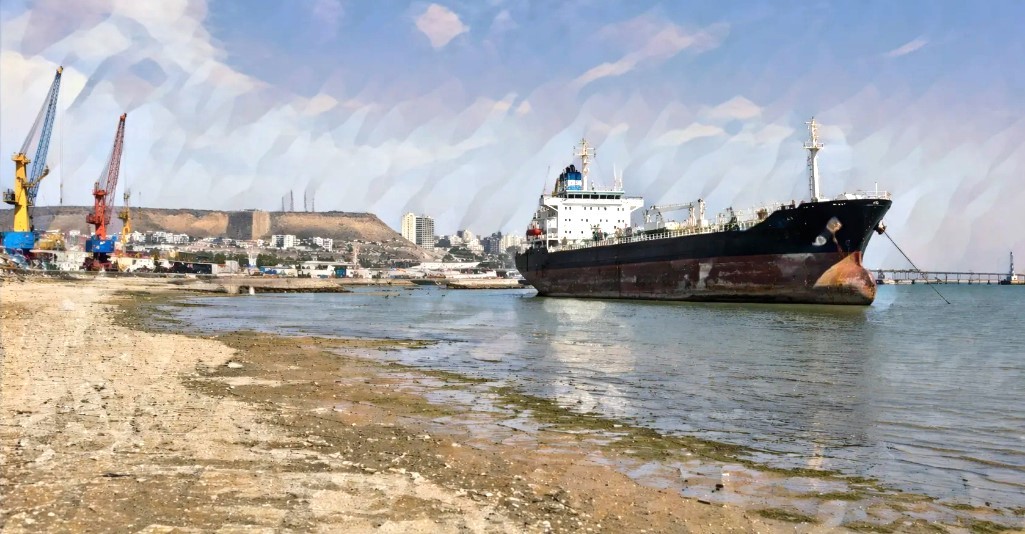
For years, the shallowing of the Caspian was treated as a long-term problem. In 2026, it is becoming an operational one. According to recent reporting, Aktau port is operating at an average depth of 4.5 meters, far below the 6.5 to 7 meters needed for full operations.

The summit will also highlight the Integrated Management of Seascapes project. The UNDP-linked initiative is intended to balance the need for dredging and port access with protection of the northern Caspian’s fragile ecosystem. That tension is no longer theoretical. It now touches trade, shipping capacity, and the future of the corridor itself.

The Digital Transition

One of the summit’s more concrete strands is the National Water Resources Information System. According to the Kazakh government, the system is to enter industrial operation by the end of 2026.

The plan is to automate 103 irrigation canals in southern Kazakhstan using $1.15 billion in financing from the Islamic Development Bank. The broader regional test is whether neighboring states will share enough data to support a cross-border water monitoring system, giving officials a clearer view of how shared resources are being managed.

The Green Energy Corridor

Alongside the water agenda, the Green Energy Corridor remains one of the projects that clearly aligns Kazakhstan, Azerbaijan, and Uzbekistan. The plan is to transmit green electricity to Europe via a subsea cable across the Caspian. CESI is finalizing the feasibility study, pointing to an export model that leans less on hydrocarbons and more on regional infrastructure.

It also shows how environmental pressure and economic strategy are starting to overlap. For Central Asian governments, climate policy is no longer only about adaptation. It is also becoming a way to build new routes, attract financing, and tie the region more closely to European demand.

Education as a Security Pillar

Another important and less heralded part of the summit is the Regional Green School Platform. According to UNICEF data, 23 million children in Central Asia are exposed to high or very high levels of climate hazards. That helps explain why the summit is also pushing climate resilience into school curricula, not simply as environmental education but as part of long-term social stability.

What the Summit Must Deliver

While the RES-2026 EXPO will showcase more than 300 companies from 30 countries, the real measure of the summit will lie elsewhere. The test is whether participants can move beyond rhetoric and adopt a 2026-2030 Program of Action and Joint Declaration in a form that gives regional coordination more substance. If they can, the summit will mark a meaningful step toward shared resource management. If not, it risks becoming another well-staged meeting that leaves the region’s hardest environmental disputes unresolved.

Kazakhstan Finance Day in New York Showcases Market Reform, IPO Ambitions, and Alatau City Pitch

At Kazakhstan Finance Day in New York, officials and executives used the panel “Investment Opportunities in Kazakhstan” to present the country as entering a new phase of market development, citing macroeconomic stability, capital-market reform, potential initial and secondary public offerings, and infrastructure tied to the Alatau City project.

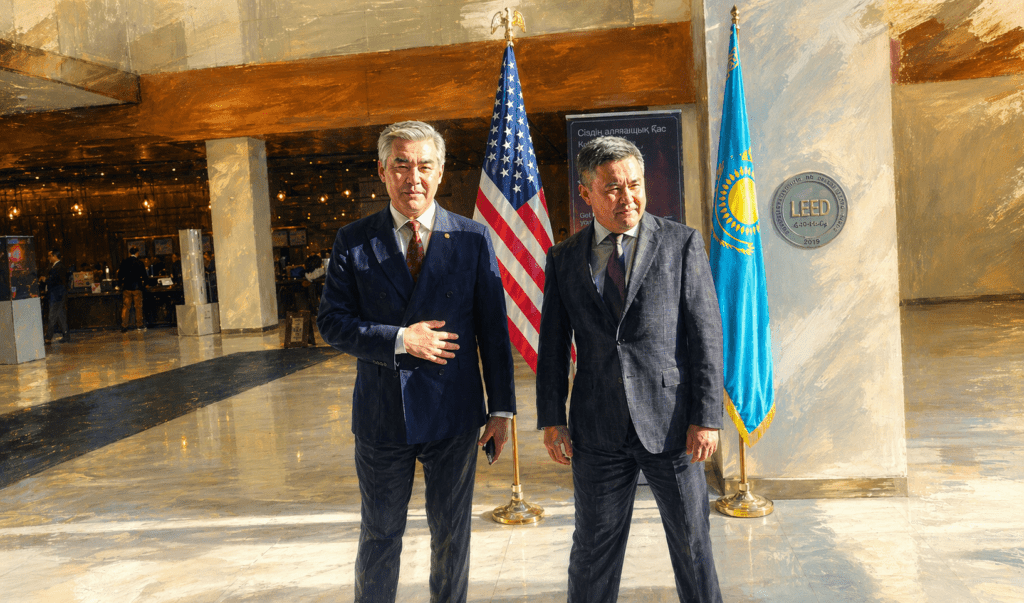
The panel session was held at Citigroup headquarters in Manhattan and was moderated by Stephanie von Friedeburg, global head of Citi’s Public Sector Group. Speakers included Timur Suleimenov, governor of the National Bank of Kazakhstan; Adil Mukhamejanov, chairperson of the management board of the Kazakhstan Stock Exchange (KASE); Zhandos Shaikhy, deputy chairman of the management board of Baiterek National Managing Holding; Aidar Ryskulov, managing director for economics and finance at Samruk-Kazyna; and Bayan Konirbayev, deputy CEO and chief digital officer of the Alatau City Authority.

Opening the event, von Friedeburg noted that the forum’s return to Citigroup headquarters for a third time reflected the continued engagement between Kazakhstan and U.S. investors. Kazakhstan’s ambassador to the United States, Magzhan Ilyassov, linked the event to growth in bilateral economic ties, citing more than $17 billion in commercial agreements signed during President Kassym-Jomart Tokayev’s November 2025 visit to Washington, and adding that further agreements were under consideration.

The first financial presentation came from Suleimenov, who reported that Kazakhstan’s economy grew 6.5% in 2025, inflation had eased to 11%, and the National Bank remained committed to returning inflation to its 5% target. He framed the country’s investment case around tighter macroeconomic coordination, fiscal discipline, and financial-sector development.

“We’re also exploring the development of a national crypto reserve framework, where digital assets will gradually be accumulated and managed as part of a sovereign reserve diversification strategy,” Suleimenov explained. He also pointed to continued work on the digital tenge and national digital financial infrastructure.

Suleimenov connected that financial agenda to the investment case, arguing that Kazakhstan was reducing its structural dependence on oil revenue and moving ahead with legal and tax changes aimed at improving the investment climate. He described the Middle Corridor as increasingly important and called the route through Kazakhstan, the Caspian, and the Caucasus “the only viable, reliable route” between the East and West.

Kazakhstan Finance Day in New York; image: K. Krombie

The discussion then moved to Samruk-Kazyna’s finances and privatization plans. Aidar Ryskulov put the fund’s assets under management at $88 billion and EBITDA at $10.8 billion. He indicated that the fund intended to remain active in international debt markets this year.

Ryskulov stated that Samruk-Kazyna was targeting a public-market transaction this year, with London, Hong Kong, and Astana under consideration, although timing would depend on macroeconomic conditions. He later pointed to IPO plans for the national railway company, Kazakhstan Temir Zholy (KTZ). “Our capacity is roughly 55 million tons, and we’re going to double this capacity in five to seven years,” he said.

Ryskulov also characterized Kazatomprom as “one of the best assets” and presented it as undervalued and a high-dividend company.

Zhandos Shaikhy focused on Baiterek’s scale and project pipeline. “Today, we manage over $36 billion of assets across diversified sectors,” he remarked, adding that “during the last year, Baiterek has extended more than $20 billion of financing support” to Kazakhstan’s economy through lending, leasing, guarantees, insurance, and equity participation. He added that the holding was “currently advancing a list of 28 national scale projects” in sectors including energy, mining, petrochemicals, logistics, data centers, and rare earth minerals.

Adil Mukhamejanov presented Kazakhstan’s capital market as larger and more liquid than many foreign investors assume, putting equity market capitalization at $96 billion, corporate bonds at $25 billion, and government securities outstanding at about $63 billion. He put average daily volume at around $150 million, average daily transactions at about 14,000, and cited the rise in brokerage accounts from 230,000 in 2021 as a sign that more households were entering the market.

Mukhamejanov outlined the reform agenda being prepared with the regulator and the National Bank, including a capital-market development program and a new law on the securities market. The measures he listed included pension reforms to ease transfers from the Unified National Pension Fund to private asset managers, and a simpler digital ID system for non-residents. He also pointed to continued work on links with Clearstream and other international market infrastructure.

On digital assets, Mukhamejanov described KASE as working on two approaches: converting existing instruments into digital form, and issuing new obligations directly in digital form. He said the aim was to build “a bridge between traditional capital markets and blockchain-based instruments” and make issuance more efficient.

The final presentation turned to urban development, with Bayan Konirbayev presenting Alatau City as a project near Almaty centered on logistics and the digital economy. He projected that the city would grow from about 50,000 residents to 1.8 million by 2050.

He also addressed the project’s legal and financing model. “We are going to have a new legal framework,” he said, before outlining what he called a shift toward a “tokenized economy.” Konirbayev added that it would operate as a system in which assets and investment instruments would be tokenized and governed under new rules, supported by public-private partnership structures, national-currency and fintech solutions, and a “digital twin” intended to improve transparency and help track tokenized transactions.

Ainagul Iskakova, deputy CEO of KASE at Kazakhstan Finance Day in New York; image: K. Krombie

Among those in attendance was Ainagul Iskakova, deputy CEO of KASE, who observed that the session’s value lay in hearing direct investor reactions. “The most crucial point for me is to hear the feedback. Because when something goes well, it’s not interesting. When something goes wrong, it is where I understand that there is room to grow.”

Uzbekistan Installs 37 Air Monitoring Stations in Aral Region as Environmental Cooperation Expands

Authorities in the region of Karakalpakstan have installed 37 automated air quality monitoring stations to track pollution levels in the Aral Sea region, according to Uzbekistan’s National Committee on Ecology and Climate Change. The project was implemented in cooperation with the United Nations Development Programme (UNDP).

The system measures fine particulate matter, including PM2.5 and PM10, as well as gases such as carbon monoxide, nitrogen dioxide, ozone, and hydrogen sulfide. It also records key meteorological indicators, including temperature, humidity, air pressure, and wind speed. Data is transmitted in real time through the Aurisgreentech system, which officials say reduces human error and improves accuracy.

During a recent visit to the region, UNDP’s representative in Uzbekistan Akiko Fujii reviewed the work of the regional ecology committee’s Situation Center, where monitoring results are processed. According to official reports, she also inspected a laboratory equipped to analyze air, water, and soil samples in line with international standards.

“The United Nations will continue to support projects aimed at improving the environmental situation in Karakalpakstan,” Fujii said, noting the importance of reliable data in assessing pollution and forecasting ecological risks.

The initiative comes as regional cooperation on environmental challenges gains momentum. From April 22 to 24, Astana will host a regional ecological summit bringing together UN agencies, international organizations, and government representatives from Central Asia and the Caspian region.

The summit will include a ministerial session led by the World Health Organization focusing on the health impacts of environmental degradation in the Aral Sea area. Discussions are expected to address the links between pollution, public health, and the need for coordinated responses across borders.

Kazakhstan’s Regional Ecological Summit 2026: What It Is and Why It Matters

Kazakhstan’s Regional Ecological Summit 2026 in Astana on April 22-24 is aiming to turn Central Asia’s environmental strain into a regional political agenda. Organized in partnership with the United Nations, the summit is built around the theme, “Shared Vision for a Resilient Future.” Its stated purpose is to bring together governments, international organizations, lenders, businesses, researchers, and civil society to push for joint and practical responses to climate and ecological pressures across the region.

President Kassym-Jomart Tokayev first proposed hosting a regional climate summit in Kazakhstan under UN auspices during his 2023 speech at the 78th session of the UN General Assembly. By 2026, that idea had broadened into a wider environmental summit covering climate transition, adaptation, food security, natural resource management, air pollution, waste, finance, and environmental skills. The official key thematic directions show that this is no longer a narrowly framed climate conference. It is being presented as a broader Central Asian platform for ecological cooperation.

In Central Asia, ecological stress now shapes core state concerns, from farming and energy to public health and cross-border cooperation. That gives the Astana summit a broader role than a standard environment conference.

That shift reflects real regional pressures. Central Asia faces chronic water stress, glacier retreat, desertification, air pollution, and growing strain on ecosystems. The summit’s organizers say the meeting is meant to produce joint solutions rather than another round of abstract pledges. The UN in Kazakhstan says the summit is expected to advance shared regional responses and identify green financing needs, while a second UN page states that one planned outcome is a Joint Declaration by the heads of state of Central Asia, alongside a 2026-2030 Programme of Action developed with the United Nations.

Tokayev’s own language explains the summit’s pitch. On August 5, 2025, speaking at the Third United Nations Conference on Landlocked Developing Countries in Awaza, Turkmenistan, he said, “Many developing countries without access to the sea are facing water scarcity, glacier melt, desertification, and other extreme weather events. Addressing these challenges requires coordinated regional efforts and strong international support. At the same time, I believe that measures to combat climate change must remain balanced and inclusive, and respond to the legitimate development needs of countries. To strengthen our joint efforts in addressing climate change, I invite you to the Regional Ecological Summit, which will be held in Astana in partnership with the United Nations.”

The wording shows how Kazakhstan wants to frame the event. Central Asia’s environmental problems cross borders, but the response, in Tokayev’s view, must also accommodate growth, infrastructure, and development. That is why the summit is being presented not just as a climate gathering, but as a forum linking ecological policy, investment, technology, and state planning. The EXPO component is part of that design. Government and investment-promotion pages say the parallel exhibition will focus on green technologies, ESG tools, and practical climate solutions, linking diplomacy to project finance and implementation.

The summit’s speaker list underlines its international reach. The official RES 2026 page includes Junhua Li, Tedros Adhanom Ghebreyesus, Inger Andersen, Tatiana Molcean, and OSCE Secretary General Feridun Sinirlioğlu, alongside regional ministers and other senior officials.

The scale is also substantial. Astana says the summit is expected to bring together around 1,500 participants from governments, international organizations, development institutions, business, and civil society. The UN says that eighteen agencies are co-organizing 25 sessions and five workshops. That gives the summit far broader institutional backing than a standard conference circuit event.

For Kazakhstan, the summit is also a foreign-policy signal. Astana is trying to present itself as a convening center for regional coordination on water, climate adaptation, environmental finance, and sustainable development. For Central Asia, the bigger question is whether the summit produces durable mechanisms after the speeches end. If the declaration and action program move forward, RES 2026 could become a framework for regional coordination on issues that already cross borders and cannot be managed by a single state alone.

Kazakhstan Plans to Build at Least Three Nuclear Power Plants by 2050

Kazakhstan plans to build at least three nuclear power plants (NPPs) by 2050, with implementation of the first project already underway, the country’s Atomic Energy Agency has said.

The nuclear energy development strategy aims to ensure energy security, support sustainable economic growth, and meet international climate commitments, while fostering high-tech industries and strengthening Kazakhstan’s position in the global nuclear sector.

“According to the Strategy, by 2050, at least three nuclear power plants will be operating in the Republic of Kazakhstan. The first NPP project is already being implemented, construction of the second is under consideration, and for the third NPP, the potential use of small modular reactor technologies is being explored,” the agency said.

In addition to plant construction, the strategy provides for the rational use of uranium resources, localization of equipment and nuclear fuel production, and the development of national industrial capacity.

Particular attention is being given to advancing nuclear science and applied technologies, creating a modern scientific and technological base, and establishing a system for training qualified personnel.

The document also outlines measures for the safe management of radioactive waste and spent nuclear fuel to minimize environmental risks. Plans include the introduction of digital solutions and ensuring a high level of information security at nuclear facilities.

“The implementation of the Strategy will enable the creation of a modern and sustainable nuclear cluster in Kazakhstan, integrated into the global nuclear ecosystem,” the agency said.

A Center of Competence for NPP construction will be established on the basis of Kazakhstan Nuclear Power Plants. This entity will serve as a project office, general contractor, and holder of state equity stakes in future plants.

In the longer term, the country plans to create a specialized nuclear energy holding company that will unite project and operating organizations in the sector.

According to expert estimates, construction of a single nuclear power plant will require up to 10,000 workers, including more than 3,000 technical specialists.

“In this regard, active work is underway to update technical and vocational education programs,” the agency said. “Particular attention is being paid to training specialists such as turbine equipment operators, electricians, NPP equipment installers, and technicians responsible for plant operation and safety.”

Programs for applied bachelor’s degrees in nuclear energy are also being developed, along with new specialties, including reactor equipment operators.

The first plant will use Generation III+ reactors, which feature enhanced reliability and modern safety systems, including passive protection mechanisms capable of operating without human intervention or external power supply.

According to the agency, the project incorporates international experience, including lessons learned from the Fukushima Daiichi nuclear accident in Japan, and includes measures to prevent radioactive releases even in severe emergencies.

Contracts for the construction of the second and third NPPs have been awarded to China National Nuclear Corporation, while the first plant will be built by Russia’s state corporation Rosatom.

The site for the first plant is located in the village of Ulken in the Almaty region, on the shores of Lake Balkhash, approximately 400 km northwest of Almaty. The government has approved the Zhambyl district of Almaty region, adjacent to the first plant’s site, as the location for the second NPP.