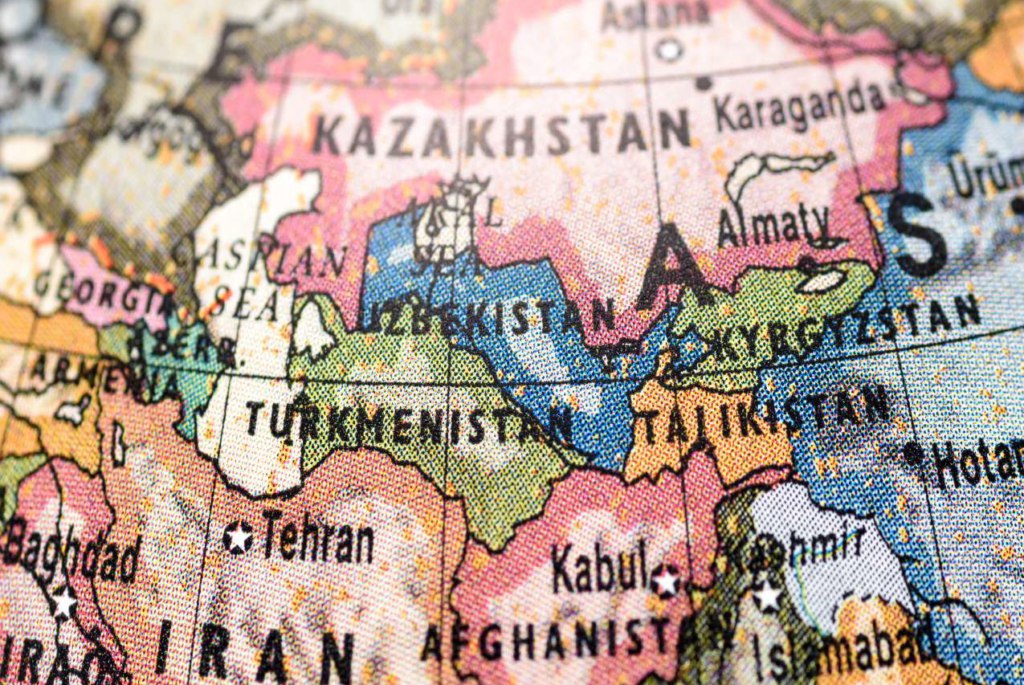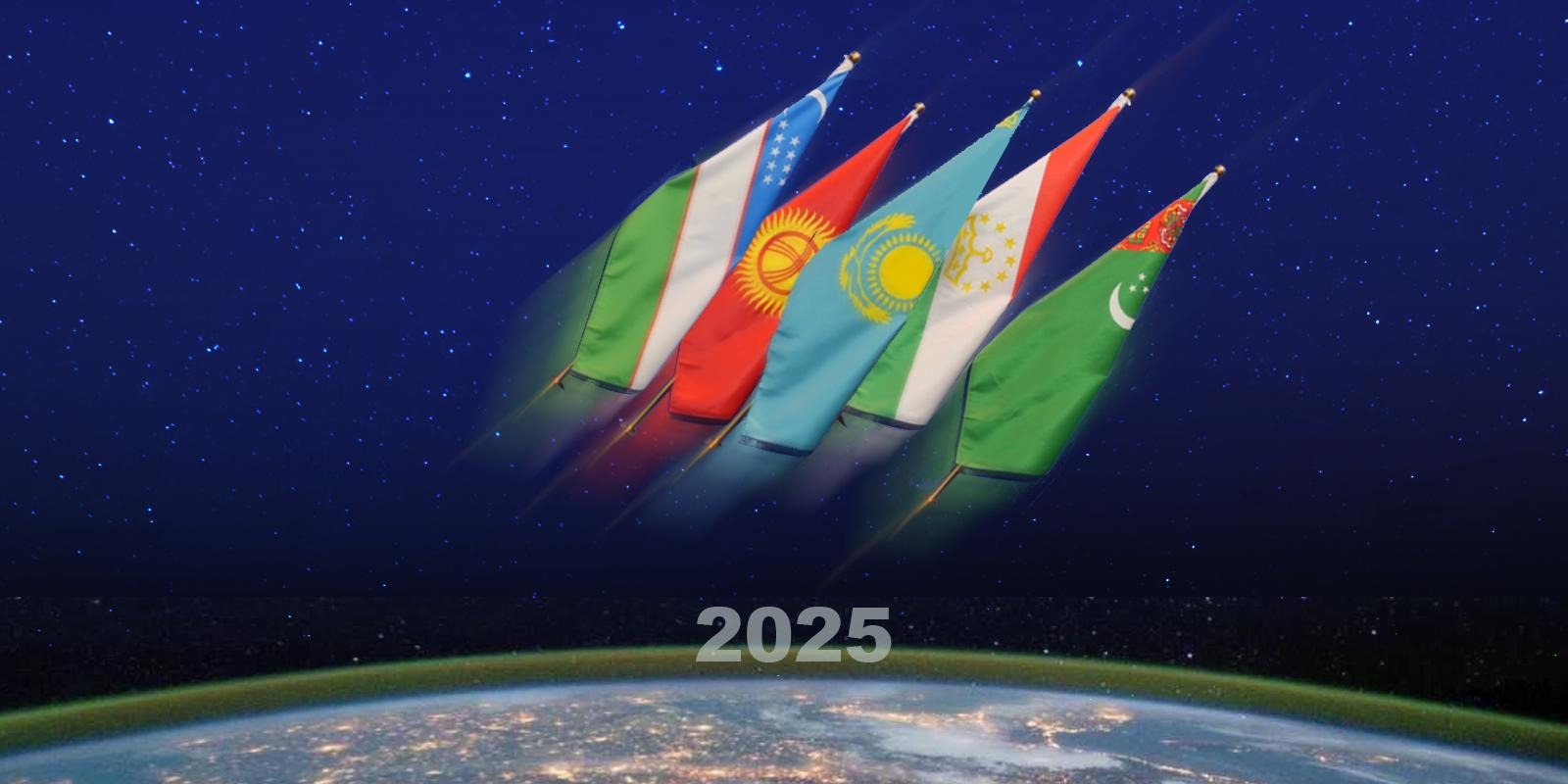
For much of the post-Soviet era, Central Asia occupied a peripheral place in global affairs. It mattered to its immediate neighbors, but rarely shaped wider debates. In 2025, that changed in visible ways. The region became harder to ignore, largely not because of ideology or alignments, but because of assets that the world increasingly needs: energy, minerals, transit routes, and political access across Eurasia.
One of the clearest signs came in April, when the European Union and the leaders of Kazakhstan, Kyrgyzstan, Tajikistan, Turkmenistan, and Uzbekistan met in Samarkand for their first summit at the head-of-state level. The meeting concluded with a joint declaration upgrading relations to a strategic partnership, with a focus on transport connectivity, energy security, and critical raw materials. The document marked a shift in how Brussels views Central Asia, moving beyond development assistance toward geopolitical cooperation, as outlined in the official EU–Central Asia summit joint declaration.
European interest is rooted in necessity. Russia’s war in Ukraine has forced EU governments to rethink energy imports, supply chains, and overland trade routes. Central Asia sits astride the most viable alternatives that bypass Russian territory. It also holds resources essential to Europe’s green transition, including uranium and a range of industrial metals. The region’s leaders spent much of the year framing their diplomacy around these tangible advantages, rather than abstract political alignments.
The United States followed a similar track. Through the C5+1 format, Washington deepened engagement with all five Central Asian states, with particular emphasis on economic cooperation and supply-chain resilience. A key element has been the Critical Minerals Dialogue, launched to connect Central Asian producers with Western markets. This initiative formed part of a broader U.S. effort to diversify access to strategic materials and reduce dependence on Russia and China.
Russia remained a central but changing presence in Central Asia throughout 2025. Economic ties, labor migration, and shared infrastructure ensured that Moscow continued to matter across the region. At the same time, however, Russia’s war in Ukraine constrained its ability to act as the dominant external power it once was. Central Asian governments maintained pragmatic relations with Moscow, but they increasingly treated Russia as one partner among several rather than the default reference point. Trade continued, security cooperation persisted, and political dialogue remained active, yet the balance shifted toward hedging rather than dependence.
Uranium sits at the center of this shift, with the United States having banned imports of certain Russian uranium products under federal law, with waivers set to expire no earlier than January 1, 2028. As Washington restructures its nuclear fuel supply chain, Central Asia’s role has grown sharply. According to the U.S. Energy Information Administration’s 2024 Uranium Marketing Annual Report, Kazakhstan supplied 24% of uranium delivered to U.S. reactor operators, while Uzbekistan accounted for about 9%. Canada and Australia remain major suppliers, but the Central Asian share is now strategic rather than marginal.
That economic weight translated into political visibility. In December, U.S. President Donald Trump said he would invite Kazakhstan and Uzbekistan to attend the U.S.-hosted G20 summit in 2026. While guest invitations do not confer membership, they offer access to senior leaders and investors at a critical moment in global supply-chain restructuring. This move is part of a broader U.S. effort to expand engagement with Central Asia.
The region’s growing global presence was also reflected beyond diplomacy, from Uzbekistan’s qualification for the 2026 football World Cup to increased international media attention on Central Asian economies, reform agendas, societies, and infrastructure projects.
Investment trends reinforced the political signals. The European Bank for Reconstruction and Development reported record investment in Central Asia – including Mongolia – committing nearly €2.26 billion across 121 projects, with Kazakhstan and Uzbekistan receiving the largest shares. The EBRD described the surge as driven by infrastructure, energy, and private-sector development. Mongolia’s growing inclusion reflects a wider regional pull, with Ulaanbaatar stepping up engagement with its Central Asian neighbors through trade, transport cooperation, and multilateral investment initiatives.
Energy security was not limited to nuclear fuel. Hydropower returned to the regional agenda in 2025, especially in discussions around Kyrgyzstan’s long-delayed Kambarata-1 project. The dam, with a planned capacity of 1,860 megawatts, is seen as critical for stabilizing electricity supply across parts of Central Asia. It was reported that the EBRD could consider lending up to $1.5 billion for the project, underscoring how regional infrastructure is now tied to international financing and diplomacy. Regional cooperation among the five Central Asian states also deepened, with leaders increasingly coordinating on water management, energy sharing, and cross-border transport rather than addressing these issues in isolation.
Security concerns also shaped the year. Violence along the Tajikistan-Afghanistan border, including attacks near sites employing Chinese nationals, exposed the region’s vulnerability to instability spilling over from Afghanistan. The incidents prompted warnings from Beijing and renewed scrutiny of border security in Central Asia. The Times of Central Asia has reported on the situation as part of a wider examination of how insecurity affects foreign investment and regional stability.
China’s role in Central Asia stayed substantial and highly visible. Beijing remained the region’s largest single trading partner and a key investor in infrastructure, mining, and energy projects. In 2025, however, Chinese engagement also faced sharper scrutiny, with the risks that accompany China’s deep economic footprint increasingly highlighted. For Central Asian governments, the challenge was to preserve Chinese investment while asserting greater control over security and diversification. The result was not a retreat from China, but a more cautious and negotiated engagement.
Despite these risks, Central Asian governments resisted pressure to align exclusively with any single power. Instead, they pursued a strategy of increasing diversification. The EU, the United States, China, and Russia all remained engaged, but none dominated the region’s external agenda.
Ties with Azerbaijan also deepened in 2025, driven by shared interests in transport, energy, and westward connectivity. Baku emerged as a key partner in linking Central Asia to the South Caucasus and onward to European markets, particularly through Caspian transit routes. This cooperation increasingly took shape within the C6+1 framework, which brings Azerbaijan together with the five Central Asian states to coordinate infrastructure planning, trade facilitation, and regional connectivity. This underscored a growing recognition that Central Asia’s global role depends not only on internal links, but on reliable Western gateways.
Turkmenistan, traditionally cautious in its diplomacy, also expanded engagement around energy exports and transport links across the Caspian, reinforcing its role in regional connectivity.
Japan played a quieter but increasingly consistent role in Central Asia in 2025. Tokyo focused on economic cooperation, infrastructure financing, and technical assistance, often emphasizing transparency and long-term sustainability. Japanese engagement carried less geopolitical weight than that of larger powers, but it offered Central Asian states another option for diversification. Japan’s steady presence reinforced the region’s ability to widen its external partnerships without triggering strategic friction.
This approach gave Central Asian states greater leverage and reduced their exposure to shifts in any one relationship. Whilst 2025 may not have been a decisive turning point, it was a clear step. The region did not suddenly acquire global influence, but it increasingly demonstrated why it matters on a global stage. Strategic documents, investment flows, and energy data all point to the same conclusion: Central Asia entered the year as a subject of geopolitical discussion, and ended it as a participant. Whether that momentum continues will depend on execution. Summits must continue to turn into contracts, and contracts into infrastructure and industry. For now, the direction is unmistakable. In 2025, Central Asia stepped onto the global stage not by seeking attention, but by offering what the world increasingly needs.