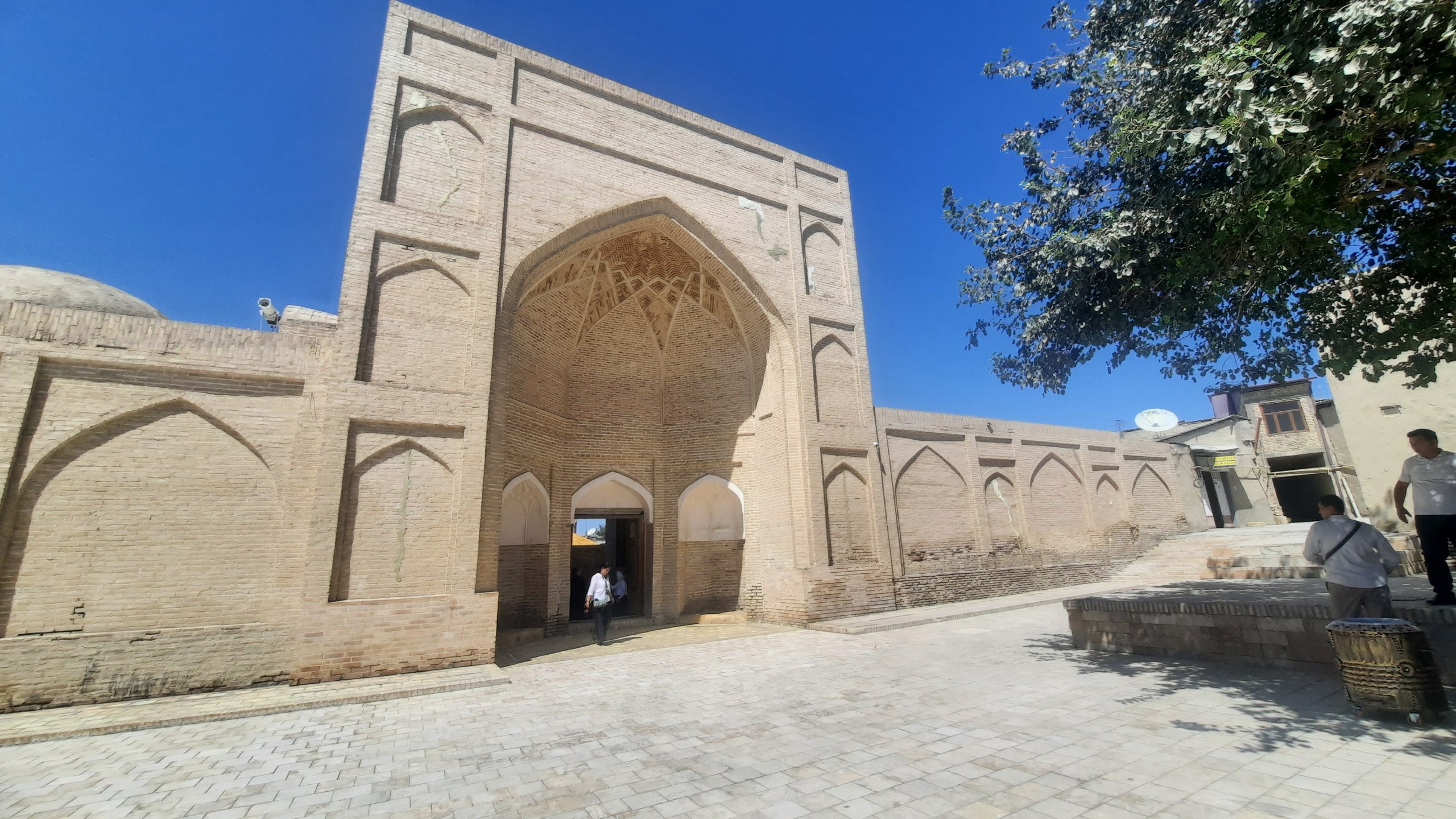
The heat of Bukhara’s old city does little to deter the crowds. Tourists squeeze through narrow lanes, pausing in the shade of centuries-old madrasas or beneath towering minarets. This September, the heart of the UNESCO Creative City of Crafts and Folk Art is hosting something new: the inaugural Bukhara Biennale of contemporary art.
Running from September 5 to November 20, the biennale is already being hailed as one of Central Asia’s largest and most diverse art initiatives. Its title, Recipes for Broken Hearts, reflects both its ambition and tone, blending art, history, and community in a city long known for its spiritual and cultural heritage.
A Global Effort Rooted in Bukhara
The Bukhara Biennale is commissioned by Gayane Umerova, Chairperson of the Uzbekistan Art and Culture Development Foundation, which has played a pivotal role in preserving and promoting the country’s cultural legacy. Artistic director Diana Campbell sees the biennale as a continuation of Bukhara’s historic role as a center of learning and exchange.
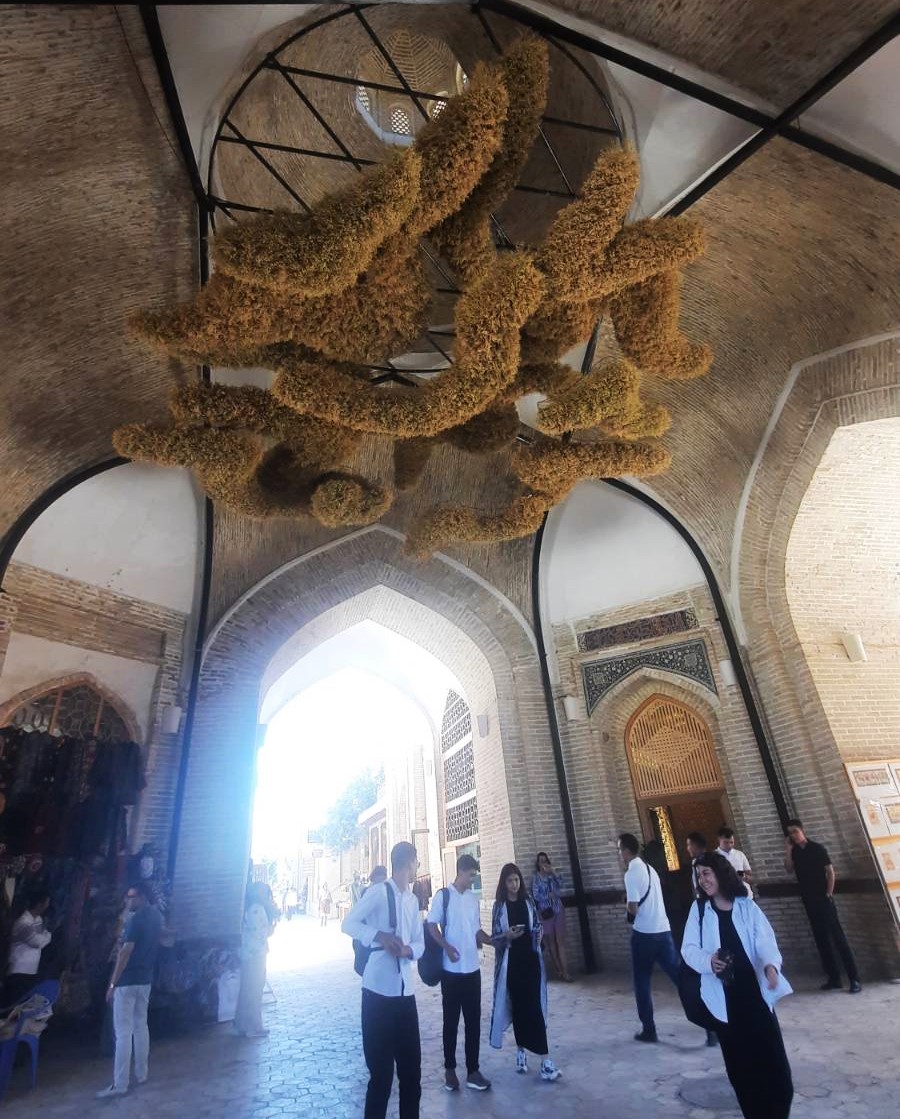
Isiriq (wild rue) is a traditional herbal medicine also widely used in purification rituals among Uzbeks. It is often burned or hung in homes to ward off misfortune and evil. In the installation, bunches of isiriq hanging from the roof appear to reflect this age-old custom; image: TCA, Sadokat Jalolova
“The heart’s creative power comes into view when we look to tenth-century Bukhara, a time and place that offer many ways of mending heartbreaks,” said Campbell. She referenced Bukhara’s legacy as the home of polymath Ibn Sina and a crossroads on the Silk Roads. “For more than a millennium, Bukhara has been a place where people gathered to seek knowledge, healing, and hope. We believe the city holds many extraordinary recipes in its heart.”
The biennale unfolds in the newly developed Bukhara Cultural District, where restored monuments are paired with modern design, featuring contributions from architects Wael Al Awar and landscape designer Günther Vogt.
From Jeddah to Bukhara: Palm Waste Becomes Structure
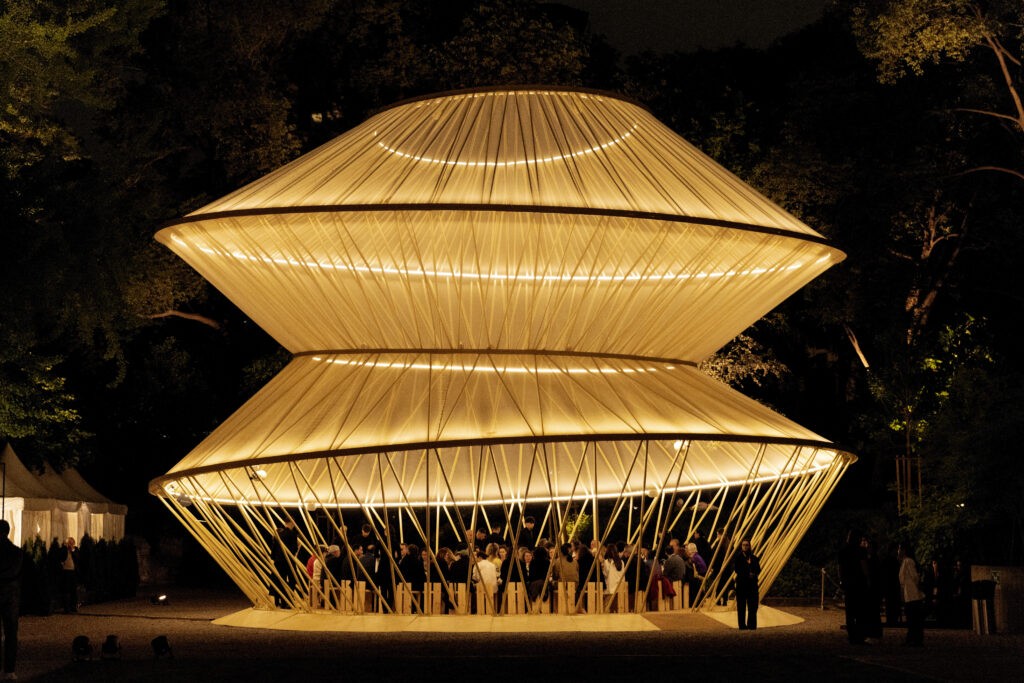
A highlight of the biennale is the AlMusalla Prize-winning installation, a reimagined musalla, or prayer space, constructed entirely from palm tree waste. Originally built in Jeddah, the structure has been transported to Bukhara as a symbol of sustainability and reuse.
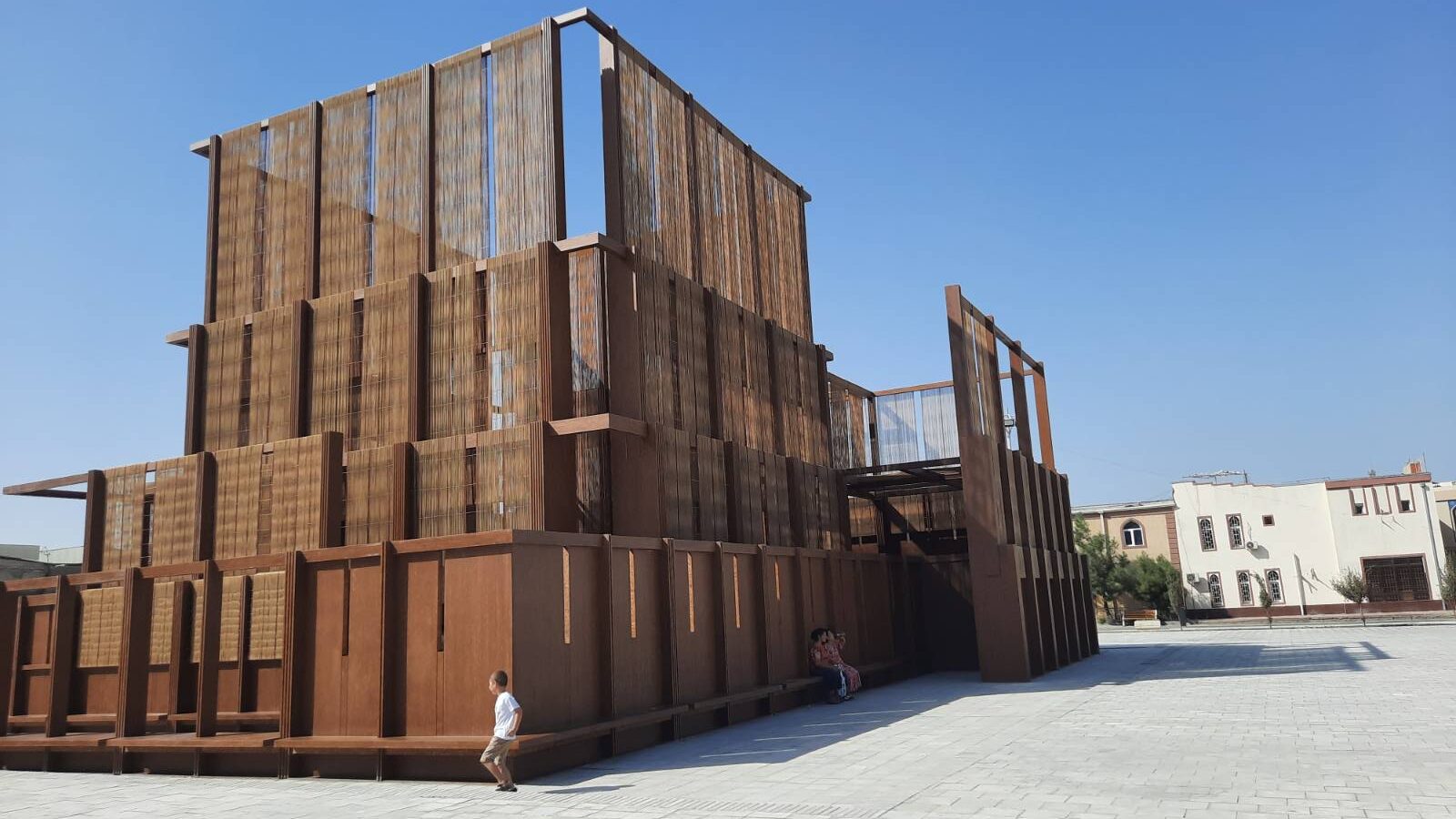
AlMusalla Prize winning installation; image: TCA, Sadokat Jalolova
Christopher Blust, engineer at AKT II, explained the origins of the project: “We were inspired by the idea of courtyards as places of gathering. Even the Prophet Muhammad’s house in Medina began with a courtyard for prayer and community.”
Equally important, he said, was the material itself. “Palm fronds are discarded and often burned. We asked: Why not return to how these were used centuries ago? We shredded them, pressed them into boards, and created structural timber. This is the world’s first project to use palm waste in this way.”
Architect Nicolas Fayad of East Architecture Studio noted that their design was informed by Jeddah’s traditional materials, timber, mud, and stone, reinterpreted through modern technology. “Everything visible in this structure, the framework, screens, and mats, comes from a single source: the palm,” Fayad said.
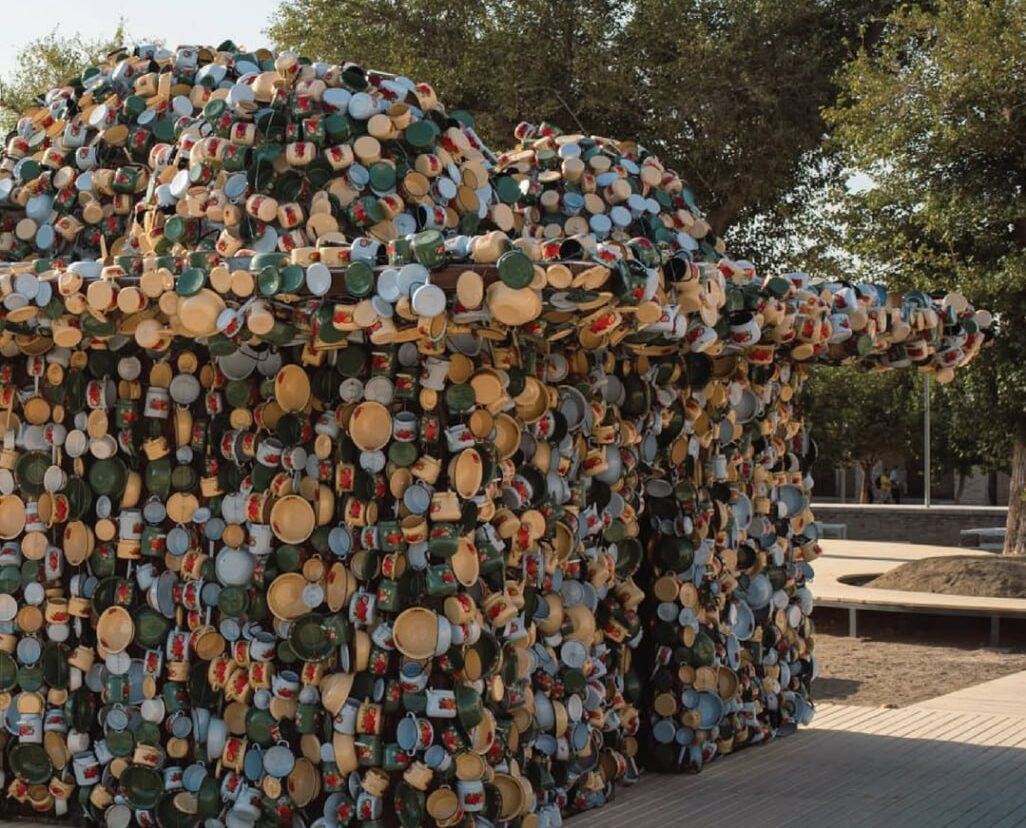
Crafted from everyday household objects, this installation portrays women occupied with countless kitchen tasks; image: ACDF Uzbekistan
Healing Cracks with Gold
Other works draw inspiration from Bukhara’s monuments. Master craftsman Bakhshullo Jumayev and his wife Muqaddasxon Jumayeva partnered with Belgian designer Hanna Militsich to repair cracks in the façade of the Khoja Kalon madrasa using golden threads, a technique inspired by the Japanese art of kintsugi.
“In Japan, they don’t discard broken vessels; they mend them with gold,” said Jumayev. “Inspired by that, we decided to patch the cracks in our heritage buildings with golden threads.”
Jumayev chose Khoja Kalon not just for its beauty but for personal reasons. He was born nearby, in the home of the renowned Bukharan gold embroiderer Rajab Oqsoqol. “We grew up walking barefoot around Khoja Kalon. This project fills me with joy,” he said.
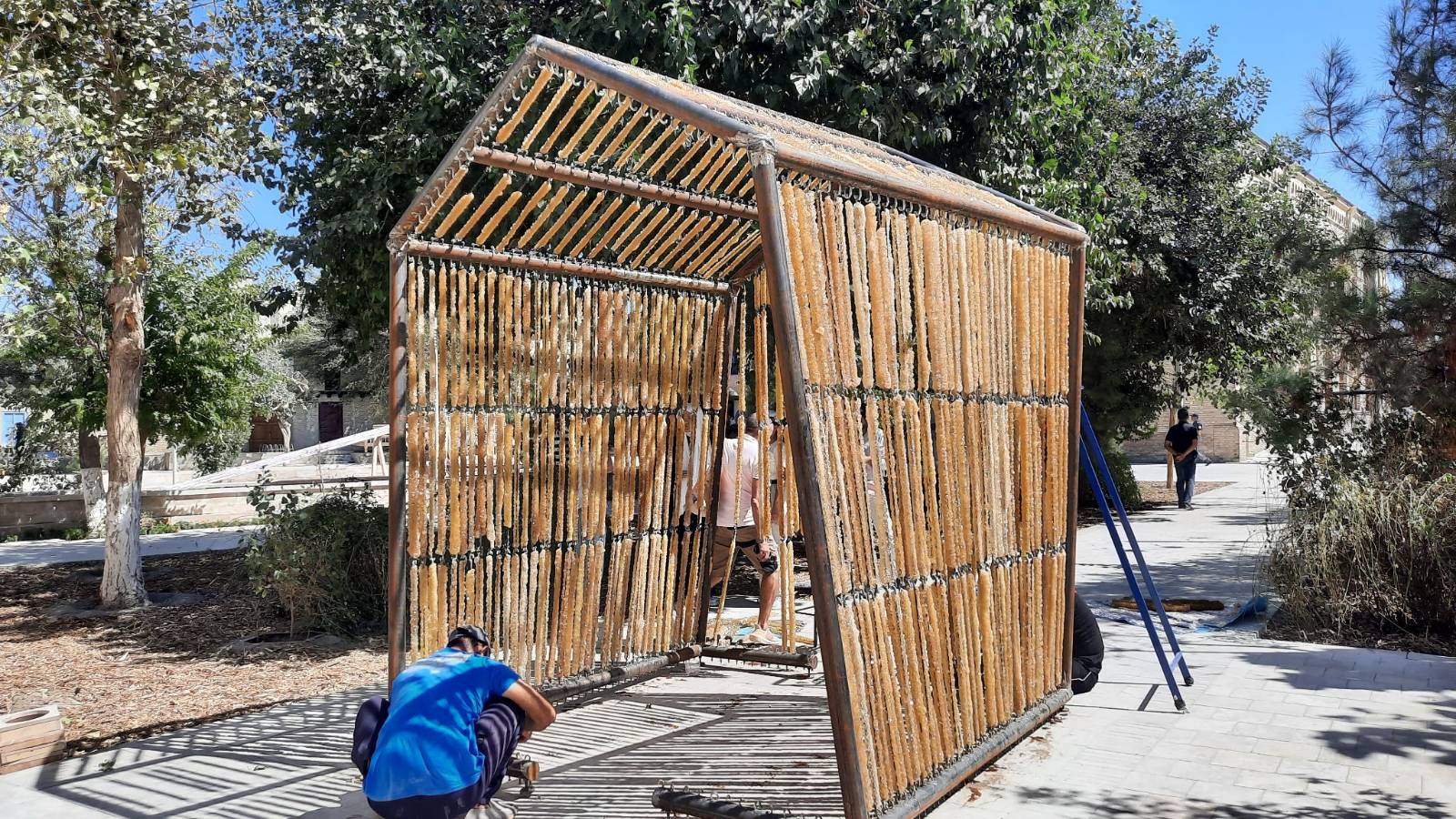
A small house made of novvot, or rock candy, appears to symbolize a life and family home filled with sweet memories; image: TCA, Sadokat Jalolova
The repairs took seven months to complete, and Jumayev emphasized that the work was both practical and symbolic. “The biennale aims to soothe aching hearts. We wanted to mend the cracks like applying a healing balm,” he said.
At 69, the sixth-generation artisan has trained more than 500 students, many now working globally. Participating in the biennale, he said, is “a dream come true.”
Voices of Women in Central Asia
Beyond installations, the biennale creates a platform for dialogue. On September 6, a panel titled Central Asian Women was held at the historic Gavkushon madrasa, focusing on the intersections of heritage, identity, and contemporary art.
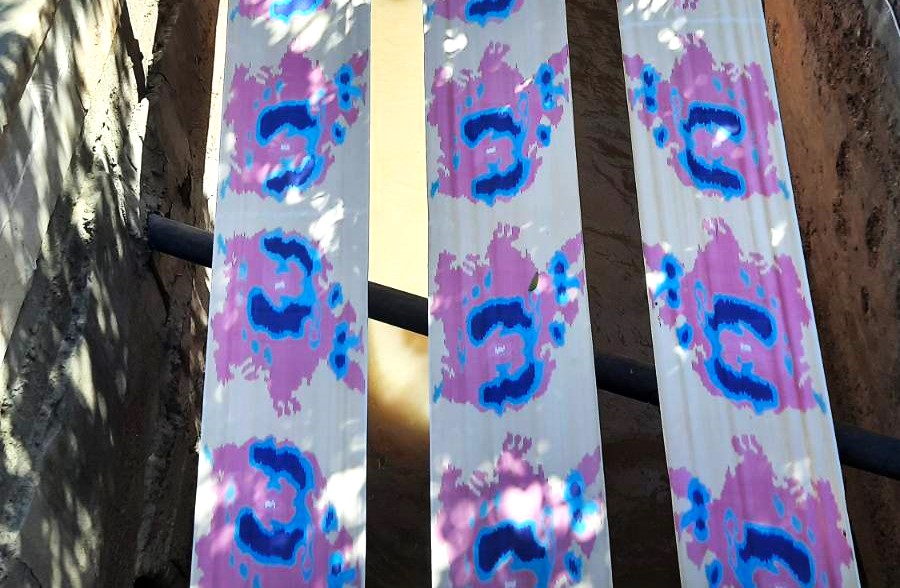
An installation made of national Atlas fabric is designed to remind visitors of a bird, sending a message that women should be free to live without limits; image: TCA, Sadokat Jalolova
Organized with the support of ACWA Power, the session featured women artists from across the region. “Women play a strategic role in shaping business and cultural landscapes,” said Janona Ahmedova, Communications Director at ACWA Power Uzbekistan. “Through art and dialogue, we aim to amplify women’s voices as part of a sustainable future.”