In 568, the Sogdian diplomat Maniakh led an embassy from the Turkic Khagan Istemi to the court of Byzantine Emperor Justin II. The mission sought to negotiate direct silk trade with the Byzantines and an alliance against Sasanian Iran, which controlled the principal overland routes between Central Asia and Byzantium.
Historians have traditionally associated this diplomatic mission with the development of direct commercial and diplomatic links along the northern routes of the Silk Road.
However, archaeological research conducted over the past decade in Mangystau, western Kazakhstan, has opened new perspectives on the study of ancient trade networks and offers a fresh interpretation of this long-held assumption.
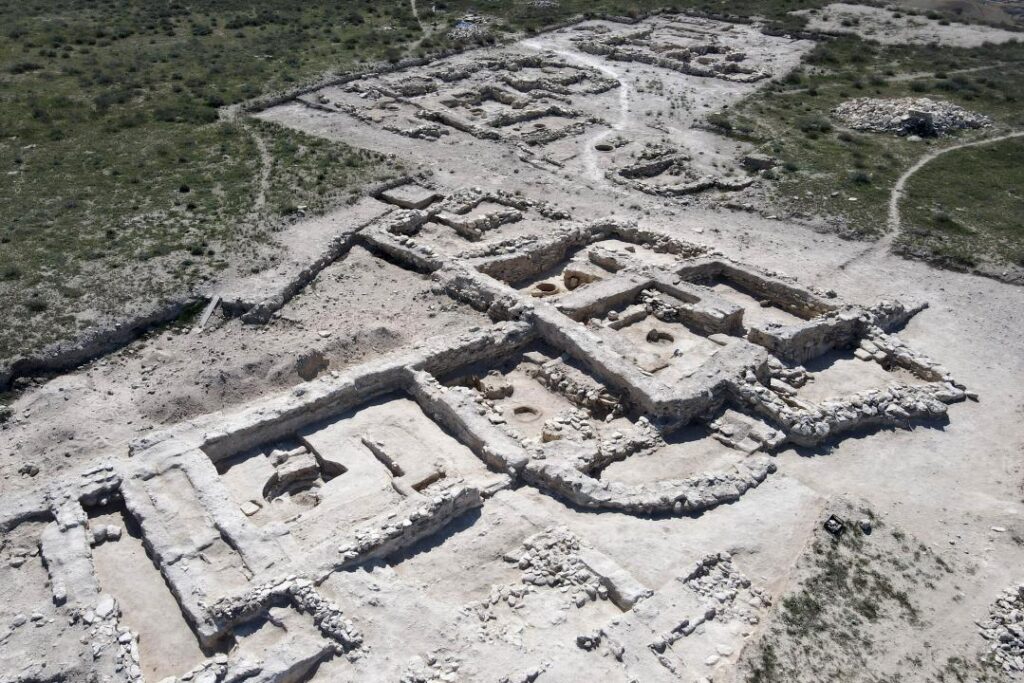
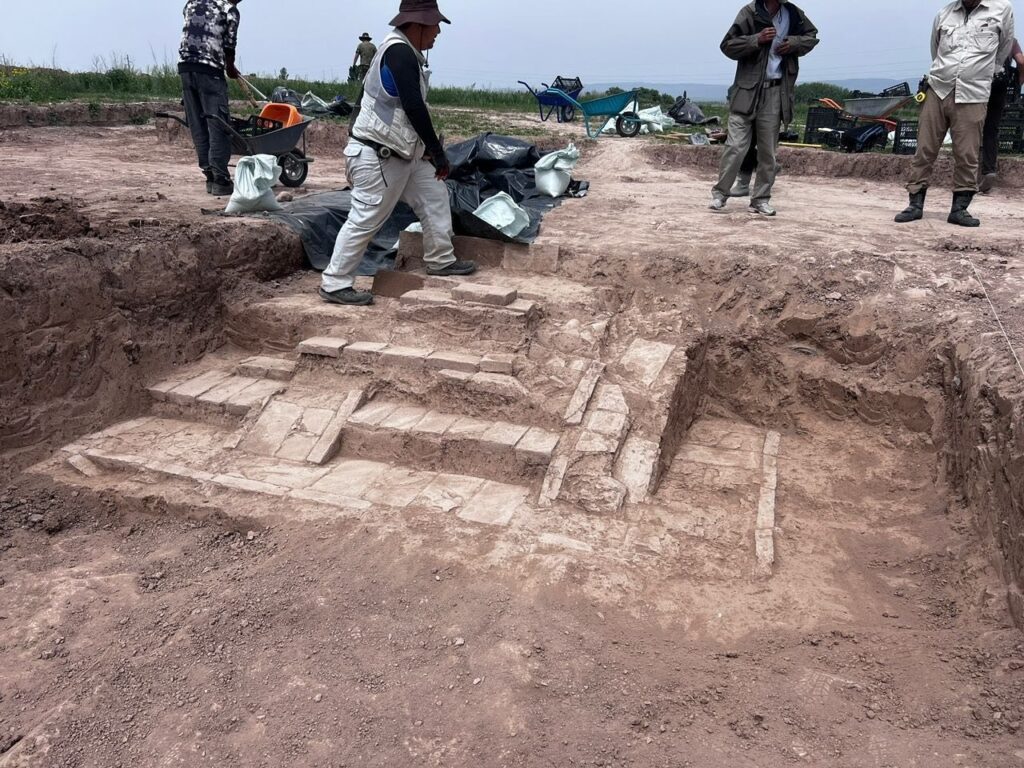
One of the most significant recent discoveries is the ancient settlement of Karakabak, located on the shore of Kochak Bay along the northeastern coast of the Caspian Sea. Preliminary evidence suggests that the settlement existed from the first century CE until the middle of the sixth century.
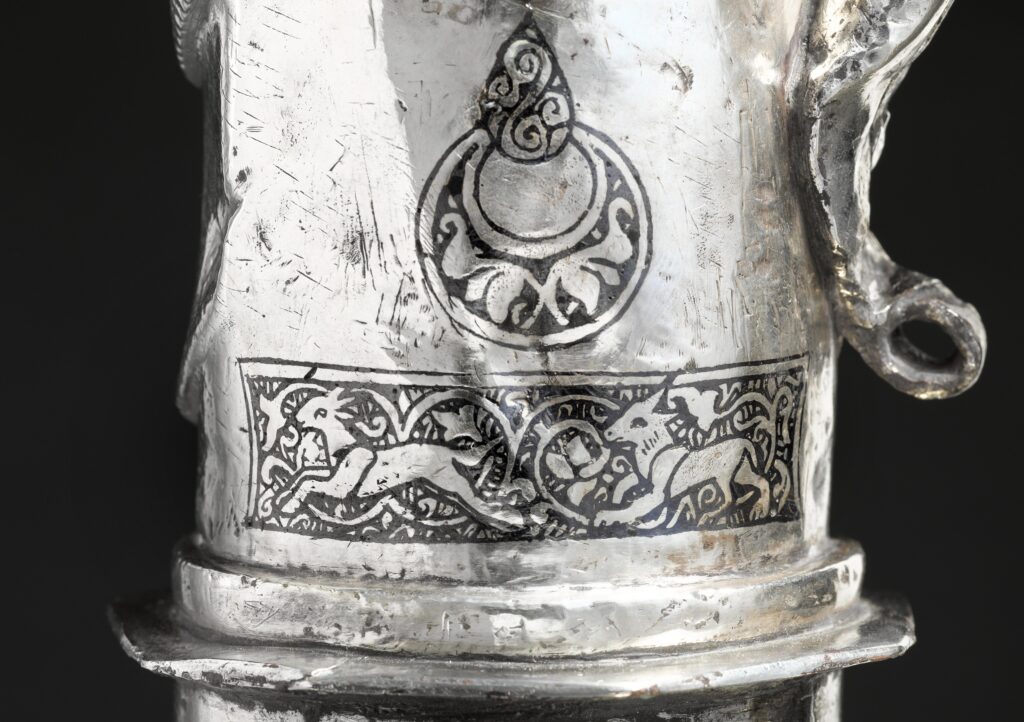
The settlement likely emerged alongside the development of local mineral resources, including the extraction and processing of copper, iron, lead, and bitumen. Craftsmen at Karakabak produced jewelry, ceremonial and everyday belt fittings, clothing, weapons, horse harnesses, and saddles. Silver, gold, garnets, amber, lapis lazuli, carnelian, red coral, and pearls were imported for jewelry making and processed at the site.
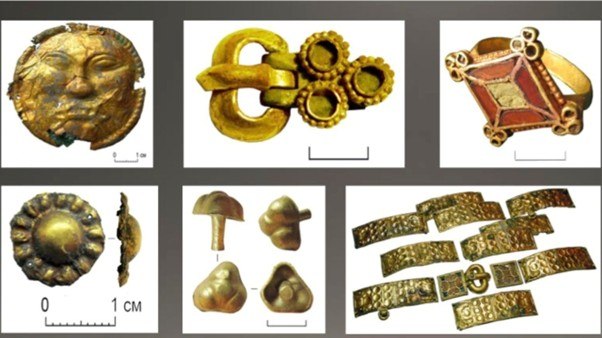
Image: Andrey Astafyev
The settlement also produced a wide range of ceramic vessels, some of which were distributed well beyond the region. Glass beads and cullet were imported from across the Caspian Sea to support local glassworking. This provides compelling evidence that Karakabak was integrated into international economic networks during antiquity. Glass found at the site included material originating in both the Roman Empire and Iran.
Taken together, the archaeological evidence allows Karakabak to be interpreted as a major manufacturing and processing center that participated in extensive interregional exchange networks serving the nomadic world.
Archaeologists have recovered a substantial collection of more than 150 coins dating from the first century through the first half of the sixth century CE. The collection includes coins from Parthia, Ancient Khorezm, Bukhara Sogdiana, Sasanian Iran, the Kushano-Sasanian Kingdom, the Byzantine Empire, and China.
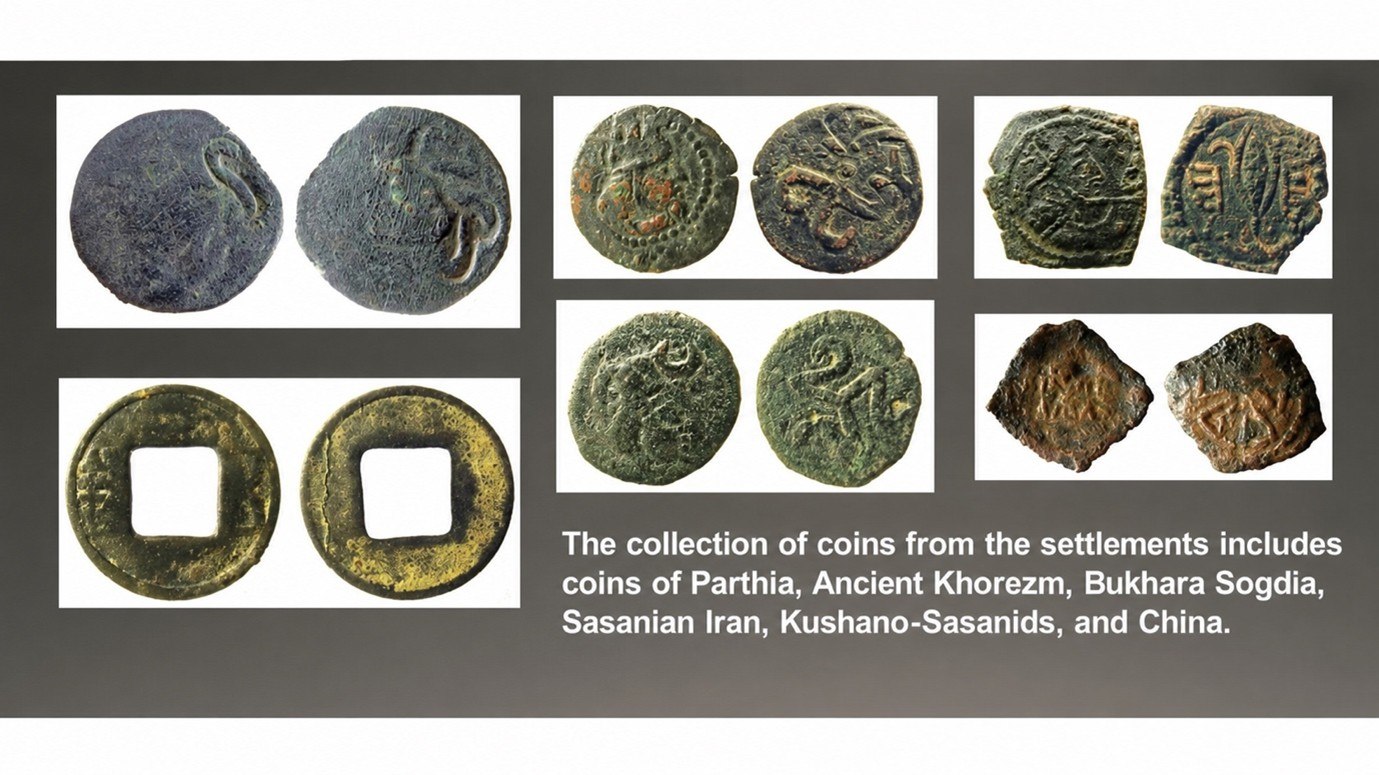
Image: Andrey Astafyev
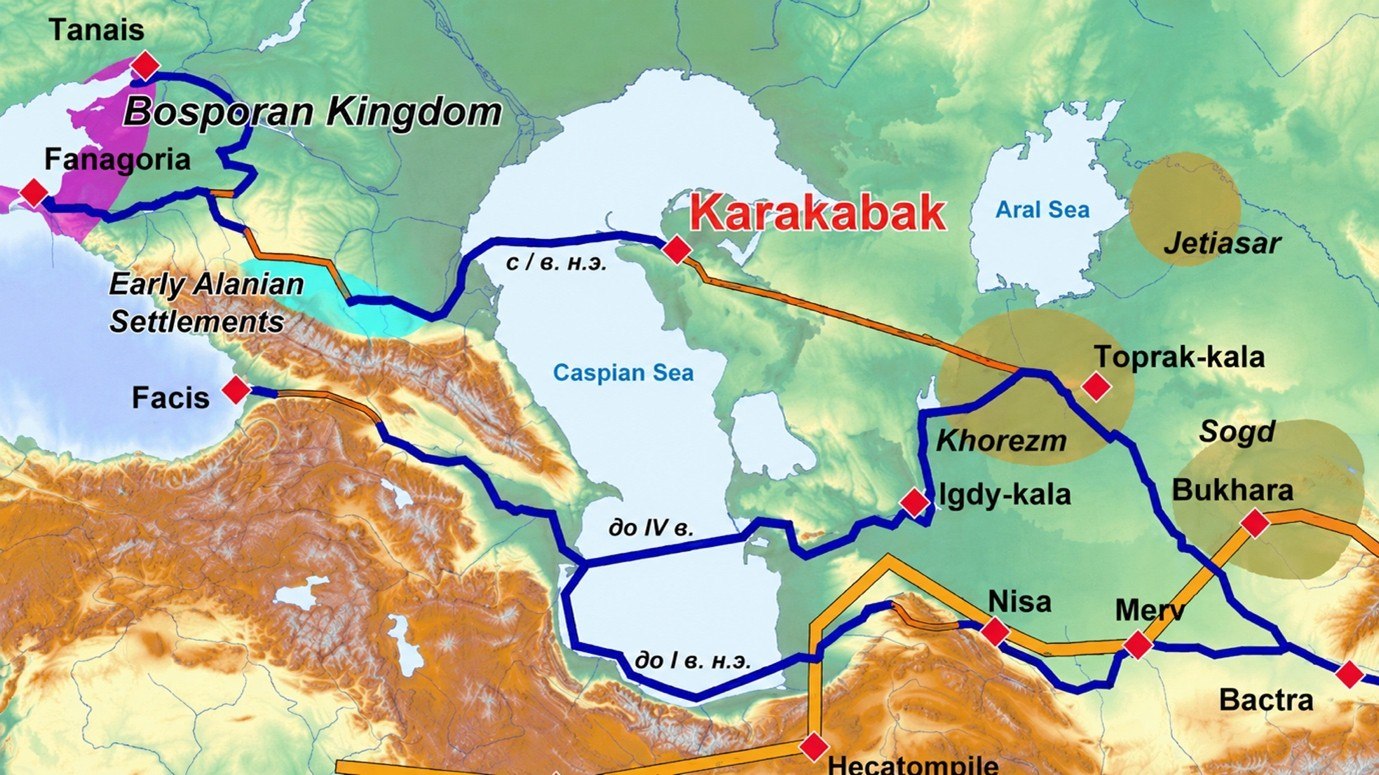
Research has established that Karakabak maintained commercial ties with the Zhetyasar culture in the lower Syr Darya region of present-day Kyzylorda Region, the Kerder culture in the Amu Darya delta, Sasanian Iran, Caucasian Albania, the North Caucasus, the Azov region, the Lower and Middle Volga, and the Southern Urals. This demonstrates the settlement’s high commercial and economic status. In terms of its role within international trade networks, Karakabak may be compared to the modern Port of Aktau on the Caspian Sea.
The discovery of an entire enclave-type archaeological complex centered on Karakabak represents a unique archaeological phenomenon in southwestern Kazakhstan. It also requires a reassessment of the site’s place and role within the transport infrastructure of the Great Silk Road.
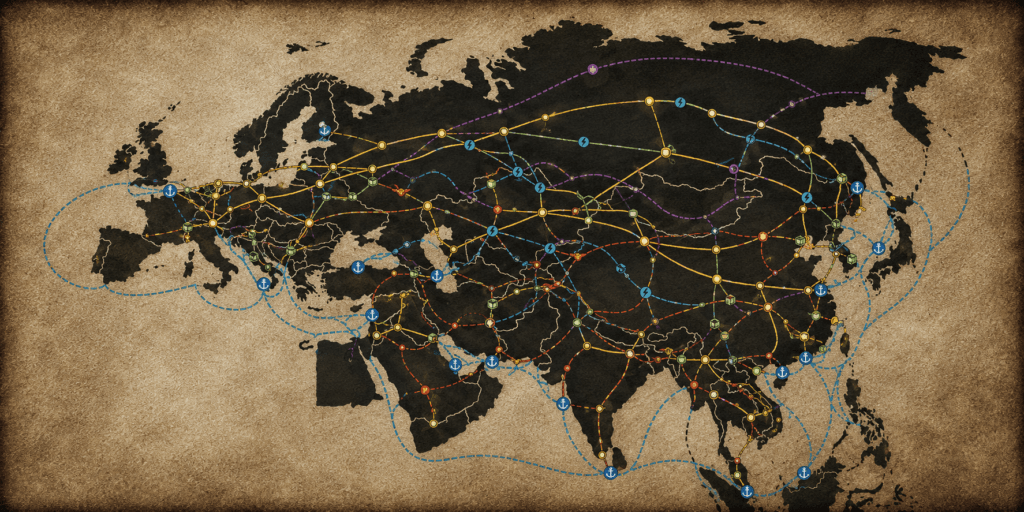
Evidence of economic ties with the Zhetyasar culture, together with the discovery of Parthian coins, suggests that alongside the traditional steppe route, a Mangystau branch of the Silk Road may also have passed through the Aral-Caspian region, linking with the Lanzhou-Turpan-Ferghana-Syr Darya corridor. The operation of this route may have been one of the principal reasons behind the establishment of Karakabak.
The archaeological evidence also points to the existence of a previously unknown Azov-Caspian trade corridor, which formed an important element of the broader transcontinental communications network. Within this system, Karakabak functioned as a major commercial and transportation hub. The discovery of imported transport amphorae of North Caucasian origin may serve as indirect evidence of active maritime trade across the Caspian Sea.
During the Hunnic and post-Hunnic periods, Karakabak developed into a major manufacturing center in the northern Caspian region. It was during this period that the Caspian-Volga trade route bappears to have become increasingly important, further expanding long-distance commercial connections.
The discovery of Karakabak adds to evidence that Mangystau participated in trade networks extending across Eurasia during the first half of the first millennium CE, including networks connected with China, India, the Roman Empire, and later the Byzantine Empire..
The study of a broad range of Classical written sources has also revealed an intriguing cartographic reference to an ancient city on the eastern shore of the Caspian Sea. In Claudius Ptolemy’s Geography, a town named Aspabota is listed east of the Caspian Sea. This makes it possible to advance a working hypothesis that the settlement of Karakabak may represent the archaeological equivalent, or at least the functional counterpart, of the center identified in ancient geographical tradition as Aspabota.
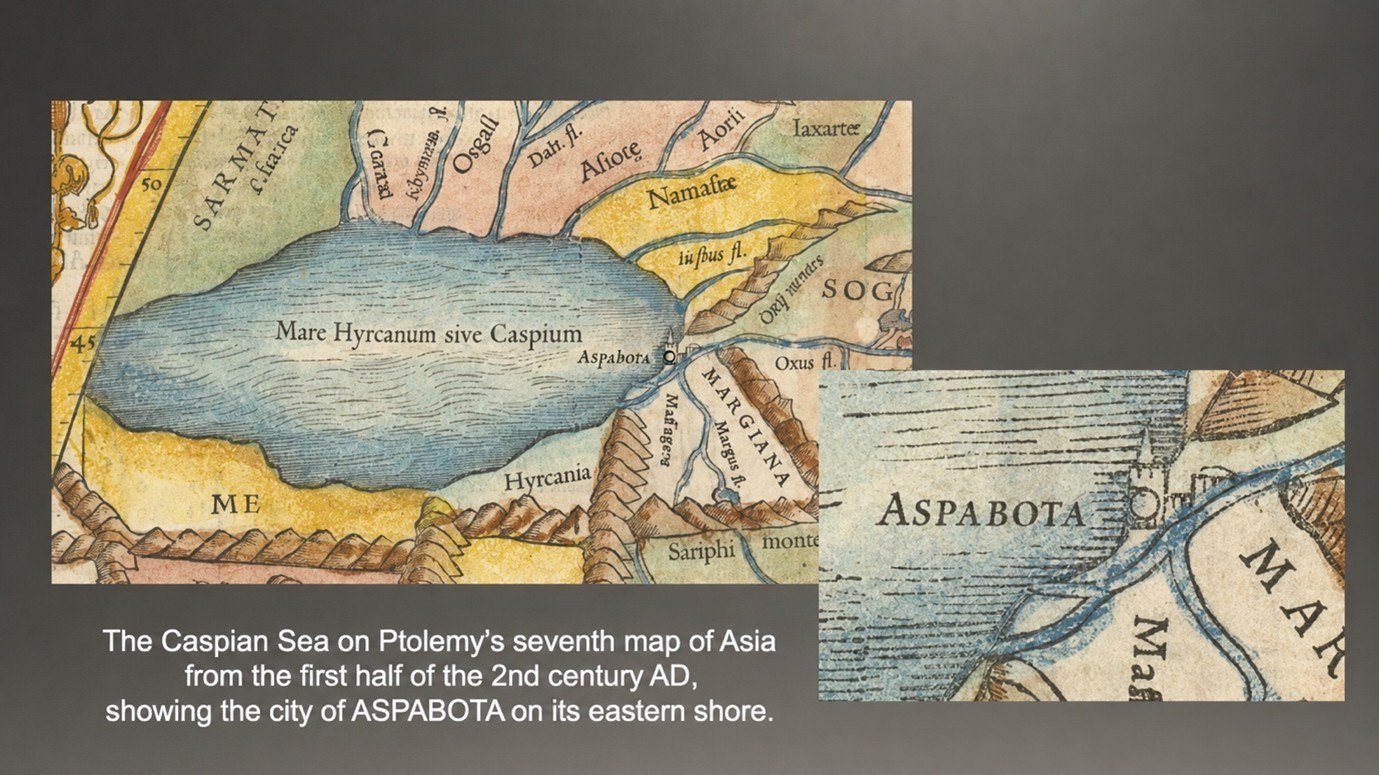
Image: Andrey Astafyev
A series of archaeological discoveries made over the past decade demonstrates that Mangystau was an integral part of the global political, economic, cultural, and ethnic processes collectively known as the Great Silk Road. These findings are of considerable international scholarly significance, represent a remarkable historical phenomenon of the nomadic civilization of the Great Steppe, and make an important contribution to strengthening Kazakhstan’s international academic standing.