The United States and Europe may have stepped back from Afghanistan, but the country’s instability still affects migration, security, trade, and humanitarian pressures far beyond its borders. Given their proximity, Central Asian states cannot and have not disengaged, and their efforts to keep Kabul connected to regional diplomacy and commerce serve interests that are also shared by the West.
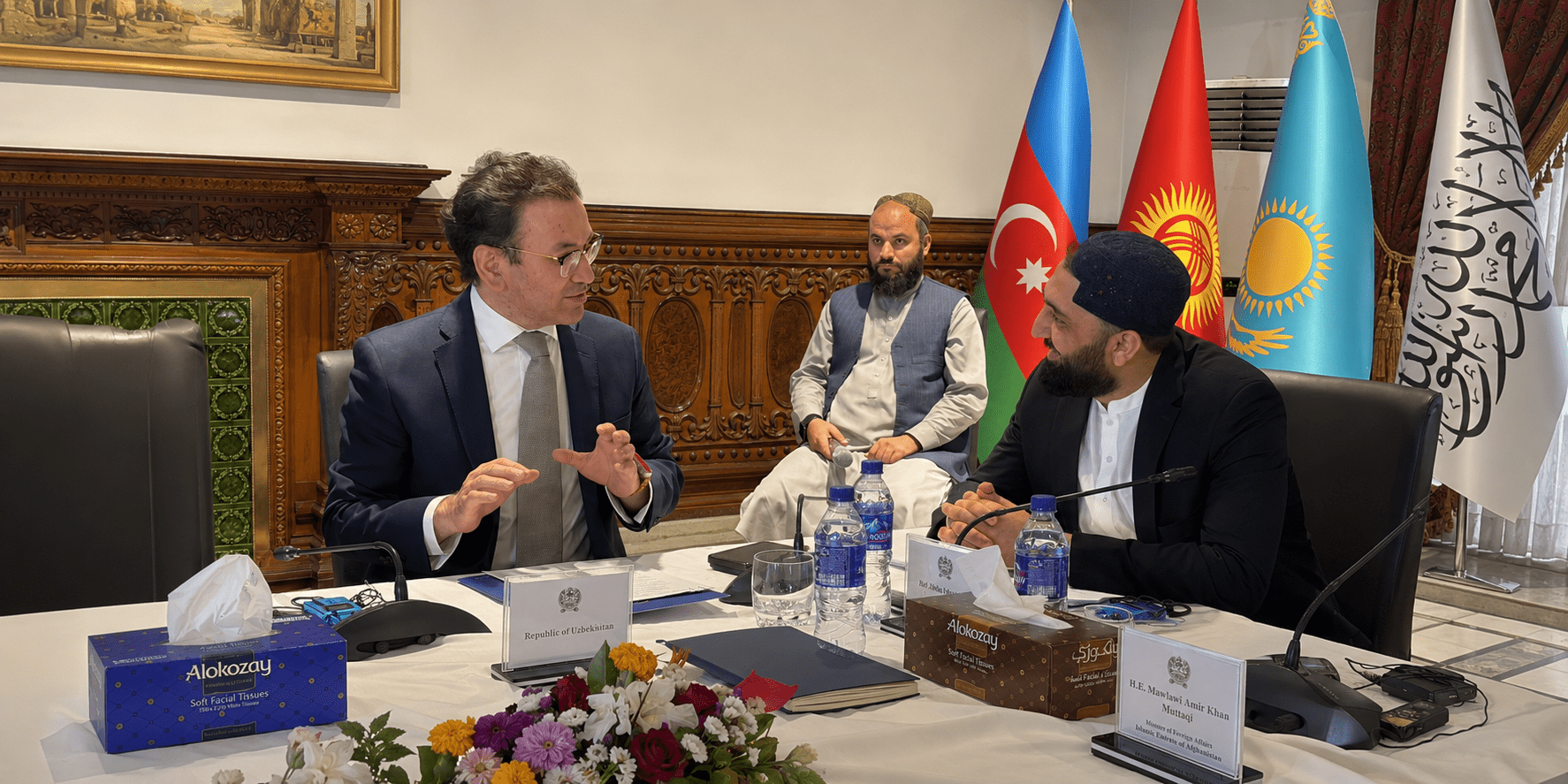
On June 16, the Center for Strategic Studies of Afghanistan‘s Ministry of Foreign Affairs convened the first Afghanistan-Central Asia Think Tank Forum in Kabul, bringing together leaders and senior representatives from strategic research institutions across the region. Held under the theme “The Strategic Role of Think Tanks in Advancing Regional Cooperation,” the forum included delegations from Turkmenistan, Uzbekistan, Kazakhstan, Tajikistan, Kyrgyzstan, and Azerbaijan alongside their Afghan counterparts.
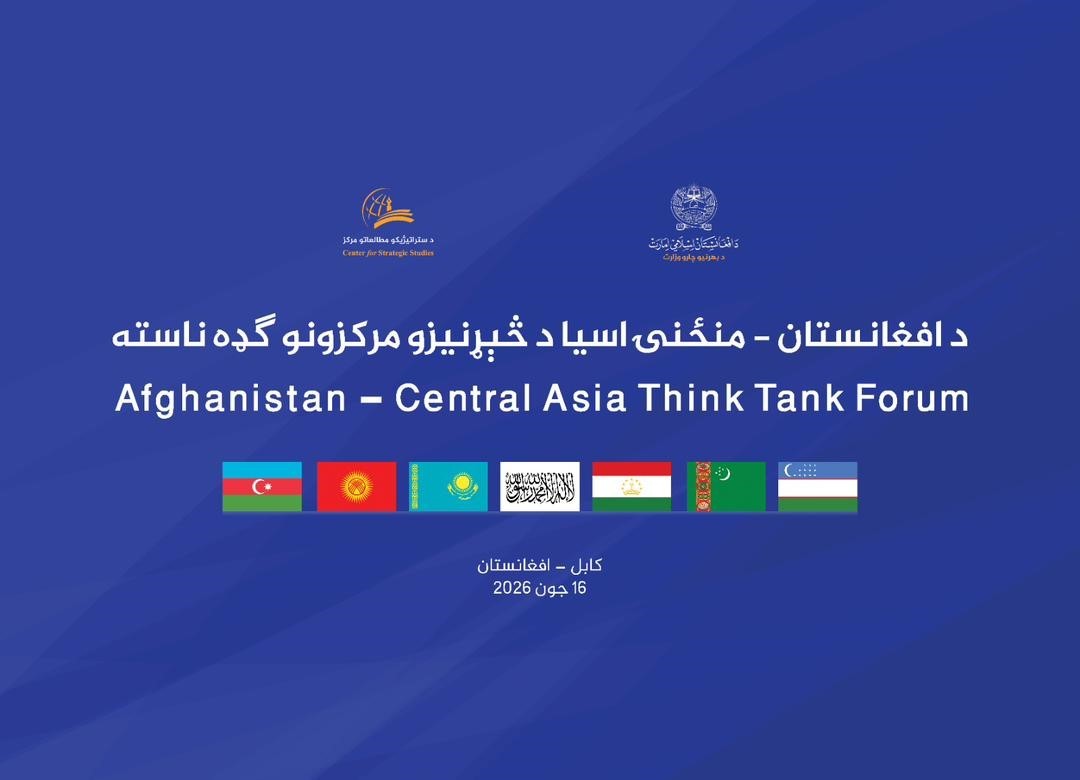
Image: Ministry of Foreign Affairs of Afghanistan
In his keynote address, Afghanistan’s Foreign Minister Mawlawi Amir Khan Muttaqi observed that the international order stands at a delicate crossroads, divided by competing narratives and opposing camps: “Given the developments and challenges in the global structure, the current international order finds itself at a sensitive juncture in history — a period marked, on the one hand, by various illusions and contradictory narratives, and, on the other, by efforts toward cooperation and multilateralism.”
In essence, Muttaqi was advocating for an international order that allows Afghanistan and its neighbors to chart their own courses while engaging constructively with willing partners.
Speaking to those in his immediate region, he drew attention to shared challenges, among them climate change, water shortages, economic headwinds, and conflict spillover, and asserted that “There is no doubt that, in order to make more effective and constructive decisions and to develop indigenous narratives for our region and shared future, specialists and researchers from academic and intellectual institutions must draft practical and comprehensive roadmaps for future cooperation across various fields.”
Muttaqi underscored to participants the growing recognition that regional states stand to gain more through practical cooperation than through isolation or unilateral approaches. He reaffirmed Afghanistan’s commitment to advancing the research-based proposals discussed at the April Consultative Dialogue in Kabul to help inform regional political and economic decision-making. His remarks reflected a view that broad-based economic development and good-neighborly relations are mutually reinforcing foundations of societal stability within a shared civilizational context—a perspective widely shared across the Central Asian republics.
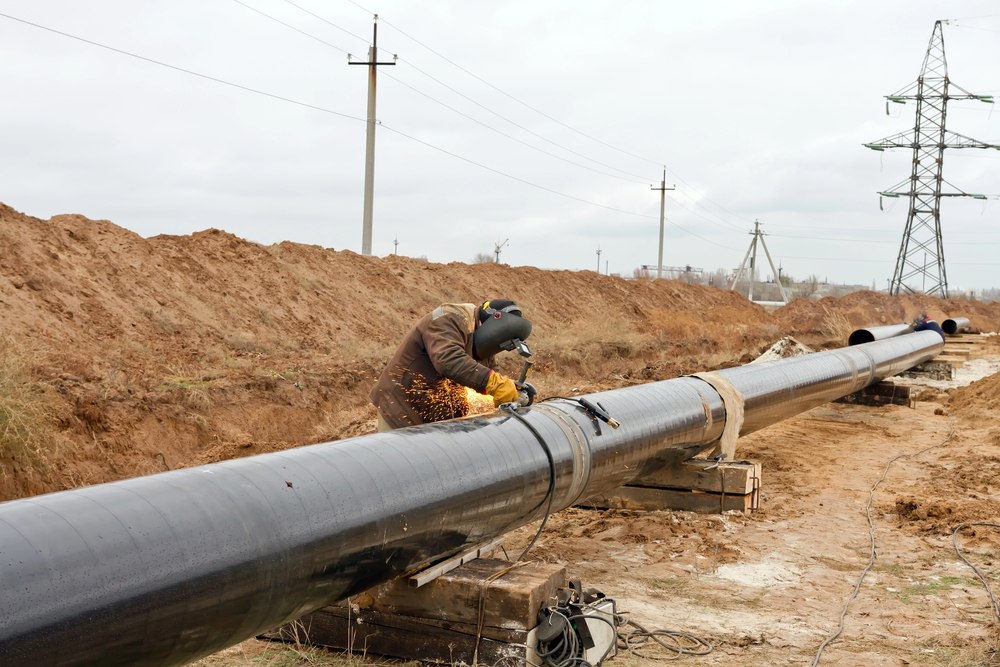
That is why, for example, he highlighted the need to follow through on economic and connectivity opportunities, citing projects such as CASA-1000, Turkmenistan-Afghanistan-Pakistan-India (TAPI) gas pipeline, Turkmenistan-Afghanistan-Pakistan electricity transmission project (TAP-500), the Lapis Lazuli Route, and the Afghan-Trans railway. These initiatives are in various stages of development, some having been stalled for decades.
Javlon Vakhabov, former Uzbek ambassador to the United States and currently Director of the International Institute for Central Asia (IICA) in Tashkent, travelled to Kabul for the Forum. In his address, he summed up the mood of the participants: “In this emerging Greater Central Asia, Afghanistan is not a periphery. It is the southern gateway of our region, linking Central Asia with South Asia, the Indian Ocean and West Asia. Therefore, Afghanistan’s stability and economic recovery are directly connected with the future development of Central Asia.” After the Forum, he told The Times of Central Asia that “Afghanistan should be regarded not as a periphery, but as a full-fledged participant and co-author of regional processes. The stability and economic recovery of Afghanistan are directly linked to the future development of Central Asia as a whole.”
In other words, Uzbekistan’s ambition – and that of the region as a whole – extends beyond transport and energy links. It seeks an integrated Central and South Asian economic and political space in which regional states—not external powers—set the agenda.
Akramjon Nematov, the First Deputy Director of Uzbekistan’s Institute for Strategic and Regional Studies under the President of the Republic of Uzbekistan (ISRS), who also attended the Forum, stressed that Central Asia today has evolved into a consolidated region with its own development strategy based on constructive relations with neighboring countries, mutual trust, and economic cooperation, which results in strengthened regional agency. Central Asia, he continued with optimism, has demonstrated that even the most complex regional issues can be resolved through dialogue, compromise, and respect for mutual interests.
Termez Dialogue Prelude to Afghanistan-Central Asia Think Tank Forum
On June 4, the Termez Dialogue 2026 in Tashkent, which The Times of Central Asia attended, set the stage for the Afghanistan-Central Asia Think Tank Forum. When Afghanistan’s Minister of Industry and Commerce, Nooruddin Azizi, addressed the participants on June 4, he cast Afghanistan as an indispensable bridge transforming connectivity between Central and South Asia. Appearing virtually before senior government officials, regional experts, and international organizations, Azizi articulated a vision of Afghanistan not as a problem to be managed but as an artery linking the region’s major civilizations, markets, and peoples.
“The Islamic Emirate of Afghanistan”, Azizi said, “reconfirms its commitment to strengthening economic and trade cooperation, and declares its full readiness to work with neighboring countries and international partners for the development of trade, transit, investment and economic connectivity.”
The Termez Dialogue — organized under the theme “Peace, Connectivity, Resilience: Shaping the Foundation for Shared Prosperity” — has emerged as one of the primary multilateral fora for advancing a Eurasian integration agenda. Established in 2025 to give practical effect to UN General Assembly Resolution A/RES/76/295, the platform brings together governments, international organizations, business communities, and academic institutions to translate political intent into concrete infrastructure and trade outcomes.
Azizi told participants: “We must look for ways to facilitate the expansion of trade, transit, investment and economic cooperation among the countries of the region.” The statement was more than diplomatic courtesy — it reflected a concrete reading of the regional map. Because Afghanistan is the single country that straddles Central Asia and South Asia, all overland connections from Uzbekistan, Tajikistan, or Turkmenistan to Pakistan and India require crossing Afghanistan—unless they traverse through Iran by way of Turkmenistan.
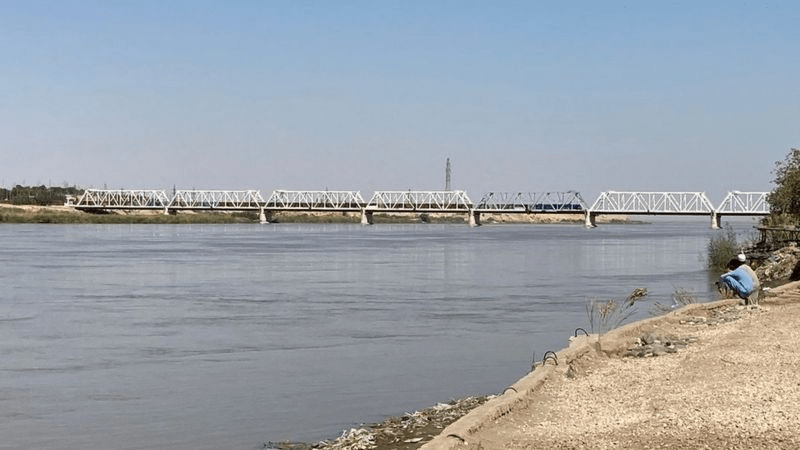
According to Azizi, “Afghan transport projects, as some of the most important regional connectivity initiatives, play a significant role in linking the railway networks of Central and South Asia by promoting trade, facilitating transit, reducing transportation costs, and strengthening regional economic cooperation. The initiative’s second phase would connect Afghanistan with Tajikistan via the Shir Khan Bandar–Nizhny Pyanj route, Uzbekistan via Termez/Ayritom–Hairatan, and Turkmenistan via Aqina–Imam Nazar, while extending westward through Iran and onwards to South Asia via Iran’s Bandar Abbas Port.” [English translation slightly edited for clarity; Original in Afghan.]
Azizi linked the ideas of free trade, sustainable economic development, and shared interests as interconnected elements that will, taken together, help maintain regional stability. “Sustainable development and shared prosperity can be achieved,” he said, “when trade barriers are reduced, transit infrastructure is strengthened, and conditions are provided for broader participation of the private sector.”
Afghanistan’s delegation at Termez Dialogue also included Zaker Jalaly and Ghuncha Gul Arman of the Ministry of Foreign Affairs’ Center for Strategic Studies (CSS), which conducts research on regional developments and cross-border strategic policy. Beyond advancing diplomatic and economic cooperation between Central and South Asia, CSS is tasked with building contacts with Western businesses.
More fundamentally, Azizi sees the need to stick to practical economic objectives. “Shared economic interests can serve as a solid foundation,” he said. “We must have peace, mutual trust, and regional stability,” underscoring Kabul’s awareness that no investment bank, logistics company, or trading house will commit capital to corridors running through unstable territory.
Azizi closed with a direct appeal to the room: “I take this opportunity to invite investors, financial institutions and friendly countries to invest in Afghanistan’s infrastructure, industry, trade and transit sector — because the future prosperity and stability of the region lie in closer cooperation and collective utilization of our shared capacities.”
Eurasia Does Not Need New Fault Lines—It Needs New Bridges of Trust.
Summing up the mood across the region, Eldor Aripov, ISRS’s director, said: “Afghanistan’s peaceful development and gradual integration into regional economic and connectivity initiatives are essential for restoring the country’s historic role as a bridge between Central and South Asia. Practical cooperation based on mutual interests can contribute to greater regional stability and shared prosperity.”
The Afghanistan–Central Asia Think Tank Forum and the Termez Dialogue 2026 reflect the region’s growing diplomatic engagement with Kabul. For the first time in decades, connectivity extends beyond infrastructure to encompass dialogue and shared purpose. Grounded in mutual respect and pragmatism, this emerging diplomatic architecture strengthens regional ownership and cooperation, laying the foundations for lasting peace, sustainable development, and a more integrated Eurasia.