• KGS/USD = 0.01144 0%
  • KZT/USD = 0.00213 0%
  • TJS/USD = 0.10456 0.19%
  • UZS/USD = 0.00008 0%
  • TMT/USD = 0.28490 0%
  • KGS/USD = 0.01144 0%
  • KZT/USD = 0.00213 0%
  • TJS/USD = 0.10456 0.19%
  • UZS/USD = 0.00008 0%
  • TMT/USD = 0.28490 0%
  • KGS/USD = 0.01144 0%
  • KZT/USD = 0.00213 0%
  • TJS/USD = 0.10456 0.19%
  • UZS/USD = 0.00008 0%
  • TMT/USD = 0.28490 0%
  • KGS/USD = 0.01144 0%
  • KZT/USD = 0.00213 0%
  • TJS/USD = 0.10456 0.19%
  • UZS/USD = 0.00008 0%
  • TMT/USD = 0.28490 0%
  • KGS/USD = 0.01144 0%
  • KZT/USD = 0.00213 0%
  • TJS/USD = 0.10456 0.19%
  • UZS/USD = 0.00008 0%
  • TMT/USD = 0.28490 0%
  • KGS/USD = 0.01144 0%
  • KZT/USD = 0.00213 0%
  • TJS/USD = 0.10456 0.19%
  • UZS/USD = 0.00008 0%
  • TMT/USD = 0.28490 0%
  • KGS/USD = 0.01144 0%
  • KZT/USD = 0.00213 0%
  • TJS/USD = 0.10456 0.19%
  • UZS/USD = 0.00008 0%
  • TMT/USD = 0.28490 0%
  • KGS/USD = 0.01144 0%
  • KZT/USD = 0.00213 0%
  • TJS/USD = 0.10456 0.19%
  • UZS/USD = 0.00008 0%
  • TMT/USD = 0.28490 0%

Kyrgyzstan Braces for Showdown Between President Japarov and Former Security Chief Tashiyev

When Kyrgyzstan’s President Sadyr Japarov suddenly dismissed his long-time friend Kamchybek Tashiyev as head of the country’s State Committee for National Security (GKNB) on February 10, he cryptically said it was “in the interests of our state, in order to prevent a split in society.”

Less than two months later, that split could be coming, and there is a possibility the country is headed for a confrontation between the two men and their supporters.

The Gathering Clouds

Tashiyev returned to Kyrgyzstan on March 19 after being outside the country for more than a month amid a widening corruption investigation targeting Tashiyev and people close to him.

On the day he arrived, Tashiyev went to the Interior Ministry’s investigative department, where he was questioned about state-owned company Kyrgyzneftegaz.

On March 17, the head of the State Tax Service, Almambet Shykmamatov, said that “Kyrgyzneftegaz was under the complete control of the GKNB.” The State Tax Service is looking into allegations that Kyrgyzneftegaz sold crude oil to private companies connected to Tashiyev’s relatives or associates who then sold the oil back to Kyrgyzneftegaz at a profit.

These accusations are not new.

Bolot Temirov, the host of the investigative news program Temirov Live, reported about this exact topic in January 2022. Two days after the report was posted on YouTube, police raided the office of Temirov Live, detaining Temirov on narcotics possession charges that were later dropped. Instead, Temirov was convicted of having a fake Kyrgyz passport and using false documents to cross in and out of Kyrgyzstan.

At an appeals trial in November 2022, a judge ordered Temirov deported from Kyrgyzstan, and he was taken from the courtroom to the airport and put on a plane to Russia. Several journalists connected to Temirov Live have been detained, and some, including Temirov’s wife, have been imprisoned since Temirov’s expulsion from Kyrgyzstan. The State Tax Service has resurrected the Temirov Live accusations, while insisting that the evidence it collected has no relationship to the Temirov Live report.

Tashiyev’s nephew, Baigazy Matisakov, who was the head of the Kyrgyzneftegaz refinery since 2021, was detained on March 18. Tashiyev’s son, Tay-Muras, who is connected to Moko Group, one of the private companies involved in purchasing oil from and then reselling it to Kyrgyzneftegaz, was questioned at the Interior Ministry.

An article from March 16 states that the State Tax Service also connected Tashiyev’s brother, Shairbek, to illegal activities in the oil business. Reports about Tashiyev being questioned at the Interior Ministry on March 19 stressed that he was called in as a “witness.”

Japarov Goes on the Offensive

On February 10, the reason for sacking Tashiyev, who was out of the country at the time, was unclear. In the days that followed, it gradually became apparent that this was more than just a disagreement between two friends who had governed Kyrgyzstan together for five years.

Japarov also dismissed top officials in the GKNB, which Tashiyev had headed since October 2020. Officials in the Interior Ministry, the prosecutor general’s office, several ministers, the mayors of Kyrgyzstan’s second and third largest cities, Osh and Manas (formerly Jalal-Abad), respectively, and eight newly-elected members of parliament were fired or suddenly resigned.

Tashiyev’s brother, Shairbek, received some 56% of the votes in his district in the November 30, 2025, parliamentary elections, the biggest percentage received by any candidate in the 30 electoral districts.

On February 16, less than a week after his brother was fired as head of the GKNB, Shairbek said his brother’s dismissal “did not cause a stir in our family.” He commented about posts on social networks that were calling for him to step down, saying that only the people who voted for him had the right to take away his deputy’s mandate.

But on March 13, the Interior Ministry’s Investigative Department called Shairbek in for questioning, and the next day, he signed a declaration officially relinquishing his seat in parliament.

The Border Guard Service was subordinate to the GKNB, but Japarov transferred it under the control of the president’s office, and also created a state security service and an investigative committee that report directly to the president.

All the while, Japarov insisted he and Tashiyev were still friends.

Shortly after Tashiyev was dismissed, the head of the presidential press service, Dayyrbek Orunbekov, warned there was a fake campaign to discredit Tashiyev, and later, Syrgak Berdikozhoyev, the chairman of the newly created State Security Service, stated that Tashiyev would continue to receive government security.

An Ominous Silence

Tashiyev was in Germany when Japarov announced his dismissal. Japarov said he had spoken with Tashiyev before the announcement, but Tashiyev said the move was unexpected.

The apparent reason for firing Tashiyev was an appeal a group of 75 former government officials and prominent public figures released on February 9, calling for President Japarov and then-speaker of parliament Nurlanbek Turgunbek uulu to set a date for an early presidential election.

Japarov was elected president in January 2021 under a previous constitution that stipulated a six-year term for the president. A new constitution approved in a national referendum in April 2021 reduced the presidential term to five years, so there was some ambiguity about Japarov’s time in office. Hours after the appeal was made public, information appeared claiming that some of its authors were contacting members of parliament and other people, and urging them to “go over to the general’s (Tashiyev’s) side” when an early presidential election was held.

The timing was strange. Tashiyev departed Kyrgyzstan on February 6 for a medical check-up in Germany, something he has done regularly since undergoing heart surgery there in February 2021. He returned on February 13 and met briefly with Japarov on February 15, then left Kyrgyzstan again on February 17.

Tashiyev did not make any comments to the media during his short stay in Kyrgyzstan. After the meeting, President Japarov said Tashiyev would not be returning to any government position and hinted that perhaps the discussion had not gone well.

“Of course, he (Tashiyev) won’t say thank you now; he’ll be upset,” Japarov said, adding, “But years from now, he’ll say, ‘Friend, you did the right thing back then.’”

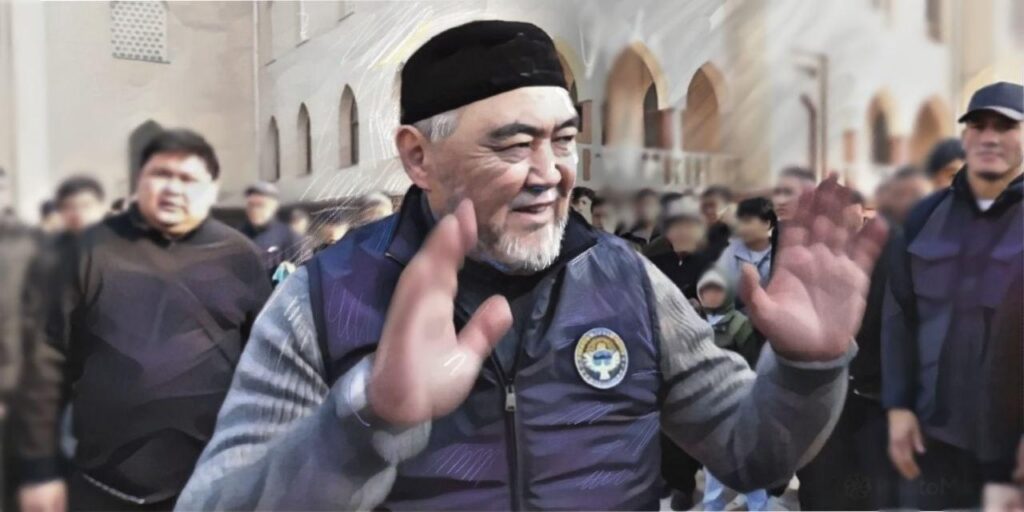
Tashiyev remained in Kyrgyzstan after being questioned by the Interior Ministry, and on March 20, attended prayers in Bishkek marking the end of Ramadan.

“If I made a mistake and offended anyone, I ask for forgiveness,” he told the media. But, he added, “I have forgiven everyone who spread rumors and slandered during the holy month… I hope next time they won’t do this and spread information that is not true.”

Next Move?

Most of the people in government whom Japarov has sacked since February 10 are connected to Tashiyev. The investigation involving Kyrgyzneftegaz seems to be the next step in disassembling Tashiyev’s support base, but this is a dangerous move.

While there is almost surely “kompromat” on Tashiyev and his family, the same is true of Japarov.

One example is Japarov’s sister, Raykul, who fled Kyrgyzstan in 2014 just before she was convicted of laundering illegal proceeds and sentenced to seven years in prison. In 2015, she was convicted of involvement in the 2007 illegal takeover of Investbank Issyk-Kul and was sentenced to ten years in prison. Raykul Japarova has repeatedly denied any wrongdoing. A warrant was issued for her arrest, and as of May 2020, she was reportedly seeking political asylum in Poland.

Then came the October 2020 revolution in Kyrgyzstan. Sadyr Japarov was in prison, three years into an 11.5-year sentence for kidnapping a local official during protests in Issyk-Kul in October 2013, charges which Japarov denies. Sadyr Japarov initially fled Kyrgyzstan, but was arrested and convicted after returning in March 2017.

Japarov was freed from prison by supporters during the October 2020 revolution and, with help from Tashiyev and others, was catapulted into the presidency in less than two weeks.

In January 2021, Kyrgyzstan’s Supreme Court overturned the convictions of Raykul Japarova. The Supreme Court had already overturned Japarov’s conviction shortly after he was freed from prison in October 2020.

There are more recent allegations that members of Japarov’s family and their friends have also been involved in unethical or illegal business activities. As head of Kyrgyzstan’s security service for more than five years, Tashiyev probably has his own kompromat material on the Japarov family and their acquaintances.

Loyal supporters of Japarov and Tashiyev are likely on edge already and preparing for a potentially volatile period in the coming weeks.
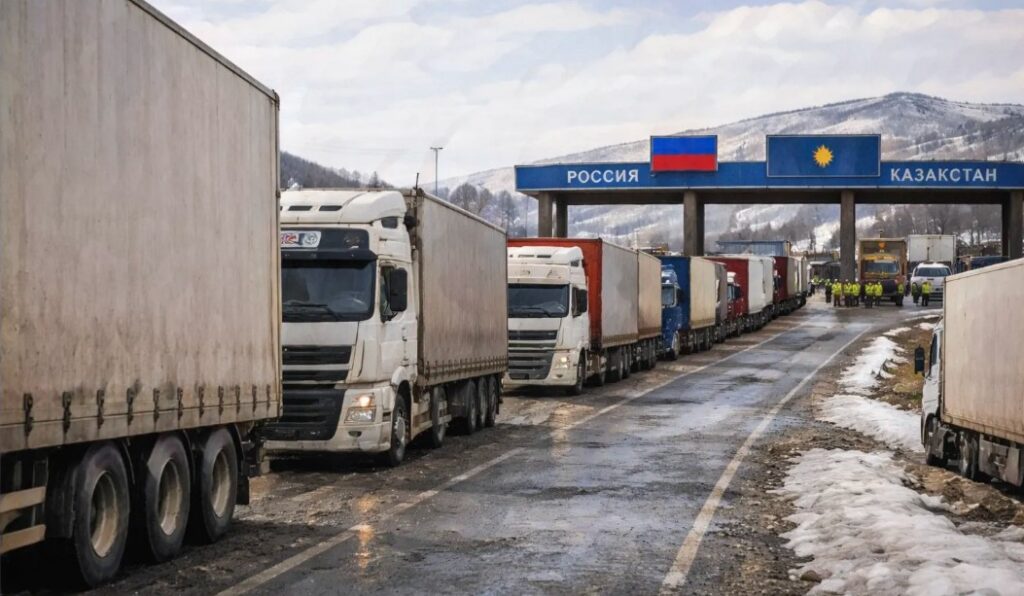

New Russian Trade Controls Add Friction to Central Asian Trade

Russia is tightening trade procedures in ways that could reshape how goods move across Central Asia. The changes are technical, but their impact could be significant.

The clearest sign is Russia’s new SPOT import-control system, which takes effect for road shipments from Eurasian Economic Union countries on April 1. Under the new rules, importers must file a document on an expected shipment two days before the truck reaches the border. The Russian authorities will assign a QR code, and from July 1, the system is due to move into full operating mode, including a security payment. Moscow says the measure is designed to improve tax compliance and reduce fraud. In practice, it introduces additional control over trade flows before goods reach the border. For transport companies and exporters, that means higher upfront costs, longer planning cycles, and greater uncertainty over delivery times. Even small delays at the border can disrupt supply chains, particularly for perishable goods.

The changes are part of a broader pattern in which Moscow is relying more heavily on administrative controls to manage trade within its closest economic partners, and the timing is notable. Central Asian economies have been expanding trade with China and the European Union, while also seeking alternative transit routes that reduce dependence on Russia. The introduction of tighter Russian controls comes as those efforts gain momentum. Over time, such measures may also push Central Asian businesses to accelerate efforts to diversify trade routes and partners.

The system may also create new internal barriers within the EAEU. The requirements for advance documentation and financial guarantees could, in some cases, exceed procedures applied to imports from outside the bloc. That would mark a significant shift for a union that was designed to simplify trade among its members. It also underlines a familiar problem within the EAEU, where commitments to free movement often sit alongside recurring administrative barriers. Similar disputes have surfaced repeatedly over the past decade, particularly in relation to agriculture and food, suggesting that the gap between formal integration and practical trade conditions remains unresolved.

Russia dominates the union’s economic geography. According to Kazakhstan’s Bureau of National Statistics, mutual trade with EAEU countries reached almost $2.16 billion in January 2026, with 15.4% year-on-year growth. Russia accounted for the vast majority of that total. Kazakhstan’s imports from EAEU partners rose significantly faster than its exports; Russia supplied close to one-third of Kazakhstan’s total imports in January. That imbalance leaves Kazakhstan particularly exposed to changes in Russian trade procedures. For Kazakh businesses, that exposure is most visible at border crossings, where delays and extra checks quickly add to costs.

Tensions over regulatory controls have also resurfaced. On March 2, Russia suspended certification for high-fat dairy products from all Kazakh suppliers, affecting butter, cream, cheese, and milk powder. Kazakhstan responded with its own measures, strengthening veterinary controls and imposing temporary restrictions on the import and transit of livestock and animal products from several Russian regions because of a worsening disease situation.

Even when such steps have a real sanitary basis, they can also serve as bargaining tools in trade relations. That has been a familiar pattern in past disputes.

This pattern has appeared before. The EAEU was launched in 2015 with the aim of allowing the free movement of goods, services, capital, and labor. In practice, member states have often relied on labeling rules and sanitary controls that can slow trade. Kazakhstan and Russia have both used such measures in past disputes, even as they maintain formal commitments to integration.

Kyrgyzstan is also feeling the strain. Bishkek has asked its EAEU partners to remove import duties on socially important goods such as flour, vegetable oil, fruits, vegetables, and cocoa powder, arguing that the country is importing inflation. The proposal was presented at a Eurasian Economic Commission meeting in Moscow on March 13. The request highlights how smaller economies within the bloc are seeking relief from price pressures rather than benefiting from seamless market access.

At the same time, Kyrgyzstan is facing growing scrutiny over its trade with Russia. In late February, EU sanctions envoy David O’Sullivan said Brussels was concerned by rising imports into Kyrgyzstan of radio equipment and machine tools. O’Sullivan said the EU had reason to believe some goods were entering Kyrgyzstan for the sole purpose of re-export to Russia. This places Bishkek in a difficult position as it tries to balance economic ties with Russia against the risk of secondary sanctions.

Russia’s latest measures do not signal a break with Central Asia. The measures reflect Moscow’s priority to tighten fiscal and supply-chain control in a sanctions environment, even at the cost of adding friction to relations with its closest economic partners. The region remains an important market, transit route, and labor source for the Russian economy. Despite headline growth, Russia’s economy faces mounting structural constraints. Migrants remain indispensable for Russia, helping to fill labor shortages caused by demographic decline and the war in Ukraine, even as xenophobia rises.

The shift toward tighter administrative control is clear. Instead of sweeping policy changes, Moscow is relying on regulatory tools that can adjust the speed and cost of trade. For the Central Asian states, the effect is cumulative. New documentation rules, certification requirements, and sanitary controls can slow shipments and raise costs, even when trade continues to flow. Over time, these measures shape how companies operate and how governments plan their economic policies within a system that remains tied to Russia.

Russian Spacecraft Lifts Off from Repaired Launch Pad at Baikonur

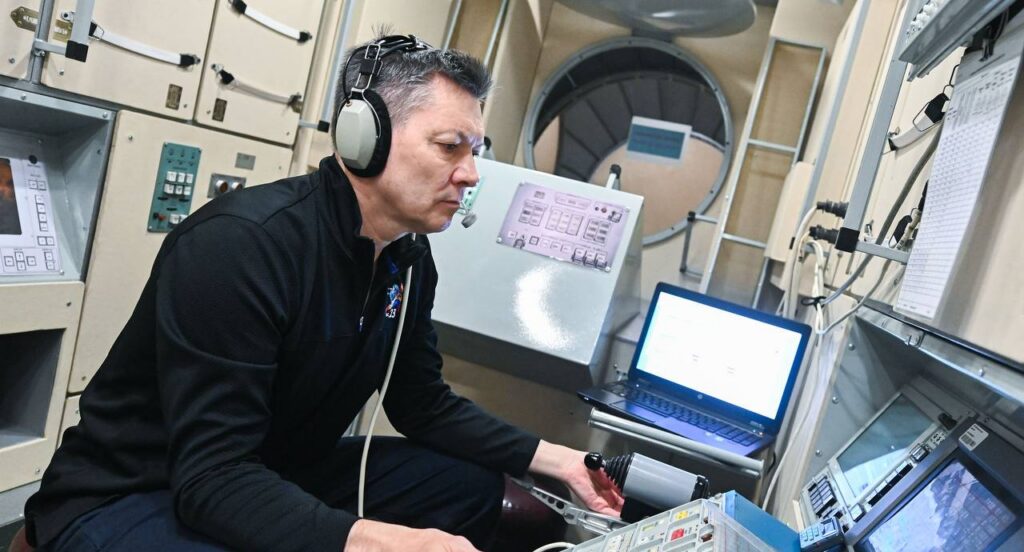
An unmanned spacecraft has launched from the Baikonur Cosmodrome in Kazakhstan, marking the first take-off from a key launch pad that was damaged in November.

The Progress MS-33 spacecraft is carrying nearly three tons of food, fuel and other supplies for the International Space Station, where docking is scheduled to occur on Tuesday.

An antenna used to ensure automatic docking with the space station remained unfolded after the cargo ship launched on a Soyuz-2.1a rocket on Sunday, according to Roscosmos, the Russian space agency. As a result, cosmonaut Sergei Kud-Svichkov, who is on board the space station, will conduct a manual docking of the approaching spacecraft, it said.

Cosmonauts regularly train for such manual approaches.

Roscosmos had said the launch on Sunday would be the first from Baikonur’s “launch complex No. 31 after its reconstruction — the main platform for the Russian space program.”

A spacecraft that launched in November with two Russian cosmonauts and one NASA astronaut safely reached the International Space Station, but damage to the launch pad raised concerns about delays in the resupply of the station.

Supplies on the cargo ship currently heading to the space station include fuel, drinking water, food rations, equipment for repairs and maintenance, oxygen, and medical supplies.

The craft will remain docked to the station for about six months “before departing for a destructive re-entry into Earth’s atmosphere to dispose of trash loaded by the crew,” NASA said. The U.S. space agency noted that another Russian spacecraft had undocked from the station on March 16, “re-entered Earth’s atmosphere, and burned up harmlessly over the Pacific Ocean.”

War Reaches the Caspian: Central Asia Faces Growing Regional Risk

The United States and Israel’s war with Iran began on February 28, 2026. The intensity of the conflict has fluctuated, but daily reports of missile strikes and explosions are increasingly resonating across Central Asia. Meanwhile, Russia’s latest war against Ukraine has continued for 1,466 days since it began on February 24, 2022.

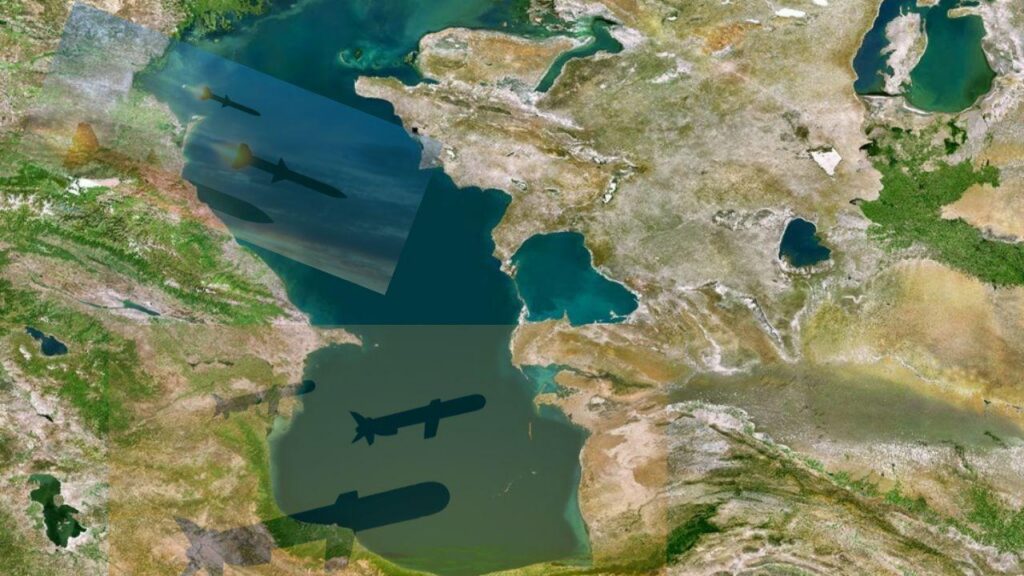
Late last year, Ukrainian drones reportedly struck a Russian oil platform at the Filanovsky field in the Caspian Sea, more than 700 kilometers from Ukraine’s nearest border. Ukraine also said the operation targeted the patrol ship Okhotnik, although the extent of the damage was not independently verified.

The war in Ukraine has also created serious challenges for Kazakhstan’s oil exports via the Caspian Pipeline Consortium (CPC). Repeated attacks and disruptions have threatened export flows, increased logistical risks, and added pressure on Kazakhstan’s budget revenues. The war against Iran has now brought military action to the Caspian coast of Iran, raising concern for energy producers and transit routes across the wider region.

On March 5, Azerbaijan’s Ministry of Foreign Affairs stated that drones launched from Iranian territory struck the Nakhchivan Autonomous Republic. According to the ministry, one drone hit the terminal building at Nakhchivan International Airport, while another crashed near a school in the village of Shekerabad. Azerbaijan demanded a thorough investigation. Iran later stated that it had promised to investigate the incident. Azerbaijan’s Prosecutor General’s Office subsequently opened a criminal case. As of now, tensions remain high, with both sides continuing to exchange accusations, and Azerbaijan maintaining heightened alert measures.

More recently, the Israeli Defense Forces confirmed carrying out airstrikes in northern Iran, targeting naval vessels in the port city of Bandar-Anzali on the Caspian coast. The straight-line distance from Bandar-Anzali to Azerbaijan’s capital, Baku, is just over 300 kilometers, and approximately 420 kilometers to Turkmenbashi, a major international seaport and the center of Turkmenistan’s oil-refining industry. The resort zone of Avaza is also located there. By comparison, the distance from Israel to Bandar-Anzali exceeds 1,300 kilometers.

These developments are contributing to rising economic uncertainty across Central Asia. The consequences extend beyond transportation and logistics disruptions, with broader implications for regional economies.

The U.S. and Israel have not always appeared aligned on what would constitute victory, meaning the measure of success remains difficult to gauge. While the United States and Israel have repeatedly stated that significant damage has been inflicted on Iran’s military infrastructure (including destroying a substantial part of the Iranian navy), there is no publicly available, independently verified evidence confirming the extent of the damage to Iran’s leadership structure following the death of Ali Khamenei, Ali Larijani and other senior Iranian figures, or on Iran’s ability to mount an effective defence. Analysts have described Iran’s military resilience as decentralized, sometimes using the term “mosaic defense,” meaning units can continue operating under standing orders even when senior leadership is hit.

It is understood that, as part of this strategy, the Iranian military has spent decades refining its ability to operate as independent nodes, each equipped to conduct strikes under preexisting standing orders. This means that each unit is effectively equipped to strike autonomously, irrespective of what is taking place in Tehran. The resilience of this strategy was demonstrated again today, when the Mina al-Ahmadi refinery in Kuwait was struck.

While the U.S. and Israel claim to have degraded Iran’s overall military capability, Iran has continued to strike energy infrastructure across the Gulf. Iran has also shown it can severely disrupt traffic through the Strait of Hormuz and strike Gulf energy infrastructure. Given that neither the U.S. nor Israel currently appears to be willing to compromise or state clearly what would constitute ‘victory’ – absent a collapse of the regime in Tehran – forecasts about the duration of the conflict vary widely and remain speculative at best. These range from expectations of a rapid conclusion of hostilities to predictions that the war could continue for months. For now, despite sustained attacks, many have argued that Iran’s governing system appears relatively stable, and expectations of swift political change have failed to materialize.

However, there may be internal tensions within Iran’s leadership. This possibility was raised by Kazakhstan’s President, Kassym-Jomart Tokayev, during a press conference held in connection with a constitutional referendum. Tokayev stated: “As for Iranian President Pezeshkian, he recently paid us an official visit and made a very favorable impression. He is a man of secular views. I welcomed his statement that Iran would not attack the Arab Gulf states. He even expressed apologies on behalf of Iran in this regard. But then his statements were disavowed, effectively nullified. Iran has attacked and continues to attack the Arab Gulf states. This suggests that the President of Iran does not wield full authority. That is a fact.” 

For Central Asia, the significance of the conflict lies not in direct involvement but in proximity, exposure, and dependence. The Caspian Sea, long treated as a relatively insulated energy and transit space, is no longer peripheral to regional security calculations. What were once distant conflicts are now unfolding within operational reach of key infrastructure, shipping routes, and export corridors.

The combination of instability in the Middle East, continued disruption from the war in Ukraine, and uncertainty over Iran’s internal cohesion is creating a layered risk environment for the region. Energy flows, investor confidence, and transport reliability are all increasingly vulnerable to developments beyond Central Asia’s control.

For governments in the region, the challenge will be to preserve stability while navigating an external environment that is becoming more volatile, less predictable, and harder to hedge against.

Kazakhstan’s Constitutional Reform and the Logic of Modernization

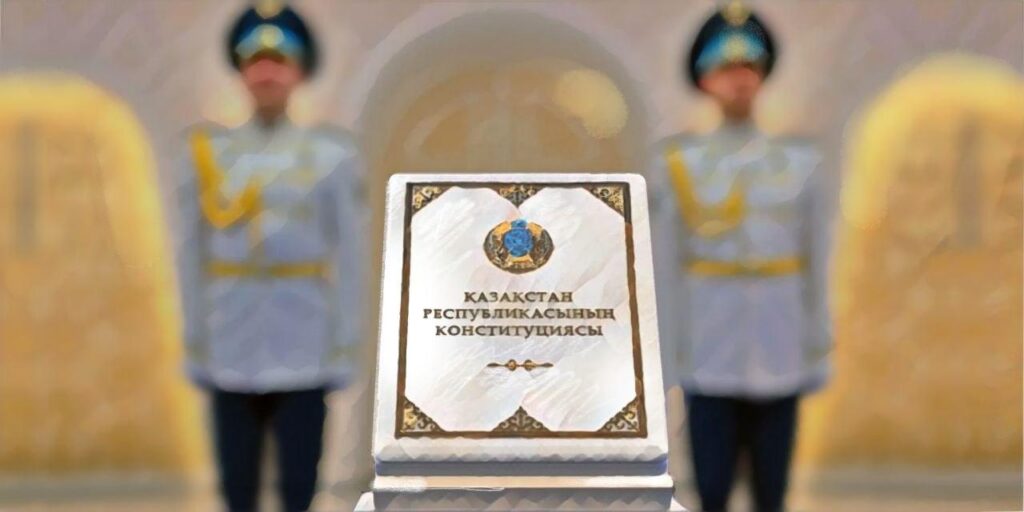
As The Times of Central Asia has noted throughout its special coverage, Kazakhstan’s new constitutional model is presented as modernization, not a rupture with the existing system. President Kassym-Jomart Tokayev has described the project as a response to a rapidly changing global landscape, arguing that the country’s basic law must be recalibrated to make governance more coherent, effective, accountable, and sustainable. That framing has included streamlining parliament, restoring the vice presidency, and redistributing authority across institutions as part of what Tokayev called a “complete reboot” of government, not a revolutionary break with existing institutions. Voters endorsed that vision in the 15 March referendum, with 87.15% backing the new constitution on 73.12% turnout. A report published the following day by the Kazakhstan Institute for Strategic Studies can be read as the most authoritative attempt to define and systematize that vision.

Why This Report Matters

Kazakhstan’s new constitutional report is presented as an analytical study while remaining closely aligned with official policy perspectives and institutional priorities. Published by the Kazakhstan Institute for Strategic Studies under the President of the Republic of Kazakhstan, it says its purpose is to examine constitutional reform as part of a broader process of institutional and socio-economic transformation. The timing is also significant. The report was recommended for publication on 16 March 2026, one day after the referendum it describes as a milestone in the country’s political development.

That makes the document best read as an authoritative explanatory text outlining the state’s interpretation of the reform. It is an effort to define the significance of the referendum for both domestic and foreign audiences. The report’s central argument is that Kazakhstan is not abandoning the presidential republic but renewing its constitutional architecture for a new stage of development. Throughout, it links constitutional change to stronger institutions, better governance, human capital, and long-term resilience.

The International Framing of Reform

For external audiences, the report presents this argument as a process of evolutionary reform, not revolutionary change. It traces the reform path back to political modernization launched in 2019 and accelerated by constitutional amendments in 2022. In the report’s own framing, the 2026 referendum is the next step in a longer sequence of institutional renewal.

The institutional changes highlighted for foreign audiences are significant. The report points to a transition to a unicameral parliament, the creation of a Vice President, the establishment of the Halyq Kenesi as a consultative body with legislative initiative, and an expanded role for the Constitutional Court. Together, these changes are framed as a way to improve policy coordination, ensure continuity in government, and broaden channels between the state and society.

The report also puts heavy emphasis on rights protection, especially in ways likely to resonate internationally. It says the reform strengthens guarantees of fair trial, the presumption of innocence, legal assistance, freedom of expression, and access to information. It also gives unusual weight to digital-era rights, including personal data, privacy, and the security of electronic communications. To reinforce that point, the report cites the Constitutional Court’s record between 2023 and 2025: 566 rulings, more than 190 hearings, 76 final decisions, legal amendments following those rulings, and 36 citizens whose rights were restored.

Just as importantly, the report addresses questions raised by international observers. A full chapter takes up common concerns, including questions about the inclusiveness of the drafting process, the length of the campaign period, and whether the media environment allowed for meaningful debate. The report emphasizes that such debates are a normal feature in constitutional reform processes and notes that formal campaign periods in countries such as France and Turkey were also short. It adds that Kazakhstan’s debate unfolded in a heavily digitalized environment, with more than 5,000 registered media outlets by 2025 and internet penetration above 93 percent.

The Domestic Dimension: Rights, Welfare, and Daily Life

Alongside its international framing, the report also emphasizes the everyday relevance of constitutional reform for citizens. The document says constitutional reform is not just about state design; it is meant to affect how citizens live, work, and interact with public institutions. It reaffirms that human life, dignity, rights, and freedoms are the highest values of the state, and ties that language to a stronger “social state” model. The report notes that 53.8 percent of respondents fully agreed that government is obliged to ensure a good standard of living for every citizen, while another 40 percent said they rather agreed.

That social-state emphasis runs throughout the report. It says the revised constitutional framework gives clearer weight to family, healthcare, social security, and access to essential public services. It also makes education, science, and innovation explicit constitutional priorities, signaling a shift away from a development model centered mainly on natural resources and toward one based on knowledge and technological capability.

The report’s own survey data suggest the public was most engaged when the debate moved away from elite institutional design and toward concrete social and rights-based issues. In February, the most frequently discussed topics were rights and freedoms, social guarantees, environmental protection, education and science. In March, the most-supported provisions included responsible treatment of nature, recognition of culture, education, science and innovation, and protection of personal data in the digital environment.

To support the human-capital argument, the report highlights rising investment in science. It says domestic R&D spending rose by 27.3 percent in 2024, reaching 219.7 billion tenge after a 42 percent jump in 2023, while young scientists are now leading 1,055 research projects. The implication is that the constitution is positioned not just as a legal text, but as a framework for economic upgrading.

The Legitimacy Case and Public Participation

The report places significant emphasis on participation and approval data to underscore the reform’s legitimacy. It says the Constitutional Commission included about 130 members, held 12 publicly broadcast sessions that drew close to one million views, and reviewed more than 12,000 citizen submissions through digital platforms. The larger point is that the reform should be understood as publicly consulted rather than purely elite-driven.

The same logic appears in the polling. The report cites survey support for the draft constitution ranging from 78.8 percent to 90.9 percent, depending on the research organization. It then pairs those findings with the official referendum result and the scale of the voting operation: 10,388 polling stations, including 71 abroad in 54 countries.

The document also highlights a noteworthy dynamic. Only 68.3 percent of respondents in one February survey said the Constitutional Commission had successfully fulfilled its task. In other words, support for the final document appears to exceed confidence in aspects of the process that produced it. The report itself notes this gap and suggests it may help guide future approaches to citizen engagement. That may be one of the report’s most consequential governance findings.

What Comes Next

Taken together, the report is trying to tell two stories at once. To foreign governments, investors, and international institutions, it says Kazakhstan is building a more modern, rules-based, rights-conscious state. To domestic audiences, it says constitutional reform should translate into better governance, stronger social guarantees, and more meaningful state-society interaction.

An important question going forward is how these commitments will be realized in practice. The referendum mandate is strong. The rights language is expansive. The modernization narrative is clearly articulated. The long-term credibility of Kazakhstan’s new constitutional model will rest on how effectively the new institutions improve accountability, protect rights, and deliver the social outcomes citizens were told to expect.

The History of Nauryz: An Ancient Festival That Continues to Unite Central Asia

Ahead of the Nauryz holiday, The Times of Central Asia looks at the origins and enduring significance of one of the region’s oldest celebrations. More than a seasonal festival, Nauryz reflects a deep connection between people, nature, and cultural identity, a tradition that has evolved over thousands of years and remains central to life across Central Asia.

Origins and Meaning

Nauryz, also known as Nowruz, is one of the world’s oldest holidays, marking the arrival of spring and the beginning of a new year. It is celebrated on the day of the spring equinox, when day and night are approximately equal and nature appears to begin a new cycle.

For many communities, the holiday symbolizes renewal, hope for prosperity, and the start of a new stage in life.

The name “Nowruz” derives from ancient Iranian words meaning “new day.” This concept lies at the heart of the celebration: the renewal of life and the symbolic rebirth of nature after winter.

With a history spanning more than 3,000 years, the holiday spread across Eurasia along the Silk Roads and became embedded in the cultural traditions of Central Asia, the Middle East, and the Caucasus.

@depositphotos

Today, Nowruz is recognized not only as a calendar event but also as a cultural tradition that promotes values such as peace, mutual respect, and harmony with nature.

Connection to the Spring Equinox

Nauryz is traditionally celebrated during the spring equinox, which usually falls on March 20 or 21, when the Sun crosses the celestial equator and daylight and nighttime hours are nearly equal.

Since ancient times, this moment has symbolized the awakening of nature and the beginning of a new agricultural year.

Historical sources indicate that different communities once observed various dates in March, often guided by natural signs. Over time, however, the astronomical equinox, commonly observed on March 21, became the most widely accepted date.

Medieval scholars paid close attention to this phenomenon. In the 11th and 12th centuries, astronomers such as Omar Khayyam refined calendar calculations to align the start of the year more precisely with the equinox.

Alongside scientific knowledge, traditional methods were also used to forecast harvests and weather conditions, including observing seed germination or measuring the length of shadows before the holiday.

Today, Nauryz is officially celebrated on March 21 in countries such as Kazakhstan and Uzbekistan, while UNESCO also recognizes Nowruz as marking the first day of spring.

Rituals and Traditions

For centuries, Nauryz has been marked by rituals symbolizing renewal, fertility, and prosperity. Among both nomadic and settled communities, it has traditionally been celebrated with public festivities, games, and family gatherings.

Common customs include ritual cleansing with water, exchanging gifts, and offering food to neighbors and guests. The altybakan swing is widely regarded as a symbol of spring and joy. In some regions, the ancient practice of jumping over fire has been preserved as a purification ritual.

Food plays a central role in the celebration. Although culinary traditions vary by country, they share a common symbolism of abundance and new life.

In Kazakhstan, the main festive dish is Nauryz kozhe, a soup prepared from seven ingredients representing prosperity and well-being. In Uzbekistan and Tajikistan, sumalak, a sweet dish made from sprouted wheat, is a key symbol of the holiday.

Sumalak is traditionally prepared collectively, often overnight, with participants taking turns stirring the pot and making wishes. It is believed to bring prosperity and fertility.

Festive tables also feature dishes such as plov, herb-filled samsa, and manty dumplings.

Celebrations are typically accompanied by traditional games and competitions, including horse racing, wrestling, equestrian contests, and street performances. People gather around a shared dastarkhan, sing songs, visit relatives, and exchange wishes for health, peace, and prosperity.

@depositphotos

From Suppression to Revival

During the Soviet period, large-scale public celebrations of Nauryz were restricted, and many traditions were preserved mainly within families and local communities. From the late 1980s onward, however, the holiday began to experience a revival.

Following the independence of Central Asian states, Nauryz was officially recognized as a public holiday across the region.

Today, it is widely celebrated in Kazakhstan, Uzbekistan, Kyrgyzstan, Turkmenistan, and Tajikistan, with festivals, fairs, and public events held in major cities.

Its international recognition underscores its cultural significance. In 2009, Nowruz was inscribed on UNESCO’s Representative List of the Intangible Cultural Heritage of Humanity, and since 2010 March 21 has been observed as the International Day of Nowruz.

Nauryz remains one of the most enduring cultural traditions in Central Asia, with its meaning preserved across generations.

Its emphasis on renewal and hospitality continues to bring communities together across borders and remains a familiar part of life across the region.