• KGS/USD = 0.01144 0%
  • KZT/USD = 0.00210 0%
  • TJS/USD = 0.10523 0%
  • UZS/USD = 0.00008 0%
  • TMT/USD = 0.28571 0%
  • KGS/USD = 0.01144 0%
  • KZT/USD = 0.00210 0%
  • TJS/USD = 0.10523 0%
  • UZS/USD = 0.00008 0%
  • TMT/USD = 0.28571 0%
  • KGS/USD = 0.01144 0%
  • KZT/USD = 0.00210 0%
  • TJS/USD = 0.10523 0%
  • UZS/USD = 0.00008 0%
  • TMT/USD = 0.28571 0%
  • KGS/USD = 0.01144 0%
  • KZT/USD = 0.00210 0%
  • TJS/USD = 0.10523 0%
  • UZS/USD = 0.00008 0%
  • TMT/USD = 0.28571 0%
  • KGS/USD = 0.01144 0%
  • KZT/USD = 0.00210 0%
  • TJS/USD = 0.10523 0%
  • UZS/USD = 0.00008 0%
  • TMT/USD = 0.28571 0%
  • KGS/USD = 0.01144 0%
  • KZT/USD = 0.00210 0%
  • TJS/USD = 0.10523 0%
  • UZS/USD = 0.00008 0%
  • TMT/USD = 0.28571 0%
  • KGS/USD = 0.01144 0%
  • KZT/USD = 0.00210 0%
  • TJS/USD = 0.10523 0%
  • UZS/USD = 0.00008 0%
  • TMT/USD = 0.28571 0%
  • KGS/USD = 0.01144 0%
  • KZT/USD = 0.00210 0%
  • TJS/USD = 0.10523 0%
  • UZS/USD = 0.00008 0%
  • TMT/USD = 0.28571 0%

Kyrgyz Bank Wins Brussels Court Case Over Sanctions Accusations

Kyrgyzstan’s Bakai Bank has announced victory in a Brussels court case against the non-governmental organization Open Dialogue Foundation (ODF), which had previously published materials calling for sanctions against the bank. The court said the allegations were not supported by sufficient evidence.

According to the bank, it filed the lawsuit to protect its business reputation after the Open Dialogue Foundation published materials in 2023 calling for sanctions against the financial institution to be considered.

The ODF publications alleged that the bank may have been involved in schemes to circumvent European Union anti-Russian sanctions. Bakai Bank denied these allegations and initiated legal proceedings in Brussels.

According to the bank’s statement and reporting on the ruling, a Brussels court held that ODF had made serious allegations without sufficient evidence.

As a result, the court ordered the organization to remove the relevant publications, publish the text of the court decision on the main page of its website, and reimburse legal costs. At the time of publication, the Open Dialogue Foundation had not publicly commented on the court’s decision. Bakai Bank stated that the court’s decision stands as confirmation of the allegations’ groundlessness.

“We welcome this decision, which confirms the lack of basis for the charges and protects the bank’s business reputation. We consistently comply with international law and adhere to the principles of transparency in our operations,” the bank’s representatives said.

Askat Alagozov, press secretary to the President of Kyrgyzstan, commented on the situation on social media. He noted that this is not the first time Kyrgyz banks have faced accusations of evading sanctions. Specifically, Keremet Bank has been sanctioned by the United States and the United Kingdom, while Capital Bank of Central Asia, also known as Kapital Bank, has been sanctioned by the United Kingdom.

According to Alagozov, such measures are accusatory in nature, and no public evidence of violations has been presented.

He also added that President Sadyr Japarov previously rejected such accusations and stated the country’s readiness to conduct an independent international audit of the banking sector. Moreover, Capital Bank of Central Asia, one of the banks targeted by sanctions, is state-owned.

Uzbekistan’s International Reserves Decline After Seven Months of Growth

Uzbekistan’s gold and foreign currency reserves declined in March after seven consecutive months of growth, according to data released by the Central Bank.

As of April 1, the country’s total international reserves stood at more than $68.99 billion, marking a monthly decrease of over $8.09 billion, or around 10%. The Central Bank attributed the drop primarily to a fall in global gold prices during March, when the price per ounce declined from $5,174.1 to $4,553.95.

Gold remains the largest component of Uzbekistan’s reserves. Its total value fell by $6.82 billion to $60.85 billion, ending an eight-month growth streak. At the same time, the physical volume of gold held by the Central Bank continued to increase, rising by 0.3 million troy ounces to reach 13.4 million troy ounces, or approximately 416.8 tons.

Foreign currency reserves also declined over the same period. In March, they dropped by $1.26 billion, or 14.3%, to $7.57 billion. Of this amount, $1.3 billion is held in foreign central banks and the International Monetary Fund, while $4.71 billion is deposited in foreign commercial banks.

In addition, the value of foreign securities purchased by the Central Bank reached $1.545 billion, accounting for 2.24% of total reserves.

The latest figures follow a period of strong growth in Uzbekistan’s reserves. As previously reported by The Times of Central Asia, the country’s international reserves rose sharply in 2025, increasing by $25.1 billion to reach a record $66.3 billion as of January 1, 2026. This growth, equivalent to a 61% increase over the year, was largely driven by high global gold prices, alongside gains in foreign currency holdings.

Opinion – Kazakhstan’s New Constitution Sends a Key Signal for Global Partners

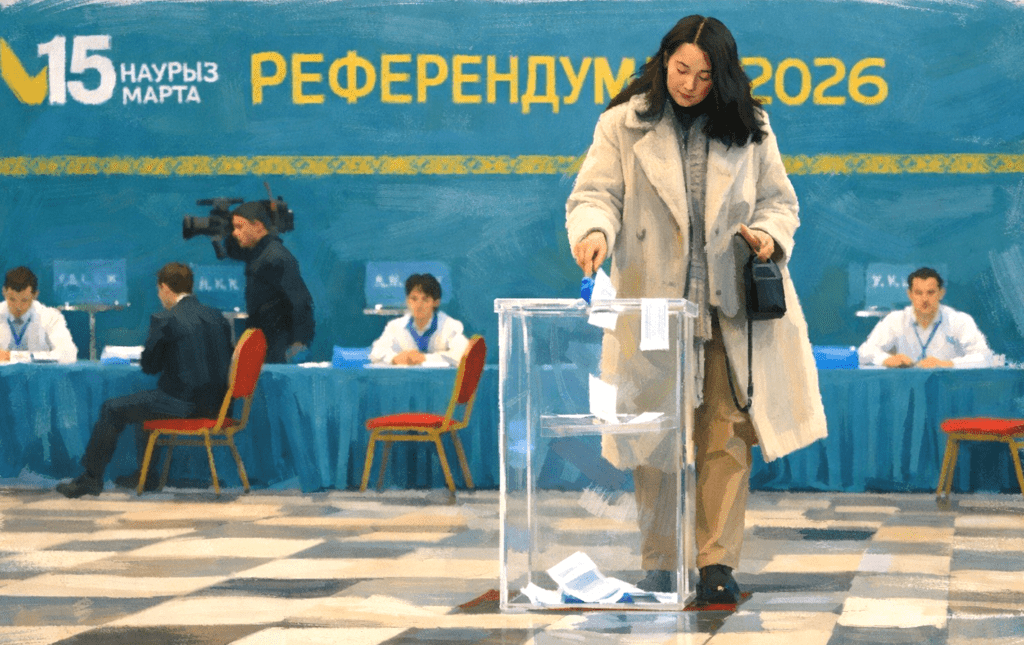
In a nationwide referendum on March 15, over 87% of voters approved a new constitution for Kazakhstan. It was a significant victory for President Tokayev and his administration, all the more so because voter turnout exceeded 73%.

Kazakhstan’s new constitution is a key signal for global partners. It replaces the old bicameral system with a unicameral legislature, establishes the Halyk Kenesi (People’s Council), an advisory body intended to promote national dialogue, and creates a vice presidency to provide for clearer succession at the top of the state.

The new constitution is the outcome of a strategy that has been building for some time. Now, backed by a clear majority, Kazakhstan’s leadership is seeking to strengthen governance by redistributing power, lessening political ambiguity, and grounding politics in shared values—however difficult that may be to accomplish. All of this is being pursued despite—and perhaps because of—the nation’s history of corruption and nepotism.

Kazakhstan’s constitutional reforms were deliberate, structural measures designed to reorient the country’s governmental machinery toward what supporters describe as the common good. That, at least, is the stated intention, reflected in a slogan often used by backers of the new constitution: “A strong president, an influential parliament, and an accountable government.”

Some outside observers have viewed the new constitution favorably, framing it as an effort to streamline governance and clarify institutional roles, while others have warned that the changes could impede sociopolitical progress and human rights by prioritizing stronger governance. Some also see the reforms as signaling a move toward more restrictive political practices.

These alarmist interpretations are overstated.

Astana’s constitutional reforms fit into an ongoing political effort, using the law to strengthen civic involvement and the well-being of the community as a whole, not just individual interests. The new constitution did not emerge ex nihilo for the purpose of freezing elite advantages at the expense of the people, as others in Kazakhstan and the broader region have done in the past. That interpretation of constitutional change in Central Asia overlooks the government’s broader reform agenda, whatever its perceived shortcomings.

In his March 31 article, A New Constitution for a Just, Strong, and Prosperous Kazakhstan, President Tokayev framed Kazakhstan as a rules-oriented state, emphasizing rights, judicial independence, and impartial institutions—an approach that stands out regionally despite open questions about follow-through.

Tokayev emphasized that “The new constitution is about people, not just better government.” The constitution’s largest section is dedicated to protecting freedoms and rights based on common sense and traditional values, including privacy, personal data, private property, and home inviolability. Judicial independence is reinforced to ensure that all citizens receive qualified, impartial defense – at least that’s the intent. Amendments require a public referendum, ensuring that fundamental choices remain popular. Religious liberty is guaranteed in a secular society.

The constitution also presents Kazakhstan as a more attractive and predictable place to do business, for both domestic and foreign investors. The constitution, according to Tokayev, “sets clear rules for economic activity.” As such, the reforms create a political culture that aims to be transparent and investor-friendly, using the opportunity to boost entrepreneurship while curbing economic predation, including abusive rent-seeking or elite wealth hoarding that flourished under a previously uneven playing field favoring entrenched interests. In turn, the measures are framed as helping create a fuller, more welcoming economic environment. Tokayev states that “Kazakhstan is already the leading destination for foreign direct investment (FDI) in Central Asia, attracting nearly 70% of the region’s FDI.”

A new political architecture built on unity and responsibility

Kazakhstan’s constitutional reforms are designed around the idea that nations thrive when citizens pair civic participation with moral virtue and personal responsibility. Supporters argue that this focus is essential to meeting the demands of citizenship in an increasingly turbulent and unmoored world. The new constitution also reflects a broader governing philosophy: that radical individualism, whether cultural or economic, is not conducive to nation-building.

Not everyone accepts Kazakhstan’s view that political reform is most effective when anchored in both human dignity and traditional moral values within a market economy oriented toward the common good; that premise, however, is persuasive. Astana’s attempt to tie democratic stability to moral education grounded in traditional values echoes Alexis de Tocqueville, a theme I explored in my earlier article, Tokayev’s National Kurultai Address: A Moral Message, Not a Political One.

For this reason, some Western observers find the new constitution unsettling. Where they expect to find an emphasis on metrics of efficiency and order, which are “means to an end” rather than “ends in themselves,” this constitution focuses on Kazakhstan’s people and the common good. Moreover, critics overlook the extent to which tradition and family shape Kazakh society. After all, the aim of any constitution ought to be the well-being of the nation and its citizens.

For example, Article 30 states unambiguously that marriage will no longer be considered a union of two people but rather is “a voluntary and equal union of a man and a woman.” It further codifies that “the care and upbringing of children shall be the natural right and duty of parents” and that “adult able-bodied children shall be obliged to care for their incapacitated parents.” Supporters of traditional marriage have welcomed these measures, whereas critics—especially activists backing a broader definition like Kazakhstan’s earlier formulation of “a union of any two people” have been disappointed by the changes and opposed them.

Article 6, which requires that information on funds and assets received by non-profit organizations from foreign sources be publicly accessible under Kazakh law, has also alarmed critics, who argue that it could stifle independent civil society. Supporters, by contrast, present it as a transparency measure to protect against foreign-backed influence activities by state or non-state actors.

In the end, Kazakhstan’s leadership understands that the success or failure of its constitutional reforms will be measured by results over time: stable employment, decent wages, openness, public safety, and national unity. If the reforms are to succeed, they will have to deliver for both elites and, more importantly, ordinary citizens—in public life, at work, and at home. On that test, Kazakhstan appears to be moving in the right direction, though the outcome will depend on what follows.


The views expressed in this article are those of the author and do not necessarily reflect the official policy or position of the publication, its affiliates, or any other organizations mentioned.

Kazakhstan Gains Weight in China’s Energy System

The newly extended U.S. waiver for Russian oil transit through Kazakhstan and the reported giant onshore hydrocarbon discovery in western Kazakhstan point in different directions, yet they belong in the same analytical frame. One concerns an existing flow that already reaches China through working infrastructure, while the other concerns a possible future source that has not yet reached the stage of commercially proven reserves. Together, they mark a change in Kazakhstan’s position. The country is increasingly important to China both as a corridor and as a possible larger upstream partner.

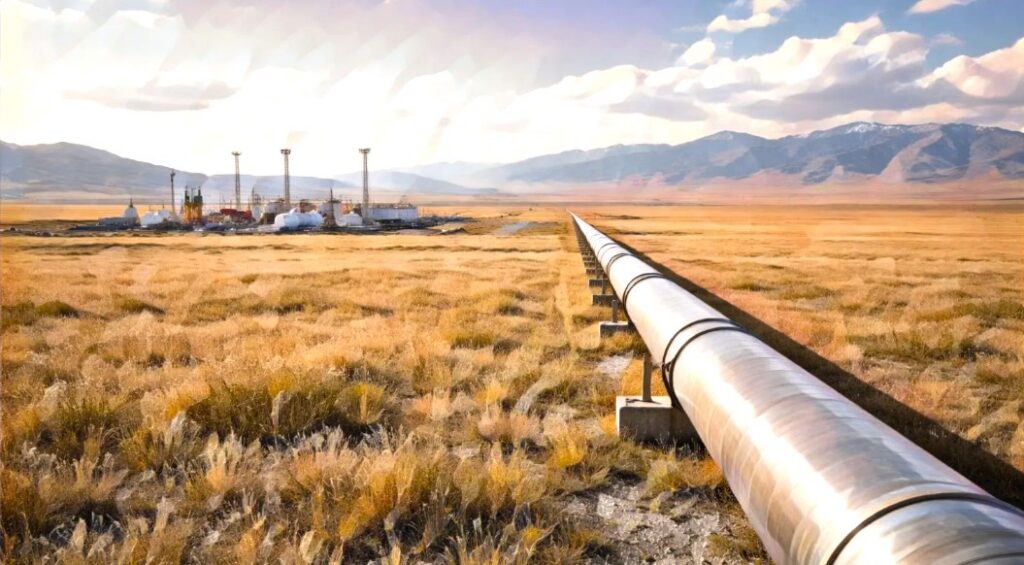
The U.S. waiver now runs until March 19, 2027. Kazakhstan is not a giant direct oil supplier to China in the way that Russia or Saudi Arabia is; China’s import structure is broader. But Kazakh-origin oil shipments, Russian transit oil, and adjacent energy links now constitute a single, more complex relationship. According to official Chinese sources, oil imported from Kazakhstan enters mainly through the China-Kazakhstan crude pipeline.

More Than Kazakhstan’s Own Barrels

Kazakhstan-China Pipeline LLP reported that in 2024, the Atasu-Alashankou route carried 1.2 million tons of oil and 9.989 million tons of transit oil, against a design capacity of 20 million tons a year. Official Chinese figures sharpen the point. By the end of 2024, total cumulative throughput on the pipeline had reached 280 million tons, including 19.139 million tons in 2024, while cumulative crude imported from Kazakhstan was lower. Kazakhstan’s significance to China is therefore larger than Kazakhstan’s own volumes would suggest, because the route carries more than Kazakhstan’s own oil.

A glance at Europe keeps that proportion straight. Eurostat reports that Kazakhstan supplied 12.7% of the European Union’s petroleum oil imports in 2025. The European External Action Service said that Kazakhstan accounted for 10.9% of EU oil imports in the first quarter of 2024. This made it the bloc’s third-largest supplier in that period, and a more important direct oil supplier to Europe than to China.

The significance of Kazakhstan’s geographic proximity to China becomes clearer when one looks beyond crude oil. Kazakhstan is not only a direct oil supplier, but also a transit corridor for multiple China-bound energy flows. The Kazakhstan-China oil pipeline is one of China’s major import routes. At the same time, while Kazakhstan’s own gas exports to China remain limited due to rising domestic demand, gas from Turkmenistan and Russia both pass through its territory. Oil and gas do not form a single operational system, but together they show that China’s energy connection with Kazakhstan extends beyond one commodity and beyond Kazakhstan’s own barrels.

The Source Side May Be Growing

In this context, the reported discovery on the Zhylyoi carbonate platform makes a difference because it widens the source side of the relationship without changing present flows. According to public statements by KazMunayGas officials, the Karaton, Kazhygali, and Zhylyoi formation has resource potential of 4.7 billion metric tons of hydrocarbons, and the broader Zhylyoi carbonate reservoir may hold as much as 20 billion metric tons of oil equivalent. The field is onshore in the Atyrau Region near the Caspian coast. A well at Karaton has already been drilled to 5,750 meters. The formation is being compared with Kashagan not only because of the headline scale, but also because it is a very large structure in one of Kazakhstan’s core producing regions.

Caution nevertheless remains essential, as these are geological-potential figures rather than proven recoverable reserves. Hydrogen sulfide has already been encountered, and deposits may extend much deeper, perhaps to nine kilometers. Negotiations over subsoil-use contracts are underway, and exploration is expected to expand to the Kazhygali block. This is what is drawing attention from Chinese and other energy observers, although any Chinese participation remains far from decided.

The bilateral energy relationship does not stop at oil and transit. Kazakhstan produced about 25,839 metric tons of uranium in 2025, about 40% of world output, and has been the world’s leading uranium producer since 2009. More importantly, the Ulba-FA fuel-assembly plant in Oskemen reached its design capacity in 2024 at 200 tons of low-enriched uranium in fuel assemblies per year, and the company says all fuel assemblies produced there are supplied to nuclear power plants in China. Kazakhstan’s value-added nuclear-fuel link to the Chinese market is therefore significant.

Taken together, these lines do not make Kazakhstan into China’s overwhelming energy supplier, but they show that China needs Kazakhstan in several specific ways. First, it is a corridor for Russian oil as well as a direct supplier of some crude and other energy-related products. Second, it is a major uranium producer with a China-linked fuel-assembly operation. And third, it is also a country where a large onshore oil prospect may increase future upstream significance if the geology proves commercially sound.

The Regional Energy Network

That broader pattern returns the discussion to the argument about Berdimuhamedov’s recent Beijing visit and the reshaping of Central Asia’s gas system. The larger point is that the region’s energy relations are becoming more cross-linked through infrastructure, transport routes, and related forms of cooperation. In the recent Turkmen case, gas provided the clearest example, as China’s westward energy connection increasingly depends not on a single bilateral exchange but on a chain of producing states, transit territories, and linked projects. Oil transit through Kazakhstan and the new onshore discovery suggest that the same tendency is becoming visible in another energy sector as well, even if in looser form.

Kazakhstan alone does not fill a dominant share of Chinese oil demand, but China needs Kazakhstan because Kazakhstan occupies a growing place in a more networked Central Asian energy space. That place appears modest when measured against China’s biggest crude suppliers, but it becomes much more significant when bilateral corridor utility, regional geographic position, and multi-sector energy context are taken into account. The U.S. waiver extension confirms Kazakhstan’s present value in the network, and the Zhylyoi discovery increases its possible future weight.

Bakytzhan Shabdukarimov

How Kazakhstan’s Animation Industry: An Interview with an ARA Studios Co-Founder

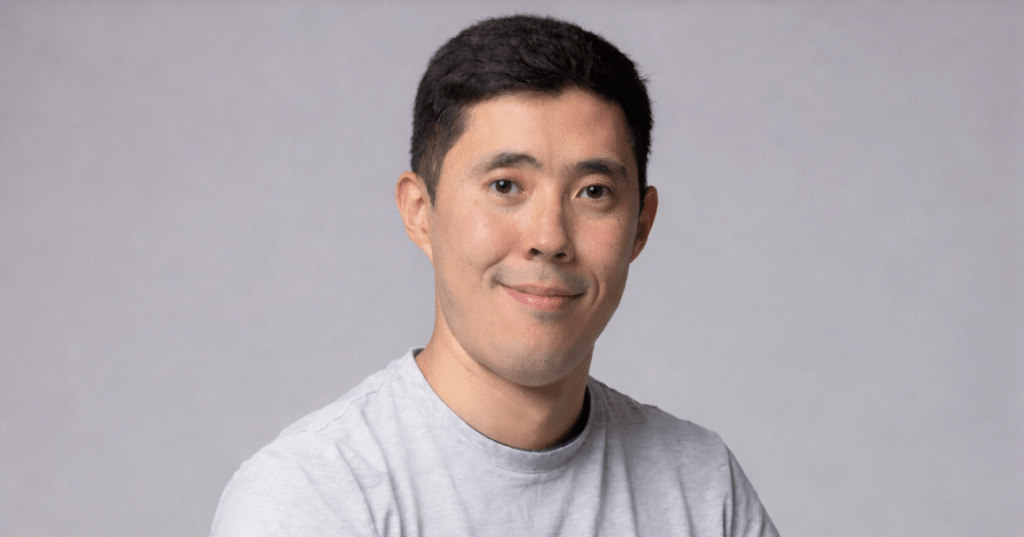
Kazakhstan’s animation industry is gradually developing despite a number of persistent challenges. The Times of Central Asia spoke with Bakytzhan Shabdukarimov, co-founder of ARA Studios, about how the team was formed, the difficulties animators face today, and how he views the future of the industry.

TCA: How did the idea to create ARA Studios come about?

Bakytzhan: The studio has two co-founders: Bakytzhan Shabdukarimov, that’s me, and Meirzhan Sandybay. The idea first emerged in 2017, and the studio was officially established in 2018. Before that, we worked on the project Shyraq. Last year, we had to disband most of our team after joining the animated series Säbi for the Balapan TV channel. That’s when we began transitioning to 3D projects. Originally, the studio focused more on 2D, while I personally worked in 3D. Over time, we fully shifted toward 3D production.

TCA: Who is behind the studio and how many people are on the team?

Bakytzhan: Right now, the core team is essentially just the two of us. But last year, we had more than 20 people. Unfortunately, projects and orders suddenly stopped, and it became difficult to maintain a large staff. So we switched to a new format, an online studio. We used to rent an office and maintain a large in-house team, but that has recently become too challenging. Now our team works remotely, and we come together when we take on larger projects.

TCA: Which projects do you consider the most important?

Bakytzhan: Of all our projects, Maqta Qyz remains the most important because it’s our flagship and we continue to develop it. But in reality, all our projects matter to us; each one has contributed to our growth and given us valuable experience. Our YouTube channel is active, and we’ve gained around 7,000 subscribers organically, without advertising or targeting. We plan to keep releasing new episodes and possibly expand into merchandise in the future.

TCA: How is the animation industry developing in Kazakhstan today?

Bakytzhan: Honestly, I haven’t been closely following all industry developments lately, but from what I can see, progress is slow. The industry remains relatively small; there is hardly a fully developed market. Most studios either work on government commissions from the Ministry of Culture or collaborate with “Qazaq Animation,” which allocates funding annually for short films, with the aim of developing them into larger projects. Other studios, including independent teams, focus on commercial work, advertising both domestically and internationally, as well as short films. At the same time, we do have strong 2D and 3D specialists and talented teams.

TCA: Is there any support for animation studios?

Bakytzhan: Yes, there is some support. As I mentioned, part of it comes through “Qazaq Animation.” There is also a new creative fund being launched that will support not only animation but the broader creative industries, film, music, and dance. Private funds are also emerging. For example, there are initiatives involving private investors and financial institutions. However, they mostly invest in feature live-action films. I’ve heard less about investment in animation. Still, interest in experimental projects and animation is gradually growing.

TCA: What are the main challenges animators face in the country?

Bakytzhan: Recently, I’ve often seen posts on Instagram, where animators, artists, and 2D and 3D specialists say there is no work. Perhaps opportunities exist, but they are very difficult to find. It feels like major global changes are underway due to AI. Studios are closing and the market is shifting. I think AI plays a significant role, as these changes affect not only creative professions but also other digital fields, including documentary production, legal services, and finance. It is especially difficult for junior specialists to find work right now. Those at a mid-level have more opportunities, but juniors need to significantly improve their skills to compete.

TCA: Where do your project ideas come from?

Bakytzhan: Ideas come from different people within the team. When we worked together in a physical studio, we constantly pitched ideas to each other. It didn’t have to come from management; we considered all kinds of proposals. If someone brings an idea and develops it properly, with sketches, a script, and a synopsis, then why not pursue it? The key is that it aligns with the studio’s values. We create family-oriented content that we believe has a positive impact on young people, children, and even adults.

TCA: Do you use elements of Kazakhstani culture or folklore in your animation?

Bakytzhan: Not fully yet. We’ve made attempts, but creating such stories properly is quite difficult.

TCA: What makes Kazakhstani animation interesting for an international audience?

Bakytzhan: This is very important because it defines our identity, what makes us recognizable. We can incorporate the Kazakh language, musical instruments, clothing, and cultural elements. But the most important thing is storytelling. It’s not enough to create something simply about Kazakh traditions, the story must be engaging and accessible to a broad audience. We need to show our way of life, not only traditional, but also modern: how we live, the challenges we face, and how we address them. It’s important to present this authentically, without inventing something artificial, and instead work with what genuinely exists.

TCA: How do you see the future of animation in Kazakhstan?

Bakytzhan: That’s a difficult question because the future is hard to predict. But we have access to the internet, and we speak different languages and so does the younger generation. That’s crucial. We can create international projects, collaborate, adapt to new realities, and improve management practices. This is an area where we are still lacking. In Kazakhstan, the animation sector remains underdeveloped in terms of industry organization, and that needs to improve.

TCA: Are there any projects you are currently working on?

Bakytzhan: Yes, Maqta Qyz. At the same time, we are trying to develop a feature-length project, but our main focus right now is Maqta Qyz.

TCA: What would you like to change in the industry?

Bakytzhan: Not much depends on a single person. The main way to influence the industry is through your own work and projects, that’s how change happens. We’re simply trying to do our job well.

Central Asia Welcomes Ceasefire, Urges Talks as Energy Risks Persist

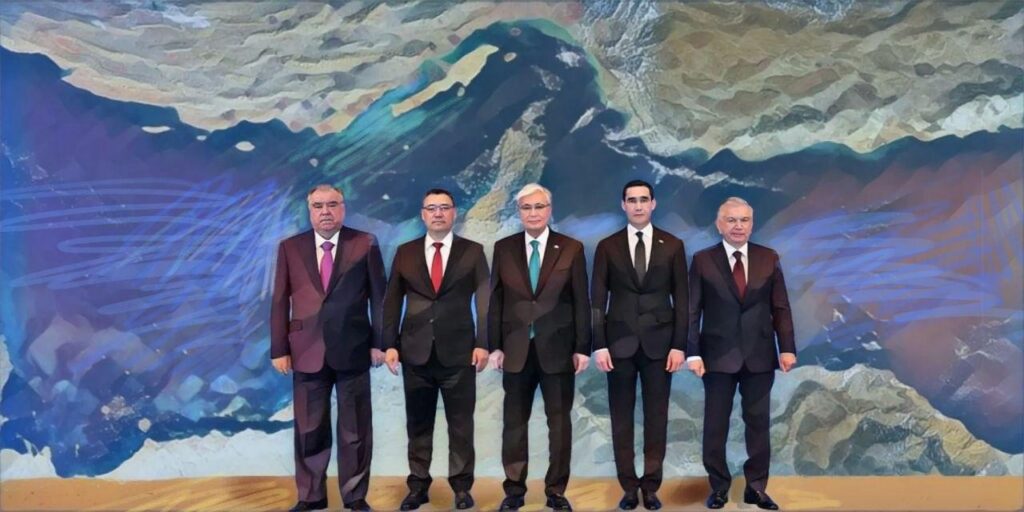
Central Asian governments have cautiously welcomed the two-week ceasefire between the United States and Iran, describing it as a necessary pause in a conflict that has already begun to affect regional stability, trade, and energy flows.

Across the region, official statements struck a consistent balance: support for the truce, alongside calls to translate it quickly into negotiations rather than allow it to become a temporary pause in hostilities.

Kazakhstan’s President Kassym-Jomart Tokayev described the agreement as a “ceasefire and truce” reached through international mediation, including efforts involving Pakistan’s leadership. According to the presidential press service, Tokayev said that “this agreement became possible due to the goodwill and wisdom of the President of the United States, Donald Trump, and the senior leadership of Iran, as well as all countries involved in the military conflict.” Tokayev went on to express his hope that the agreement would prove sustainable and contribute to global trade and economic stability.

Uzbekistan’s Foreign Ministry described the ceasefire as an “important step toward de-escalating tensions” and stressed that it should serve as a pathway to a broader political settlement. Tashkent called for “all parties to exercise restraint, [and] refrain from actions that could further escalate the situation, warning that further escalation risks widening the conflict and undermining regional stability. The statement reaffirmed Uzbekistan’s “unwavering position on the need to resolve conflicts exclusively by peaceful means in strict accordance with the principles of the Charter of the United Nations.”

Tajikistan’s Foreign Ministry also welcomed the agreement, expressing hope that the ceasefire would open the way to a comprehensive and long-term peace. Dushanbe emphasized that the conflict has “no military solution and its continuation will only worsen the already difficult situation in the Middle East and cause colossal damage to all countries in the region.” The statement urged all parties to “abandon the use of force” and use political and diplomatic mechanisms in accordance with international law and the UN Charter.

Kyrgyzstan’s Foreign Ministry said it “welcomes the achievement of a ceasefire agreement in the Middle East,” highlighting the role of Pakistan’s mediation efforts in reducing tensions. Bishkek reaffirmed that disputes must be resolved exclusively through political and diplomatic means on the basis of the UN Charter and international law, and expressed its “hope for achieving sustainable and long-term peace in the region.”

Turkmenistan had not issued an official public statement on the ceasefire at the time of publication, in line with its longstanding policy of neutrality and cautious approach to external conflicts.

Meanwhile, Azerbaijan’s Foreign Ministry also welcomed the “announced ceasefire” and praised the efforts of mediators who helped broker the agreement. Baku called on all parties to “engage in productive dialogue aimed at resolving existing problems and strengthening mutual trust” and signaled its readiness to “support initiatives aimed at strengthening lasting peace, security, and cooperation in the region.”

The convergence in tone reflects more than diplomatic routine. The conflict has already spilled into Central Asia’s political and humanitarian agenda, prompting coordination on evacuations, aid deliveries, and contingency planning. It has also exposed the region’s vulnerability to disruption along key energy and transport corridors, raising the cost of renewed escalation if the ceasefire fails.

That vulnerability is already visible in global energy markets. Disruption in the Strait of Hormuz — a critical artery for global oil shipments — has prompted major Asian importers to seek alternative supply routes, with Central Asia increasingly entering the conversation as a potential, if partial, substitute.

Countries such as South Korea and Japan, both heavily dependent on Middle Eastern crude, are exploring ways to diversify supply, including increased engagement with Kazakhstan and Azerbaijan. For these buyers, the appeal of Caspian crude lies not only in its availability but in its compatibility with existing refinery systems.

Yet geography imposes clear constraints. Unlike Gulf producers, Central Asian exporters rely on longer, more complex routes, including transit across the Caspian Sea and onward through the South Caucasus or the Black Sea. Much of Kazakhstan’s oil also continues to move through infrastructure linked to Russia, notably via the Caspian Pipeline Consortium (CPC), adding a further layer of geopolitical risk.

Even so, the current crisis may accelerate longer-term investment in alternative corridors, including the Trans-Caspian route, as governments and energy companies seek to reduce exposure to chokepoints such as Hormuz. What has changed is not just the perception of risk, but the cost of maintaining reliable connectivity.

For Central Asia, the ceasefire offers a reprieve. Whether it holds — and whether it leads to a negotiated settlement — will determine not only the trajectory of the conflict, but the region’s role in an increasingly fragmented global energy and transport system.