• KGS/USD = 0.01144 0%
  • KZT/USD = 0.00192 -0%
  • TJS/USD = 0.10849 0.37%
  • UZS/USD = 0.00008 0%
  • TMT/USD = 0.28571 0.28%
  • KGS/USD = 0.01144 0%
  • KZT/USD = 0.00192 -0%
  • TJS/USD = 0.10849 0.37%
  • UZS/USD = 0.00008 0%
  • TMT/USD = 0.28571 0.28%
  • KGS/USD = 0.01144 0%
  • KZT/USD = 0.00192 -0%
  • TJS/USD = 0.10849 0.37%
  • UZS/USD = 0.00008 0%
  • TMT/USD = 0.28571 0.28%
  • KGS/USD = 0.01144 0%
  • KZT/USD = 0.00192 -0%
  • TJS/USD = 0.10849 0.37%
  • UZS/USD = 0.00008 0%
  • TMT/USD = 0.28571 0.28%
  • KGS/USD = 0.01144 0%
  • KZT/USD = 0.00192 -0%
  • TJS/USD = 0.10849 0.37%
  • UZS/USD = 0.00008 0%
  • TMT/USD = 0.28571 0.28%
  • KGS/USD = 0.01144 0%
  • KZT/USD = 0.00192 -0%
  • TJS/USD = 0.10849 0.37%
  • UZS/USD = 0.00008 0%
  • TMT/USD = 0.28571 0.28%
  • KGS/USD = 0.01144 0%
  • KZT/USD = 0.00192 -0%
  • TJS/USD = 0.10849 0.37%
  • UZS/USD = 0.00008 0%
  • TMT/USD = 0.28571 0.28%
  • KGS/USD = 0.01144 0%
  • KZT/USD = 0.00192 -0%
  • TJS/USD = 0.10849 0.37%
  • UZS/USD = 0.00008 0%
  • TMT/USD = 0.28571 0.28%
11 December 2025

Kazakhstan Trades Electricity for Water in Bid to Mitigate Summer Drought Risks

Central Asia is entering a new phase in the management of its water-energy nexus, moving from declarations to practical coordination. A trilateral protocol signed in Almaty by Kazakhstan, Kyrgyzstan, and Uzbekistan marked a significant step toward stabilizing the region’s water regime amid escalating climate risks.

Brokered under Kazakhstan’s chairmanship, the agreement aims to balance the load on the Toktogul Reservoir, the main regulating structure of the Syr Darya basin. Kyrgyzstan typically increases winter water discharges to generate electricity, which reduces irrigation water availability downstream during summer. Under the new deal, Kazakhstan and Uzbekistan will supply Kyrgyzstan with electricity during winter, in return for Kyrgyzstan’s commitment to store water and ensure its release during the 2026 growing season.

The Almaty Protocol complements the existing plan for filling the Shardara Reservoir, which aims to accumulate 11 cubic kilometers of water by April 1, 2026. Achieving this target hinges on Toktogul’s operations. Without external support, Kyrgyzstan’s energy infrastructure would struggle to meet the requirement. Supplemental electricity from Astana and Tashkent thus forms the economic backbone of this arrangement.

Longstanding disparities in regional water and energy needs remain a source of instability. Kyrgyzstan requires water in winter for hydropower, while Kazakhstan, especially its Turkestan and Kyzylorda regions, relies on it in summer for irrigation. Recent water shortages have pushed the countries toward more pragmatic coordination. Uzbekistan has committed to managing the technical conditions for transit and balancing inter-system flows. Despite facing its own energy shortfall and aging infrastructure, Kazakhstan is participating in regional stabilization to avert socio-economic risks in its southern provinces.

External factors are adding urgency to regional cooperation. Afghanistan’s construction of the Qosh-Tepa Canal is expected to reduce the Amu Darya’s water balance by 20-25%. Although Uzbekistan is most directly affected, the resulting pressure on water systems could also impact the Syr Darya, on which southern Kazakhstan heavily depends.

Internally, Kazakhstan faces persistent challenges. Water loss during transport reaches up to 40-50% due to outdated canal infrastructure. Rice cultivation continues in the water-intensive Kyzylorda region, while water-saving technologies are used on only about 30% of irrigated land.

These new agreements suggest that Central Asian countries can rapidly implement collective mechanisms in response to shared threats. In effect, elements of a regional Water and Energy Consortium are already operating in a de facto, ad hoc manner. Water, energy, and food security are increasingly seen as interconnected resources requiring coordinated governance.

For Kazakhstan, the priority now is to institutionalize these provisional agreements. If the “electricity-for-water” model can be formalized into a durable framework, it could stand as one of the most significant accomplishments of the country’s regional diplomacy.

Opinion: Kazakhstan’s Electoral Reforms – Why Officials and Experts Are Reconsidering Local Democracy

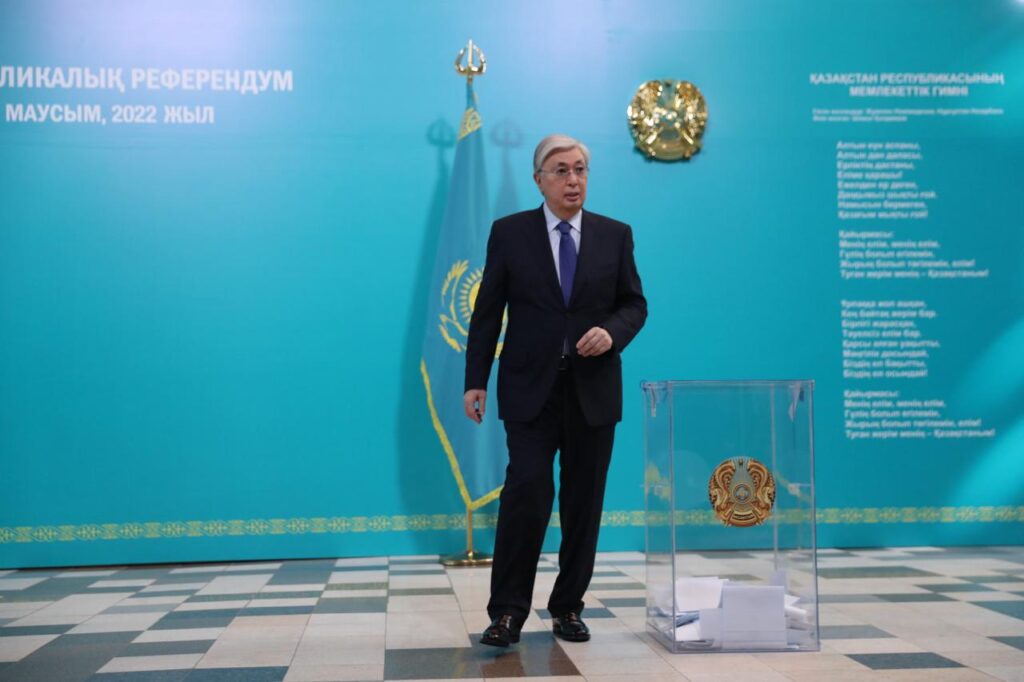
The metaphor that history moves in a spiral has resurfaced in Kazakhstan, where ongoing debates over electoral reform and information policy are testing the boundaries of the country’s democratic trajectory. Recent official messaging points toward a more managed model of political participation, framed as a necessary response to emerging challenges.

This trajectory was articulated by State Councilor Erlan Karin in his article, “The Politics of Common Sense,” published in the state-run Kazakhstanskaya Pravda. In the piece, Karin reflects on the formation of public values in Kazakhstan, portraying it as an evolutionary process. Simultaneously, Karin references government-led social programs, such as “Law and Order,” “Clean Kazakhstan,” and “Adal Azamat” – a program focused on building character, promoting civic responsibility, and fostering national unity – as instruments of state-directed civic education.

Karin reiterates his previously stated position on the existence of “red lines” in public discourse, sensitive subjects such as interethnic relations, religion, language, and foreign policy. While insisting that these topics should not be off-limits, he calls for “common sense” in how they are discussed.

“When it comes to public stability, the state will not compromise,” he asserts, adding that the government will lawfully oppose any attempts at “destructive information influence and incitement to hatred.”

Karin also highlights what he describes as a new category of problematic actors:

“This spring, I drew attention to a phenomenon known as ‘inforeket,’ in which certain bloggers and activists engage in outright extortion. This practice stems from past policies of appeasement toward disruptive elements, which encouraged the rise of pseudo-public figures, bloggers, and ‘tame oppositionists.’ Now abandoned by their once-powerful patrons and wealthy clients, they continue to seek income using outdated methods.”

In the same article, Karin names a group of experts, deputies, and public figures who contributed input to the new internal policy principles. Several of these individuals are currently advancing proposals to revise aspects of Kazakhstan’s electoral system—particularly the mechanisms for selecting district akims.

Among them is Berik Abdygaliuly, political scientist, historian, and director of the National Museum of Kazakhstan. In a recent podcast, Abdygaliuly argued for reconsidering the model of electing district akims. He noted that while more than 3,000 rural akims and maslikhat deputies have been elected in recent years, the outcomes have been mixed. Voter fatigue is mounting, he said, and the financial costs of repeated campaigns – amounting to hundreds of millions of tenge – have not corresponded with visible improvements in local governance.

His proposal is that district akims should be chosen not by direct popular vote but by maslikhats, the local representative bodies empowered to demand reports, assess performance, express no confidence, and initiate dismissals.

This idea quickly gained support from other commentators participating in public discussions of governance reform. Political analyst Marat Shibutov wrote on his Telegram channel that the electorate is “simply getting tired of elections” after several consecutive voting cycles since 2021. Shibutov supported the idea of “revising or freezing” the election mechanism for district akims as “rational.”

Meanwhile, political scientist Andrey Chebotarev highlighted a recent speech by Deputy Minister of National Economy Bauyrzhan Omarbekov at a Public Chamber session of the Mazhilis, focused on improving local government legislation. Omarbekov reportedly emphasized the mismatch between candidates’ campaign promises and pre-approved district development plans, the lack of accountability mechanisms, and the limited involvement of maslikhats.

Chebotarev, while a proponent of elected local self-government in rural and urban areas, argues that districts, being integral to regional administrations, might be better suited to appointments under the state administration framework. He calls for a clear delineation between state governance and local self-governance, suggesting that electing district akims is not a critical issue. Still, given the growing powers of maslikhats, transferring the authority to elect akims to them is “worthy of official consideration.”

Taken together, these developments suggest the emergence of an increasingly aligned expert discourse – featuring political scientists, sociologists, and economists – aimed at shaping public understanding of governance reforms and lending intellectual support to the state’s evolving policy priorities. Unlike earlier periods, when political conformity was often maintained through direct coercion or patronage, today’s adjustments appear to be advancing through institutional argumentation, procedural refinement, and carefully managed public messaging.

In an era marked by global hybrid conflicts and intensifying disinformation pressures—and with Kazakhstan’s digital public sphere increasingly exposed to external narratives—the government is positioning these reforms as necessary safeguards. The result is a systemic reshaping of political discourse and electoral practice that, to some observers, recalls earlier patterns of managed participation, albeit presented through the language of expertise, stability, and civic rationality.

The views expressed in this article are those of the author and do not necessarily reflect the official policy or position of the publication, its affiliates, or any other organizations mentioned.

Moldova To End Visa-Free Travel for Kyrgyzstan and Tajikistan

Moldova has formally withdrawn from the Commonwealth of Independent States (CIS) visa-free travel agreement, a move that will introduce visa requirements for citizens of Kyrgyzstan and Tajikistan. The Moldovan parliament approved the government’s proposal to terminate the 1992 Bishkek Agreement, according to inbusiness.kz.

The CIS, which originally included 11 post-Soviet states upon its creation in 1991, now counts only seven full members. Although Moldova ended its membership in the CIS earlier, it had continued to uphold visa-free travel arrangements with several former Soviet republics, including countries in Central Asia.

The new legislation does not affect Kazakhstan or Uzbekistan. Moldovan officials told local media that Chişinău intends to preserve visa-free travel with these two countries through separate bilateral agreements. “For citizens of Kazakhstan and Uzbekistan, the procedure for travel remains unchanged,” Azattyq.org reported, citing Moldovan government sources. In 2024, Moldova also announced plans to open its first embassy in Kazakhstan’s capital, Astana.

The new visa requirements apply solely to citizens of Kyrgyzstan and Tajikistan, who will now need to obtain visas for work, study, or personal travel to Moldova. Authorities in Chişinău explained that the decision is part of Moldova’s broader effort to align its legal framework with European Union standards. EU regulations require visas for all CIS nationals, and Moldova is gradually adjusting its migration and visa policies in preparation for EU accession.

The move comes in the wake of Moldova’s October 2024 referendum, in which voters supported the country’s path toward EU membership. Since then, the government has withdrawn from numerous CIS treaties, exited the CIS Interparliamentary Assembly, ceased payments to the Mir television network, and closed its local bureau.

Relations between Moldova and Kyrgyzstan have been further strained by unresolved issues, including Kyrgyzstan’s calls for the repayment of a Soviet-era debt and Moldova’s ban on Kyrgyz airlines due to their inclusion on the EU’s aviation safety blacklist. Kyrgyz civil activist Almaz Tazhybay told Vesti.kg that Kyrgyz carriers will only regain access to Moldovan airspace after meeting EU safety requirements.

Moldovan authorities have emphasized that the policy is not targeted at any specific country. Officials in Chişinău describe the changes as part of a broader legal realignment as Moldova pursues its goal of joining the European Union by 2030.

Kazakhstan Faces Deepening Medical Personnel Shortage Amid Rising Emigration

Kazakhstan continues to grapple with a severe shortage of medical personnel, a crisis intensified by the steady emigration of specialists. According to First Deputy Minister of Health Timur Sultangaziev, there are currently around 9,000 unfilled positions across the country, approximately 4,000 for doctors and over 5,000 for mid-level healthcare workers.

Speaking during a session of the Mazhilis, Kazakhstan’s lower house of parliament, Sultangaziev reported that roughly 2,500 medical professionals have left the country over the past five years. “There is an outflow of medical personnel from the healthcare system to foreign countries,” he said.

Sultangaziev cited inadequate compensation as the primary factor driving this exodus. In response, the government has allocated an additional $9.6 million this year to raise salaries for public emergency medical service employees. The Health Ministry is currently evaluating a further salary increase estimated at $19.2 million, though a final decision has yet to be made.

The parliamentary session also focused on proposed legislation to increase penalties for violence against medical workers. MP Askhat Aimagambetov noted that 280 such incidents have been officially recorded in the past five years, but suggested the real number is much higher. Many medical professionals reportedly choose not to report assaults, fearing retaliation or loss of work hours.

The draft bill includes a new article in the Criminal Code, introducing special legal status for “medical workers” and “ambulance drivers”, and stipulating harsher penalties for violent offenses. Aimagambetov compared the proposed sanctions to those for attacks on gamekeepers, which carry a maximum sentence of 12 years’ imprisonment.

“If a hooligan breaks the finger of an ordinary citizen, it’s moderate harm. If he breaks a surgeon’s finger, it’s a disaster. Thousands of operations may be cancelled because of one broken finger,” Aimagambetov said, emphasizing the vulnerability of ambulance staff, who must respond to emergency calls without regard to risk.

The final version of the bill outlines penalties including fines, correctional or community service, or up to three years’ restriction or deprivation of liberty for non-life-threatening violence. In cases involving aggravating circumstances, the punishment increases to 3-7 years. Life-threatening or severe injuries could result in 5-10 years’ imprisonment, or 7-12 years under aggravating conditions.

As previously reported by The Times of Central Asia, Kazakhstan has already begun implementing additional protective measures for medical personnel. In the summer, authorities announced plans to equip ambulance staff with body cameras in response to the rising number of assaults on healthcare workers.

KMG Pushes Back on Reports of European Asset Sale Amid Romania Refinery Losses

KazMunaiGaz (KMG) says it has no concrete plans to sell any of its European assets, though pressure is building to at least sell off some of the Kazakh company’s shares in oil refineries in Romania. Reports on November 21 said KMG was looking to privatize up to 50% of its shares in its subsidiary KMG International’s (KMGI) European operations in Europe.

The reports were based on a list of recommendations from Kazakhstan’s Agency for the Protection and Development of Competition (APDC), which proposed, as part of the 2026-2027 strategy, that KMGI should have a two-stage tender to sell up to 50% of its stakes. On November 26, KMG denied making any decisions about KMGI businesses in Europe, adding that the APDC’s list of recommendations “includes assets from different sectors, but this in itself does not automatically trigger a sale.”

Rompetrol

KMGI has 28 companies operating in seven countries, four of them European, but the focus of reports was on the two oil refineries KMGI owns in Romania. KMGI purchased 75% of the shares in the Romanian oil company Rompetrol in 2007, and in 2009 bought the remaining 25% of shares in the company. That sale included the Petromidia oil refinery, with a capacity of some five million tons annually, and the smaller Vega refinery, with a capacity of some 350,000 tons that Rompetrol owns.

KMGI also took ownership of the oil terminal near Constanta on the Black Sea coast, some 20 kilometers from the Petromidia refinery. The terminal imports mainly Kazakh oil.

KMGI invested billions of dollars in upgrades and modernization of the refineries and the terminal, and finally, in 2017, operations of subsidiary Rompetrol Rafinare (54.63% KMGI and 44.7% Romanian state through the energy Ministry) showed a profit – $80 million.

By 2022, profits had slightly increased to $90.3 million, but in December that year, the Romanian authorities changed tax regulations, and in 2023, Rompetrol Rafinare registered a net loss of some $270.5 million, and in 2024, a loss of $78 million. In the first six months of 2025, the company lost $53 million and paid some $771 million in taxes to the Romanian government.

Rompetrol Rafinare has complained to the Romanian government that the tax burden is preventing the company from investing in new projects and has brought a legal challenge to the solidarity tax in court. In such a situation, it seems unlikely KMG would easily find a party interested in buying up to 50% of KMGI’s Romanian operation, unless the price was very low.

Opponents of the proposed arrangement point to the $7 billion in investment KMG has made over nearly 20 years into upgrading the Romanian refineries as a reason to be patient for a while longer.

KMGI

KMG has subsidiaries operating in Switzerland, Bulgaria, Turkey, Moldova, and Georgia, as well as in Romania and Kazakhstan. At the start of 2025, there were reports that KMG was considering the acquisition of an oil refinery in Bulgaria from Russia’s LUKoil, so it appeared the Kazakh company was looking to expand its operations in Europe.

The EU has been decreasing the amount of oil it buys from Russia since Moscow launched its full-scale invasion of Ukraine in February 2022. As imports of Russian oil have decreased, the EU’s imports of Kazakh oil have been increasing, and according to some sources, Kazakhstan is now the third largest supplier of oil to the EU (behind the United States and Norway).

It would seem KMG’s European assets should remain valuable for at least the near-term future.

Reports about the possible sale of KMGI shares in the Romanian companies did not mention possible sales of shares in any other specific KMG assets in Europe. It could be that there are some in the Kazakh government who feel there have already been enough problems in Romania, and it is time to cut KMG’s losses there.

However, Petromidia and Vega are the only two oil refineries KMG owns in Europe. They are links in a KMG ground-to-the-gas-pump chain that extracts oil in Kazakhstan, transports it via pipelines, railways, and oil tankers that the company partially or fully owns, and, in the case of Romania, refines that oil and then sells it as gasoline at the more than 1,400 petrol filling stations Rompetrol operates in Romania, Georgia, Bulgaria, and Moldova.

The APDC mentioned the privatization of KMGI shares was meant to attract strategic partners and investors who could “ensure the continued operations of KMG’s international businesses.” So, it could be that the APDC or someone else in the Kazakh government has already identified certain companies as potential strategic partners, possibly someone who could convince the Romanian government to drop its onerous solidarity tax.

KMG’s response seems to indicate that nothing will happen quickly, but that something could happen later.

Turkmenistan Identified as World’s Largest Source of Methane Super-Emitters

Turkmenistan has emerged as the top global source of major methane emissions in the oil and gas sector, according to new data published by the U.S.-based Stop Methane project. The findings, widely reported by Central Asian media, are based on satellite observations collected between January 1 and November 12 of this year.

Researchers at the University of California, Los Angeles, which leads the project, compiled the ranking using satellite data to identify sites with the highest methane emissions over specific time intervals. The list includes locations where emissions ranged from 3.7 to 10 tons per hour, levels deemed significant contributors to atmospheric pollution.

Industrial facilities in Turkmenistan, particularly near Esenguly and Turkmenabat in the Balkan province, accounted for the majority of high-emission events. Out of the 25 entries in the ranking, 17 are located in Turkmenistan, far more than any other country. The remaining positions are held by a handful of other states, including Venezuela, Iran, Pakistan, and the United States.

Decades-old Soviet-era infrastructure is widely cited by independent energy analysts as one of the main reasons Turkmenistan dominates global methane-leak rankings. Much of the country’s gas production network relies on older pipelines, compressors, and separation units that were never modernized to international leak-prevention standards. Because methane is colorless and odorless at industrial concentrations, these failures can persist unnoticed for long periods without satellite monitoring. Experts note that relatively inexpensive upgrades – such as replacing valves, improving maintenance, and installing continuous monitoring – could sharply reduce emissions if implemented.

Stop Methane analysts based their assessment on over 3,000 methane plumes detected at approximately 2,000 oil and gas sites worldwide. The data was collected using the U.S.-operated Tanager-1 satellite, which monitors key oil and gas extraction zones. The satellite’s capabilities allow for the detection of large leaks that are often invisible from the ground.

The surge in methane detection over the past two years reflects not a sudden rise in leaks but a leap in the resolution of satellite instruments now able to spot plumes previously undetectable. Earlier monitoring systems could identify only massive blowouts, whereas newer platforms – including Tanager-1 and NASA’s EMIT – can map medium-sized leaks in near-real time. This technological shift has revealed a methane footprint far larger than governments and companies had reported, making emissions visible to the international community and accelerating calls for transparency and mitigation.

The organization highlighted the serious environmental impact of methane, emphasizing its role in both air pollution and climate change. Beyond the climate implications, methane leaks represent a direct economic loss for Turkmenistan. The International Energy Agency estimates that most methane emissions in the oil and gas sector can be avoided at little or no net cost because the captured gas can be sold. For a country whose budget relies heavily on gas exports, the volume of methane escaping from super-emitter sites translates into millions of dollars of lost revenue annually. Addressing these leaks, therefore, offers both environmental and fiscal benefits.

For context, a site emitting five tons of methane per hour, roughly mid-range on the list, releases as much pollution annually as one million SUVs or a large coal-fired power plant.

Methane emissions have long been a concern in Turkmenistan. In 2019, international environmental groups reported that leaks at the Korpeje gas field in western Turkmenistan generated climate impacts equivalent to those from one million cars.

Despite this, Turkmen authorities have pointed to recent progress. Speaking at a regional climate forum in April, President Serdar Berdimuhamedov stated that the country had reduced methane emissions by 11% by the end of 2024, surpassing national targets.

Turkmenistan’s official messaging increasingly emphasizes environmental progress, yet satellite observations still reveal frequent large-scale leaks across its gas fields. This disconnect has led analysts to question the scope and transparency of the country’s mitigation programs. Without independent verification of emissions reductions, experts warn that the credibility gap between government statements and satellite-detected leaks may widen, complicating the country’s engagement with international climate initiatives.

Turkmenistan ranks fifth globally in natural gas reserves, estimated at 400 trillion cubic feet as of 2025. In 2023, the country produced a record 3.0 trillion cubic feet of dry natural gas. While China remains its primary export market, Ashgabat continues to seek new buyers. Turkmenistan’s methane profile is becoming a geopolitical liability as major consumers introduce stricter rules on the carbon and methane intensity of imported fuels. The European Union, in particular, is preparing standards that would penalize or restrict gas with high upstream emissions. This poses a potential obstacle to Turkmenistan’s long-sought ambitions to access European markets via the Trans-Caspian route, especially if competing suppliers in the region can demonstrate cleaner production. However, the U.S. Department of Energy has warned that elevated methane emissions could hinder potential access to European markets via the Trans-Caspian route.

Turkmenistan also holds an estimated 600 million barrels of oil and produced an average of 275,000 barrels per day in 2024. Across Central Asia, several oil- and gas-producing states are grappling with methane management, but Turkmenistan stands out due to the sheer scale of its super-emitter sites. Kazakhstan and Uzbekistan have also been flagged for significant leaks, though typically at lower levels and with fewer major emission points. Analysts argue that the region’s shared dependence on aging infrastructure makes coordinated methane-reduction strategies increasingly important, particularly as global scrutiny intensifies.