• KGS/USD = 0.01144 0%
  • KZT/USD = 0.00193 -0%
  • TJS/USD = 0.10811 -0.28%
  • UZS/USD = 0.00008 0%
  • TMT/USD = 0.28490 0%
  • KGS/USD = 0.01144 0%
  • KZT/USD = 0.00193 -0%
  • TJS/USD = 0.10811 -0.28%
  • UZS/USD = 0.00008 0%
  • TMT/USD = 0.28490 0%
  • KGS/USD = 0.01144 0%
  • KZT/USD = 0.00193 -0%
  • TJS/USD = 0.10811 -0.28%
  • UZS/USD = 0.00008 0%
  • TMT/USD = 0.28490 0%
  • KGS/USD = 0.01144 0%
  • KZT/USD = 0.00193 -0%
  • TJS/USD = 0.10811 -0.28%
  • UZS/USD = 0.00008 0%
  • TMT/USD = 0.28490 0%
  • KGS/USD = 0.01144 0%
  • KZT/USD = 0.00193 -0%
  • TJS/USD = 0.10811 -0.28%
  • UZS/USD = 0.00008 0%
  • TMT/USD = 0.28490 0%
  • KGS/USD = 0.01144 0%
  • KZT/USD = 0.00193 -0%
  • TJS/USD = 0.10811 -0.28%
  • UZS/USD = 0.00008 0%
  • TMT/USD = 0.28490 0%
  • KGS/USD = 0.01144 0%
  • KZT/USD = 0.00193 -0%
  • TJS/USD = 0.10811 -0.28%
  • UZS/USD = 0.00008 0%
  • TMT/USD = 0.28490 0%
  • KGS/USD = 0.01144 0%
  • KZT/USD = 0.00193 -0%
  • TJS/USD = 0.10811 -0.28%
  • UZS/USD = 0.00008 0%
  • TMT/USD = 0.28490 0%
10 December 2025

By 2050, Nearly One-Fifth of Kazakhstan’s Population Will Be Over 60

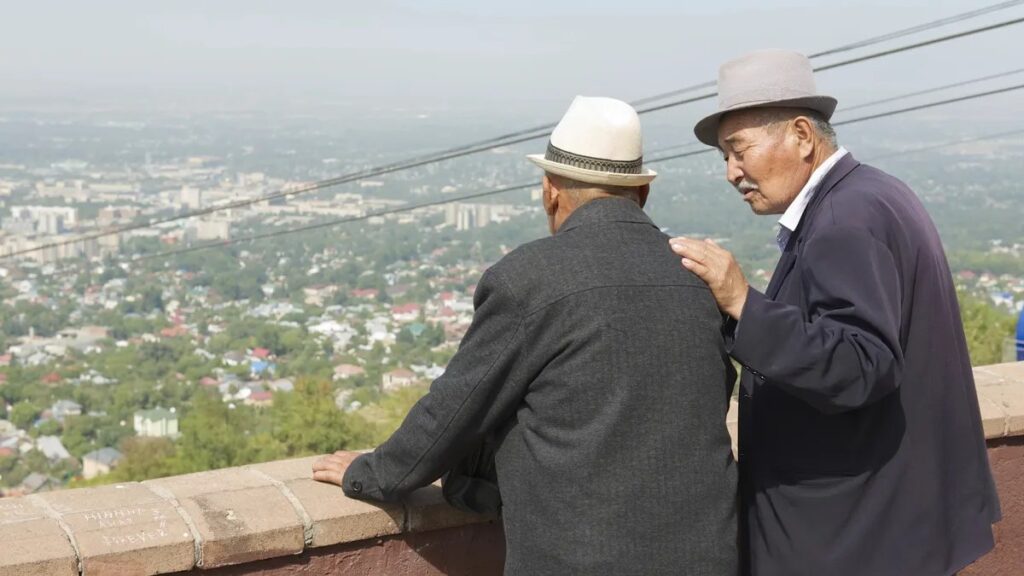
Kazakhstan is on the cusp of a significant demographic transition. A recent report by the Unified Accumulative Pension Fund (UAPF), the agency overseeing the country’s pension system, projects that by 2050, 19% of Kazakhstan’s population will be of retirement or pre-retirement age.

The study, published on the UAPF website, reveals that as of January 1, 2025, Kazakhstan’s population had surpassed 20.3 million. Of this total, 42.8% — approximately 8.7 million people — were under the age of 25. Another 48% (around 9.7 million) were between 25 and 65, while 9.2%, or about 1.9 million people, were over 65 and currently classified as pensioners. Overall, individuals aged 60 and older now make up 13.9% of the total population.

According to UAPF forecasts, the national population is expected to grow to 26.3 million by the end of 2050. However, this growth will be accompanied by an aging trend. “This means that by 2050, on average, one in five Kazakhs will be aged 60 or older,” the report notes. This shift mirrors a broader global pattern of aging populations and declining birth rates.

Life expectancy in Kazakhstan, which had declined during the COVID-19 pandemic, has rebounded significantly. It rose from 70.23 years in 2021 to 75.44 years in 2024. At the same time, the Total Fertility Rate (TFR) has decreased from 3.32 children per woman in 2021 to 2.80 in 2024, with projections indicating a further drop to 2.42 by 2050.

“With the gradual decline in birth rates and increased life expectancy, fewer people are entering the labor market, and the imbalance between pensioners and the working-age population continues to grow,” UAPF analysts stated.

The report also predicts a neutral migration balance by 2050, meaning the number of people emigrating will roughly equal those immigrating for permanent residence. This marks a shift from earlier decades of net inward migration. Since 1991, over 1.15 million ethnic Kazakhs born abroad have moved to Kazakhstan permanently, according to data previously reported by The Times of Central Asia.

As Kazakhstan confronts these demographic realities, policymakers will need to consider long-term strategies to ensure the sustainability of its pension system and the vitality of its labor force.

Kazakhstan’s Terminal in Xi’an Drives Surge in China-Europe Freight

Kazakhstan’s logistics terminal in Xi’an, a major transportation hub in China’s Shaanxi Province, has catalyzed a dramatic surge in container traffic along the Trans-Caspian International Transport Route (TITR), boosting Kazakhstan’s position as a critical player in regional trade. According to Kazakhstan Temir Zholy (KTZ), the national railway operator, freight volume from China via this corridor increased 33-fold in 2024.

Operational since February 2024, the terminal has become a linchpin in cross-continental trade, enhancing the flow of goods between China and Europe through Kazakhstan.

Xi’an hosts China’s largest dry port and is a pivotal launch point for freight to Europe. Over 30% of all container trains departing China for the European Union originate from Xi’an, while about 40% of China’s imports from the Commonwealth of Independent States (CIS), which includes Kazakhstan and Russia, are routed through the city.

The Kazakhstan terminal in Xi’an currently has an annual handling capacity of 133,000 twenty-foot equivalent units (TEU). In 2024, it processed over 276,000 tons of cargo, equivalent to approximately 23,000 TEU. In the first four months of 2025 alone, the terminal handled 10,524 TEU (or 126,288 tons). Plans are in place to expand throughput to 83,000 TEU annually by 2030.

The terminal predominantly facilitates the shipment of vehicles and auto parts from top Chinese manufacturers including BYD, Geely, Chery, and Hongqi. It also processes large volumes of electronic goods, metal products, and consolidated cargo.

This development underscores Kazakhstan’s growing strategic role in the TITR, a route increasingly seen as a vital alternative to the Northern Corridor passing through Russia. As trade dynamics shift, Kazakhstan continues to assert itself as a central transit hub connecting China with Central Asia and Europe.

Rediscovered Correspondence from the Man Behind the “Great Game”

A recently uncovered letter written by Captain Arthur Conolly, the British officer who coined the term “Great Game,” has captivated historians and scholars of 19th-century geopolitics. The correspondence offers a rare glimpse into the mind of the officer whose ill-fated expedition to Central Asia would become emblematic of the imperial rivalry between the British and Russian empires.

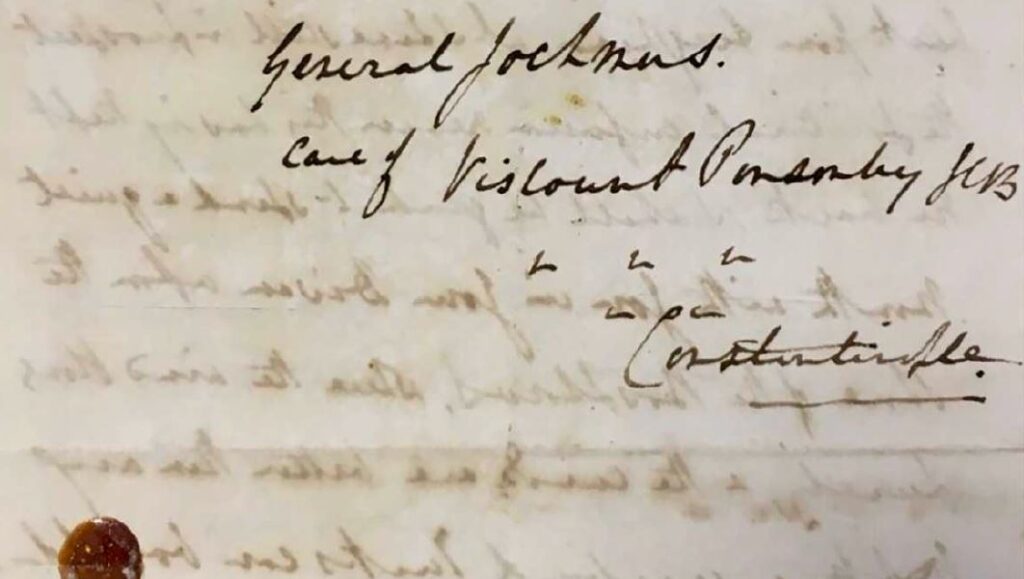
The letter dates from April 1841, when Conolly stopped on the bank of the Amu Darya River, the northern boundary of Afghanistan, en route to Bukhara. Partly written in code, the missive, addressed to the Austrian General, August Giacomo Jochmus, commander of the combined forces of the Ottoman Empire, Britain, and Austria during the Syrian War of 1839–1841, reveals new details about Conolly’s observations regarding Central Asia’s complex power dynamics. The letter was discovered in the Russian State Archive of Literature and Art in Moscow.

While the term “Great Game” would only gain prominence much later through Rudyard Kipling’s Kim, Conolly’s writings shine a light on the precarious nature of imperial ambitions. His correspondence often reflected a mix of hope and foreboding, as he championed diplomatic engagement to win influence in the region while recognizing the human cost of such rivalry.

The newly discovered letter includes remarks on the state of local governance, tribal allegiances, and the risks posed by Russian territorial advances. These insights could reshape the contemporary understanding of British intelligence operations and frontier policies at the height of imperial competition.

“Travel has its charms and excitements, but it also has its disenchantment,” Conolly wrote, “and if I get safely back from Peshawar, I shall be glad to spend a quiet month with you in your Divan upon the shore of the Bosporus.”

Conolly’s fate remains a tragic footnote to his legacy. Captured and executed in 1842 by the Emir of Bukhara while attempting to negotiate the release of fellow British officer, Charles Stoddart, he became both a cautionary tale and a symbol of imperial zeal. This rediscovered letter serves as a poignant reminder of the personal stakes involved in the sprawling global chessboard that defined 19th-century diplomacy.

The Photographs of Prokudin-Gorsky: A Glimpse of a Lost World

Using the emerging technology of color photography, Sergey Mikhaylovich Prokudin-Gorsky (1863–1944) undertook several photographic expeditions to capture images of the Russian Empire. Most of his work took place between 1909 and 1915, though some photographs date as early as 1905. At the time, the Russian Empire stretched roughly 7,000 miles east to west and 3,000 miles north to south. It encompassed one-sixth of the Earth’s land surface, making it the largest empire in history, spanning what are now eleven time zones.

Abutment for a dam and house belonging to the government. [Kuzminskoe] Prokudin-Gorsky, Sergey Mikhaylovich, 1912

Tsar Nicholas II supported Prokudin-Gorsky’s ambitious endeavor by granting him travel permits and access to various modes of transportation, including trains, boats, and automobiles. His journeys are preserved in photographic albums that include the original negatives. One album also features miscellaneous images, including scenes from other parts of Europe. The photographs capture a broad array of subjects: religious architecture and shrines (churches, cathedrals, mosques, and monasteries); religious and secular artifacts (such as vestments, icons, and items linked to saints, former Tsars, and the Napoleonic Wars); infrastructure and public works (railroads, bridges, dams, and roads); a variety of industries (including mining, textile production, and street vending); agricultural scenes (like tea plantations and field work); portraits, which often showed people in traditional dress, as well as cityscapes, villages, natural landscapes, and blooming plants.

Besides being a photographer, Sergey Prokudin-Gorsky was a chemist who is renowned for his pioneering contributions to color photography in the early 20th century. In 1901, he traveled to Berlin to study photochemistry before returning to Russia, where he outfitted a railroad car as a mobile darkroom with the support of Tsar Nicholas II. As he traveled across the Russian Empire, he documented its people and landscapes, eventually earning recognition in Russia, Germany, and France. In 1906, he was appointed head of the photography section of Fotograf-Liubitel, Russia’s leading photography journal. One of his most famous works is a color portrait of Leo Tolstoy, taken in 1908.

“By capturing the result of artistic inspiration in the full richness of its colors on the light-sensitive photographic plate, we pass the priceless document to future generations,” wrote Prokudin-Gorsky. As a nobleman, inventor, professor, and pioneer of color photography in Russia, Prokudin-Gorsky had a deep sense of national identity and heritage. Although he was unable to complete his grand project due to the outbreak of World War I and increasing social unrest across the Russian Empire, he still managed to capture photographs in regions such as the Urals, Siberia, Crimea, Dagestan, Finland, and Central Asia, as well as along the Volga and Oka rivers. Unfortunately, much of his photographic archive was lost in the aftermath of the 1917 Revolution.

Prokudin-Gorsky created unique black-and-white negatives using a triple-frame method, taking three separate exposures through blue, green, and red filters. This technique allowed the images to be printed or projected in color, often for magic lantern slide presentations. The complete collection of 1,902 triple-frame glass negatives has been digitized, including approximately 150 images not included in his original albums. Each digitized image displays all three frames. Additionally, the individual frames, typically the green-filtered center shot, are also available, enabling closer inspection of the details.

Fishing settlement, Prokudin-Gorsky, Sergey Mikhaylovich, 1915

The Library of Congress holds twelve albums (in fourteen volumes) that Prokudin-Gorsky compiled as visual notebooks documenting his travels and research. Digitized pages from these albums allow modern viewers to retrace the same routes Prokudin-Gorsky followed over a century ago, viewing the photographs in the original order he intended. The pages display all 2,433 contact prints contained in the albums, along with their original Cyrillic captions and annotations. Each page typically includes six prints, though some contain blank spaces where images were removed long ago.
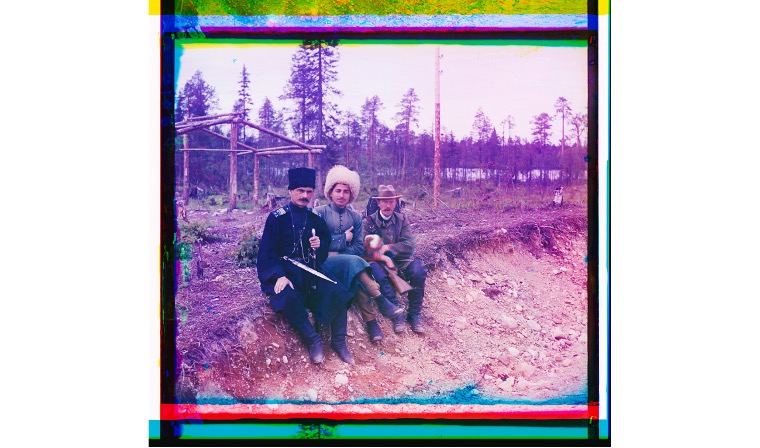
Sergey Mikhaylovich Prokudin-Gorsky and two men in Cossack dress are seated on the ground

A page from Prokudin-Gorsky’s photo album of Europe containing images of Venice, Sergey Mikhaylovich Prokudin-Gorsky

Prokudin-Gorsky also traveled to Italy, Finland, and Yasnaya Polyana — Leo Tolstoy’s estate in Russia — to photograph subjects of cultural and historical significance, including Tolstoy himself. These travels were most likely undertaken before he began his larger project to document the Russian Empire.
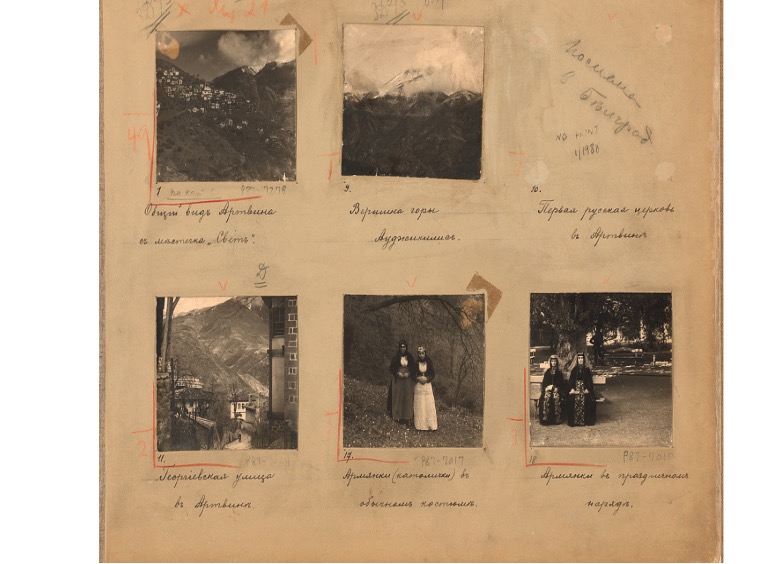
A page from Prokudin-Gorsky’s photo album of the Caucasus containing photos of Artvin (in present-day Turkey), as well as its surrounding mountains and some of its Armenian inhabitants, Sergey Mikhaylovich Prokudin-Gorsky, between 1900 and 1920

From the photographs he took a century ago, we can clearly see the face of society at that time.
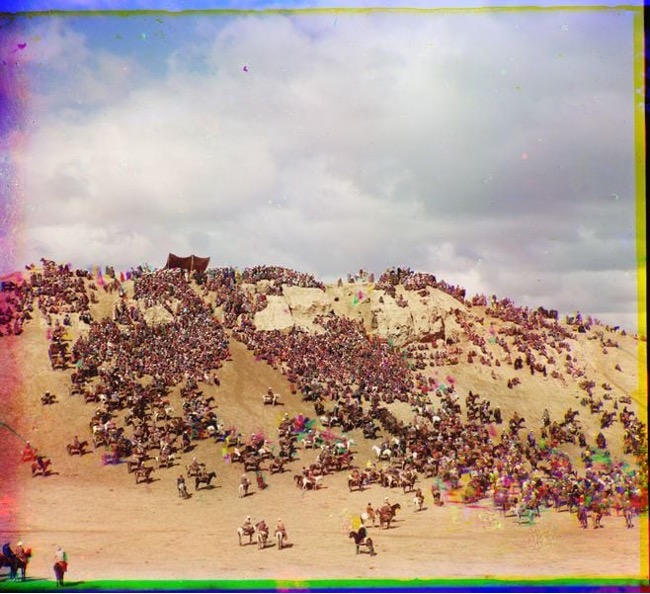
Bayga, near Samarkand, Turkestan, Sergey Mikhaylovich Prokudin-Gorsky, between 1905 and 1915

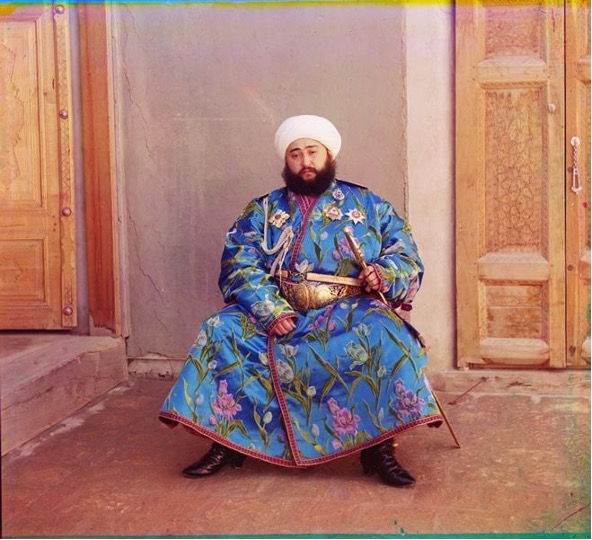
Isfandiyar Jurji Bahadur, Khan of the Russian protectorate of Khorezm (Khiva, now a part of modern Uzbekistan), Sergey Mikhaylovich Prokudin-Gorsky, 1910

A watercarrier in Samarkand (present-day Uzbekistan), Sergey Mikhaylovich Prokudin-Gorsky, 1910

Nomadic Kirghiz on the Golodnaia Steppe in present-day Uzbekistan and Kazakhstan, Sergey Mikhaylovich Prokudin-Gorsky, 1910

Opinion – The Quiet Competition: How the U.S. Is Losing Ground to China in Central Asia

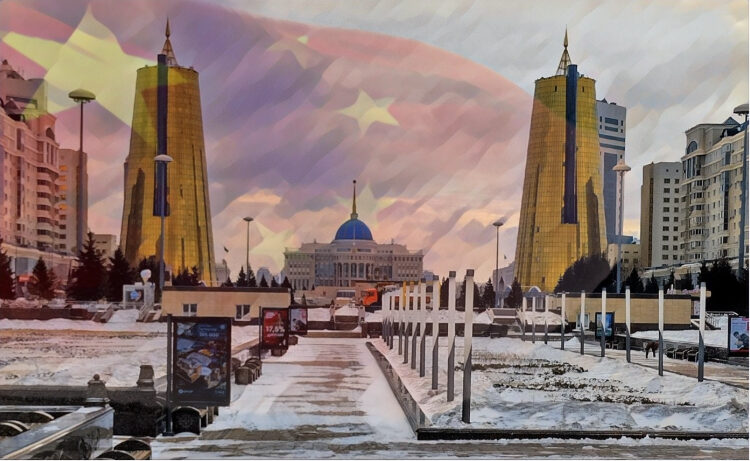
Over the past decade, China has steadily expanded its presence in Central Asia, not through military force, but by building roads, trade corridors, and digital infrastructure. As the United States scaled back its regional footprint following its withdrawal from Afghanistan, Beijing moved quickly to fill the void. Today, China has positioned itself as the region’s dominant external power, while the U.S. risks being left on the sidelines.

At the heart of China’s strategy is the Belt and Road Initiative (BRI), which has provided over $1 trillion into infrastructure projects globally since its launch in 2013. This includes $704 billion in construction contracts and $470 billion in non-financial investments. In 2024 alone, BRI engagement reached $121.8 billion – $70.7 billion in construction and $51 billion in investments – and trade between China and the countries of Central Asia hit a record $95 billion, highlighting the depth of China’s economic integration.

This engagement has also created significant financial dependencies. Central Asian countries owe China roughly $15.7 billion, about 8% of the region’s total external debt, and these loans are often opaque and carry terms that provide Beijing with outsized political leverage.

Chinese firms are also laying fiber-optic networks and constructing electric vehicle corridors to link western China with its neighbors. In Tajikistan, for example, contractors are upgrading the Pamir Highway to support cross-border EV transport. Huawei and other Chinese tech giants are also expanding the region’s telecommunications infrastructure, raising serious concerns about surveillance, data sovereignty, and long-term digital dependency.

China’s economic outreach is reinforced by high-level diplomacy. The China–Central Asia (C+C5) format has become the centerpiece of Beijing’s regional engagement. At the 2025 summit, leaders from across the region gathered to coordinate on connectivity, climate resilience, and trade facilitation. The regularity and substance of these summits stand in sharp contrast to the United States’ more sporadic diplomatic presence.

The U.S. maintains the C5+1 platform and launched a promising Critical Minerals Dialogue in 2024. However, these initiatives have yet to match the scale or consistency of China’s approach as U.S. infrastructure investment is limited, its commercial footprint is small, and diplomatic engagement is too infrequent to shift the region’s strategic trajectory.

This matters. Central Asia is strategically located, resource-rich, and increasingly central to global supply chains and geopolitical competition. Kazakhstan alone supplies more than 40% of the world’s uranium. The region also serves as a testing ground for competing development models, and if the United States fails to become a more engaged and credible partner, China’s infrastructure-heavy, state-centric model may become the default.

To remain competitive, Washington should recalibrate its approach in Central Asia. This includes pursuing bilateral deals that deliver real impact, such as deepening ties with Uzbekistan and Kazakhstan through targeted investment packages, trade agreements, and joint-sector initiatives. It also means securing access to critical minerals by expanding private-sector investment in mining, processing, and transport infrastructure aligned with U.S. supply chain needs. Offering digital infrastructure alternatives is equally essential; the United States must support secure, interoperable, and transparent technology networks that provide a viable counterweight to Chinese-backed systems. Finally, diplomacy must become more agile and outcomes-focused. The C5+1 platform should be elevated by institutionalizing high-level summits and establishing actionable working groups focused on tangible results.

The United States still has time to reengage Central Asia on its own terms, but that window is closing. Strategic competition in the region is no longer hypothetical. It is unfolding, and for the moment, China is setting the pace.

EDB Evaluates Environmental Projects to Combat Air Pollution in Bishkek

The Bishkek municipality and the Eurasian Development Bank’s (EDB) Fund for Digital Initiatives are considering two major environmental projects to tackle air pollution and enhance the quality of life in Kyrgyzstan’s capital.

The proposals were reviewed during a meeting on May 21 between Bishkek Mayor Aibek Junushaliyev and Tigran Sargsyan, Deputy Chairman of the EDB Management Board and head of the EDB’s Fund for Digital Initiatives.

According to the municipal government, the first project involves establishing a comprehensive air quality monitoring system based on a digital platform. The system is designed to address the city’s chronic air pollution by providing government bodies with real-time data on key emission sources. It would also enable assessments of contributions from industrial activities and natural background pollutants.

The second project envisions an intelligent transport monitoring system aimed at improving traffic flow modeling and management. The goal is to optimize the city’s public transport network, reduce congestion, and enhance urban mobility, all while improving environmental conditions.

Transport and Air Quality: Pressing Challenges for Bishkek

Traffic congestion and outdated public transport are among the most pressing issues in Bishkek, a city undergoing rapid population growth. According to the Ministry of Natural Resources, Ecology, and Technical Supervision, motor vehicles are responsible for 27% of the city’s air pollution. With over 600,000 registered vehicles, nearly double the city’s road infrastructure capacity of 350,000, Bishkek’s air quality continues to decline.

More than 333,000 of these vehicles are over 15 years old, contributing significantly to emissions. Nonetheless, the city has taken steps to modernize its public transport fleet, including replacing aging diesel-powered buses with larger, eco-friendlier models powered by liquefied petroleum gas (LPG).

Air pollution is especially severe during the winter months when coal burning for household heating, accounting for 40% of the city’s emissions, surges. As a result, Bishkek frequently ranks among the world’s top 10 most polluted cities on IQAir’s global air quality index.

The proposed EDB-backed projects represent a potential turning point for Bishkek’s environmental management strategy, offering digital tools and policy solutions to address longstanding public health and urban planning challenges.