• KGS/USD = 0.01144 0%
  • KZT/USD = 0.00210 0%
  • TJS/USD = 0.10438 0%
  • UZS/USD = 0.00008 0%
  • TMT/USD = 0.28490 0%
  • KGS/USD = 0.01144 0%
  • KZT/USD = 0.00210 0%
  • TJS/USD = 0.10438 0%
  • UZS/USD = 0.00008 0%
  • TMT/USD = 0.28490 0%
  • KGS/USD = 0.01144 0%
  • KZT/USD = 0.00210 0%
  • TJS/USD = 0.10438 0%
  • UZS/USD = 0.00008 0%
  • TMT/USD = 0.28490 0%
  • KGS/USD = 0.01144 0%
  • KZT/USD = 0.00210 0%
  • TJS/USD = 0.10438 0%
  • UZS/USD = 0.00008 0%
  • TMT/USD = 0.28490 0%
  • KGS/USD = 0.01144 0%
  • KZT/USD = 0.00210 0%
  • TJS/USD = 0.10438 0%
  • UZS/USD = 0.00008 0%
  • TMT/USD = 0.28490 0%
  • KGS/USD = 0.01144 0%
  • KZT/USD = 0.00210 0%
  • TJS/USD = 0.10438 0%
  • UZS/USD = 0.00008 0%
  • TMT/USD = 0.28490 0%
  • KGS/USD = 0.01144 0%
  • KZT/USD = 0.00210 0%
  • TJS/USD = 0.10438 0%
  • UZS/USD = 0.00008 0%
  • TMT/USD = 0.28490 0%
  • KGS/USD = 0.01144 0%
  • KZT/USD = 0.00210 0%
  • TJS/USD = 0.10438 0%
  • UZS/USD = 0.00008 0%
  • TMT/USD = 0.28490 0%

Kyrgyzstan’s Health Ministry Proposes Higher Taxes on Sugary Drinks and Salty Foods to Protect Public Health

Kyrgyzstan’s Ministry of Health has proposed reforms to the country’s excise tax system targeting sugar-sweetened beverages and foods with high salt content in an effort to reduce their consumption and improve public health.

The proposal was discussed on March 9 at a meeting involving representatives of the Ministry of Economy and Commerce, the Ministry of Finance, the State Tax Service, the Ministry of Agriculture, the World Health Organization (WHO), UNICEF, and leading business associations.

Currently, Kyrgyzstan applies a uniform excise tax of 3 soms (about $0.03) per liter on sugar-sweetened non-alcoholic beverages, regardless of their sugar content.

The Ministry of Health proposes introducing a differentiated excise tax system in which the rate would depend on the amount of sugar in a beverage:

  • Up to 5 grams of sugar per 100 ml – 5 soms (about $0.06) per liter
  • 5-8 grams per 100 ml – 7 soms (about $0.08) per liter
  • 8-11 grams per 100 ml – 9 soms (about $0.10) per liter
  • More than 11 grams per 100 ml – 11 soms (about $0.12) per liter

Officials say the new structure would encourage manufacturers to reduce sugar content in beverages, promote healthier consumer habits, and decrease consumption of high-sugar products.

The ministry also proposes introducing a fixed excise tax of 20 soms (about $0.20) per liter on energy drinks, citing their high levels of sugar and caffeine and the potential health risks they pose, particularly for adolescents.

Authorities are also considering similar differentiated taxation for foods with high salt content, including fried and salty snacks such as chips, salted crackers, and similar products.

The goal is to discourage excessive consumption of high-salt foods and reduce related health risks.

Representatives of the World Health Organization and UNICEF have expressed support for the proposal.

WHO representative Alina Altymyshova noted that similar measures are widely used around the world. According to her, 116 countries already apply various forms of taxation or regulation on foods and beverages high in sugar and salt to help prevent noncommunicable diseases and promote healthier diets.

She also highlighted numerous international studies demonstrating the negative health impacts of regular consumption of sugary beverages, particularly among children and adolescents.

Deputy Health Minister Temirbek Erkinov warned that unhealthy diets are becoming a growing public health challenge in Kyrgyzstan.

According to data from the National Statistical Committee for 2023, about 9% of children in Kyrgyzstan, roughly one in eleven, are overweight.

Other indicators highlight widespread unhealthy dietary habits:

  • 75% of children aged 6-23 months consume unhealthy foods
  • 78% regularly drink sugary beverages
  • 16% do not consume fruits and vegetables daily

More than 84,000 people in Kyrgyzstan are currently registered with diabetes, with the number increasing by 5,000 to 7,000 cases each year.

“The issue of nutrition and related diseases is becoming one of the most serious challenges for the public health system,” Erkinov said.

Health officials believe measures to reduce the consumption of foods high in sugar and salt should become an important tool in preventing noncommunicable diseases and improving the country’s overall public health.
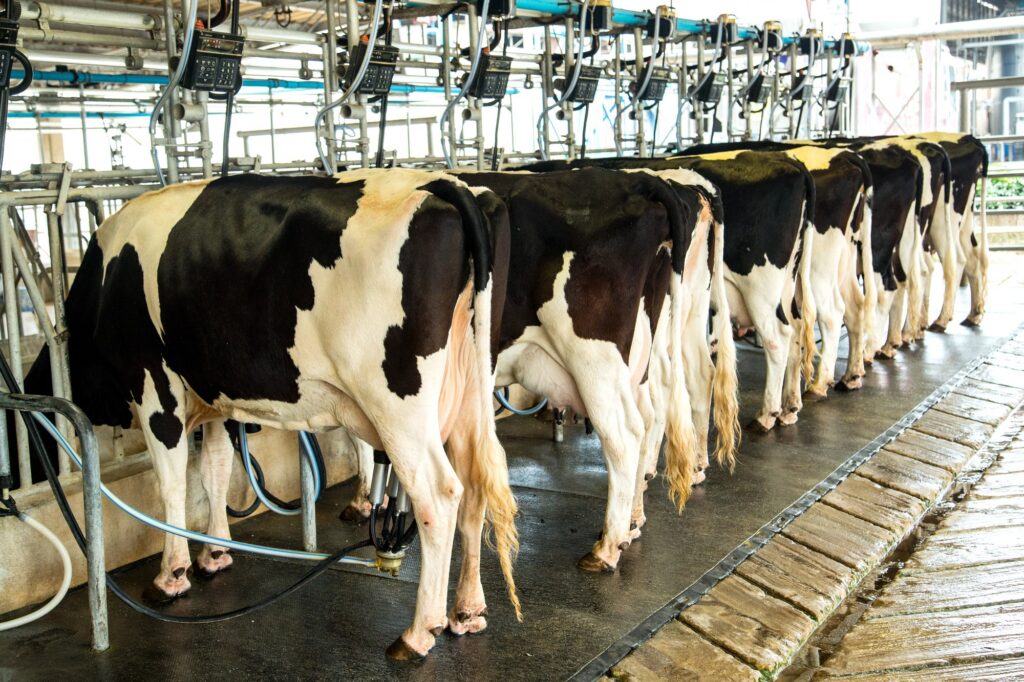

Kazakhstan Considers Supporting Dairy Sector to Curb Inflation

Kazakhstan’s government is considering additional support for dairy processors and bakeries as part of broader efforts to slow inflation and stabilize prices for essential food products.

The proposal was discussed during a government meeting focused on inflation dynamics and price trends for socially significant food products.

According to Aizhan Bizhanova, Kazakhstan’s First Vice Minister of Trade and Integration, inflation in the country has been slowing for five consecutive months, declining from 12.9% in September 2025 to 11.7% in February 2026.

Food inflation has also continued to ease, falling from 13.5% in December and 12.9% in January to 12.7% in February.

The ministry attributes the slowdown in part to the expansion of the list of socially significant food products subject to price regulation. The list has been expanded from 19 to 31 items, and since the beginning of the year authorities have opened more than 800 administrative cases related to violations of pricing rules.

“During the first week of March, the price index for socially significant food products increased by 0.1%. At the same time, dairy products recorded price growth, mainly due to rising costs of raw milk,” the government’s press service said in a statement.

Additional pressure on prices has also come from higher energy costs and increased production expenses.

Dairy products account for a significant share of Kazakhstan’s food inflation, estimated at about 6.3%. The Ministry of Trade and Integration therefore proposed exploring mechanisms to support dairy processing enterprises in order to reduce production costs and stabilize prices.

The government also discussed possible support measures for Kazakhstan’s bakery sector. Among the options considered were providing bakeries with discounted grain and flour and exploring the possibility of lowering railway tariffs for transporting raw materials.

Officials suggested working with the national railway operator Kazakhstan Temir Zholy to reduce transportation costs for the sector.

Participants at the meeting noted that prices traditionally rise in March due to seasonal factors. However, the Ministry of Trade and Integration plans to mitigate the impact through additional price discount campaigns and expanded agricultural fairs.

Kazakhstan also continues to use a “green corridor” mechanism to facilitate the import of vegetables from neighboring countries.

Deputy Prime Minister and Minister of National Economy Serik Zhumangarin, who chaired the meeting, instructed authorities to conduct a detailed review of pricing at 42 dairy processing enterprises operating in Kazakhstan.

The aim is to identify effective mechanisms for supporting producers and stabilizing consumer prices.

Officials also highlighted slow releases of vegetables from regional stabilization funds, which supply products to the market at fixed prices. The slow pace was particularly noted in the Aktobe, Zhambyl, Kyzylorda, and Ulytau regions.

Zhumangarin instructed the Ministries of Agriculture and Trade to inspect regional stabilization funds and verify the actual availability of products reported by local authorities.

Despite recent improvements, several international organizations expect inflation in Kazakhstan to remain elevated in 2026.

S&P Global Ratings forecasts inflation will reach about 11% by the end of the year.

The Eurasian Development Bank predicts inflation could fall to 9.7% by the end of 2026.

Meanwhile, the International Monetary Fund has linked Kazakhstan’s inflation pressures to signs of economic overheating.

8 March Women’s Rights Rally Takes Place in Bishkek

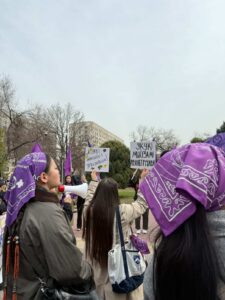
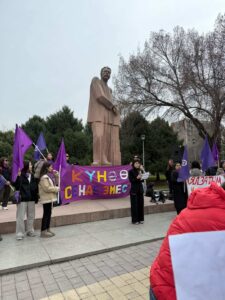
A rally in support of women’s rights took place in Bishkek’s Maxim Gorky Square on March 8, International Women’s Day. More than a hundred people gathered at the square, including activists, public figures, and city residents who came to support the initiative.

The rally has become one of the traditional events held in the capital of Kyrgyzstan on 8 March. For about ten years, marches and public gatherings dedicated to equal rights and women’s safety have been organized in Bishkek on this day.

In previous years, participants more often held marches through the city center. However, this time the authorities allowed the event only in the format of a peaceful rally in the park. Initially, the organizers planned a march, but the gathering ultimately took place in Gorky Square.

@TCA

The rally began during the day and lasted for about an hour. Police officers monitored public order during the event. Participants gathered in small groups, held posters and banners, and discussed issues related to women’s rights and gender equality.

Among those present at the rally were Member of Parliament Elvira Surabaldieva, former ombudsman Atyr Abdrakhmatova, as well as human rights defenders, content creators, and public activists.

Representatives of various civic initiatives and activists who regularly take part in similar events in Bishkek were also present.

Many participants brought posters addressing themes of equal rights and women’s safety. The signs included slogans against domestic violence and calls to protect women’s rights.

Posters traditionally serve as the main visual element of such events, helping participants draw attention to issues of gender inequality and the need to address cases of violence.

@TCA

Rallies dedicated to women’s rights are held in Bishkek every year on March 8. They usually bring together activists and residents who want to remind the public that International Women’s Day is connected not only with celebrations but also with the historical struggle for equal rights.

Despite changes in format over the years, such events remain among the most visible civic initiatives in the capital of Kyrgyzstan focused on gender equality and women’s rights.

“Acid clouds” from Iran? Kazakhstan and Uzbekistan Weather Agencies Say There is No Threat to Central Asia

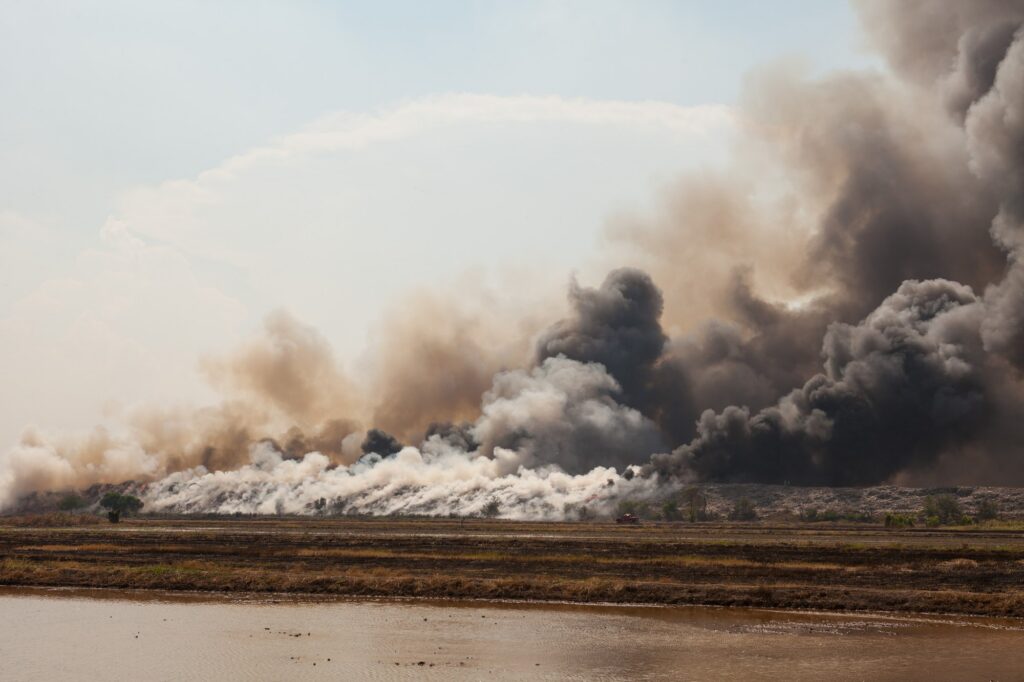
Social media has been flooded with claims that a toxic cloud could drift from Iran toward Central Asia following strikes on oil facilities. However, the meteorological services of Kazakhstan and Uzbekistan say those fears are not supported by scientific data.

In recent days, posts online have warned of so-called “acid clouds” allegedly forming over Iran after attacks on oil depots and other energy infrastructure. Some of these posts claimed the pollution could be carried by atmospheric currents toward Turkmenistan, Uzbekistan, Kazakhstan, and China. Others cited reports of “black rain” in Tehran and elevated concentrations of sulphur dioxide, nitrogen oxides, and soot.

Iranian authorities and international reporting have documented severe local air pollution risks in and around Tehran after the strikes. The Iranian Red Crescent Society warned residents that rainfall following the explosions could be acidic and hazardous to health. Experts said the pollution could irritate the skin, eyes, and lungs and contaminate soil and water near the affected areas.

Kazhydromet, Kazakhstan’s national weather service, said reports that “acid clouds” from Iran could reach Central Asia are not confirmed by scientific data or observation results. The agency explained that acid precipitation typically forms near the source of emissions and that the concentration of pollutants decreases significantly over long distances due to natural atmospheric processes. Monitoring data, it said, show no signs of such pollution moving toward Kazakhstan or other Central Asian countries.

Uzbekistan’s hydrometeorological service, Uzhydromet, expressed a similar position. It said information circulating on social media about “acid clouds” reaching Central Asian countries has no scientific basis. According to the agency, dangerous concentrations of acid precipitation thousands of kilometres from the source are practically impossible, and current observations show no threat to Uzbekistan or neighbouring states.

Experts note that large fires at oil facilities can release substantial amounts of harmful pollutants into the atmosphere. However, such risks are primarily local or regional near the source. By the time emissions travel very long distances, atmospheric dispersion and deposition typically reduce concentrations sharply. As a result, the health concerns reported in Tehran do not support claims of a toxic cloud threatening Central Asia.

Both Kazhydromet and Uzhydromet urged the public and media outlets to rely on official information and avoid spreading unverified reports.

Central Asia Faces an Arc of Instability to the South

Until a few weeks ago, looking south from Central Asia, observers of the region saw nothing but opportunities for connectivity. Admittedly, Iran on one side and the area between Afghanistan and Pakistan on the other have never been known for their stability. However, the current situation sees two serious conflicts on the southern border of Central Asia, which risk representing an arc of instability that will be difficult to overcome.

While the global energy implications of the ongoing war in the Middle East, which began following the joint attack by the United States and Israel on Iran, are likely to be felt for months to come, the greatest risk for the Central Asian region is related to connectivity. This could also compromise significant efforts made in this regard by regional governments. Consider, for example, the recent trip to Pakistan by Kazakh President Kassym-Jomart Tokayev, which focused on the possibility of building a railway from Pakistani ports to Kazakh territory via Afghanistan and Turkmenistan.

For much of the past decade, Central Asian governments have invested heavily in opening southern trade routes to global markets. Railways through Afghanistan, port access through Iran, and new logistics corridors to Pakistan were meant to reduce dependence on northern routes and expand the region’s economic options. The sudden emergence of conflicts along the southern frontier now raises questions about how secure those connections will be.

The Times of Central Asia spoke with Peter Frankopan, author and Professor of Global History at Oxford University, about the potential implications of the two wars on Central Asia’s southern border. According to him, the main risk is not related to connectivity, but to contagion: “The key issue is about the safety of civilians and the protection of infrastructure in Central Asia,” he told TCA. “In times like these, nothing can be ruled out. With Iran lashing out at neighbors and realizing that attacks on oil, gas and more give it leverage, it is not hard to see what might come next. Second, of course, are threats to national economies. Wars create winners and losers. One can see a boom for some people in Central Asian states, but plenty of pressures, especially on inflation.”

Indeed, the economic repercussions of the Middle East conflict are already being felt in the region, particularly in Turkmenistan, which maintains some of the closest trade ties with Iran and shares a long border with the country.

Frankopan does not see any particular differences in terms of the danger to Central Asia posed by what is happening in Iran and between Pakistan and Afghanistan: “Clearly, instability in Afghanistan is an immediate concern, but it is not related to Iran and will have its own velocity and rhythms. But the risks of expanding violence and terrorism, of refugees, of narcotics and other illicit trafficking are real – and may well get worse.”

Regarding connectivity, one of the topics that Central Asian governments pay the most attention to, according to Frankopan, the current situation should not be considered an insurmountable obstacle: “This is simply testimony to turbulence as competing ideas of the present and future jostle and take shape. A few weeks ago, everyone was talking about middle corridors and a new golden era of exchange; now they are talking about breakdowns and dislocation. Both of those cannot be right – or wrong. People, states, and businesses cooperate when they want or need to, and when it suits all sides. Like all relationships, it works as long as it works, but it can all suddenly stop. The question now is who wants to collaborate and work together, why, and about what.”

Another aspect that could potentially jeopardize the difficult balancing act of the Central Asian republics, particularly Kazakhstan, should not be overlooked: increasingly narrow political margins. Consider, on the one hand, the fact that Uzbekistan has recently collaborated with India and Iran on a project such as the International North–South Transport Corridor, which has – or perhaps it would be more accurate to say “had” – a very important hub in the port of Chabahar, a collaboration that the current close relationship between the U.S. administration led by Donald Trump could make very costly to maintain.

On the other hand, the increasingly close relations between Kazakhstan and Israel could prove difficult to maintain in light of the increasingly assertive regional policies of Prime Minister Benjamin Netanyahu. Regarding this dimension, and with particular reference to Kazakhstan, Frankopan adopts a longer-term perspective, stepping back from the constant flow of news coming from the frontline. “Tokayev is a shrewd operator, and one who evaluates risk carefully. I don’t know how he is assessing the current situation, but I would pay close attention to it and think his analysis would be worth listening to. Kazakhstan has to balance multiple competing interests and pressures. Some of us think that experience helps in these circumstances; if you take a historian’s view, those run deep. So, balance and risk management are everything.”

In recent years, Central Asia has demonstrated great resilience and the ability to adapt quickly to an ever-changing international landscape. Although the situation on its southern border is becoming increasingly alarming, it remains possible that the pragmatism of regional leaders in international relations will once again prevail.

Opinion: Examination Reform – An Effective Assessment Tool in the Age of Artificial Intelligence

Kazakhstan’s decision to reform and expand assessment beyond the Unified National Testing (UNT) system marks a significant shift in how the country identifies talent and prepares young people for a rapidly changing world. Recently reported by Times Higher Education, the reform recognizes a growing reality: traditional, memory-based exams are no longer enough in an era shaped by artificial intelligence, automation and constant technological change.

For more than two decades, the UNT has provided a standardized and transparent route into higher education. It brought clarity and fairness at scale, and for that, it deserves credit. Yet its core limitation has become increasingly clear. By focusing largely on the reproduction of subject knowledge, it leaves little room for students to demonstrate analytical thinking, problem-solving ability, or the capacity to work across disciplines. In practice, it rewards exam technique and memorization over deeper understanding.

This matters because the skills now demanded of graduates are changing fast. Across the global labor market, employers are placing greater value on adaptability, technical literacy, and the ability to apply knowledge in real-world settings. International organizations have been clear on this point.

The OECD’s Future of Education and Skills 2030 framework argues that education systems must develop cross-cutting competencies such as critical thinking, creativity, collaboration, and self-direction. The World Economic Forum has made a similar case, urging a move away from static, theoretical learning towards transferable, future-facing skills. As artificial intelligence becomes embedded across industries, assessment models need to keep pace. Evaluating what a student can recall under exam conditions is no longer a reliable proxy for how they will perform in complex, technology-rich environments.

Research increasingly shows that standardized tests capture only part of an applicant’s potential, a point widely discussed in international higher education policy debates and assessments such as the OECD’s Programme for International Student Assessment. They can also reinforce socio-economic inequalities, as access to preparation resources often matters as much as ability. The result is a system that measures how well students survive exams, rather than how well they think.

Kazakhstan’s new modular examination model is designed to respond directly to these challenges. Instead of testing knowledge in isolation, it aims to assess functional literacy, logic, analytical reasoning and critical thinking alongside mastery of the school curriculum. This more practice-oriented approach offers a fuller picture of a student’s readiness for higher education and, ultimately, for professional life.

I see this shift every day in my work within Kazakhstan’s education ecosystem. The new test does not stand alone; it forms part of a wider effort to build coherence across schools, universities, policymakers and philanthropic organizations. Real, lasting change depends on alignment around shared goals, rather than on pilots or isolated initiatives.

At the NNEF Public Foundation, established by the renowned educator Dinara Kulibayeva, this principle has guided our work for nearly three decades. Through a network of affiliated schools, universities and developmental programs – including Astana IT University, which I am proud to lead – we have helped young people across Kazakhstan learn, grow and realize their potential.

Thousands of graduates now hold leadership roles in industry, research and public service, both at home and abroad. Many of them succeeded because someone recognized strengths that traditional examinations could not fully capture.

From my professional experience, students who thrive in today’s environment are those with cognitive flexibility and mature critical thinking. They can break down complex problems, understand how different elements interact, and consider multiple possible outcomes. Assessment systems should be designed to identify exactly these qualities, rather than relying solely on recall.

The modular structure of the new examination reflects this need. By moving beyond simple knowledge testing, it creates space to identify intellectual adaptability, systemic thinking, and readiness to operate in interdisciplinary, high-tech contexts. In doing so, it aligns Kazakhstan more closely with international assessment practices while remaining grounded in national priorities.

Greater transparency and a broader definition of merit should also strengthen trust in the admissions process. When selection criteria are clearer and more closely linked to real capability, confidence in fairness increases. Over time, stronger student intake feeds directly into academic performance and institutional reputation, reinforcing the quality of the higher education system as a whole.

Ultimately, this reform is about more than modernizing exams. It is about building a pipeline of talent equipped for analytical work, research, and lifelong learning. If implemented consistently and supported across the education system, the new approach has the potential to improve academic outcomes, enhance research capacity, and strengthen the international standing of Kazakhstani universities.


The views expressed in this article are those of the author and do not necessarily reflect the official policy or position of the publication, its affiliates, or any other organizations mentioned.