• KGS/USD = 0.01144 0%
  • KZT/USD = 0.00209 0%
  • TJS/USD = 0.10528 0.19%
  • UZS/USD = 0.00008 0%
  • TMT/USD = 0.28490 0%
  • KGS/USD = 0.01144 0%
  • KZT/USD = 0.00209 0%
  • TJS/USD = 0.10528 0.19%
  • UZS/USD = 0.00008 0%
  • TMT/USD = 0.28490 0%
  • KGS/USD = 0.01144 0%
  • KZT/USD = 0.00209 0%
  • TJS/USD = 0.10528 0.19%
  • UZS/USD = 0.00008 0%
  • TMT/USD = 0.28490 0%
  • KGS/USD = 0.01144 0%
  • KZT/USD = 0.00209 0%
  • TJS/USD = 0.10528 0.19%
  • UZS/USD = 0.00008 0%
  • TMT/USD = 0.28490 0%
  • KGS/USD = 0.01144 0%
  • KZT/USD = 0.00209 0%
  • TJS/USD = 0.10528 0.19%
  • UZS/USD = 0.00008 0%
  • TMT/USD = 0.28490 0%
  • KGS/USD = 0.01144 0%
  • KZT/USD = 0.00209 0%
  • TJS/USD = 0.10528 0.19%
  • UZS/USD = 0.00008 0%
  • TMT/USD = 0.28490 0%
  • KGS/USD = 0.01144 0%
  • KZT/USD = 0.00209 0%
  • TJS/USD = 0.10528 0.19%
  • UZS/USD = 0.00008 0%
  • TMT/USD = 0.28490 0%
  • KGS/USD = 0.01144 0%
  • KZT/USD = 0.00209 0%
  • TJS/USD = 0.10528 0.19%
  • UZS/USD = 0.00008 0%
  • TMT/USD = 0.28490 0%

Central Asia Unites: Evacuations Amid Middle East Turmoil

As hostilities between Israel and Iran escalate in the Middle East, Kazakhstan, Kyrgyzstan,  and Uzbekistan have initiated a comprehensive evacuation of their citizens from high-risk areas, drawing on regional cooperation and humanitarian assistance to ensure their safe return.

Regional Support in Evacuation Efforts

Azerbaijan and Turkmenistan have stepped in to aid the Central Asian nations’ evacuation operations, providing transit routes and logistical support. At the Astara border checkpoint, six Kazakh citizens crossed from Iran into Azerbaijan, where they were offered medical assistance and meals before continuing their journeys. Turkmenistan has also facilitated the safe passage of approximately 120 evacuees, including citizens of Kazakhstan, Kyrgyzstan, Uzbekistan, Tajikistan, and Romania, through its border checkpoints with Iran.

Turkmenistan’s Ministry of Foreign Affairs confirmed that foreign diplomats and their families were recently evacuated from Iran through Turkmenistan. The country provided comprehensive humanitarian assistance to the evacuees, offering transportation, food, accommodation, and essential supplies. Turkmenistan’s authorities highlighted that the operation was carried out in close cooperation with foreign embassies and international organizations, reflecting its commitment to humanitarian values, international cooperation, and good neighborly relations, particularly during the “Year of Peace and Trust,” as declared by the United Nations General Assembly at Turkmenistan’s initiative.

Uzbekistan has evacuated over 30 citizens of its citizens from Iran via Turkmenistan and Azerbaijan, according to the Ministry of Foreign Affairs. “All necessary measures are being taken to ensure the safety of our citizens. The embassies of Uzbekistan in Iran and Israel are operating around the clock,” the ministry stated.

Kyrgyzstan has also successfully evacuated 28 of its citizens from Iran via Azerbaijan. “Currently, the necessary assistance is being provided to facilitate the swift return of the evacuees from Azerbaijan to Kyrgyzstan,” a Foreign Ministry official stated.

Flight Bans and Alternative Routes

Kazakhstan’s Civil Aviation Committee has meanwhile implemented a full ban on flights over or near the airspace of Iran, Iraq, Israel, Jordan, Lebanon, and Syria following intensified airstrikes in the region. This decision disrupted flights for hundreds of Kazakh travelers, particularly those in the United Arab Emirates and other Middle Eastern nations.

To address the situation, alternative evacuation routes were established. On June 15, two FlyDubai flights arrived in Almaty, carrying a total of 332 Kazakh citizens. These flights included passengers initially stranded after the airspace ban and others who had been scheduled to depart after the interruption. Following rerouting operations, airlines such as Air Astana and FlyArystan have warned of disruptions to flights to and from the Gulf and North Africa. Passengers have been advised to check schedules in advance and to expect delays.

Mirziyoyev Addresses the Conflict’s Impact

The conflict between Israel and Iran has raised serious concerns across Central Asia. Speaking during a government meeting held via videoconference, Uzbekistan’s President Mirziyoyev warned that the hostilities could negatively impact newly developing trade and transport routes in the region.

The growing conflict will “have an impact not only on the Middle East, but also on our region. If the escalation continues, trade relations and logistics routes that are only just being restored after the pandemic will become more difficult,” Mirziyoyev’s press secretary stated. The President urged regional governors and ministers to act proactively, assessing risks in their areas, and stressed the importance of clear communication with the public and business community to resolve challenges promptly.

Security Advisories Issued

Following Israeli airstrikes on Iranian territory on the night of June 13, which targeted suspected uranium enrichment sites, missile bases, and high-ranking members of Iran’s Islamic Revolutionary Guard Corps, Central Asian countries have taken precautionary measures. Uzbekistan’s Ministry of Foreign Affairs advised citizens in both Iran and Israel to stay alert, follow local safety guidelines, and be prepared to shelter if necessary. Citizens were also urged to carry identification and maintain close contact with their respective embassies.

Kazakhstan’s embassy in Tel Aviv similarly issued guidelines for its citizens, encouraging vigilance, staying informed through official sources, and staying in touch with the embassy. Emergency hotlines were established to provide immediate support.

The Ministry of Foreign Affairs has also urged Kyrgyz nationals residing in affected areas to avoid high-risk zones, comply with local safety advisories, and maintain close contact with its diplomatic missions. Emergency hotlines have been established for citizens needing immediate assistance.

Broader Context of the Conflict

The evacuation effort comes amid an escalating tit-for-tat of military strikes between Israel and Iran. Recent airstrikes have resulted in significant casualties, including over 224 deaths in Iran and 24 in Israel, with dozens more injured.

The authorities in Kazakhstan, Kyrgyzstan, and Uzbekistan have confirmed that evacuation efforts are ongoing and will adapt to changing circumstances to ensure the protection of all of its nationals in conflict zones.


Flash Floods Severely Damage Irrigation Infrastructure and Crops in Tajikistan

Heavy rains and ensuing flash floods have inflicted significant damage on agriculture and infrastructure near the city of Penjikent in northwestern Tajikistan. The rural community of Kosatarosh was particularly hard-hit, with key irrigation canals damaged and dozens of hectares of farmland inundated.

Key Canals and Farmland Affected

According to the emergency response headquarters under the Penjikent city administration, flooding and mudslides disrupted the flow of two major irrigation canals, Khalifa Hassan and Farmetan.

Around 20 meters of the bank of the Khalifa Hassan Canal was washed away, with sediment and debris accumulating in the channel. The Farmetan Canal was partially blocked, endangering the water supply for local farms.

The disruption poses a serious threat to agricultural output, as the Khalifa Hassan Canal supplies water to over 3,500 hectares of cropland and orchards. Local authorities estimate that at least 80 hectares of rice, potatoes, corn, and other crops, cultivated by both collective farms and private households, were affected.

On the morning of June 16, Penjikent Mayor Abduholik Kholikzoda visited the affected area and held an emergency meeting with representatives of the Committee for Emergency Situations and other relevant agencies. Authorities agreed to initiate a rapid damage assessment and commence restoration work.

The State Administration for Land Reclamation and Irrigation of the Zarafshon River Basin has been tasked with clearing debris from the canals and repairing damaged sections. Specialists from the Zarafshon joint venture have already deployed equipment and begun initial repair operations.

Authorities Had Issued Warnings

The Tajikistan Hydrometeorological Agency had issued a warning on June 12-13 about the heightened risk of mudslides in mountainous and foothill regions, including areas in Sughd region, such as Ayni, Penjikent, and Iskanderkul, as well as regions under direct republican jurisdiction and parts of the Gorno-Badakhshan Autonomous Region.

“Precipitation expected in mountainous and foothill areas could lead to mudslides,” the agency warned.

The Emergency Committee advised residents to avoid rivers and reservoirs, suspend fishing and hunting, and temporarily cease grazing livestock in vulnerable mountainous areas.

Volatile Summer Weather Increases Risk

Forecasters predict that June 2025 will be unusually hot across Tajikistan, with temperatures expected to exceed seasonal averages by more than two degrees. The southern and lowland regions are expected to experience particularly high temperatures. Despite the heat, meteorologists warn of possible short-term rainfall, thunderstorms, dust storms, and squalls.

Authorities have urged citizens to remain vigilant, particularly in flood-prone mountainous areas, where weather volatility continues to pose a risk. The situation in Penjikent underscores the increasing vulnerability of such regions to climate-induced disasters.

Opinion: From Xi’an to Astana – Elevating China–Central Asia Cooperation to a New Height

As summer awakens the vibrant landscapes of Kazakhstan, with lilac blossoms aglow and the Ishim River meandering through the capital, Astana is once again at the center of regional diplomacy. From June 16 to 18, Chinese President Xi Jinping will visit Kazakhstan to attend the Second China–Central Asia Summit — an event of both symbolic weight and strategic substance.

This year’s summit marks more than a diplomatic gathering — it signifies the maturing of a young but increasingly impactful multilateral framework born from centuries-old ties. From the ancient Silk Road to today’s modern infrastructure corridors, the five Central Asian nations and China are deepening a relationship rooted in trust, driven by mutual benefit, and destined to shape the region’s collective future.

Ancient Friendship, Strategic Renewal

More than 2,100 years ago, Chinese envoy Zhang Qian opened the first pathway to Central Asia, laying the groundwork for millennia of exchange. In 2013, standing in Kazakhstan, President Xi unveiled the Silk Road Economic Belt, the founding vision of what would become the Belt and Road Initiative (BRI), reviving the spirit of the ancient Silk Road for a new era. Since then, cooperation between China and Central Asia has grown from historical affinity into a full-spectrum partnership.

Over the past decade, this partnership has reached “three completions”: the full establishment of comprehensive strategic partnerships between China and all five Central Asian countries, full coverage of BRI cooperation documents, and full alignment with the concept of a shared future for humanity. These milestones demonstrate not just diplomatic intent but a shared strategic outlook that has withstood global uncertainties.

As Xi noted, the decision to deepen China–Central Asia cooperation is not a product of convenience, but a generational choice made by leaders with long-term vision, responding to the will of their peoples and the imperatives of regional stability.

Tangible Results: A Shared Path to Modernization

Since the launch of the China–Central Asia mechanism in 2020, progress has accelerated. The elevation of this platform to the leaders’ level in 2023 during the Xi’an Summit underscored its growing relevance. From the Xi’an Declaration to the establishment of a permanent secretariat, institutional foundations are now firmly in place.

More importantly, the mechanism is delivering real results. Trade between China and the five Central Asian states reached a record $94.8 billion in 2024, a $5.4 billion increase from the previous year. New cooperation structures in transport, agriculture, customs, and emergency management are enabling efficient multilateral coordination.

A flagship example is the China–Kyrgyzstan–Uzbekistan railway, now under active construction, marking a milestone in physical connectivity. This long-anticipated project, personally championed by the three heads of state, will reshape regional logistics and unlock new trade routes across Eurasia.

Beyond rail, a web of cooperation is forming: the high-functioning Khorgos Gateway and the newly launched Kazakhstan Xi’an Terminal, increased Caspian Sea corridor traffic, and regularized freight trains between China and Central Asia. These are not mere infrastructure projects — they are lifelines of mutual development. Kazakhstan, in particular, is actively reinforcing its role as a traditional regional hub, leveraging its strategic location to become a pivotal connector between East and West.

People-to-People Connectivity: Cultural and Educational Bridges

In parallel with trade and transport, China and Central Asia are expanding cultural ties. On May 31, a China–Central Asia international tourism train, its carriages decorated with Xi’an landmarks, arrived in Almaty, launching a new chapter of people-to-people exchange.

Visa-free travel agreements, mutual tourism years, and growing educational ties are bringing communities closer. Business travel, in particular, is growing rapidly as China and Kazakhstan deepen cooperation in areas like new energy, the digital economy, and logistics. Notably, the latest data shows China has become Kazakhstan’s second-largest source of tourists. In 2024, over 650,000 Chinese visitors traveled to Kazakhstan — a 78% year-on-year increase, and nearly nine times the pre-pandemic level.

Luban Workshops — Chinese vocational education centers — are helping train local talent in fields ranging from automotive mechanics to engineering and energy management. At the same time, joint archaeology projects in Khiva and Almaty, and the co-preservation of epic literature like Manas, reflect a mutual respect for cultural heritage.

Astana Summit: Steadying the Region in an Uncertain World

The Second China–Central Asia Summit arrives at a moment when the international system is under strain, and regions are seeking anchors of stability. Amid rising geopolitical tensions, economic shocks, and cultural divides, the China–Central Asia relationship offers something rare: consistency, mutual benefit, and a future-oriented outlook.

From Xi’an to Astana, the road is not just physical — it is a roadmap of shared development, mutual respect, and collective aspiration. As China and Central Asia enter this new phase, the Astana summit will serve not only as a diplomatic milestone but as a signal to the world: that in the heart of Eurasia, a region is rising — not in opposition to others, but in cooperation with itself.

The flowers of partnership have blossomed. Now is the time to nurture the roots and harvest the promise.


The views expressed in this article are those of the author and do not necessarily reflect the official policy or position of the publication, its affiliates, or any other organizations mentioned, including CGTN.

Kyrgyzstan Seeks Clarity from U.S. on Possible Travel Restrictions

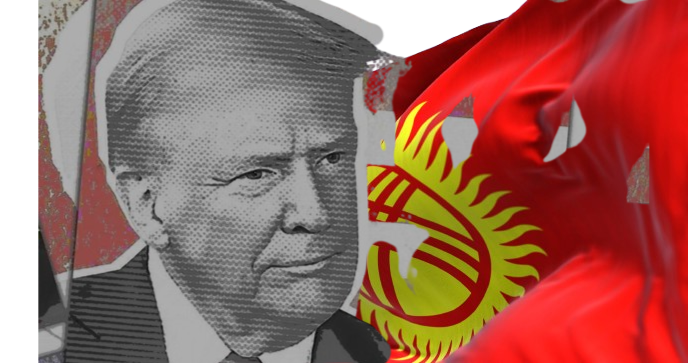
Kyrgyzstan’s Ministry of Foreign Affairs says it plans to summon the top diplomat at the U.S. Embassy to clarify whether and on what grounds the United States will impose restrictions on Kyrgyz nationals seeking to enter the country.

In a statement released on Sunday, the ministry responded to a U.S. media report that Kyrgyzstan might be in a group of countries whose citizens could be subject to restrictions and bans similar to those imposed on Turkmenistan and other nations earlier this month.

“Today, the United States continues to review immigration laws aimed at ensuring security and regulating the entry of foreign citizens into the country. At present, there has been no official information from the United States regarding the introduction of any restrictions on citizens of the Kyrgyz Republic,” the ministry said.

“According to information published in The Washington Post, it remains unclear to the Kyrgyz Republic what criteria will be used to compile the list of countries whose citizens may be subject to restrictions,” it said.

On Saturday, The Washington Post reported that the U.S. “is considering restricting entry to citizens of an additional 36 countries in what would be a significant expansion of the travel ban announced by the Trump administration early this month,” which had affected 19 countries, including Turkmenistan. The newspaper cited a State Department memo that it said set a 60-day deadline for the targeted countries to meet “certain requirements” or face a full or partial entry ban.

Countries might be added to the restricted list for failing to meet U.S. benchmarks on identity documentation, government cooperation, visa overstays, or for issues like fraud, citizenship-for-investment programs, or other security and cooperation concerns.

“Among the new list of countries that could face visa bans or other restrictions are 25 African countries, including significant U.S. partners such as Egypt and Djibouti, plus countries in the Caribbean, Central Asia, and several Pacific Island nations,” the newspaper reported.

Kyrgyzstan said it plans to summon the chief U.S. diplomat in Bishkek “to provide an official explanation on these issues.”

Lesslie Viguerie, a career diplomat and former deputy assistant secretary of state for Central Asia and Pakistan affairs, is the U.S. ambassador in Kyrgyzstan.

Turkmenistan is among seven countries whose citizens face partial restrictions on travel to the United States, such as not being able to move permanently to the U.S. or get tourist and student visas. Nationals from another 12 countries face a full travel ban, subject to case-by-case waivers and other exceptions.

The U.S. measures are part of the Trump administration’s broader policy to address immigration and manage the entry of foreign nationals. Trump emphasized immigration policies during his campaign for a second presidential term, stating that stricter measures were aimed at enhancing national security. These policies have faced legal challenges and public criticism, with some cities experiencing protests following actions by agents conducting immigration enforcement operations.

Rosatom Selected to Build Kazakhstan’s First Nuclear Power Plant

Kazakhstan has announced that the Russian nuclear energy corporation Rosatom will take the lead in constructing the country’s first nuclear power plant. This landmark project, which was greenlit following a national referendum, signals Kazakhstan’s commitment to diversifying its energy sources and marks a significant step in its energy strategy following years of massive energy deficits, which are projected to reach 3.3 billion kWh in 2025.

The nuclear power plant will consist of two reactors and will be built near the village of Ulken, on the western shore of Lake Balkhash, approximately 400 kilometers northwest of Almaty. The plant is expected to have an electricity generation capacity of 2.4 gigawatts by 2035, meeting a significant portion of Kazakhstan’s future energy needs. This project will restore Kazakhstan’s nuclear power generation, which has been absent since the closure of the BN-350 reactor in 1999.

Rosatom’s selection follows a competitive bidding process that also included major international players, China National Nuclear Corporation (China), Électricité de France (France), and Korea Hydro & Nuclear Power (South Korea). The proposals were assessed based on criteria such as safety, cost, workforce training, nuclear fuel cycle cooperation, and social responsibility initiatives, with Rosatom’s proposal being deemed the most advantageous.

Both President Tokayev and the Kazakh Atomic Energy Agency had previously highlighted the importance of forming an international consortium for the project given Kazakhstan’s multi-vector foreign policy. Given current geopolitical events, it remains unclear whether other parties would join a consortium headed by Russia. Efforts are currently underway to secure state export financing from the Russian Federation as part of Rosatom’s proposal.

Kazakhstan is the world’s largest uranium producer but has relied heavily on coal-powered plants for electricity generation, supplemented by hydropower and an increasing shift toward renewables. The coal industry currently provides fuel for approximately 70% of the nation’s electricity generation. The nuclear power pivot in the country’s energy strategy is aimed at reducing Kazakhstan’s dependency on fossil fuels, enhancing energy security, and addressing environmental concerns. As previously reported by The Times of Central Asia, over the past two decades, air pollution levels in Kazakhstan have remained persistently high despite numerous reform pledges and reductions in specific emissions.

Economically, the plant is expected to improve Kazakhstan’s electricity supply reliability, support industrial growth, and create jobs in technology development, construction, and power plant operations. Speaking in January, former Minister of Energy Almasadam Satkaliyev stated that “By 2030, the NPP construction project will create around 5,000 jobs, peaking at approximately 10,000 jobs in 2032. Once operational, the first plant will provide at least 2,000 permanent positions.” The project also includes plans for the localization of equipment and workforce training, ensuring long-term capacity building.

Kazakhstan’s selection of Rosatom as the lead in its first nuclear power project reflects a strategic blend of technological ambition, international collaboration, and energy diversification. “Rosatom has been actively involved in Kazakhstan’s nuclear sector for years, including uranium mining and nuclear fuel cycle activities,” James Walker, CEO and Head of Reactor Development at NANO Nuclear Energy told The Times of Central Asia, emphasizing Rosatom’s “established presence [and] Russia’s geopolitical influence in Central Asia.”

The decision over who to partner with had been seen as a bone of contention in Kazakh political circles, with financial officials and economic policymakers reportedly leaning toward the China National Nuclear Corporation. Meanwhile, scientists, engineers, nuclear professionals, and technicians – who prioritize reliability and operational familiarity – were said to be lobbying for Rosatom, given Russia’s historical involvement in Kazakhstan’s nuclear sector.

In related news, Rosatom’s plans to build a nuclear power plant in Uzbekistan have been updated following talks between Russia’s Minister of Economic Development, Maxim Reshetnikov, and the Minister of Investments, Industry and Trade of Uzbekistan, Laziz Kudratov. “Last year, construction of a low-power nuclear power plant began, and [now] the leaders of the countries [have] reached an agreement to reformat the project and build a two-unit high-power plant and a two-unit low-power plant,” the Russian Ministry reported.

Kazakhstan Reshapes Its U.S. Partnership

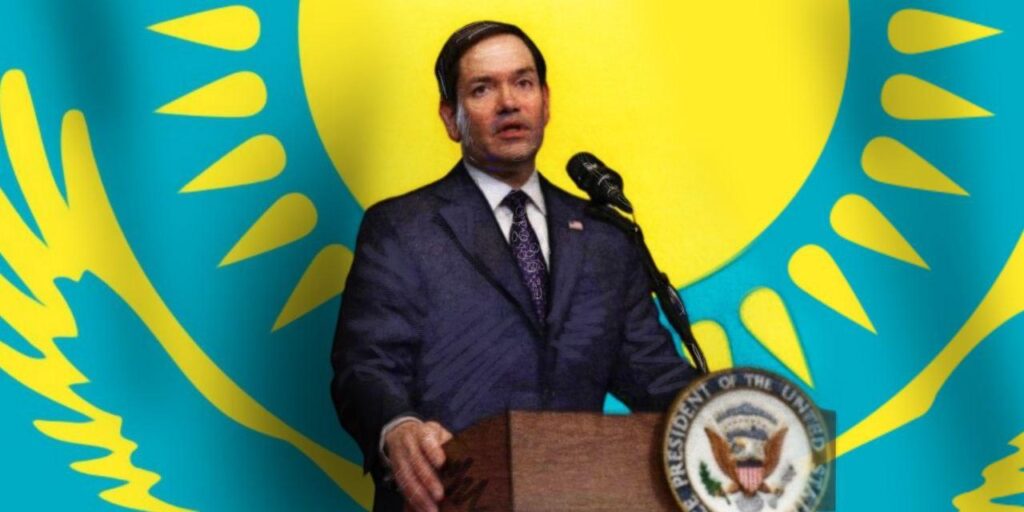
On June 12, U.S. Secretary of State Marco Rubio met with Kazakhstan’s Deputy Prime Minister–Foreign Minister Murat Nurtleu in Washington. According to the State Department readout, the American side reiterated its commitment to Kazakhstan’s independence, sovereignty, and territorial integrity while the two diplomats discussed the expansion of “opportunities for bilateral trade and investment” and the importance of “trusted infrastructure and a favorable regulatory landscape for U.S. companies in Kazakhstan.” Other policy issue-areas targeted for cooperation included the expansion of security cooperation, promotion of regional integration (through the C5+1 diplomatic platform), and exploration of commercial opportunities “particularly in the technology and critical minerals sectors.”

The bilateral meeting is an expression of deeper structural adaptation within a rapidly transforming international system. While U.S.-Kazakhstan relations were once characterized by only episodic contact and simple tactical cooperation, they have recently been reconstituted into a stable and operationally integrated bilateral relationship with system-wide relevance.

Trade between the United States and Kazakhstan reached $4.1 billion in 2023, a 30 percent increase from the year prior, with projections for 2025 surpassing $4.5 billion by mid-year. Long anchored in oil exports and machinery imports, the bilateral trade structure is now undergoing strategic deepening. Kazakhstan’s 12 percent share of global uranium reserves, alongside its emerging lithium sector and other rare earth elements, makes one of the most alluring partners in U.S. efforts to restructure supply chains and reduce overdependence on China, owing to its export reliability, geographic position between major powers, and regulatory openness to Western investment.

Kazakhstan, for its part, is demonstrating a granular grasp of what structural integration into global supply networks requires. Domestic reforms have included the modernization of investment regimes and coordinated institutional adjustments across ministries and frameworks such as the Astana International Financial Centre. Nonetheless, uneven rail capacity, limited downstream processing, and gaps in customs harmonization still pose material constraints to full Western alignment.

The C5+1 framework, launched in 2015 and revitalized since 2021, has matured into a semi-institutionalized platform for intra-regional coordination. Thanks partly to Kazakhstan’s initiatives, it now offers both practical counterweights to Russian influence and Chinese economic presence, including infrastructure collaboration and trade diversification, as well as symbolic ones like diplomatic visibility and regional leadership signaling.

More than a diplomatic forum, it reflects a broader regional strategy in which Central Asian states, led by Astana, seek to institutionalize a distinct strategic space through multilateral formats. This architecture enables selective cooperation on infrastructure, trade, and regulatory standards while preserving flexibility amid the competing pressures of a multipolar order.

Foreign Minister Murat Nurtleu has been instrumental in this conceptual and operational shift. After serving as Chief of Staff to the President from 2022 to 2023, he was appointed Deputy Prime Minister–Minister of Foreign Affairs in April 2023. His career trajectory—including postings at Kazakhstan’s UN Mission in Geneva (overlapping with Tokayev’s tenure as Director General of the UN Office in Geneva) and his leadership in Asia-Africa diplomatic affairs—reflects an evolving strategic mindset.

Nurtleu has emerged not merely as a representative of state policy but as a co-constructor of Kazakhstan’s new international roles. His orchestration of Kazakhstan’s presence within the C5+1 and the Minerals Security Partnership illustrates a pivot from transactional diplomacy to regime-building at the meso-institutional level. His focus on regulatory harmonization, risk assurance, and legal interoperability signals a shift toward durable diplomatic architectures designed to insulate Kazakhstan from systemic shocks. These industrial activities embed the country further into global value chains on structurally advantageous terms.

President Kassym-Jomart Tokayev’s decision to elevate the Kazakh language over Russian in official diplomatic discourse is more than symbolic; it asserts a sovereign voice in foreign policy. Within this context, the American reaffirmation of Kazakhstan’s independence, sovereignty, and territorial integrity during the Rubio–Nurtleu meeting acquires enhanced meaning. It signals not a perfunctory endorsement but a willingness to engage Kazakhstan as a co-architect of regional order—on equal footing, with shared responsibility for its future design.

Washington’s posture remains largely reactive, consistent with its historical pattern of episodic engagement and strategic underprioritization of Central Asia. American assistance to Central Asia is still overshadowed by China’s embedded financing and Russia’s historical-cultural entanglement. To shift the dynamic, the United States should scale the C5+1 platform into a genuinely cooperative instrument—capable of mobilizing coordinated investment, generating policy convergence in priority sectors, and building institutional memory. Moving beyond episodic summits toward task-specific working groups with operational mandates would signal a durable commitment to regional partnership.

Still, China’s related $44 billion trade volume with Kazakhstan in 2024 represents a “gravitational pull” that cannot simply be offset by rhetoric or isolated investments. Western engagement is gaining traction, but it still lacks the institutional persistence and physical imprint of Chinese capital.

U.S.-Kazakhstan relations, in their current form, offer a potential prototype for non-hegemonic partnership in a differentiated international order. Kazakhstan is not drifting into a Western orbit, nor is it tethered irrevocably to Eastern vectors. Instead, it is constructing a modular and antifragile statehood that integrates domestic reform with a multi-directional strategic orientation. For the United States, this bilateral relationship presents a choice: whether to treat Kazakhstan as a convenience within great-power competition or as a co-architect of a new regional logic. If the latter, what may emerge is not only a renewed U.S. presence in Central Asia but also a grounded yet agile diplomatic form capable of managing complexity without imposing hierarchy.


The views expressed in this article are those of the author and do not necessarily reflect the official policy or position of the publication, its affiliates, or any other organizations mentioned.