• KGS/USD = 0.01144 0%
  • KZT/USD = 0.00194 0%
  • TJS/USD = 0.10872 0.18%
  • UZS/USD = 0.00008 0%
  • TMT/USD = 0.28571 0%
  • KGS/USD = 0.01144 0%
  • KZT/USD = 0.00194 0%
  • TJS/USD = 0.10872 0.18%
  • UZS/USD = 0.00008 0%
  • TMT/USD = 0.28571 0%
  • KGS/USD = 0.01144 0%
  • KZT/USD = 0.00194 0%
  • TJS/USD = 0.10872 0.18%
  • UZS/USD = 0.00008 0%
  • TMT/USD = 0.28571 0%
  • KGS/USD = 0.01144 0%
  • KZT/USD = 0.00194 0%
  • TJS/USD = 0.10872 0.18%
  • UZS/USD = 0.00008 0%
  • TMT/USD = 0.28571 0%
  • KGS/USD = 0.01144 0%
  • KZT/USD = 0.00194 0%
  • TJS/USD = 0.10872 0.18%
  • UZS/USD = 0.00008 0%
  • TMT/USD = 0.28571 0%
  • KGS/USD = 0.01144 0%
  • KZT/USD = 0.00194 0%
  • TJS/USD = 0.10872 0.18%
  • UZS/USD = 0.00008 0%
  • TMT/USD = 0.28571 0%
  • KGS/USD = 0.01144 0%
  • KZT/USD = 0.00194 0%
  • TJS/USD = 0.10872 0.18%
  • UZS/USD = 0.00008 0%
  • TMT/USD = 0.28571 0%
  • KGS/USD = 0.01144 0%
  • KZT/USD = 0.00194 0%
  • TJS/USD = 0.10872 0.18%
  • UZS/USD = 0.00008 0%
  • TMT/USD = 0.28571 0%
22 December 2025

Uzbekistan: Suspects Arrested in Attack, Media on Notice

Several suspects have been arrested in Uzbekistan following a shooting attack on a vehicle in a case that is being treated as attempted murder, according to the prosecutor general’s office. The investigation and public uncertainty about some of the key details of the assault has highlighted tension in Uzbekistan over the role of media and state control of the flow of information.

The attack by two people early Saturday, a type of violence that is rare in Uzbekistan, prompted a flurry of reports by Uzbek media organizations and social media posts that a former high-profile figure in the government of President Shavkat Mirziyoyev was traveling in the vehicle and was the target. The organizations did not identify their sources.

Authorities did not directly confirm or deny the reports, but they warned that people who spread false information can be prosecuted because it can lead to panic and destabilize society.

“The Prosecutor General’s Office is conducting investigative actions concerning the criminal case related to the attempted murder in Qibray,” the office said, referring to an area in the Tashkent region where the attack occurred. “During the investigation and operational search activities, three additional individuals involved in committing this crime were identified and detained as suspects.”

The arrests brings the total number of people in detention to four. The prosecutor general’s office has not commented on widespread Uzbek media reports that Komil Allamjonov, former chief of the presidential information department, had survived an attempt to kill him. But it has said in a separate statement that “unverified and baseless information” about the case “has been widely circulated on social media, lacking reliance on credible official sources.”

The statement continued: “The law clearly defines both rights and responsibilities in the information sector—bloggers, group admins, and social media channel operators with large audiences should particularly be aware of this. Many in the public may accept any information they disseminate as fact. Media representatives must also adhere to the applicable legal norms in the same way that state agencies are required to.”

The office appealed to media outlets to “rely on and reference only official information” that the prosecutor general’s office provides about such investigations.

The law in Uzbekistan says the spread of false information that leads to the denigration of “a person´s dignity” or threatens “public order or security” can lead to prison sentences; advocates of freedom of expression say such regulations are used to muzzle criticism of the government. A recent criminal case against a blogger who made comments deemed to be offensive shows how the state seeks to regulate speech.

For now, questions remain about the weekend attack on the vehicle. Inadvertently or not, at least one Uzbek media outlet was still linking Allamjonov to the case, even though authorities have not publicly mentioned him. An online headline in UzDaily.com read: “Three more suspects in the attempted assassination of Komil Allamjonov detained.”
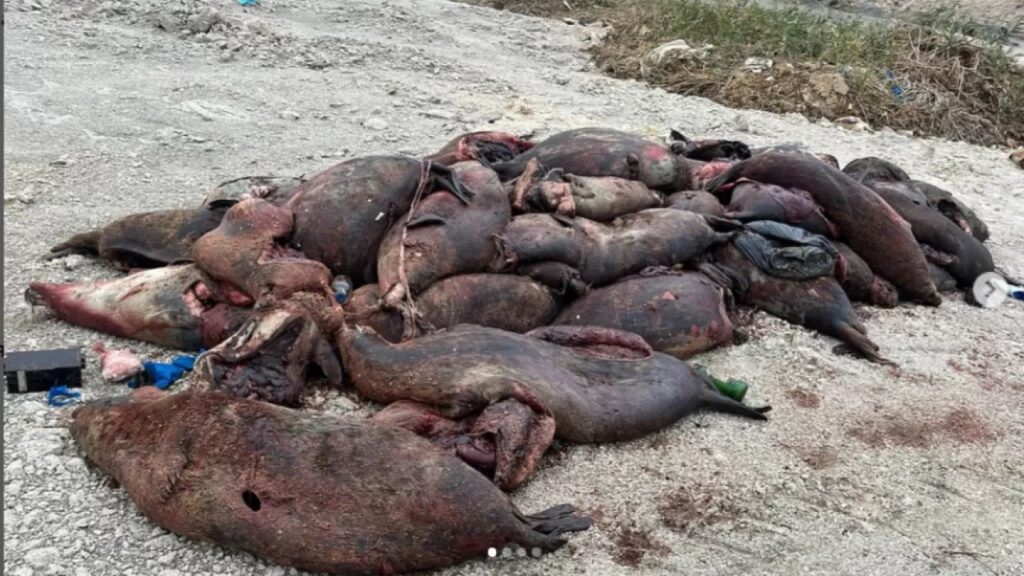

Storm Washes Dead Seals Ashore on Kazakhstan’s Caspian Coast

Seals have died in mass numbers on the coast of the Caspian Sea in the Mangistau region, according to Azamat Sarsenbayev, a blogger from Aktau.

“In the area of Bautino, in Tupkaragan district, after recent storms, hundreds of red-listed seal carcasses were brought ashore; scientists have now counted 151 seal carcasses. According to scientists who are now studying seals in this area (who found the carcasses), some of the dead seals have mechanical injuries on their bodies,” he said.

The Akimat of Mangistau region noted that the dead seals were thrown ashore due to north-western and western winds, which caused them to be carried to the coast. The bodies of the animals are in a stage of significant decomposition. Local authorities said the carcasses will be sent for examination to determine the possible causes of the animals’ deaths.

Samples taken from the 151 seals have been sent to the Institute of Hydrobiology and Ecology, where specialists will conduct toxicological, histological, and virological analyses to determine the exact causes of death. According to the Akimat, the first 51 carcasses were found on October 24, and on October 25 and 26, another 100 bodies of dead seals were found on the same coast.

Mass deaths of seals have been repeatedly recorded on the Caspian Sea coast. In December 2022, more than 2,500 carcasses were found in Russia’s Dagestan. Studies have shown that the cause of death could be methane emissions, forming gassy areas of air above the water in doldrums, which causes suffocation in animals. In December 2023, similar incidents were recorded on the coast of Dagestan, where waves carried away about 130 seal carcasses, some of which may have been brought by currents from other regions of the Caspian Sea. Regular incidents, including the death of animals in fishing nets and water pollution, hurt the numbers of the Caspian seal, which is listed in the Red Book of endangered species.

Turkmengaz Ends Gas Supply Contract with Gazprom Over Pricing Dispute

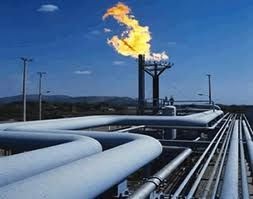
Turkmenistan’s national gas company, Turkmengaz, has not extended its gas supply contract with Gazprom because the parties could not agree on a new fuel price.

Turkmengaz Chairman Maksat Babayev explained: “On June 30, as outlined in the contract, we were set to review prices. If both sides agreed on the price, we could extend the contract. However, after negotiations, we couldn’t agree on the commercial terms. So, as per the contract, without an agreement, the contract was to end on June 30, which is what we proceeded with.” He shared this at a press conference following the “Oil and Gas of Turkmenistan – 2024” (OGT 2024) event.

Babayev added that for Turkmengaz, the critical factor in starting, resuming, or ending supplies is the commercial aspect. “Contracts for purchase and sale are considered based on mutual benefit,” he explained. “Currently, demand from the north, west, and east is growing, and we are constantly in talks with various buyers and countries, so resuming supplies to Russia is certainly possible.”

In 2019, Gazprom signed a five-year contract with Turkmengaz to buy natural gas through June 30, 2024. The agreement covers an annual supply volume of 5.5 billion cubic meters.

Previously, Gazprom’s head, Alexey Miller, announced that the company doubled the volume of gas supplies to Central Asia from January to August 2024.

According to Miller, the republics’ rapid economic and social development has opened meaningful new opportunities for Gazprom, which is currently at the highest possible level of gas supply to Uzbekistan.

ADB to Help Upgrade Strategic Road in Kazakhstan

The Asian Development Bank (ADB) has approved a sovereign-guaranteed local currency loan of up to $291.49 million for KazAvtoZhol, the company overseeing the planning, construction, operation, and maintenance of Kazakhstan’s national highways. This loan will support reconstructing a 208-kilometer road connecting Kyzylorda and Zhezkazgan in central Kazakhstan.

The project will upgrade the existing two-lane highway to a higher-standard, climate-resilient two-lane road, providing all-weather access and reducing travel time from 4 to 2 hours.

The reconstruction will also improve domestic and regional connectivity and road safety and promote national and international trade.
ADB Director General for Central and West Asia Yevgeniy Zhukov commented: “By improving the Kyzylorda–Zhezkazgan corridor, we are addressing critical infrastructure constraints that hinder Kazakhstan’s economic growth and balanced regional economic development. The project road is also crucial for leveraging Kazakhstan’s geostrategic advantage and boosting regional and global integration.”

Kazakhstan, the largest economy in Central Asia, is well-positioned to become a bridge between Asia and Europe. However, due to inefficiencies and high transport and logistics costs, the country needs help leveraging its strategic position. The country has also seen a high traffic fatality rate, with 12.2 deaths per 100,000 people in 2021.

The ADB project incorporates rumble strips, safer pedestrian crossings, and interchanges to improve road safety. These measures are expected to significantly reduce accidents and enhance the overall safety of the road corridor.

Uzbekistan Leads in Central Asia’s Military Strength Rankings

U.S. News recently published its list of the world’s strongest militaries, with Russia, the U.S., and Israel in the top three.
The Times of Central Asia reviewed this rating in the Central Asian countries section.

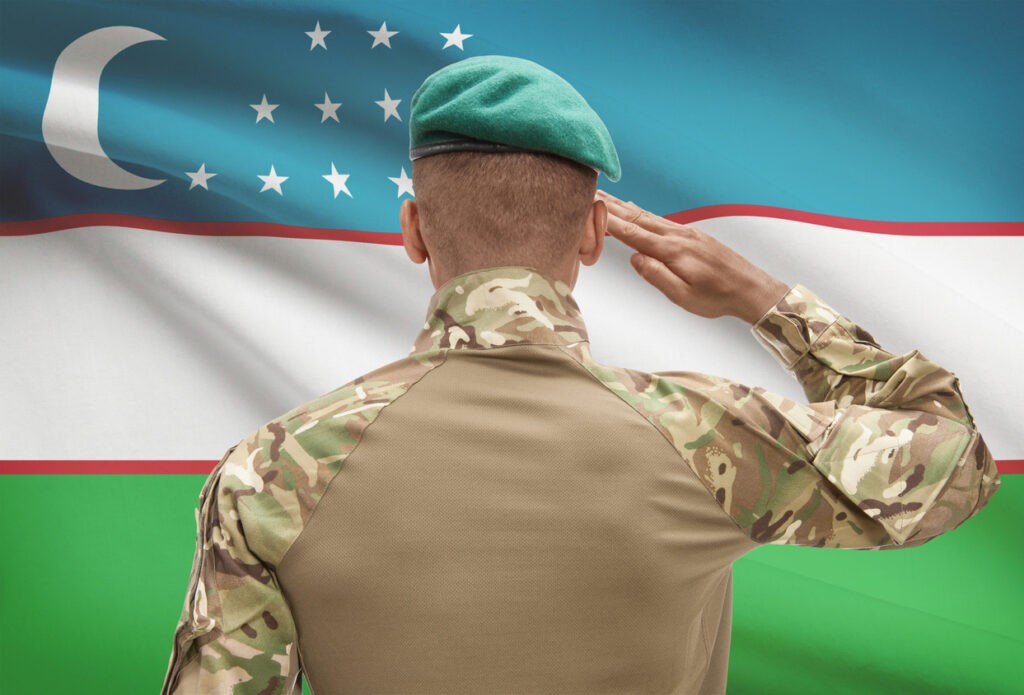
Uzbekistan ranks 19th globally in military strength, the highest in the region. However, U.S. News ranks the country 74th out of 78 in its “Best Countries” category, citing an economy still largely driven by cotton. Uzbekistan remains a major global player in cotton, as the fifth-largest exporter and seventh-largest producer worldwide.

Kazakhstan, Central Asia’s largest economy, ranks 22nd for military strength and is noted for its vast reserves of fossil fuels, uranium, and other minerals. Much of Kazakhstan’s economic growth has been oil-driven, and the country ranks 83rd on the “Best Countries” list.

U.S. News ranked countries based on cultural influence, entrepreneurship, heritage, openness to business, quality of life, and social purpose.
In a separate ranking, the Global Firepower Military Index for 2024 lists Kazakhstan as Central Asia’s top military power, placing it at 58th worldwide. Uzbekistan has fallen by three places since last year’s rankings — the only country in the region not to show an improvement — and is now in the 65th position. In the bottom half of the table, Turkmenistan lies in 83rd place, while Kyrgyzstan is 100th. Global Firepower puts Tajikistan in 107th place, making it the region’s weakest army.

Very Nice? Sacha Baron Cohen Reprises Borat Role on U.S. Talk Show

Borat is back.

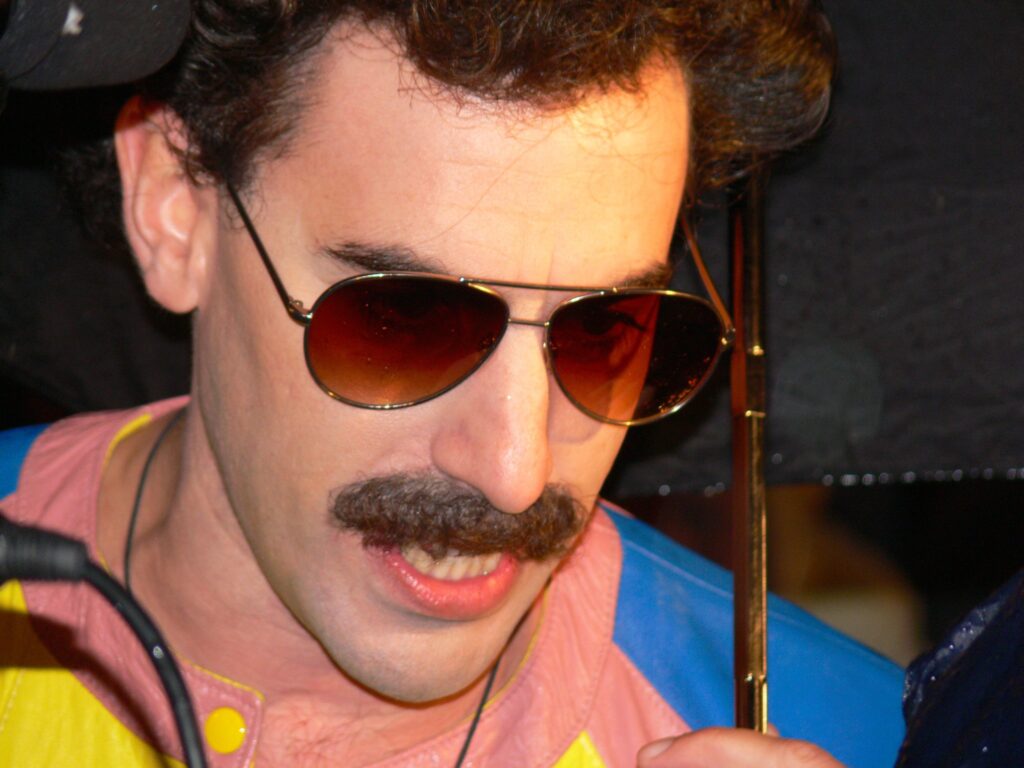
Briefly, at least. Actor and comedian Sacha Baron Cohen, who played the fictional journalist from Kazakhstan for laughs in films in 2006 and 2020, resurrected the character in an appearance last week on The Tonight Show with Jimmy Fallon.

Fallon asked Baron Cohen, who had donned a thick, fake mustache, what Borat would say to Donald Trump and Kamala Harris. The results were, well, vintage Borat.

Borat´s cringeworthy, often unscripted encounters and scatological brand of humor are either keen satire, or just tasteless and offensive, or perhaps some blend of the two, depending on the perspective.

The Borat character is a crude misogynist who talks about “sexy time” with bears in his homeland. But his escapades in the United States are arguably an attempt to lampoon American life or society in general as much as to portray a country in Central Asia, repository of ancient civilizations, as a land of backward buffoons.

Borat producers have said they were not trying to convey the actual conduct or beliefs of people in Kazakhstan, where the government took offense when the first movie came out. Later, some people in Kazakhstan warmed to Borat and recognized the public relations boost and even increased tourist numbers linked to Baron Cohen’s outrageous character in a boxy suit. His catchphrase “Very nice!” was the hook in a promotional video for Kazakhstan.

In 2006, Erlan Idrissov, who was then Kazakhstan’s ambassador to Britain, expressed unease about Borat´s boorish persona in the successful first movie at a time when, according to the envoy, Kazakhstan was starting to emerge as an economic and political “pace-setter” in the region.

“But, sadly, it is still the case that few people in Britain or America know anything about Kazakhstan or can even locate it on a map. They are in no position to judge whether Borat or his movie is remotely credible or fair. Baron Cohen exploits this ignorance to the full,” Idrissov wrote in The Guardian.

In 2020, there was less fuss about the second Borat movie in Kazakhstan, whose international stature had grown over the years.

“Kazakhstan has grown up, Borat hasn’t,” read a headline in Emerging Europe, a regional policy and management group.