• KGS/USD = 0.01144 0%
  • KZT/USD = 0.00196 -0%
  • TJS/USD = 0.10899 0%
  • UZS/USD = 0.00008 0%
  • TMT/USD = 0.28490 0%
  • KGS/USD = 0.01144 0%
  • KZT/USD = 0.00196 -0%
  • TJS/USD = 0.10899 0%
  • UZS/USD = 0.00008 0%
  • TMT/USD = 0.28490 0%
  • KGS/USD = 0.01144 0%
  • KZT/USD = 0.00196 -0%
  • TJS/USD = 0.10899 0%
  • UZS/USD = 0.00008 0%
  • TMT/USD = 0.28490 0%
  • KGS/USD = 0.01144 0%
  • KZT/USD = 0.00196 -0%
  • TJS/USD = 0.10899 0%
  • UZS/USD = 0.00008 0%
  • TMT/USD = 0.28490 0%
  • KGS/USD = 0.01144 0%
  • KZT/USD = 0.00196 -0%
  • TJS/USD = 0.10899 0%
  • UZS/USD = 0.00008 0%
  • TMT/USD = 0.28490 0%
  • KGS/USD = 0.01144 0%
  • KZT/USD = 0.00196 -0%
  • TJS/USD = 0.10899 0%
  • UZS/USD = 0.00008 0%
  • TMT/USD = 0.28490 0%
  • KGS/USD = 0.01144 0%
  • KZT/USD = 0.00196 -0%
  • TJS/USD = 0.10899 0%
  • UZS/USD = 0.00008 0%
  • TMT/USD = 0.28490 0%
  • KGS/USD = 0.01144 0%
  • KZT/USD = 0.00196 -0%
  • TJS/USD = 0.10899 0%
  • UZS/USD = 0.00008 0%
  • TMT/USD = 0.28490 0%
08 December 2025

Kazakhstan’s Kapchagay Reservoir Fills Up For First Time In A Decade

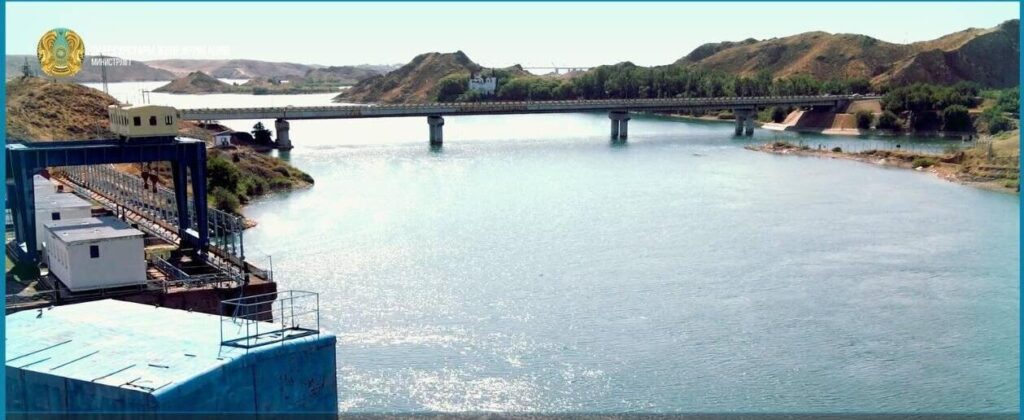
Kazakhstan’s Ministry of Water Resources and Irrigation announced on August 26 that the Kapchagay reservoir outside Almaty was completely full for the first time in ten years.

Created in 1970 as an artificial lake, 100km long and up to 25km wide in places, the reservoir can hold more than 18 billion cubic meters of water.

The reservoir collects water from the Ili River, which originates in China. This spring, the ministry said up to 900 cubic meters of water per second flowed into the reservoir, attributing the increased inflow to the melting of the Tien Shan mountain glaciers and higher than usual rainfall.

The reservoir was initially meant to regulate the flow of the Ili River on its way to Kazakhstan’s largest lake, Balkhash. Today, it is used for irrigation, fish farming, and recreation. Located a one-hour drive from Almaty, its beaches are popular with holidaymakers.

According to Medet Kerimzhanov, deputy head of the Balkhash-Alakol basin inspectorate, the last time the Kapchagay reservoir was 100% full was in 2014. Today, 750 cubic meters of water per second are released from the reservoir to irrigate fields. Kerimzhanov added that the irrigation season in the region will continue until the end of September.

Earlier this month, the Ministry of Water Resources said it was drafting an intergovernmental agreement between Kazakhstan and China on distributing water from transboundary rivers — the Ertis, the Ili, and the Emel. To date, the parties have reached a consensus on several provisions of the future agreement, the ministry said.

China to Build a Trade and Industrial Park in Astana

Last week, Xinjiang Hengyuan Investment Management Co., Ltd., based in the Chinese city of Baiyang, and Kazakh Invest signed a memorandum to implement the construction of a trade and industrial park, spanning 50 hectares, in Astana.

As reported by Kazakh Invest, the project is expected to positively impact the development of critical sectors of Kazakhstan’s economy, including logistics, warehousing, processing, trade, and real estate management. The project will also attract Chinese trade and manufacturing companies to operate in Kazakhstan.

Yan Wang, Deputy Mayor of Baiyang, commented: “We are entering this project with great enthusiasm, seeing the enormous potential of Kazakhstan as a key logistics hub in the region. Creating the Kazakhstan-China Trade and Industrial Park in Astana will significantly expand the country’s logistics capabilities and strengthen its role as an important transit corridor between East and West. We believe this project will catalyze attracting new trade flows and manufacturing.”

Yerzhan Yelekeyev, Chairman of the Board of Kazakh Invest, added: “This project opens up new horizons for cooperation between Kazakhstan and China. The creation of the Kazakhstan-China Trade and Industrial Park in Astana will not only accelerate the development of key sectors of our economy -but-also create numerous new jobs.”

Uzbekistan and Afghanistan To Work Together on Mining Projects

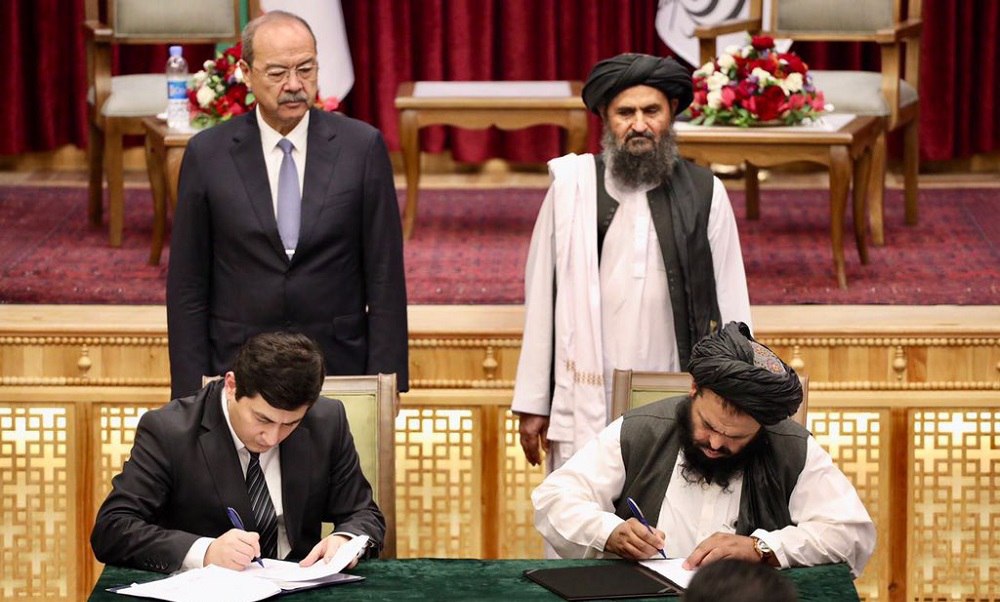
Afghanistan and Uzbekistan have signed five agreements related to mining projects in Afghanistan.

The agreements are for the exploration of hydrocarbon fields in the Afghan-Tajik oil and gas basin, the development of copper and gold deposits in the Qandaran district of Zabul province, iron extraction in the Hesh district of Bamyan province, and hydrocarbon resources in the Tuti-Maidan district of Faryab province. There are also plans to build a 120-megawatt gas-fired power plant in Faryab province.

These agreements, totaling $1.15 billion, were part of a more comprehensive package of 35 agreements and memorandums of understanding signed between the two countries. These agreements amount to an Uzbek investment in Afghanistan of over $2.5 billion.

The latest round of cooperation points to the strengthening of economic ties between Tashkent and Kabul, which is especially important given the region’s current geopolitical challenges and financial instability. These agreements can also significantly impact Afghanistan’s economic development by providing needed resources and creating jobs in crucial regions of the country.

With the Russian Language Waning in Central Asia, Will Other Languages Replace It?

Russian is still the most widespread foreign language in Kazakhstan, though its role is declining there, and across Central Asia in general. At the same time, the people of the region have been slow to learn other languages, in part due to economic factors such as slowing globalization, according to the Kazakhstani political analyst Zamir Karazhanov, who is head of the Kemel Arna Public Foundation.


The language of cities

Since declaring independence in 1991, all the counties of Central Asia have made promoting their national languages a priority. But foreign languages, which link the region with the rest of the world, have also historically been seen as critical. In practice, however, the study and use of foreign languages other than Russian is not widespread.

The Russian language is losing its prominence in Kazakhstan as the number of ethnic Russians declines. According to official statistics, as of January 1, 2024, Russians made up 14.89% of the country’s population, down from close to 40% in 1989. Nevertheless, thanks to the education system and Kazakhstan’s proximity to Russia, the level of proficiency in Russian remains high.

In Kazakhstan and Kyrgyzstan, Russian is a second official language. In Tajikistan, it is called the “language of interethnic communication”. In Uzbekistan and Turkmenistan, however, it does not have an official status.

More than 90% of Kazakhstanis know Russian to some degree, while 20% of the population considers it their native language. Meanwhile, those figures for Turkmenistan are 40% and 12% respectively. In Kyrgyzstan, about 44% know Russian and 5% consider it their native language; in Uzbekistan, it is about 50% and 2.7%; and in Tajikistan, 55% and 0.3%.

Kazakhstan’s President Kassym-Jomart Tokayev has repeatedly spoken about the need to preserve the Russian language in Kazakhstan, and the unacceptability of language-based discrimination. Last year, he unveiled the International Russian Language Organization, established by the CIS Heads of State Council. “The new organization is open to all countries and, of course, very relevant from the point of view of global humanitarian cooperation,” explained Tokayev, while underlining that measures to promote the Russian language in the Eurasia region and elsewhere are congruous with the trend of strengthening national identities. “Kazakhstan will continue the policy of bolstering the status of the state language of Kazakh,” Tokayev said at the time.

Today, Kazakhstan has many Russian-language media, while Russian remains the lingua franca at meetings among post-Soviet countries. Even though Russian is concentrated in big cities, all Kazakhstanis receive a significant amount of western and other foreign news from Russian sources.

“Russian is spoken in most of Kazakhstan. In the biggest city, Almaty, communicating in Russian is not a problem. But, if you move 30-50 km outside the city, it gets harder to speak it. Russian is the language of cities and the language of interethnic interaction,” the political analyst Karazhanov told The Times of Central Asia.

“Of course, the number of native speakers of the Kazakh language is growing, and the number of Russian speakers is declining, but Kazakh cannot yet be the language of interethnic communication. To raise its status, large investments are still needed, including accessible, preferably free, linguistic courses so people of other nationalities can learn Kazakh. This is a long process. Historically, the Russian-speaking population did not come into contact with Kazakh, except in the provinces where mainly Kazakhs lived. Overall, across the country, the opposite process [compared to now] was taking place. Currently, geopolitical events are a factor. After the announcement of mobilization in 2022 [for Russia’s war in Ukraine], migrants poured into Kazakhstan from Russia, which increased the need for Russian,” Karazhanov added.


The role of slowing global growth

Central Asia has slowly adopted the English language. In a global ranking of English proficiency by the language education company Education First last year, Kazakhstan ranked 104th out of 113 countries surveyed, and 22nd out of 23 in Asia, behind Uzbekistan, Kyrgyzstan, and Azerbaijan.

In 2022, Uzbekistan overtook its Central Asian neighbors in terms of English proficiency, though that meant just 89th place overall – its score was still considered “very low”. Meanwhile, Kyrgyzstan was ranked 91st, Kazakhstan 99th, and Tajikistan 106th.

In the breakdown by city, Tashkent trailed Astana and Bishkek, which nevertheless had a low score.

“The prevalence of foreign languages, including English and Chinese, which are in great demand abroad, is linked to the population’s need for them. People need these languages mainly for work, and/or to leave [Kazakhstan] to live permanently in another country. Even if the study of foreign languages goes up, this will not lead to an increase in the level of proficiency in them inside Kazakhstan, since it is linked to intentions to leave the country. For someone who [fluently] speaks a foreign language to stay in Kazakhstan, he needs a job where that language is required. In turn, the availability of such jobs mainly depends on investors who are native speakers of a foreign language, and there are not so many of them right now. Investment is rising, but we are not seeing an influx of foreign companies in which big capital would flow not to one group of industries (in particular, extractive industries), but to many groups or entire sectors of the economy at once. Chinese and English are needed in mining and the oil sector; in other areas, foreign businesses find translators, meaning this is not a mass process; the population [at large] is not included in it. In other words, a foreign language is needed either to travel abroad or to work for a foreign company, which is not very common. Therefore, the percentage of people who speak foreign languages remains low, since the population does not particularly need them for ordinary life,” says Karazhanov.

Karazhanov also attributes the slow adoption of the English language in Central Asia to the lack of colonial influence in the region, meaning the language was not studied for generations.

Today, he believes, the study of foreign languages is slowing, as the pace of globalization and economic growth weakens broadly, together with “people shooting all around.” In the near future, Karazhanov argues that no foreign language in Kazakhstan and in the region as a whole will be spoken proficiently by 20-30% of the population. On the contrary, if the geopolitical tensions fail to abate, the role of regional languages, including Russian, will only rise.


Back to the roots

Over the years, proposals have been made to add Chinese and Arabic to the compulsory study of Kazakh, Russian, and English in Kazakhstani schools, though they were never considered at the government level. Experts say interest among Kazakhstanis in learning Chinese, Turkish, Arabic, Korean, and even Uzbek (in areas along the two countries’ border) is growing steadily but very slowly. The situation in Kazakhstan, Karazhanov thinks, can be extrapolated to the whole of Central Asia, though not without some reservations.

“A person begins to learn a foreign language only when he faces a problem. He wants to get something, but first, he needs to learn another language. There is no such acute problem in the countries of Central Asia at this point. It is not that investors are coming, paying extra money to study [a language] and hiring huge staffs who speak Chinese or English. In terms of investment, Kazakhstan ranks first in Central Asia, so if there is no such need here, then there is definitely none in Kyrgyzstan or Uzbekistan,” the analyst noted.

The situation with the Russian language varies across the region. Kazakhstan’s neighbors have always had a lower share of Russian speakers, so it is no surprise that Uzbek and Tajik are gradually becoming the lingua franca in Uzbekistan and Tajikistan. In Kazakhstan, the transition to Kazakh is also proceeding relatively painlessly, without the bumps in the road that one might expect amid such a major shift in the national makeup of the population.

As for other foreign languages, Arabic is of interest as the language of the sacred texts of Islam, while Turkish has an appeal given the Turkic roots of the Kazakh language. Demand for learning them is growing steadily, explained Karazhanov, and depends less on economic and demographic factors.

“I cannot say that the number of Muslims in Kazakhstan is increasing since it surged back in the 1990s, but some religious people are really trying to learn Arabic. Others are starting to learn Korean so that they can go to South Korea to work. There is a Korean diaspora in Kazakhstan, which has its own language schools, and it is not only Korean Kazakhstanis who study there. Many Kazakhstanis travel to Turkey to buy real estate. But, as I said, people must need to learn languages; if there is none, then the percentage of those who speak them will grow to some small figure and plateau there,” Karazhanov concluded.

Deadly Attacks in Russia Spark Fears of Extremism Amid Ethnic Tensions

On August 23 2024, four prison employees were killed after several prisoners staged a revolt in the remote IK-19 Surovikino penal colony in the southwestern Volgograd region of Russia. Special forces stormed the facility and “neutralized” the attackers, whom the Russian media named as Temur Khusinov, 29, and Ramzidin Toshev, 28, from Uzbekistan, and Nazirchon Toshov, 28, and Rustamchon Navruzi, 23, from Tajikistan.

In a mobile phone video released by the perpetrators, the attackers identified themselves as members of Islamic State, claiming their actions were fueled by a desire to avenge the mistreatment of Muslims. The footage starkly depicted prison officials lying in pools of blood, while other clips showed the attackers moving freely through the prison courtyard.

With the twentieth anniversary of the Beslan school massacre – perpetrated by members of a Chechen separatist group called the Riyad as-Saliheen Martyrs’ Brigade – drawing near, tensions in Russia are running high, with the perceived threat from extremism leading to a wave of xenophobia. The Crocus City Hall attack, which allegedly involved Tajiks, served to stoke ethnic tensions in Russia, leading to backlash by nationalists. Faced with such conditions and prejudice, an exodus of migrant workers during a time of war has left Russia with a dearth of human capital.

Through the Collective Security Treaty Organization (CSTO), Russia is working with the C5 to detect and combat violent extremists, some of whom are illegally entering Central Asia before traveling to Russia. The Central Asian states, which are secular, are meanwhile trying to balance rights to religious freedom with blocking the malinfluence of oppressive and potentially violent ideologies. Three Central Asian countries border Afghanistan, and both the U.S. and the UNODC are working with Tajikistan to counter terrorism and violent extremism.

While some extremist groups see Central Asia as a fertile recruiting ground, a UN report from 2023 noted that “Regional Member States estimated current ISIL-K strength at between 1,000 and 3,000 fighters, of whom approximately 200 were of Central Asian origin.” Despite these low numbers, however, the fact that some observers continue to link Islamic State Khorasan Province to the countries of Central Asia – even though the terrorist organization has purely Afghan roots – means that Central Asia once again finds itself at the center of a nexus of international security challenges.

Burabay National Park: A Place of Respite, Legends and Cultural Heritage

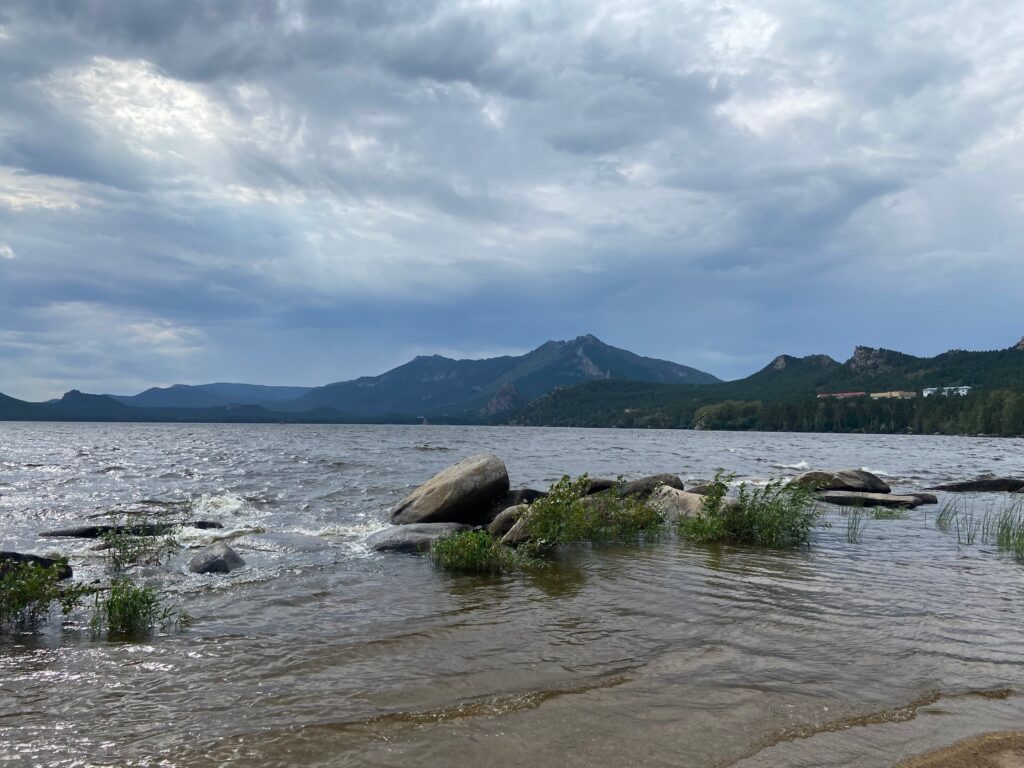
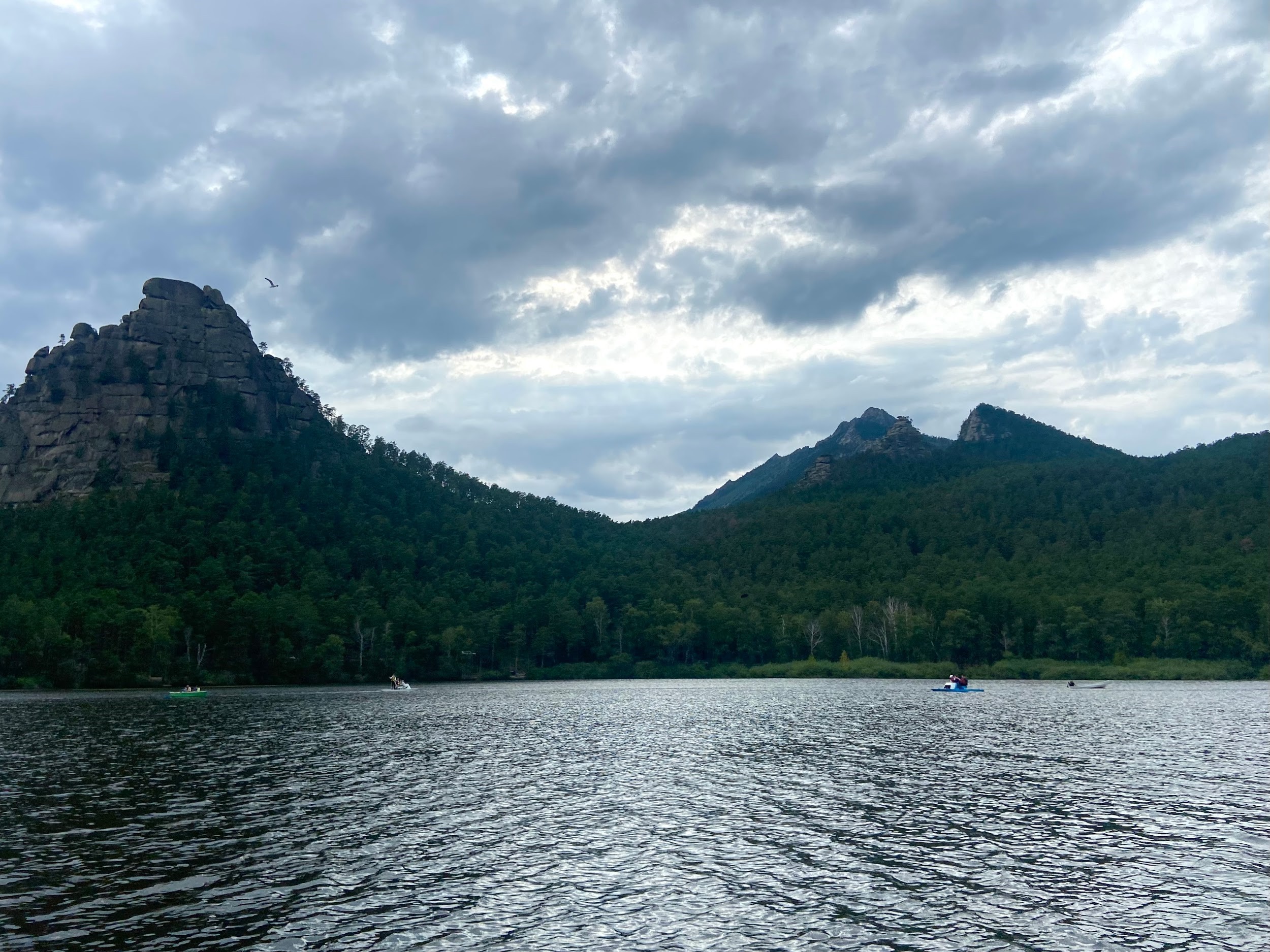
Burabay National Park, located just 250 kilometers from Kazakhstan’s capital Astana, is a place of outstanding natural beauty offering easily accessible respite from the hustle and bustle of city life.

Known by its Russian name ‘Borovoye’, from boro meaning pine forest – until 2000, the park spans 85,000 hectares on which visitors can participate in outdoor pursuits from cycling, horseback riding and skiing, to swimming, kayaking, sailing and water skiing, or simply relax and enjoy the fresh clean air and magnificent views of the hills and mountains.

Photo: Mt Okzhetpes – TCA, Tamila Olzhbaekova


Mountaineers can test their skills on Mt Kokshetau, the highest peak standing at 957 meters. For those less experienced, The Three Sisters provide a range of gradients suited to different levels of hikers and climbers, and Mt Bolektau affords panoramic views within an easy 20-minute ascent.

For many, the pearls in Burabay’s crown are its crystal-clear lakes. The park boasts no fewer than fourteen, each with its own unique beauty and atmosphere. Amongst the best known are Maloye, Shchuchye, Chebachye, home to 300 species of fish, and the largest, Lake Borovoye, popular for its well-maintained beaches and water sports.

Burabay is also a place of great archaeological, cultural, and historic significance and both its origins and natural landmarks are steeped in legends.

Origins

Different myths tell how disappointed by its barren terrain, either Allah or Tengri decided to enhance the flat Kazakh steppe by scattering it with small mountains, lakes, and forests. The area and its settlers were guarded by a beautiful white camel; a bura in Kazakh, and hence the name, Burabay. Coveting it as a trophy, robbers shot it with an arrow but were instantly flattened when the camel turned into a rock. Today, it is but one of the park’s many legendary landmarks.

Photo: Adobe stock -Zhumbaktas


Zhumbaktas

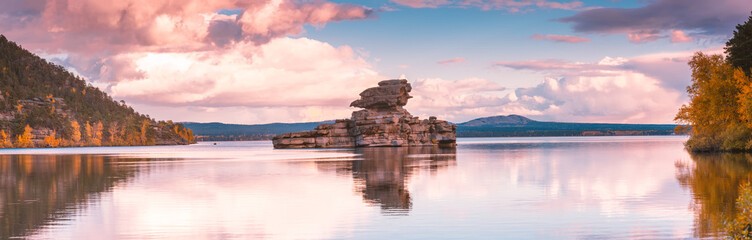
In the center of Borovoe Lake stands a rocky outcrop known as ‘Zhumbaktas’ which translates as ‘mysterious stone’ in Kazakh. According to legend, a rich Khan sought a wealthy husband for his beautiful daughter but instead, she fell in love with a talented, roaming musician. The couple fled and pursued by the girl’s brothers, sailed to the middle of the lake. The young man, shot through the chest with an arrow, toppled into the water. The girl appealed Tengri, who granting her wish to join her beloved, turned her into a rock. From one side, the island looks like a boat, from another, a girl with her hair blowing in the wind, and when viewed from a different angle, an old woman.

Photo: Dancing Birch Grove – TCA, Tamila Olzhbaekova


Dancing Birch Grove

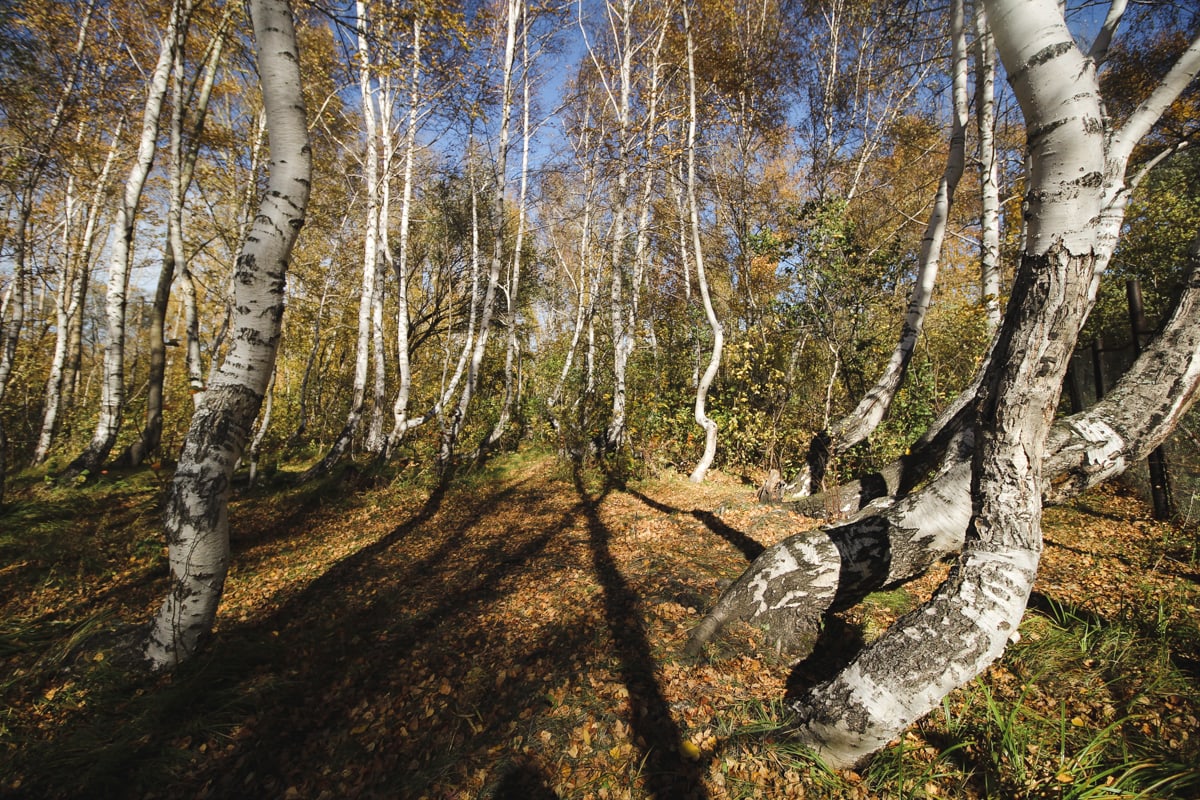
Amid the park’s vast forests, stands an enchanting grove, where blown by the wind, birch trees sway and intertwine. According to legend, village girls dancing in a clearing froze in fear and turned into trees when they noticed the khan watching them.

Mount Okzhetpes

According to research by Kazakh historian Shokan Ualihanov, whilst living in Borovoye, Abylai Khan, the renowned ruler who united the 18th century Kazakh Khanate and liberated its territories from foreign invaders, led and won a war between the Kazakhs and the Zhungars. A local myth then relates that on their return, debate arose amongst the warriors concerning the division of the spoils which included a young Kalmyk maiden. To determine the matter, the khan instructed the girl to ascend Mt Okzhetpes and marry whoever managed to strike her waving kerchief with an arrow. None of the warriors succeeded and ignoring the khan’s order to come down, she leapt into Lake Auliekol and drowned. The lake known as the ‘holy lake’, symbolizes freedom of choice.

Photo: Kenesary Cave – TCA, Tamila Olzhbaekova


Cave of Khan Kenesary

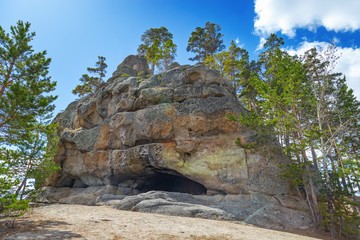
The 19th century Kazakh ruler and grandson of Abylai Khan, was another famous figure who frequented the area. A keen hunter, he is said to have spent nights in the forest in what is now known as the  Kenesary Cave.

Social History

The region’s social history, both ancient and modern, can be explored in two of Burabay’s permanent attractions: the Botai-Buraby Open Air Museum focusing on ancient Botai culture dating back to 3700-3100BC, and the Jailau Ethnic Village which provides a taste of Kazakh traditional life flavoured with yurts, altybakans or swings, music, craft, national dress, food etc.


Photo: Burabay Multimedia Complex – TCA, Tamila Olzhbaekova


Burabay Multimedia complex

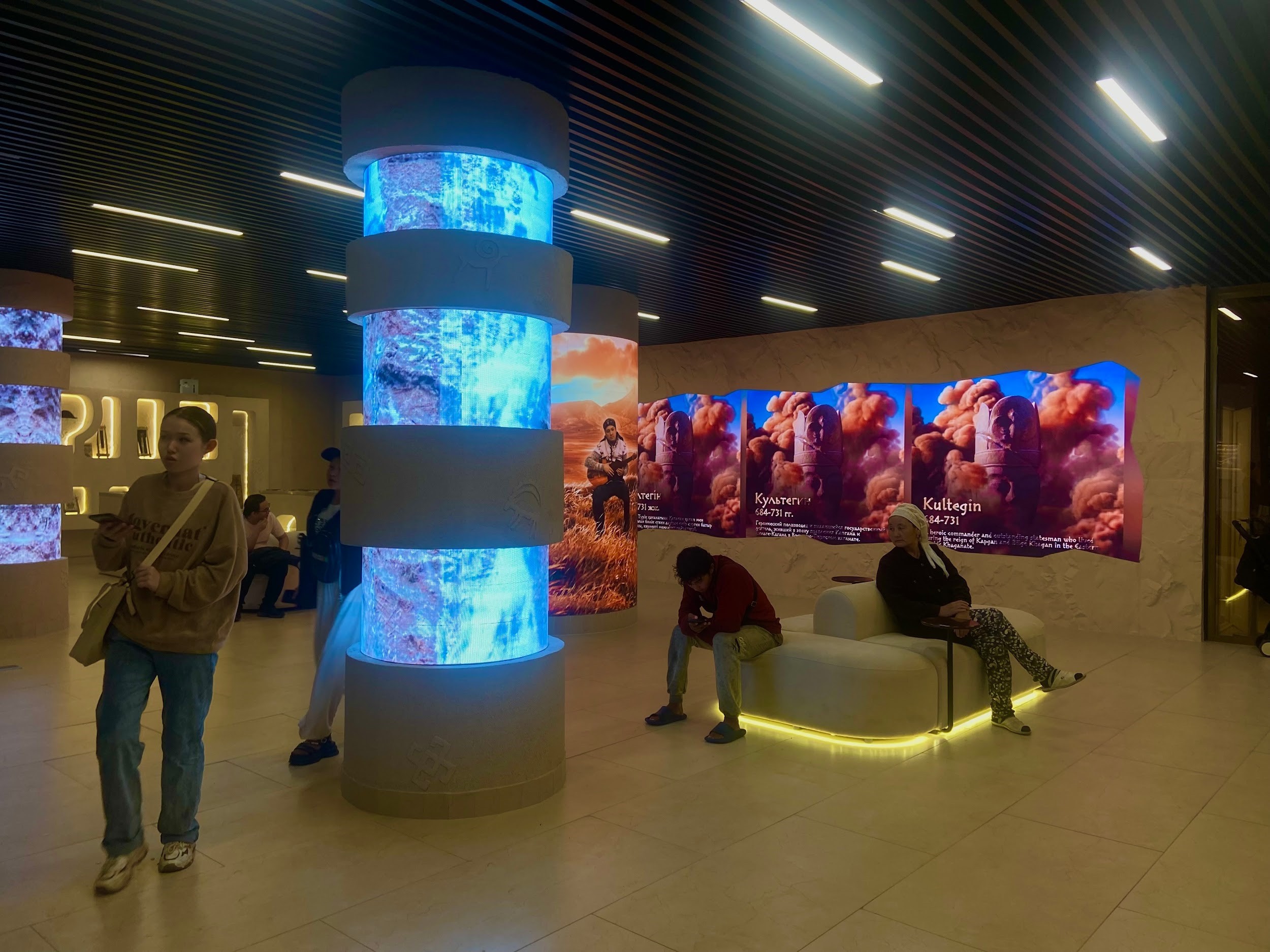
In addition to wandering around the above, tourists can delve deeper into the area’s rich history by visiting the park’s innovative multimedia interactive museum. Located in Abylai Khan Glade, the recently refurbished complex includes modern technologies -5D, augmented reality, light show- in nine themed spaces dedicated to Kazakhstan’s cultural, spiritual, and historical heritage:  Great Steppe Heritage, Travel to Kazakhstan, Flight of the Samruk bird, Heroes’ Land, Eternal Nation, History of the Great Steppe, Historical Figures of Kazakhstan, Corridor of Time, Abylai Khan’s Blessing. Aimed to promote cultural identity, the ‘Tree of Life’ enables all Kazakhs to trace their tribal affiliations, whilst locals and foreigners alike, can enjoy an exhilarating virtual bird’s eye view of the entire country by taking the ‘Flight of the Samurk’.

Photo: Complex interior – TCA, Tamila Olzhbaekova


Given its diverse wealth of attractions and close vicinity to Astana, Burabay provides a tantalizing glimpse of all that Kazakhstan has to offer and an experience which is bound to inspire tourists, especially those on their first visit during the Nomadic Games, to further explore the country.