• KGS/USD = 0.01144 0%
  • KZT/USD = 0.00193 -0%
  • TJS/USD = 0.10866 0.55%
  • UZS/USD = 0.00008 0%
  • TMT/USD = 0.28490 0%
  • KGS/USD = 0.01144 0%
  • KZT/USD = 0.00193 -0%
  • TJS/USD = 0.10866 0.55%
  • UZS/USD = 0.00008 0%
  • TMT/USD = 0.28490 0%
  • KGS/USD = 0.01144 0%
  • KZT/USD = 0.00193 -0%
  • TJS/USD = 0.10866 0.55%
  • UZS/USD = 0.00008 0%
  • TMT/USD = 0.28490 0%
  • KGS/USD = 0.01144 0%
  • KZT/USD = 0.00193 -0%
  • TJS/USD = 0.10866 0.55%
  • UZS/USD = 0.00008 0%
  • TMT/USD = 0.28490 0%
  • KGS/USD = 0.01144 0%
  • KZT/USD = 0.00193 -0%
  • TJS/USD = 0.10866 0.55%
  • UZS/USD = 0.00008 0%
  • TMT/USD = 0.28490 0%
  • KGS/USD = 0.01144 0%
  • KZT/USD = 0.00193 -0%
  • TJS/USD = 0.10866 0.55%
  • UZS/USD = 0.00008 0%
  • TMT/USD = 0.28490 0%
  • KGS/USD = 0.01144 0%
  • KZT/USD = 0.00193 -0%
  • TJS/USD = 0.10866 0.55%
  • UZS/USD = 0.00008 0%
  • TMT/USD = 0.28490 0%
  • KGS/USD = 0.01144 0%
  • KZT/USD = 0.00193 -0%
  • TJS/USD = 0.10866 0.55%
  • UZS/USD = 0.00008 0%
  • TMT/USD = 0.28490 0%
10 December 2025

Uzbekistan Begins Construction of New International Airport Near Tashkent

Uzbekistan has launched one of its largest infrastructure initiatives to date, the construction of a new international airport in the Tashkent region. President Shavkat Mirziyoyev inaugurated the project, which is being implemented by an international consortium of investors.

A National-Scale Project

The new airport is intended to strengthen Uzbekistan’s aviation sector and establish the country as a key transit hub between East and West.

“Ultimately, our goal is to turn Uzbekistan into a major aviation hub connecting East and West, North and South,” Mirziyoyev stated. He underscored that developing transport infrastructure and modernizing air traffic management remain strategic priorities.

The project is being led by a consortium comprising Vision Invest (Saudi Arabia, 45%), Sojitz (Japan, 30%), Incheon International Airport Corporation (South Korea, 15%), and Uzbekistan Airports (10%).

Construction will unfold in four phases. The first stage, with an estimated cost of $2.5 billion, includes building the terminal complex and airfield. Once completed, the airport will have the capacity to handle up to 20 million passengers annually, process 129,000 tons of cargo, and support up to 30 take-offs and landings per hour. It will feature 14 telescopic ramps and parking for 62 aircraft across a 1,300-hectare site in the Urtachirchik and Kuyichirchik districts of the Tashkent region.

Technology, Sustainability, and Connectivity

Designed to fully comply with International Civil Aviation Organization (ICAO) standards, the airport will incorporate state-of-the-art air navigation and meteorological systems to ensure operational reliability in all weather conditions.

Environmental sustainability is a key focus. It will be the first airport in Central Asia constructed in line with “green” building principles. The passenger terminal will house a 46,000 square meter duty-free zone.

The facility will serve as part of a broader multimodal transport hub. It will connect directly to major regional highways, Tashkent-Samarkand, Tashkent-Andijan, and Tashkent-Bostanlyk and will feature a dedicated high-speed rail station and a shuttle service linking Tashkent and the planned city of New Tashkent.

Officials project that the new airport could generate more than $27 billion in revenue and create thousands of jobs across sectors including construction, tourism, and logistics.

Strengthening Uzbekistan’s Regional Aviation Role

Passenger traffic in Tashkent has tripled over the past eight years, reaching 9 million annually. By 2040, it is expected to rise to 24 million. The current airport, limited to 11 million passengers and constrained by its urban location, cannot be expanded, prompting the decision to pursue the new megaproject.

Nationwide, Uzbekistan is upgrading seven international airports and has built new terminals in Muynak, Kokand, Zaamin, Shakhrisabz, Saryasyk, and Sohe.

The aviation sector has also seen increased competition: the number of airlines has grown to 15, and the aircraft fleet has expanded from 26 to 105 units. Within five years, officials aim to boost the fleet to 180 aircraft, expand routes to 230 destinations, and increase annual flights to 200,000.

Kazakhstan Leads Regional Efforts to Save the Caspian Sea

Today, Central Asia and the Caspian littoral states face growing challenges that extend well beyond national borders. Climate change, water scarcity, land degradation, and the shrinking of the Caspian Sea are no longer only environmental concerns but matters of regional security and sustainable development.

The Caspian Sea, the world’s largest inland body of water, has become a symbol of crisis. Its rapid decline threatens ecosystems, navigation, fisheries, and food security from the Caucasus to Central Asia.

Dushanbe: ecology as a new agenda for regional security

A week ago, Dushanbe hosted two major international events: the “Central Asia–Russia” Summit and the meeting of the CIS Heads of State Council. At both forums, President Kassym-Jomart Tokayev called for moving from declarations to concrete action, proposing to

  • Establish a Council of Ministers for Ecology among the Central Asian countries and Russia
  • Develop an Interstate Program for the preservation of the Caspian Sea’s water resources
  • Expand the use of space technologies to monitor transboundary water bodies

These initiatives are part of a broader effort to build a new environmental framework for Eurasia, positioning Central Asia as a laboratory for sustainable solutions rather than a zone of ecological risk.

The environmental disaster of the Caspian Sea

The Caspian Sea is shrinking rapidly. According to data from Kazakhstan’s Ministry of Ecology, since 2006 its surface area has decreased by more than 31,000 square kilometers, and water levels have fallen by about 1.5 to 2 meters. Projections indicate severe consequences for spawning grounds, the Caspian seal population, port infrastructure, and the regional economy.

The crisis mirrors the Aral Sea disaster, where environmental degradation caused widespread illness and social disruption. Experts warn that toxic dust from the exposed seabed could lead to respiratory diseases among millions of people. According to estimates by Save the Caspian Sea, the shoreline could retreat by as much as 89 kilometers, pushing fishing communities to the edge of survival.

Falling sea levels already threaten unique wildlife, navigation, water supply, and agriculture, creating risks of migration and conflict. Because the Caspian is landlocked and not connected to the world’s oceans, its water losses cannot be naturally replenished. A coordinated response is needed, including sustainable water management, pollution control, and climate adaptation.

The Caspian Sea as a crossroads of interests and contradictions

The Caspian region today is more than an ecosystem; it is a geopolitical nexus where the interests of coastal states and global powers converge. Key transport routes such as the North–South Corridor and the Middle Corridor meet here, linking the economic, energy, and political interests of Russia, Iran, Turkey, China, and the European Union.

The United States has also shown growing interest, particularly through its support for infrastructure projects in the South Caucasus and initiatives related to the Zangezur Corridor. Yet logistics, energy, and trade risk losing their purpose if the region’s natural foundation disappears.

An ecological collapse could undermine multibillion-dollar investments, threaten food security, and turn the Caspian from a zone of cooperation into a battleground over resources. That is why saving the sea has become a test of Eurasia’s capacity to act through cooperation rather than competition for survival.

Common interests of coastal countries

About 80% of the Caspian’s inflow comes from the Volga River. Experts note that recurring droughts and heavy water withdrawals over recent years have accelerated the sea’s decline across both sides of the basin. In this context, Astana has proposed that Moscow help establish a mechanism to coordinate water management as part of a joint Caspian program. At the same time, the looming ecological crisis should not be handled by just two countries; it requires regional and international coordination.

For Russia, protecting its southern agricultural zones in the Volga Delta and its fishing industry from ecological consequences is critical. Dust storms from the drying seabed and resulting soil erosion threaten fertile lands in Russia’s Volgograd, Astrakhan, and Saratov regions, and could eventually affect Krasnodar, Stavropol, Rostov, Voronezh, and Dagestan. Maintaining navigation through the ports of Astrakhan and Makhachkala and preserving the integrity of the North-South corridor is also vital.

Iran is focusing on preventing soil salinization in its northern provinces, ensuring the sustainability of Bandar-e Anzali port, and protecting Caspian energy logistics. For Azerbaijan, safeguarding the sea’s unique ecosystem is a priority, especially preserving fish stocks (including sturgeon species), the habitat of the Caspian seal, and limiting economic losses from shoreline retreat. The Baku–Alat port corridor is also strategically important.

What exactly is Kazakhstan proposing?

In his remarks at the 80th session of the UN General Assembly in New York in September, President Tokayev raised the Caspian issue on the global stage, noting that “the Caspian Sea is rapidly shrinking.” He called for urgent steps to preserve the sea’s water resources in cooperation with regional partners and the wider international community.

Astana has proposed three practical steps to serve as pillars of the Caspian initiative:

  • establish an international coordination mechanism for Caspian restoration. Russia, Kazakhstan, Azerbaijan, Iran, and Turkmenistan could form a permanent framework for joint action, engaging the UN, World Bank, and regional bodies to carry out hydrological, infrastructure, and scientific projects.

  • use space and digital technologies to monitor the sea’s level and condition. Kazakhstan proposes integrating satellite systems into a unified information network, analyzing data at a supercomputing center in Astana, and using the UN Regional Centre for Sustainable Development in Almaty as a hub for data exchange and public reporting.

  • develop an interstate program for sustainable water management across the Caspian basin. The program should coordinate river regulation, shared monitoring systems, infrastructure projects, efficient water use, and climate adaptation efforts.

Additionally, Kazakhstan suggests creating an International Fund for Caspian Environmental Programs, with participation from the UN, the Green Climate Fund, and other partners. Its goals include restoring biodiversity by reviving endangered sturgeon species and supporting the Caspian seal population, strengthening cooperation to curb pollution and poaching, creating new protected areas, and regulating resource use.

Conclusion

Kazakhstan knows the cost of environmental disasters. The Aral Sea tragedy and the Semipalatinsk nuclear tests left lasting scars and made environmental protection a national duty. That experience now drives the country’s global initiatives.

The fate of the Caspian is more than an ecological issue; it is a test of Eurasia’s ability to balance development with survival. The choices made today will decide whether the Caspian remains a living sea or becomes another lost opportunity.

Russia Announces ‘Deportation Regime’ for Migrant Laborers

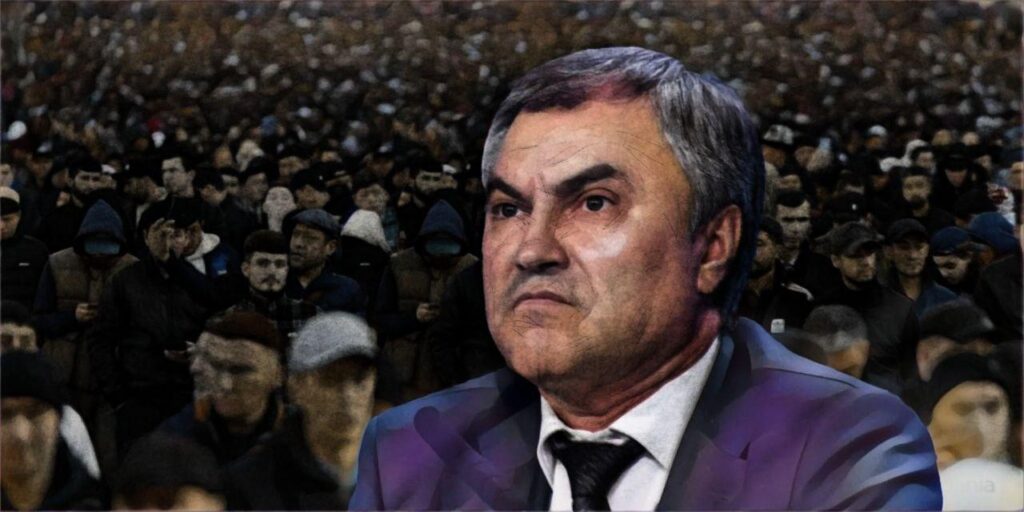
It has been more than a month since the deadline for migrant laborers working in Russia to complete their registration documents or face expulsion. The anticipated mass deportations have not happened, but Russian State Duma Chairman, Vyacheslav Volodin, indicated on October 13 that could change soon.

Volodin warned, “A new migration regime is now in effect… the deportation regime.”

The Final Bell

Several months ago, Russian officials announced the September 10 deadline for all migrant laborers to legalize their status to work and live in Russia.

Russia’s Federal Migration Service created a list in the summer of 2024 of “controlled persons,” those who still did not have all the required documentation to remain in Russia. The list was posted on the service’s website in February 2025.

Volodin said those on the list lacked one or more of the following: “documents or certificates required for obtaining migration status or citizenship, registration of a place of stay or residence.” Volodin said the list also included those who failed to complete mandatory procedures such as “annual medical examinations for [their] presence… as well as fingerprinting and photographing” or have failed to show that their “patent, work permits, or employment contract” was renewed.

The Duma Chairman said some 35,000 “foreign citizens” had already been expelled between January and August of this year.

September 10 arrived, and in the days that followed, there were no reports of Russian law enforcement rounding up migrants and sending them back to their homelands. However, it was clear the Russian government was not bluffing.

In his remarks to the Duma, Volodin explained that as of September 1, there were still some 770,000 migrants on the register of controlled persons, and that one-third of them were women and children.

If these people have not taken care of their requirements, Volodin said, “They need to leave our country, informing [us] of the date, place, and route of their departure.”

The Dwindling Number of Central Asian Migrant Laborers in Russia

There are several million foreign workers in Russia, and the largest group is those from Central Asia, though fewer of them work there than was previously the case.

The terrorist attack on Moscow’s Crocus City Hall in March 2024 that left more than 140 people dead was blamed on citizens of Tajikistan. It sparked a wave of xenophobia in Russia aimed at Central Asians, and prompted a raft of new laws and regulations for migrant laborers.

Uzbekistan’s citizens have long been the largest group of Central Asian migrant laborers working in Russia, numbering between 4 to 6 million, depending on the season, during 2016. Figures vary for how many Uzbek citizens are working in Russia now, but Uzbekistan’s Migration Agency said at the start of October that it was about 1.3 million, noting the figure fluctuates depending on the time of the year, and that during the warmer months of 2025, it was closer to 2 million.

During his recent visit to Tajikistan for a CIS summit and a separate meeting with all the Central Asian presidents, Russian President Vladimir Putin claimed there are currently more than 1 million citizens of Tajikistan living and working in Russia. That figure is down from 1.7 million in 2024.

In January 2025, Kyrgyzstan’s Foreign Ministry said there were some 350,000 Kyrgyz citizens working in Russia, down from 650,000 in 2023.

Women and Children First

Volodin’s mention that one-third of the people now targeted for violating the terms of staying in Russia are women and children was telling.

In early September 2024, former Russian President and current Deputy Chairman of Russia’s Security Council, Dmitri Medvedev, said there should be a ban on foreign workers bringing their families with them to Russia. Medvedev said migrant laborers’ children were attending Russian schools, and in some of those schools, “three-fourths” of the students could not speak Russian. In comments clearly aimed at Central Asian migrant laborers, Medvedev said, “By all means come, but leave behind your nine kids and several wives.”

A new regulation was introduced that required children of migrant laborers to pass a Russian language test before being admitted to school. More than 87% of the children of foreign citizens failed to pass the test for the 2025-2026 school year. These children will likely be among the first to be deported from Russia along with their mothers if the latter are unemployed and only in Russia because their husbands are working there.

Coming Home

It is difficult to say how many Central Asian migrant laborers might be among those facing what Volodin called the “deportation regime.”

In late July 2025, Kyrgyzstan’s General Consul in Russia, Bakyt Asanaliyev, said there were some 103,000 Kyrgyz citizens on Russia’s list of controlled persons, but indicated the number was dropping week by week. On September 10, Russian Ministry of Internal Affairs spokeswoman Irina Volk said that more than 14,600 of those Kyrgyz citizens have legalized their presence in Russia.

The authorities in Tajikistan and Uzbekistan have been quiet about how many of their citizens were on Russia’s list, and how many fulfilled all the obligations to stay and work in Russia. Kyrgyzstan is a member of the Russian-led Eurasian Economic Union (EAEU), which grants citizens of member states special privileges, including for migrant laborers. Tajikistan and Uzbekistan are not EAEU members.

If tens of thousands of Kyrgyz citizens face deportation from Russia, the figure must be higher for migrant laborers from Tajikistan and Uzbekistan.

The return home of tens of thousands of Central Asian migrant laborers will put a strain on the labor markets in Kyrgyzstan, Tajikistan, and Uzbekistan, not to mention the loss of millions of dollars in remittances these laborers were sending home.

Volodin said those targeted for deportation would have to pay a fine and would be banned from re-entering Russia for five years. However, Russia is short of workers, especially for the sort of menial labor (construction workers, street sweepers, delivery people) often performed by foreign workers.

The delay in implementing the “expulsion regime” could be a sign that Russian officials are trying to find ways to keep as many of the migrant laborers as possible.

Central Asia’s Rail Corridors: U.S. and Chinese Partnerships in Perspective

Kazakhstan’s railways are modernizing with a U.S. supplier, while Kyrgyzstan and Uzbekistan are advancing a new trans‑mountain link with China. On September 22, 2025, Wabtec and KTZ announced a multi‑year locomotive and services package worth about $4.2 billion, described by the company as its “largest” agreement. In parallel, China, Kyrgyzstan, and Uzbekistan formalized a joint company to build the long-planned CKU railway, with China holding a 51% stake.

Central Asia’s rail networks are thus being reshaped by two major partnerships – one with the United States and one with China. Rather than a zero-sum rivalry, these projects show how regional governments are pursuing different infrastructure strategies to expand connectivity.

Kazakhstan and Wabtec: Modernizing an Existing Network

In September 2025, Kazakhstan’s railway operator KTZ signed a $4.2 billion agreement with U.S.-based Wabtec for 300 Evolution Series ES44ACi locomotives. The diesel-electric engines are tailored for Kazakhstan’s 1,520 mm gauge network and harsh climate, replacing aging Soviet-era stock.

Wabtec finalized full ownership of the Astana locomotive plant in late 2023; production and services for 1,520-mm stock are now fully under Wabtec’s Kazakhstan subsidiary. Local manufacturing and long-term service contracts are expected to expand domestic engineering capacity. The locomotives’ digital diagnostic systems should improve fuel efficiency and maintenance intervals.

According to the official Wabtec press release, the agreement “strengthens KTZ’s role as a critical and reliable hub for the Middle Corridor,” while KTZ CEO Talgat Aldybergenov said it “confirms our commitment to advanced technologies in the transport sector”. Rail accounts for about 64% of Kazakhstan’s freight turnover (2024), so locomotive performance directly affects Middle Corridor throughput.

Financing details have not been disclosed, but the purchase appears to be domestically funded through KTZ and state support. For Astana, the order fits its multi-vector foreign-policy approach: Kazakhstan continues its partnerships with France’s Alstom, China’s CRRC, and Russia, maintaining balance across suppliers.

While the locomotives are diesel, Kazakhstan is also electrifying key lines with European partners. Diesels provide an immediate boost without new catenary investment, and Wabtec claims lower emissions than previous models. Over time, expanded electrification could complement this upgrade. Overall, the Wabtec partnership represents incremental modernization. This is an interoperability-based approach that strengthens existing routes rather than building new corridors from scratch.

Image: trains.com – One of Kazakhstan’s modern Evolution Series diesel locomotives (model TE33A) produced through a partnership with U.S. firm Wabtec. Kazakhstan’s railways carry about 64% of the country’s freight, making such upgrades crucial for trade connectivity.

The China–Kyrgyzstan–Uzbekistan (CKU) Railway: Building a New Corridor

After nearly three decades of discussion, China, Kyrgyzstan, and Uzbekistan launched construction of the CKU railway in late 2024. The 523 km line will run from Kashgar (Xinjiang) through the Kyrgyz mountain ranges to Andijan, Uzbekistan. It will provide a second direct China–Central Asia connection, bypassing reliance on Kazakhstan’s network.

The CKU is designed with dual gauges: standard (1,435 mm) in China and broad (1,520 mm) in Kyrgyzstan and Uzbekistan, with a dry-port transshipment hub in Makmal, Kyrgyzstan. This compromise allows integration with existing Central Asian networks, but requires reloading at the border. About 80% of the Kyrgyz section crosses mountainous terrain, demanding over 120 km of tunnels and 26 km of bridges. Completion is planned for around 2029, though engineering challenges could extend the timeline.

The CKU’s financing and governance differ from the Kazakhstan rail structure. Unlike Kazakhstan’s self-funded procurement, the CKU is a jointly financed venture. China is expected to cover 51% of costs, including a $2.35 billion low-interest loan and $1.2 billion in direct investment; Kyrgyzstan and Uzbekistan will each contribute 24.5%. Early estimates put the total cost near $4.7 billion, but analysts warn it could reach $10–12 billion due to terrain complexity. China is expected to provide roughly half the project’s financing through a low-interest state loan, while Uzbekistan and Kyrgyzstan each hold equity stakes, giving them limited but formal roles in governance and shared exposure to project risks.

The CKU line also holds implications for strategic value and related cooperation. If extended beyond Uzbekistan, it could shorten China–Europe freight routes by 900 km and cut transit times by seven days. For China, it adds redundancy to western export corridors; for Kyrgyzstan and Uzbekistan, it opens new access to markets and potential transit revenue. Experts estimate the CKU railway could carry up to 15 million tons of freight annually, representing about 47% of the 2024 China-Kazakhstan rail volume.

Uzbekistan’s rail cooperation with China extends beyond the CKU corridor. In August 2024, Uzbekiston Temir Yullari signed a $181 million deal with CRRC Zhuzhou to modernize 12 “Oʻzbekiston” electric locomotives and supply 38 new freight, passenger, and shunting units by 2034. The agreement continues more than two decades of collaboration between UTY and CRRC, and follows the earlier deliveries of high-power two-section locomotives in 2020.

Tashkent has also diversified suppliers, acquiring locomotives from Russia’s TMH and Sinara-Transport Machines, and ordering six high-speed trainsets from Hyundai Rotem in June 2024. Together, these initiatives highlight Uzbekistan’s effort to modernize its fleet and expand capacity while balancing foreign partnerships.

Image: rollingstockworld.com – Two-section electric freight locomotives built by China’s CRRC for Uzbekistan Railways (Uzbekiston Temir Yollari). These modern units enhance the country’s mainline hauling capacity and support growing regional freight operations.

Risks and Outlook

Challenges remain. High-altitude construction raises cost risks; the gauge break adds operational friction; and traffic forecasts depend on competitive tariffs and efficient customs. Kyrgyzstan’s debt exposure is another concern, though lending terms are described as concessional. Still, the political momentum is strong, and work on several tunnel portals began in 2025. If successful, the CKU will complement rather than replace existing corridors, expanding Central Asia’s overall connectivity.

Balancing Infrastructure Strategies

Central Asian governments are exercising their agency, not acting as proxies in a great-power contest. Kazakhstan’s cooperation with Wabtec demonstrates gradual modernization within existing corridors, enhancing efficiency while preserving flexibility. Diesel upgrades can later integrate with electrified lines or European digital systems, which is consistent with Astana’s goal of remaining a multi-partner transit hub.

Kyrgyzstan and Uzbekistan, through the CKU railway, illustrate a different model, one of new-build connectivity financed largely through Chinese capital but negotiated on shared-ownership terms. Both countries pushed for mixed gauge and joint management to ensure national stakes rather than full dependency. Uzbekistan is already investing in complementary logistics hubs and digital customs links from the Caspian to the Black Sea. For Kyrgyzstan, the railway also promises domestic unification between its northern and southern regions.

From a policy standpoint, these initiatives reflect two infrastructure models. The U.S.-linked approach provides advanced equipment and know-how within existing systems, requiring less external debt and fewer political strings. The Chinese model mobilizes rapid financing and construction for transformative new lines, but often brings higher leverage and technical lock-in.

While Kazakhstan’s rail network retains its broad gauge (1,520 mm) heritage, the country’s aggressive modernization (in partnership with U.S. and European firms) is bridging the gap with Western rail systems. The introduction of Wabtec’s digitally enabled, fuel-efficient locomotives and the European-supported upgrades in electrification and signaling are advancing alignment on emissions policy, energy-efficiency targets, electronic data interchange, and condition-based maintenance on multiple fronts: from emissions standards and energy efficiency to digital logistics protocols and maintenance regimes.

This subtle alignment with U.S./EU rail technology, in the heart of Eurasia, enhances the Middle Corridor’s appeal as a reliable, high-quality link between China and Europe. Shippers and investors focused on performance and sustainability may view the modernized Kazakhstan route as a competitive alternative, setting the broad-gauge network as a competitive option in international rail commerce. The Middle Corridor’s evolution thus demonstrates how technological integration can overcome legacy differences, integrating Eurasian rail flows into global logistics.

The China–Kyrgyzstan–Uzbekistan (CKU) Railway exemplifies the projection of Chinese technical, digital, and financial standards into Central Asia. Constructed, majority-owned, and primarily financed under Beijing’s direction, the joint venture gives China significant influence over construction, operations, and technology integration. The line incorporates standard gauge (1,435 mm) in China and broad gauge (1,520 mm) in Kyrgyzstan and Uzbekistan with a transshipment interface dual-gauge infrastructure to bridge Chinese and Soviet-era rail standards and is expected to use Chinese-built locomotives, signaling systems, and rail management practices under the China–Kyrgyzstan–Uzbekistan Railway Company. Additionally, it is expected to introduce digital customs platforms aligned with China’s “Smart Customs” initiatives, embedding Chinese-designed logistics and data systems along the route.

These parallel routes highlight how Central Asia is evolving into a multi-standard transport environment. Rather than converging into a single geopolitical framework, the region is developing parallel corridors shaped by distinct Chinese and Western technical and financial models.

Both projects face uncertainties, from cost overruns to shifting trade patterns, but together they broaden the region’s logistics landscape. Astana, Tashkent, and Bishkek are using such partnerships to diversify routes, attract investment, and reinforce regional cooperation. As these railways take shape, Central Asia is positioning itself as a bridge – not a battleground – turning infrastructure pragmatism into a pathway for greater economic resilience and strategic autonomy.

Afghanistan Offered Opportunity to Regain Role as Central Asian Transit Hub

Erkin Tukumov, Special Representative of the President of Kazakhstan for Afghanistan, has called on Central Asian nations to intensify efforts to develop new transport corridors linking the region with Afghanistan and further to South Asia, including Pakistan and India. He made the remarks during the 2025 Astana Think Tank Forum at a session titled “Vision for Central Asia.”

“Afghanistan has historically served as a transit hub, with the Great Silk Road and other trade corridors passing through its territory,” Tukumov stated. “Today, like the countries of Central Asia, Afghanistan is interested in developing stable and reliable transport routes that facilitate the movement of goods and provide access to South Asian markets. In the past, the region was primarily oriented toward the West, and later toward the East, particularly China. The southern direction remained largely overlooked for an obvious reason: Afghanistan endured nearly half a century of war.”

Tukumov noted that the security situation is evolving, and although complete safety cannot yet be guaranteed, the level of risk has notably decreased. He emphasized that the Taliban now exercises effective control over the entirety of Afghan territory, which has contributed to an overall sense of stability. Trade and economic cooperation between Central Asian countries and Kabul, grounded in bilateral agreements, is also growing.

“The next logical step is the establishment of new transport corridors connecting Central Asia with Afghanistan and South Asia. This objective can only be achieved through a coordinated regional effort,” he said.

Javlon Vakhabov, Director of the International Institute for Central Asia (Uzbekistan), supported this view. He advocated for a unified regional approach to infrastructure development, including a strategic focus on the Afghan direction, and called for the creation of a sustainable coordination mechanism.

“It is also necessary to convene an international forum titled ‘Central Asia – Afghanistan’ to foster expert dialogue, align policy efforts, share research, and develop joint strategies,” Vakhabov added.

He further proposed involving Afghanistan in the regional water dialogue, particularly regarding the joint management of the Amu Darya, and establishing a multilateral framework to ensure equitable water use.

Younes Zangyabadi, Executive Director of the Institute for Peace and Diplomacy (Canada-USA), referred to the “Group of Neighbors and Friends of Afghanistan” (6+2 format), a diplomatic initiative established in the late 20th century under UN auspices. The group included Iran, Pakistan, Tajikistan, Uzbekistan, Turkmenistan, China, Russia, and the US. Zangyabadi suggested that this format could be revived with Central Asian countries taking a leading role.

“Central Asia is well-positioned to take the initiative in reviving this platform, which once brought together regional and global powers to discuss the future of Afghanistan in an inclusive manner,” he said.

Valiullah Shahin, Director of the Center for Strategic Studies at the Afghan Ministry of Foreign Affairs, expressed Kabul’s readiness to participate in water negotiations and emphasized Afghanistan’s interest in boosting trade, economic ties, and regional security. He also voiced support for collaborative efforts focused on development and stability in Central Asia.

Previously The Times of Central Asia reported that Kazakhstan had proposed the establishment of an international network of think tanks to contribute to reforming global governance systems.

Kyrgyzstan, Uzbekistan, Kazakhstan Move Forward with $4.2 Billion Kambarata-1 Hydropower Project

The Kambarata-1 Hydropower Plant (HPP), a landmark energy project jointly developed by Kyrgyzstan, Uzbekistan, and Kazakhstan, is gaining international momentum, with strong backing from global financial institutions. Uzbek Minister of Energy Jorabek Mirzamahmudov announced that the plant’s projected construction cost stands at $4.2 billion, while pledged financing has already reached $5.6 billion.

In an interview with Uzbekistan 24 TV, Mirzamahmudov said the most recent trilateral ministerial dialogue was held in Brussels in late September, under the auspices of the World Bank. It marked the third high-level discussion between the participating states and brought together representatives from 10 major financial institutions, including the European Bank for Reconstruction and Development (EBRD), the European Investment Bank (EIB), the OPEC Fund, the Asian Infrastructure Investment Bank (AIIB), the Asian Development Bank (ADB), and several Italian financial entities.

The project has been widely recognized as a model for regional cooperation. According to Mirzamahmudov, multiple international lenders have expressed readiness to support Kambarata-1 even before the technical documentation is finalized. “In the past, such projects couldn’t even be discussed, they were off the table. Now they are being supported at the highest level,” he said. “They see this as a regional cooperation project and believe in its long-term economic potential.”

Governance and Sustainability Standards

Implementation of the project will be managed through an intergovernmental agreement, a joint operator, and a new project-specific venture. The minister emphasized that construction will adhere to international best practices in environmental protection, safety, and financial transparency, while taking into account the national interests of all three countries.

Mirzamahmudov described the project as both an energy and environmental milestone. Kambarata-1 will utilize renewable hydropower from the Naryn River and improve transboundary water management across the region. Unlike many large-scale dam projects, the design of Kambarata-1 minimizes environmental and social disruption and does not require resettlement of communities. It is also expected to support regional agriculture by enabling controlled water releases during the summer growing season.

Ownership and Output

Under the proposed ownership structure, Kyrgyzstan will hold a 34% stake in the project, with Uzbekistan and Kazakhstan each holding 33%. Electricity will be distributed proportionally, though countries will have flexibility to purchase additional power based on demand and market conditions. “Since this is a commercial project, countries will have the flexibility to buy more or less electricity depending on consumption levels,” the minister explained.

To be constructed on the upper reaches of the Naryn River in Kyrgyzstan, Kambarata-1 will have a planned capacity of 1,860 megawatts, a dam height of 256 meters, and a reservoir volume of 5.4 billion cubic meters. Upon completion, it is expected to generate an average of 5.6 billion kilowatt-hours annually, making it Kyrgyzstan’s largest hydropower facility and a cornerstone in addressing Central Asia’s energy deficit.