• KGS/USD = 0.01144 0%
  • KZT/USD = 0.00212 0%
  • TJS/USD = 0.10454 -0.1%
  • UZS/USD = 0.00008 0%
  • TMT/USD = 0.28571 0.28%
  • KGS/USD = 0.01144 0%
  • KZT/USD = 0.00212 0%
  • TJS/USD = 0.10454 -0.1%
  • UZS/USD = 0.00008 0%
  • TMT/USD = 0.28571 0.28%
  • KGS/USD = 0.01144 0%
  • KZT/USD = 0.00212 0%
  • TJS/USD = 0.10454 -0.1%
  • UZS/USD = 0.00008 0%
  • TMT/USD = 0.28571 0.28%
  • KGS/USD = 0.01144 0%
  • KZT/USD = 0.00212 0%
  • TJS/USD = 0.10454 -0.1%
  • UZS/USD = 0.00008 0%
  • TMT/USD = 0.28571 0.28%
  • KGS/USD = 0.01144 0%
  • KZT/USD = 0.00212 0%
  • TJS/USD = 0.10454 -0.1%
  • UZS/USD = 0.00008 0%
  • TMT/USD = 0.28571 0.28%
  • KGS/USD = 0.01144 0%
  • KZT/USD = 0.00212 0%
  • TJS/USD = 0.10454 -0.1%
  • UZS/USD = 0.00008 0%
  • TMT/USD = 0.28571 0.28%
  • KGS/USD = 0.01144 0%
  • KZT/USD = 0.00212 0%
  • TJS/USD = 0.10454 -0.1%
  • UZS/USD = 0.00008 0%
  • TMT/USD = 0.28571 0.28%
  • KGS/USD = 0.01144 0%
  • KZT/USD = 0.00212 0%
  • TJS/USD = 0.10454 -0.1%
  • UZS/USD = 0.00008 0%
  • TMT/USD = 0.28571 0.28%

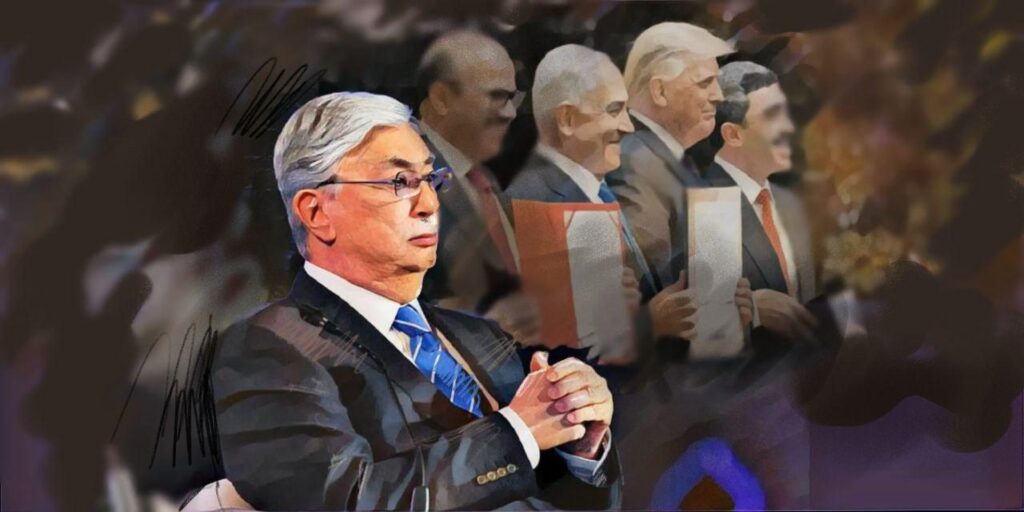
Kazakh Diplomacy: Why Tokayev Aligned Kazakhstan With the Abraham Accords

On November 6, 2025, President Kassym-Jomart Tokayev confirmed that Kazakhstan had formally acceded to the Abraham Accords, aligning the Central Asian state with the U.S.-brokered diplomatic framework. Launched during Trump’s first presidential term, the Abraham Accords seek to expand diplomatic normalization between Israel and Muslim-majority states. Initially signed in September 2020 by Israel and the United Arab Emirates, and separately by Israel and Bahrain, the Abraham Accords were later expanded to include Morocco and Sudan.

Within the broader Abraham Accords framework, Washington continues to seek Saudi Arabia’s participation, a step viewed as diplomatically significant given the kingdom’s custodianship of two of Islam’s holiest sites. However, the process was derailed following the outbreak of the Gaza war in late 2023, triggered by a Hamas attack on Israel. Riyadh has since insisted that normalization can only proceed once there is meaningful progress toward establishing a Palestinian state.

Kazakhstan, a secular state with a Muslim-majority population, has maintained diplomatic ties with Israel since April 1992. Embassies were opened in 1996, and bilateral relations have expanded steadily, including in trade, defense, and humanitarian fields. In 2016, Israeli Prime Minister Benjamin Netanyahu visited Kazakhstan, highlighting the strength of this relationship. These longstanding ties help explain why Kazakhstan’s accession did not mark a shift in its bilateral relationship with Israel.

Because Kazakhstan established full diplomatic relations with Israel decades ago, several analysts have described the country’s accession to the Abraham Accords as largely symbolic. Uzbek political scientist Kamoliddin Rabbimov argues that the decision was a calculated gesture rather than a shift in Kazakhstan’s geopolitical orientation.

“The question arises: is Kazakhstan really ready to weaken its relations with China, Turkey, and Russia in order to join the American-Israeli alliance? I don’t think so,” Rabbimov said. “President Tokayev most likely just formally supported Trump’s initiative by saying ‘yes’ without putting any real geopolitical meaning into it. Nevertheless, even such a ‘yes’ is capable of slightly upsetting the balance in Kazakhstan’s foreign policy.”

Giorgio Cafiero, the CEO of Washington-based Gulf State Analytics, views the move as strategic positioning. “Given the Trump administration’s determination to expand the scope of the Abraham Accords, this move by Kazakhstan was a relatively easy way to win the White House’s favor.”

German analysts at Kettner Edelmetalle emphasize Kazakhstan’s natural resource wealth as a key factor. “The country has significant deposits of minerals and rare earth elements, resources that are indispensable for modern technologies. By strengthening ties with Washington, Astana apparently hopes to attract more American investment in this strategically important sector.”

Eldar Mamedov, non-resident fellow at the Queens Institute and a former senior advisor to the European Parliament, views the development through the lens of geopolitical balancing. “The Abraham Accords are merely a tool in Astana’s deliberate efforts to diversify its geopolitical dependence on Moscow and strengthen its strategic relations with the United States,” he writes. “Perceiving them as the beginning of a new, ideologically defined bloc misinterprets the fundamentally pragmatic and self-interested nature of Kazakhstan’s calculations.”

Kazakhstan’s accession to the Abraham Accords reflects Tokayev’s broader effort to balance relations with major powers. While it may not represent a dramatic reorientation of foreign policy, the move raises Kazakhstan’s diplomatic profile in Washington without signaling a fundamental shift in its multi-vector foreign policy.


Epiphany in Central Asia: Orthodox Traditions and Regional Unity

On the night of January 18-19, Orthodox Christians across Central Asia gather at frozen rivers and lakes to celebrate the feast of Epiphany by plunging into icy waters, three times each, in line with tradition. Though rooted in the Christian faith, this ritual has evolved into a broader cultural event, drawing participation from people of many backgrounds.

A Test of Faith and Endurance

In Central Asia, Epiphany coincides with some of the coldest days of the year, often referred to as the “Epiphany frosts.” Despite subzero temperatures, participation in ice bathing continues to grow.

According to Orthodox tradition, Epiphany commemorates the baptism of Jesus in the River Jordan. While the climate in Israel was mild, believers in the region embrace the symbolic cleansing despite the extreme cold.

The Orthodox Church does not consider ice bathing a requirement for the faithful. Instead, the central ritual of the holiday is the Great Blessing of Water, performed both on Epiphany and the evening before. Priests encourage believers to collect holy water from churches, sprinkle it throughout their homes, and drink it in small amounts on an empty stomach. Many believe this brings health and protection for the year ahead.

Nevertheless, in the main Orthodox churches of Central Asia, fonts and pools are prepared for those who wish to immerse themselves. Designated ice holes are also opened in lakes and rivers for traditional bathing.

Strict Safety Measures in Kazakhstan

In Kazakhstan, authorities take extensive precautions to ensure public safety during Epiphany bathing. In Astana, the celebration began with a religious procession from the Constantine and Helen Cathedral to the embankment of the Ishim River, where the water was consecrated despite temperatures dipping to minus 30 degrees Celsius.

Warm changing rooms were provided, and teams from the Ministry of Emergency Situations, along with paramedics and rescue personnel, were on hand throughout the night.

In Almaty, where temperatures hovered around minus 15 degrees, Epiphany fonts were set up at 10 churches. Authorities reminded residents that swimming in non-designated natural bodies of water is prohibited due to the risk of slipping or falling through the ice. However, safety teams and patrols were stationed at approved bathing sites, including the Bolshaya Almatinka, Malaya Almatinka, Butakovka, Goryachiy Istochnik, and Gorenik rivers.

Officials advised those with cardiovascular or endocrine conditions to avoid the ritual and warned against participating while intoxicated.

A Cultural Tradition Embraced by Many

Over time, Epiphany bathing in Central Asia has grown beyond a strictly religious practice. In Kazakhstan, many ethnic Kazakhs and other non-Christian residents eagerly take part, viewing the ritual as a source of health and vitality. It has become a powerful symbol of interethnic and interfaith unity in the region.

While Muslim clerics typically do not encourage participation, they generally refrain from direct criticism, recognizing the tradition’s broader cultural significance. Orthodox priests also emphasize that the ritual is more custom than doctrine, open to anyone.

Some compare Epiphany bathing to the festive atmosphere of Kurban Ait, when Muslims share food in public spaces. Likewise, Orthodox Christians in Central Asia have long celebrated Nauryz, the Turkic and Persian New Year, enjoying traditional dishes such as nauryz kozhe.

Wider Regional Observance

In parts of Central Asia with milder winters, ice does not form thick enough for traditional immersion. In Tashkent, for instance, Metropolitan Vikenty of Tashkent and Uzbekistan consecrated water in a pool at the Tashkent Diocese’s Spiritual and Administrative Center.

In Kyrgyzstan, Epiphany is celebrated with particular ceremony. In the village of Sosnovka in the Zhayyl district of Chui region, hundreds, and often thousands, gather annually to plunge into the Kara-Balta River near the Church of St. Demetrius of Thessaloniki. The tradition, launched in 1995 by Father Alexander Mezentsev, has since become a regional hallmark. Tents are set up along the riverbank, and hot tea is offered to bathers.

As such, the Epiphany ice bath has evolved into more than a spiritual rite, it is now a widely embraced cultural celebration, underscoring the shared traditions and resilience of Central Asia’s diverse communities.

Central Asia Trade with China Tops Record $100 Billion in 2025

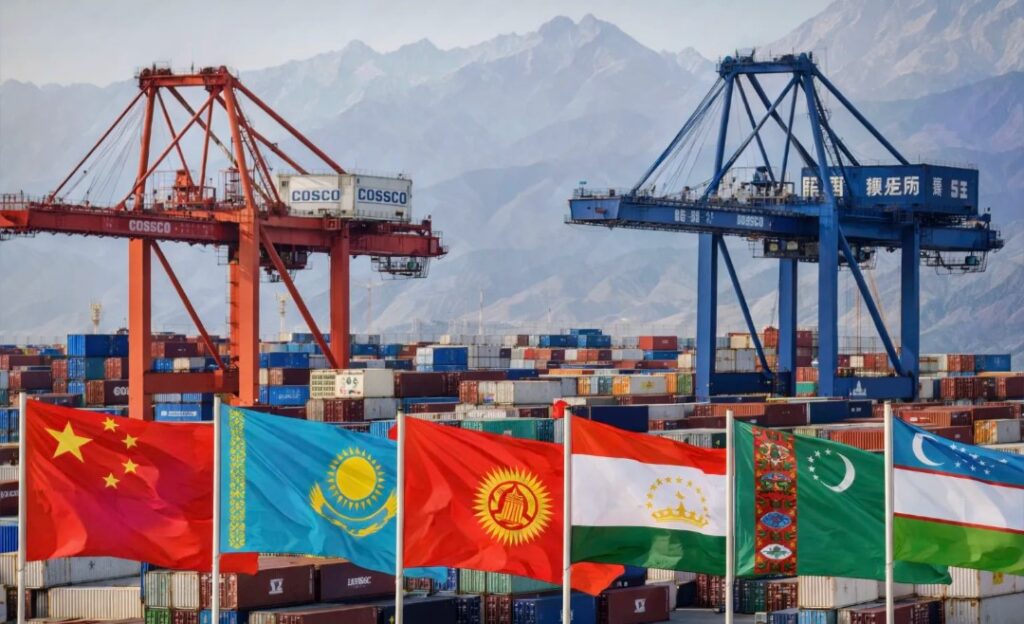
Trade between China and Central Asia increased to a record of more than $100 billion in 2025, despite challenges to global economic growth, the Chinese government said on Monday. 

Citing data from China’s General Administration of Customs, Foreign Ministry spokesman Guo Jiakun said the trade structure with the Central Asian nations of Kazakhstan, Kyrgyzstan, Tajikistan, Turkmenistan and Uzbekistan had improved and that more high-end products were entering the Chinese market from the region. 

 “As global economic growth remains sluggish and the international trading system faces serious challenges, the economic and trade cooperation between China and Central Asian countries has withstood external headwinds, and the trade volume surpassed US$100 billion,” Guo said. 

He attributed the increasing cooperation in part to a China-Central Asia summit in Astana, Kazakhstan last year that was attended by Chinese President Xi Jinping and the five Central Asian leaders. 

China’s Belt and Road initiatives, which include the development of trade routes that pass through Central Asia and link up with Europe, are also making progress, according to the Chinese official. 

Total trade between China and Central Asia was $106.3 billion in 2025, an increase of 12 percent over the previous year, China’s state-run Xinhua news agency reported. Chinese exports such as machinery, electronics and high-tech goods were $71.2 billion, an increase of 11 percent over the previous year. Imports from Central Asia amounted to $35.1 billion, a rise of 14 percent from 2024.

China is involved in major projects in Central Asia, including the extraction of minerals used for “clean” technology, equipment manufacturing and the modernization of agriculture. China imports oil and natural gas as well as a growing number of other products from the region. 

Russia was once the main trading partner of Central Asia after the fall of the Soviet Union, but China has the lead position now. The United States is also seeking to develop more trade with resource-rich Central Asia, which is diversifying its international partnerships.   


Second Malta-Flagged Vessel Hit in Black Sea as Shipping Risks Rise

The Maltese government has officially condemned recent attacks on commercial vessels in the Black Sea after a second ship flying the Maltese flag was damaged in a missile strike. This marks the second such incident within a week involving Maltese-registered ships.

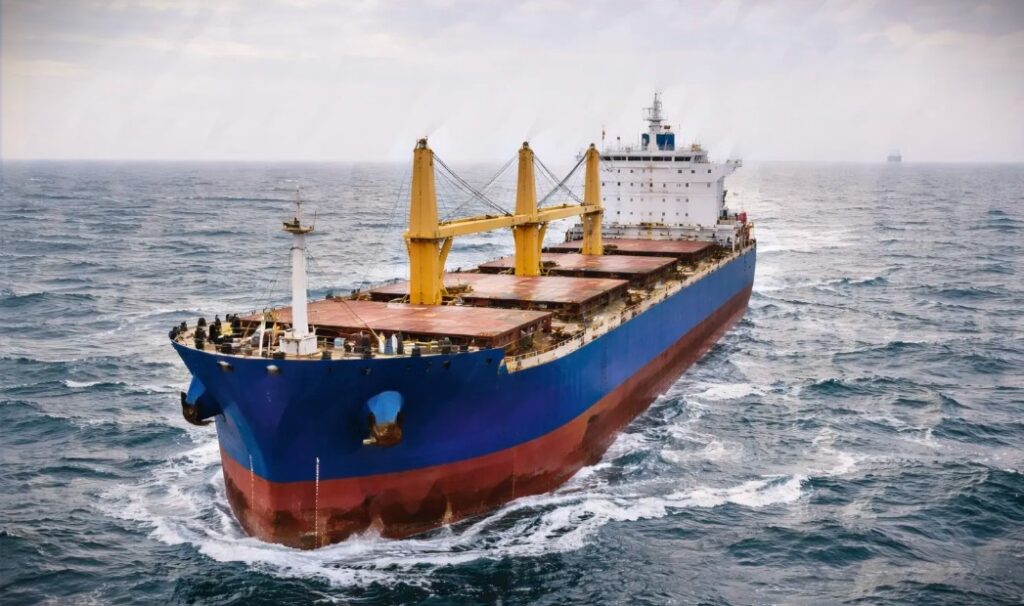
A spokesperson for Malta’s Ministry of Transport confirmed that the latest vessel, a Malta-flagged commercial ship, sustained minor shrapnel damage during a missile strike targeting port infrastructure in the Black Sea. The ship remains seaworthy, although one crew member was injured.

The earlier incident involved the Matilda, an oil tanker also registered in Malta and chartered by the Kazakh shipping company Kazmortransflot, a subsidiary of state-owned KazMunayGas. On January 13, according to a statement from the Russian Foreign Ministry, the Matilda was struck by two Ukrainian drones.

In 2025, Kazmortransflot increased its transport volumes by more than 15% compared to 2024, reaching 51,400 DFE. The growth was attributed to rising demand for shipping along the Trans-Caspian International Transport Route.

Both incidents occurred near the CPC marine terminal outside Novorossiysk.

In a statement, Malta’s Ministry of Transport emphasized that attacks on commercial shipping present a serious threat to civilian seafarers, global shipping safety, and the uninterrupted flow of legitimate international trade. The ministry also noted that commercial vessels operating in conflict zones are increasingly exposed to elevated operational and insurance risks, even when transporting cargo fully compliant with international sanctions.

The attacks near the CPC marine terminal have already had a measurable economic impact on shipping and energy exports. As of December 2025, insurance rates for merchant ships operating in the Black Sea had risen to 1% of a vessel’s value, up from 0.75% and 0.25% during more stable periods. Ships operating in areas of active military conflict are typically insured per voyage rather than annually, significantly raising operating expenses.

Shipping and insurance analysts say the rise in insurance premiums is reducing profit margins on oil and petroleum product exports in the region.

Although Kazakhstan’s export volumes have not yet been directly affected, traders and shippers are increasingly factoring geopolitical and logistical risks into their strategies. Repeated disruptions near one of Eurasia’s critical energy hubs are heightening concerns about the reliability of supply routes, especially given limited alternatives.

Kazakhstan has already begun restructuring its oil export network due to disruptions at the CPC, its primary crude oil export channel. Authorities have turned to alternative infrastructure to maintain output and avoid production slowdowns.

Russian Philosopher Sparks Outrage by Questioning Sovereignty of Former Soviet States

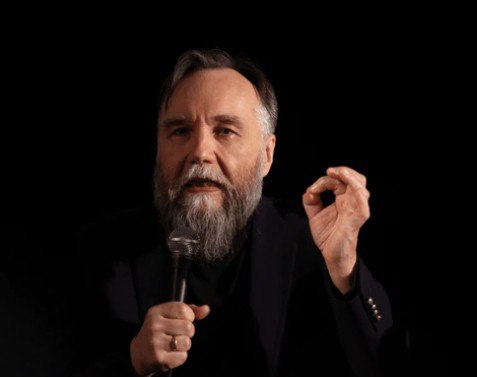
A fresh wave of controversy has erupted in Central Asia after Russian philosopher and political theorist Alexander Dugin publicly questioned the sovereignty of several post-Soviet states, including Uzbekistan. A video fragment of Dugin’s recent remarks circulated widely online, prompting strong backlash from regional analysts and commentators.

In the recording, Alexander Dugin, founder of the International Eurasian Movement and often described as the ideologue of the so-called “Russian world,” said that national sovereignty should no longer apply to former Soviet republics. He specifically named Armenia, Georgia, Azerbaijan, Kazakhstan, Uzbekistan, Tajikistan, and Kyrgyzstan as states that, in his view, should not exist independently under any future political order.

“Nothing sovereign can exist in this new model. That’s it. Sovereignty is over. National states are a thing of the past. This is garbage,” Dugin said, adding that “it is impossible to agree with the existence of a sovereign Uzbekistan.”

Backlash from Uzbek Analysts

Dugin’s remarks prompted immediate criticism in Uzbekistan. Journalist Ilyos Safarov described the comments as part of a broader ideological pattern rather than an isolated statement.

“Yesterday it was Solovyov calling for a ‘special military operation’ in Central Asia. Today it is Dugin denying our sovereignty,” Safarov said. “This shows that post-imperial thinking is still alive in certain Russian political circles.”

He warned that ignoring such rhetoric could further embolden these narratives. “Silence is often interpreted not as diplomacy, but as weakness. If these ideas are left unanswered, they begin to look acceptable to a wider audience,” Safarov said, noting that even unofficial figures can influence public discourse and political attitudes in Russia.

Zavqibek Mahmudov, an associate professor at the Abdulla Avloniy National Institute of Pedagogical Excellence, echoed these concerns. He argued that ideological declarations, even from non-state actors, can translate into real-world political agendas.

“History shows that radical political projects often begin with philosophical justifications,” Mahmudov said. He criticized Dugin’s rhetoric as part of a political chauvinism that categorizes countries as either “real” or “artificial.” “When the existence of an entire nation is questioned, this is no longer academic debate, it is a direct challenge to international law and the principle of sovereign equality.”

Mahmudov called for a coordinated legal and diplomatic response from all the countries mentioned in Dugin’s remarks. “A collective stance would be far more effective than individual national responses,” he noted.

Official Distancing from Moscow

The controversy follows recent remarks by Russian television host Vladimir Solovyov, who had floated the possibility of military action in Central Asia. That incident prompted a response from Russia’s Foreign Ministry. On January 16, ministry spokesperson Maria Zakharova stated that Solovyov’s views did not represent official Russian policy and reaffirmed that Moscow’s relationships with Central Asian countries are grounded in “partnership and respect for sovereignty.”

Despite this distancing, analysts caution that repeated rhetorical assaults on Central Asian sovereignty, whether from state actors or affiliated intellectuals, may reflect deeper ideological currents that could have lasting consequences for regional stability.

Tokayev Aligns Kazakhstan With Trump’s Board of Peace Initiative

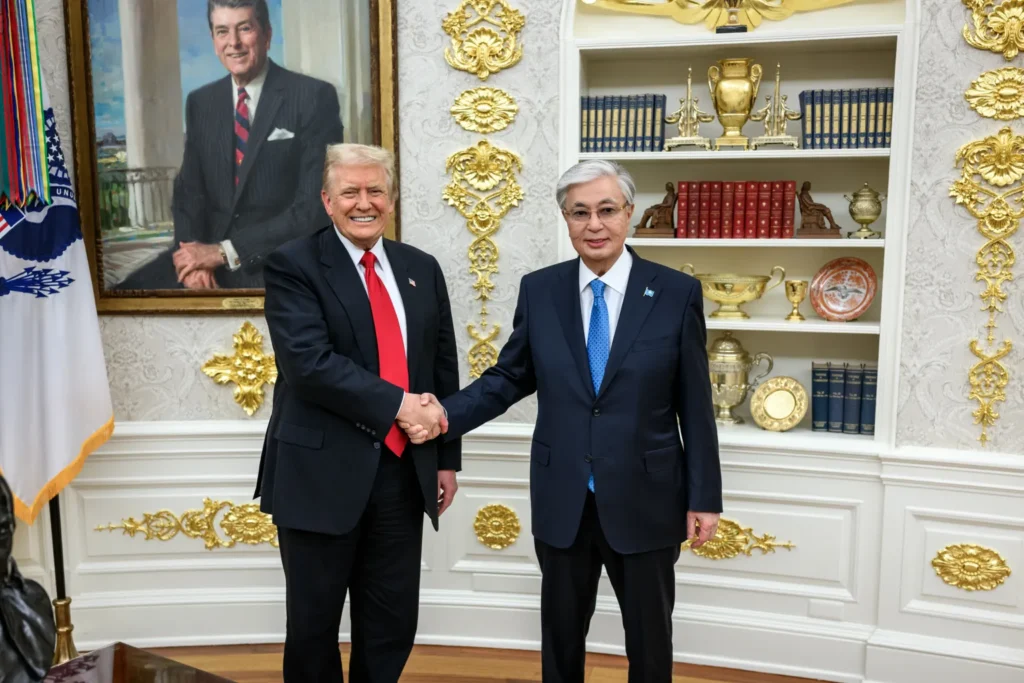
Kazakh President Kassym-Jomart Tokayev has agreed to join a new international body initiated by U.S. President Donald Trump that is intended to address post-war governance and reconstruction in Gaza, with the possibility of later expanding its remit to other global conflicts. Tokayev’s press secretary, Ruslan Zheldibay, said President Tokayev has accepted Trump’s invitation and sent a letter expressing his readiness to participate.

The “Board of Peace” is a structure initiated by Trump as part of his broader Middle East agenda. Draft documents outline a body that would coordinate political oversight, reconstruction funding, and security arrangements in Gaza following the current conflict. They describe Trump as chair of the board on a permanent basis and outline different membership terms for participating states.

Kazakhstan was invited as an early participant and is expected to be among the first countries to formally join. The decision aligns with Kazakhstan’s long-standing foreign policy approach, which emphasizes engagement with major powers and participation in multilateral diplomatic initiatives. Astana has previously hosted negotiations on regional security issues and has sought a visible role in international conflict mediation.

The Board of Peace emerged from a U.S.-backed plan announced in late 2025 to stabilize Gaza following months of war. The plan was presented as a mechanism to oversee reconstruction and governance while preventing renewed conflict. Invitations to join the board were sent to roughly 60 countries, spanning Europe, Asia, the Middle East, and Africa.

A draft charter reviewed by several governments sets out a tiered membership structure. Countries may serve on the board for an initial three-year term without a financial contribution. Longer participation is tied to a $1 billion payment to a central fund within the first year of the charter’s entry into force. The funding clause links longer participation to large upfront contributions, although U.S. officials have disputed that the payment would be mandatory in practice.

The board’s initial focus is Gaza, but the charter allows for expansion to other conflicts if members agree. The documents describe responsibilities that include oversight of reconstruction projects, coordination with regional actors, and engagement with international financial institutions. The charter does not grant the board enforcement powers, leaving its authority dependent on political support from participating states.

Kazakhstan’s participation follows earlier expressions of support for Trump’s Gaza initiative. In October 2025, Tokayev welcomed the U.S. peace plan as a potential step toward restoring stability and rebuilding trust among states involved in the conflict.

The move places Kazakhstan alongside a diverse group of invited countries. Russia has confirmed receipt of an invitation for President Vladimir Putin to join the board, and Moscow has said it is examining the proposal and seeking clarification through diplomatic channels.

Several other governments have acknowledged invitations, while responses have varied. Some countries have indicated interest in participation, while others have expressed reservations about the board’s structure and its relationship to existing international institutions. Concerns have focused on governance, accountability, and the potential overlap with United Nations-led mechanisms for peacekeeping and reconstruction.

The United Nations remains central to Gaza-related diplomacy. A Security Council resolution adopted in November 2025 authorized international stabilization efforts under a U.S.-led framework, providing legal cover for certain aspects of the reconstruction plan. The resolution drew criticism from some diplomats and analysts, who argued it risked weakening established UN peacekeeping norms and sidelining Palestinian self-determination.

Kazakhstan has maintained diplomatic relations with Israel since 1992 and has positioned itself as a neutral actor in Middle East affairs. Its decision to join the Board of Peace reflects a calculation that participation offers diplomatic visibility and influence in a major international initiative, while aligning with Astana’s broader strategy of maintaining balanced relations with Washington, Moscow, Beijing, and regional powers.

No operational timetable for the proposed board has been published, and details about staffing, decision-making procedures, and coordination with existing aid and security frameworks remain unresolved. The scale of the proposed funding mechanism and Trump’s permanent chairmanship have also raised questions among diplomats about how the body would function over time.

Tokayev’s acceptance makes Kazakhstan one of the first countries whose leadership has confirmed participation. The extent to which the Board of Peace evolves into a durable institution will depend on how many invited states commit, how the funding provisions are implemented, and whether the board can gain acceptance from regional actors directly affected by its decisions.

For Kazakhstan, the decision signals an intention to remain engaged in high-profile diplomatic initiatives beyond its immediate neighborhood. Whether that engagement yields tangible influence or becomes a symbolic association with a contested framework will become clearer should the initiative move from concept to practice.