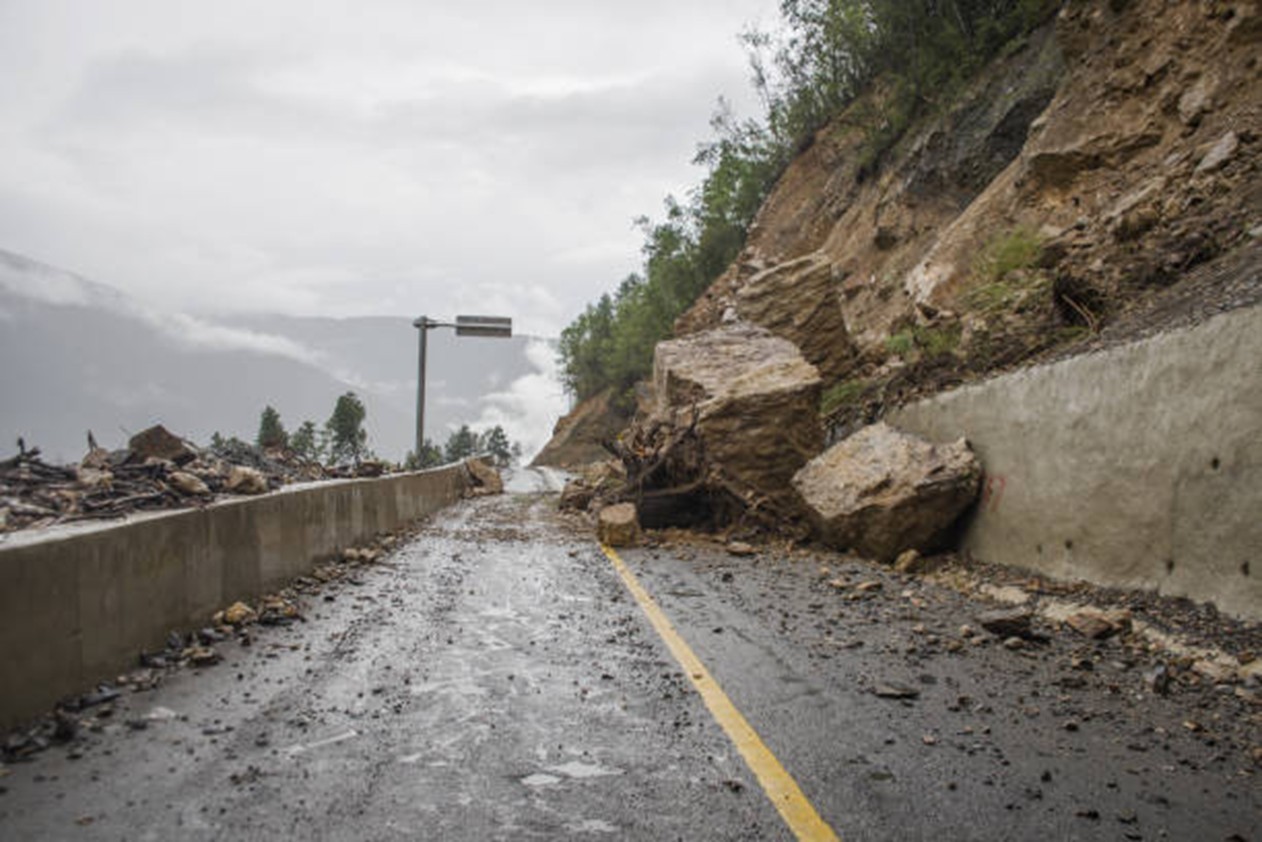
Authorities in Tajikistan say heavy rain could trigger mudslides in parts of the country in the coming days and have warned people to be extremely careful when traveling on roads near mountains and riverbanks.
The warning was issued on Wednesday, days after government officials, scientists, and other delegates from across Central Asia met in Bishkek to discuss ways to address cross-border mudflows and floods. The three-day meeting, which ended on Friday, was organized by Kyrgyzstan’s Ministry of Emergency Situations and the Regional Environmental Center for Central Asia, a group that gets support from the World Bank and other international partners.
Mudslides and flooding often hit parts of Central Asia in the spring and early summer, when rainfall, rising temperatures, snow and glacier melt, and increasing water levels threaten communities that scientists say are more vulnerable because of climate change. In the spring of 2024, flooding in Kazakhstan displaced thousands of people and damaged many homes and other buildings in what the government called the worst natural disaster in the country in 80 years.
Central Asian governments are increasing cooperation on mitigation measures, including early warning systems, data sharing, and other projects to better protect their populations. As temperatures rise faster in Central Asia than the global average, Tajikistan is especially vulnerable because it is a mountainous country where glacier melt is a growing concern.
Heavy rains and mudslides are possible through Friday, July 3, in mountainous and hilly areas across the country, as well as in Sughd Region in northwest Tajikistan, which borders Uzbekistan, and in Khatlon Region in the southwest, which borders Uzbekistan and Afghanistan, Tajikistan’s Ministry of Transport said. Citing meteorological experts, the ministry also warned of dust storms in Khatlon and the capital, Dushanbe, because of strong winds blowing from the south.
“As a result of rising temperatures, glacier melt, and increasing water levels in the Panj, Vakhsh, Varzob, and Zeravshan rivers, there is a risk of mudflows in these areas,” the ministry said. It added that it had “instructed all road maintenance departments and institutions to monitor the condition of highways around the clock.”
The possibility of flooding from glacier melt and rising river levels is not only a problem in mountainous areas in upstream countries such as Tajikistan and Kyrgyzstan, but also in downstream countries, including Kazakhstan, Uzbekistan and Turkmenistan, that rely on cross-border water supplies but are also vulnerable to natural disasters.
Turkmenportal, an online news site, said the recent meeting in Kyrgyzstan on water cooperation in Central Asia was important to Turkmenistan because it “is located in the lower reaches of Central Asia’s largest rivers and is directly dependent on the quality of transboundary cooperation in water management and flood risk reduction.”